Blog

  • Sumner found in Fairfield County

    Sumner

    FAIRFIELD COUNTY – Douglas William Sumner, 41, reported missing on Oct. 22, was found in his wrecked vehicle off of Hwy 21 North in Fairfield County according to a statement from Fairfield County Coroner Chris Hill. Sumner appears to have run off the highway, down a 60-foot embankment where his vehicle struck a tree.

    This incident is still under investigation by the Coroner’s Office, SC Highway Patrol and SLED.

  • Chinese company launching operations in Mack Truck Plant

    WINNSBORO – Healthcare US Co., Ltd., a venture of China-based Healthcare Co., Ltd., today announced plans to establish new operations in Fairfield County. The company’s $45 million investment is projected to create 250 new jobs.

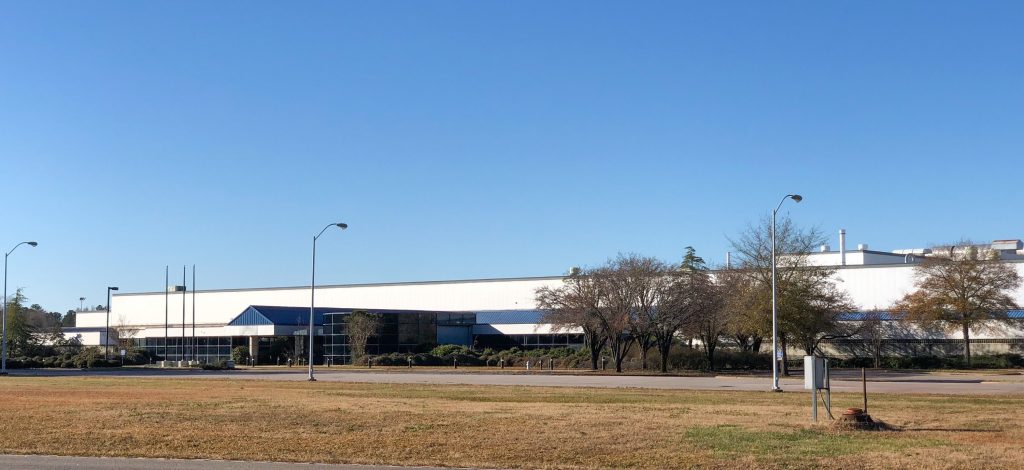
    Healthcare US Co., Ltd. is expected to launch its new, 650,000-square-foot, Fairfield County facility in the first quarter of 2019. Located at 1 Guardian Way in Winnsboro, where Mack Truck was previously housed, the operation will specialize in the production of memory-foam mattresses for a variety of customers. Hiring is also slated to begin early next year, and interested applicants should contact healthcare.us@hkfoam.com for more information.

    “Fairfield County is beyond excited and thankful that Healthcare USA Co., Ltd. has chosen to locate its first U.S. factory in Winnsboro,” said Fairfield County Council Chairman Billy Smith. “The representatives of this company with whom we’ve worked throughout this process have been a pleasure to do business with, and we look forward to their future operation and success within the county. We welcome them with open and supporting arms and are hopeful that others will see this and know that Fairfield County is open for business and focused on the kind of growth that will be beneficial both for our citizens and the businesses that choose to locate and invest with us.”

    “We’re happy to be establishing this new facility in Fairfield County, and we are very appreciative of the ongoing support from both the local and state governments,” Healthcare Co., Ltd. President James Ni said. “This is a milestone for our company, and we are excited to support the community we will soon be calling home.”

    Founded in Jiangsu, China in 2003, Healthcare Co., Ltd. is the first publicly-traded, memory-foam mattress manufacturer in China and is now the largest such manufacturer in that country. Becoming a global industry leader, the company has established overseas production operations in both Serbia and Spain, with approximately 3,600 workers globally.

    The Coordinating Council for Economic Development has awarded a $300,000 Rural Infrastructure Fund grant to Fairfield County to assist with the costs of building renovations.

    “South Carolina’s ongoing economic success can be attributed, in part, to our manufacturing prowess and ability to recruit foreign direct investment,” Secretary of Commerce Bobby Hitt said. “This $45 million investment in Fairfield County only reinforces that notion. We look forward to this new partnership with Healthcare USA Co., Ltd.”

    See the full story in Thursday’s issue of The Voice.

    FIVE FAST FACTS

    • Healthcare US Co., Ltd. is launching new Fairfield County operations.
    • $45 million investment to create 250 new jobs.
    • Healthcare US Co., Ltd. is a China-based manufacturer of memory-foam mattresses for a variety of customers.
    • Located at 1 Guardian Way in Winnsboro, the company is expected to launch its new, 650,000-square-foot facility in the first quarter of 2019.
    • Hiring is expected to begin simultaneously, and interested applicants should contact healthcare.us@hkfoam.com for more information.


  • Blythewood Council wants water contract re-do

    BLYTHEWOOD – The town of Blythewood is looking to open discussions with the Town of Winnsboro in the coming new year as it prepares to renegotiate the town’s water supply contract.

    During the Nov. 26 town council meeting, Mayor J. Michael Ross said that the town’s contract with Winnsboro as its fresh water supplier will expire in 2020, and that he hopes that in the next year the town can come to new terms in its usage agreement.

    “We believe that we are probably one of their largest users. We would like to even suggest that we might use as much or more water than the town of Winnsboro, and we hope that we can use that position in the negotiations,” Ross stated.

    In addition to rate concerns, Ross said that Blythewood has compiled an agenda list of approximately ten other items residents have brought to the attention of Blythewood’s administration that will be brought to Winnsboro.

    “We have gotten what seems like constant complaints about bills, the billing system and even the smell of the water,” Ross stated.

    While he said Winnsboro has attempted to resolve some of the issues, including flushing the water system on several different occasions, he said he has “some real concerns” regarding the issues.

    Resident Dennis Drozdak, who opened the discussion Monday night during the citizen remarks forum of the meeting, told the council that he had conducted an at-home test of his water that same day.

    “It registered at .83 particles. That’s pretty high and that might be the reason why the water smells,” Drozdak stated.

    Drozdak also said that he once received a water bill of over $600, and that he believed the town of Winnsboro owed answers to the Blythewood community.

    While Drozdak alleged that, over the summer, the town of Blythewood was marked the third highest in the state for water usage rates, that ranking is not reflected on the state’s Rural Infrastructure Authority website.

    Drozkak also said that Winnsboro’s water rate recently increased by over nine percent.

    Winnsboro Town Clerk Lorraine Abell told The Voice, however, that the increase came last July and was levied by the City of Columbia for water it sells to Winnsboro, and that Winnsboro only passed along Columbia’s rate increase.

    Blythewood’s contract with Winnsboro began in 2000, when the Town of Blythewood needed water and the City of Columbia showed no interest in supplying water service requested by the Town. Until that time, the water source for Blythewood residents and businesses had been from private wells.

    “The water was bad at both Bethel-Hanberry Elementary School and Blythewood Academy, plus we needed fire hydrants and improved fire ratings,” Jim McLean, a town councilman at the time, told The Voice. “Plus, we needed water for economic development.”

    “Winnsboro stepped in and came to Blythewood’s rescue,” McLean said. “It was because of Winnsboro supplying us water when no one else would, that we were able to get fire hydrants and significantly better fire ratings for homeowners, better water for our schools and considerable economic development leverage for the town. We were able to bring in three hotels as well as residential development including Cobblestone Park.”

    McLean recounted how Winnsboro’s then-mayor, Quay McMaster, sat down with Blythewood’s then-mayor, Roland Ballow, and the two worked out the contract that is still in effect.

    “They probably should have had the advice of an attorney,” McLean quipped, “but they were just trying to do the right thing for Blythewood, to supply us with a much needed water source at a time when the Town had little money to work with.”

    Winnsboro supplied the water lines to the Town and Fairfield Electric Cooperative and SCE&G covered most of the cost of the water tower.

    Today, the hotels and restaurants in the town bring in more than $400,000 a year in accommodation and hospitality revenue for Blythewood.

    While Winnsboro’s reservoirs have been so low at times in the last few years that it has had to purchase water from Columbia, Winnsboro water reserves are expected to increase dramatically when a new direct line into the Broad River becomes operational early next year, according to Town of Winnsboro officials.

    Ross said that he will keep the public updated as the town navigates the negotiations of a new agreement with the town of Winnsboro.

    “We don’t want the water to smell bad or taste bad, and we want it at a fair and reasonable price,” Ross stated.

  • Advanced middle schoolers score well

    BLYTHEWOOD/FAIRFIELD – Advanced middle school students who are able to take high school courses in the eighth grade also are subject to the end of course (EOC) tests.

    As a group, the mean or average scores for these high-achieving middle schoolers were better than the state and district averages and area high schools.

    Students in three Richland 2 middle schools in the Blythewood area – Blythewood Middle, Kelly Mill, and Muller Road – as well as Fairfield Middle School in the Fairfield School District, took the end-of-course test for Algebra1 and Mathematics for the Technologies. Also, Fairfield allows high achieving students to take English 1 in middle school, and 35 students at Fairfield Middle completed that course and were subsequently tested.

    According to the Department of Education website, the EOCEP “encourages instruction in the specific academic standards for the courses, encourages student achievement, and documents the level of students’ mastery of the academic standards.”

    In other words, it is a standard way of measuring how well students are learning the subjects taught in the state’s public schools.

    EOCEP examination scores count 20 percent in the calculation of the student’s final grade in “gateway courses” (i.e., courses every student must take before graduation). These currently include: Algebra 1, Intermediate Algebra, Biology 1, English 1, and United States History and the Constitution.  To meet federal accountability requirements, the EOCEP in mathematics, English/language arts and science is administered to all public school students by the third year of high school.

    For school year 2018, all four area middle schools exceeded both state and district averages for Algebra 1, and Fairfield Middle exceeded state and district averages for English 1 as well.  This is how they did:

    Blythewood Middle:  For the 2018-2018 school year, 96 students took the Algebra 1 test, with an average score of 88.3 (out of one hundred points.)  Almost 44% scored A on the test; another 40.6 scored B; 13.5% scored C, and only 2.1% scored D.  These scores were down from the previous year, when the mean score in Algebra 1 was 90.8, with 58.7% of the students scoring an A and no student scoring below a C.

    Kelly Mill Middle: Eighty-eight students took the Algebra 1 test for 2017-2018, with a mean score of 78.9; 20.5% scored an A, while 25% received a B, 33% received a C, 11.4% received a D, and 10.2% received an F.  Overall 78.5% received a C or better.  Kelly Mill’s scores showed an improvement over the previous year, when the mean was 75.5 and only 7.7% scored A, and about 70% scored a C or better.

    Muller Road Middle:  Seventy-eight students took the Algebra 1 test for 2017-2018, achieving a mean score of 84 and with 28.2% of the students receiving an A; 35.9% a B; 29.5% a C, and only 6.4% receiving a D or F. These scores were down slightly from the previous year, when the mean was 86.2 with more than 30% scoring an A and almost 98% passing the course with a C or better.

    Fairfield Middle: Of the 29 middle schoolers who took the Algebra 1 test in Fairfield School District for the 2017-2018 school year, 24.1% scored an A; 10.3% a B; 17.2% a C; 27.6% a D; and 20.7% an F. The mean score was 74.8 out of a possible 100.  These scores were down from the previous year, when the average score was 76 and about 64% of students taking the test received a C or above.

    For English 1, the mean score was 79.2, with 25.7% receiving an A; 17.1% a B; 34.3% a C; 20% a D; and only 2.9% an F.  These scores, however, were an improvement over the 2016-2017 school year, when the mean score was 76.8, with 18.2% of the students receiving an A and more than a third receiving a D or an F.

  • Blythewood parade rescheduled

    BLYTHEWOOD – The Town of Blythewood Christmas Parade has been rescheduled from this Sunday, Dec. 9, to 3 p.m. Sunday, Dec. 16, due to expected cold, rainy weather this weekend.

    “We are sorry for the inconvenience,” Major J. Michael Ross said in an emailed statement to the media, “but we wanted to let the community know as soon as possible.”

    For more information about rescheduling, contact the Blythewood Christmas Parade Committee at  blyparade@aol.com.

  • Winnsboro’s new ER hosts Open House Dec. 13

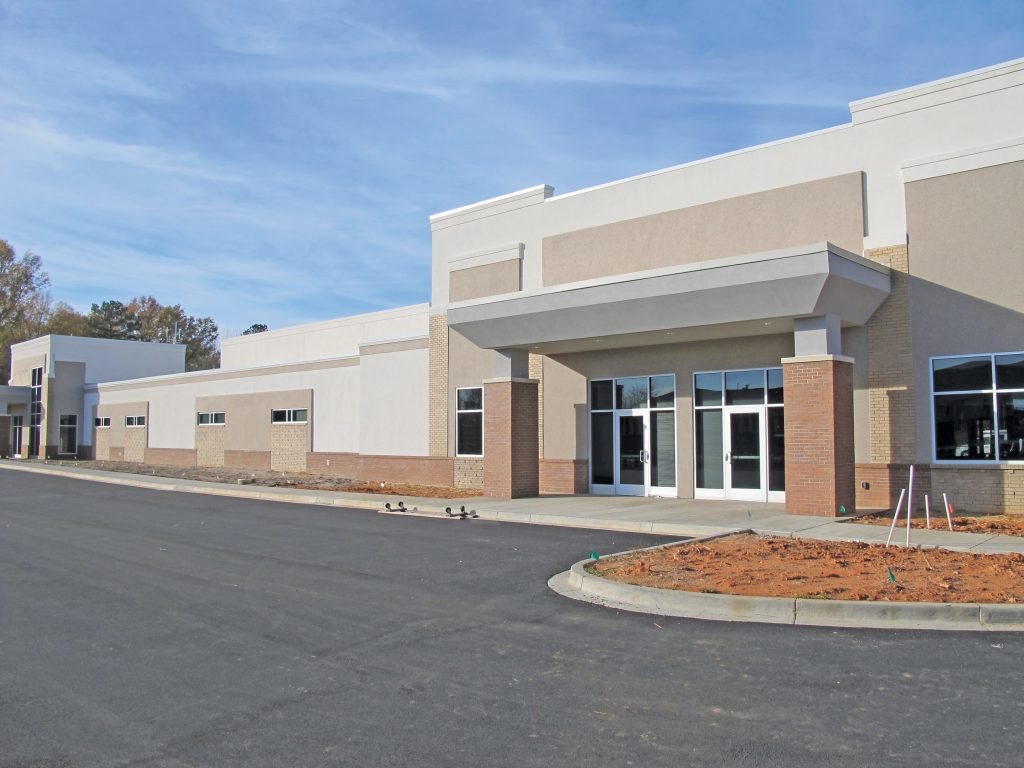
    WINNSBORO – The public will get their first peek inside the new Providence Health-Fairfield Emergency Room next week – Thursday, Nov, 13, from 4 to 6 p.m. – when officials hold an open house with a ribbon cutting and tours of the new facility.

    Located at 1810 US Hwy 321 S, across the street from the Winnsboro Bi-Lo, the state-of-the-art Emergency Room will open for business later this month.

    Officials with Providence stated that the new facility will provide Fairfield County with quick and easy access to round-the-clock, high-quality emergency care.

    The County contracted with Providence to construct and operate the facility after plans were initiated to   close Fairfield Memorial Hospital earlier this year. Closing date for the hospital is Dec. 18.

    “This facility was designed to include everything that we need to provide efficient and safe emergency care,” Providence Health-Northeast CEO said.

    The building includes four treatment rooms with two pre-constructed additional exam rooms for future expansion. It also includes two trauma rooms and an onsite full service laboratory for the fast return of blood work results.

    The facility also has a top-of-the-line CT scan, an ultrasound and x-ray technology to facilitate quick access to the diagnostic information needed for emergency care.

    The structure is laid out in a horseshoe shape so patients can feel the progress of their visit as they move through the facility, White pointed out. In the center of the horseshoe is a large, open nursing station keeping the staff in close range to all parts of the patient journey.

    “We gave careful consideration to patient comfort such as the use of natural light and high ceilings,” White said. “We wanted to provide a healing environment for our patients, families, and staff.

    “The ambulance entry for the facility leads directly to the nurses’ station so that care can be delivered as quickly as possible for the most emergent cases,” White said. “Directly next to the ambulance entrance are two large trauma bays that will provide ample space and supplies to ensure that staff has, at their fingertips, whatever tool is needed to provide the complex care required for more serious cases.”

    White said the trauma rooms in the new facility are some of the nicest ones she’s seen in her experience with emergency care.

    “The facility itself is somewhat of a futuristic layout in terms of how we can best meet the emergency needs of the community,” White added.

    The structure also includes 6,000 square feet of shell space to achieve future needs as they are determined.

    White said the emergency room’s location, easily accessible near the intersection of Highways 321 and 34, is key to providing quality care to the community.

    “The facility’s close proximity to the Providence Health-Northeast community hospital provides the added benefit of fast-track access for patients who need to be transferred for more advanced care,” White added.

  • R2 Chair McKie’s ‘lost’ ethics filings questioned

    BLYTHEWOOD – Nearly a month after the November elections, two Richland 2 school board members still had not filed ethics disclosure forms required by state law, according to the South Carolina Ethics Commission.

    As of 1 p.m. Tuesday, the ethics commission’s online Statements of Economic Interest database listed all of the school board candidates who filed except for two notables – new board member Teresa Jones Holmes and board chairwoman Amelia McKie.

    Holmes couldn’t be reached for comment Tuesday.

    McKie expressed shock that her name wasn’t listed online for public viewing.

    “I’ll try to find out where the disconnect was,” McKie said during a 4:30 p.m. phone interview. “There shouldn’t have been a problem. Certainly I want to get to the bottom of whatever the disconnect is.”

    McKie contacted The Voice about an hour later to say that the ethics commission had her forms, saying they had been submitted weeks ago.

    The ethics commission website listed McKie’s time of filing at 5:26 p.m. Tuesday. Holmes filed at 4:50 p.m., after The Voice telephoned her at 1:07 p.m.

    At 11:02 a.m. Tuesday, an unidentified ethics commission representative said via email that the agency’s website was “up to date and accurate” as of that time.

    The spokesperson declined further comment.

    “The statements were filed on the date and time shown on the website,” the ethics commission said via email Wednesday morning. “I am aware of no glitch in the application that would cause a document to become ‘lost’ in the system.”

    The ethics commission website says all candidates must electronically file Statements of Economic Interests forms, and that they’re posted online immediately.“Upon filing, the information is immediately available to the public through public reporting,” the website states.

    The apparently late filings come months after the Richland 2 board voted to modify the procurement code.

    In July, the board voted to strike several provisions from the code, including one that prohibited the district from doing business with board members.

    At the time of the vote, Dr. Harry Miley, the district’s chief financial officer, said via email that the prohibition already exists elsewhere in the board’s policy.

    “We are undertaking a comprehensive review and update of all of our policies with particular attention to trying to eliminate places where the same topic is addressed in multiple policies,” Miley said. “We are also undertaking a review of our procurement code to see if revisions are needed.”

    McKie’s form lists $9,600 in personal income from her position on the school board. She receives additional income from consulting, but those amounts are not included on the online forms.

    NextEra also purchased $15,000 in consulting services from McKie, according to ethics documents.

    Holmes reported $83,000 in personal income from a position with the Fairfield County School District, documents show.

    Neither McKie nor Holmes listed any property interests, business interests, gifts or government contracts, according to the forms.

    Nearly all of the other seven school board candidates filed their economic interest forms by August, according to state ethics records.

    One candidate, a challenger and not an incumbent, filed his in October, records show.

    State law requires all elected officials to file Statements of Economic Interest and campaign contribution reports.

    Forms document a candidate’s income sources, including any sources doing business with the government agency the elected office oversees.

    High-ranking appointed officials, such as city administrators, superintendents and chief financial officers, must also file, according to the ethics commission website.

    Candidates who fail to file, or who file late, face a variety of civil and criminal penalties.

    Civil penalties begin at $100 for reports not filed within five days after the deadline. Fine amounts increase by $10 per calendar day for the first 10 days after notice is provided by certified or registered mail.

    Daily fines increase to $100 for every day the form isn’t filed, with total fines capping at $5,000.

    If forms still aren’t filed, failing to file becomes a criminal violation, with violators facing additional fines and possible prison time.

    In addition, state law prohibits public officials who haven’t filed Statements of Economic Interest from being sworn in.

    “No public official, regardless of compensation, and no public member or public employee as designated in subsection (B) may take the oath of office or enter upon his official responsibilities unless he has filed a statement of economic interests in accordance with the provisions of this chapter with the appropriate supervisory office,” the law states.

    This requirement still exists even if a public official has no economic interests to disclose.

    “He shall nevertheless file a statement of inactivity to that effect with the appropriate supervisory office,” the statute states.

  • Breaking Legs

    Cast includes, from left: Sophie Pirich, Jesse Elliott, Anne Heiler, Jennifer Warner, AJ Jacobs, Ellie Feuerstein and Jerry Windhorn.

    BLYTHEWOOD – Blythewood High School’s drama class’s one-act play, Elephant’s Graveyard, has been named one of the two top state winners at SC Theater Association competition. BHS will now compete (for the fifth year) in the Southeastern Theater Conference in Knoxville, TN against the top two winners from 10 states. To pay for the trip, the cast will perform at the Farm on Dec. 19 & 20, at 7 p.m. Tickets are $10, available at the BHS office.

  • PC could rezone dormant Red Gate property

    BLYTHEWOOD – The Blythewood Planning Commission elected to hold further discussions next month on an intensely debated item that would allow the town to rezone three separate areas that have sat dormant for the past decade.

    Presently zoned as a Planned Development District, or PDD, the areas include two zones titled Red Gate Farms I and II, and a third area presently owned by Sharpe Properties. Because the areas have sat dormant for the past ten years, with no signs of development at any point according to town officials, town ordinances require the planning commission to open discussion on the matter and consider rezoning, if applicable, or charge the developer with violation of the zoning chapter.

    Red Gate Farms I and II are presently owned by Arthur State Bank, with the original plans under the PDD to develop the areas into housing communities. Red Gate I includes 143 acres with a proposal to build 135 single family units and 23 acres of general commercial, while Red Gate II plans propose building 97 single family units and 300 multi-family units with 13 acres of general commercial.

    One consideration for the commission has been to return the area’s zoning to Rural, as it was prior to the property being annexed into the city from Richland County in 2007.

    Attorney for Arthur State Bank, Bob Fuller, addressed the commission Monday night and said the bank had been unable to sell the properties because of the lack of availability of utilities and infrastructure services to the property. Fuller said that now, on what he said could potentially be the eve of acquiring those services to the area, changing the area’s zoning would be a “terrible blow” to the property owner.

    Almost four years ago, however, in January, 2015, the Town of Winnsboro issued a Water Capacity Availability and Willingness to Serve Letter to the Arthur State Bank for 40 acres of the 142.5 acre tract. That availability and willingness to serve was conditional upon Arthur State Bank selling the property to a ‘bona fide’ subdivision development entity (approved by the Town of Winnsboro) within 18 months of the issuance of the letter, and that any successors or assigns to the rights issued Arthur State Bank under the letter, enter into a mutually agreed to Water Utility Development and Service Agreement for the proposed subdivision within 24 months of the date of the Town of Winnsboro’s Water Capacity Availability and Willingness to Serve Letter. No sale transpired.

    “We understand there are community interests, there are neighboring interests, and there is a town interest, but the owner also has a very important interest in this. Not that it is to be developed exactly how the PDD says, but that it be given the opportunity to follow the path of development that was initially designed for that property,” Fuller told the panel.

    Fuller alleged changing the property’s zoning from the PDD to a “radically changed proposition” of Rural would prevent the bank from recouping any of its investment and was “too big of a pill to swallow”.

    Planning commission chairman Donald Brock told Fuller that while the commission was respectful of the position the bank was in, it was not the commission’s responsibility to make the bank whole on an investment.

    “It is my opinion a Rural designation would fit with the surrounding land area out there,” Brock stated.

    According to Brock, even if the commission did make a motion to rezone the property to Rural, the bank would have the opportunity to reapply for a zoning change.

    As a discussion-only item on the agenda, the commission was not required to take action on the matter Monday night and agreed to pick up the discussion to include all interested parties next month.

    Before moving to other items, panel member Mark Cruise asked that the minutes of the meeting reflect that by holding the meeting with all parties next month that it is the commission’s intent to get the item off docket next month and resolved.

    “We want to take care of all interested parties, but – so there is no sleight of hand here – you’re hearing the intent,” Cruise stated.

  • Council to finalize animal law

    Fairfield County Attorney Tommy Morgan (right) explains why the county cannot issue fines greater than $500 for violations of a new animal control ordinance that received second reading Monday night as Kathy Faulk with the Hoof and Paw Benevolent Society (left) looks on. | Michael Smith

    WINNSBORO – It could cost up to $500 per violation in the enhanced animal control laws under consideration by Fairfield County Council.

    Second reading of the draft ordinance passed unanimously last week.

    While animal rights advocates applaud higher fines and greater guidance for law enforcement, they say the new law, which hasn’t been updated for 11 years, should go further.

    Kathy Faulk, community outreach director for the Hoof and Paw Benevolent Society, which lobbied for more teeth in the law, commended the council supporting the ordinance.

    “Updating this animal ordinance is, as you know, long overdue. We are hopeful and very excited that this ordinance may go through,” Faulk said. “It will help improve the quality of life of animals that are living in Fairfield County. It will help animal control and law enforcement do their jobs.”

    The old law, last updated 11 years ago, included only rudimentary definitions of offenses. A version of the ordinance that passed Monday night included several additional provisions, including:

    Mandatory reporting of any pet struck by a motor vehicle or bicycle

    More detailed definitions of nuisance animals

    Pets must be fed at least once a day and have potable water

    Tethers must be at least 12 feet long and weigh no more than 15 percent of an animal’s body weight

    On tethering, Faulk said she’d like to see it outlawed in its entirety. She also pressed for a $1,000 maximum fine for offenses.

    “Our views on tethering remain unchanged,” she said. “We believe it is inhumane for animals to spend their lives on the end of a tether. However, we believe this ordinance provides some much needed guidelines and it’s a start.”

    Faulk also called for the use of swing chains as tethers to be outlawed.

    Councilman Dan Ruff also pressed for tougher penalties.

    “I agree that we should look into raising the fine to $1,000,” he said.

    Fairfield County Attorney Tommy Morgan said state law limits fines counties can charge for ordinance violations.

    Morgan said the maximum fine allowed in magistrate court for ordinance violations is $500. He noted that state law contains tougher penalties for felony violations, with higher maximums on fines and offenders facing up to five years in prison.

    County law enforcement officers have the option of charging felonies under the state’s “Ill Treatment of Animals” cruelty law. Those charges are heard in General Sessions Court.

    “In a nutshell, the state restricts counties in what penalties we can put in animal control ordinances,” Council Chairman Billy Smith said.

    Smith agreed that he, too, would like the proposed ordinance revised to outlaw swing chains. He also called upon the General Assembly to update its animal abuse laws.

    “In my mind if there’s a state provision in law that we’ve addressed, it should be charged under the state provision because there are higher provisions,” Smith added. “We need to push state legislators to draft legislation to that effect.”

    Ruff called upon the solicitor’s office to prosecute cases more vigorously.

    “I guess we need to encourage our solicitor to prosecute these cases to the fullest extent of the law,” Ruff said.

    Sixth Circuit Solicitor Randy Newman couldn’t be reached for comment.

    In previous comments, Newman has said it’s unrealistic to expect prison time in every animal abuse case, and that plea bargains are necessary.

    “It is simply not possible to go to trial on every case or even a majority of cases,” Newman said in an email to The Voice. “This would cause an even greater delay in justice for victims of crimes, defendants and their families.”

    Newman also criticized media coverage of how animal abuse cases are handled.

    “You guys get an initial incident report and have the guy tried in the news and guilty before the case is even indicted,” Newman said. “This newspaper seems to be concerned with folks being sentenced to prison.”

    A recent investigation by The Voice, which reviewed publicly available court records online, found that virtually none of the Fairfield County animal abuse cases prosecuted by the solicitor’s office resulted in a prison sentence.

    “The likelihood of a person with little or no previous record going to prison is very slim,” Newman said.

    Final reading of the county’s animal control ordinance is tentatively scheduled for Dec. 10.