Blog

  • PC tables industrial zoning

    163 Acres of Manufacturing Proposed West of I-77

    BLYTHEWOOD – The Blythewood Planning Commission voted Monday night to table a request by Richland County to rezone three connected parcels west of I-77, totaling 163 acres, to Limited Industrial 2 District (LI-2) zoning. Tiffany Harrison represented Richland County’s Economic Development Office at the meeting.
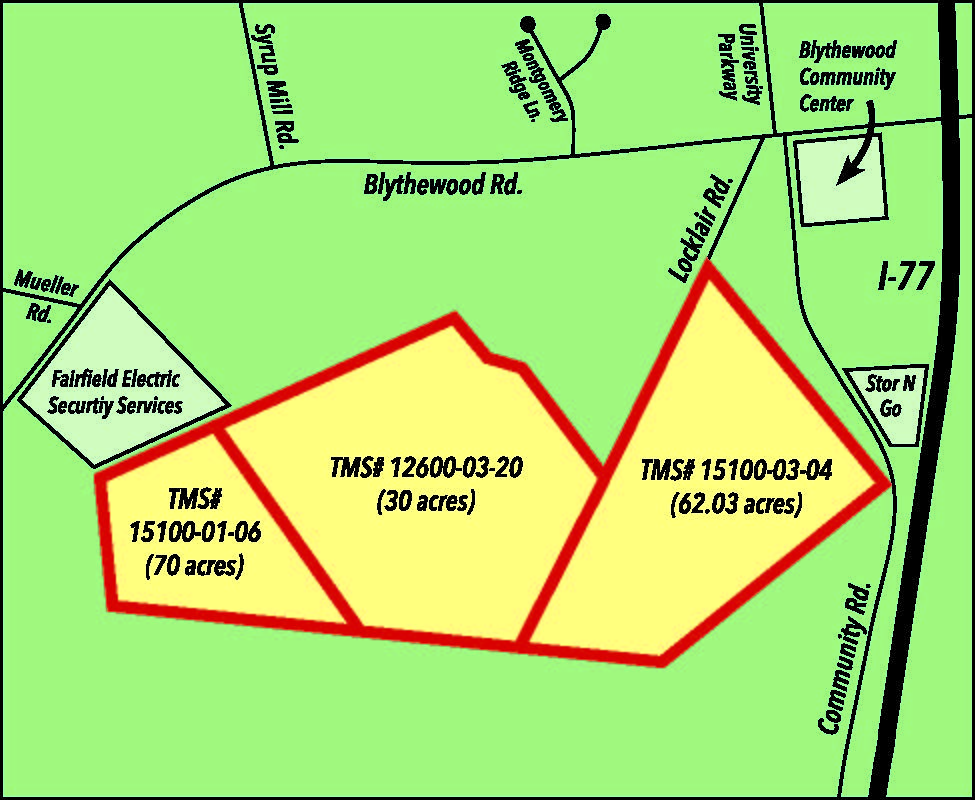
    Richland County Economic Development Office is requesting to rezone 163 acres of property in the town to Limited Industrial 2 (LI-2) zoning. | Ashley Ghere

    The parcels, currently zoned Development (D-1) are bordered roughly by Blythewood Road to the north, Community Road to the east and Ashley Oaks neighborhood to the southwest.

    The three parcels are part of approximately 1,000 acres of potential industrial use. Two years ago, at Richland County’s request, council rezoned approximately 600 acres to the south of the 163 acres to Li-2.

    On March 25, town council voted to update the town’s Master Plan priorities listing Economic Development as a number one priority. From that list Council voted to define a possible technical village within the 1,000 acres.

    “The LI-2 zoning district allows a wider variety and greater intensity of manufacturing uses than the Limited Industrial (LI) district but not the most intense manufacturing uses of the Basic Industrial (BI) district,” Town Administrator Brian Cook explained to the commission.

    But the long and varied list of manufacturing businesses that are allowed to operate under the LI-2 zoning designation did not set well with many of the 20 or so residents who attended the meeting.

    Those uses include textile manufacturing, computer and electronics, pharmaceutical and medicine, aircraft, motor vehicle body and trailers, plastic and rubber products, certain steel and aluminum products, forging and stamping, machine shop, small arms ammunition and many other types of manufacturing as well as a number of kinds of services, warehousing and gas stations.

    A complete list of allowed and conditional uses is available at town hall and on The Voice’s website (blythewoodonline.com).

    Both Harrison and Blythewood’s Economic Development Director Ed Parler assured naysayers that the list does not include dirty manufacturing.

    “This is the highest and best use of this property,” Parler said, noting that it would provide jobs and revenue for the town.

    Asked by newly appointed commissioner Ed Kesser if the County has a master plan for the industrial acreage, Harrison said there would be covenants and restricts put in place, but that the priority is to get the properties rezoned. She said Richland County can’t move forward until the zoning is in place.

    “A lot of these kinds of manufacturing you’re not going to want in your neighborhood, Commission Chairman Donald Brock said, looking over the list. “And what if you get the zoning, but don’t get the cleaner manufacturers to come here, then will you take less desirable ones?” Brock asked.

    “We don’t want to limit uses too much,” Harrison said. “We want to keep it broad.”

    “I feel like we’ve been kept in the dark,” Tom Utroska said, echoing others in the audience. “I’m not opposed to LI-2, but you need a better explanation before you make a recommendation to Council,” Utroska said to the commissioners.

    Heeding that advice, the commission voted 4-2 to table the item until the August meeting.
    Planning Commission Packet

  • Story Walk moves kids around town

    RIDGEWAY/WINNSBORO – Summer fun is making the rounds in Ridgeway and Winnsboro as Story Walk brings kids and their families on to downtown sidewalks to read the “big book”, Good Food, written by DeMar Reggier, Much like a progressive dinner where participants eat from house to house until they finish the meal with dessert at the last house, so the book is read from store to store to store until it’s finished.

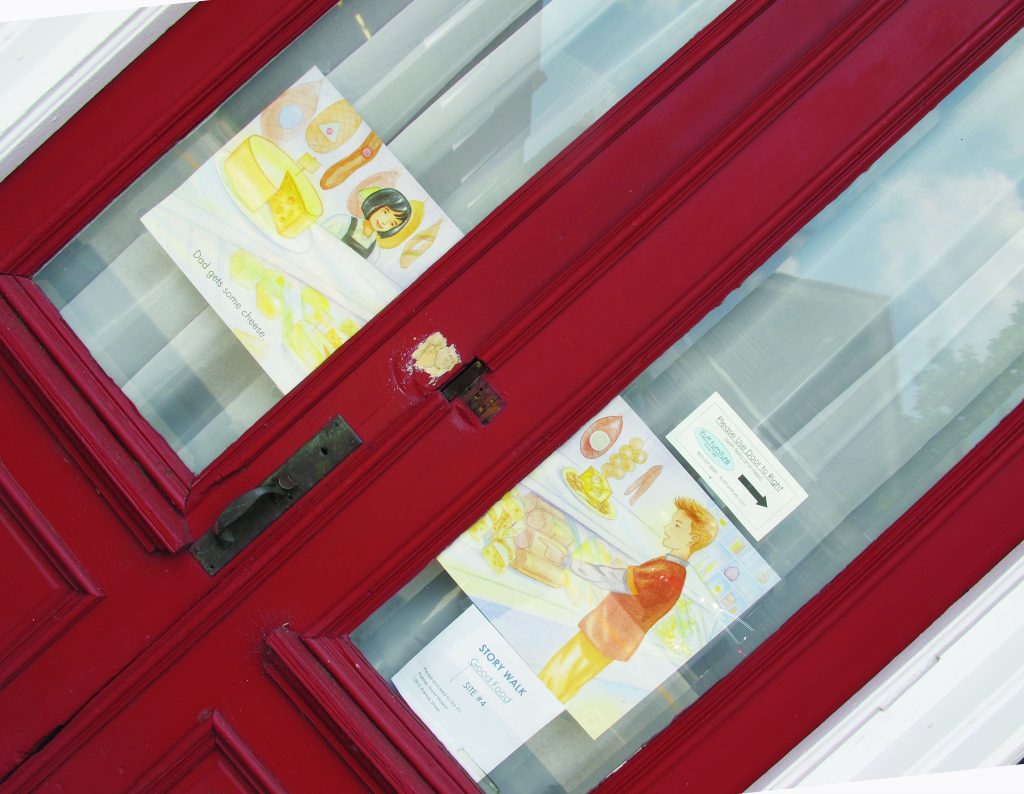
    The giant pages of the book are taped in merchant windows up and down the streets of Ridgeway and Winnsboro, and the book is read as the reader moves down the street from store window to store window.

    Book pages pasted on Ruff Furniture doors in Ridgeway.

    Participants read each page and then follow the sequential numbers and simple instructions telling them where to walk and find the next page.

    “This is a committee project initiated by the 15 members of Eat Smart Move More Fairfield,” explained the group’s chairperson, nutritionist Earnestine Williams. “We teamed up with the Fairfield County Libraries for the project.”

    This combined effort to get folks out and moving and kids from pre-kindergarten through third grade reading more this summer is William’s first effort in this format.

    “The merchants have been very supportive,” said Williams.  “If the program is well received, we would continue it again next year.”

    “The Good Food book has 28 pages”, she explained.  “I believe we have 7 or 8 merchants in Ridgeway, and 14 merchants in Winnsboro with the enlarged pages in their windows.”

    In Ridgeway, participants start at R. H. Lee & Co, 100 S. Dogwood Avenue, and proceed down Dogwood and around the block to Palmer Street and down both sides of Palmer Street.

    In Winnsboro, the walk starts at Napa Auto Parts, 152 N. Congress Street, and continues down Congress Street, crosses over and continues down the opposite side of the street to finish at the library.

    “We have already had some children complete the walk,” Beth Bonds, Circulation Desk Manager for the Fairfield County Library in Winnsboro, said.  “After the participants have finished the whole walk by reading the book pages either in Ridgeway or Winnsboro, they can then come to the main branch of the Library in Winnsboro and receive a certificate, a prize and have their photo taken.”

    The walk began June 8 and will run until July 31, 2019.

    Sponsors include the Fairfield County Library, Eat Smart Move More Fairfield and Fairfield Community Coordinating Council.

    For more information, Contact Williams at 803-635-1052 Ext. 2050.

  • County delays action on library purchase

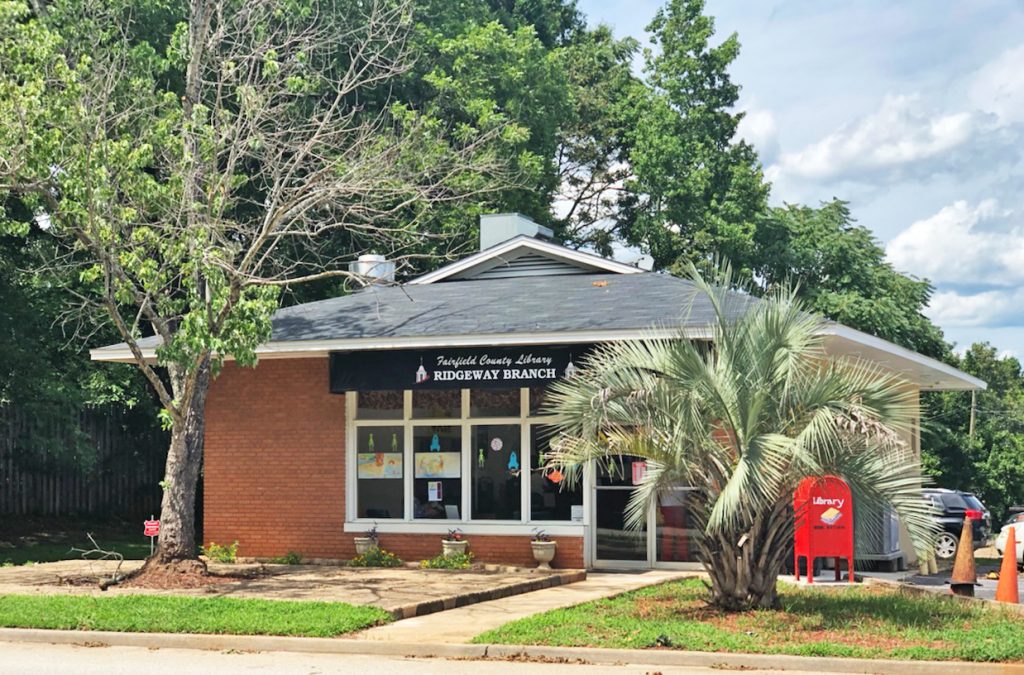
    The county recently renovated this building for the Ridgeway library, located on Palmer Street in downtown Ridgeway. The county is currently leasing it with an option to purchase.

    WINNSBORO – Plans to purchase a permanent home for the Fairfield County Library branch in Ridgeway are on hold for now.

    At a recent administrative committee meeting, council members voted unanimously to table a proposal to buy property the library is currently leasing on South Palmer Street.

    It was not immediately clear when the matter would return for a vote, though it will likely be later this year.

    That’s because the county wants to pursue federal grant opportunities that could potentially unlock more money to help cover costs of buying the property at 235 S. Palmer Street in Ridgeway.

    County Administrator Jason Taylor said up to $500,000 is available through the Community Development Block Grant, or CDBG, program.

    “It would be beneficial for us all if we try to secure the grant,” Council Chairman Neil Robinson said.

    Grant money would be especially helpful since the sale price is substantially higher than the property’s estimated value.

    Eric Robinson, the county’s library director, said at the June 24 committee meeting that the property owner is asking $169,900.

    Fairfield County property records, however, list the property’s fair market value at $66,700.

    The property last sold for $85,000 in June 2005 and was then deeded over to the current owner, Lok-Yan Yip Patterson for $1 in 2008, records state.

    “Has anyone tried to bargain with the lady?” Councilman Jimmy Ray Douglas asked.

    “Feel free to do so. She’s a shrewd business person,” Eric Robinson, the county library director, answered.

    “I know she is. She’s had the place remodeled and now is trying to sell it for three times what it’s worth,” Douglas replied.

    Robinson said he and the board prefer to remain in the existing building since the South Palmer Street is an ideal location. He said the library would incur additional costs if it had to move, citing the integration of technology in the current facility.

    “If you read the history on this, we’ve bounced around Ridgeway. We’re into our sixth different building,” Robinson said. “Because we’ve sunk so much money into it and the county has sunk so much money into it, we would like for this to be our permanent location.”

    At present, the library board has said it’s willing to offer about $90,000 to buy the facility, which is essentially half the current asking price plus any rent remaining on this year’s lease.

    Library officials, however, said the owner signaled she’s not interested in that amount because she would lose rent revenue in the long term.

    County attorney Tommy Morgan said there’s no harm in delaying action on buying the property. He said the lease agreement allows the county to renew for another two years, with rent only increasing from $850 to $892 a month to account for Consumer Price Index increases.

    In the meantime, negotiations over a final sale price can continue. The CDBG avenue also requires multiple appraisals, and would also work in the county’s favor.

    “The county is pretty much in the cat-bird seat when it comes to that,” Morgan said.

  • Council to raise franchise fees

    BLYTHEWOOD – Mayor J. Michael Ross announced Friday morning that council is planning to raise the franchise fees that town residents pay on their power and water bills from the current three percent ($3 per $100) to five percent ($5 per $100).

    The revelation came during the public hearing section of a special meeting called to grant new 30-year non-exclusive franchise agreements to both Fairfield Electric Coop and Dominion Energy.

    Lake Ashley resident Edith Norris came to the meeting with questions about the fee.

    “I understand that this fee is collected on our light bill on behalf of the town and that Dominion and Fairfield Electric give this fee back to the town. Is that standard for all the town residents? How much does the town collect and what is that money used for?”

    Ross explained that the three percent franchise fee is across the board for all residents in the town and that the town collects franchise fees not just from the power companies, but from insurance companies, Winnsboro water service and other companies that do business in Blythewood.

    “This current agreement with the power companies has been in effect since 2001 – 18 years. And it’s remained the same, three percent,” Ross said.

    He explained that Fairfield Electric returns about $140,000 in fee collections annually to the town and Dominion returns about $70,000.

    “Since there is no taxation in Blythewood, this is one of the few revenue streams we have to operate with,” Ross said. “So all these fees usually go back into the general fund for operating the park, paying employees and other things since there is no tax millage,” he said.

    “It’s been three percent for 18 years, so it’s time to go up on the fee, like all the other municipalities have done. Things have gone up more than three percent over 18 years and we don’t have another way to raise money for operating expenses other than building permits and business licenses,” Ross said.

    “I understand, but how does a franchise fee differ from a tax?” Norris asked.

    “I don’t know,” Ross said, looking to town attorney Jim Meggs for guidance. “It’s just a word,” he said, shrugging.

    “It looks like a tax to me,” Meggs said.

    “Only the residents who live in the town limits pay the fee,” Norris said. “Before we annexed into the town, we didn’t pay this fee. So, it is a tax, but it’s called a fee.”

    “The town requires the power company to collect this fee,” Morgan Harrell representing Dominion, added. ”The power company doesn’t require the town to pay it.”

    Meggs weighed in with some clarity on the issue.

    “Under our state constitution, municipalities have authority over streets and rights of way inside the town limits. We even have some say about the Department of Transportation’s rights of way,” Meggs said. “The constitution requires that if people use the town’s streets’ right of way, they have to have a consent or franchise agreement with the town. It’s a traditional municipal thing across the state. Counties don’t have franchise authority, so you don’t pay fees in the county.”

    “I realize it’s a way of collecting tax,” Norris said, pressing the issue, “but a franchise fee can’t be deducted on my income tax. So why isn’t it called a tax?”

    “I don’t know,” Ross finally said. “It is what it is. It gives the town the money it needs to run the town.”

    While Norris said that because the town has grown it is therefore collecting more money in franchise fees even though the fee has not increased.

    Ross countered that there is more work to do and pay for when there are more people in the town. He said it is not final that the fee will be raised to five percent. He said it may only go up one percent.

    Harrell pointed out that the town can also raise or lower the fee at any time during the 30-year contract. The fee, she said, is not bound by the contract.

    Ross said the new fee will be finalized at second reading and that any change in the fee would go into effect Jan. 1, 2020.

  • R2 board names new officers

    Manning

    COLUMBIA – Richland Two’s board of trustees has new leadership.

    James Manning is now chairman, taking over for Amelia McKie, who remains a voting member.

    Teresa Holmes was named vice chairman and Cheryl Caution-Parker became secretary, according to votes taken at the June 25 meeting.

    Manning and Caution-Parker were unanimously voted into their new positions. The board voted 4-1 to make Holmes vice chair, with McKie and Caution-Parker abstaining. James Shadd cast the lone dissenting vote.

    Holmes

    McKie had nominated Shadd for vice chair, but that vote failed 4-3, with McKie, Caution-Parker and Shadd voting in the minority. Shadd declined a separate nomination to serve as secretary.

    Manning said he’s appreciative of the support the board displayed in nominating him as chairman. His goals include successfully managing the school’s building program, improving school safety and boosting student achievement.

    “I want to continue to focus on those things, to make sure that we do the best we can,” he said.

    Caution-Parker

    One board issue that’s arisen lately is public participation at meetings. In recent months, some residents have complained that the former chair altered the order in which speakers registered to muffle public criticisms.

    Manning said he plans to follow board policy.

    “Public input, like everything else, is managed through our policies,” he said. “I do think that’s something we need to take a look at, but ultimately the board chair should not have any undue influence in that process.”

    The board officer turnover comes at a controversial time for the Richland Two board, with one member owing nearly $51,000 in ethics fines and another facing a criminal disorderly conduct charge.

    In July 2018, the S.C. Ethics Commission fined McKie $41,000 for various campaign violations.

    The most current ethics commission’s debtor list available online, which is dated Jan. 3, 2019, still lists McKie’s fine at $41,000.

    However, documents obtained by The Voice state that the fine increases to $50,750 if McKie misses certain deadlines.

    Documents state that McKie was supposed to pay the first $20,000 by Dec. 31 and the remaining balance by June 30.

    An Ethics Commission representative said via email Monday that there has been no change in McKie’s status.

    Richland County resident Gus Philpott, a frequent critic of the board, said he’s looking forward to seeing positive changes with new board leadership at the helm.

    However, it still doesn’t change his belief that McKie and Holmes should step down from the board.

    Philpott maintains that McKie and Holmes aren’t legally allowed to serve because neither filed Statements of Economic interest forms until after taking the oath of office. State law prohibits elected officials from taking the oath when SEI forms haven’t been filed.

    “They are, in my opinion, not legal board members,” Philpott said. “Teresa Holmes was nominated for the position of vice chair and was elected. My contention is since she is not a board member, she cannot serve as an officer.”

    Asked about Philpott’s comments, McKie provided the following response:

    “One of the most sacred aspects of our American democracy is that every citizen is entitled to his/her own opinion, regardless of the accuracy of the same. The day that ceases to be is the day we no longer embody a democracy.”

    Holmes said she doesn’t plan to step down, and disputes that she’s not legally qualified to serve on the board.

    “There is no reason that he should continue to say that,” Holmes said. “He knows that that’s not true.”

    Elkins-Johnson is also facing legal difficulties.

    In January, the Richland County Sheriff’s Office charged her with disorderly conduct following an altercation occurring after a board meeting.

    According to a police report, the suspect shouted obscenities and threatened relatives of a state senator and the board chair.

    The Richland County Public Index lists a tentative court date of July 22, though the case has been continued several times.

  • Dickerson led 7-3 vote to rezone golf course for homes

    More Than 120 Crickentree Residents Attended to Oppose Rezoning

    COLUMBIA – Richland County Council dimmed the hopes of more than 120 Crickentree residents who were in attendance at a public hearing Tuesday night, that council would save their quiet, treed, large-acre neighborhood from hundreds of homes being built on a former golf course along the border of their neighborhood.

    At the urging of their county council representative Joyce Dickerson, Council voted against them, 7-3, Tuesday evening to approve the first reading of a request by Texas investment firm E-Capital to rezone the 183-acre former golf course property from TROS (Traditional Recreational Open Space) to RS-LD (Low Density Residential).

    While the County planning staff recommended the zoning, the county’s planning commission voted 5-2 on June 3 to recommended that council reject the rezoning request on the basis that “a substantial portion of the property in question is zoned TROS and in light of the stated purposes within section 26-85, including preservation of conservation and open space, and to lessen the potential diminution of property values and to provide for a community-wide network of open spaces.’

    Councilman Bill Malinowski said he had researched TROS zoning and that he found it had been created by the Richland County Conservation Commission for government owned land only and that it would not be appropriate zoning for a golf course.

    E-Capital’s attorney Robert Fuller spoke at the beginning of the public hearing, but he did not mention the number of houses proposed on the property or the width of the buffer promised as he had done in past meetings.

    “E-Capital’s silence on the number of homes and width of buffer promised leaves the residents in the dark, now, as to what the company plans to build,” Resident Russ St. Marie said following the meeting.

    In previous meetings the numbers have ranged from 249 homes down to, more recently, 207, but according to the county’s planning information on the rezoning, as many as 672 (less 20 percent for infrastructure) could be built on the 183-acre parcel under RS-LD zoning.

    According to the County’s Planning/Zoning Director Geonard Price, the developer would be allowed to build the maximum number of homes allowed and would not be held to the promised amount.

    Before calling for the vote, Dickerson took the opportunity to vent her feelings about the Crickentree residents, Blythewood town government, LongCreek Plantation neighborhood and others.

    Without further explanation, Dickerson said she had watched as Round Top neighborhood “has been squeezed by Crickentree and LongCreek Plantation.”

    And she didn’t stop there.

    “I have been challenged with numerous threats and correspondence containing fabricated information, for instance, that Blythewood requested to put a park…that community is not in Blythewood. So for someone on Blythewood planning commission to tell you they can put a park there, that’s fabricated information,” Dickerson read from a prepared speech.

    Crickentree is located in 29016 which is in the Blythewood community, but not the town limits.

    When asked if she would provide the threatening emails to The Voice, Dickerson said she would have to check with the county’s attorney before she could share them.

    Dickerson also reported that she had received many emails urging her to vote for the rezoning. However, no one except the E-Capital representatives spoke in favor of the rezoning during the public hearing.

    Noting that residents had said over the past year that if the TROS in their neighborhood were rezoned, it could cause a domino effect for other nearby golf communities, Dickerson pushed back.

    “I am not looking at Windermere, Woodchuck [sic], Spring Valley, Wildwood, Longtown [sic]. All of you seem to be in a gated community with deed restrictions on some of your properties.

    Due to a large turnout, many of those residents who came to the meeting were held in the lobby until near the end of the meeting. They were told by a security officer that seating was over capacity. Some left while others, including The Voice reporter, were not allowed in until the proceedings were almost over.

    Council will have two more votes on the issue. Tuesday night was the only opportunity residents will have to publicly address the issue before council.

  • JWC operating in the red

    JENKINSVILLE – Recently released tax returns show the Jenkinsville Water Company (JWC) continues to operate at a financial loss.

    For 2017, the latest year IRS data was available, JWC reported $439,560 in revenue versus $511,097 in expenses, leaving a negative balance of $71,537, tax records show.

    At JWC’s annual meeting in January, the water company reported a net operating loss of $21,537 for 2018. Tax returns for that year were not immediately available.

    JWC reported six-figure deficits in 2015 and 2016, tax records show.

    Taken at face value, JWC operating losses total $374,021 since 2012. Operating losses have been reported every year since then.

    In January, Ginyard denied that the water company was operating at a deficit. He attributed the variance to depreciation expenses.

    “It’s not a deficit. We’ve had no tax problems,” Ginyard said. “What you saw on the loss was depreciation.”

    On Tuesday, Ginyard said he wasn’t aware of any deficits and deferred comment on financials to the water company’s accountant.

    “You’ll have to talk to our CPA to get to our books,” Ginyard said. “I’m not going to make comments about anything I don’t know about. I don’t know anything about tax forms showing a $71,000 deficit.”

    For the 2017 tax year, the water company reported $86,168 in salaries, down from $109,223 in 2016, tax records show.

    Overall expenditures dropped nearly $40,000, falling from $551,013 to $511,097, a difference of $39,916. However, revenues also dropped, plunging from $441,790 to $424,929.

  • Blythewood cut-flower farm on AG + Art tour

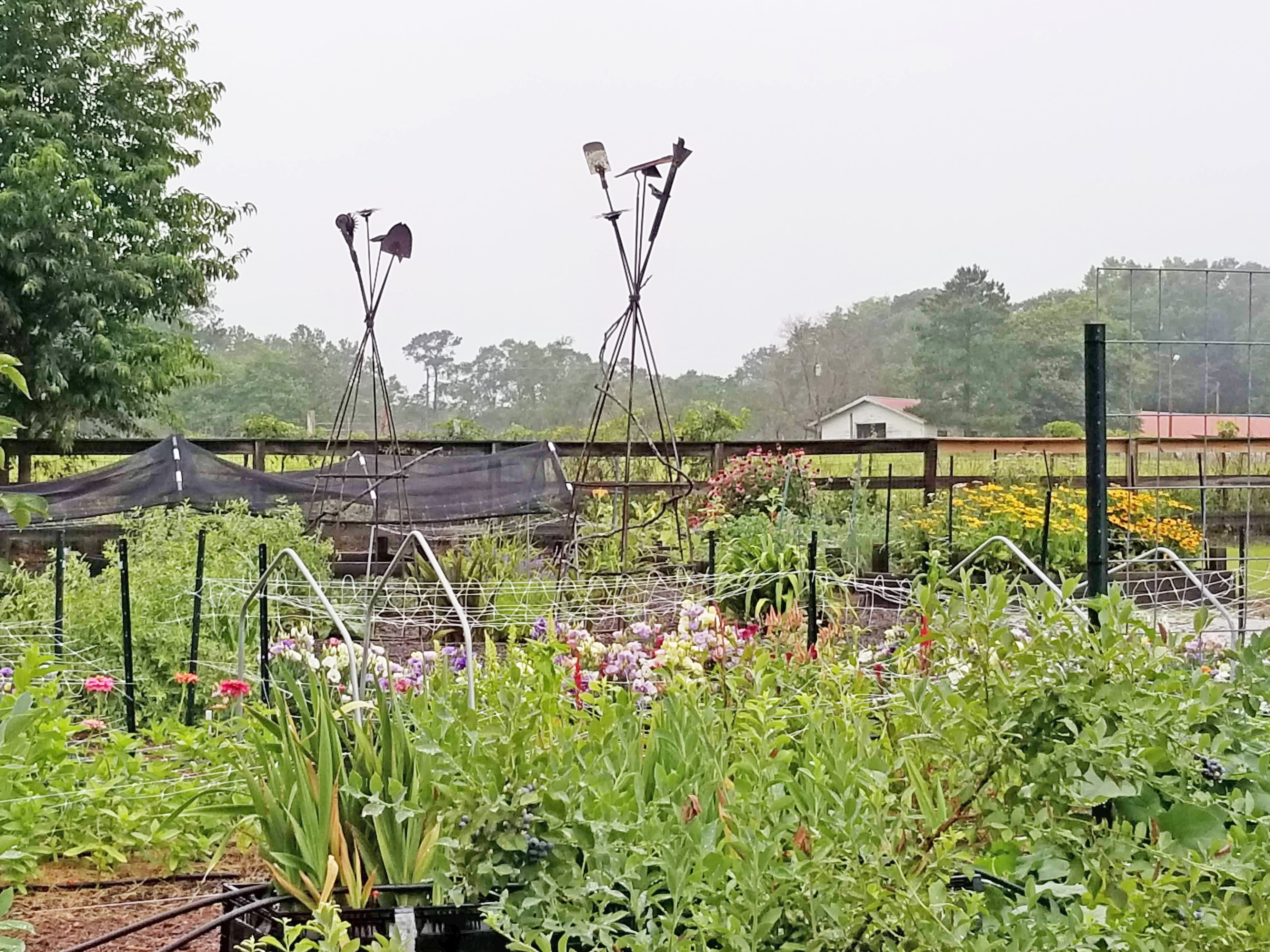
    Purple Tuteur farm is named for the unique trellises (tuteurs) in the garden.

    BLYTHEWOOD – Influenced by her grandmother, who grew roses, Linda Bradley has had a life-long love of flowers.

    “As I grew,” Bradley said, “so did my interest in growing flowers. I enjoyed working in our home garden with my father. In college, I studied botany and horticulture, among other things.”

    In the mid-2000s, Bradley began improving the soil in her backyard gardens and planting perennials.

    By 2016, after becoming credentialed as a Master Gardner and retiring from a lifetime of work in IT, Bradley said she continued to expand her knowledge and relished being part of a community of avid growers.

    “This was also the year when my mother passed away, and I began this journey in earnest,” Bradley said.

    So it was only natural that she would launch a new career in cut-flower farming. Bradley’s flower farm, Purple Tuteur, is located on Langford Road in Blythewood.

    This weekend, Bradley’s farm will be one of four Blythewood farms showcased in the inaugural Richland County Ag + Art Tour.

    “Honoring the memory of my family through this mission gives me great joy,” Bradley said. “I remain connected to them while making others smile through the beauty of fresh flowers,” Bradley said.

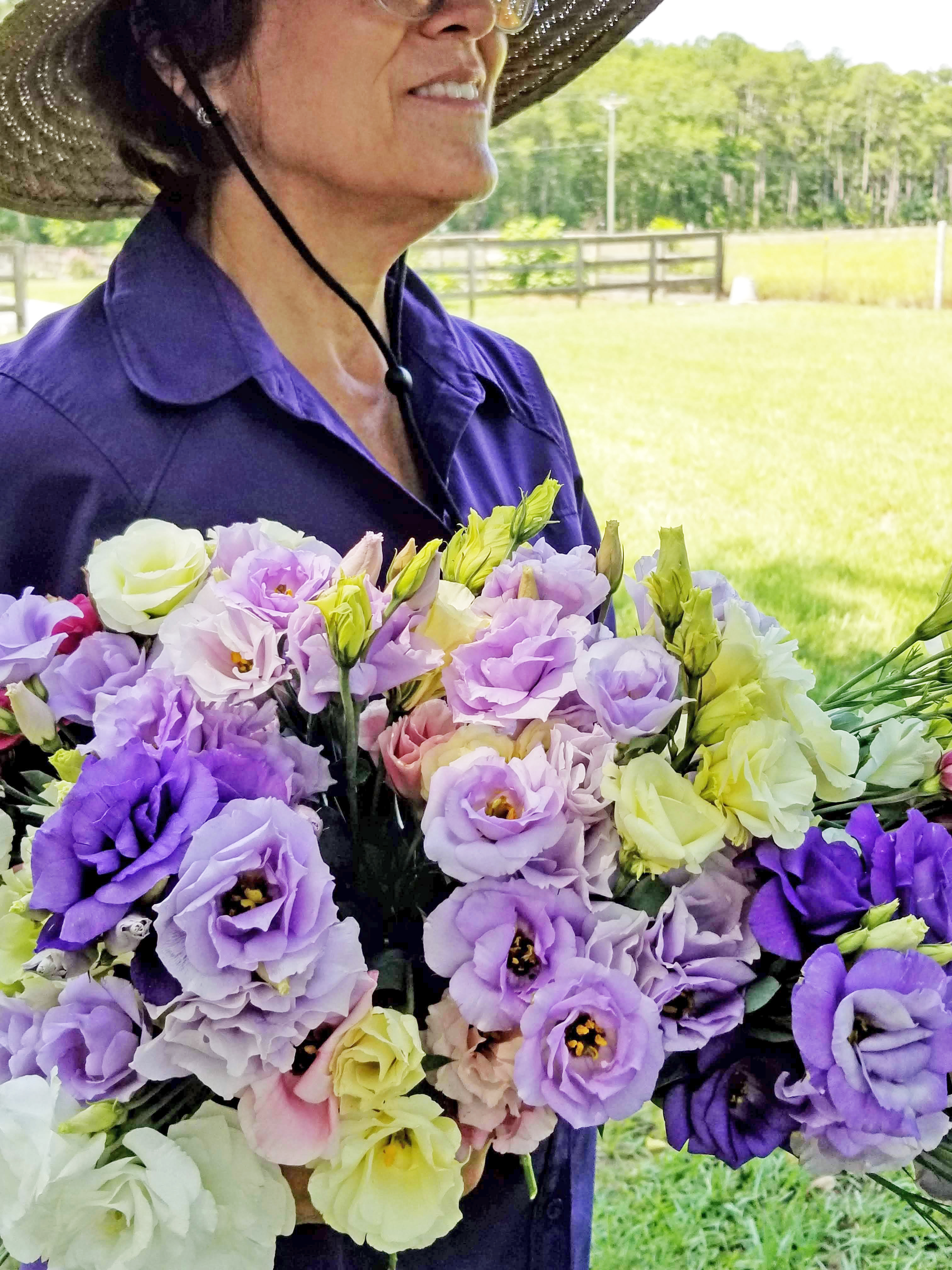
    Farm owner Linda Bradley gathers flowers.

    The farm’s name, Purple Tuteur, is derived from a sort of garden trellis, or tuteur. Two imposing tuteurs, stand about eight feet tall in Bradley’s front garden.

    Traditionally, tuteurs are used to elevate and support plants in the garden and are usually made of a few sticks and some twine tossed together to corral wayward tomato plants, or they can be permanent and ornamental structures.

    “The free standing trellises add structure and interest and are used to save room in the garden,” Bradley said. “By serving as a frame for plants to grow up instead of sprawling on the ground, more can be grown in the same space.”

    Bradley’s tuteurs, made of rebar, were created and installed by gardener Jenks Farmer, a popular gardening contributor to Southern Living Magazine and other publications.

    One of Bradley’s tuteurs is painted purple and the other one has been allowed to rust naturally like abandoned farm machinery in the field.

    While many cut-flowers available in the United States are imported by airplane from South American countries with dubious policies on chemicals and labor, flowers harvested and delivered to the customer without ever seeing the inside of an airplane or a tractor-trailer are fresher and last longer in the vase, according to Bradley.

    She has different markets for her flowers. She sells bouquets at the Lake Carolina Farmers Market every week and alternates between Blythewood Farmers Market and Sandhills Farmers Markets, attending two markets each week.  She also delivers fresh bouquets to her customers’ homes and businesses through a subscription bouquet service.  In addition, she sells flowers to local florists and event planners.

    “Local flowers are truly fresh, often cut the same day that you see them,” Bradley said. “Fresh flowers last longer, smell better and they contribute to our local economy.”

    Eventually, Bradley said she would like to host workshops on gardening topics at the farm.  For a complete list of flowers she grows and the seasons they are available, visit her website at www.purpletuteur.com.

    To visit Purple Tuteur Farm, on Langford Road, join the Richland County Ag and Art Tour this coming weekend, June 29 and 30.  It is a free event that allows you to tour local farms while also enjoying local artisans.

    At Purple Tuteur, wander the gardens while seeking solutions to your gardening woes from Master Gardeners there.  Several artisans will be painting, making jewelry and throwing pottery at the farm.

    While in Blythewood, visit Doko Farm on Cedar Creek Road and see their heritage pigs, turkeys, lambs, and goats and take home some pasture-raised meat.  Artisans, including a woodworker, painter and a bluegrass band will be performing.

    Head a little farther north from Doko Farm and visit Fabel Farms on Hinnants Store Road to get some vegetables, honey, and wool products and see more artisans.

    Finally, head south to visit Carolina Bay Farms in Hopkins and City Roots Farm in Columbia.  The farm tour will run on both Saturday, June 29, from 10 a.m. – 4 p.m. and Sunday, June 30, from 1-5 p.m.

    For more details, including the addresses of the farm, what each farm offers and times for guided tours, visit https://agandarttour.com/richland/

  • Council passes $1,670,875 budget

    Mayor, Council Get Pay Raises Dec. 1

    BLYTHEWOOD – Town Council passed the first of two readings on its $1,670,875 FY 2020 budget Monday night, exceeding last year’s budget by $105,761.

    The only change to the town budget since the final workshop in early June is an $80,000 expense from the town’s hospitality fund for a SC Department of Transportation (SCDOT) project to add decorative, 8-foot high, black-coated safety fencing and sidewalks along each side of the Blythewood Road bridge over I-77.

    Reviewing the General Fund revenue, Cook said building permits and fees are projected at $180,679, down slightly from the $202,111 budgeted for 2019. Building and permit fees came in at $173,389 in 2017; $200,437 in 2018 and the actuals at the end of April were $150,565.

    Cook said fees for business licenses from both inside and outside the town are expected to be slightly higher than the current year, and that revenue for franchise fees next year is looking good, projected to be $273,457, up from $250,000 in 2019.

    Revenues and expenses for the governing body for 2020 are on par with 2019, Cook said. Total administration budget is projected to increase almost $45,000, going from $396,096 to $441,978, with almost $40,000 of that increase allocated for a 2.5 percent cost of living raise and a 3 percent merit increase for town employees.

    Administrative salaries are up about $10,500 over last year’s budget. Part of that increase is attributed to a 20 percent across the board raise for the mayor and council members. With the pay raise, the mayor will receive $10,800 annually and council members will each receive $7,200 annually.

    Mayor J. Michael Ross said he requested a $5,000 increase in community promotions from $7,500 to $12,500 for advertising and other promotions that he said might come up during the year that are not budgeted for.

    Costs for VC3, the Town’s computer software company, that Cook said maintains the town’s computer systems, will increase from $46,350 to $58,320. Some of that cost, he said, is a one-time cost that will go down some next year.

    In anticipation of updating the Town’s comprehensive plan, contracted services with the Central Midlands Council of Governments will increase from $20,000 to $35,000.

    The increase from $261,820 to $268,444 for Public Works is attributable to increased costs in contracted services for additional irrigation and landscape beautification projects in the Town. The Christmas committee also received an increase of $1,000 over 2019, and inspections and code enforcement expenses are expected to increase about $10,000.

    The budget for Parks and Recreation will be reduced by about $40,000 in 2020 due to an annual cost savings of $19,000 as the result of eliminating the park mowing contract and purchasing a mower for Town Hall to do the mowing in-house.

    Cook said there will be some increase in the Parks and Recreation budget, however, to allow for the purchase of a new piece of playground equipment and the addition of benches and possibly a shade in the playground area.

    Council addressed the Blythewood Chamber of Commerce’s financials at the May 23 meeting, and the Chamber declined to make its annual request a $17,500 economic development work subsidy (previously called a grant by town officials.) The chamber did however, ask for and receive $3,500 for an ‘elite partner’ chamber membership for the Town government at the premiere level.

  • Fireworks set for July 3

    BLYTHEWOOD – The Town of Blythewood will host its fifth annual July Fireworks bash on Wednesday, July 3 from 4 – 11 p.m. with music, food and a park full of thousands of fireworks fans from Blythewood, Fairfield and beyond.

    The Fireworks, Food and Music event will feature about 25 food vendors, five on-stage music groups and a full half hour of fireworks that will light up the sky over Doko Meadows Park beginning at 9:30 p.m.

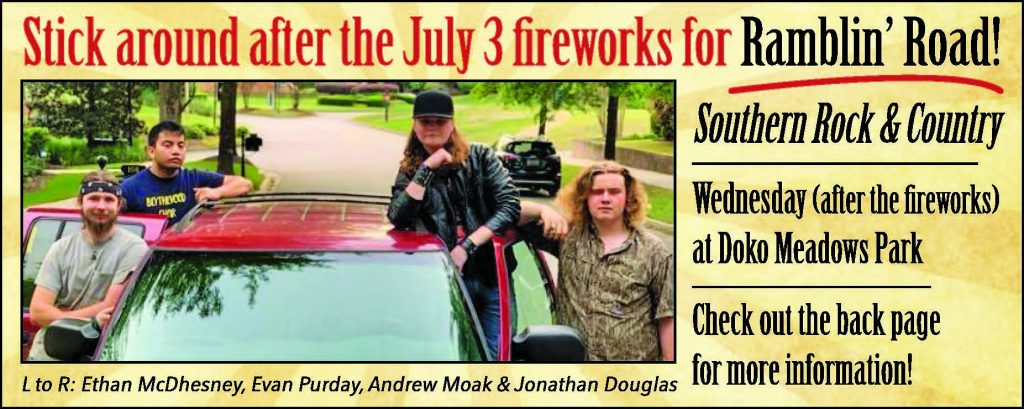
    Featured artists include Eboni Ramm, Blues Deluxe, A.J. Sanders and the DB Bryant Band. This year, there will be something new on the program – an after-fireworks performance featuring local musicians Ramblin’ Road from 10 p.m. to 11 p.m.

    Food and drink vendors will include Doko Smoke BBQ, McNulty’s Taproom, Scotties, The Haute Dog Lady, Sweet Peas Ice Cream, The Donut Guy, Bessie’s Sweet Delights, Brain Freeze, Kona Ice, Fishin’ Fellas, and others. Beer sales will be available. No coolers please.

    The event is free. Bring lawn chairs or a blanket to sit on and show up with the kids.

    For more information, call town hall at 754-0501.