Category: Schools

  • R2 board secretary resigns when asked to verify that McKie is legally seated

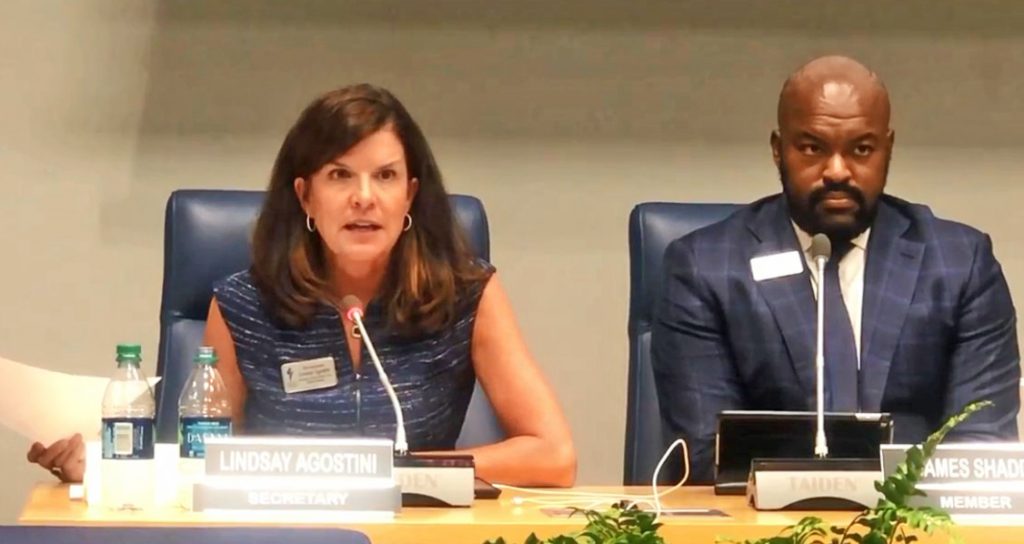
    R2 school board member Lindsay Agostini resigns as secretary. James Shadd, right, was elected to replace Agostini as board secretary. | Barbara Ball

    COLUMBIA – Chairwoman Amelia McKie’s ongoing ethics problems have prompted another member of the Richland 2 Board of Trustees to resign her officer position.

    Lindsay Agostini stepped down as secretary of the Richland Two board, but still remains on the board as a voting member. Agostini notified McKie and Superintendent Dr. Baron Davis of her decision via email Friday.

    In a prepared statement read at Tuesday’s meeting, Agostini said she consulted her personal attorney after raising concerns about two documents she says she was asked in her position as secretary to sign.

    Both documents alluded to lingering legal and ethics issues that have haunted McKie for months.

    “With these questions in mind and under advice of legal counsel, my principles would not allow me to sign these two documents,” Agostini said. “Therefore, I felt it was in the best interest of the district for me to resign as board secretary but continue in the capacity as a member of the Board of Trustees.”

    Neither McKie nor other trustees at Tuesday’s meeting responded to Agostini’s statement.

    One document, titled “Certificate of Incumbency,” asked Agostini to confirm McKie as the board chair. It also stated the dates of McKie’s chairmanship are July 1, 2018 to June 30, 2019, Agostini said.

    The “Signature and No Litigation Document,” which related to the recently passed $468.4 million bond referendum for school building upgrades, was modified to include verbiage inferring that McKie is legally allowed to serve on the board in spite of failing to follow state ethics law.

    “The School District is aware that members of the public have called for the resignation of the current Board Chair because of fines owed by the Board Chair to the South Carolina State Ethics Commission because the Board Chair did not have on file a current Statement of Economic Interest prior to being sworn in to a second term as a member of the Board,” the document stated.

    “The School District is not aware of any litigation, regulatory effort, or official proceeding challenging the Board Chair’s right and title to serve as a Board member or Board Chair,” the document continues.

    Agostini said she refused to sign both documents since she said she cannot, in fact, verify that McKie is legally allowed to serve.

    “This presented several questions to me. Is this normal wording? Why is an extra paragraph needed? Have we ever included wording like this in a Richland Two bond document?” Agostini asked. “We are asking our community for half of a billion dollar bond and we need to include this language?”

    McKie owes nearly $52,000 in ethics fines for failing to file various campaign disclosure reports.

    She also didn’t file statements of economic interest, or SEI, forms from 2015 to 2018 until December 2018, the S.C. Ethics Commission’s online database states.

    McKie did not file the forms until after The Voice sought comment from her about the missing forms. March 31 is the deadline to file SEI forms in a given year, according to the Ethics Commission.

    Section 8-13-1110 of state law says no public official “may take the oath of office or enter upon his official responsibilities” unless an SEI form is filed.

    McKie has been serving on the board since her re-election in November 2018. She didn’t file her SEI forms until Dec. 4, nearly a month later.

    McKie’s apparent ineligibility to serve has prompted several residents to call for her and other non-compliant trustees to step down.

    “The proper action is for Ms. McKie and [board trustee Teresa] Holmes to stand up now and step away from the board immediately,” Richland County resident Gus Philpott said at a Richland Two meeting in March. “Ms. McKie is not legally a board member and so cannot be chair of this board.”

    In January, when The Voice asked the state ethics and election commission spokespersons which agency is tasked with enforcing the eligibility statute, each agency punted the issue back to the other.

    “I would think compliance would be a question for that body [the ethics commission],” Chris Whitmire, spokesman for the S.C. Election Commission, told The Voice in January.

    Meghan Walker, the ethics commission’s director, said only the election commission has the power to remove a candidate from the ballot. She said the ethics commission only fines candidates for non-compliance.

    “We don’t file an injunction or anything,” Walker said.

    Section 8-13-1520 further says violations of the ethics chapter are misdemeanors punishable by up to a year in prison, a $5,000 fine or both, though there’s been no indication that charges will be filed.

  • 6th Annual Hall of Fame Induction

    WINNSBORO – The 6th annual Fairfield County School District Hall of Fame gala was held April 27 in the school gym. A welcome by Tracie Swilley, Principal of FCHS and the introduction of the inductees was followed by dinner and entertainment by Seven Show Band. This year’s inductees include Russell N. Feaster, Sr., Jessie C. Gaston, Lloyd J. McGriff, Carolyn P. Pierce,  James E. Smalls (posthumously) and Gloria B. Thomas.

  • Chalk Walk

    Photo: Martha Ladd

    WINNSBORO – Teachers, students, parents and friends joined the annual Chalk Walk at Fairfield Central High School last week to celebrate education and raise funds for scholarships. After stretching and warming up, the walkers made several turns around the track.

  • School district proposes $45.3M budget

    WINNSBORO – No tax increase is anticipated in next year’s school district budget, though property owners still may wind up paying higher school taxes.

    At last week’s school board meeting, Chief Financial Officer Kevin Robinson said the proposed $45.3 million budget includes about $4 million in additional revenue, with $2.9 million attributed to increased tax collections.

    Robinson attributed the revenue increase to increases in property values.

    “The bulk of it is really due to increases in the property tax value, particularly with business property tax values,” Robinson said.

    The Board of Trustees voted 6-1 to approve first reading of the budget, with Paula Hartman casting the lone opposing vote. Two more readings are required before the budget takes effect.

    Hartman said she preferred using the windfall to lower debt service millage.

    “We made reference that, if down the road we had extra money, we would reduce the millage,” she said. “That’s what I suggest the board think about doing.”

    As proposed, the budget contains several moving parts, though most address teacher and employee salaries.

    The draft spending plan calls for appropriating $2.8 million for retention bonuses and associated fringe benefits. One million of that amount will come from the fund balance as a transfer to the general fund, with the rest coming from increased tax collections, Robinson said.

    In January, Superintendent Dr. J.R. Green announced a plan to offer every certified employee a $5,000 bonus to attract and retain teachers. Non-certified employees would receive $3,000.

    At $49,288, Fairfield County’s average annual teacher salary ranks 37th out of 82 districts in South Carolina, according to state report card data.

    Fairfield’s budget also reflects state mandated teacher raises recently approved by the S.C. General Assembly, which approved increasing teacher pay by 4%.

    However, the state is only funding a portion of the 4% (about $700,000) with Fairfield funding the rest, according to budget estimates.

    Board trustee Henry Miller expressed frustration over what he called an unfunded mandate.

    “They do it all the time,” Miller said. “In Washington, D.C., they just send it down and call it an unfunded mandate. That’s what the state just did to us.”

    The budget also shows an increase of $38,141 in student transfer payments to the Chester County School District, traditionally a major rub of the Fairfield school board.

    In 2012, a judge ruled that the Fairfield school district must subsidize students transferring into Chester County. The ruling impacts mainly students living in the Mitford area.

    Ironically, the Chester transfer payment is rising because the district there anticipates increasing revenues, Robinson said.

    “Let’s say, hypothetically, a giant tire manufacturer appears in Chester and has a huge economic impact, and it increases their tax rolls,” board chairman William Frick said. “Because they’re now receiving more taxes, we’ve got to pay them more money?”

    Robinson said that’s correct because while Chester County receives state per pupil funds for Mitford students, it doesn’t receive local support.

    “We’re paying the portion of local taxes that would be attributable to [transfer] students if they were in Chester, which means we’re basing the payment on Chester’s local tax revenue,” he said. “If their local tax revenue goes up, that means the amount we’re paying per student will go up.”

    “So if their economy does better and they get more taxes, we have to pay Chester more money?” Frick asked, drawing chuckles from the board.

    “Unless we have a dramatic decrease in the number of students,” who transfer to Chester, Robinson replied.

  • R2 board OKs stricter conduct for teachers

    COLUMBIA – Weeks after brushing aside adopting greater accountability measures for their own conduct, the Richland Two school board voted 6-0 for similar conduct rules for district staff.

    On March 26, board members combed through the five-page policy, which lists numerous behaviors classified as “misconduct.” Many behaviors focus on teacher-student interactions.

    Board vice-chair Monica Elkins-Johnson said she thought the staff conduct policy might discourage students from confiding with teachers who they trust.

    “Not all students have a relationship with school counselors,” Elkins-Johnson said. “This [policy] is stating that they can only have these conversations with a school counselor.”

    Superintendent Dr. Baron Davis said the district always encourages dialogue between students and staff. He said the policy is aimed at students in crisis situations, such as suicide.

    “Advice is absolutely not counseling,” Davis said. “We just want to encourage a student, [who] for example is having suicidal [thoughts] or harming themselves, we need to immediately get that student to a trained professional to de-escalate that situation.”

    Board member Teresa Holmes expressed another definition of misconduct, which includes “refusing to follow a supervisor’s instructions and directions.”

    “It’s too subjective that you have to follow instructions without them being clarified,” Holmes said. “You could tell me to go down the hall and if I don’t go, I didn’t follow your instructions. It’s too subjective.”

    Discussion of staff conduct comes on the heels of an ethics controversy involving a quorum of the board.

    At least three members have been fined by the S.C. Ethics Commission. Board chair Amelia McKie owes the most at $51,750.

    In February, board members voted 4-3 against the policy revision that would’ve authorized stripping board members of officer titles “for cause,” provided a supermajority approves.

    Board members found in violation would still retain their elected post.

    Those voting in the majority to reject the measure took issue with the phrase ‘for cause,’ calling it vague.

    Board member James Shadd III, who was fined $13,000 by the ethics commission in 2014, took issue with the proposed misconduct policy’s “for cause” terminology, voting against the proposed policy on Feb. 12.

    He suggested the policy proposal was reactionary, saying sanctions for legal troubles some board members face already exist in state law.

    “What does ‘just cause’ mean?” Shadd III asked.

    A search for the phrase “probable cause” in the state ethics statute generated 19 results. The phrase “just cause” appeared three times.

    Many of the board members voting down the policy were themselves in violations of various state ethics laws.

    “Because of recent events, I have made sure that I’m a stickler to policy now. I’ve become a policy guru,” McKie said in February.

    McKie would’ve been impacted by the policy change had it passed.

    “I would greatly shun having a nebulous policy,” she said. “If you want a policy that tightens things up a bit, I’ve got that.”

    Richland Two board members voted against the policy revisions following an investigation by The Voice that numerous board members violated state law by going months, and in some cases, years without filing campaign finance and/or conflict of interest forms.

    Also at the March 26 meeting, the board discussed language of the district’s profanity policy.

    Elkins-Johnson, the board’s vice-chair, asked if the policy applies to coaches. District staff said it does.

    Violations of the policy are “grounds for placing an employee on administrative leave, with pay, pending an investigation and possible recommendation for termination of employment,” the policy states.

    Ironically, Elkins-Johnson is facing a disorderly conduct charge following an obscenity-laden outburst after a recent school board meeting.

    At the Feb. 22 board meeting, while reading from a prepared statement, Elkins-Johnson apologized “for the language that I used” during an altercation at the Jan. 22 board meeting.

    A Richland County Sheriff’s Department incident report states that Elkins-Johnson cursed and made threatening comments during a dispute involving McKie’s husband and the sister of state Sen. Mia McLeod.

    Elkins-Johnson was charged with disorderly conduct. She’s tentatively scheduled to appear back in court later on April 29, according to Richland County court records.

  • FCHS crowns winners during Evening at Sea pageant


    WINNSBORO – Fairfield Central High School held its ‘Evening at Sea’ pageant last Saturday. Crowned were, from left, Miss Freshman, Trinity Proctor; Miss Sophomore, Abigail Hudson-Smith; Miss Junior and Miss Black and Gold, JaNiyah Coleman; Miss FCHS, Zenia Mobley and Mr. FCHS Darius Free. | Photo: Joe Seibles

  • Readers Turn Out

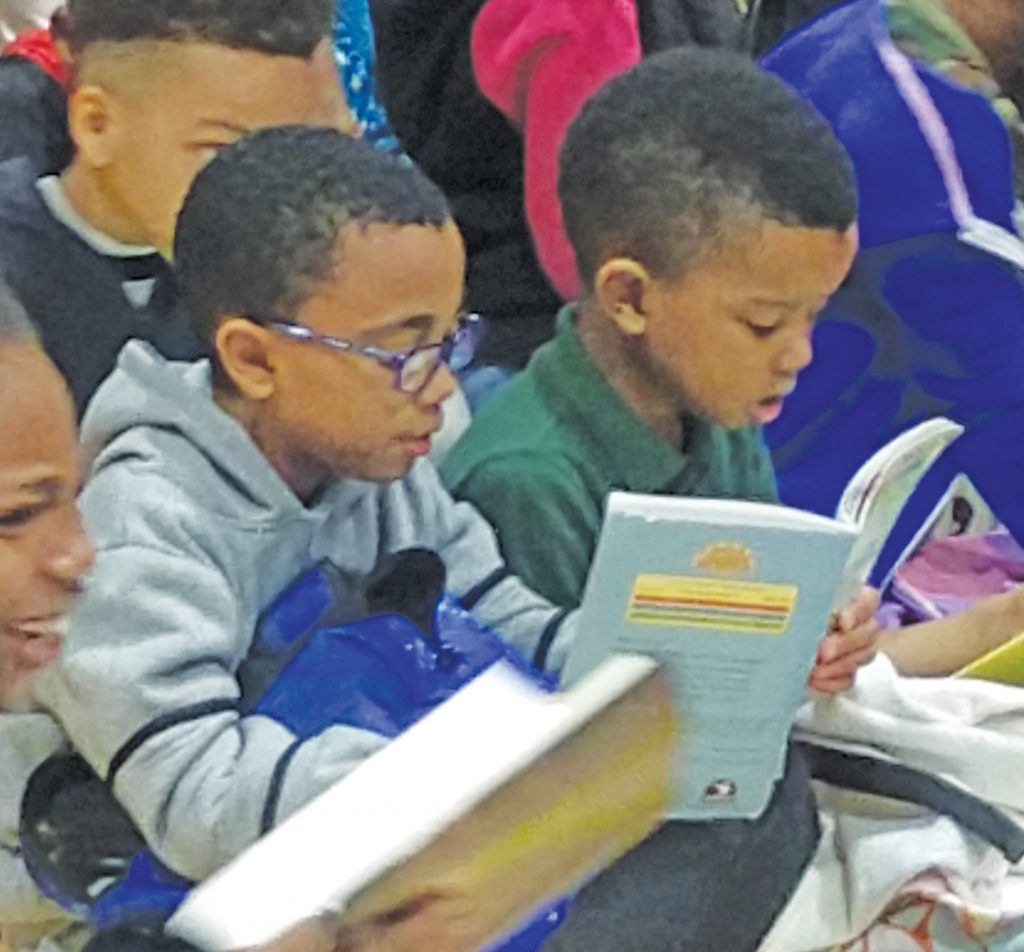
    WINNSBORO – About 250 children and 50 adults attended the Winnsboro Library’s annual read-in held at the Fairfield County Recreation Center on March 29. The program lasted from 9 – 12 a.m. and was followed by lunch.

  • Supers take home top pay, benefits

    COLUMBIA – Public education isn’t the most profitable profession in South Carolina.

    For a select few, however, the field can be quite lucrative.

    In a state where the governor earns $106,078 a year and agency heads like the state superintendent of education make $92,007, many district level school superintendents rake in two to three times that amount.

    That’s the case in Fairfield and Richland counties, where superintendents take home considerably more compensation than state agency heads accountable to 5 million South Carolina residents.

    Throw in generous retirement plans, copious car allowances, travel and other high end perks, and total superintendent annual compensation pushes well past $200,000. For Fairfield Superintendent Dr. J. R. Green, with responsibility for eight schools, it’s in the neighborhood of $225,000. For Richland Two Superintendent Dr. Baron Davis, with the responsibility of 32 schools, the pay and benefits bring in about $260,000.

    And it’s all subsidized with taxpayer money.

    Meantime, teacher pay has continued to lag.

    In 2018, Fairfield County School District teachers averaged $49,288 and Richland Two teachers averaged $51,802, South Carolina district report cards state.

    Teachers’ salaries in both districts fall well short of the national average of $58,950, according to figures from U.S. Department of Education.

    Swelling superintendent pay has become a nationwide trend, with some superintendents being paid close to $400,000, according to a January 2019 report by the American Association of School Administrators, or AASA.

    Salary Rises, Attendance Falls

    “Often times the superintendent is the highest paid member in the community,” Noelle Ellerson, an associate executive director with AASA, said in a video on the group’s website.

    Since 2012, salaries of superintendents in the Midlands have risen considerably faster than student growth.

    Green has seen his base salary climb 23 percent since 2012, rising from $140,000 to $182,287, contract documents show. In the same period, the district’s student population has dropped 15 percent, decreasing from 3,108 to 2,641, according to South Carolina school report cards.

    Richland Two’s student population has increased since 2012, but at a notably slower rate than superintendent salaries, public records show.

    Davis’ starting base pay was $186,312, according to his initial superintendent contract dated July 25, 2016. He now earns $191,904. The pay increase is more than double the Richland Two student enrollment growth of 9.85 percent (25,964 to 28,503) in the same period.

    Davis’ contract says as of July 1, 2018, he was entitled to annual salary increases equal to the “average rate of percentage increase” that the district’s certified employees receive.

    The board awarded him a 2.5 percent increase in September 2018.

    Green is among the highest paid superintendents nationwide for districts of Fairfield’s size, according to the AASA report. His base salary of $182,287 is well above the AASA median of $167,444 for male superintendents in districts with 2,500 to 9,999 students. But Fairfield’s 2,641 student population is near the bottom of that AASA range of student enrollment.

    Green’s pay is closer to the 75th percentile of education chiefs who make at least $193,000, according to the AASA report.

    Davis’ base salary technically falls below the median for large districts based on AASA findings. However, the AASA classifies any district with more than 25,000 students as large, lumping Richland Two, at 28,503 students, with the nation’s largest districts, many of which have between 100,000 and 1 million students. These upper echelon districts pay between $340,000 and $400,000 a year, according to U.S. Department of Education figures.

    According to a March, 2018, report in the New York Daily News, the New York City school district, the nation’s largest, pays its superintendent $353,000, about $100,000 more than Davis is paid. In South Carolina, the state’s largest three districts – Greenville (75,471 students) Charleston (48,937) and Horry (44,669) – are substantially larger than Richland Two and pay their superintendents around $225,000 a year in base pay, according to S.C. Ethics Commission filings.

    Defending Supers’ Pay

    William Frick, chairman of the Fairfield County school board of trustees, said Green is fairly compensated. He said Green brings a long list of qualifications to Fairfield County.

    “[Superintendents] are paid well, but they have a difficult job to do,” Frick said. “They are compensated accordingly.”

    Richland Two board chair Amelia McKie couldn’t be reached for comment about Davis’ compensation package. However, in a Sept. 15, 2018 letter summarizing Davis’ performance, McKie spoke very highly of him.

    “You have done an excellent job developing the District’s culture and creating the expectation that the District and all of our schools will be ‘premier,’” McKie wrote. “You exhibit excellence at all times, and we would like to see all departments throughout the District reflect your commitment to excellence, professionalism and customer service.”

    Evaluating Green

    The board voted on Dec. 18 to extend Green’s contract to 2024. Board member Paula Hartman raised concerns about extending it so far into the future.

    “I really don’t understand the reasoning – not saying there are any objections – but most districts have three-year contracts,” Hartman said. “I don’t understand why we continue to keep it at six years.”

    Frick said prior to hiring Green, the district has had a history of struggling to retain superintendents.

    “I’m happy that we have the opportunity to have an amendment to extend it out one more year. I’m glad we can essentially tie him down for another year,” Frick said.

    Green said he views the board’s extending of his contract as an affirmation of his performance.

    “When the board says it wants to extend my contract, that says you’re interested in having me for the long haul,” Green said.

    The superintendent went on to say that a year ago, he put a letter into his file saying that regardless what the board did, his salary should remain the same.

    “I felt that I was fairly compensated,” Green said. “I wanted the focus at this point to be on salaries of the staff.”

    However, Green’s contract states that he is automatically entitled to salary and benefit increases every time his contract is extended, provided he receives at least a “satisfactory” rating on his performance evaluations.

    The superintendent evaluation form the Fairfield board of trustees currently uses, and which contains only five two-word categories to be evaluated, doesn’t feature “satisfactory” as a rating, but instead uses “needs improvement,” “proficient” and “exemplary.”

    In December 2018, Fairfield board members rated Green as “exemplary” in almost every category. One board member rated Green as proficient in Leadership and Learning Environment, but exemplary in the others.

    “I enjoy working with Dr. Green,” one board member wrote. “We need make it harder [sic], going too good!”

    Green’s raises started at 3 percent in 2013, increased to 4 percent in 2014, and rose to 5 percent in 2015, documents show.

    Green can now receive an automatic 5 percent pay increase every year forward so long as he receives at least a “satisfactory” rating, according to his contract.

    Neither his salary or benefits are tied to student performance, test scores or enrollment.

     R2 Evaluations Mixed

    Davis’ second contract, a three-year contract, took effect July 1, 2017 and expires June 30, 2020. In September 2018, after his most recent annual review, Davis’ contract was extended a year to 2021 to keep it at three years. Davis received generally positive reviews during his evaluation.

    Collectively, the board gave Davis a score of 142 out of 150 possible points, earning him a “distinguished” rating, the highest rating possible.

    Two board members opted to submit individual evaluations.

    Board member James Manning gave Davis a perfect score of 150, according to district documents obtained through the S.C. Freedom of Information Act.

    Board member Lindsay Agostini was more critical.

    Her individual evaluation marked Davis down in several areas, characterizing him as defensive, antagonistic and expressing “difficulty recognizing a problem or concern with constructive criticism,” evaluation forms state.

    One area of defensiveness Agostini raised involved a disagreement over the elimination of keyboarding as a class.

    Agostini also said Davis gave “antagonistic responses” during a bond referendum presentation at an event sponsored by the Bethel-Hanberry Alumni Association.

    “The following day, prior to the start of executive session on August 28, 2018, the superintendent acknowledged and apologized to the board for his actions,” the evaluation stated.

     Benefits Boost Pay

    Superintendent compensation extends well beyond base salary.

    In Fairfield, Green’s original contract called for the district to provide an annual annuity contribution equal to 4 percent of his salary, which in 2012 amounted to $5,600.

    In 2014-2015, the board amended Green’s contract to increase the annuity contribution to 8 percent. Now it automatically increases 2 percent every year the contract remains in effect.

    Today the district pumps $29,165 per year into Green’s annuity, documents state.

    Besides the usual perks of paying for moving expenses, other benefits include $100,000 of term life insurance, free cell phone use and free use of an automobile that’s fully maintained by the district. The invoice for the last full maintenance on his automobile last fall came to $1,800 according to district records.

    The district also pays Green’s car insurance, and he receives two weeks of paid vacation on top of legal holidays and other school holidays. The district also paid for his professional memberships into the AASA, the South Carolina Association of School Administrators (SCASA) and other professional groups and local service clubs.

    In the event the board terminates the contract, Green is entitled to 18 months pay which would currently come to about $275,000.

    R2 Benefits Add Up

    In addition to Davis’ base salary of $192,104, the district makes an annual retirement contribution of $43,261 on Davis’ behalf. The district also pitches in $6,717 in annual annuity payments calculated at a rate of 3.5 percent of his annual salary based on a “satisfactory” evaluation, documents state.

    Davis essentially doesn’t pay for travel. Richland Two covers $18,000 a year in travel payments for Davis, covering commutes to virtually anywhere in the Midlands, essentially backfilling his take home pay with compensation not available to most other employees.

    Davis can also request reimbursement from the district for travel outside the Midlands or out of state if it’s for reasons benefiting the district.

    Other perks include $760 in payments for a $250,000 term life insurance policy and $768 for cell phone use, both funded annually by the district.

    Counting these benefits, Davis’ total compensation is in excess of $261,000.

    Beyond that, Davis receives other perks – 20 vacation days per year, plus legal and other holidays recognized by the district. He’s also entitled to receive pay for unused sick leave, annual leave and vacation days in an amount that’s “consistent with Board policy.”

    In addition, the district pays for Davis’ memberships in the AASA, SCASA, the Rotary Club, “and any other reasonable and customary professional group memberships for which the Superintendent believes is necessary to maintain and improve his professional skills.”

    Davis’ contract has been amended twice.

    In July 2017, his monthly automobile allowance increased by $1,500 a year.

    A year later, Davis’ salary increased to its current figure. His annuity contribution also rose from 1.5 percent to 3.5 percent of his annual salary, and this September it will increase again to 6 percent.

    Salary, Benefits and Ethics

    Documents showing the salaries and compensation of Green and Davis were obtained through S.C. Freedom of Information Act requests.

    In requesting the documents, The Voice asked not only for both superintendents’ salaries, but also their contracts, any amendments, and documents listing total compensation, including retirement benefits, vehicle allowances and other supplemental income backfilling personal expenses a typical person would ordinarily incur.

    Green’s contract has been amended six times in seven years (since 2012), most recently in December 2018. Dr. Davis’ contract has been amended twice during his nearly three-year tenure.

    S.C. superintendent salaries are available for public inspection on the S.C. Ethics Commission’s website.

    State law requires superintendents to file annual Statements of Economic Interest, or SEI, forms. The forms are supposed to document the “source, type, and amount or value of income received from a governmental entity by the filer or a member of the filer’s immediate family,” according to the ethics commission website.

    Citing state law, an ethics commission spokesperson further defined “income” as “anything of value received, which must be reported on a form used by the Internal Revenue Service for the reporting or disclosure of income received by an individual or a business.

    “Income does not, however, include retirement, annuity, pension, IRA, disability, or deferred compensation payments received by the filer or filer’s immediate family member,” the law states.

    Some superintendents are thorough in their filings.

    Burke Royster, the superintendent of Greenville County Schools, and one of the highest paid education chiefs in the state, reported his $247,000 salary and several benefits on his SEI form.

    Other superintendents, however, don’t report their total compensation to the ethics commission.

    On his SEI forms, Green only reported his base salary from year to year. He didn’t list any annuity payments, his district-provided automobile or other perks.

    Davis listed his travel compensation, but nothing relative to retirement payments.
  • BHS teacher finalist for SC’s top teacher

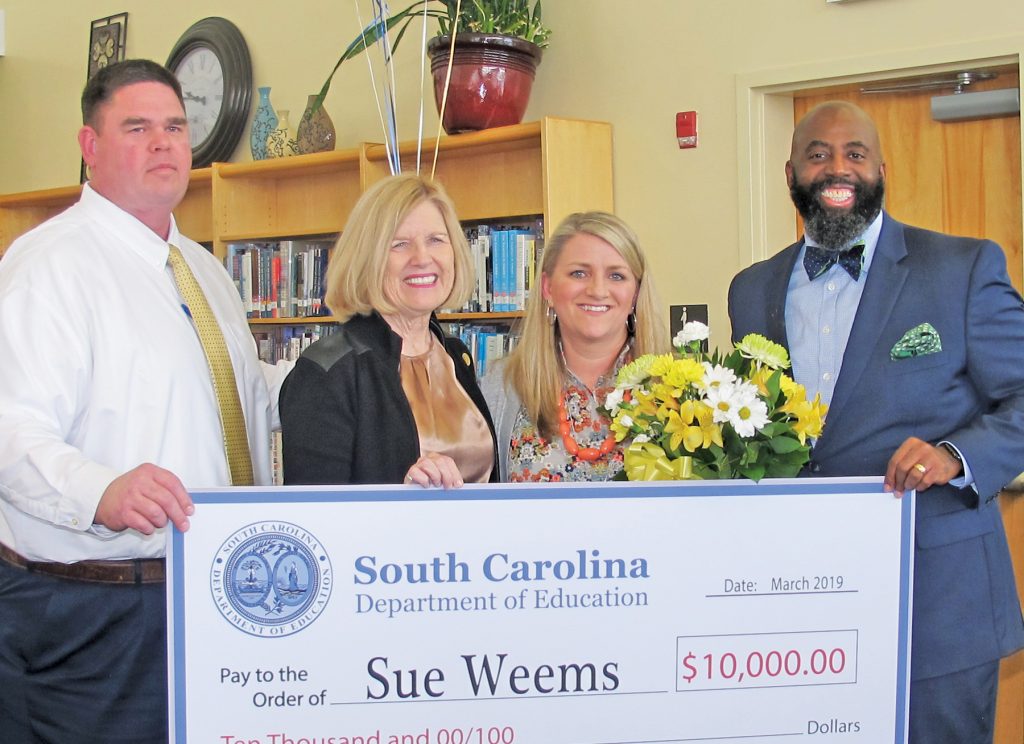
    Blythewood High School principal Matt Sherman, left, State Superintendent of Education Molly Spearman and Richland Two Superintendent Barron Davis, right, congratulate Sue Weems, center right, for being named a finalist for SC Teacher of the Year. | Barbara Ball

    BLYTHEWOOD – Blythewood High School English teacher Sue Weems got a big surprise Tuesday morning when State Superintendent of Education Molly Spearman made an unexpected stop at the high school to announce that Weems has being named one of five finalists for the South Carolina Teacher of the Year award.

    Richland Two School Superintendent Barron Davis presented Weems with flowers and Blythewood High School Principal Matt Sherman presented her with a bouquet of balloons.

    Weems was also presented a $10,000 check as she faced a bank of television and newspaper cameras. She will now go on to the next stage of competition that will culminate in the crowning of the South Carolina Teacher of the Year at a Gala on May 8 in Columbia.

    “Sue has spent her career meeting the needs of each individual student and challenging them to be their very best,” Spearman said. “Her experience in both K-12 and higher education is an invaluable tool that helps her identify with her students and show them what is possible.”

    Spearman also noted that Weem’s husband, who is in the military, is deployed in San Diego. Libby Roof, Richland Two’s Chief Communications Officer, tried to make phone contact with Weem’s husband so Weems could give him the good news, however, he could not be reached.

    Weems, a tenth and eleventh grade English teacher, and a Blythewood resident, is the published author of fifty original short stories for students in kindergarten through sixth grade.

    “Mrs. Weems possesses an innate ability to inspire students’ success,” said Richland Two superintendent Dr. Baron Davis. “Her own experiences including being the child of educators, mother of four and a military spouse who has lived in many locales, has shaped her approach and teaching philosophy. Her students benefit from her abilities to tailor her teaching style to meet the individual needs of each learner and to make connections with all of her students. Richland Two is extremely proud of Mrs. Weems,” Davis said.

    Weems said she considers her most profound legacy to be that she deeply understands her students and individualizes instruction to meet their needs. She said her teaching mantra is “care, connect and challenge.”

    The teacher selected for the State Teacher of the Year will receive a total of $25,000 and will be provided with a brand new BMW to use while serving for one year as a roving ambassador providing mentoring, attending speaking engagements, working with teacher cadets and teaching fellows, leading the State Teacher Forum and serving as the state spokesperson for over 50,000 educators.

  • FCHS teacher finalist for SC’S Top Teacher

    WINNSBORO – Fairfield Central High School teacher Chanda Jefferson was surprised at her school today when State Superintendent of Education Molly Spearman arrived unexpectedly in Jefferson’s room to announce that she has been selected as one of five finalists for the South Carolina Teacher of the Year award.

    Jefferson was then presented with a bouquet of flowers, another bouquet of balloons and a check for $10,000.

    “Chanda is an exceptional educator who has not only worked to ensure her own students are successful but has also given of her time and energy so that students across our state have high quality Biology opportunities,” Spearman said. “Chanda’s commitment to increasing the rigor in both her classroom and classrooms across South Carolina should be commended.”

    A ninth through twelfth grade Biology teacher at Fairfield Central, Chanda has worked on both the local and state levels to increase student performance of the South Carolina Biology I End-of-Course exam. In 2014, she received the Outstanding Biology Teacher for South Carolina Award presented by the National Association of Biology Teachers. She was one of twenty teachers to receive the Princeton University Fellowship for Teachers and one of three teachers to receive the Amazon Educator Academy Scholarship. Harvard University invited Jefferson to be a guest speaker for the 74th Annual Society of Developmental Biology Conference.

    Outside of the classroom, Jefferson has served as an Education Network Partner for the National Human Genome Research Institute, helping to plan a National DNA Day Celebration in South Carolina.

    Spearman praised Jefferson for catering to each student’s individual learning style and using hands on activities; incorporating social media, scientific modeling, inquiry, and STEM techniques in her lessons.

    Jefferson will next compete for South Carolina Teacher of the Year at the annual Gala, to be held on May 8 in Columbia where the overall winner will be crowned.