Category: Schools

  • Results Vary on EOC Exams

    BLYTHEWOOD/FAIRFIELD (Nov. 20, 2015) – Scores from the 2014-2015 End of Course exams were up statewide, according to data released this month by the S.C. Department of Education, while locally numbers were mixed.

    Average scores across the state in Algebra 1/Mathematics for the Technologies 2 (AMT) inched up to 82.6 from last year’s 82.1. In Biology 1/Applied Biology 2 (BAB), scores increased to 82.3 from last year’s 81.8. English 1 (E1) and U.S. History and the Constitution (HC) saw the biggest increases, with E1 average scores up to 79.4 from last year’s 78.4, while HC scores were up to 76.1 from 74.9 a year ago.

    As a district, Fairfield County Schools experienced increases all but one subject. In AMT, average scores were up to 82.2 from 77.7 last year; in BAB, scores increased to 74.5 from last year’s 74.1; and E1 scores were up to 76 from 73.2 a year ago. HC scores fell to 67.5 from last year’s 69.

    At Fairfield Central High School, AMT scores were up to 81.8 from 76.6 a year ago; BAB scores up to 74.5 from last year’s 74.1; and E1 scores rose to 74.6 from 71 a year ago. HC scores dropped a point and a half, from 69 to 67.5.

    The percentage of students earning an A in AMT jumped to 15.1 percent over last year’s 2.7, while the percentage earning a B rose to 22.3 over last year’s 14.7. Scores of F fell from 17.9 percent last year to 11.2 percent.

    In BAB, the percentage of students scoring an A fell to 12.2 from 13.2 a year ago, while scores of B rose to 15.6 percent from 8.3 percent last year. Scores of F fell slightly from 38.7 percent last year to 37.4.

    In E1, scores of A rose to 5.6 percent from 1.1 percent a year ago, while scores of B were up to 14.5 percent over last year’s 6.1. Scores of F dropped from 39.4 percent last year to 37.4.

    HC scores of A fell from 1.1 percent last year to 0 this year, while scores of B also fell from 7.9 percent to 6.2. Scores of F were up from 56.6 last year to 61.2 percent this year.

    At Fairfield Middle School, AMT scores rose to 83.7 from 81.9 a year ago, while E1 scores fell to 82.1 from 83.4 last year.

    The percentage of students earning an A in AMT rose from 10 percent last year to 14.3 percent this year, while scores of B were also up from 22 percent last year to 37.5 percent this year. Scores of F also ticked upward, from 4 percent last year to 7.1 percent.

    In E1, scores of A were up from 10.3 percent last year to 15 percent this year, while scores of B fell from 43.6 percent a year ago to 22.5 percent. Scores of F increased dramatically, from 2.6 percent last year to 15 percent this year.

    In Richland 2, average scores in AMT were up to 83.4 from 82.6 a year ago, while scores in BAB fell to 80.4 from last year’s 82.4. E1 scores remained flat at 78.2, while HC scores were up to 76 from 74.4 a year ago.

    The percentage of students scoring A fell in AMT to 21 percent from 22.4 a year ago, while the percent scoring B rose to 23.9 from 17.5 percent. The percent scoring F fell to 9.4 from 11.1 percent last year.

    In BAB, the percent of students scoring A dropped to 28.4 from 31 percent last year, while scores of B fell from 16.3 percent to 14.7 percent. The percentage of scores of F rose from 19.7 last year to 26.4 in 2014-2015.

    In E1, the percentage of students scoring A rose to 17.2 from last year’s 14.9, while scores of B fell to 15.1 from 17.4. Scores of F were up to 28.4 percent over last year’s 24.3.

    In HC, scores of A rose to 9.5 percent over last year’s 6.2, while scores of B rose to 13.5 percent from last year’s 12.5. Scores of F fell from 34.5 a year ago to 31.1.

    Westwood High School experienced the most consistent improvement, with scores up across the board.

    Average scores at WHS in AMT were up to 80.7 from 76.4 last year, while in BAB scores went up to 76.5 from 75.8 a year ago. E1 scores were up to 73.9 from last year’s 72.9, and in HC scores were up to 72.6 from 72.1.

    The percentage of students scoring A in AMT rose to 13.5 from just 8.1 a year ago, while scores of B rose to 22.9 percent from 11.1 last year. Scores of F dropped to 14.3 percent from 22.1 a year ago.

    In BAB, the percent of scores of A rose to 15.4 from 13.8 a year ago, while scores of B also rose to 15.4 from 13.5 last year. Scores of F were down to 32.6 percent over last year’s 32.2.

    The percentage of scores of A rose to 9.2 in E1, up from 4.8 last year, although scores of B fell to 10 percent from 13.7 a year ago. Scores of F were up from 37.9 last year to 39.5 in 2014-2015.

    The percentage of scores of A fell to 4 percent in HC this year from 4.7 last year, while scores of B rose to 9.2 percent from last year’s 6.3. The percent of scores of F fell to 38.8 from 40.9 a year ago.

    Blythewood High School was a roller coaster ride, with average scores up in AMT to 81.3 from 79.9 a year ago, but down in BAB to 83.7 from 87.5 last year. Scores also fell in E1 to 81.9 from 82.8 last year, but rose in HC to 80.7 from 78.5 a year ago.

    The percentage of students scoring A in AMT rose to 11.4 from 10.7 a year ago, while scores of B were up to 23.8 from 17.7 percent last year. Scores of F fell to 10 percent from last year’s 13.3.

    In BAB, scores of A were down to 35.2 percent from last year’s 44.1, while scores of B fell to 16.2 from 17.2 percent a year ago. Scores of F nearly doubled, from 9.3 percent last year to 18 percent in 2014-2015.

    In E1, the percentage of scores of A edged down to 22.1 from 22.8 percent, while scores of B fell to 20.3 from 23.7 percent. Scores of F were up to 17.6 from 10.1 percent.

    The percentage of scores of A in HC were up to 17.3 from 10.3 percent, and scores of B rose to 18.3 from 17.5 percent. Scores of F dropped to 16.4 from 20.1 percent.

    At Blythewood Middle School, average AMT scores fell to 92 from last year’s 96.3. No data was available for E1 scores. The percentage of students scoring A dropped to 50 from last year’s 79.6, while scores of B rose to 29.2 from 13.3 percent. No students scored an F.

    Kelly Mill Middle School saw average AMT scores rise to 93.1 over last year’s 90.2, with no data available for E1. The percentage of students scoring A rose to 57 from last year’s 50.4 percent, while scores of B were up to 30.2 from 20.3 percent.

    Muller Road Middle School also experienced an increase in average AMT scores, to 92.5 this year over last year’s 87.5, again with no data available for E1. The percentage of students scoring A jumped to 54.2 from last year’s 32.9, while scores of B fell to 27.8 from 31.6 percent a year ago. The percentage of students scoring F fell to zero from last year’s 2.6.

     

  • School Board transfers $2.25 million

    WINNSBORO – Fairfield School District Superintendent J.R. Green asked the School Board during their Oct. 20 meeting to approve a transfer of $2.25 million from the general fund to the capital projects fund for the 2014 -2015 fiscal year, which ended on June 30.

    “The funds will be used to pay for various technology, equipment and facility needs in the District,” Kevin Robinson, the District’s Director of Finance, told the Board.

    Later in the meeting, Board member William Frick (District 6) asked the superintendent to give the Board some idea, beyond new technology and other improvements, of what the $2.25 million transfer would be used for.

    Green replied, “This is something I’m going to bring back to the Board eventually, but there are a few things we’re looking at. We’d like to get a couple of new activity buses…we need to refresh some Chromebooks…and we have an issue with the cooling tower at the high school and we think we’ll eventually have to replace it.” Green said he would also like to embark on renovations that will allow the removal of portables behind the middle school and at Kelly Miller.

    “For me, the elimination of the portables would be the priority,” Green said, “but I say that in context of not knowing what that would cost, so I can’t say this is something we can move forward on.”

    Robinson explained that after the transfer of the $2.25 million from the general fund balance (now estimated to be $11 million), the general fund balance would be approximately $9 million at the end of the 2014-2015 school year.

    This generated a discussion about the district’s fund balance and an expected surplus from the 2014 – 2015 fiscal year.

    According to Robinson, the general fund surplus, estimated at $4.5 million, is the result of an anticipated $2.8 million increase in revenue due to an increase in property tax, with the remaining $1.7 million resulting from savings in expenditures. These expenditure savings include a $1.4 million decrease in expenditures on salaries and benefits and a $300,000 savings from not having to transfer money into the food services program last year as had been anticipated.

    Board member Annie McDaniel (District 4) cautioned that the Board should wait before approving any fund transfers until the annual audit of the District, due in November, is published. She questioned how Green could be confident of such a large surplus, since the District had a much smaller fund balance the previous year. The District’s annual financial statement for the previous fiscal year (FY 2013-2014) showed a general or unassigned fund balance of $6,565,658.

    Concerned about the savings of $1.4 million in salaries and benefits, Frick said he saw that as a significant expenditure savings.

    “Am I reading that correctly?” Frick asked. “Do we have any kind of explanation about that? That seems rather significant.”

    Robinson said this savings came about because several positions that were in the budget were not filled or filled for only part of the year. He said the District also hired teachers with less experience to replace some retiring teachers who were paid at a higher rate, and that the District was also able to transfer a little more of salary costs into the special revenue fund than had been anticipated.

    McDaniel asked if the Board could see the projected schedule from the auditors that shows the $4.5 million increase in the fund balance.

    “It’s strange that we are asked to vote in October before we have (seen) the audit in November. The audit will reflect exactly what’s happening,” McDaniel said.

    Frick asked, “With an anticipated $9 million in the fund balance (after transferring out $2.25 million), and considering that each year we’re looking at about a $6 million TAN (Tax Anticipation Note), are we potentially anticipating next year not having to do a TAN?”

    Robinson replied that the District would probably still issue a TAN but not in the amount of $6 million; “In theory, we’d have to do less of a TAN,” he said.

    “We have money in the capital project fund, I would say about $1 million, that is obligated,” Robinson added. “But some of that is accounted for by the on-going project with the old Career Center. We do have projects that come up during the year that have to be done. The purpose of transferring the money now is to give us the flexibility if we have any unforeseen facility needs, and also to give us the ability for other things that need to be done, which we don’t anticipate having enough money for once we get done with the old Career Center.”

    “One of the things that get people in the most trouble with money is not being up front and transparent,” McDaniel again cautioned. “So with capital projects, you should take time to discuss, plan and know what you want to spend. There is no reason by the time you transfer the money that you aren’t specific about what you want to spend the money on.”

    “Normally,” McDaniel continued, “with capital projects, there is specific planning for these projects, with an estimated cost beforehand. You don’t say ‘you propose, you might, you’d like…’ You come back later when you know what you want to spend it on. When you know what the total is, you request that we move it. We should not be voting arbitrarily.”

    Hartman asked if the money could be pulled out at a later time.  Green answered that it  could.

    The Board passed the transfer on a 4-2 vote, with McDaniel and Hartman voting against.

    “Madam Chair,” McDaniel said, “I would like the record to reflect that I am voting against this because, in my opinion, it is reckless to vote now knowing that the audit is coming up next month.”

    Hartman said she voted against the transfer since the funds can be transferred at any time.

    “The Board should not pull the funds out until we know what it will be used for,” Hartman said.

  • Local Scores on Par with State

    BLYTHEWOOD/FAIRFIELD – Results of the state’s SCPASS tests, administered to fourth- through eighth-grade students last spring, showed local students near or above state results in the tested subjects of Science and Social Studies, according to data released last week by the S.C. Department of Education.

    Science

    (State results in parentheses)

    In the Richland 2 School District, 71.9 percent of fourth-graders (69.9) scored Met or Exemplary on test standards, as did 69.2 percent of fifth-graders (66.3); 60 percent of sixth-graders (63.6); 67.2 percent of seventh-graders (68.2); and 64.1 percent of eighth-graders (65.2).

    Sixth-graders throughout the district had the most difficulty with the subject, with 40 percent failing to meet standards (36.4).

    Locally, Bethel-Hanberry Elementary led the way with 87.3 percent of fourth-graders scoring Met or Exemplary. At Blythewood Middle, 80.5 percent of seventh-graders scored Met or Exemplary, and at Round Top Elementary 79.8 percent scored Met or Exemplary. At Langford Road Elementary 77.3 percent scored Met or Exemplary, while at Kelly Mill Middle 73.6 percent of eighth-graders scored Met or Exemplary and at Bookman Road Elementary 71.6 percent of fourth-graders scored Met or Exemplary. At Dent Middle 70.4 percent of seventh-graders scored Met or Exemplary, and 68.8 percent of eighth-graders at Muller Road Middle scored Met or Exemplary.

    On the downside, 42.3 percent of sixth-graders (36.4) at Dent failed to meet standards, while 42.2 percent of sixth-graders at Muller Road Middle also failed to do so. At Kelly Mill Middle, 39.5 percent of sixth-graders, as well as 37.7 percent of fifth-graders (33.7) at Langford Elementary also failed to meet standards.

    Scoring Met or Exemplary in the Fairfield County School District were 54.2 percent of Fourth-graders; 53.8 percent of fifth-graders; 55 percent of sixth-graders; 65.6 percent of seventh-graders; but only 35.7 percent of eighth-graders.

    Topping the district was the Magnet School for Math and Science, where 92.1 percent of sixth-graders, 71.4 percent of fifth-graders and 66 percent of fourth-graders scored Met or Exemplary.

    At Geiger Elementary, 69.4 percent of fifth-graders and 69.2 percent of sixth-graders scored Met or Exemplary, while at Fairfield Middle 65.6 percent of seventh-graders scored Met or Exemplary. Sixty percent of sixth-graders at the McCrorey-Liston School of Technology and 54.2 percent of sixth-graders at Kelly Miller Elementary scored Met or Exemplary. At Fairfield Elementary, 52 percent of fourth-graders scored Met or Exemplary.

    Fairfield Elementary also took the biggest hit in the district, with 72.7 percent of sixth-graders failing to meet standards. At Fairfield Middle, 64.3 percent of eighth-graders (34.8) failed to meet standards, as did 59 percent of fifth-graders at Kelly Miller.

    At McCrorey-Liston, 52.9 percent of fourth-graders failed to meet standards, as did 52.8 percent of fourth-graders at Geiger. Thirty-four percent of fourth-graders at the Magnet School also failed to meet standards.

    Social Studies

    (State results in parentheses)

    Scoring Met or Exemplary across Richland 2 were 87.8 percent of fourth-graders (85.3); 76.8 percent of fifth-graders (71.4); 75.9 percent of sixth-graders (77.5); 65.4 percent of seventh-graders (67.9); and 72.7 percent of eighth-graders (73.4). Seventh-graders struggled the most, with 34.6 percent not meeting test standards (32.1).

    Langford Elementary saw the best numbers, with 95.5 percent of fourth-graders scoring Met or Exemplary. Bookman Road Elementary was close behind, with 93.8 percent Met or Exemplary in the fourth grade. Bethel-Hanberry also fared well, with 92.1 percent of fourth-graders scoring Met or Exemplary, while 90.4 percent of fourth-graders at Round Top Elementary turned in the highest scores.

    At Blythewood Middle, 82 percent of eighth-graders scored Met or Exemplary, as did 77.1 percent of sixth-graders at Muller Road Middle. At Dent Middle, 76.2 percent of sixth-graders scored Met or Exemplary, while 73.5 percent of sixth-graders at Kelly Mill Middle also scored Met or Exemplary.

    Kelly Mill also followed the state trend, with 39.4 percent of seventh-graders failing to meet test standards. At Muller Road Middle, 36.8 percent of seventh-graders, along with 36.1 percent of seventh-graders at Dent also failed to meet standards.

    At Langford Elementary, 33.3 percent of fifth-graders (28.6) failed to meet standards.

    Scoring Met or Exemplary over the entire Fairfield County School District were 81.3 percent of fourth-graders; 55.3 percent of fifth-graders; 71.6 percent of sixth-graders; 58 percent of seventh-graders; and 58 percent of eighth-graders. District-wide, fifth-graders struggled the most with 44.7 percent failing to meet test standards. Forty-two percent of seventh- and eighth-graders also failed to meet standards.

    The Magnet School again made the best showing, with 94.7 percent of sixth-graders scoring Met or Exemplary. They were followed closely by sixth-graders at Geiger, 92.3 percent of whom scored Met or Exemplary.

    At Kelly Miller, 84.8 percent of fourth-graders scored Met or Exemplary, as did 81.3 percent of fourth-graders at Fairfield Elementary. At McCrorey-Liston, 70.6 percent of fourth-graders scored Met or Exemplary. Fifty-eight percent of seventh- and eighth-graders at Fairfield Middle also scored Met or Exemplary.

    Fifth-graders at Fairfield Elementary turned in the poorest performance, with 66.7 percent failing to meet test standards. At Kelly Miller, 51.3 percent of fifth-graders failed to meet standards, as did 42.9 percent of fifth-graders at McCrorey-Liston and 42 percent of seventh- and eighth-graders (26.6) at Fairfield Middle. At Geiger, 30.6 percent of fifth-graders failed to meet standards.


  • Board Approves 26 Field Trips Costing $175,000

    WINNSBORO – The Fairfield County School Board approved 26 out-of-state and overnight student field trips at its regular called meeting Tuesday, Oct. 20, despite the concerns of two dissenting board members that the board lacked adequate information and justification for its actions. The trips will take selected Fairfield County middle- and high-schoolers to the Bahamas, Puerto Rico, New York City, Orlando, Myrtle Beach and other venues. Of specific concern was the cost of the trips, estimated at more than $175,000.

    The trips were listed on eight spreadsheets, one for each school, showing the planned trips, date and destination, number of students and adults traveling, curriculum standards the trips would address and cost for each trip. The discussion focused on the information – and lack of it – presented in the spreadsheets.

    Hartman questioned the cost of the Orlando trip – $33,810 for 45 students and three chaperones – and about a planned Bahamas trip two months later for 40 students and six chaperones, at a cost of $27,140, both for Chorus, Theater and District Honors students. Green stated that it would be some of the same students going on both trips.

    “The information I have asked (you) in the past to be clear on,” Hartman persisted, “is what exactly are the students getting from this trip, education-wise?”

    Green replied, “It gives them the opportunity to perform.”

    The curriculum standard to be addressed by both trips, as listed on the spreadsheet, is: “Perform learned accompaniment patterns for selected songs, using appropriate dynamics and timbre and a steady tempo.”

    Green stated that the students have “fundraised and contributed their personal resources each year. I think the district supported that last year to the tune of, off the top of my head, about 10 or 12 thousand dollars …it wasn’t as if the district funded the entire trip.”

    Hartman also pointed out that a planned trip to Puerto Rico for 10-12 history students listed the entire trip as costing $2,000, when last year that same trip cost about $22,000. Green said the $2000 figure was an error and should have been shown as a per person cost. That clarification added approximately $28,000 to the cost of the trip.

    “What I am hearing now is that these requests are not the totality of what the district is being asked to fund,” McDaniels said. “So exactly how much is the district being asked to fund?”

    Green replied, “There is no total and at this point in time, most of these groups are hoping they can raise enough funds so that the board would not have to approve any additional funding.”

    McDaniel stated that, “Now I am not going to address ‘hope’ with you, Dr. Green…but if you want the Board to approve, it’s kind of deceptive, that we have amounts before us, but you are now saying that these are not the amounts the board is being asked to approve.”

    Green stated that at this time he wasn’t asking the board to approve the money, just the field trips.

    Hartman asked Green the purpose of the Puerto Rico trip for history students.

    “A cultural experience, the opportunity to witness the Puerto Rican culture first hand, the cuisine, the climate, the dress, the weather…” Green stated.

    Hartman was not satisfied, saying he was not making it clear what the students are getting out of this trip.

    Green replied that, for example, the Puerto Rico trip would address curriculum standard 7-6 which says the “student will demonstrate an understanding of the significant political, economic, geographic, scientific, technological and cultural changes as well as the advancements that have taken place throughout the world.”

    Hartman continued to point out that it was not clear how much the trips will actually cost nor what amount will be fund-raised.

    Board member William Frick (District 6) said he recalled similar discussions about field trips in the past in that there was a lack of uniformity in filling out the forms. “Could we have the total amount put in there in the future?” he asked.

    Hartman asked if those forms could also show how much of the costs the Board is expected to pay.

    “In the future we’ll do that,” Green said.

    When the issue finally came to a vote, it passed 4-1 with Hartman voting no and McDaniels abstaining. Board member Andrea Harrison (District 1) was not present.

    Following the meeting, Hartman told The Voice that she voted no because there seemed to be no clear explanation as to how much money the students are expecting to raise or how much money the school will be paying.

  • Storm Disrupts Sports Schedules

    BLYTHEWOOD/FAIRFIELD – Last weekend’s storms, which wreaked havoc across the Midlands, also spurred a shuffle in upcoming athletic schedules at area high schools. Football fields are drenched, and with many schools remaining closed throughout the week, no practices have been held.

    Blythewood High School has moved Friday’s football region opener at Spring Valley to Monday, Oct. 12, at 7:30 p.m. No makeup date was announced at press time for the Blythewood-Westwood volleyball game, originally scheduled for last Tuesday.

    Fairfield Central’s long anticipated football showdown with Newberry will not be played Friday. At press time, Athletic Director Terrell Roach said the game was tentatively rescheduled to Saturday, but a kickoff time was not available. A makeup date for last Tuesday’s volleyball match at Newberry was also not available at press time.

    Richard Winn Academy saw the biggest schedule changes. While the Eagles will play football Friday at Wardlaw Academy as scheduled, last week’s game at Carolina Academy will now be played on Tuesday, Oct. 20 at 6 p.m. The football game at W.W. King Academy, scheduled for Oct. 23, has been cancelled entirely. Last Tuesday’s volleyball match against Ben Lippen has also been scrubbed and will not be rescheduled.

    Westwood’s football schedule was still in limbo at press time. The one thing athletic director Jason Powell knew for sure Tuesday night was that this week’s region opener at Lugoff-Elgin would not be played on Friday night.

    Readers are encouraged to visit the web pages of individual schools for updates. Changes will also be posted on The Voice’s webpage, blythewoodonline691.broadstreet.us/, as they are received.


  • Career Center Canopy Debate Stalls

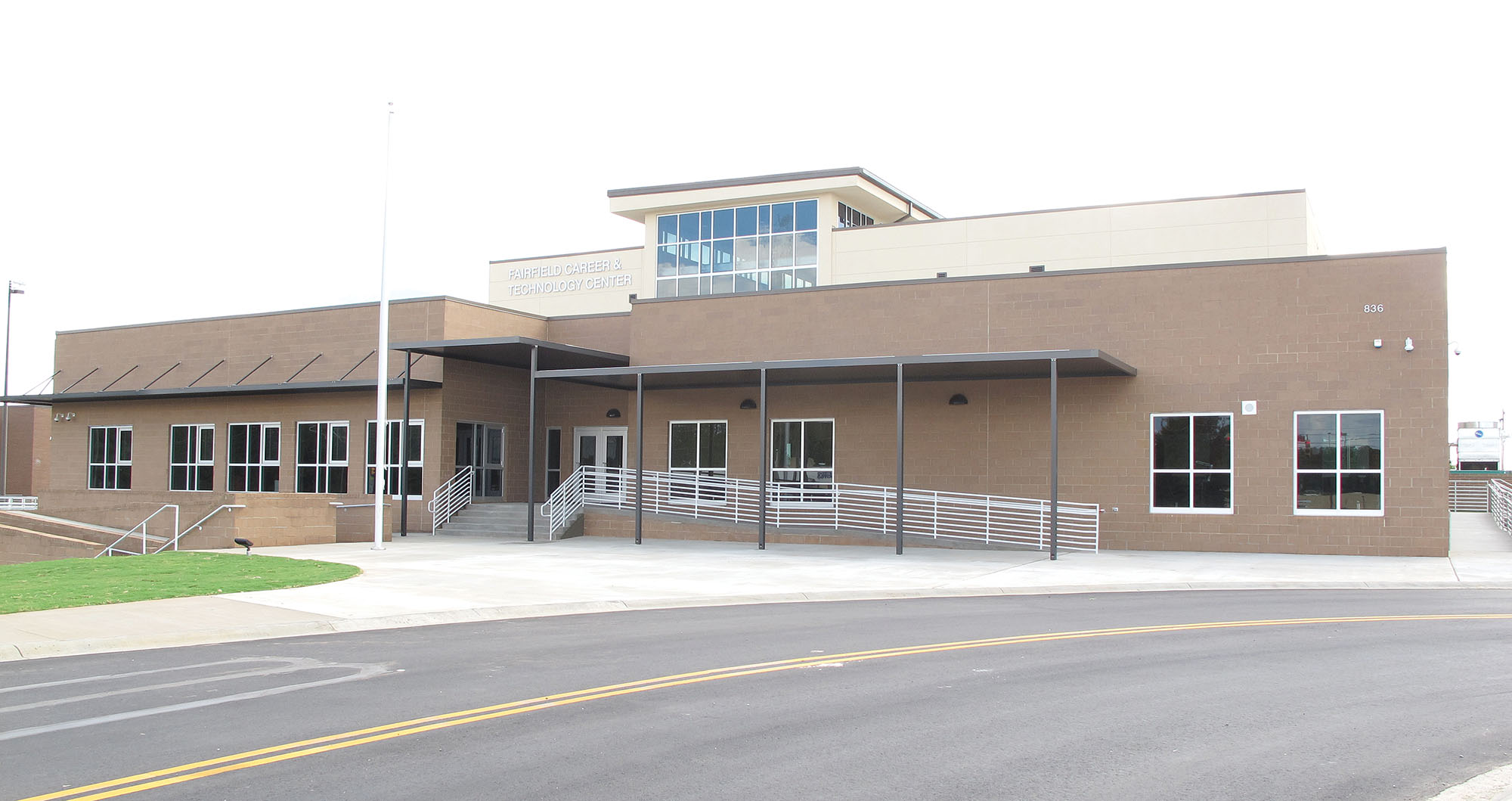
    The new Fairfield County Career & Technology Center.
    The new Fairfield County Career & Technology Center.

    WINNSBORO – Discussion by the Fairfield County School Board Tuesday night about whether or not to construct a covered walkway between the Middle School and the new Career and Technology Center veered off course momentarily into money spent on security systems and the Superintendent’s contingency fund, but ultimately settled with the Board tabling the matter.

    Dr. J.R. Green, Superintendent of Schools, presented the Board with an array of options for the canopy, ranging from $79,000 to $186,000 (see the Aug. 14 edition of The Voice), but said his concerns involved the effectiveness of a canopy that would have to be approximately 17-feet high in order to accommodate bus traffic, as well as the how the late addition would affect the overall look of the facility.

    “If the canopy is 17-feet tall, unless you get a rain that is coming directly down, will it provide much coverage?” Green said, adding, “They did such a good job constructing a facility we can be proud of, I would not want to put something that is gaudy that crosses the road that really takes away from the facility.”

    An option, Green said, would be to construct a covered walkway along the sidewalk of the Middle School, and a second covered walkway along the Career Center sidewalk, leaving the 24-foot span of driveway uncovered. That option, which Board member Henry Miller (District 3) put on the floor as a motion, would cost the District $79,000, according to the bid submitted by Ventilated Awnings Corp. William Frick (District 6) seconded the motion.

    But Board member Annie McDaniel (District 4) did not like the sound of that alternative.

    “By not ensuring our children do not get wet in their transition from the Middle School to the Career Center, how does that affect our students?” McDaniel asked.

    When Miller answered that a 17-foot-high covered walkway spanning the drive would not, in fact, ensure that students remained dry, McDaniel asked, “Are we saying the children coming from the high school are more important than the children coming from the middle school?”

    “We don’t want to phrase it that way,” Miller said. “We want to make sure that any time we spend our money that it’s spent in the right way. If we’re going to build something and it doesn’t make sense and they’re still going to get wet, why throw away that money? Let’s make rational and smart decisions. That’s all I’m saying.”

    McDaniel then blasted Dr. Green for his $40,000 contingency fund, “to do whatever he wants to do with and doesn’t have to bring accountability back,” she said; and the board for spending $180,000 on a security system. When Chairwoman Beth Reid (District 7) tried to steer McDaniel back onto the topic of the canopy, McDaniel concluded, “but we don’t want to spend the money for our babies so they don’t get wet?”

    “If we spend money on this and it’s 17-feet high and the kids still get wet,” Miller said, “somebody is going to look at us and say that was pretty foolish.”

    At Frick’s suggestion, Miller withdrew his motion and Frick followed by withdrawing his second. Frick then moved to table the discussion until all four companies bidding on the project could bring architectural renderings back to the Board for review.

    In the meantime, Green said, the District had purchased 25 umbrellas, which are kept at the Middle School and used by students walking from there to the new Career Center in inclement weather. Green said there were never any more than 21 students moving back and forth between the two buildings at one time.

    “And I’m proud to say, Ms. McDaniel, that I took that money out of that superintendent’s contingency fund to purchase those umbrellas,” Green said. “So it is being put to good use.”

    During the canopy discussion, McDaniel also revealed that she had called the architects to question them about the canopy. After the canopy matter had been tabled, Reid asked individual Board members to refrain from calling the architects, and instead to rout their questions through District channels.

    But McDaniel refused.

    “That’s a violation of First Amendment rights,” McDaniel said. “If I want to call the architect or anybody else that’s doing business in this district, I will call them, so you and all the board members will know that.”


  • Board Mulls Career Center Change

    WINNSBORO – While the Fairfield County School District officially cut the ribbon Wednesday on their new Career and Technology Center (CTC), when the state of the art facility opens for students later this month, those making the trek from the adjacent Middle School will have to do so in the elements.

    Fairfield Central High School students attending the CTC will be able to reach the facility under the shelter of a covered walkway, approximately 8- to 10-feet in height. But between the CTC and the Middle School lies a major access road for buses and other large vehicles, such as service trucks and emergency vehicles.

    As Dr. J.R. Green, Superintendent, pointed out at the School Board’s June 9 meeting, the original design for the CTC did not include a covered walkway to the Middle School and the addition of one would constitute a change order that would add to the cost of the project.

    “That really should not be a change order,” Board member Annie McDaniel (District 4) said during the June 9 meeting. “They (Brownstone Design, LLC and MBAJ Architecture) should have to eat that. That should have been part of what we bid out. If they failed to bid it out, that should be their problem and not ours.”

    Green told McDaniel that the guaranteed maximum price of $17,710,982, approved by the Board on a 4-2 vote (McDaniel and District 2 member Paula Hartman voted against) during their May 20, 2014 meeting, was based on drawings that did not include a covered Middle School walkway. Green would, he said, ask M.B. Kahn, the project’s construction manager, to explore such an addition.

    During the Board’s July 21 meeting, from which McDaniel was absent, Green reported an initial quote of $115,057 for the addition from Ventilated Awnings Corp.

    Green said the quote was significantly higher than he had expected, but added that the estimated height – at least 17 feet – necessary to accommodate large vehicle traffic made the addition an expensive proposition. Furthermore, he said, with the walkway reaching that high into the air it may be money wasted.

    “Unless you’re getting rain coming straight down,” Green said, “it really provides very little benefit.”

    While Board member Carl Jackson (District 5) echoed McDaniel’s June 9 sentiments, calling the absence in the original design of a walkway “short-sighted,” Green said even had one been planned from the beginning, it still would have had to reach a height great enough to accommodate bus traffic.

    “It really is a consequence of where (the CTC) is located,” Green said.

    The Board held off on a final decision on the walkway, asking Green to explore additional quotes.

    Last week, Green shared with The Voice a list of four quotes for the canopy, including a revised quote of $105,400 from Ventilated Awnings.

    Peachtree Construction offered the next lowest quote, at $118,500; followed by Creative Protective Covers, at $135,500; and Mapes Construction, at $186,815.

    Future Former Career Center

    The Board did take action on renovations to what will soon be the former Career Center, unanimously approving a $1,669,500 bid by Weber Construction Co. Weber’s bid was the lowest of five offers that included Pyramid Contracting ($1,770,500), FBI Construction ($1,790,000), Metcon Commercial Construction ($1,838,250), and Southern Builders of York County ($1,847,000).

    Weber’s bid includes $32,500 for the replacement of the electrical system and $92,000 for the replacement of the lighting system for the entire facility.

    Once renovated, the facility will house the District’s alternative school, Gordon Odyssey Academy, as well as the Transportation and Maintenance departments.


  • District Debuts ‘Showpiece’ Facility

    From last summer’s ceremonial groundbreaking where the state of the art new Career and Technology Center now stands are School Board Chairwoman Beth Reid, Superintendent Dr. J.R. Green, District 4 Board member Annie McDaniel, District 2 Board member Paula Hartman, State Sen. Creighton Coleman (rear), District 3 Board member Henry Miller, former District 5 Board member Bobby Cunningham and District 6 Board member William Frick.
    From last summer’s ceremonial groundbreaking where the state of the art new Career and Technology Center now stands are School Board Chairwoman Beth Reid, Superintendent Dr. J.R. Green, District 4 Board member Annie McDaniel, District 2 Board member Paula Hartman, State Sen. Creighton Coleman (rear), District 3 Board member Henry Miller, former District 5 Board member Bobby Cunningham and District 6 Board member William Frick.

    Ribbon Cutting, Tours at New Career Center Wednesday

    WINNSBORO – A little more than a year after the ceremonial first shovels of dirt were pitched out of the ground on the Highway 321 Bypass on a sliver of land nestled between Fairfield Central High School and Fairfield Middle School, the District’s new showpiece is undergoing its final finishing touches. And on Wednesday, the District will officially cut the ribbon and welcome the public in to see for themselves Fairfield County’s new Career and Technology Center.

    “We’re super excited,” Chris Dinkins, Director of the facility, said. “It’s hard to believe we’re here at this point. I’ve only been here a couple of years, but I know there are a lot of people who have really been pushing for this for a long time.”

    Indeed, Dinkins, who took over the reins at the aging facility on Highway 321 Business in 2012, came on board at just the right time – at just about the same time that then interim Superintendent David Eubanks slowly but surely convinced the School Board that they should and could build a new career center.

    The outgoing facility, built in the 1960s, has certainly outlived its usefulness as career center in the rapidly changing technological world of the 21st century. With the new facility, the District aims to prepare students for careers of the future, while still arming them with the kind of practical skills that never go out of style.

    “It’s hard to quantify what this means for the District’s progress, since for the last several years we have been making do with what we had,” Dinkins said. “Now, we have all the technology available and we’re going to have to think beyond where we have been thinking. Now we can really prepare students to compete in the workforce right out of school, or if they are going to continue their education at a two-year or four-year college, we can have them ready for that as well.”

    Dr. J.R. Green, Superintendent, said the perception of career centers has changed over the years, and the new facility allows the Fairfield County School District to change along with it.

    “Traditionally, career centers have been for students not on track for four-year colleges,” Green said. “Now, there will be opportunities for all students.”

    Two of those first such opportunities offered at the new facility include the heady subjects of Project Lead the Way Biomedical Science and Engineering.

    “Engineering is a tough field,” Dinkins said. “These are people who design the next space shuttle or redesign car engines to make them smaller and more efficient. We want to get students engaged, get them thinking creatively so they can be prepared.”

    The new facility was designed for its space to be flexible, so as technology evolves, so can the courses. Dinkins said he hopes to add more Project Lead the Way courses in the coming years, while courses in clean energy may also be on the horizon.

    The traditional programs will also be there, Dinkins and Green said, including masonry, welding, construction, electricity and horticulture, among others.

    “Those programs aren’t going away,” Dinkins said, “because those jobs aren’t going away.”

    The final price for the building came in at approximately $14.9 million, Green said, with the equipment and fixtures taking that up to around $17.5 million. And it was money well spent, he said.

    “This is a very impressive facility,” Green said. “State of the art. Brownstone and MBAJ did a great job designing it, and MB Kahn did an excellent job of meeting their construction deadlines. This is a cutting-edge facility.”

    The public can come see it for themselves Wednesday. The official ribbon cutting ceremony is at 4 p.m., with tours of the facility from 4:30 – 7 p.m.


  • Superintendent: AP Scores Show Promise

    WINNSBORO – The Fairfield County School District received mixed results earlier this month with the release of Advanced Placement (AP) test scores, but those results, according to Dr. J.R. Green, Superintendent, came with some very encouraging numbers.

    The highlight of the exams, administered at the end of the 2014-2015 school year, came from the AP Calculus numbers. AP exams are scored on a scale of 1-4, with scores of 3 and 4 receiving college credit. Of the nine students taking the AP Calculus exam, Green said two students scored a 3, while one student earned a 4. Four students received a score of 2.

    “Historically, these are the best results I have been able to uncover,” Green said.  “I could see this year the cultural shift where students were invested in preparing for the exam. We had kids coming in before school started to prepare and we had kids coming in on Saturdays to prepare. When proper instruction meets a commitment from students, success happens.”

    Green said AP Biology scores were also improved. Of the 22 students taking the exam, Green said, five earned a score of 3 while 14 earned a score of 2.

    Although scores of 2 do not earn college credit, Green said those students still benefit from the experience. They typically find their first year of college, where they see the same material again, a much easier experience, he said.

    The District’s numbers in AP English (broken out into two exams – AP Language and Composition and AP Literature and Composition) and the newly added AP U.S. History indicate more work needs to be done.

    Of the 12 students taking the exam in AP Language and Composition, only one earned a 3; six earned a score of 2 and five eked out a 1. Of the 17 students taking the exam in AP Literature and Composition, no college credit was achieved. Eight students earned a score of 2 and nine earned a 1.

    Of the 11 taking the AP U.S. History exam, only one earned a 2 while 10 earned a 1.

    “I am optimistic these results will improve,” Green said. “Regardless, it is beneficial to expose students to the rigor of AP courses.”

    Green said many students who could potentially score well on AP exams have in recent years opted instead to take dual credit courses in association with Midlands Technical College. Those students have experienced considerable success, Green said, with all 10 students taking English 101 last year earning college credit. Five of those students, he said, earned A’s. All eight taking English 102 also received college credit, with another five A’s in that class.

    Next year, Green said, the District will offer Math 110 for dual credit, with plans to offer Math 111 in the future. Green said the District may allow students completing and receiving credits in both dual credit classes to sit for the AP exams in their respective subjects.

    Green said the District has been rebuilding its AP program since it was, for the 2011-2012 school year, discontinued under Superintendent Dr. Patrice Robinson.

    “We are reestablishing our AP culture,” Green said, “and I can see we are heading in the right direction.”


  • Chairwoman Clears Chambers

    Council Divided on Protocol

    STEM School Seeks County Funding

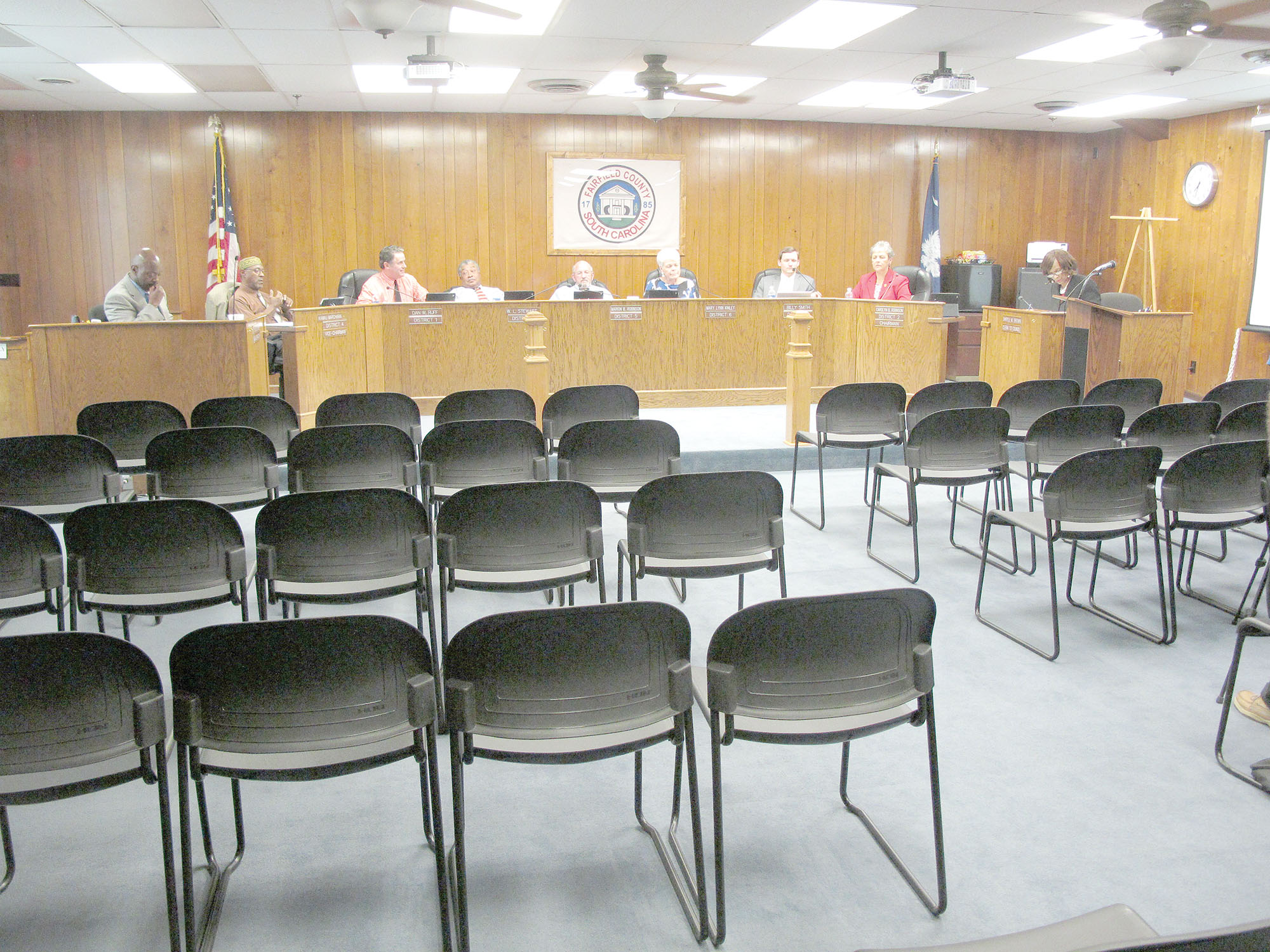
    And then there were none – Council holds forth in an empty chamber Monday after the Chairwoman cleared the room.
    And then there were none – Council holds forth in an empty chamber Monday after the Chairwoman cleared the room.

    WINNSBORO – A plea Monday night from students, teachers and administrators from the Midlands STEM Institute Charter School (MSICS) for funding assistance from County Council met with a cool reception from the Council Chairwoman who eventually cleared the chamber after her third warning to refrain from applause was violated.

    Chairwoman Carolyn Robinson (District 2) gaveled the standing room only audience twice after appeals for funding by a pair of elementary aged children elicited enthusiastic applause and warned that a third such outburst would result in the clearing of the chambers. Robinson then asked a small contingent of the STEM supporters to leave the meeting before proceeding with the second public comment segment of the night.

    “I think Mrs. Brown (Clerk to Council, Shryll) advised you that you could not discuss funding with us tonight,” Robinson said after asking the supporters to exit.

    Council’s bylaws contain no prohibition against requesting funding during the second public comment portion of the meeting, stating only that “Input will be for items not currently on Council’s agenda or under Council’s consideration. The subject matter shall be related to and limited to items, issues and topics regarding Fairfield County.”

    “Council does not have anything to do except collect the taxes on your tax notices for schools,” Robinson continued. “This is a subject that has to be dealt with with your Fairfield County delegation, which is Sen. (Creighton) Coleman and Mrs. (MaryGail) Douglas, as well as your school board. County Council has zero to do with funding for schools. If you had been attending our budget work sessions you would have seen there’s not one thing in our County budget that associates and deals with Fairfield County schools.”

    Asserting a point of order, Councilman Billy Smith (District 7) asked Robinson to hold her comments until County Council time, as she had similarly requested of Councilman Kamau Marcharia earlier in the meeting. Nevertheless, Robinson forged ahead, telling Smith she was “taking personal privilege.”

    In Roberts Rules of Order, under which Council operates, a “point of privilege” allows a council member to interrupt a speaker to complain about room temperature, lighting, noise, etc. It does not, however, provide a member a platform from which to engage in open debate or dispense their opinion on a subject.

    “You need to also check and see the lawsuit that’s out there and has been out there a long time with Chester County,” Robinson continued, addressing the remaining STEM crowd. “They’re doing the same thing of trying to get the funds to go to Chester County for the students in Chester to go there that you’re doing right now with this school.”

    Robinson’s uncertain reference to the four-year-long Mitford Case left many in the audience scratching their heads. The lawsuit, filed by Fairfield County Schools in July of 2010, was an effort to block legislation that required Fairfield to pay Chester County Schools 103 percent of Chester’s prior year per-pupil cost for each of the approximately 200 Mitford student enrolled in Chester schools. The case reached its end a little over a year ago when the S.C. Supreme Court ruled 3-2 in favor of the legislation and of Chester County Schools.

    State education per pupil dollars – a little more than $5,700 – follow students to whatever public school they attend, including Chester County and including the STEM Charter School. What the 2010 legislation achieved was to send an additional $10,000 or so in local funds along with it – funds that do not currently follow students to charter schools.

    When public comment continued, Marie Milam, Executive Director of MSICS, told Council that the school had been squeaking by on the $5,709 in state per pupil money, yet accomplishing great things. Barred from asking directly for financial assistance, Milam asked Council for moral support.

    “We are a struggling school, in terms of finances,” Milam said. “All new schools go through that. We are asking for your support in terms of your voice, in terms of your opinions, in terms of your judgment.”

    Closing the public comment segment, Douglas (D-41) told Council she was disappointed in how the applause for the children was gaveled away.

    “I am embarrassed,” Douglas said. “I’m embarrassed at what these children witnessed here tonight. They don’t know that it is the School District that controls that money. I have sat here on many occasions and have seen children come to this place and we have applauded them, we have encouraged them. And for us to let them leave tonight without that encouragement for having come, I am disappointed in that.”

    But it was Smith’s chiding of Robinson during County Council Time that elicited the applause that broke the camel’s back.

    “I’m embarrassed by what happened here tonight,” Smith said. “We shouldn’t conduct ourselves up here that way. If we’re not going to allow clapping, Madame Chair, we don’t need to allow it any time. We had clapping earlier in this chamber and nothing was said because it was something that we were all amenable to and we all appreciated it. Some folks may not appreciate what those folks from STEM came in here and said, but I certainly did and I don’t see a problem with applause if we’re going to allow it at another time.”

    The ovation for Smith was short lived. Robinson dropped the gavel and called for the room to be cleared. Only Council, members of the administrative staff and the media remained.

    With the room now virtually empty, Smith was allowed to continue his comments.

    “You already got most of them I was talking to out of here,” Smith said to Robinson. “We ought to be fair about things. If we’re going to allow something, then allow it. If not, then don’t. Either way I’m fine. But let’s just set a decision and then go from there.”

    Robinson said applause was reserved for presentations. The public comment segments of the meetings, in which each speaker is limited to 3 minutes, are for receiving information and for discussion items.

    “Asking for funding during that 3 minutes is not a presentation,” Robinson said. “For them to have properly done this tonight, they should have come to the Presentation Committee and asked for a time to come and make that presentation to us.”

    Councilman Dan Ruff (District 1), however, said the matter could have been handled with a softer touch.

    “I understand that applause rule,” Ruff said, “but I think there are some times when we can allow a little latitude, especially when there’s children involved, and maybe a little bit more diplomatic way of handling it when they do applaud.”

    When Robinson asked Ruff for specific suggestions on how the matter could have been handled, Ruff said it could have been done in “a little kinder way.”

    “Say, ‘I appreciate ya’ll’s interest in this, but we have an applause rule that we can’t allow it’,” Ruff offered. “I think it’s just a better way of handling it so we don’t disrupt everything like happened here tonight. I’m not condemning you; I just think there’s a better way—”

    “I already asked them three times,” Robinson interrupted.

    “I guess it was the way you asked,” Ruff said.

    “I’m sorry?” Robinson asked.

    “That’s just my opinion,” Ruff said. “I’m just making a suggestion.”

    When Councilman Walter Larry Stewart (District 3) also suggested Robinson could have handled it better, Robinson for the second time in her tenure as Chairwoman referred to her own rashness.

    “Sitting in this position, you have to make snap decisions and you can’t always think how ya’ll want us to think,” she said. “The adults sitting there should have been able to tell those children to behave and not participate.”

    Robinson also called her decision last June to change her vote and support cuts to County allocations to social programs a “snap decision” (see the June 12 edition of The Voice).

    Robinson did receive some support, however, from Marcharia (District 4) and Mary Lynn Kinley (District 6).

    “This is a business meeting,” Kinley said, “and my thought is why did they not come at budget time? I think the budget time is for those kinds of requests. In a business meeting you have to have your rules and you have to abide by them or you’re going to have chaos.”

    “You gave them ample warning not to do that,” Marcharia agreed, “but maybe we definitely need to make it clear – we’ve always had that rule about clapping.”

    Still, Marcharia said, Council was not likely to be viewed in a positive light after Monday night.

    “You go on their Web site tonight and we’re going to look like animals,” he said.