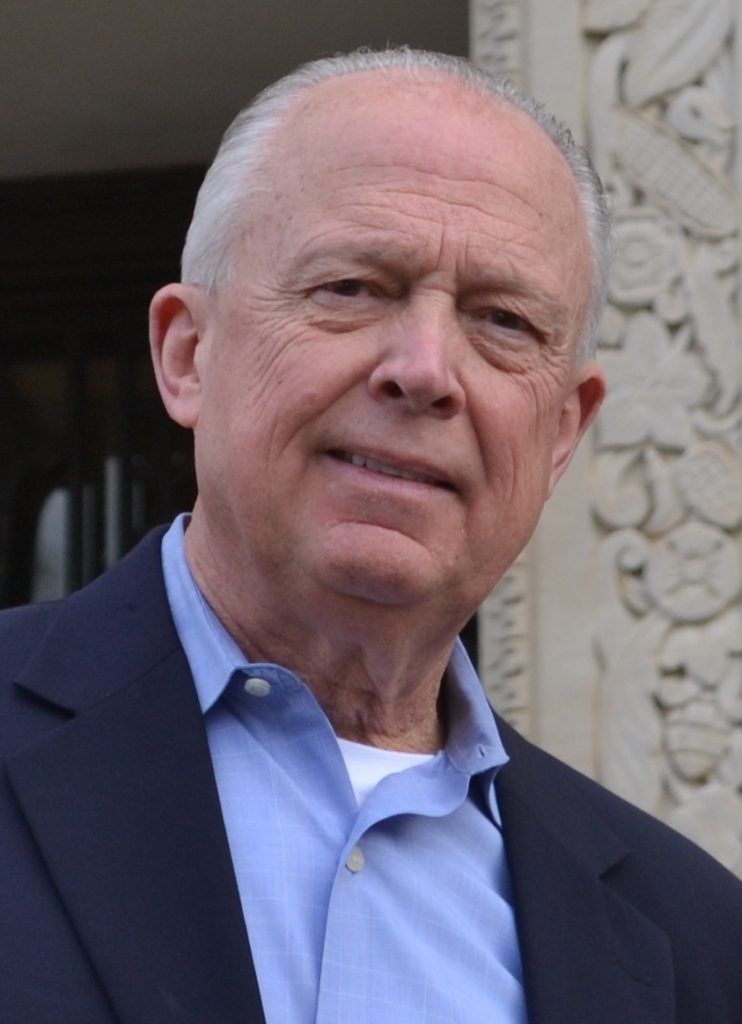
If you blinked during the March 24 Fairfield County Council meeting, you didn’t miss any new business or old business, or other business, for that matter.
Brandon S. Henderson
The agenda was followed, technically. But the real story
wasn’t what was on it, it was what wasn’t.
Item after item rolled by with “None” stamped across it like
an assembly line of no actions. No board appointments. No administrator’s
report. No old business. No new business. In a county that should have plenty
of both old and new business, one must wonder: how does nothing make the list?
The night did begin with a heartfelt proclamation for Ms.
Geneva Bell on turning 108. Sadly, the recognition was posthumous. Our sincere
condolences go out to her family.
Then came the public comment session that was 20 minutes
max, but enough time for the sparks to fly. The first three speakers voiced
deep concern over the lack of representation for District 3 in response to the
recent committee assignments. It was described as not only alarming but
dangerous for the residents of the community.
What started as a standard comment quickly morphed into a soap worthy back and forth between a constituent and members of council. Go catch the starting moments at the 34:15 mark, I dare you. Nothing beats experiencing the council leadershp’s awkwardness, the not so veiled shade, and the sheer “what is happening?” energy in person. If this were any other county, I’d be tuning in weekly just for the drama.
The only thing missing was a glass of wine being thrown
across the chamber.
Not that I’m making suggestions! But if council is going to
continue down this path of performative governance, maybe they should lean in
and just rename this, “The Real House Council of Fairfield.” At least then we’d
know what to expect.
Meanwhile, back in the real world, the residents are still
waiting on actual governance. No new business. No old business. Just more
questions, and no signs of answers.
Perhaps we’ll find out more on the next episode on Monday
April 14, 2025.
COLUMBIA – Each October, many state agencies – including public colleges and universities – are required to submit to me their financial statements for the previous fiscal year. I use those statements to produce South Carolina’s financial report, which is used by lawmakers, credit rating agencies, and others to assess the state’s financial condition.
Eckstrom
An agency’s failure to turn in its statements on time can have ramifications beyond just that one agency. If it holds up completion of the state’s financial report, it potentially hinders policymakers’ ability to make decisions about spending and taxes. It may also send a troubling signal to investors interested in buying state bonds, or otherwise reflect poorly on the state.
Untimely financial statements sometimes raise red flags about an agency’s accounting and record-keeping. In the recent past, they’ve led to discovery of serious deficiencies – such as failure to reconcile bank statements regularly, or a lack of CPAs in crucial accounting positions. Even worse, they can indicate indifference toward the importance of financial reporting.
When an agency misses the deadline, it’s up to me to light a fire under them. But my options for doing so are limited. Hopefully, with repeated phone calls and a little nudging, I’ll have the statements in enough time to complete the state’s financial report without much delay.
But what happens when an agency is evasive or uncooperative – for example, won’t return calls? With no legal authority to force them to do anything, my only recourse is to raise the issue publicly and hope the unflattering attention will motivate the tardy officials.
Which brings me to the subject of S.C. State University…
SCSU boasts a loyal student body and faithful alumni, yet its governance — particularly its financial leadership — has often fallen short. In 2014, its troubles came into the open: out of control spending, large budget deficits, about $10 million in unpaid vendor bills, mismanaged funds, and improperly recorded transactions — all of which resulted in a two-year probation by the regional accreditation agency. (Losing its accreditation would have been disastrous, as it would have meant its students were no longer eligible for federal aid and may well have caused SCSU to close its doors.)
Since then, much money and effort have gone into putting SCSU on sound financial footing. Lawmakers purged the entire board of trustees. The Legislature gave the school around $20 million in state loans which later were forgiven, meaning taxpayers foot the bill to clean up the mess.
Given the resources invested in righting the ship, there was no joy in notifying other state leaders last month that SCSU was late again this year submitting its financial statements. After missing the Oct. 1 deadline, university officials assured me I’d have the statements by Nov. 22. That date came and went. It wasn’t until Dec. 12 – more than two months late – that the statements were turned in.
All who care about SCSU’s future should be concerned. Timely financial disclosures are crucial for keeping the university healthy and solvent. And again, late financial statements can portend broader issues.
While its fiscal woes only became known to the public in 2014, I actually had begun sounding the alarm years earlier — after growing concerned by the school’s chronic problems turning in its financial statements. Out of an abundance of caution, I’m sounding the alarm again.
Certainly, SCSU finances have stabilized over the past few years, and the quality of its board and administration are much-improved. Nonetheless, we mustn’t tempt fate. Given its track record and the magnitude of its recent troubles, complacency isn’t an option.
S.C. State’s crisis was rooted in a lax attitude toward the notions of oversight and accountability — a mindset partially cultivated by state leaders’ hands-off approach to the university; the storied, historically black university was treated as a special case, allowing its administrators to operate nearly oversight-free. What was actually needed, then as now, was “tough love.”
Three years later, the high stakes dictate keeping an attentive eye on SCSU administrators. We must remind them we’re watching and what’s expected of them. Failure to meet minimum standards isn’t acceptable.
And there’s a cautionary tale here for governmental bodies at all levels. While not a sensational topic, oversight measures such as financial reporting requirements are fundamental to an institution’s well-being.
Dr. Debbie Hamm, who had been serving as Interim Superintendent since the abrupt June 13 departure of former Superintendent Katie Brochu, accepted an employment contract valid thru June 2015 for an annual salary of $199,000. The motion to approve the terms was accepted 6-1 at the Richland 2 School Board meeting Tuesday night at Polo Road Elementary School. Board member Monica Elkins-Johnson voted nay on the grounds that the Board was moving hastily and did not go through a formal interview or national search. Assenting Board members cited longevity, understanding of Richland 2 culture, willingness to expand collaboration and the renewal of joy in the District as considerations for offering the permanent role to Hamm. At the end of the contract, a national search will be conducted and Hamm has the opportunity to put her name in the hat for continued consideration. Hamm told the audience that she is “grateful and it will be a privilege to serve as your superintendent.” She was met with a standing ovation from the audience.
Board adopts plan for Lake Carolina Elementary
A student assignment plan was decided for Lake Carolina Elementary and its newly built partner school just two blocks away, Elementary #19. All students living in the Lake Carolina neighborhood and students in the Ashland neighborhood will attend the two schools with Lake Carolina housing kindergarten through second grade and Elementary #19 housing the upper grades third thru fifth. Elkins-Johnson didn’t support the plan because, she said, she wasn’t comfortable that Lake Carolina teachers could adequately prepare children for third grade under this system. She also voiced concerns that “this establishes a private school in a public school setting.” Board member Melinda Anderson made no comment but also voted against the approved plan. Board member James Manning sees this decision as a new, modern tool for the District in making attendance choices. Board member Chip Jackson told the public that the principals for the two schools located just two blocks apart are proven academic leaders and the opportunity for deep collaboration is exciting for the students.
Melinda Anderson in the news
Perhaps what garnered the most discussion was what was not discussed at the Board meeting – the recent allegations in the news that Board member Melinda Anderson verbally threatened Westwood High School’s head football coach Rodney Summers. Jackson, in closing comments, alluded to this when he gave praise for Chairman Bill Fleming’s excellent leadership for the past month during turbulence within the Board. Prior to the meeting and after the meeting, the audience was expectant that the situation with Anderson would be addressed, but no mention was made. In the recent weeks, Anderson is alleged in a report filed with a Richland County deputy to have threatened to kill her grandson’s football coach and stating that she had a gun. Top executives in the District were present during the reported incident and identified as witnesses to the alleged comments. Anderson denies the comments and says it is beneath her to address such “foolishness.” More recently there have been news reports that a friend was sent by Anderson to the football field to witness Summers’ football practice. A scene allegedly ensued and the School Resource Office, who is also a Richland County deputy, was called to file a complaint report. The District’s students who make threats of bodily harm, meanwhile, routinely face stiff disciplinary action and even expulsion.
The next Board meeting is nearly a month away, Dec. 10, at Blythewood High School.
During closing comments at the March 26 Richland 2 School Board meeting, held at Conder Elementary School, Board member James Manning continued his pressure on the Board to track and disclose professional development fees. Manning said the Board should have empirical evidence to support the amount spent and received for professional development. The rest of the Board remained silent on the issue. Without referring to Schlechty training directly, Manning reiterated the Budget Design Team findings, saying that there may be different professional development opportunities that would yield stronger results.
Survey Says – Earlier in the meeting, the District’s Budget Design Team made a presentation to the Board. Under the Schlechty training model, Design Teams are created for all areas of the District. To that end, a cross-divisional group of District employees were organized into sub-committees to analyze employee responses to an on-line survey regarding the District’s budget. There was a significant drop in employee responses to the survey, down by a third from last year. Survey suggestions include: more diversity in the kinds of professional training available; more IT/computer training to support the purchase of technology; increase administrative support at the schools and a reversal of the controversial experiment that put assistant administrators in the classrooms with teaching duties at the high schools.
Bulls vs. Bears – Chief Financial Officer Bob Davis reported that First Citizens Bank suggested the District place $5 million of its $20 million cash reserve account into a more aggressive investment account (one-time only) to increase yields. This departure from the usual investment criteria was endorsed by Davis who said all funds would continue to be insured.
Last of Bonds – The Board approved selling the last of the bonds available from the $306 million bond referendum of November 2008. The funds will be used to finance improvements at existing schools and the construction of new schools – School #19, an elementary school in Blythewood on Kelly Mill Road, is currently 43 percent complete but final work will not be completed until more than a year from now, in the spring of 2014.
Arts & Language – The standing room only meeting kicked off with dozens of recognitions and presentations made. Conder Elementary showcased the arts in a poetry reading and strings performance of Cajun music. Project CARE, a three year counseling grant expiring this year, highlighted the work of the bilingual portion of the program.
The next Board meeting will be April 9 at Polo Road Elementary School. The first public hearing of the proposed budget will be at 5 p. m. before the Board holds executive session. The regularly scheduled public session is at 7 p.m.