Category: News

  • Winnsboro Nixes New Codes, Opts for Enforcement of Current Regulations

    Winnsboro Town Council devoted the majority of Monday night’s 2-hour work session to debate over adoption of the International Property Maintenance Code (IPMC). In 2009 Fairfield County adopted sections of the IPMC, but as council and Mayor Roger Gaddy reviewed and read further into the IPMC, they realized that their existing codes were very similar.

    “I don’t see that we need to approve a whole new book of ordinances,” Gaddy said. “I think we need to enforce what we already have.”

    With the similarities already in place, council members then considered hiring a code enforcement officer to enforce current codes and ordinances.

    “We’ve got to hire someone who is passionate, level headed, but firm,” Gaddy said. “That somebody needs to have the patience and is willingness to sit down and explain the ordinances.”

    After considerable discussion, Councilman Bill Haslett called for a motion to hire a code enforcement officer, which was seconded by Clyde Sander and was so approved.

    In new business, Billy Castle presented the council with a revised edition of the new zoning ordinances for the town. For all intents and purposes, the new zoning ordinances have been approved, but will need to pass through two separate readings, with the first to take place at Tuesday’s town council meeting. For all the time and hard work put into the zoning ordinances by Castle and his committee, councilman Haslett made a motion to provide an award and certificate ceremony. The motion was approved and the ceremony will be held once the zoning ordinances have gone through their official readings.

    Council also discussed a new ordinance to prevent the dumping of grease and oil into the sewer system. Council noted that they had, on two separate occasions, been written up by the Department of Health and Environmental Control (DHEC) and have been advised to come up with some type of grease and oil ordinance. Due to years of build-up and the storms this summer, there was a large amount of grease, oil, sludge and fatty substances that had washed into the sewer lines, causing drainage to slow. A new ordinance would call for grease traps and would help prevent a build-up in the next 20-25 years.

    Finally, council agreed to hold a ribbon-cutting ceremony for the new annex building on Oct. 21 at 3 p.m.

  • School District Responds to ACLU Inquiry

    In response to a Aug. 20 Freedom of Information Act (FOIA) request by the American Civil Liberties Union (ACLU) of South Carolina, the Fairfield County School District has supplied the civil liberties organization with several of its policies related to prayer and religious displays within the school district and at district events. A complete response to the ACLU’s detailed request, however, would cost the ACLU more than $2,000, according to the school district’s reply letter dated Sept. 13.

    In addition to policies, the ACLU’s request seeks records of all programs, schedules, itineraries, calendars, agendas, minutes or news publications referring to, relating to or reflecting the inclusion of prayer, invocations, benedictions, blessings, proselytizing or other religious remarks or exercises in any school-sponsored event, including (but not limited to) graduation exercises, athletic events, school board meetings, ceremonies and banquets, baccalaureate services, school event calendars, daily announcements and school newsletters. According to the district’s reply, compiling these documents would cost the district 120 hours, and at an hourly rate of $19.73 an hour, the cost to the ACLU would be $2,367.60, half of which would have to be paid up front before the district began work pulling the records together.

    The ACLU’s request is not limited to the Fairfield County School District, but is part of the statewide “Religious Freedom Goes to School” campaign, launched just eight months after the ACLU prevailed in a legal battle with the Chesterfield County School District.

    In Chesterfield, a middle school student was the victim of religious coercion. Teachers were praying over him and he was being sent to detention for not attending evangelical pep rallies, said Victoria Middleton, executive director of the ACLU of South Carolina.

    In December 2011, that student’s parent sued the Chesterfield County School District, and in January of this year, U.S. District Court judge R. Bryan Harwell ruled in favor of the parent. As a result, Chesterfield was issued a permanent injunction against prayer at school events, and school officials were enjoined from promoting their religious beliefs to students. The Chesterfield School District was also stuck with the plaintiff’s attorney’s fees. Since then, Middleton said, the ACLU has received several complaints of similar activities in schools across the state.

    “(This program) is an effort to get an idea of what the policies are at the districts,” Middleton said, “if they do have policies, and the way they can comply with the First Amendment in regard to freedom of religion.”

    While the Fairfield County School District’s reply to the ACLU primarily directed the ACLU to the district’s web site for details on policies, the district did include a copy of three policies in the response.

    Policy IHAL, “Teaching about Religion,” states that “Neither the district nor its employees will promote or disparage any religious belief or non-belief. Instead, the district will encourage all students and staff members to appreciate and tolerate each other’s religious views.”

    “The district supports the inclusion of religious literature, music, drama and the arts in the curriculum and in school activities, provided it is intrinsic to the learning experience in the various fields of study and is presented objectively,” the policy, which was adopted in August of 1990 and revised in April of 1997, states.

    Policy IMDC, “Religious Observances and Displays,” states that the religious and secular holidays that occur during the school year may be observed in district schools and that the “historical and contemporary values and the origin of religious holidays may be explained in an unbiased and objective manner without sectarian indoctrination.” The district will permit the use of religious symbols related to these holidays, the policy states, as a teaching aid, “provided such symbols are displayed as an example of the cultural and religious heritage and are temporary in nature.”

    As for school ceremonies, Policy IMD only allows for the pledge of allegiance, and notes that students with religious objections may be excused from saluting the flag or reciting the pledge.

    The Fairfield County School Board, which has traditionally opened their meetings with the pledge followed by a prayer, opened their Sept. 18 meeting with the pledge and a moment of silence instead.

    Meanwhile, two weeks after the district received the ACLU’s FOIA request, they also received a letter from the Alliance Defending Freedom (ADF). According to the ADF, the ACLU’s campaign contains “inaccurate and incomplete” information. Furthermore, the ADF said, the ruling in the Chesterfield case does not apply to any other school district. The ADF offered its assistance to the school district regarding the ACLU’s campaign.

    The ADF is a conservative Christian non-profit organization founded in 1994 as the Alliance Defense Fund by Bill Bright (founder, Campus Crusade for Christ), Larry Burkett (founder, Crown Financial Ministries), James Dobson (founder, Focus on the Family), D. James Kennedy (founder, Coral Ridge Ministries), Marlin Maddoux (president, International Christian Media) and Donald Wildmon (founder, American Family Association).
  • Unlocked Cars Tempt Thieves Near Lake Wateree

    The Fairfield County Sheriff’s Office is investigating a larceny spree that took place in the early morning hours of Sept. 19 on Wateree Estates Road, between the 1400 block and the 2000 block, and which netted thieves more than $900 in cash and other items from unlocked vehicles.

    Deputies first responded to a home in the 2000 block of Wateree Estates Road just before 6 a.m. Sept. 19 where the interior contents of two trucks had been rifled by thieves during the night. Suspects made off with $100 in cash and a silver necklace worth $100.

    An hour and a half later, deputies arrived at a home in the 1600 block where a car and a pickup truck, both unlocked, had been pilfered. A handgun and other items worth $385 were taken from the vehicles. Deputies recovered what appeared to be a sawed-off broom handle left behind by suspects inside one of the autos.

    At 8:47 that morning, deputies were dispatched to a home in the 1400 block of Wateree Estates Road. Again, an unlocked car and an unlocked pickup truck had been entered by unknown suspects, who this time only made off with a handful of loose change, totaling approximately $30.

    Back in the 2000 block of Wateree Estates Road at 9:06 a.m., a resident reported two vehicles parked outside his home had been entered. Both were unlocked and suspects stole jewelry worth $150 and $100 in cash. A little more than 10 minutes later, the Sheriff’s Office received a call from a homeowner in the 1900 block. During the night, he said, someone had entered his unlocked Chevrolet Suburban and stolen tools worth $20. A few houses down, also in the 1900 block, a resident reported a similar story. When deputies arrived at her home at 10:37 a.m., she said someone had entered her unlocked car during the night and stolen $30 in cash. A seventh incident is also under investigation by the Sheriff’s Office, although details were not available at press time.

    In each of the incidents, no forced entry was necessary, the Sheriff’s Office said, and the vehicles were virtually ransacked each time, with papers and personal items strewn in and around the vehicles. The Sheriff’s Office is encouraging residents to keep their vehicles locked at all times. Furthermore, the Sheriff’s Office said, the best policy is to never leave valuables inside vehicles, locked or otherwise. Meanwhile, the Sheriff’s Office added, investigators are following up on several leads connected to the larcenies.

  • Fairfield County, State SAT Scores in Decline

    The Fairfield County School District lost 27 points on the composite SAT scores by graduating seniors in 2012, according to data released this week by the College Board through the S.C. Department of Education. Statewide, numbers fell 5 points, while the national average was down 2 points.

    Fairfield test takers saw their biggest drop in math, where seniors lost 13 points between 2011 and 2012, falling from 431 to 418. Seniors also lost 8 points in the critical reading category and 6 points in writing. Overall, the district’s 2012 composite score was 1222, down from 1249 in 2011. More Fairfield seniors took the test in 2012 – 62 in 2012 versus 42 in 2011 – but only 30 percent of eligible students took the exam.

    Across South Carolina, 52 percent of eligible public school students took the SAT in 2012 (that percentage for all students – public and private schools – was not available from the College Board). All students – public and private – statewide lost 1 point in critical reading and 2 points each in math and writing between 2011 and 2012.

    In neighboring school districts, Chester lost 66 points over last year, Newberry lost 52 and Richland 2 lost 40. Districts with the biggest losses since 2011 were Marion 7, which lost 151 points, and Clarendon 2, which lost 126. Greenwood 51 made the biggest improvement in South Carolina, upping their scores by 80 points.

    Mick Zais, State Superintendent of Education, raised issue with the state’s lagging scores, particularly in critical reading and writing.

    “Like the other college admission test, ACT, the SAT is not a measure of school effectiveness,” Zais said. “However, within the student population taking the SAT is another data point confirming a troubling trend: there is a wide reading gap between South Carolina and the nation.”

    In South Carolina, the average critical reading score was 481, math was 488 and writing was 462 compared to the national average for all schools of 496, 514 and 488.

    In the public school sector, seniors graduating in South Carolina scored a composite of 1422, down 5 points from 2011. The national average was 1477, down 4 points from 2011. Critical reading was 477, math was 487 and writing was 458. The national public school averages were 491 for critical reading, 506 for math, and 481 for writing.

    “Addressing the reading gap in elementary school must be our top priority, because reading is fundamental to everything else in a student’s education. If students cannot read, they will not succeed in school,” Zais said. “To accomplish this goal, we must transform education from a one-size-fits-all system to one that delivers a personalized and customized education to each student.”

    All South Carolina colleges and universities accept either SAT or ACT scores for admission. The five South Carolina universities receiving the most scores from all South Carolina SAT test-takers were the University of South Carolina (Columbia), Clemson, College of Charleston, Coastal Carolina and Winthrop. Eighty-nine percent of the state’s SAT participants said they hope to earn a two-year degree or higher in their postsecondary career. Their most popular fields for majors are Health Professions, Business, Engineering, Visual and Performing Arts and Education.

  • County Gets on Board with Water Authority

    Fairfield County Council voted unanimously Monday night to join the proposed Fairfield regional water authority charter committee, at a cost of $5,000. Fairfield County joins the towns of Winnsboro, Blythewood and Ridgeway in their commitment to the water authority. Mid-County Water has expressed interest in joining as well, but has yet to make it official. The Jenkinsville Water Company has expressed no interest in joining the water authority, while the Mitford Water Company is bound by contract to Chester County for the next several decades.

    The deadline for prospective members to submit their entry fee is Sept. 30. A water authority would allow members to share the costs of upkeep, upgrade and expansion of the current water system, and would give members first dibs on service.

    Council also voted to curtail their meetings with the Fairfield memorial Hospital Board of Trustees to twice a year, beginning with the first meeting in January.

  • LongCreek Residents Expected Back at County Planning Commission

    On Oct. 1, a large contingent of LongCreek Plantation residents are expected to converge on the County Planning Commission to protest three issues.

    They say they will ask the Planning Commission to vote against the rezoning of a 10-acre parcel from RURAL density to RS MD (residential medium density.)

    Resident and attorney Sam Brick will also be on hand to appeal an application of the green code that he says is misapplied to a LongCreek Plantation development.

    And residents will be speaking out against revisions the County wants to make to its Green Code.

    The meeting is at 1 p.m. at the County building at 2020 Harding St.

  • SAT Scores Down at BHS, District

    Blythewood High School’s Class of 2012 lost 43 points on their composite SAT scores, according to data released this week from the College Board through the S.C. Department of Education, falling from 1409 in 2011 to 1366 in 2012.

    Numbers were down for graduating seniors in high schools across the Richland 2 School District, with the district’s composite scores as a whole falling 39 points between 2011 and 2012. Statewide, the average SAT composite score for all graduating seniors was 1431, down 5 points from 2011. In the public school sector, seniors graduating in South Carolina scored a composite of 1422, also down 5 points from 2011. The national average was 1477, down 4 points from 2011.

    Blythewood tested 66 percent of its seniors in 2012, above the state public school average of 52 percent. Graduating seniors at Blythewood High lost 15 points in the critical reading category, 13 in writing and 14 in math.

    Graduating seniors in high schools across the district also experienced a drop-off. Richland Northeast, which tested 62 percent of its seniors, lost 20 points in critical reading, 17 points in writing and 12 points in math. Ridge View test takers lost 14 points in critical reading and 9 points in math, while breaking even in writing. Spring Valley test takers lost 17 points in critical reading, 10 in writing and 10 in math.

    As a district, Richland 2 tested 65 percent of its seniors, who lost 17 points in critical reading, 11 in writing and 12 in math. Richland 1, meanwhile, saw their composite scores edge up 4 points from 2011, from 1343 to 1347. Although test takers there lost 4 points in writing, they gained 2 points in both critical reading and math. Neighboring Fairfield County School District lost 27 points on composite scores between 2011 and 2012.

    The Marion 7 School District lost 151 points in 2012, while Clarendon 2 lost 126. Greenwood 51 made the most gains in South Carolina, lifting their composite scores by 80 points.

    Mick Zais, State Superintendent of Education, raised issue with the state’s lagging scores, particularly in critical reading and writing.

    “Like the other college admission test ACT, the SAT is not a measure of school effectiveness,” Zais said. “However, within the student population taking the SAT is another data point confirming a troubling trend: there is a wide reading gap between South Carolina and the nation.”

    The state average for critical reading was 477, math was 487 and writing was 458. The national averages were 491 for critical reading, 506 for math and 481 for writing.

    “Addressing the reading gap in elementary school must be our top priority because reading is fundamental to everything else in a student’s education,” Zais said. “If students cannot read, they will not succeed in school. To accomplish this goal, we must transform education from a one-size-fits-all system to one that delivers a personalized and customized education to each student.”

    All South Carolina colleges and universities accept either SAT or ACT scores for admission. The five South Carolina universities receiving the most scores from all South Carolina SAT test-takers were the University of South Carolina (Columbia), Clemson, College of Charleston, Coastal Carolina, and Winthrop. Eighty-nine percent of the state’s SAT participants said they hope to earn a two-year degree or higher in their postsecondary career. Their most popular fields for majors are Health Professions, Business, Engineering, Visual and Performing Arts, and Education.

  • See You at the Farm –

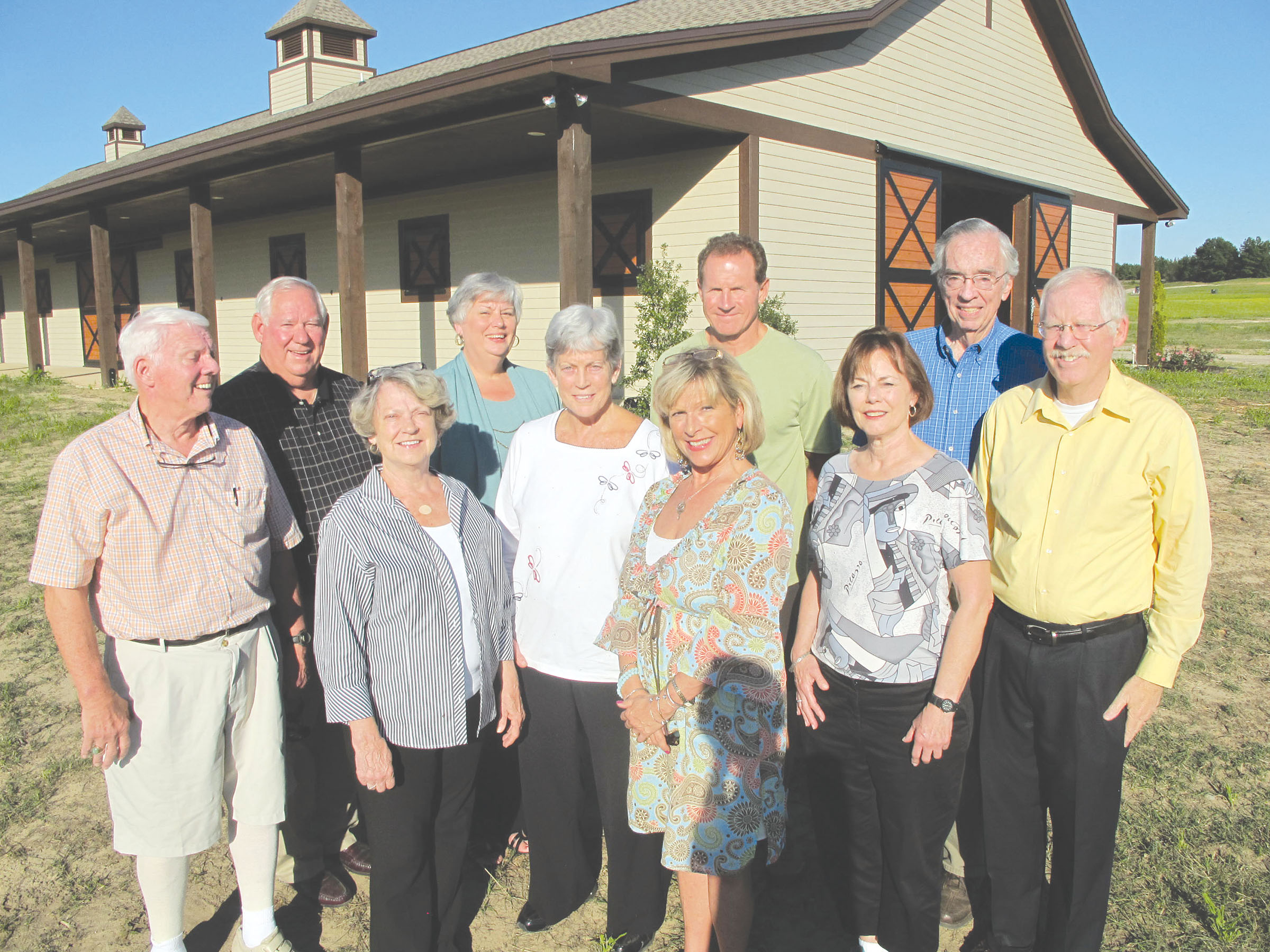
    Organizers for BBQ, Bluegrass and Bluejeans, a fundraising extravaganza to be held at The Farm at Ridgeway, located on Highway 21 just north of Blythewood, met at the barn on Monday to finalize plans for food, entertainment and fun. The event, planned for Oct. 13, benefits the Fairfield Memorial Hospital (FMH) Foundation. Proceeds will be used to purchase rehabilitation equipment. Members of the organizing committee are (front row): Nelson Lacy (chairman of FMH), Virginia Lacy (vice-president of the FMH Foundation/BBB chairwoman of entertainment), Judi Montgomery (BBB co-chairwoman food committee), Phyllis Nichols Gutierrez (BBB event chairwoman/FMH Foundation board member) Dawn Catalano (executive director of FMH) and Mike Quinn (president of FMH Foundation); (back row): Larry Sharpe, owner of The Farm at Ridgeway, Norma Branham (BBB co-chairwoman food committee), Randy Kelley (FMH Foundation/BBB chairman of set-up) and Dr. Mack Hughes (auctioneer.)

  • Ball Field Search Stagnates

    Almost no progress has been made toward acquiring additional ball fields to accommodate the Blythewood Baseball League (BBL) and the Blythewood Recreation Center’s five new girls’ softball teams, according to Bob Mangone, chairman of the town’s baseball field committee. Mangone was appointed last spring by Mayor J. Michael Ross to chair the committee charged with identifying potential additional fields.

    There are only three ball fields in Blythewood and they are owned by the Richland County Recreation Commission. Mangone wants to find four more. He said he is trying to find the owners of a 1-acre lot adjacent to the current ball fields. Mangone said that lot would provide one field, but after three months, he hasn’t been able to find out who owns the lot and whether they would sell it. Last summer he suggested the council might ‘take’ the property through eminent domain.

    In August, Mangone said he was also looking at 8 acres behind Bethel-Hanberry Elementary School that is owned by Richland School District 2, but this week said that he has not had a chance to ask the school about using that acreage.

    James Brown, Executive Director of the Richland County Recreation Commission, which owns Blythewood Rec Center, said the Commission plans to ask the School District to allow the girls’ softball teams to play there next spring.

    An agreement was reached for the softball and baseball teams to share the three Rec Center fields during Fall Ball.

    With 15 BBL teams playing Fall Ball, and only five softball teams, that works, but in the spring there will be 35-40 BBL teams and more softball teams. Mangone said something will have to be worked out before then if everyone is going to have a field to play on.

    While Mangone had promised a public forum on the issue in both August and September, he said the forum is now on hold.

    Bill Trapp, president of the BBL did not return calls from The Voice, and Jeff Brown, who organized the girls’ softball league at the Blythewood Rec Center and has recently been promoted to Program Director over all the County Rec Centers, was also unavailable for comment.

  • Ordinance Would Change Blythewood Election Day

    Town Council passed the first of two readings to change the town’s election date to make it a more uniform date to coincide with other elections in Richland County.

    Under the proposed ordinance, the town’s regular elections for the offices of mayor and council will be held in odd numbered years on the first Tuesday after the first Monday in November.

    Town attorney Jim Meggs explained that this might or might not be the first Tuesday of the month.

    If the ordinance passes second reading it will become effective upon preclearance by the Department of Justice, Voting Rights Division.

    In other business, Council approved a verbal resolution for the transfer of the development agreement for the Abney Hills development from its former owner, Mike Shelley to Security Federal Bank in Irmo who now owns the property as part of a fee in lieu of foreclosure and plans to act as developer to finish the buildout.

    The verbal resolution also approves a resetting of the buildout dates from 2013 to 2016.

    Council also passed second reading to amend the town’s Hospitality Tax ordinance. Changes included giving business owners 10 days instead of a 24-hour notice to prepare for an audit or inspection.

    The ordinance also provided that if a business changed ownership and the previous owner was delinquent in paying Hospitality Tax, the new owner would be responsible for paying the unpaid balance.

    Council also passed first reading on an administrative ordinance that would establish new commercial zoning district regulations in the Town.

    An executive session was on the agenda to discuss proposed contractual arrangements and proposed sale or purchase of property; however, the session was cancelled.

    Town administrator John Perry announced that Council would probably hold one or two workshops during October to discuss the new commercial zoning amendments. Those dates will be announced later.