Category: News

  • Fairfield County School District Results Mixed on State Reports

    The Fairfield County School District saw its Absolute Rating improve from a Below Average mark in 2011 to Average in 2012, according to district and school report cards released Tuesday by the S.C. State Department of Education. It is the highest Absolute Rating the district has received in the last five years. The district’s Growth Rating dropped from Excellent in 2011 to Good on the current reports, while schools across the district showed mixed results on the 12th annual report cards.

    The Absolute Rating is based on a school’s academic performance on achievement measures for the current school year while the Growth Rating is the level of growth in academic performance when comparing current performance to the previous year’s performance.

    A battery of numbers on the reports show the district performing close to or better than similar districts. On PASS Test results, the Fairfield County School District had a higher percentage of students scoring “Met or above” than in similar districts in every subject but Writing, in which Fairfield was off by only 1.5 percentage points. Likewise, the percent of students scoring “Exemplary” also bested those of similar districts in every subject but Writing, which Fairfield missed by 0.2 percentage points. In HSAP results, the percent of Fairfield students passing two subjects was 63.4 percent, compared with 65.2 percent in similar districts. More significantly, 10.2 percent of Fairfield students passed no subjects on the HSAP tests, versus 16.1 percent of students in similar districts. Fairfield’s overall HSAP passing rate as of spring 2012 was 84.1 percent, while in similar districts that number was 86.2 percent. Fairfield’s End of Course test passing rate outpaced similar districts by nearly a full percentage point, 49.5 to 48.6 percent, while Fairfield’s on-time graduation rate was 76.6 percent, compared to 74.8 percent in similar districts. The dropout rate shrank from 2.7 percent last year to 1.5 percent this year, while the attendance rate fell from 97.5 percent in 2011 to 96.2 percent in 2012. The district received an overall grade of B on last spring’s Federal Accountability Rating System.

    Fairfield Central High School

    held steady at Average for the third consecutive year on its Absolute Rating, while its Growth Rating improved from Below Average in 2011 to Good in 2012. Compared to similar high schools, Fairfield Central’s HSAP passing rate was better by more than 3 percentage points, 84.1 to 80.5. Fairfield Central’s on-time graduation rate was 76.9 percent, compared to 66.9 percent in similar high schools. Fairfield Central showed slightly better numbers in English and Biology than similar high schools on the End of Course tests, and slightly lower numbers in Algebra. Fairfield Central’s performance in U.S. History was significantly lower than similar high schools, bringing their overall End of Course numbers down to 43.4 percent, versus 47.1 percent in similar high schools. Money spent per pupil at Fairfield Central rose 10.5 percent in 2012 to $9,174. Parent attendance at teacher conferences was down from 87.69 percent in 2011 to 85.3 percent in 2012. The student-teacher ratio improved slightly from 24-1 in 2011 to 22.2-1 in 2012.

    Fairfield Middle School

    also held steady at Average on both its Absolute and Growth ratings. Money spent per pupil also held steady at $10,274, and the student-teacher ratio of 16.2-1 also saw no change. Parents attending conferences fell slightly from 100 percent a year ago to 99.9 percent in 2012.

    Fairfield Elementary School improved to Below Average on its Absolute Rating, up from At-Risk in 2011 and 2010. Its Growth Rating remains at Below Average, where it has been since 2010. Money spent per pupil was down slightly this year to $8,308, a decrease of 0.3 percent, while the student-teacher ratio remained at 18.1-1 and parents showed 100 percent attendance at conferences again this year.

    The Fairfield Magnet School for Math and Science improved from Average in 2011 to Good in 2012 on its Absolute Rating, while its Growth Rating remained at Excellent for the second year in a row. Money spent per pupil rose 1.7 percent to $7,754 and parents attending conferences improved from 88.8 percent a year ago to 100 percent this year. The student-teacher ratio increased significantly in the past year, from 8.9-1 to 18.3-1. That ratio is still lower than similar schools, whose average ratio is 19.1-1.

    Geiger Elementary, while retaining its Below Average Absolute Rating, saw its Growth Rating fall from Average last year to At-Risk this year. Although the student-teacher ratio improved from 17.4-1 last year to 11-1 this year, the amount of money spent per pupil decreased 6.7 percent to $8,090. Parent attendance at conferences was also down from 96.6 percent to 34.1 percent.

    Kelly Miller Elementary held its Absolute Rating of Average for the third consecutive year, but saw its Growth Rating fall from two straight years of Excellent to Average. Money spent per pupil increased 3 percent to $9,420 and the student-teacher ratio improved to 11.5-1 from 13.5-1 last year. Parents attending conferences held at 100 percent.

    The Absolute Rating at McCrorey-Liston Elementary fell from Average in 2011 back to its 2010 rating of Below Average, while its Growth Rating remained at Average for the third consecutive year. Money spent per pupil rose 1.1 percent to $10,136, while the percentage of parents attending conferences fell from 94.5 to 91.4. The student-teacher ratio for MLE was not reported.

  • Ridgeway Gets Ringing Endorsement from CPA; Council Offers Lease on Old Town Hall

    The economy may be on hard times, but the town of Ridgeway appears to be in great shape, having received an “unqualified” opinion on a recent audit, conducted by Howard Nichols, CPA.

    “That’s what you want, an ‘unqualified’ opinion,” Nichols told town council Thursday night. “That’s the best you can get.”

    Nichols said the town had a total of $721,509 in cash investments, compared to $482,192 in expenses.

    “Cash-wise, you’re in really good shape,” he said. “You could go a year and a half without receiving any money.”

    After receiving an overview of the preliminary report, Mayor Charlene Herring wanted one final confirmation from their CPA.

    “My question always to Howard Nichols is, ‘Are we fiscally sound?’” Herring asked.

    “Yes,” Nichols answered. “Ya’ll are in good shape.”

    Council also gave first reading to an ordinance amending the tax rate paid by insurance companies to 6 percent on premiums sold inside the town limits. A similar ordinance was passed last week by the Winnsboro Town Council, and is required to keep municipalities in line with recently passed state legislation.

    Following an executive session, council voted unanimously to offer a lease on the Old Town Hall building to restaurateurs Elisseos Mergianos and James Miller.

  • Congressman Addresses Fairfield County Council

    Earmarks are a thing of the past, but that doesn’t mean counties and municipalities are being completely hung out to dry by Washington, D.C. That was the word from U.S. Rep. Mick Mulvaney (R-5th District) to Fairfield County Council Monday night as he presented a brief review of the state of affairs in the nation’s capital and encouraged Council members and the public to reach out to him for assistance.

    “I wish that I could come and tell you that I had my finger on the pulse of Washington, D.C., and I could tell you where I thought things were going to go in the next couple of weeks,” Mulvaney told Council. “I don’t have that feel, yet. I hear what everyone’s been saying on T.V. about more willingness to compromise and discuss things and possibly moving forward. I don’t know yet if that’s empty rhetoric or if it’s actually going to happen.”

    Mulvaney, who was re-elected to a second term to Congress Nov. 6, met with Council in a work session prior to Monday’s regular meeting where the discussion centered largely around the state of federal aid to the local level. Mulvaney rehashed the highlights at the podium during Council’s regular session.

    “I cannot foresee a circumstance where federal grants and aid to political subdivisions like counties and towns will go up dramatically,” Mulvaney said. “I can foresee a circumstance or two where they might drop dramatically. But really, I think what you should be planning for for the next couple of years, at least the next two years, is pretty much the status quo. Unless there is some outside shock to the economic system, pretty much you should see a generally similar approach over the course of the next two years.

    “Earmarks are gone,” Mulvaney continued, “grants are not. Earmarks and grants are not the same thing. Competitive grants, where we actually try to apply for them without political influence but with some political support, are very much alive and well, and something we participate in a lot with my office on a regular basis.”

    Mulvaney said Council, or the public, should feel free to call his Rock Hill office at 803-327-1114, his cell phone at 803-246-1001, or his Washington office at 202-225-5501 if they needed assistance.

    “The office we run in Rock Hill is not a political operation,” Mulvaney assured Council. “The office in D.C. is not a political operation. We do not ask if you are a Democrat or a Republican. We do not even ask you if you have voted. We are in the constituent service business.”

    Addressing another looming political concern, Terry Vickers, President of the Fairfield County Chamber of Commerce, asked Council for a letter of support to be sent to Washington encouraging President Barack Obama and budget axe wielders to spare Midlands area military bases from potential cuts.

    Fort Jackson in Columbia is the largest Army training facility in the nation, Vickers said, and Shaw Air Force Base in Sumter is home to the Third Army. These bases represent an economic impact of some $7.1 billion in the Midlands, Vickers said, including revenue from local businesses generated by the troops and their families, as well as the associated supporting civilian jobs.

    “The President is looking at cuts to our defense spending,” Vickers said. “What I am asking from County Council tonight is your consideration of a resolution and also letters to our delegation to let them know how strongly we feel that we do not need to have the impact of sequestration (withdrawal/retirement), the defense cuts, at our Midlands’ bases.”

    Vice Chairman Dwayne Perry said he was skeptical of any suggestion that Washington might shut down its largest Army training facility.

    “I clearly don’t see how our president would make that kind of decision,” Perry said, “and I don’t think our congress or anyone else would let him do that.”

    “I feel the same way,” Vickers said, “but I would really feel more comfortable having that cushion of support there letting whomever has the red pen know that we stand united with our military bases and what they can do for us and what we can do for them.”

    David Ferguson, Council Chairman, instructed County Administrator Phil Hinely to look over the draft letter Vickers had provided and make it available to Council for their signatures at the next regular meeting.

  • A ‘Corny’ History of Little Candies

    Eaten a lot of these lately? Don’t feel bad: they’re fat-free!

    Well, we have one of the fall holidays behind us, Halloween. Are you wondering how many calories you ate with those little candy corns? It is hard to keep track when you grab them by the handfuls. Put your mind at rest: each tiny candy has only 3.57 calories per kernel. Even though it tastes rich, it is fat free.

    We eat these sugary little spikes known as candy corn year around, but they are most popular and mainly associated with Halloween. Actually Oct. 30 was National Candy Corn Day. They have been around for a very long time, invented in the year 1880 by George Renninger of the Wunderle Candy Company. This company in Philadelphia was the first to go into commercial production. It was later introduced to the mass market around 1898 by the Gustav Goelitz Confectionary Company in Cincinnati (which would later make the jelly bean) and quickly became popular thanks to its innovative multicolored look.

    Making candy in those days was much more difficult than it is today with all the machinery available now. In those early days, large kettles were used to cook the basic ingredients of sugar, water and corn syrup. Marshmallow was later whipped in to make it softer. The hot candy mixture was then poured into hand-held buckets called ‘runners.’ Each runner held 45 pounds of the hot mixture. Men called ‘stringers’ walked backwards pouring the steaming candy into trays of cornstarch in kernel-shaped molds. A pass was made with the white, then orange and then the yellow. The last process is a glaze applied to make it shine. This was one of the few candies made in different colors and people were fascinated, adding to its popularity. The candy was so popular that other companies tried other vegetable shapes, such as turnips. Did not think that would go over and I notice there are none around. The candy was originally sold in bulk containers, packed in wooden buckets, tubs and cartons and delivered by wagon and train. Distribution of any distance was limited because of being perishable.

    During World War I, Herman Goelitz, son of Gustav, moved to California and started his own company. Sales went down considerably during the recession and war times. In the 1970s when the price of raw sugar was so high, the company had to borrow money to keep afloat. While many other companies went out of business, the demand for candy corn kept the Goelitz Company from bankruptcy. You might better recognize the name that the Goelitz Company in later years changed to. It is now known as the Jelly Belly Candy Company. This little candy has remained unchanged for more than 100 years, although today machines do most of the work. Halloween accounts for 75 percent of the candy production and over the years the company has come out with reindeer corn (red, green and white), Indian corn (chocolate and vanilla flavored), Cupid corn for Valentine’s day (red, pink and white) and bunny corn for Easter (pastel colored).

    Candy corn produced this year will amount to close to 35 million pounds. That is about nine billion individual kernels of corn. It is very popular in the United States and Canada. Brach’s is the main retailer of candy corn and sells enough candy each year to circle the earth 4.25 times if the kernels were laid end to end.

    So if your trick-or-treater brought home many of the candy corns, just remember the 3.57 calories and enjoy them.

  • Recount of District 4 Confirms Marcharia Win

    A recount Friday morning by the Fairfield County Elections Office confirmed a narrow victory for incumbent Kamau Marcharia in County Council’s District 4.

    Totals that rolled in late on election night, Nov. 6, indicated a four-vote edge for Marcharia over his challenger Mary Brown, 834-830, a margin of less than 1 percent. The results triggered an automatic recount for the seat, which Friday tallied up the exact same results, according to Debbie Stidham at the Voter Registration Office.

    After the recount, Marcharia said he was naturally relieved.

    “Every vote counts,” he said, “and this election demonstrates that.”

    Marcharia said he had to work vigorously during this campaign against a challenger who had employed a very energetic and, to some extent, successful ground game that included a lot of knocking on doors and early voting. But in the end, Marcharia said, his base in Jenkinsville and Lake Monticello helped him carry the day.

    “The overwhelming support from my constituency put me over the top,” he said.

    Marcharia said he did not believe the close vote was a referendum on his policies, but was instead simply a vigorous effort by his opponent.

    “I don’t see any reason to change what I’m doing,” Marcharia said. “I don’t think people are dissatisfied with what I’m doing. I’m out there fighting for things for them.”

    Things like a new fire station and EMS station in the area, which Marcharia said would be in next year’s budget and which would help residents in District 4 feel some relief on their home insurance premiums. But the one lesson Marcharia said he did learn: “You can never take politics for granted.”

  • Winnsboro Town Council OK’s Trio of Ordinances

    Winnsboro Town Council gave the OK to three ordinances during their regular meeting Monday night, aimed at tighter zoning regulations, greasy clogs and taxes on insurance companies.

    Ordinance 110612A revises the town of Winnsboro’s zoning codes. Section one of this ordinance states that the town of Winnsboro’s zoning ordinances adopted in April of 1999 shall be repealed in their entirety and the town is to be re-zoned. New zoning includes: authority and jurisdiction, dividing the town of Winnsboro into different districts, regulating and restricting the height of buildings and other structures, regulating and restricting the percentage of lot areas that may be occupied, regulating and restricting the location and use of buildings, supplementary regulations for parking and landscaping, regulations of signs, providing for the method of administration and amendment, providing penalties for violations, defining powers and duties of the board of zoning appeals and repealing the previous zoning ordinance.

    Ordinance 110612B regulates the discharge of fats, oils and grease. It is intended to aid in the prevention of sanitary sewer blockages caused by the introduction of fats, oils and grease. No later than one year after the adoption of this ordinance all establishments and users shall install grease traps or interceptors designed to limit the introduction and discharge of grease.

    Finally, the third ordinance approved was ordinance 110612C, an ordinance amending business provisions for insurance companies. The ordinance amends the tax rate paid by insurance companies to 6 percent on premiums sold inside the town limits.

    After the motions were approved, council members took time to recognize the planning commission for their work over the last 15 months in reviewing and revising the new zoning ordinances and regulations. Mayor Gaddy presented them with plagues and a few special words.

    “I know you all have worked tirelessly,” Gaddy said. “We appreciate the hard work you’ve done and it has not gone unnoticed.”

    Council kicked off Monday’s meeting by designating November as “National Hospice and Palliative Care Month.” Gaddy expressed the importance of hospice care.

    “We encourage citizens to increase their understanding and awareness of care at the end of life,” Gaddy said. “We want to observe this month with the appropriate activities and programs.”

    In other business the council authorized the rental of the Armory to the Moratorium on Nov. 21 and on Dec. 29. The next town council meeting is on Nov. 20.

  • Receipt Confirms Board Secretary’s Claims

    Documents obtained by The Voice through a Freedom of Information Act (FOIA) request confirm claims by Fairfield County School Board member Danielle Miller that she returned to the District nearly 100 percent of a mileage check provided to her for travel to a conference in Atlanta, Ga., last summer, to which Miller drove a District-owned car. What remains unclear, however, is why at least some of that money wasn’t used to supply fuel for the vehicle at some point during the approximately 500-mile round trip.

    Miller, who serves as Board Secretary, attended the conference on school bullying at the Atlanta Hilton Hotel June 28-30 and was issued a check for $528.38 by the District on June 21. That total amount included a $225 per diem (Miller was originally only to attend two days of the event), $63 for parking and $240.38 for mileage. An additional per diem check of $75 was issued to Miller on June 27 after Miller found she could attend the full conference.

    Through an email exchange between Miller and The Voice in September, Miller said she had returned the mileage money to the District and told The Voice that she would be happy for the newspaper to view a copy of the receipt. After repeated additional email exchanges, however, Miller failed to provide The Voice with any evidence the mileage money had been returned, prompting an FOIA request.

    Received by The Voice last week, a copy of a cash receipt (number 006024) from the District’s Finance Office, signed by Kevin Robinson, Finance Director, indicates that Miller returned $240 to the District on Aug. 21. The inference from the receipt is that Miller used 38 cents to purchase gas for the District car, a virtual impossibility.

    As of press time, Miller had not responded to questions as to why she returned so much mileage money to the District had how fuel was provided for the District car.

    For past stories on the ill-fated Atlanta trip, see our July 27 and Aug. 24 issues.

  • Compliments to the Chef, from the Community

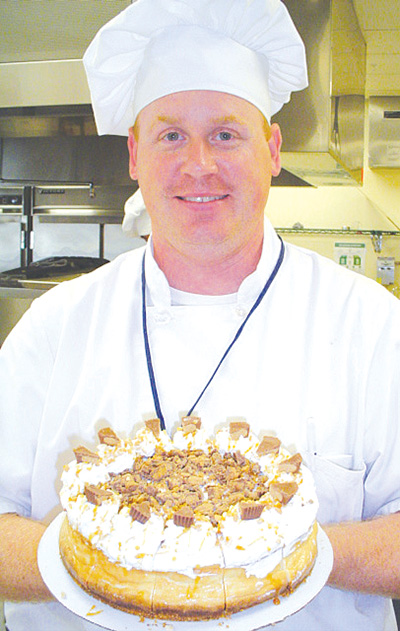
    Chef William Turner

    Although high winds and light rain were predicted, they never materialized as the community turned out Sunday afternoon, Oct. 28, to show their appreciation to retired Blythewood High School Chef William Turner, who established the BHS culinary arts program seven years ago. Since that time it has flourished under his guidance, but because of health issues, Chef Turner has had to retire to focus on his medical treatment.

    The event was set in the gardens of Reese’s Plants on Wilson Boulevard as a benefit for the Turner family as they face mounting expenses associated with that treatment.

    Some of the Blythewood and the Columbia area’s finest chefs manned tents and tables from 4 to 7 p.m., offering samples of delicious foods, from veggie sliders to roasted quail. Turner’s friends, co-workers and former students paid $15-$25 per person for the food-sample tour.

    But the evening wasn’t just about food. Two for the Road entertained and Winnsboro artist Christie Buchanan’s whimsical artwork was displayed among the flowering plants and trees. It also showed up on a charming potting shed at the entrance to the gardens.

    An archway of festive blue and white balloons, provided by Balloons, Arches & Flowers of Columbia, welcomed guests along the entry path and balloons flew atop the food tents.

    Guests dined and visited at formal tables throughout the garden. Joe Pinner emceed and as soon as everyone saw the great raffle prizes, they were buying raffle tickets by the handful.

    It was a wonderful sunny afternoon with lots of visiting and eating in an enchanting setting. It was a unique culinary event befitting ‘The Chef.’

  • Resounding Wins for Coleman, Douglas

    Although the results will not become official until Friday morning – and in the race for the District 4 seat on Fairfield County Council, perhaps not even then – results from Tuesday’s election indicate some convincing winners.

    Incumbent Creighton Coleman will return to the S.C. State Senate in District 17, besting his Republican challenger Robert Carrison 18,401 votes to 6,808. Coleman handily won his native Fairfield County, 8,896 to 2,600. In Chester County, Coleman won by 4,644 votes, 8,810 to 4,166.

    “I appreciate the confidence the voters of District 17 have expressed in me,” Coleman said late Tuesday night. “I look forward to representing them for another four years with honesty and integrity.”

    In the race for the District 41 seat in the State House, Democrat MaryGail Douglas took home a resounding victory over Republican William Gray, 11,419 votes to 3,274. Douglas earned 8,896 of those votes in her home county of Fairfield where Gray could only muster 2,600 votes. In Chester County, Douglas won 2,523 votes to Gray’s 674.

    Gray admitted that a Republican victory in District 41 was a long shot from the start.

    “I set out to create a two-party system for Fairfield County,” Gray said. “Victory was not even something I contemplated. I knew it would be an uphill battle.”

    Gray said he was particularly disappointed on his lackluster showing in his home precinct.

    “I did not win my home box,” Gray said, “which says to me that black people in this community need to do a self-examination on where they stand and where they want Fairfield County to go.

    “I congratulate Mrs. Douglas on her victory and I will support her in her efforts,” Gray said.

    Douglas said she was overwhelmed by the voter response.

    “It’s mind boggling how many people turned out,” she said. “It’s a mandate that says ‘we’re behind you.’ We’ve got a lot of work to do, and I will be looking to folks for input.”

    In other Fairfield County races, incumbent Annie McDaniel retains her District 4 seat on the Fairfield County School Board, beating back two challengers. McDaniel earned 725 votes while Arthur Lathan brought in 554 and Carrie Suber-O’Neal 436.

    “I was a little bit nervous,” said McDaniel, who is known for her fiery nature representing District 4. “I appreciate the support the voters have given me and I appreciate that they’ve given me one more chance to serve them.

    “For some in District 4, (the results) say they like the fight,” McDaniel added, “that I take on a challenge. For others, I think they would like for me to continue to fight, but on a lighter note.”

    School Board District 2 incumbent Danielle Miller lost her bid for another term Tuesday night, falling to Paula Meisner Hartman 855 votes to 574. William Frick easily took the District 6 seat with 898 votes. Thomas Armstrong, running as the write-in candidate, earned only 14 votes.

    One Fairfield County race, for the District 4 seat on County Council, will have to undergo a recount before the results can be determined. Tuesday night, incumbent Kamau Marcharia tallied 834 votes to Mary Brown’s 830. Some voting irregularities were reported in early voting for that race, with votes for Marcharia turning up for Brown. The voting machines had to be recalibrated, according to reports, putting as many as 86 votes at risk.

    “It’s kind of nerve racking,” Marcharia said Tuesday night. “It just goes to show you, every vote counts.”

    Elsewhere in County Council, incumbent Carolyn Robinson won another term in District 2, beating challenger Vernon Pylant 931 votes to 606. Mary Lynn Kinley, unchallenged in District 6, earned 909 votes.

    In other Fairfield County races, the unchallenged Herman Young won 10,427 votes in his bid for another term as Sheriff; Betty Jo Beckham, also unchallenged, won 10,745 votes for the Clerk of Court office; and Barkley Ramsey will see another term as County Coroner with 10,542 votes.

    H. Keith McDonald (77 votes) and Oscar L. Buddy Peay (34 votes) were the only vote-getters in the race to fill three empty seats on the Rocky Creek Watershed. In the Jackson Mill Creek Watershed, also with three seats to fill, the write-in candidate earned 60 votes. The Wateree Creek Watershed also had three seats to fill, with the single write-in candidate earning three votes.

    Lucas Vance contributed to this story.

  • Fairfield County Honors Veterans Friday

    Today, Fairfield County celebrates our countless veterans who have bravely and gallantly served our country. This year’s ceremony will take place at the Fairfield County Recreation Department’s gymnasium starting promptly at 11a.m. We invite everyone to attend our celebration.

    In countless ceremonies like this – repeated across the land – Americans will pause to honor our Veterans. Over the course of 237 years of independence, these patriots have stood watch over our liberty. From Bunker Hill to Bagdad, we are the beneficiaries of their vigilance and determination to uphold the democratic beliefs on which our nation was founded.

    America has been blessed as no other country in the history of the world. The sacrifices of our armed forces have given us the security and freedom in which to grow and flourish as a nation – in law, human rights, economics, science and technology, and the arts. We only need to look at the news headlines to know that our way of life is a beacon of hope and freedom to others, across the world. It has drawn millions to our shores and serves as a model of democracy for the world.

    We remember America’s heroes, for it was on the 11th hour of the 11th month of 1918 that the guns of the Great War fell silent across Europe and the dough boys started coming home. The guns did not stay silent for long, however. Our troops have persevered on the wind-swept beaches of Normandy, on the frozen ground of Korea, in the sweltering jungles of Vietnam and in the sandy deserts of Iraq. Today, we think of those who fought the decisive battles and who have kept the fragile peace since the founding of our Nation. Let it be our mission to preserve the memories of their great deeds.

    Today we also remember the men and women who tonight and every other night of the year will be sitting alone in the dark, waiting to go on patrol, keeping the peace close to home, or standing guard in faraway places like Helmand Province or Kandahar. Every day, they put on their uniforms and they lay their lives on the line for each of us – to allow us to continue to enjoy the blessings of freedom. They are today’s soldiers, sailors, airmen, Marines and Coast Guardsmen, who have stepped forward and answered the call to arms. They are tomorrow’s veterans. May we forever be thankful and grateful!

    – Department of Veterans Affairs