Category: News

  • Sinkhole repaired on Oakhurst Road

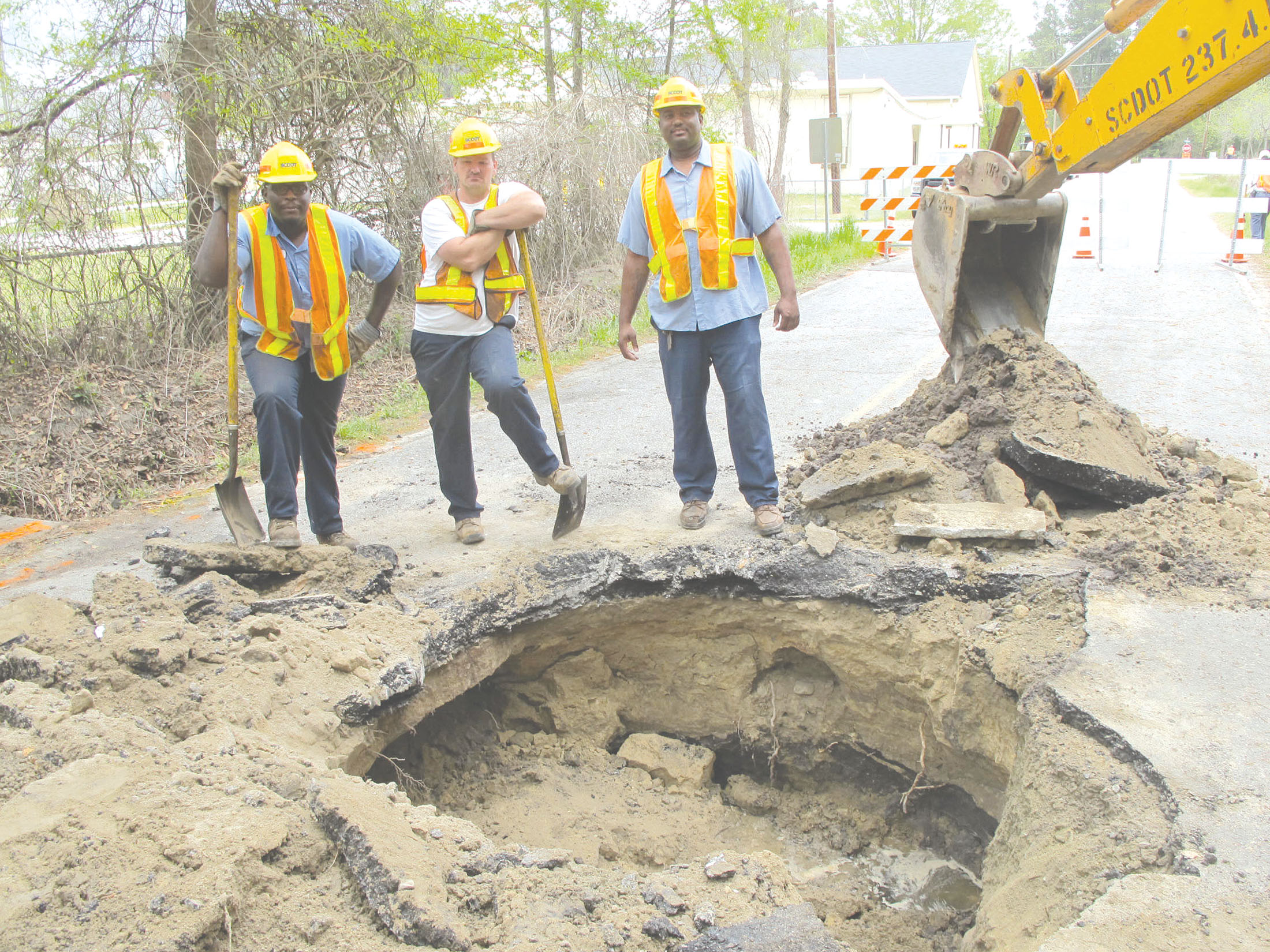
    James Collins of Blythewood, left, and fellow SCDOT crew members Brent Lilly and foreman Carlos Jackson work to repair the sinkhole in Oakhurst Road.

    BLYTHEWOOD – A sinkhole was reported on Oakhurst Road Saturday afternoon, causing the road to be closed for several days.

    When S.C. Department of Transportation (SCDOT) road crews arrived on the scene, they discovered a hole in the pavement about 3 feet in diameter about 150 feet from the Blythewood Fire Station. According to crew foreman Carlos Jackson, a much larger cave, measuring about 5 by 10 feet, was discovered beneath the hole in the pavement. Jackson said the sinkhole was caused by a broken, 2-foot diameter concrete drainage pipe that runs underneath the road.

    He said the force of the water pouring out of the broken pipe had carved out the cave beneath the pavement. SCDOT crews set up barricades blocking traffic on Oakhurst Road, and the repair work was completed by Tuesday.

  • Tax hike could follow R2 budget

    RICHLAND – The $225 million 2013-2014 general fund budget for Richland School District 2 will have its second and last public hearing (and only vote) Tuesday at Westwood High School during the next School Board meeting, which begins at 5 p.m. The vote will most likely result in higher taxes for the county’s businesses since that is the only way the District can raise the necessary funds.

    The passage of ACT 388 eliminated the residential property tax source, and the amount of money that comes to the District from personal income and sales tax are out of the Board’s control.

    Those wishing to study the budget prior to the meeting will find it by going to richland2.org, then click on School Board, Agendas, April 9 meeting, then Budget.

    The District’s finance department will present three budget options to the School Board based on: 1) No tax increase for business (0 mills); 2) Middle tax increase for business (9 mills); and 3) Maximum tax increase for business (12 mills). Millage is a complicated formula that determines the tax per each $100,000 of business property values.

    The 12 mill budget reflects a $10.6 million increase over the District’s current budget.

    Under a 12 mill budget:

    *Step increase for eligible employees (including benefits) increase $4,479,379.

    The step increase is the 2 percent raise required by law for all certified teachers. Historically, the District has extended this raise to all employees including the 36 or so District employees who each earn more than $100,000, as well as to Superintendent Dr. Katie Brochu, who earns more than a quarter of a million dollars with benefits. Meanwhile, some District employees, such as aides in the classroom, earn wages at poverty level for a family of four.

    *An increase of $399,352 to hire four more School Resource Officers.

    Social worker salary schedule moves to teacher salary, for an increase of $161,439.

    In plain English, that means school social workers would receive the same pay as teachers with masters degrees. The Board supports this salary increase proposal as well as Board member Melinda Anderson’s frequent calls to increase the District’s number of social workers to meet the District’s changing demographic needs. But in many instances, the social worker’s job is a duplication of the same services provided by the County.

    *Creation of quality & development support staff position for an increase of $111,250.

    The Board recently increased the previous budget by $200,000 to expand professional development opportunities for para-professionals (secretaries, etc.). The proposed 12 mill budget calls for the creation of a new staff position (at a cost of $111,250) to track the additional $200,000 professional development opportunities.

    *An additional $863,324 for the Center for Knowledge – North.

    When a duplication of the Center for Knowledge for elementary students was suggested for the northern end of the District (to be housed in Muller Road Middle School in Blythewood), it was recorded that the cost would be $672, 690. Now cost almost $200,000 more.

    *Foreign language in elementary schools eliminated from budget

    To realize $1.3 million in savings, the District has eliminated foreign language in elementary schools from the budget altogether. Many Richland 2 parents continue to protest this elimination since they feel it is the hallmark of an exemplary school district.

    It is reasonable to expect the budget to have a direct correlation to the District’s academic success and progress. Yet, after almost four years of the Brochu budget, there has been no turnaround in the three-year drop in high school SAT scores or the continuing drop in elementary and middle school PASS scores.

    All members of the community are encouraged to attend the budget meeting. There will be two opportunities to make comments to the Board — once before the vote and once after the vote.

  • Former WDPS officer accepts plea deal in shooting

    FAIRFIELD – Michael Bernard Roseboro, the former Winnsboro Department of Public Safety Officer who shot his estranged wife while on duty last October, was sentenced to 17 years in prison last week. Prosecutors for the Sixth Judicial Circuit accepted a guilty plea to a reduced charge of assault and battery of a high and aggravated nature on April 11. Roseboro was originally charged with attempted murder and faced a maximum sentence of 20 years.

    Roseboro was on duty with the Department of Public Safety when, at around 9:15 p.m. Oct. 28, he drove his patrol car to the home of his estranged wife, Keisha Roseboro, at 148 8th Street and shot her one time with his service weapon. Roseboro fled the scene in his squad car, prompting a search that lasted four days. Roseboro was surrounded by agents from the State Law Enforcement Division at Camp Welfare on Nov. 1 and, in the middle of negotiating his surrender with Fairfield County Chief Deputy Keith Lewis, shot himself one time in the chest as officers closed in.

    Roseboro had been with the Department of Public Safety for three months at the time of the shooting and had also served with the Fairfield County Sheriff’s Office from 2001 to 2010, first as a deputy and finally as an investigator. He was fired for lying to County officials about the sale of a fire department pumper truck.

    Keisha Roseboro has since filed a civil lawsuit against the Department of Public Safety on behalf of herself and her two children who witnesses the shooting.

    John T. Mobley, attorney for Takisha (Keisha) Roseboro, filed the complaint Feb. 26 in the Sixth Judicial Circuit’s Court of Common Pleas in Fairfield County. The suit claims that the Winnsboro Department of Public Safety was negligent in hiring and retaining Michael Roseboro, knowing that “prior to October of 2012, multiple parties have filed claims and made allegations indicating that (Michael) Roseboro had a history of using excessive force and/or engaging in other conduct that indicated he was mentally unstable and or had a tendency to engage in violent behavior,” the complaint states.

    According to the complaint, The Winnsboro Department of Public Safety “knew, or should have known, that the continued employment of (Michael) Roseboro would create an unreasonable risk of harm to others.”

    Roseboro, along with officer Dwayne Robinson, the Town of Winnsboro and the Department of Public Safety, were named as defendants in a 2001 lawsuit filed by Ronnie O. Armstrong. That suit, which was settled in 2003, claimed negligent use of unreasonable and excessive force, false arrest and confinement, assault, battery and outrage, as well as negligent hiring and negligent supervision and training.

  • Bond Passes Second Reading

    FAIRFIELD – Although the parking lot was full and Council chambers were standing room only, when it came time for the public to speak, either for or against, the County’s latest $24.06 million economic development bonds Monday night, all was silent. Only one individual signed up to speak during the public hearing on the bonds, but when his name was called, he declined, paving the way for a 6-1 vote by Council to approve second reading of Ordinance 614.

    Carolyn Robison (District 2), who had voted for the ordinance during its first reading on March 25, was the lone dissenting vote Monday night.

    “We’re telling people there’s no additional taxes, but what we’re not telling them is that we’re paying off the present bond issue and this is not lowering their taxes at all,” Robinson said. “The red marks look nice, but this is the bottom line and the truth to what’s really going on.”

    The bonds are part of the County’s 10-year economic development plan, and approximately half of the funds generated will go toward the enhancement of the County’s two industrial parks and water and sewer infrastructure along the I-77 corridor. A portion of the funds – $3.5 million – will go toward the development of recreational parks, while another $3.59 million will go toward upgrades to the County Courthouse and the Administration Building and Sheriff’s Office. Some of the funds will also be designated for upgrades of fire stations in each district.

    Prior to the public hearing, Council heard from Mike Briggs, president and CEO of the Central S.C. Alliance, a regional economic development firm based in Columbia. Briggs said the County was on the right track, positioning itself for future economic investment. After years of being outsourced, manufacturing is returning to the United States, Briggs said, and companies are looking for move-in ready sites.

    “To be successful in this business, you’ve got to prepare for folks who want to come and look,” Briggs said, noting the 40 projects his firm has helped lead into the Midlands of South Carolina. “Those 40 projects aren’t here because we have raw land that can be turned into something in the next three or four years. That’s not the way things work. Your willingness and ability to create property, your willingness and ability to put infrastructure in the ground, to be forward thinking, has positioned this county very well in this globally competitive search for jobs and investment.”

    Council also held a public hearing on an application for a Community Development Block Grant to install sewer lines to the Middle Six community. The project would provide sewer lines to approximately 72 homes on Old Camden Road and Flora Circle and would require $50,000 in matching funds from the County. Steven Gaither, the County’s Grants Coordinator, said that in order to qualify for the federal funds, at least 80 percent of residents in the community must agree to tap onto the lines, and of those, at least 51 percent must be defined as LMI, or low to moderate income. Gaither said a request has been submitted to the Town of Winnsboro, who would provide the services once the lines were installed. If Winnsboro accepts, then the project goes to the U.S. Department of Commerce for approval. Within 12 months of final approval, the system would be in place, according to Kevin Strickland, an engineer with W.K. Dickson.

    The project is not necessarily a new idea, Council Chairman David Ferguson said, pointing out that fellow Councilman David Brown (District 7) has been working to make it a reality for at least 10 years. But, Ferguson said, residents in Middle Six have had reliable septic tank systems in place in the past, making them reluctant to sign on to a municipal system.

    “As time has gone on and these sewer systems have failed,” Ferguson said, “now folks are coming around to want to do this.”

    Council will hold its first work session for the 2013-2014 budget April 11 at 6 p.m. and will hold a special called meeting April 15 at 6 p.m. for final reading of the bond ordinance.

  • Council Lifts Water Restrictions

    WINNSBORO – Town Council officially terminated their extreme drought proclamation Tuesday night, with Mayor Roger Gaddy issuing a sigh of relief as he said the reservoir had made a dramatic recovery. Gaddy also said that the Town’s agreement with the City of Columbia, to provide 400,000 gallons a day to customers in Blythewood, has put the Town in a much better position than it was last August, when the proclamation was first issued.

    Council continues to negotiate terms of a new water contract with Columbia, meanwhile, which could bring additional water into Winnsboro’s reservoir.

    Council also voted to officially cut its ties with Red Clay Development, dropping the old Mt. Zion Institute property back into the Town’s lap once more. Council first voted to split with Red Clay last December, but legal wranglings have prevented the split from being official until Tuesday night. Red Clay purchased the property from the Town nearly three years ago for $100,000.

    At the suggestion of outgoing Councilman Bill Haslett, Council also elected to bring Hand Made in America of Asheville, N.C., into town on a fact-finding mission May 9. Haslett said the company would conduct an evaluation of Winnsboro and make recommendations on possible economic growth.

  • Water Committee Gets Inside Info From S.C. Agencies

    FAIRFIELD – As the steering committee for the formation of a Fairfield County regional water authority continues to hammer out the details of how such an organization would function, members of the committee heard from three other already established S.C. water systems during their April 3 meeting at the Midlands Technical College campus in Winnsboro.

    Representatives from the Lowcountry Regional Water System, the Anderson Regional Joint Water System and the Lake Marion Regional Water Agency shared with the Fairfield committee the hurdles they had to overcome in order to establish their systems, and their opinions on whether or not it was worth all the effort.

    Bill Clark, former Orangeburg County Administrator who serves on the Lake Marion agency’s board, said his group had both positive and negative experiences with the politics of organizing the system, but ultimately the system has been a benefit.

    “When you get multiple counties and municipalities around the table, it’s hard to get them all to agree all the time,” Clark said. “It helps if you like politics, and it helps if you’re good at it.”

    Once their agency was formed, Clark said, they found they had a group that carried significant political clout, one that represented Orangeburg, Clarendon, Berkeley, Dorchester, Calhoun and Sumter counties, as well as the town of Santee and the city of Sumter.

    “It was worth it,” he said. “When we finally came to a group that began working together, we found that we had a pretty powerful coalition put together; not only to collaborate on the cost of developing the system, but politically we started encompassing multiple Congressional districts at the federal level, multiple House and Senate districts in Columbia, and we found we had a little bit of a powerhouse put together there that helped us with funding.”

    One of the results was a new water plant on the shores of Lake Marion near the town of Santee that went into operation in 2008 debt-free.

    “We would have never pulled that off if we hadn’t had a group of six counties working together at that time,” Clark said. “We could not have done what we have done at this point without having multiple collaborators in the process. It’s allowed us to share costs and develop the kind of political alliances we’ve needed to be successful.”

    The Lowcountry system, said Fred Hannah, the agency’s engineer, is still a work in progress. It currently exists as a board that owns no assets. On May 1, all of the assets from the water systems of Hampton County and the towns of Brunson, Hampton, Gilford, Varnville and Yamassee will transfer to the regional system, Hannah said. Hannah said the smaller individual systems were gradually becoming overwhelmed with new, stricter regulations from the Department of Health and Environmental Control. Also, he said, while the individual systems had capacity to handle domestic growth, they were not capable of handling any real industrial growth in the area, which is ripe for development with work beginning to get under way on the Port of Charleston.

    “The benefits, short-term, are getting out of these regulatory compliance issues and consent orders,” Hannah said. “The longer-term benefit is to create both an operational reserve and a capital reserve to fund the long-term infrastructure we need for economic development capacity.”

    Bill Hancock, a CPA with the West Columbia firm Brittingham, Brown, Prince and Hancock, LLC, which handles audits for the Lexington Joint Municipal Water and Sewer Commission, as well as a dozen other municipalities, said it is difficult for a small water system to bear the burden of state compliance.

    “That becomes a fixed cost, along with your infrastructure costs,” he said, “and you end up having a small amount of people bearing a larger and larger burden.”

    Hancock also said that a single joint system can cut out duplicate services and have a single licensed water operator, as well as benefit from what he called an ‘economy of scale,’ with more people using the same system.

    “Once it’s up and going, there’s no mystery to how it runs,” he said. “The first step is the big one.”

    The Anderson authority comprises 15 members, including the towns of Anderson, Belton-Honea Path, Clemson, Powdersville, Central, Pendleton, Central and Williamston, as well as Clemson University. Dyke Spencer, manager of the Powdersville Water District and Chairman of the Anderson authority’s commission, said the process wasn’t easy, but it was worth it.

    “We had some rubs,” Spencer said. “Nine years ago, when I got introduced to this, I thought it was never going to work. But it will work. It does work. We had a lot more difficulty making decisions a few years ago than we do now.”

    Spencer said the members have, after some initial difficulties, adapted to the idea of regional benefit.

    “We’ve come to grips with the fact that most of the water that comes through that pipe goes to Clemson and they’re going to get the lion’s share of the benefit out of it,” Spencer said, “but we’ve all learned that it’s our regional thing we’ve got to do. The next big line will go another direction.”

    Several members of the Anderson system, including Powdersville, had to convert from non-profit organizations to special purpose districts in order to join the authority, a process that Mid-County Water is facing before joining a Fairfield authority. Herb Rentz, manager of Mid-County, asked Spencer how that process went.

    “I think it was fairly seamless,” Spencer said. “I had more trouble trying to make sure my board understood we weren’t a non-profit anymore, because they were used to having an annual meeting and we were trying to get them used to having monthly meetings and operate more like a special purpose district.”

    Hancock also pointed out that convincing customers to go along with the changeover was also a common hurdle to forming water authorities.

    “Once they realize that the ownership of the assets was not going to change – let’s be honest, folks, the towns don’t own these assets. The customers are the system,” Hancock said. “So by moving custodianship away from a town council to a commission, those customers haven’t lost any rights to those assets.”

    Water rates were foremost on the mind of Ridgeway Mayor Charlene Herring, and she asked the panel about their rate increases associated with forming their regional systems.

    Hannah said the average increase was about $5 per month, with a five-year plan in place to bring all the various water rates to the same level. He also said that water rates in many towns were artificially low.

    “I think there’s a strong connection to politics,” Hannah said, “where ‘I’m the mayor and I run the water system and I’m going to keep your rates low’.”

    But the flip side to that, he said, was that municipal water systems don’t have the funds to maintain themselves and begin siphoning off the general fund. That, Hancock said, leads to an increase in taxes, fees and fines in order to prop these systems up.

    “The days of the $12 water bill are over,” Hancock said. “That’s just not sustainable.”

    The next steering committee meeting is May 1 at 4 p.m. at the Midlands Technical College QuickJobs Center, 1674 Highway 321 Bus. N., Winnsboro.
  • New Schools Delayed to Fund Pet Project

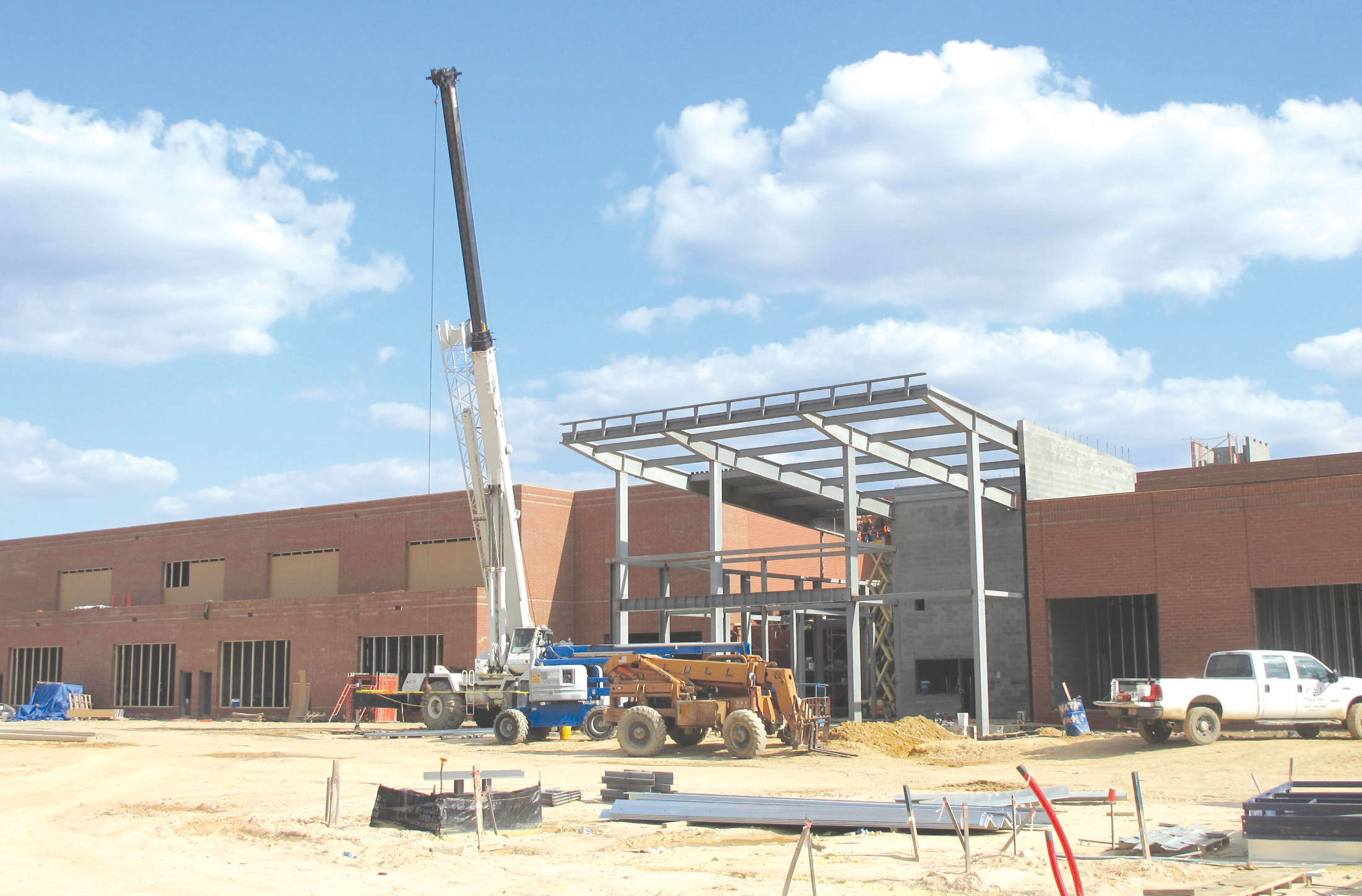
    Elementary #19, where all work has stopped.

    BLYTHEWOOD – In 2008, voters in Richland School District 2 passed a $306 million bond referendum for certain specified projects, including the construction of several new schools in Blythewood. Now it seems some of those specified projects in Blythewood are either on the block or delayed for the purpose of freeing up funds for a project that was never presented to voters before the 2008 bond was passed — a $40 million Student Education Center that was scheduled to be completed in July of this year. While it is rumored that the Center will be built on property near Two Notch and Clemson roads, possibly on the Clemson Extension Services property, no site has yet been disclosed by the Board. And a completion date is not on the radar.

    Among the projects approved for Blythewood in the 2008 bond referendum were Langford Road Elementary, Muller Road Middle, Westwood High School, Elementary #19 on Kelly Mill Road and Elementary #20 to be built at an as-yet-unspecified location.

    Now, more than a year after construction began on Elementary #19, the $30 million project is only 43 percent finished and construction is at a standstill with completion backed up at least another year. Elementary #20 has been put on indefinite hold. Sources close to the projects say the delays are intended to produce a savings for the District that is likely earmarked for construction of the planned Student Education Center that has yet to see the light of a full public discussion by the Board.

    How did that happen? Via a legal loophole that allowed the Board, on Sept. 11, 2012, to make a $39.5 million change order to what appeared to be a $500,000 District Office renovation study initiated by the Board six months earlier. While the original renovation contract was billed to the public as a feasibility study, it was actually a design-build contract from the start. A design-build contract gives the Board enormous latitude to change any and all components of the contract without public discussion and is rarely used for construction projects for school districts. It is important to note, too, that the District’s 10-year Facility Plan hadn’t called for District Office renovations until the year 2016. The renovation plan now appears to have been little more than a means by which to initiate construction of the Student Education Center without having to go through the ramifications of public approval.

    While the proposed Student Learning Center came as a surprise to the Richland 2 public, the fine print in the original RFP (Request for Proposal) actually laid out the Board’s real intent for the Center, stating that because neighborhoods do not provide the amenities critical for a community, the District has a role in providing these.

    “Additionally,” the RFP stated, “community amenities normally found in mature neighborhoods are lacking in the region [Richland 2] and the District wishes to utilize its facilities where appropriate to meet the needs of the residents of Richland School District 2.”

    Indeed, the proposed Student Education Center is more than a renovation of District Offices; it will include profession-based learning with a full catering operation, a tony snack bar and other school ‘business’ operations — all run, according to Superintendent Dr. Katie Brochu, by students in a high, airy space full of light and glass exterior walls so the public can watch the activities inside.

    One District official not authorized to comment on the issue said the Center would also possibly include a public swimming pool. That was the case in a York County, N.C., when Dr. Brochu served as Superintendent in that District. There, a bond referendum was proposed to fund a similar Learning Center that did include a public swimming pool, but the voters rejected the bond. The pool was subsequently removed from the proposal and, at the same time, Dr. Brochu left her position with the District, after which the bond referendum passed a second vote.

    The 7-0 vote on Sept. 11, 2012 by the Board for the $39.5 change order changed the project’s focus from the District Office/Community Center to a Student Education Center. This is legal and was directed by the District with the express approval of the Board. But the unseemly aspect of it all is that there was absolutely no heads up for the Richland 2 public. The vote took place after 10 p.m., following a second closed-door session with only two community members still in the audience. Furthermore, the Board’s agenda for the evening included no mention of discussion of, or a vote on, the Center, which runs counter to S.C. open meetings laws.

    District officials and Board members have been reluctant to discuss the particulars of the project. However, on Tuesday evening, the Board authorized Superintendent Dr. Katie Brochu to secure a ground lease for 26 acres of land for a 99 year lease. It is presumed that the site is for the Student Education Center.  That information as well as the site location will be disclosed after Dr. Brochu signs the lease.

  • Touring the Old South

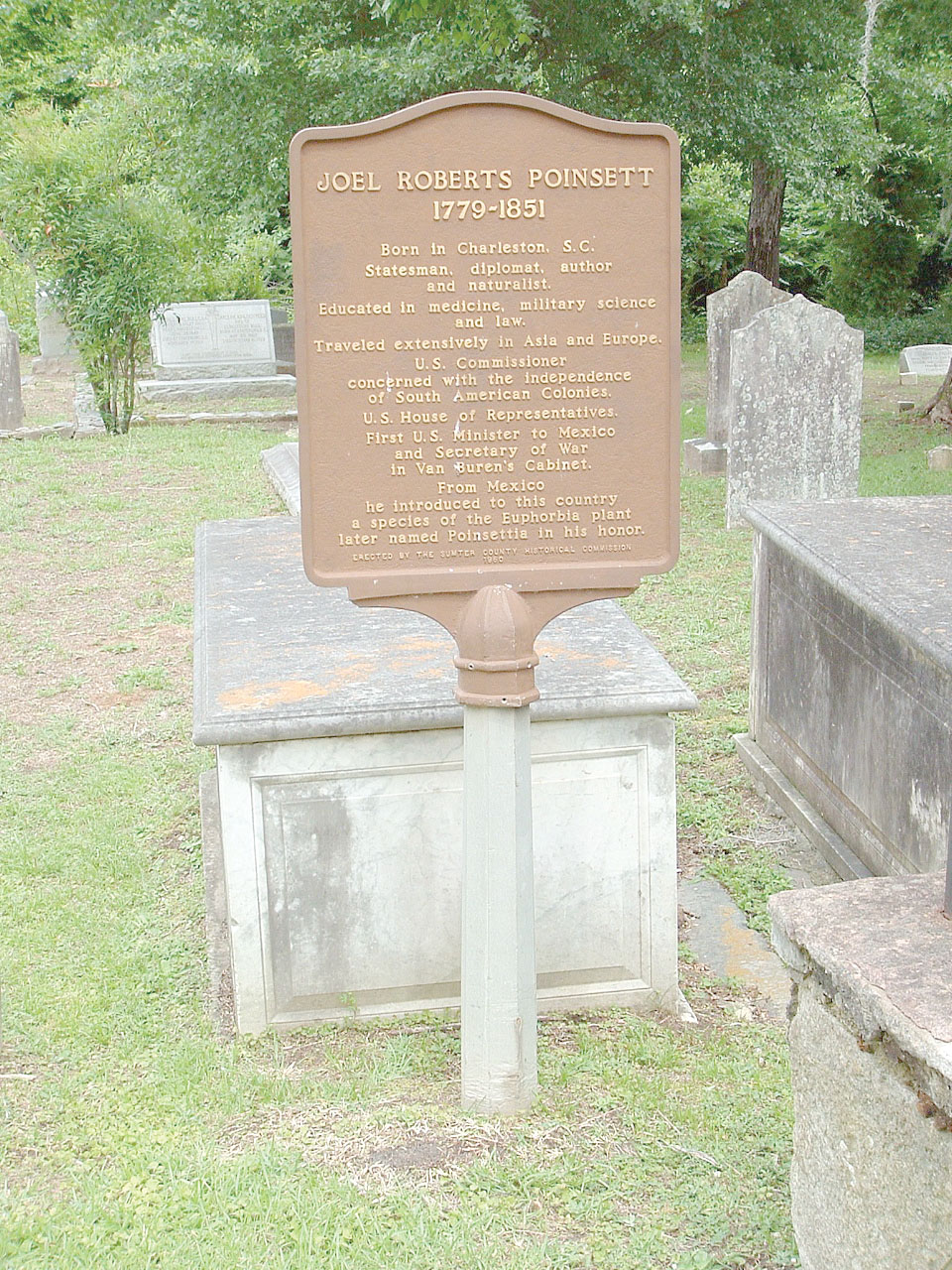
    Nothing says ‘Old South’ quite like an Antebellum cemetery, like the one located at the Church of the Holy Cross in Santee, near Sumter, where you’ll find the gravesite of the man who brought South Carolina the Poinsettia.

    There’s an old road that makes for a great Sunday drive, SC Highway 261. You’ll see historic sites; feel you are in the mountains, yet feel you are at the coast. More than that, you’ll come across the ghosts of history. Best of all, it’s about an hour’s drive southeast. An historical marker greets travelers, reading, “Over it came Indians, pack animals laden with hides, drovers, rolled hogsheads of produce, wagoners, and stagecoaches. The armies of two wars passed over it.” Some called it the King’s Highway.

    Highway 261 winds through the High Hills of Santee. This area is rural, isolated and heartbreakingly antebellum. The land plunges, opening up vistas of distant ridges. You think at once of the mountains. It’s a curious sight to see Spanish moss in the mountains, but Highway 261 gives you massive oaks with limbs draped in Spanish moss.

    You’ll find enough history here to fill several good-sized books. For starters, there’s the Church of the Holy Cross. This stately old church was built from 1850 to 1852 of rammed earth. In its old cemetery lies Joel Roberts Poinsett, the man who brought us the poinsettia. A ways down the road, off the beaten path, you’ll come across the grave of General Thomas Sumter, the “Carolina Gamecock.” He earned his nickname when he killed British soldiers for burning down his house.

    Those of you who recall Ken Burn’s Civil War documentary will recognize the name Mary Boykin Chestnut. She grew up in Stateburg, a stone’s throw from Highway 261. Chestnut published her Civil War diary as a “vivid picture of a society in the throes of its life-and-death struggle.”

    Along Highway 261 you’ll find the hamlet of Boykin Mill Pond and its quaint old sanctuary, the Swift Creek Church. In May 1860, approximately 75 young people met at Boykin Mill Pond to picnic right near the church. Late that afternoon, 30 or more crowded onto a flatboat, overturning it. Close to 25 young people drowned, mostly women. You’ll find an old mill here, too. Boykin Mill and its 100-year-old turbines have long preserved a time when mills provided communities cornmeal, grits and flour. A few steps away is the Broom Place, where Susan Simpson makes sturdy, colorful brooms the old-fashioned way.

    As you drive along, the winding oak-shaded lane summons up images of a horse and buggy with men in powdered wigs and women in colonial attire. Then visualize a regiment of Confederates marching down the road, the dust rising around their feet. Imagine Mary Boykin Chestnut seeing the men and reaching for her diary as all, one by one, vanish into the eternal mists we call history. You’ve rediscovered the Old South and it’s just a short drive away.

    Learn more about Tom Poland, a southern writer, and his work at www.tompoland.net. Email day-trip ideas to him at tompol@earthlink.net.

  • Applied Learning: What’s in Store for WHS Students

    Westwood High School Swoop and Scoop clerk Antonio Maxwell, center, shows spirit merchandise to student-customers Jarmel Reese, left and Ashley Rudd.

    Applying what is learned in the classroom to the business world is often the goal for those leaving high school. Once students leave school, they have an education but can lack work experience. But experience is just what the students in Jeremi Madden’s Business Education classes are gaining behind the counter at the Westwood High School Swoop and Scoop school store. The store, which is attached to Madden’s classroom, was created by the students in his Marketing class and is now being run by current students in the school.

    The store was the brainchild of Principal Ralph Schmidt who wanted to provide an opportunity for students to gain real world experience within the walls of Westwood. Although it was Schmidt’s idea, it was the students of Madden’s class who developed a business plan, designed the store and pitched the plans to Schmidt and other members of his staff for the current store.

    “I was so proud of the students and their presentation,” Schmidt said. “They were able to answer all our questions.”

    Schmidt said that Madden did an excellent job of preparing the class for their presentation. The students are taking what they learned in the classroom and applying it to the store, gaining hands on experience as well.

    Westwood Swoop and Scoop school store is thriving, offering school supplies, healthy snacks and Westwood spirit items. It is open Monday, Wednesday and Friday before and after school and during lunch. The excitement and pride that the students are taking in the store is just what Madden and Schmidt were hoping to see, and each shift is staffed by students, eager, apparently, to go to work.

    “I send out a schedule on Google spreadsheet,” Madden said, “and within an hour all shifts are filled.”

    The process for employment at the store is the same as for a regular job. Students must submit an application with references and go through an interview process. The skills that the students are gaining, such as time management, marketing, retail sales and more, will allow them to be ready to go on to other jobs after high school. And, Madden said, students know that if they do a good job in the store, he will be more than willing to give them a letter of reference for other jobs outside of school.

    Schmidt is looking forward to the year-end review with the students. He is ready to get feedback from them on what worked, what did not work, their marketing plan and ideas for the next year. There are plans to develop a Web presence in which parents, family or friends can purchase items online and the student workers will pull the inventory, package the items and deliver to students in the school. The store has also helped multiple groups on campus with fundraisers – something it hopes to continue to do.

  • Car Plunges into Lake, Killing Ridgeway Woman

    RIDGEWAY – A 79-year-old Ridgeway woman was killed last week when the car she was driving ran off the road and into Lake Wateree near her home on Rolling Hills Road. Fairfield County Coroner Barkley Ramsey said an autopsy completed over the weekend determined that Inge Conrad died from drowning after crashing her 2002 Subaru into the lake, just 45 yards from her home.

    Ramsey said diving crews with the S.C. Department of Natural Resources used an underwater camera to discover the car, which was found totally submerged in about 8 feet of water in a cove.

    Conrad was reported missing Thursday night (April 4) by a son with whom she lived. She had last been seen leaving the Camden home of another son around 2 p.m. Thursday. Ramsey said weather conditions, which were windy with heavy rain, may have contributed to Conrad losing control of the car. On Friday, when the weather had cleared, a family member found tire tracks leading from the driveway and into the lake not far from the home. There was also evidence that Conrad struck a tree and several pieces of outdoor furniture before crashing into the lake. Conrad’s body was found in the car, which was pulled from the lake Friday at approximately 10 p.m.