Category: News

  • Blackville’s Healing Springs

    Yes, you can drink the water. That’s really the whole point, isn’t it?

    Drive south 80 miles and you’ll come to what well may be the only property deeded to God. You’ll find this unique place near Blackville. It’s well-known and popular Healing Springs. People have long made pilgrimages to this Barnwell County site to fill jugs, bottles and whatever works with water. It’s not for the taste, though the water tastes fine. No, they come to take the reputed healing powers back home.

    Healing Springs has long been considered special. We can go back to pre-European times when Indians considered the waters sacred. They bathed in the springs for restorative power when ailing or injured. The springs’ fame skyrocketed during the American Revolution. An historical marker chronicles the legend. “By tradition, Healing Springs got its name during the Revolutionary War. In 1781 after a bloody battle at nearby Windy Hill Creek, four wounded Tories sent inland from Charleston by General Banastre (the Butcher) Tarleton were left in the care of two comrades who had orders to bury them when they died. Luckily, Native Americans found them and took them to their secret, sacred healing springs. Six months later the Charleston garrison was astonished by the reappearance of the six men. All were strong and healthy.”

    Springs have long held a prominent role when it comes to a hot topic these days, our health. When modern medicine fails many people turn to springs hoping to heal various ailments. Back a ways I knew a woman who would regularly make a 120-mile roundtrip to Blackville. Laden with plastic milk jugs, she’d come home with the therapeutic spring water and swore by it.

    The water surges out of the ground in three places where four-spigoted fixtures make it convenient to collect. I stopped by the springs recently and three people were filling milk jugs and soft drink bottles with artesian water that surged up and out pipes. One lady told me she was from Pennsylvania. I have no doubt the water she collected was headed for the Keystone State. Folks come from all over. Some describe the springs as “a hidden gem in the middle of nowhere.” This hidden gem has ample parking and a picnic area. A sign urges people to revere God by keeping his property clean.

    Blackville’s Healing Springs, known as God’s Acre Healing Springs, is indeed famous and it’s true that no one owns it. Lute Boylston deeded the springs to God in 1944. The deed states that the owner of the land surrounding the springs is “God Almighty.” (I’d say He’s always been the owner, wouldn’t you?) Gallons gush forth every minute. Healing waters are just 80 miles away. Get some jugs and hit the road. Once you’re loaded up with water, drive into Blackville and enjoy Amish-Mennonite cooking at Miller’s Bread-Basket in Blackville at 483 Main St.

     If You Go …

     • Springs Court, 3 miles north of Blackville on Hwy 3/Solomon Blatt Ave. Turn onto Healing Springs Road, then make a quick right at Healing Springs Baptist Church. The springs are behind the church.

    • Open daily, dawn to dusk. Free.

    • Read more here: www.roadsideamerica.com/story/12456

    Learn more about Tom Poland, a Southern writer, and his work at www.tompoland.net. Email day-trip ideas to him at tompol@earthlink.net.

  • Board Member Denies Making Death Threats

    BLYTHEWOOD – A Richland 2 School Board member said Tuesday she will stand on her record in the face of a recent Richland County Sheriff’s Department report that alleges she threatened the life of Westwood High School’s head football coach.

    “I have been a voice for the children of District 2 for the last 23 years, and my record is impeccable,” Melinda Anderson said. “It is very difficult to dispel untruths.”

    According to the report, Anderson was in a meeting at Westwood High School on Oct. 7 with Acting Superintendent Debbie Hamm and the District’s Human Resources Officer, Roosevelt Garrick Jr., to discuss the treatment of her grandson by head football coach Rodney Summers. Hamm, who filed the report, told the Sheriff’s Department that during the meeting Anderson said, “I’m so angry I just want to kill the coach, and I have a gun.” Summers was not present at the meeting.

    Anderson denied making the threat and said Tuesday that the incident report was “not accurate.” She also said she was not interested in trying to debunk what she characterized as false statements.

    “I will not lower my standards to try to disprove some foolishness cooked up by certain administrators,” Anderson said, although she could not offer details on why such a statement would be attributed to her, or to which administrators she was referring.

    “I don’t know who’s behind it all,” she said.

    The Board issued a statement early Tuesday indicating that they had addressed the issue and that threats and harassment would not be tolerated. Neither Hamm nor Summers wished to press charges, according to the report.

  • Commission OK’s Primrose Lots

    BLYTHEWOOD – The Planning Commission voted unanimously to allow developer D. R. Horton, who owns most of Cobblestone Park, to add two single-family lots (each lot 0.21 acres) in the Primrose (formerly The Farm) section of the development. Town Administrator John Perry said the lots will encroach into the green space causing a .28 percent reduction in that space.

    Robert Schneider, Executive Director of Central Midlands Transit (The Comet), gave a presentation on the CMT and its new branding and identity. He told the Commission that he hoped at least limited bus service would come to Blythewood in the next three years. He also said he would like to see the service eventually connect with Fairfield County.

    In other business, Perry said the draft Landscape and Tree Preservation Ordinance for the Town was being fine-tuned by the Town’s attorney and would be presented to the Commission at the Dec. 2 meeting. Perry said the sign and lighting sub-committee would give the Commission an update at that meeting, as well. No public notification has been given of the sub-committee meetings. A representative from the County’s Penny Tax Committee will also give an update at the Dec. 2 meeting.

  • The Voice of the Animals: Hoof and Paws for a Good Cause

    Shirley Locklear, president of the Hoof & Paw Benevolent Society, and Janice Emerson, Adoption Coordinator with Fairfield County Adoption Center, with some of the cats and puppies available for adoption at the Center.

    I spent Monday evening with some very dedicated people. We have lots of folks dedicated to helping their fellow folks in need, but the people I met with are dedicated to helping the four-footed members of the community. They are the members of the Hoof and Paw Benevolent Society, created several years ago to support the work of the Fairfield County Adoption Center. Since then, their work has expanded to the surrounding areas including Blythewood.

    Shirley Locklear, president of the Society, explained it like this: “We create opportunities to help animals in shelters and within our community,” Lockair said. “We host adoption events, sponsor spay and neuter clinics, help abused animals in whatever ways we can and we hold educational events and fund raisers to accomplish our goals.”

    You might have seen their booth at Rock Around the Clock or other community festival.

    Close to the Society’s collective heart is the Cat House at the Fairfield County Adoption Center where they make a special effort to find homes for cats who end up at the Cat House for whatever reason. And the group is always on the lookout for grants and funds to support their efforts. Member Doris Macomson, representing the Blind Dog Rescue organization in Rock Hill, reported that Fairfield County could be one of the beneficiaries of a $100,000 grant recently received by the Humane Society of Charlotte for a feral cat program. The trap-and-release program would include humanely trapping the county’s feral cat population, sending the cats to Charlotte to be spayed and neutered, then releasing them back to the areas where they were picked up.

    The Society, along with the Fairfield Adoption Center, recently sponsored a low-cost spay and neuter clinic for Fairfield County and surrounding areas where some 200 animals have been spayed or neutered. The group is also planning to hold a rabies clinic in the community and, more immediately, go door to door to inform pet owners about a recent rabies scare in the county and about the dangers posed to their pets from rabid raccoons and other non-pet animal types.

    “It’s important for pet owners to not leave water and feed bowls outside that could attract raccoons and other animals that might carry rabies,” Macomson said. “Eating from the infected bowls can lead to pets becoming infected.”

    The Hoof and Paw organization is more than a little busy these days speaking for those who have no voice. They are dedicated to the welfare of the animals, and they need other animal lovers from Fairfield, Blythewood and surrounding areas to join their efforts. Membership in the Society costs only $12 per year (“just a dollar a month,” as Shirley Locklear points out.)

    Check out the details of the Hoof and Paw Benevolent Society on their website, www.hoofandpawsc.org and see their Facebook page hoofandpaw(space)sc or contact Shirley Locklear at 803-633-0061.

    The Hoof and Paw Benevolent Society meets the first Monday of every month at 6:30 p.m. at the Fairfield Memorial Hospital conference room.

  • Local CEO Charged with Fraud

    Terris Shirelle Riley

    BLYTHEWOOD – A local business leader was carted off to jail Friday, charged with defrauding the state government for an undisclosed amount of money “in excess of $10,000,” an arrest report from the State Law Enforcement Division (SLED) states.

    Terris Shirelle Riley, 39, of 497 Langford Road in Blythewood, was arrested by SLED agents on Nov. 1 and transported to the Alvin S. Glenn Detention Center, where she was officially charged with breach of trust with fraudulent intent. Riley is CEO of New Venue Technologies, Inc. (NVTI), a “provider of IT Business and Network Infrastructure services and support,” according to the company’s Web site.

    According to the arrest report, the state gave NVTI more than $10,000 to make purchases from vendors and that NVTI did not forward payment to those vendors after the products were delivered.

    Rebecca Griggs, a spokeswoman for the S.C. Budget and Control Board, whose audit uncovered the discrepancies, said the contract in question was between the state and NVTI and called for NVTI to serve as “the Software Acquisition Manager (SAM) for governmental entities.”

    “Payments were made to NVTI by governmental entities that purchased software through the SAM.  NVTI was to pass through these funds they received as payment from governmental entities to software vendors,” Griggs said. Griggs would not say how much money the state had forked over to NVTI, or how much of that amount failed to reach vendors.

    The contract was in place from February 2011 to October 2013, Griggs said, with payments to NVTI from governmental entities utilizing the SAM made routinely throughout the life of the contract. NVTI was mandated by the contract to forward those payments to vendors within three days, the SLED report states, and between June of 2011 and last month, NVTI allegedly did not do so.

    State House Minority Leader Todd Rutherford (D-74), who appointed Riley to Gov. Nikki Haley’s Regulatory Task Force, was retained as Riley’s attorney Tuesday morning. Riley was removed from the Task Force following her arrest.

    Phone calls to Rutherford  and emails to NVTI were not returned at press time.

  • Alcohol Suspected in Fatal Crash

    WINNSBORO – A Ridgeway man was killed Saturday night in a single-vehicle crash on Reservoir Road, and the Fairfield County Coroner’s Office said speed and alcohol are believed to have been factors in the fatality.

    Barkley Ramsey, Fairfield County Coroner, said Willie Franklin Sanders, 59, of 294 Inspiration Drive in Ridgeway, was pronounced dead at 9:50 p.m. at Fairfield Memorial Hospital, where he had been transported by ambulance following the wreck.

    According to the S.C. Highway Patrol, Sanders was driving a 2005 Chevrolet Trailblazer west on Reservoir Road Saturday evening. Around 9:25 p.m., as he was 4 miles west of Winnsboro, Sanders ran off the right side of the road, over-corrected, crossed back over Reservoir Road and ran off the left side of the road where he struck several trees. The Trailblazer overturned, ejecting Sanders from the vehicle. Sanders was not wearing a seatbelt at the time of the accident, the Highway Patrol said.

  • Election Signals Shift in Balance of Power

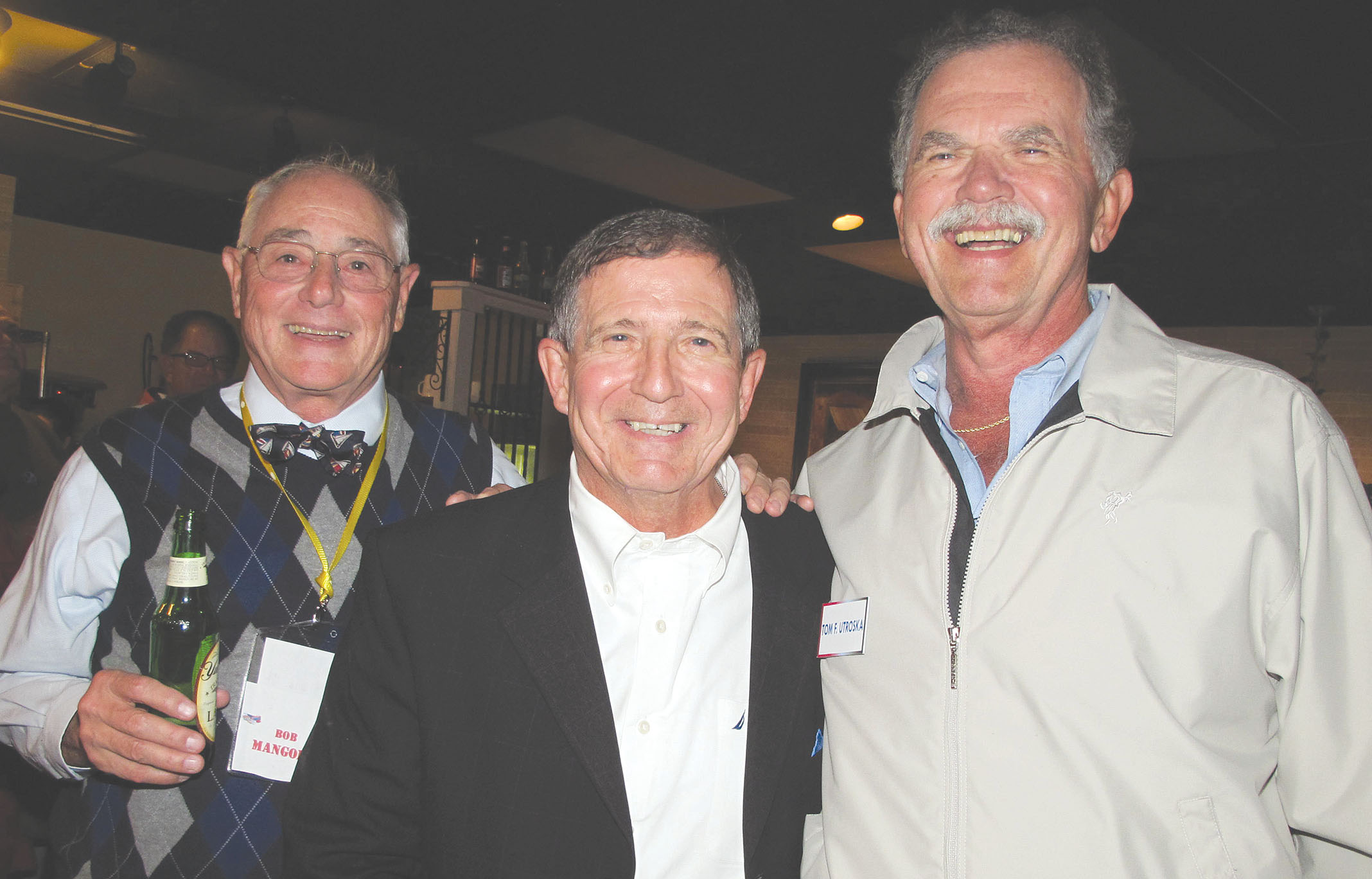
    Winners of the Blythewood Town Council election, Bob Mangone, Bob Massa and Tom Utroska, celebrate at a reception after their victory.

    BLYTHEWOOD – With the balance of power at stake in the Blythewood Town Council election Tuesday evening, two of the challengers, Bob Massa and Tom Utroska, came away with a clear victory over incumbents Paul Moscati and Ed Garrison. Ernestine Middleton lost her bid for a two-year term to Bob Mangone. Middleton, who returned to Blythewood last year after an embattled two-year stint with the Arkansas Lottery, joined Moscati and Garrison on a platform based on the recent rapid expansion of construction of high-dollar facilities in the town park.

    Massa, a CPA and self-described fiscal conservative, said he was confident the residents wanted a change in the Town’s direction.

    “I think everyone wants a nice town and I appreciate what has been done to make it so,” Massa said. “But the financial slope was getting steep quickly and I and a lot of other residents were getting worried. I think we need to step back and, along with the Town’s CPA, Kem Smith, analyze our spending before encumbering the Town with more big debt.

    “We have a Master Plan and I would like for us and the Town’s people to re-look at it before moving forward,” Massa said. “I want to make sure we are all on the same page, not just doing what a few leaders have decided is best for the Town.”

    Massa, the leading vote getter with 195 votes, said he was “overwhelmed.”

    “It’s just the start of the hard work, though,” Massa said. “Blythewood is growing. We have to not only manage that growth, but do so with financial soundness. I’m humbled by the vote of the people.”

    Massa is the Financial Director of the City of Forest Acres. He serves on Blythewood’s Board of Zoning Appeals and is a Board member of the Blythewood Chamber of Commerce. A resident of the Oakhurst neighborhood, Massa said he plans to retire in January and focus on his duties as Town Councilman.

    Utroska, a resident of Cobblestone Park, said he was “pleased that the voters in the Town have given me, Mr. Massa and Mr. Mangone the opportunity to serve in this capacity. I promise that we’ll do our best to fulfill our campaign platforms. Now, I’m looking forward to getting to work.”

    A native of Canada, Utroska is retired from the Canadian National Railway and is a partner in a railway consulting firm. He is a member of the Town’s Board of Zoning Appeals, Chair of the Town Park Committee and is past President of the Town’s Planning Commission.

    Both Massa and Utroska will serve four-year terms on Council. Bob Mangone will serve the two years left in Jeff Branham’s term following his resignation last summer for employment in another state.

    Although Mangone ran on a separate platform from Massa and Utroska, he said he shares their desire to manage the Town’s growth appropriately and in a way that is good for the residents and businesses in the Town. He campaigned for fiscal responsibility, integrity of office and for targeted growth. Mangone said he wants to make sure the growth benefits the entire town and preserves its history, charm and values.

    “I’m humbled by the confidence the voters have shown in me and I will work to follow through with everything I promised in my campaign. My door and my phone are always open. I plan to listen to what the residents have to say,” said Mangone who currently serves on the Town’s Board of Architectural Review and is Chair of the Athletic Fields Committee.

    Councilman Ed Garrison, who has served two terms on Council, told The Voice Tuesday night following the election, “The election speaks for itself. I guess the Town has a new set of visioneers and I wish them the best and all that it holds for them.”

    Councilman Paul Moscati and Ernestine Middleton did not return phone calls and emails from The Voice.

    The newly elected Town Councilmen will be sworn into office at the next meeting on Nov. 25, which will be held at the Doko Manor in Doko Meadows. The public is invited to the meeting and swearing in ceremony.

  • Tax Credit Passes First Reading

    WINNSBORO – An ordinance to offer a one-time tax credit in order to attract an international company cleared its public hearing and second reading by County Council Monday night. The ordinance amends the fee-in-lieu-of-taxes agreement between the County and Lang Mekra North America, LLC, offering them a one-time tax credit of $35,000 in exchange for Lang Mekra lowering its sales price on a building they own in the Walter Brown Industrial Park, Tiffany Harrison, Director of Economic Development, explained. Lang Mekra has reduced its asking price for the building by more than the $35,000 tax credit, Harrison said, and the deal would result in more than what the one-time credit is worth in annual property taxes from the proposed new company slated to purchase the building. Lang Mekra, Harrison said, currently pays approximately $220,000 a year in county property taxes.

    While Harrison would not disclose the name or the nature of the proposed new industry, she said the company plans to make a $1.5 million investment in the County that would result in approximately $36,000 a year in annual property taxes. Harrison said the company is a relatively small venture, which plans to create 25 jobs over the next five years.

    Council also passed second reading of an ordinance to sell the former location of their Voter Registration offices at 117 E. Washington St. in Winnsboro to the Fairfield Community Development Corporation, Inc. (FCDC), a non-profit that has designs on the historic building as part of the downtown farmers market.

    At a Council work session on Sept. 18, Terry Vickers, President of the Fairfield Chamber of Commerce, presented a proposal to Council on behalf of the FCDC. Vickers said the FCDC would purchase the building for $100 “and considerations,” during the work session, and the building would be remodeled to serve as the cornerstone of the next phase of the Winnsboro Farmers Market. Christ Central Ministries had a tentative proposal for the building, but pulled their proposal before it ever came to full Council once they learned the FCDC was interested in the property, Chairman David Ferguson (District 5) said Sept. 18.

    The 6,200-square-foot building will be known as the Fairfield County Farmers Market Artisan Center Community Kitchen, and will include commercial kitchen space, space for classrooms, as well as an area for the farmers market. Vickers said last month that the FCDC had received a pledge of $125,000 from three donors wishing to remain anonymous to begin refurbishing the building. The FCDC will also write a Rural Business Enterprise Grant proposal for an additional $200,000, she said. In early 2014, she said, a third phase grant through Eat Smart Move More South Carolina will be written for equipment, technical assistance, professional services, start-up operating costs and working capital. Vickers said the FCDC will insure the building at the time of purchase from the County and will have the facility fully operational by the fall of 2014.

    In a symbolic gesture, Council also passed 5-1 a resolution in opposition to House bill 3290 and Senate bill 203, officially known as the “Business Freedom to Choose Act,” but more commonly known as the solid waste flow control bills. Councilwoman Carolyn Robinson (District 2) voted against the resolution. The bills have created considerable controversy among the counties who claim the legislation will open up the state to all manners of out-of-state waste. Proponents of the bill, including one of its co-sponsors, State Sen. Creighton Coleman (D-17), say the legislation merely prevents counties from forming waste hauling monopolies.

  • County Puts Recreation Vote to a Vote

    WINNSBORO – After months of political wrangling, debate and delays, County Council Monday night at last made an affirmative decision regarding recreation spending. In a 6-0 vote – Councilman Mikel Trapp (District 3) was absent from the meeting – Council decided to decide how recreation projects would be approved for each district.

    The vote put to rest the incessant bickering that had plagued Council in recent months over whether individual Council members or a majority vote by the entire Council would have the authority to green-light projects out of this year’s $24 million bond issue, $3.5 million of which – divvied out in $500,000 lumps to each district – was devoted to recreation.

    But discussion of the vote on how Council would vote was temporarily derailed as Council members quickly became bogged down in the nuts and bolts of individual projects, rather than the process of how those projects would begin to even take shape.

    “I need some structure, if we’re going to vote on this,” Councilman Kamau Marcharia (District 4) said. “(Previous) Administrators have already spent hundreds and hundreds of thousands of dollars without us interfering on recreation, but now we’re going to have Council voting on recreation?”

    Marcharia was referring to the more than $800,000 the County has spent refurbishing and building a new football field at Drawdy Park in District 6, a project of which Marcharia has been vocally critical during recent meetings and one that he said Council never specifically approved. Chairman David Ferguson (District 5) once again reassured Marcharia that the Drawdy Park project was part of the County’s capital improvements fund and was approved during the budgeting process.

    Vice Chairman Dwayne Perry (District 1) put the ‘majority vote’ motion on the floor, which was seconded by Councilwoman Mary Lynn Kinley (District 6).

    “District 2 does not have a plan,” Councilwoman Carolyn Robinson (District 2) said, “and probably won’t have a plan for a while, because we’ve been too busy to actually get out and work the district. District 2 does not have any plan or plans to have a plan in the next two months.”

    Robinson said she wanted assurances that the projects would have a dollar figure attached to them when they came back before Council for a vote.

    “There are so many things that have come down when I was off Council to the previous administrator who had the right to go out and had ad infinitum to do anything in regards to spend those kinds of funds,” Robinson said. “We never truly, even this past year, went through item by item and discussed those budgets as to what was included.”

    Perry confirmed that his motion called for each individual project to go through administration in order to obtain cost estimates, after which the projects would come back to the full Council for a final vote.

    Councilman David Brown (District 7), meanwhile, said he was concerned about what he called “mid-year appropriations,” and questioned whether or not the funds existed to staff the projects, specifically Marcharia’s proposed recreation center in the Dawkins community.

    “We’ve got to come up with a job description of what these people are going to be doing,” Brown said. “And in our present budget are there places and positions in the budget that we can fulfill these people or is that going to throw our budget that we’ve presently got into the negative because we’re going to be hiring these people before the end of the year to run some of these operations with no personnel slot for these people to be paid out of?”

    Milton Pope, Interim County Administrator, said his staff had compiled a master list of the projects. Once Council had adopted the method by which they would begin approving these projects, Pope said, and once Council adopted the master list, his staff would begin working on the cost estimates. Those estimates, Pope said, would include staffing.

    “The only finite thing that we have at this point is the dollar amount,” Pope said. “We know what dollar amount we can’t exceed.”

    Pope added that staffing could not be paid for out of the bond, and if staffing of facilities drove costs beyond the $500,000 threshold, those projects would have to come back to Council in order to be trimmed down.

    “That would also possibly give Mrs. Robinson additional time to do what she’s working on with her district,” Pope said. “But, in order to activate the staff, we need you to OK the list and we can get cost estimates on that.”

    But Marcharia said he detected an attempt to hold back his project in District 4.

    “I see this as another stall tactic,” Marcharia said. “We have ample time to talk about staff. They haven’t even cleared off the ground, you don’t have any ground. You (Perry) want a pool room and all that. I guess you’re going to have to pay for a staff to run that. I’ve got $500,000 and I have a plan. Take my plan and tell me where the $500,000 cuts off and start working. I can’t have that done?”

    Ferguson then brought the discussion back to earth.

    “Let me clarify what this vote is about,” Ferguson interjected. “This vote isn’t about what we’re talking about. OK? This vote is about how the process is going to work and who’s going to be voting on what. That’s the only thing on the floor at this present time.”

    And, Ferguson said, once one district was ready to move forward there would be no waiting on the other districts before that work could proceed. But Robinson, moments before the vote, asked if the language in Perry’s motion was suitable for the bond attorneys.

    “Because we’re dealing with this bonding attorney, because everything has to be in legal verbiage, why don’t we have a written out presentation as to how we say it so it will pass and be able to be put into the bond exactly right tonight?” Robinson suggested. “It needs to be a little more detailed than that. You need a little more legal verbiage than what we’re saying to accomplish this tonight.”

    Jack James, the County’s attorney, said Council could go into more legal depth if they wished, but left the matter at Council’s discretion. Pope, meanwhile, said that since Perry’s motion was for Council to act in a manner consistent with state laws, complicating the motion with legalese was unnecessary.

    After the vote passed, there was a brief debate among Council members as to what the vote meant.

    “Did we vote to give the Administrator the option to go ahead and move ahead individually?” Marcharia asked.

    “If you’re ready to move ahead with your project,” Ferguson answered, “that’s exactly what we just did.”

    “I’ll see you later tonight, Mr. Pope,” Marcharia nodded to the Interim Administrator.

  • Council Members Hit With Lawsuit

    Dispute over Insurance Payouts Headed for Court

    WINNSBORO – When the S.C. Attorney General’s Office issued an opinion last July that characterized as unconstitutional cash payouts to three County Council members to cover supplemental health insurance premiums, the opinion stated that a court of law would, ultimately, have to decide if those payouts were indeed illegal. More than three months later, it appears as if that opinion will be put to the test, as a Winnsboro attorney filed lawsuits last week against the three Fairfield County Council members in an effort to recoup that money.

    Attorney Jonathan M. Goode, of the Goode Law Firm in Winnsboro, filed the documents Oct. 25 in the Fairfield County Clerk of Court’s Office against Council Chairman David Ferguson (District 5), Mikel Trapp (District 3) and Mary Lynn Kinley (District 7), representing State Rep. MaryGail Douglas (D-41) and 15 others as plaintiffs. Goode is seeking a non-jury trial in the Sixth Judicial Circuit Court of Common Pleas.

    Since 2009, Ferguson, Trapp and Kinley were receiving $475 a month from the County to cover their own supplemental hospitalization insurance. That practice ended last July after the S.C. Attorney General’s Office issued an opinion characterizing the payouts as “unauthorized” and “a departure from the law.”

    Covered by a state plan for their primary health insurance, Ferguson, Trapp and Kinley were therefore not eligible for the County’s supplemental coverage. Prior to 2009, these Council members, along with all part-time employees, were covered for hospitalization by the Carolina Cares plan. For each of the Council members in question, it was costing the County approximately $877 a month – or $31,560 a year total – to include them on the Carolina Cares plan. As the County worked through attrition to wean part-time employees from the plan, the three Council members were also asked to drop the plan and take a direct payout of $475 a month each – or $17,100 a year total – to get their own hospitalization insurance.

    While Ferguson and Trapp declined to comment on the case, Kinley said she has a clean conscious and that the money was not misused, as Goode’s claim asserts.

    “I still feel in my heart that we’ve done nothing wrong,” Kinley said. “Most of us have receipts. I think I can verify everything. I keep very good records. I think I have receipts that verify that (supplemental health insurance) is what that money was used for.”

    Goode is pursuing two causes of action against the Council members: Unjust enrichment/abuse of trust, and Conversion. In the first cause, Goode claims that each of the three Council members violated state law as set forth in the Attorney General’s opinion, and as a result “wrongly received monies to which (they were) not legally entitled,” the complaint states. In the second cause of action, Goode claims the Council members “did convert said monies to (their) own use, which is a misuse of the Defendant’s authority.”

    Goode is seeking actual damages, “including, but not limited to, reimbursement of all monies wrongfully paid” to the Council members, as well as “interest on said monies, costs and attorney fees,” the complaint states.

    “Our goal is to get any money that has been improperly spent returned back into the general fund,” Goode said. “The Attorney General’s opinion speaks for itself. People are mad and this sends a message to elected officials that there are some taxpayers who will stand up to them when they feel money is being spent improperly.”

    Also listed as plaintiffs are: E. Scott Frazier Bell, Carole J. Gehret, Stephen Gehret, Tangee Brice Jacobs, Elizabeth A. Jenkins, Helen Johnson, Vernon J. Pylant, Margaret Richardson, Thomas Richardson, Jeffrey Schaffer, Barry R. Tuttle, Clyde E. Wade, Michael B. Ward, Patricia A. Williams and Thomas L. Williams.

    No trial date had been set as of press time.