Category: News

  • Councilman Called Upon to Substantiate Claims of Racism

    Vice Chairman Appeals for Peace After Public Squabble

    WINNSBORO – A County Councilman who not once but twice spouted cries of racism during Council’s February meetings was called on the carpet Monday night by a citizen demanding that the Councilman back up those claims with facts.

    Councilman Mikel Trapp (District 3) said during Council’s Feb. 10 meeting that criticism of S2 Engineering, the firm responsible for the construction of the new football field at Drawdy Park where a 50-foot section of retaining wall collapsed in January, was motivated by race.

    When Trapp took some heat for those comments at Council’s Feb. 24 meeting, he doubled down, lashing out at the Fairfield County citizens’ watchdog group, Saving Fairfield. Trapp said that member of Saving Fairfield had used racial slurs against him on numerous occasions and had even telephoned his place of employment in an effort to get him fired. Saving Fairfield “promotes hatred and racism,” Trapp said on Feb. 24.

    Saving Fairfield spokesman Bob Carrison denied Trapp’s accusations the very next day, and Monday night Tim Schroll, another Saving Fairfield member, said Trapp’s claims have no basis in reality and that Trapp’s behavior was outside the bounds of Council’s guidelines for code of conduct.

    “(Trapp) claims someone or several members of (Saving Fairfield) used a racial epithet toward him. He also claims that there were no witnesses to this and he refused to give any names, dates or places it occurred,” Schroll said during the meeting’s second public comment portion. “He’s made previous statements that have no evidence to support it. Maybe someone should depose this council member under oath where he can repeat these charges as well as be forced to substantiate them for the record as well as accept the full weight of the law for false statements he makes. It is time for this council member to either prove these allegations or publicly withdraw them. I ask the council to hold themselves to the same standards they hold us to. If you agree to do that, I can ask no less.”

    But Trapp appeared unmoved and instead instructed Schroll, who identified himself as a resident of District 6, to stay on his own turf.

    “It would probably serve you better if you concentrate on District 6 and let District 3 operate the way it operates because District 3 is running just fine,” Trapp said.

    Monday night’s meeting got off on an even more sour note when Dawkins resident Jeff Schaffer was ejected from chambers in the middle of the meeting’s opening public comments portion.

    “It’s hard to imagine a more stupid or more dangerous way of making decisions than by putting those decisions in the hands of people who pay no price for being wrong. That would be you folks,” Schaffer began, quoting from Thomas Sowell, he said. By the time Schaffer got around to adding, “Whenever I think you folks can’t get any dumber . . . I’m just amazed,” Chairman David Ferguson (District 5) lowered the gavel.

    “Don’t you slap that thing again,” Schaffer said.

    “I’ll slap it if I have to,” Ferguson replied.

    “Slap all you want,” Schaffer taunted.

    “You will not address this Council like that,” Ferguson said.

    “I’ll address you any way I want to address you,” Schaffer said. “You address me with some respect. You’re not intimidating me. You may do that to some other people, but you’re not doing that to me.”

    At that moment, Schaffer was escorted from chambers through the grumbling audience by a Fairfield County Sheriff’s deputy.

    Bookending a standard slate of routine business, the public comments sessions caused Vice Chairman Dwayne Perry (District 1) to reflect on decorum.

    “We should be professional enough to get our points across without attacking one another. Any time you attack someone it rarely builds a bridge to developing trust,” Perry said. “If I were ever to call one of you ‘stupid’ or ‘dumb’ sitting up here, that would be very disrespectful. I think my mother would turn over in her grave if I’d said that to you all.

    “I think we should be kind,” Perry said. “That’s a pretty strong word, but I think we should be kind and considerate. Sometimes it does hurt and it’s sad to sit up here and see the way we act toward each other. It didn’t used to be like that and I’d prefer, if there’s any way possible, we get away from that and get back to the business of this county and treating people like we want to be treated.”

  • Local Bill Mends District Lines

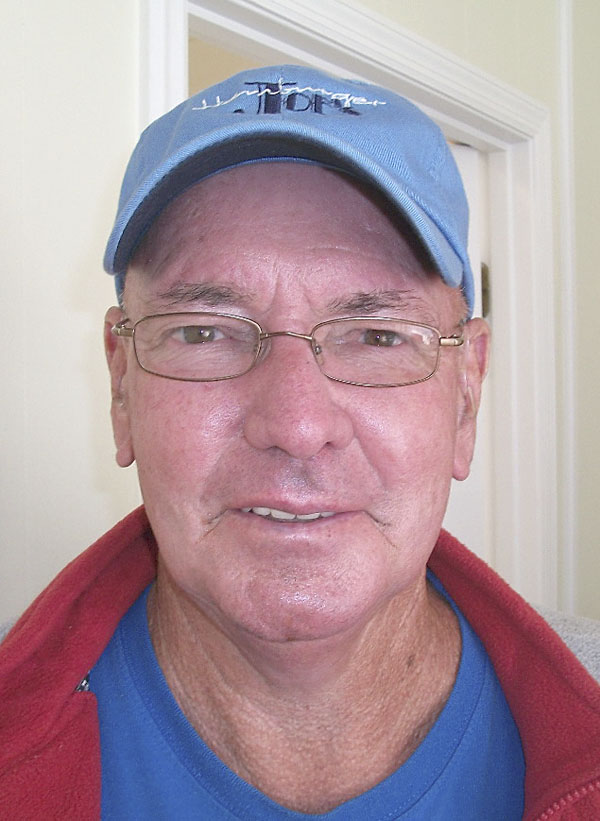
    Bobby Cunningham, once again District 5 representative on the Fairfield County School Board.

    WINNSBORO – After nearly three years of disenfranchisement, District 5 once again has representation on the Fairfield County School Board of Trustees, thanks to a piece of special legislation signed by Gov. Nikki Haley on March 4. The bill (S1002), introduced by Sen. Creighton Coleman (D-17) in the State Senate on Feb. 5 and Rep. MaryGail Douglas (D-41) in the House on Feb. 18, was designed to return School Board member Bobby Cunningham to District 5 after he was drawn out of his district and into District 6 in 2011. The redistricting followed the 2010 census information that showed a shift in racial demographics in areas of the county and was required by federal law.

    The process that led to an incumbent being drawn out of his district, however, has come under scrutiny. The State Budget and Control Board (BCB) provides county councils across the state with district maps for their consideration, according to Will Roberts of the BCB’s Office of Research. Residences of incumbents are clearly marked on the maps, Roberts said, “To make sure they don’t get drawn out.”

    But Cunningham did get drawn out, leaving District 5 without representation on the School Board and piling two representatives – Cunningham and William Frick – into District 6.

    County Council reconfigured the district lines, Roberts said, to meet federal demographic requirements. The new map was then approved by a county ordinance and submitted to the U.S. Department of Justice for approval (approval by the D.O.J. may not be required in future redistricting, since the U.S. Supreme Court recently struck down Section 4 of the Voting Rights Act, Roberts noted).

    Council Chairman David Ferguson (District 5) said he was not aware Cunningham had been drawn out of the district the two men share, nor was he aware of the legislation to return Cunningham to District 5 until the bill had already made it through both houses of the General Assembly. Ferguson also said he was not certain if the homes of incumbents were marked on the map provided to Council by the BCB.

    “I’m not sure that they were,” Ferguson said. “That’s not our job. That’s the responsibility of the people who make the decisions in Columbia. They send the maps up here.

    “That Board member (Cunningham) did not call me, Creighton Coleman did not call me, MaryGail Douglas did not call me,” Ferguson said. “If they had, I would have gone back to the Budget and Control Board to see what the deal was. They are the professionals who know where the lines go.”

    Cunningham said he only found out he was no longer in District 5 when he went to vote in the 2012 elections.

    “I knew they had redrawn some lines,” Cunningham said, “but I had no idea it could affect someone in the middle of their term. Why was a sitting official zoned out of their district? Who signed off on it? Was my residence marked on the map? My biggest concern was an incumbent was redistricted and received no notice until they went to vote.”

    Debbie Stidham, Director of the Fairfield County Voter Registration Office, said her office mailed out new voter registration cards and notifications to voters whose districts had changed after the 2011 redistricting, even though her office was not required by law to do so, she said. She said she could not explain why Cunningham either failed to receive or overlooked notification.

    Coleman said the legislation effects nine people including Cunningham, who now all return to District 5.

    “It’s something I wish we didn’t have to do,” Coleman said. “He shouldn’t have been taken out of his district and we shouldn’t have had to go through the hassle of drawing up (the legislation), shepherding it through the General Assembly and having the governor review it and sign it.”

    Ferguson said rumors that he intentionally drew out Cunningham were untrue. Kirk Chappell, Ferguson’s opponent in 2000, also saw his district change from 5 to 3 in 2011. Ferguson said that change came at the request of Councilman Mikel Trapp (District 3), who needed to gain minority population in his district and therefore asked to absorb Jackson Creek Road, where Chappell lives, into District 3. Minutes from the Sept. 26, 2011 meeting confirm Ferguson’s recollection of the events and show where Trapp requested the change. Meetings from meetings leading up to the final redistricting ordinance also show where Council had been given clear guidelines by the BCB for redrawing the lines, including a presentation by the BCB’s Wayne Gilbert on Aug. 29, 2011 that included the directive “locate incumbents.” First reading of the ordinance (591) passed that same night, and after a work session on Sept. 7 where it was determined that districts 1 and 7 required the most corrections, second reading then passed on Sept. 12, 2011.

    Final reading passed on Sept. 26, 2011 after attorney John Moylan told Council that all the BCB’s guidelines had been met, including “not to pit incumbents against each other – whether they be County Council or School Board members,” minutes from the meeting state.

    “Am I sorry it got done like that? I certainly am,” Ferguson said. “Had Mr. Cunningham or anyone called me, I would have made every effort to get him back in his district.”

    Now firmly back in District 5 and nearing the end of his four-year term on School Board, Cunningham said he is considering a continuation of his political career.

    “I am weighing my options,” Cunningham said.

  • Student Ed. Center Moves Forward

    The past week has been a whirlwind of activity for the Richland 2 School District. The long awaited Student Education Center – the project that started as a District Office renovation in 2011 and expanded to include a free standing vocational training center in 2012 – was the first design-build project in the district. Delays in securing a site have pushed the project out by at least 18 months. When plans to build on the Clemson Extension site did not materialize, the District and Design/Build team of Kahn Construction started reviewing sites anew. A site was found in the Village of Sandhills. Director of Planning Fred McDaniel presented an overview to the Blythewood Chamber of Commerce on Tuesday. The $41 million dollar building project will also receive program funding from business and industry interested in helping to train students for our local workforce. Specific courses and industry partnerships are forthcoming.

    Perhaps most interesting to parents making vacation plans for the coming months was the discussion of missed school days due to snow and ice. Pending approval from the state legislature, the Board approved to forgive two of the four recent snow days and to use the two scheduled make up days of March 28 and April 21 for the remaining two days. Superintendent Dr. Hamm polled teachers and parents in suggesting a solution to the inclement weather days. It was suggested the adding of the two days – one of which included removing Memorial Weekend – would create more havoc for families and large absences that would not be conducive for overall learning.

    School #20

    Elementary School #20, near Trenholm Extension and Decker Boulevard, will be the second construction project using the design-build format. A consortium of architects, engineers, builders and designers put forth a proposal to take the school from concept to completion working as team from the onset. While commonly used in private construction for decades and even public universities, the state only in very recent years authorized school district to engage in such contracts. The advantages are cost savings and a reduced timeframe. The realized savings are put back into the district for further projects.

    The site incorporates surrounding wetlands as an opportunity for outdoor learning and observations. The three finalist teams (Kahn-Brownstone; Contract-Quackenbush; and Thompson-Turner) made their presentation. Each focused heavily on the uniqueness of a school surround by wetlands, forest and creek. Environmental consultants and civil engineers from all teams offered methods for protecting the natural habitat. After being graded in a rubric fashion, the School Board was presented with the highest scoring team and voted to accept the score and award the contract. The announcement as to the specific team will be saved pending notification and acceptance from that team. The elementary school is slated to open for the 2016-2017 school year.

  • Nature: Top Secret

    Meadow? Lea? Grassland?
    All of the above at the Savanna River Site.

    This day trip may present the most interesting place of all for a simple reason: Few people are allowed to see it. My history with the place goes back 28 years. One July day in 1986, a self-assigned writing project took me to the Savannah River Site. And what a site! It covers more than 310 square miles.

    In building the “bomb plant,” the government moved the town of Ellenton lock, stock and barrel, a disruptive event like few others. Way back then, in the early 1950s, a hand-lettered sign at the city limits expressed the evicted peoples’ sentiment: “It is hard to understand why our town must be destroyed to make a bomb that will destroy someone else’s town that they love as much as we love ours. But we feel that they picked not just the best spot in the U.S., but in the world.”

    A new town was made for the displaced, New Ellenton. Many younger residents who left Ellenton, however, never returned. Of those 50 years or older who relocated to New Ellenton, over half died within a decade. Expatriates forbidden to visit their old homes, their will to live withered. Neither were the dead spared. One hundred and fifty graveyards were relocated to a real eternal rest.

    However, the tight security has made the site a rich and diverse natural area. Carolina bay wetlands and biological diversity ennoble this place. In a great paradox, a place that refined materials for hydrogen bombs created a grand oasis where more than 240 bird species, more than 100 species of reptiles and amphibians and nearly 100 species of freshwater fish live. A creek coursing through here exhibits the greatest diversity of invertebrates of any creek in the Western Hemisphere. South Carolina’s largest alligator — over 13-feet long — lived here. As one-time SRS Ecology Lab Director Whit Gibbons pointed out in USA Today, “These are not nuclear mutants, simply specimens grown large because they are not hunted or fished. It’s a pretty simple formula. The best protection for the environment is no people.”

    SRS will offer 22 general driving tours to the public in 2014, giving approximately 1,100 people a chance to see the site. Tour check-in begins at 12:30 p.m. at the Aiken County Applied Research Center, located off Highway 278, near the site’s northern boundary. Guests will get a safety briefing, tour of the Savannah River Ecology Laboratory and general driving tour of the site. The tour will conclude at approximately 4:30 p.m.

    Site tours provide an opportunity for those interested in SRS to better understand the Department of Energy’s facilities and workers that changed the face of Aiken, Barnwell and Allendale counties, area cities and helped win the Cold War. Guests will also learn about the site’s future missions.

    Be advised that specific natural areas, however, are not part of the tour. You just can’t go to SRS without solid justification, but you can apply for one of the guided tours. You won’t see any natural areas though. And if you don’t take a tour? As close as you will get is driving through on S.C. Highway 125.

    If You Go …

    To Apply For A Tour …

    www.srs.gov/general/tour/public.htm for dates, times, and other details.

    Learn more about Tom Poland, a Southern writer, and his work at www.tompoland.net. Email day-trip ideas to him at tompol@earthlink.net.

  • ‘This is My Home’

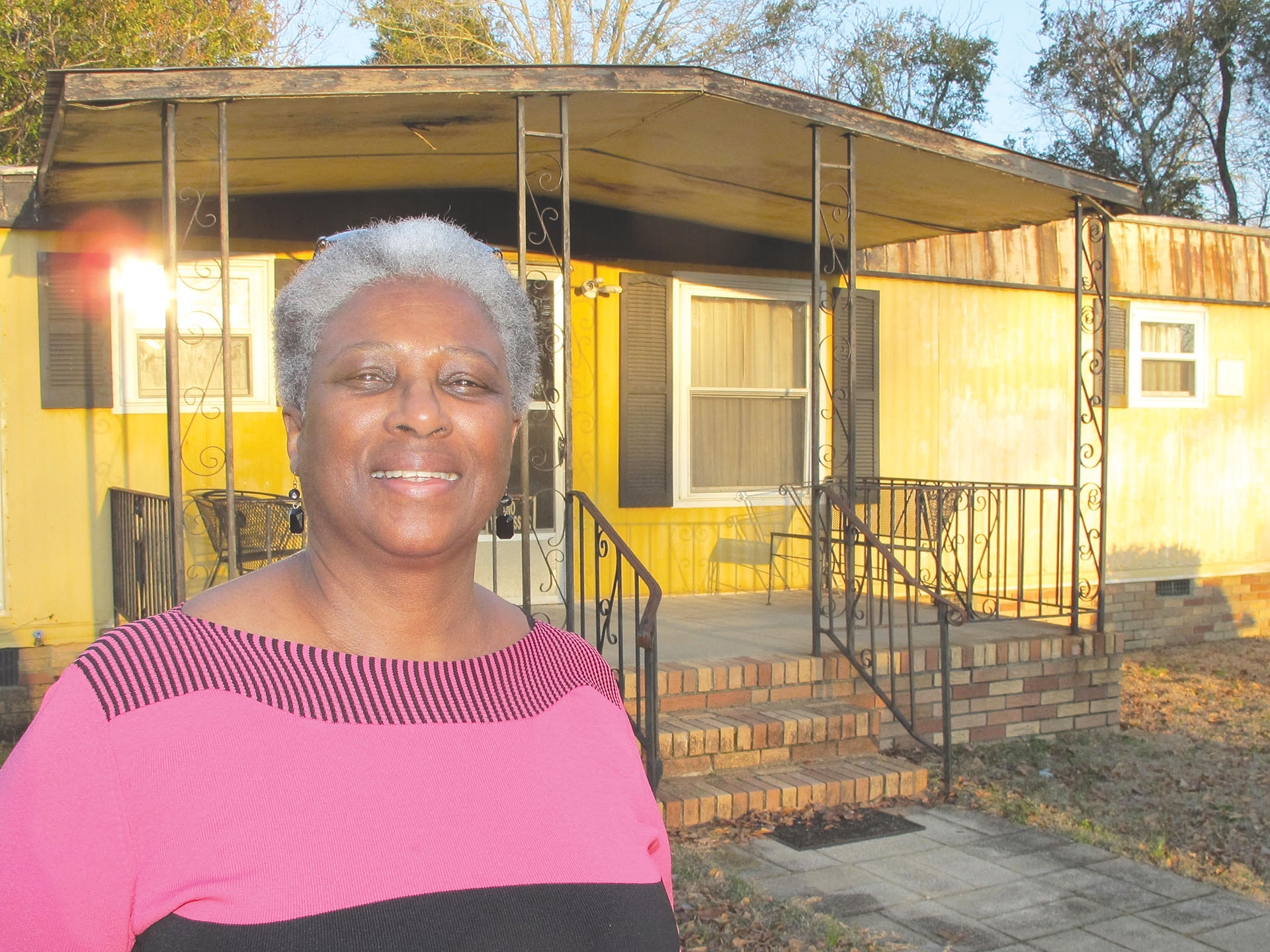
    Debra Scott stands outside the home where she grew up and where she has returned to live – the home she recently learned the Town had designs on ‘taking.’

    Woman Shocked to Learn of Town’s Plans to ‘Take’ Property

    BLYTHEWOOD – During the past year, the Ball Field Committee of Mayor J. Michael Ross has discussed ways to increase the number of fields at the Blythewood Park Rec Center as well as build new fields on 8 acres that Richland School District 2 owns behind Bethel-Hanberry Elementary School. Both sites are on Boney Road. On several occasions Bob Mangone, former chairman of the committee, has suggested that the three fields at the Rec Center could be expanded with the help of a government ‘taking’ of a 1.5-acre residential lot with two trailer homes that is adjacent to the current fields. Mangone said the trailers appeared to be vacant and that a records search by the Town’s attorney to find the owners of the property was unsuccessful.

    Earlier this week, however, Debra Scott, who lives in one of the homes on the lot, called The Voice after reading in a recent issue of the newspaper about the Committee’s plans to possibly ‘take’ the lot and its homes through a government taking.

    “I live in one of those homes,” Scott told The Voice in a phone conversation, “and my cousin lives in the other one. And nobody is going to take it from us. This property has been in my family for many generations, I don’t know how many. But I do know that my great grandmother Collette McDaniel grew up here, my grandmother, who was one of Collette’s 14 children grew up here, my mother Charlotte Young grew up here and she raised me right here in this house (the larger of the two trailer homes now sitting on the land.)”

    Scott said no one from the town government had called her or left a note on her door in an effort to contact her. The Voice accepted an invitation from Scott to visit the property where she gave a tour of the lot and her home, which was immaculately tidy inside and out.

    “There used to be a wood house right over there,” Scott said, pointing to a front corner of the wooded lot next to the Blythewood Park tennis courts, “and that house might have been there since the late 1800s; I’m not sure. That’s where my ancestors first lived. We tore it down not too long ago and had it hauled off. My mother moved into this house when I was born, and I was raised right here.”

    After graduating from high school, Scott was married and she and her husband moved to Columbia where they bought a home that she still maintains. Her two daughters, Nikki and Chastity, have families and still live in Columbia.

    “My mother lived here in this house until last year when she had to move into a care center. So I moved back,” Scott said. “I walk over to church at Bethel Baptist every Sunday morning just as I used to walk to Bethel School across the street when I was young,” she recalled with a smile.

    Scott, who works for a care facility in West Columbia, said she doesn’t really know how long the property, which is in a family trust, has been the home place of the McDaniels. But she said it’s still the heart of the family. She said many relatives in Blythewood as well as those far flung from the home place, come back every few years for the occasions of funerals and family reunions.

    “It’s nice being here next to the park,” she said. “My grandchildren like to go over and play there when they visit.”

    Standing in the yard as she looked around the property, Scott reminisced, “It’s always been a nice safe place, and I’m near a lot of relatives and lifelong friends, and I have lots of memories. It’s my home. It’s the place all my relatives come back to. It means something to us and we don’t want it taken from us.”

    Contacted by The Voice about Scott’s phone call, Mangone said he would be in touch with her soon.

    “We certainly don’t want to take a property where someone lives and has so much history,” he said. “We were looking for more space for fields and just thought no one lived there. But that’s fine with us. We wish Ms. Scott well, and we’ll look elsewhere.”

  • Bravo Fine Reduced

    Financials Still Incomplete

    BLYTHEWOOD – The S.C. Secretary of State has reduced the fine for Bravo Blythewood for continuing to not register with and file financial information with the agency’s Public Charities Division from $2,000 to $200. Martha Jones, who has been Bravo Blythewood’s CEO since it was incorporated as a non-profit on Aug. 3, 2011, had never filed with the Public Charities Division, according to Shannon Wiley, Deputy General Counsel.

    While the fine was paid on March 5, Wiley said Jones has not yet met the agency’s financial reporting requirement. Wiley told The Voice that there is still some work to be completed with the group’s financial report that must be addressed by the accountant working with Jones. Jones did not respond to an email from The Voice for comment. Wiley was not sure when the accountant would come in to complete the financial report.

    Bravo Blythewood is the cultural arts arm of the Town of Blythewood and is primarily funded by the Blythewood government.

  • Ag + Art Tour Coming to Fairfield

    WINNSBORO – Planning for the first Ag + Art Tour for Fairfield County is under way and applications for farmers and artisans are now being accepted. Farmers and artisans who want to participate must sign up by March 18. The tour is part of the first Catawba Regional Ag + Art Tour that is slated for June 21-22 at local farms in Chester, Fairfield, Lancaster and York counties. Tours will be on Saturday from 9 – 5 and 1 – 5 on Sunday. The tour is free.

    Farmers and artisans in Fairfield County can apply online at www.catawbaagandarttour.com/fairfield.

    The Catawba Regional Ag + Art Tour will be a weekend-long self-guided tour that will link together the established agricultural aspects and happenings of Chester, Fairfield, Lancaster and York counties, while adding an art component, including potters, quilters, musicians, storytellers, jewelers, painters and more. Everything on the tour is handmade and homegrown in the four participating counties.

    The Tour is an extension of the original Ag + Art Tour which was first held in 2012 in York County. Since the inaugural tour, community leaders from neighboring counties have joined together to form the Catawba Regional Ag & Art Tour.

    For more information about the Tour, contact Ben Boyles at 803-981-3021 or visit www.AgandArtTour.com for details.

  • Baughman Wins Council Seat

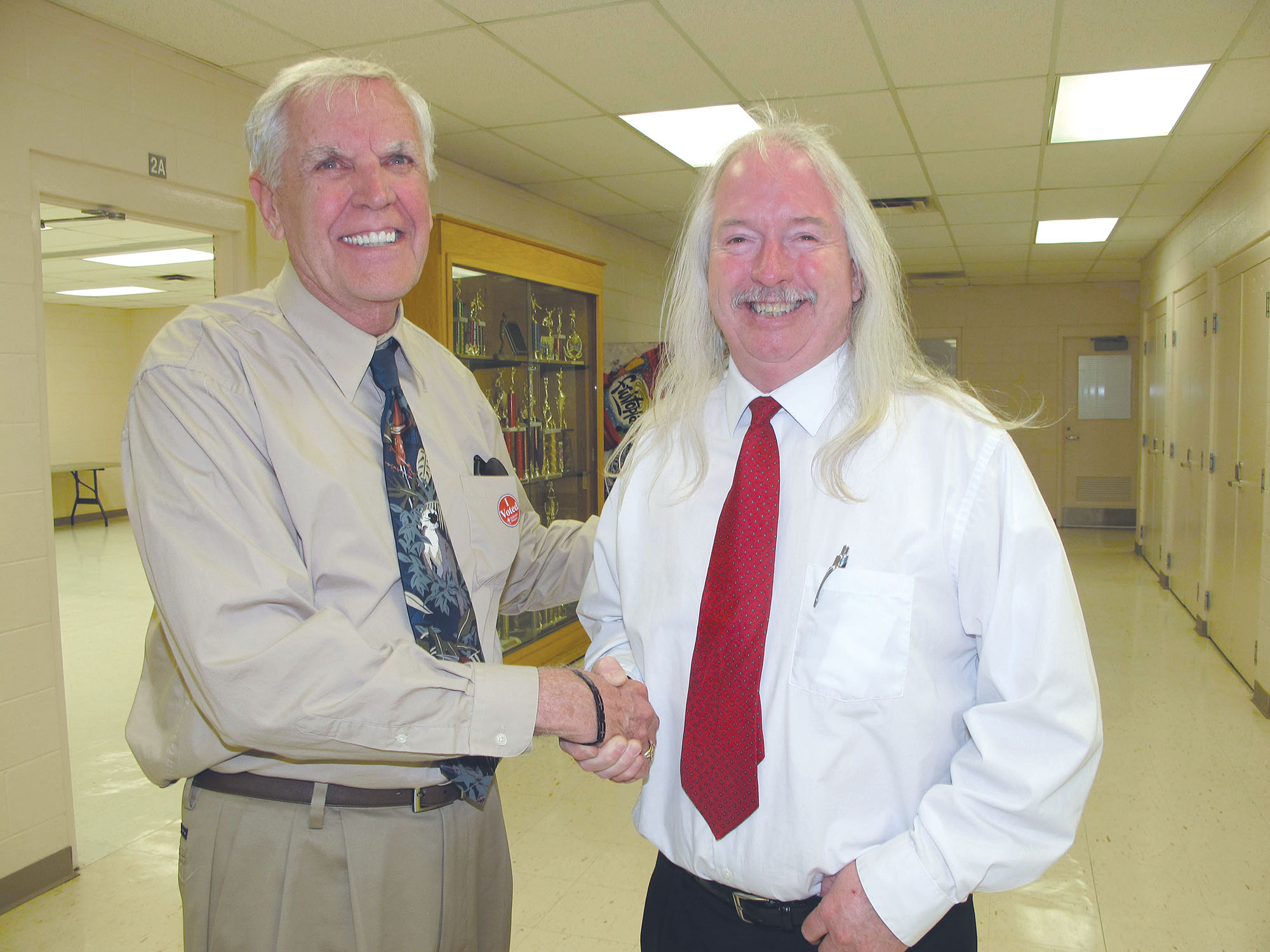
    Newly elected Town Councilman Eddie Baughman, right, is congratulated by his opponent, James Arnold.

    BLYTHEWOOD – Two newcomers to Blythewood politics faced off Tuesday with Eddie Baughman taking home the prize almost 2-1. Baughman’s 60 votes topped write-in candidate James Arnold’s 33.

    With a low turnout of approximately 6 percent, the special election primarily attracted voters from the candidates’ home precincts. Baughman, who lives in the Lake Ashley area, received 39 votes to Arnold’s 10 in Blythewood Precinct 2, where residents of the Lake Ashley area vote. Arnold, who lives in Ashley Oaks, received 17 votes to Baughman’s 8 in Blythewood Precinct 3, where residents of Ashley Oaks vote. Baughman received 11 votes in Blythewood Precinct 1 to Arnold’s 6, and Baughman took the single vote cast in the Ridgeway Precinct and the single vote cast in LongCreek Precinct.

    While 95 voters signed in to vote, only 93 votes registered. Poll clerk Vertis Wilder explained that the discrepancy will be accounted for before Thursday when the election is certified.

    Baughman will be sworn into office at the regular March 24 Town Council meeting. The seat has been vacant since December when Roger Hovis resigned to go to work for the Richland County Sheriff’s office.

    Final Vote Tally

    Eddie Baughman………….60

    James Arnold……………….33

    Total voters………………….95

    Voter Turnout: 6%

  • County OK’s $500K Loan to Hospital

    WINNSBORO – At an emergency meeting Thursday evening, Fairfield County Council approved a $500,000 loan to Fairfield Memorial Hospital. The loan, approved by an emergency ordinance, will allow the hospital to meet its payroll obligations as well as satisfy a portion of the hospital’s approximately $3 million in outstanding debt to vendors.

    At a meeting last week between the hospital’s Board of Directors and County Council, Tim Mitchell, the hospital’s Chief Financial Officer, said that if the hospital didn’t get its hands on at least $200,000 by March 6, payroll could not be met.

    Councilman David Brown (District 7), who during last week’s joint meeting grilled hospital administrators about the financial future of the hospital and the progress being made on a deal to marry Fairfield Memorial to a larger facility in Richland County, had additional questions Thursday night.

    “After our conversation last week, and knowing the necessity of this and knowing the situation we’re in, what do the next 12 months look like?” Brown asked.

    Mike Williams, the hospital’s CEO, said Fairfield Memorial was weighing three options: partner with a larger hospital, lease the hospital to a private entity or downsize the existing facility to an urgent care center. Williams said that one month ago Fairfield Memorial contracted with Stroudwater Associates, a healthcare consulting firm with offices in Atlanta, to put together a proposal for a potential collaborative agreement with a larger hospital. Williams said the Stroudwater study was costing a total of $75,000, with Fairfield Memorial on the hook for $30,000. Fairfield Memorial’s potential partner and other private entities are footing the rest of the bill, Williams said.

    Leasing the hospital to a private company, Williams said, could reduce if not eliminate the amount of charity care Fairfield Memorial currently provides to county patients, while downsizing the facility to an urgent care center would mean serious cases would have to be seen at other hospitals. The most desirable option, Williams said, was a collaborative agreement with a Richland County hospital.

    “I hope we’re working on all three (options) simultaneously,” Council Chairman David Ferguson (District 5) said. “This is something we’re going to have to get real busy at real soon.”

    The $500,000 loan is the third loan from the County to the hospital in as many years. The County fronted Fairfield Memorial $400,000 in March 2011. According the County’s most recent financial audit, that note became payable in April of 2011 in monthly installments of $13,333. During the 2013 fiscal year, the audit states, the County received no payments from the hospital.

    “Due to management’s uncertainty as to the likelihood of collection, the County has maintained an allowance of $333,333 for the full amount outstanding at June 30, 2013,” the audit states. “The County plans to continue attempts to fully collect the note.”

    Last January, just weeks after the County had advanced to Fairfield Memorial the final $245,000 of its annual $980,000 contribution, Interim County Administrator Milton Pope approved a loan of $50,000 to the hospital. That loan was also issued in order for the hospital to meet payroll obligations and was paid back a week later.

    “We can’t keep throwing good money after bad money,” Vice Chairman Dwayne Perry (District 1) said Thursday. “The (hospital) Board has got to deal with it. We have to have some projections over the next six months and show new revenue and what the expenses are, or this $500,000 is going to be gone and we’re right back in the same place.”

    Thursday’s emergency ordinance gives the hospital three years, with no interest, to repay the $500,000 loan.

  • STEM Bond Hits County Snag

    WINNSBORO – Board members of the new Midland’s STEM Charter School came before County Council’s Presentation Committee last week asking the committee to recommend that Council include on its next agenda a request for approval of a $39,261,000 bond, $3,422,000 of which will go to help fund the school. The attorney for the school, Steve Cox, and Interim Fairfield County Administrator Milton Pope explained to the committee that the approval, in the form of a resolution, was little more than a technicality. Pope said the approval of the bond was merely a requirement by the Internal Revenue Service (IRS) for the school to receive tax exempt status. County attorney John James explained to the committee that there was no risk to the County to approve the bond, and that the County would not be liable should the school default for any reason.

    “It would not be a debt or responsibility of the County,” James assured the committee.

    Still, the three committee members, County Council Chairman David Ferguson (District 5) and Councilmen Mikel Trapp (District 3) and Dwayne Perry (District 1), quizzed the members of the STEM group and, in the end, delayed the approval, voting unanimously for a motion by Perry to defer the matter until March 10, saying they needed more time to study the issue.

    “This is certainly something new to us,” Ferguson told the STEM group. Cox explained to Ferguson that Council had given such approvals for industrial projects and that this was the same thing.

    Pope explained at the beginning of the meeting that under new guidelines for agenda items, Council now requires that agenda items first go before the Council’s Presentation Committee, which will then recommend to Council that the item be placed or not placed on the agenda. Or, as Pope pointed out, the committee does not have to even make a recommendation.

    Ferguson asked Cox why the bond is for $39,261,000 when the school is only receiving $3,422,000. Cox explained, “The bond’s issuing authority is the Wisconsin Authority, which covers projects in a multitude of states. So you see several other projects listed in this bond besides STEM. Only $3.5 million of the bond goes to STEM. But the law requires the full amount of the bonds to be listed in the resolution.”

    “Is this approval process customary (to ask for County Council approval)?” Perry asked.

    Cox explained that not only is it customary, but that, “if our bonds are to be tax exempt, the governing body of the jurisdiction in which the project is located must have a public hearing and approve the bond issue. So these are held all the time. You probably do them for industrial projects.”

    Perry asked if there was another way to have the bond approved. Cox said there are two candidates for approving this bond – the county or the state. But Cox said it is not customary to ask for the state’s approval.

    “That would be very unusual. Neither the Governor nor the Attorney General have an established procedure to do this,” Cox said, adding that it had been done only once that he knew of, in Charleston, when a council member had a conflict of interest.

    “The reason we came to this council is because you are customarily the body that approves bond issuances,” Cox said.

    Still, Perry asked again, “Has anyone ever gone outside that (the local government of jurisdiction) process?”

    Cox reiterated that it had been done in Charleston and re-explained the situation.

    “Every charter school in South Carolina that I’m familiar with has come before the local government,” Cox said.

    James told the committee, “We would be doing this as a resolution, so this does not bind the Council on its ability to borrow or its credit rating.”

    Perry asked how many charter schools there are in the state. Cox explained that 30-40 have been authorized by local school districts, but that now most charter schools are authorized by the State Charter School District. He said there are about 20-30 authorized in this way.

    Perry asked why the STEM school had not asked to be authorized by the local school district, and Cox explained that the Charter School District offers a uniform procedure throughout the state and that its procedures are more streamlined and easier to navigate. Kevin Thomas, Board Chairman, also explained that the drive to establish the school began in 2011, prior to the hiring of J. R. Green as Superintendent of the Fairfield County School District.

    To make it easier for the committee members to understand, Pope explained that the approval they would be giving the school would not be an endorsement of the school, but approval of a process. Cox compared the approval the school seeks to a business license requirement.

    “A business needs a license. The County may or may not like a certain business, but it issues a business license as a technical satisfaction for that business to operate,” Cox said.

    Perry asked Pope if the resolution would require three readings, and Pope reminded him that it would be just like any other resolution.

    “A resolution only has one reading,” Pope said. “And if you place the item on the agenda, it is just to fulfill the technical requirement of the IRS.”

    “So if I want to deliberate longer and reconvene another committee meeting, I can do that?” Perry asked, to which Pope answered that he could. Perry said he needed two more weeks to study the issue.

    The committee voted unanimously to defer a recommendation until they could meet again early on March 10 before the Council’s next regular meeting. Ferguson said the item would appear on Council’s agenda for a possible vote that night in case the committee recommends it to the agenda. If the Council votes to approve the item to be on the agenda, a public hearing would be held at a later date. Ferguson said he would poll the other Council members prior to the next meeting to see if the STEM members need to come back to answer questions at the next Council meeting.