Category: News

  • French Huguenot Country

    This Maltese cross marks the spot where Huguenots worshipped, somewhere near the Georgia state line.

    This day trip is hard to estimate because addresses don’t exist. Still, I’d estimate that 115 miles or so will take you to a region rich with history. Beyond McCormick, toward the Georgia line, you’ll find old French Huguenot Country (Main directions below). Off U.S. Highway 378, your first stop is Badwell Cemetery. Stay on the Huguenot Parkway all the way through Savannah Lakes, and you will spot Badwell Cemetery Road to the right. Take this sandy lane, take the left fork and you’ll arrive at a turnaround where a white monument breaks through the greenery. Park near a beech tree where countless souls have carved sentiments and messages into its aged bark.

    You’ll find the cemetery downhill. Be alert. Legend says a troll guards Badwell Cemetery. A rock wall, partially caved in, protects the cemetery, or tries to. Thieves made off with the Grim Reaper sculpture that guarded the wall’s iron door, but it was recovered and sits in the South Carolina State Museum. I’ll always remember this graveyard, but not because notable French Huguenots such as the Rev. Gene Louis Gibert and Petigru and Alston family members lie here. No, credit for this bittersweet memory goes to the inscription on a four-sided white marble marker:

    Sacred to the memory of Martha Petigru, Only daughter and last remaining child of Thomas and Mary Lynn Petigru, Aged 25 years, 1 month, and 16 Days.

    Her sun went down

    While it was yet day.

    Born Septr. 16th 1830

    Died Novr. 2nd 1855

    May the parents who bitterly mourn the

    Irreparable loss of one

    So deservedly beloved,

    Be cheered by Him, Who has said.

    “I am the Resurrection and the Life,

    He that believeth in me, though he were dead,

    Yet shall he live.”

    Her sun went down while it was yet day, Jeremiah 15:9. If you’ll backtrack and take the right fork, you can follow a path to an old block springhouse where folks stored food in cool water to better preserve it.

    Your next stop is a memorial to the site of a Huguenot place of worship. Now here you’ll have to be a bit adventurous and just drive on past the road that took you to Badwell. Look for memorial signs. Take a sandy lane to the left and drive on through the pines until you see a Maltese cross that marks the spot of the New Bordeaux Huguenot place of worship. New Bordeaux, 1764, was the last of seven French Huguenot colonies founded in South Carolina. The village prospered in the 1760s and early 1770s, but the Revolutionary War ruined their economy and New Bordeaux faded away.

    In addition to Badwell Cemetery and the old springhouse in this part of the state you can explore Mt. Carmel, a ghost town of sorts, New Bordeaux, the old Calhoun Mill and the ruins of Fort Charlotte.

    Get a good map and strike out on an adventure in history.

    If You Go …

    • Take SC-121 to US-378, then after passing the Baker Creek State Park sign look for Huguenot Parkway and follow the signs.

    • Admission: A bit of courage but no money!

    Learn more about Tom Poland, a Southern writer, and his work at www.tompoland.net. Email day-trip ideas to him at tompol@earthlink.net.
  • Blythewood Hires New Clerk

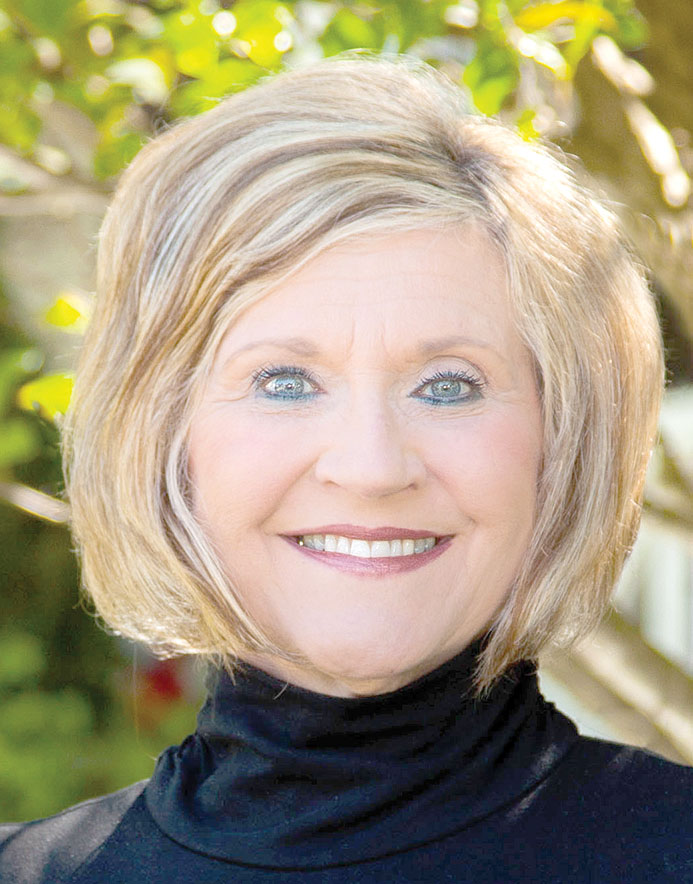
    Beverly Griffin Colley

    BLYTHEWOOD – Born and raised in Blythewood, Beverly Griffin Colley is now the new Blythewood Town Clerk. She was hired by Council Monday evening by a unanimous vote. Colley has worked the last nine years in the office of Congressman Joe Wilson in West Columbia.

    “I was raised right down the street,” Colley told Council, “and I’m looking forward to coming back to work in my hometown and serving to the best of my ability.”

    Colley, who still lives in Blythewood, replaces former Town Clerk Martha Weaver. Interim Town Administrator Jim Meggs told Council there were about 15 applicants for the Town Clerk position and that at least a dozen were interviewed. Colley will assume her duties at Town Hall in about two weeks.

  • Ridgeway’s Race for Mayor: Herring Makes Her Case

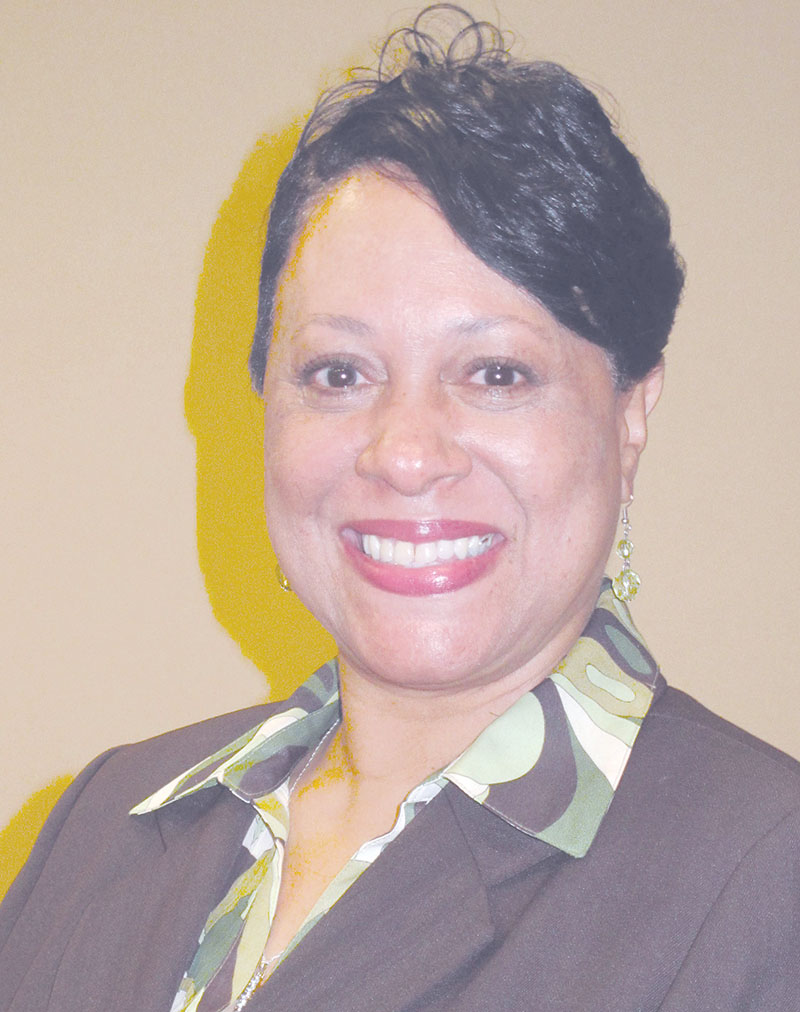
    Mayor Charlene Herring

    I am an educator by profession having obtained a BA in History from Columbia College and a Master’s Degree+30 hours in Elementary Education and Administration from USC. I am currently serving as an Educational Consultant having retired from Richland School District Two where I was the Chief Academic Office, a principal, an assistant principal, curriculum coordinator and teacher. I have garnered awards such as State Teacher of the Year Finalist, Administrator of the Year, and One of One Hundred Most Influential Leaders by Columbia Business Monthly Magazine.

    I became Mayor of Ridgeway in 2006 and have completed my eighth year in office. I have lived at 110 W. Ruff Street in Ridgeway for 16 years with my husband and former council member, Roger Herring. I have two daughters and two grandchildren. I am 64 years old. I am a member of Aimwell Presbyterian Church.

    I am running for re-election as Mayor of Ridgeway. I can answer affirmatively the proverbial question “Are we, Ridgeway, better off than we were eight years ago?” Absolutely! The quality of life and work has improved not only because of my vision and leadership but because of the good work of council, businesses and the citizens of Ridgeway.

    I have built my leadership and service as Mayor on three words: Revitalization, Responsibility and Relationships. Ridgeway has been revitalized through streetscape improvements, restoration of buildings, and attraction of downtown businesses, grants received for water expansion and upgrades, and recognition at the state level as recipients of awards for leadership, business growth and technology.

    Responsibility can be defined by the involvement and ownership of the Town by the mayor and citizens through the creation of a Strategic Plan, management of a fiscally sound budget, adoption of a town logo and brand, and promotion of safety with the addition of police officers, community meetings and implementation of a Crisis/Disaster Plan.

    A community is as vibrant and strong as the citizens who live there. Ridgeway is a strong community. Relationships have been built and nurtured through the work of Town committees, events such as Pig on the Ridge, Arts on the Ridge, Ridgeway Reads, Easter Promenade, Holidays on the Ridge, 43 Mile Yard Sale and First Fridays, awards such as Citizen of the Year and Entrepreneur of the Year and the creation of The Ridgeway Museum. I have also strengthened relations with other cities in the county, the Midlands and across South Carolina through meetings, joint projects and presentations. Ridgeway is known throughout the Carolinas as a progressive yet quaint southern town. Our population doubles each month as persons come to visit, shop, dine and tour.

    I am asking the citizens of Ridgeway to re-elect me for four more years. There is still much to be done such as the creation of a town park, additional street, water and capital improvements, continued attraction and sustainability of downtown businesses, a new strategic plan and further engagement of citizens in the community. Help me continue to lead by example, influence and involvement so Ridgeway remains a great place to live and work.

  • Council Amends Budget

    BLYTHEWOOD – Town Council took the second and final vote Monday night to amend the Town’s budget for fiscal year 2013, to more accurately reflect the operational losses of Doko Manor this past year. The 2014 budget that was set last July projected a $20,000 loss in the Manor’s operating funds in the 2014 fiscal year, which ends June 30, but in only six months that loss was already at $22,000 and climbing. The budget adjustment revised the projected loss from $12,000 to $44,000 for General Maintenance/Service Supplies and from $33,000 to $49,000 for Program and Oversight Salaries for the fiscal year. Councilman Bob Massa, a CPA, had advised Council in January that state law requires a budget adjustment when the budget veers from its projections by more than 5 percent.

    Other revisions to the budget included: appropriation for Ground Maintenance was reduced from $8,000 to $2,500; General Maintenance/Major Repairs from $10,000 to $5,000 and Utilities from $22,000 to $14,000.

    Council Sets Term Limits

    By a 3-2 vote, Council also finalized an ordinance that sets term limits for the Mayor and Town Council members at two consecutive terms each.

    New Rates for Manor

    Council passed a resolution revising rental rates and charges for The Manor. Councilman Tom Utroska said he and the Director of Events at the Manor, Booth Chilcutt, have addressed the changes at length.

    “Most of the rates are raised, but they are still lower than those at Saluda Shores, which is what we use as a basis for setting our prices,” Utroska said. “We have set a flat rate for local civic and community groups ranging from $35 to $60 per hour, based on a minimum of two hours’ usage and a maximum of four hours’ usage. These groups, as well as those who pay the rental rates, would also be charged extra for use of equipment such as table cloths, projectors, etc.”

    Accommodations Tax Funds Awarded

    Council voted on A-Tax Review Committee recommendations, awarding funds for those events that they feel bring visitors to Blythewood. Of the six applicants, the Diamond Invitational Baseball Tournament received the most at $15,000. The USC equestrian team, which won the 2014 SEC Championship at One Wood Farm on Saturday, received $5,000 and was earlier awarded another $5,000 for a total of $10,000. Three other groups/events that requested funding, Blythewood Chamber of Commerce ($20,000), Jon Godwin Racing Team ($10,000) and Blythewood Rodeo ($10,000), were denied their requests for funding. Blythewood Rodeo was asked to resubmit a more concise application and the Blythewood Chamber was asked to resubmit next year.

    The awards are recommended by the A-Tax Committee based on how much business it is thought each group/event would bring to the town. Council then votes on the recommendations.

    History Recognized

    The Blythewood Historical Society kicked off the agenda Monday night to honor and thank the Blythewood Town government for 40 years of service. After historian and former Councilman Wade Dorsey presented a short history of the Town’s first election in 1974, Mayor J. Michael Ross asked those first elected officials and/or family members who were there to represent them, to stand and be recognized.

    In other regular business, Council members voted to defer an ordinance to amend the Landscape & Tree Preservation Subchapter until they have more time to study it.

    Council voted to go into executive session to discuss employment, appointment, compensation, promotion, demotion, discipline or release of an employee, a student or a person regulated by the public body or the appointment of a person to a public body. It was also to discuss negotiations incident to proposed contractual arrangements for the Doko Depot Restaurant. No vote was taken on either matter.

  • Zoning Errors Top 100 Parcels

    WINNSBORO – Nearly 150 properties were left with incorrect zoning last year when the County and its consultant, Dan Vismore & Associates, went through a major rezoning process en route to adopting a new land management ordinance, according to a presentation made to County Council Monday night. Council then took the first steps to correct those errors with a public hearing and first reading of ordinance 627.

    Tim Roseboro, Director of Planning & Zoning, told Council that two properties in Jenkinsville were incorrectly zoned, while five on Highway 321 Bypass were also erroneously rezoned. All seven should have been zoned B2 (General Business), Roseboro said, as should have 10 parcels near Washington Street in Winnsboro. Three parcels along the Ridgeway town limits that should have been zoned as RC (Rural Community) were also incorrectly zoned. But the major problem, Roseboro said, was in South Winnsboro, where 95 parcels were incorrectly zoned that should have been zoned as R2 and 35 that should have been zoned as R1, both residential designations.

    Milton Pope, Interim County Administrator, said that even though it is obvious the corrections need to be made, Council was obligated by law to go through the legal stages of three readings and a public hearing before adopting the changes. The proposed corrections, Pope said, will make the zoning maps consistent with the overall comprehensive land management plan.

    First reading passed 6-0. Councilman Mikel Trapp (District 3) was absent.

  • Recreation Back on the Table

    WINNSBORO – Milton Pope, Interim County Administrator, told Council Monday night that the plan on how to spend $3.5 million in bond money to develop recreation in the county had entered its next phase. Pope said his staff had met last week with Ken Simmons & Associates (KSA), the consulting firm selected by bid to guide the County through the process, and that the firm would be meeting with each Council member individually in the coming weeks to review their wish lists for recreation.

    Pope said KSA would be reviewing all extant recreation information complied by the County over the years, including the study conducted by the Central Midlands Council of Governments several years ago.

    “They’re bringing their recreational experience to the county to see how we can maximize the use of $3.5 million that we have county wide,” Pope said.

    Once the master list of projects is reviewed, Pope said, it will come back before full Council for a vote on how to proceed, “because we could wind up with a situation, based upon the master list, where those costs could exceed the $3,.5 million and they may not,” Pope said. “But we need to know what those costs are and if in fact there are going to be any continual costs or operational costs that we need to consider.”

    Bruce Wadsworth, a resident of the Dawkins community who has been a strong supporter of erecting a rec center in Western Fairfield, said he was glad to see the subject up for discussion once again.

    “I’m glad to see recreation is back on the agenda,” Wadsworth said during the meeting’s second public comments session. “My dad always told me that if two people are going to have something, they are going to have to work together. There are eight of you. You guys need to work together.”

    Still, Wadsworth expressed frustration that Western Fairfield was still waiting on a facility after years of neglect.

    “(Councilman Kamau) Marcharia says he’s been trying for years to get a rec out in the Dawkins community,” Wadsworth said. “It shouldn’t take years for eight people in your positions to get your heads together and do the right thing.”

    On another recreation front, Pope reported that the engineering consultants Goodwin, Mills & Caywood, were given the go-ahead to begin reviewing the disaster at Drawdy Park, as well as reviewing other work performed by S2 Engineering in the county. District 1 resident Randy Bright, during the meeting’s opening public comments session, said Drawdy Park had gone from disaster to eyesore, and urged Council to take some action to preserve it.

    “Council members, have you been to Drawdy Park lately? It’s an absolute embarrassment,” Bright said. “It’s in disrepair, there’s trash everywhere, there are accidents waiting to happen at every ball field. There’s big deep holes, drainage holes that have fences around them, trash has been thrown in them, busted pipes, exposed wire everywhere, exposed junction box.”

    While Wadsworth would later lament the fact that Council was willing to spend more and more money on Drawdy Park while Western Fairfield did without, Bright questioned spending the money at all.

    “I wonder what good will it do to spend $3.5 million on recreational projects if they’re going to fall into such disrepair like Drawdy Park has,” Bright said. “Drawdy Park is a sincere embarrassment.”

  • Woman Found Guilty in Feb. Animal Cruelty Case

    WINNSBORO – A Winnsboro woman charged with two counts of cruelty to animals in January was found guilty on both counts in Fairfield County Magistrate’s Court last week. Rosa Laqunna Vesselles, 27, of 223 Doty Road Ext., was fined $135.19 for the first count and $139.25 for the second count by Judge Michael Paul Swearingen on March 20.

    Vesselles was issued the citation by a Fairfield County Sheriff’s deputy on Jan. 28 after the deputy discovered one dead dog and a second dog in decrepit condition tied up in the front yard of Vesselles’s home. The surviving dog later perished.

    According to the original incident report, a Sheriff’s deputy was patrolling the area on Jan. 28 when, at approximately 10:45 a.m., she “saw what appeared to be a very frail” dog lying motionless in the yard of the home. After knocking on the door of the home for several minutes and receiving no answer, the deputy walked to the back yard and found the dog to be deceased, still tied to a chain, which was attached to a post stuck into the ground.

    “There was no shelter for the dog,” the report states, “very little food and no water.”

    A second dog was found on the far side of the home. The dog, while still alive, was “very thin, poor (and) malnourished,” the report states. The dog was also tied to a chain that was attached to a post in the ground, surrounded by trash and his own feces, and also had “no water, very little food and no shelter. The dog was so weak it could barely stand.”

  • County Tables Vote on Cars, Road Name

    WINNSBORO – After considerable debate, County Council tabled two items on Monday night’s agenda – what to do with surplus vehicles and whether or not to approve a name change for a road in Western Fairfield County.

    The County has only recently upgraded its fleet of vehicles with eight new cars last month and plans on adding eight more, pending the recommendation of the Administration and Finance Committee, which met prior to Monday’s full Council meeting. Chairman David Ferguson (District 5) said that in the past, the County has donated used vehicles to Fairfield Memorial Hospital, the towns of Ridgeway and Winnsboro and has contributed several to the Fairfield County School District for use at the Career Center’s auto mechanic’s courses. Ferguson placed the motion on the floor to “continue that policy” of donation, and while it received a second from Councilwoman Mary Lynn Kinley (District 6), Councilwoman Carolyn Robinson (District 2) said the “policy” was not actually a policy and that Council may want to consider selling some, if not all, of the used vehicles at auction.

    “It was a motion from 2002 for the administrator to do as he saw fit and some of the recommendations were to give to the town of Winnsboro and to the hospital,” Robinson said, “But that’s only a motion, that’s not a policy, per se; therefore, motions as I see them are only good for two years. They’re not like ordinances that last.”

    Robinson said she felt that some of the vehicles might fetch at least $1,000 or more at auction; although, she added, the ones worth much less – between $200 and $300 – might still be donated to the Career Center.

    “A Crown Victoria will bring $900 to $1,200 at sale,” Councilman David Brown (District 7) said. Notices should be sent to the county’s municipalities, as well as the hospital and the school district, he said, to see if they are in need of vehicles before they are sent to auction.

    “Maybe we can get some feedback on this process when we have taken vehicles out of circulation and put in position when they’re taken to auction,” Vice Chairman Dwayne Perry (District 1) said. “What has that process looked like and what kind of financial return have we gotten from taking those vehicles there? Maybe we can have that information brought back to us before we make a decision on it tonight.”

    But Ferguson amended his motion to include potential donations to any municipality that would come before Council and request a used vehicle. Robinson amended the motion further to include contacting the various potential recipients of used vehicles to assess their need.

    “I just don’t see us sending all eight vehicles out to the school,” Robinson said. “Those kids can only do so much work on so many vehicles in a year. I would like to see this motion tabled.”

    Ferguson ultimately agreed and tabled the motion until Council’s April 14 meeting.

    “OK. I would just like to make it absolutely clear that the school system in this county does not have the funds to buy cars and equipment for those young people to learn on,” Ferguson said. “It’s the cheapest way to educate the young people in this county, these things we’re taking off the road and getting a small amount of money for.”

    Just last week, however, when discussing the distribution of funds from the County’s many fee-in-lieu of taxes agreements with local industries, Ferguson told The Voice that the school district was doing just fine financially.

    “With the school funding where it’s at, being near the top in the state, we’re not in bad shape as far as that goes,” Ferguson said last week.

    A motion to rename High Hill Lane to Wylie Lane was also tabled after Robinson noted that the petition on the application, which came through the County’s Planning & Zoning Department, appeared suspect.

    “The first three names on the list were signed by the same person,” Robinson said, examining the petition through reading glasses.

    Milton Pope, Interim County Administrator, said that the list of signatures was provided by the applicant, whom Planning & Zoning Director Tim Roseboro confirmed as Thelma W. Brown.

    “She’s the third name on the list,” Robinson said.

    Councilman Kamau Marcharia (District 4), in whose district the road lies, suggested sending the application back to Planning & Zoning for verification. In order to change the name of a road, Marcharia noted, the applicant must first acquire the signatures of 75 percent of residents owning property on the road.

  • Borrowing to Pay Debt

    Decoding Municipal Bonds

    WINNSBORO – County Council has recently borrowed money to pay interest on money it borrowed last year. On Feb. 12, the County issued a new general obligation bond in the amount of $769,177.88 for the purpose of making the first interest payment on the $24.06 million installment purchase revenue bonds (IPRB’s) that were issued almost a year ago on April 29, 2013, to finance the costs of acquiring, constructing and equipping various projects for the County, according to Interim County Administrator Milton Pope. While former County Administrator Phil Hinely was quoted in both Fairfield County newspapers last March as saying the County issued the $24 million IPRB’s, Pope told The Voice last week that the IPRB’s were not issued by the County but by the Fairfield Facilities Corporation (FFC).

    According to Pope, the FFC is a non-profit corporation that was created by the County Council on March 25, 2013, to allow Council to borrow more money than it could otherwise legally borrow within its constitutional debt limit, which is equal to 8 percent of the assessed value of taxable property in the County. For Fairfield County, that limit, as of March 2, 2013 was $4.5 million according to the ordinance authorizing the $769,177.88 general obligation bond.

    And while revenue bonds are, by law, to be repaid with a revenue stream, such as a County-owned water company or toll road and not ad valorem (property) taxes, a unique feature of IPRB’s is that a mock revenue stream can be created from the issuance of general obligation bonds that are then paid off with ad valorem taxes that have not been approved by the electorate.

    So, after creating the FFC by resolution last spring, Council passed Ordinance 614 on April 15, 2013 to authorize an unlimited number of general obligation bonds to be issued at unspecified dates, in unspecified amounts. The first one, issued on Feb. 12, will cover the 2014 interest payment on the $24 million IPRB’s. Council could continue to issue more general obligation bonds each year until their $4.5 million debt limit is exhausted. According to the payment scheduled for the $24 million IPRB’s that was published in the County’s FY2013 audit, the interest and principal payments were loaded so that the bulk of the payments would begin in 2019 at which time the new ad valorem taxes from the second nuclear reactor at the V.C. Summer Nuclear Station in Jenkinsville (scheduled to begin operations in 2016) would start picking up the heftier payments on the IPRB’s.

    Of the new $769,177.88 general obligation debt, $40,000 went to the County’s bond counsel, Parker Poe Adams & Bernstein LLP, for bond issuance fees, and $5,900 went to BB&T for other fees. The County will pay an additional $69,674.25 in interest on the bond over the next seven years for a total payout of $838,852.13.

    While Council Chairman David Ferguson (District 5) issued a notice to County Auditor Peggy Hensley and County Treasurer Norma Branham on Feb. 12 to levy and collect taxes on all taxable property in the County sufficient to pay the principal of and interest on the 79,177.88 general obligation bond, Pope told The Voice that new taxes will not be levied to pay for the bond. He said sufficient property taxes have already been levied to cover the payments.

    Even though the law allows counties and municipalities to issue general obligation bonds if they do not exceed the 8 percent debt limit, Article 13 of the S.C. Code of Laws, annotated sections 4-9-1210 and 11-27-40, provides voters with a 20-day window in which to initiate a referendum to repeal the bond. To initiate such a referendum, within 20 days after the County publishes a notice (in a newspaper of general circulation in the County) that it has adopted the bond ordinance, not less than five qualified electors (voters qualified to vote in the County) must file notice with the clerk of court and with the clerk of council of their intention to seek a referendum. Then, within 60 days after the enactment of the ordinance authorizing the issuance of the bond, a petition signed by qualified electors of the County equal in number to at least 15 percent of the qualified voters of the County must be filed with the clerk of council requesting that the ordinance be repealed. Council can either hold a referendum on the ordinance or rescind it. An affidavit of publication of such a notice for Ordinance 614 was published March 22, 2013.

    When Council passed Ordinance 614 last spring to authorize the $769,177.88 general obligation bond, references were made in public meetings and in the newspapers by Council members and Hinely, referencing the ‘bond that Council passed’ not as a general obligation bond that would be issued in the future to pay for the $24 million IPRB’s but as the $24 million revenue bonds. A news article on the front page of the March 29 issue of The Voice attributed the following to former County Administrator Philip Hinely: “the $24.06 million in bonds Council voted on Monday night (March 25, 2014) aren’t necessarily ‘new’ bonds, but are a ‘rolling over’ of the 2009 (general obligation) bond that kick-started the 10-year plan. Therefore, he said, they ($24 million bonds) don’t come with a tax increase. If we didn’t do it that way, we would have to issue new bonds,” Hinely said, “and that would increase taxes.” Asked to explain how the $24 million bonds were a ‘rolling over’ of the 2009 general obligation bond, Pope said he would get back with that information, but had not at press time.

    Next week The Voice will look more closely at the use of IPRB’s by small towns and counties and why some S.C. legislators have begun to crack down on the increasingly widespread use of installment purchase revenue bonds.

  • Board Preps for Review

    Debate Over Minutes Drags On

    WINNSBORO – After a shaky start to their March 18 meeting, the Fairfield County School Board approved funding for a pair of student field trips, cut ties with a software company and took their first steps at preparing for an external, voluntary accreditation review.

    The meeting stumbled out of the gate, however, as Board members could not come to a consensus over approval of minutes from last month’s meeting. At issue were comments made by Board member Paula Hartman (District 2) that were ruled out of order by Board Chairwoman Beth Reid (District 7) and were therefore not included in the minutes. Hartman insisted that her comments be included in the minutes for the record, but Reid was adamant.

    “You were ruled out of order prior to it going on the record,” Reid said.

    “How come other things other Board members say gets on the record and I can’t?” Hartman asked.

    “I don’t know,” Reid said. “You were ruled out of order prior to it going on the record.”

    “No I did not,” Hartman said.

    “It’s time to call for the question,” Reid said. “This is the minutes. This is ridiculous.”

    But Board member Annie McDaniel (District 4) said if Hartman was requesting a statement be included for the record, the Board should accommodate her. McDaniel then moved to approve the minutes with the inclusion of Hartman’s statement. Hartman seconded the motion, which failed to carry 2-4 (District 1 Board member Andrea Harrison was absent). A motion to approve the minutes without corrections carried 4-2, with Hartman and McDaniel voting against.

    “And I want it stated for the record that if we are going to work together as a board we need to make sure we are following rules and we’re following orders appropriately,” McDaniel added after the vote, “and that it is not the Chair’s discretion to call people out of order unless they are really out of order.”

    Board member Henry Miller (District 3), however, pointed out that it was indeed the Chairwoman’s discretion on when to lower the gavel and call another member out of order.

    After spending nearly half an hour approving the minutes, the Board finally got down to business.

    A recommendation from Superintendent J.R. Green to use June 3 and 4 as makeup days for classes missed because of winter storms and to use June 5 as a teacher workday was tabled after McDaniel noted it was not listed as an action item on the agenda.

    The Board also approved $14,200.50 to help fund a trip to Orlando, Fla. by the Fairfield Central Robotics Team to compete in a regional competition. In their first season in competition, the Robotics Team recently placed 14th in the state competition in Myrtle Beach. The team will travel to Orlando April 3-5 for the event. The motion to help fund the trip passed 6-0.

    The Board also OK’d up to $20,000 to help fund a trip to Puerto Rico by students at Gordon Odyssey Academy on a 6-0 vote, and voted 6-0 to end the District’s relationship with Thinkgate, which Dr. Claudia Edwards said had proven “unreliable as an assessment delivery tool.”

    Accreditation

    Edwards previewed for the Board the process of self-examination that will be part of the upcoming review of the District by AdvancED (AE), a voluntary accreditation system. AE visits districts in their system every five years, Edwards said, and a review team would be arriving in Fairfield County in December. Step one, she said, was the completion of surveys by stakeholders, including members of the Board. McDaniel, however, appeared reluctant to participate.

    “I don’t want to go through this so we can have another stamp,” McDaniel said. “For folks who don’t know, AdvancED is SACS. It’s just another name for SACS and I’ve already been through what they can do. So if we’re not going to use this to help make the district better, then I don’t want to go through with it. I want to be able to answer the questions in such a manner that whoever is reviewing us will come in and help us get where we need to be.”

    McDaniel is one of two remaining Board members (Miller being the second) who served when the Southern Association of Colleges and Schools (SACS) attempted to visit and review the District back in 2009. At that time, the SACS review team was barred by the Board from interviewing administration, staff and stakeholders and received a scathing review from the team. The stonewalling tactic very nearly cost the District its SACS accreditation at the time.

    Policy Review

    The District voted 4-2 to enter into a contract with the S.C. School Boards Association (SBA) to review the District’s policies, at a cost of $1,200 to the District. The review will center mainly on Section B of the Board’s Policy Manual, dealing with school board governance and operations. McDaniel said she would like other policies reviewed, including how class salutatorian and valedictorian are selected, the Board’s travel policy and the policy governing gratis use of District facilities. While Reid said that any Board member who had suggestions for policy reviews could submit them by email, she told The Voice this week that the selection of salutatorian and valedictorian were governed by state standards.

    “So what is there to discuss?” Reid pondered.

    McDaniel and Hartman voted against the contract.