Category: News

  • Volunteers Needed for Wall

    BLYTHEWOOD (March 17, 2016) – Organizers bringing The Wall that Heals to Doko Park in Blythewood this Memorial Day are calling for 104 volunteers to each work three-hour shifts during the four 24-hour days the exhibit will be open from May 26 – 30.

    “We’re 10 weeks out now, and we’re about where we need to be,” Town Councilman Eddie Baughman told Council members at a workshop Tuesday morning. “But we’re going to have to have a lot of volunteers step up real soon to make this happen. It’s a very large event that could bring as many as 20,000 visitors to Blythewood during those four days.

    “That’s a lot of people to be patronizing our businesses while they’re in town,” Baughman said, “buying gas, eating at our restaurants, visiting our shops and, hopefully, staying overnight in our hotels. I think it will be a great opportunity to welcome so many people to our town.”

    Baughman, a Vietnam War veteran, suggested last fall that Council bring The Wall to Blythewood.

    The exhibit features a half-scale replica of the Vietnam Veterans Memorial in Washington, D. C. The chevron-shaped wall is made up of 24 panels that will stretch across approximately 250 feet of lawn in the park next to Town Hall.

    The wall is accompanied by a mobile Education Center that tells the story of the Vietnam War and the era surrounding the conflict and includes displays of photos of service members whose names are found on The Wall, along with letters and memorabilia left at The Wall in Washington, D.C.

    The exhibit will also include a map of Vietnam a and a chronological overview of the conflict.

    Anyone wishing to volunteer their time during the event should contact Hazel Kelly at Town Hall at 754-0501.


  • Solicitor: No Charges for SMC Cop in Campus Break-In Shooting

    SPARTANBURG (March 11, 2016) – The Eighth Judicial Circuit Solicitor last week officially declared the shooting death of a former Fairfield Central High School student last November on the campus of Spartanburg Methodist College (SMC) justified and announced that no charges would be filed against the SMC Campus Police officer who fired the fatal shots.

    Delvin Tyrell Simmons, 20, a 2014 graduate of Fairfield Central High School and a student at Limestone College in Gaffney, was shot and killed on the campus of SMC by a campus police officer on the night of Nov. 9 while driving away from the scene where, the report states, Simmons had been observed breaking into a vehicle.

    “There is no question that this incident is a tragedy for all parties involved and affected, particularly for the family of the deceased,” Eighth Circuit Solicitor David M. Stumbo wrote in his March 2 report to the S.C. State Law Enforcement Division (SLED). “Nevertheless, it is our firm opinion that Officer (Andrew B.) Tomlinson was justified under the circumstances in discharging his service weapon during this incident.”

    Spartanburg County Coroner Rusty Clevenger ruled Simmons’s death a homicide and the shooting was investigated by SLED. SLED’s findings were reviewed by Solicitor Stumbo. Both officers involved in the incident were placed on administrative leave pending the outcome of the investigation.

    SMC security camera footage showed Simmons breaking into vehicles in the upper parking lot of Sparrow Hall on the night of Nov. 9, Stumbo’s report states, and the stolen items were located inside the car in which Simmons was later killed, a Ford Crown Victoria.

    No video surveillance footage was available of the shooting, Stumbo wrote in his report, because of the location of the shooting in relation to the position of surveillance cameras on campus. There was also no dash-cam footage, as officers were not in the vicinity of their patrol cars at the time of the shooting. The officers were also not equipped with body cameras, the report noted.

    There were, however, multiple witnesses to the incident whose statements were consistent with Tomlinson’s statement and corroborated by the physical evidence found at the scene, Stumbo’s report states.

    According to the reports, witnesses had spotted Simmons and a second suspect, later identified as Oliver Mylik Chandler, 20, of Darlington, breaking into a Jeep Cherokee and placing items from the Jeep into the trunk of a Ford Crown Victoria at approximately 8:45 p.m. When SMC officers Tomlinson and Justin Yarborough arrived at the scene, both suspects fled on foot. Chandler was later apprehended by officer Yarborough while officer Tomlinson remained with the Crown Vic.

    A short time later, Simmons returned to the Crown Vic, got in behind the wheel and backed the car out of its parking space. Tomlinson stepped in front of the car, raised his hands in the air and ordered Simmons to stop. But, according to multiple witnesses, Simmons instead accelerated the Crown Vic, driving straight toward officer Tomlinson who attempted to get out of the path of the car. According to the report, just before the car struck him, Tomlinson  fired four times into the front of the vehicle as he continued to move backwards and to his right.  The vehicle brushed Tomlinson on his left side, and he injured his right knee trying to get out of the way. The Crown Vic came to a standstill after crashing into two cars parked in the lot.

    An autopsy revealed that two of the gunshots struck Simmons in the head, killing him instantly. The toxicology report showed that Simmons tested positive for marijuana as well as the antidepressant Trazodone, the SLED report states.

    Chandler, whose last known address was, according to the SLED report, 8045 Howard St., Spartanburg, was charged with car-breaking and larceny. According to Stumbo, Chandler later confessed to the break-ins and implicated Simmons in the crime as well.

    Spartanburg County Sheriff Chuck Wright said last November that evidence found in the Crown Victoria Simmons was driving connected Simmons and Chandler to auto break-ins on the campus of Gardner-Webb University in Boiling Springs, N.C., about 40 minutes from the SMC campus. Wright said Gardner-Webb police confirmed that clothing they noted on men breaking into vehicles through surveillance video was the same clothing found inside the car of Simmons.

    Investigators allege that Simmons and Chandler broke into several cars on the campus of Gardner-Webb University on Nov. 2 and then used a debit card stolen from one of the vehicles multiple times in Gaffney the next day, running up charges of more than $308.

    “Based on all of the facts and circumstances available at this time, it is our legal opinion that Officer Tomlinson discharged his service weapon out of a legitimate and reasonable concern for his own life and safety,” Stumbo wrote. “Because there is no evidence of criminal intent we are closing our review of this case.”


  • Leak Ups JWC Water Purchase

    JENKINSVILLE (March 11, 2016) – Responding to questions from a shareholder at Monday night’s monthly meeting of the Jenkinsville Water Company board of directors, company president Gregrey Ginyard said there was currently a water shortage in Jenkinsville. That ‘shortage,’ additional questions revealed, may in fact have been attributed to a leak in the system that forced the company to purchase approximately 10 times as much outside water as normal.

    “We bought a million gallons of water from Mid County (in February),” Ginyard said when asked directly by shareholder Dee Melton if there was a water shortage in Jenkinsville. “So I would say yes, when we were buying less than 100,000 before.”

    Ginyard later clarified for The Voice that the Jenkinsville Water Company had actually purchased 1,206,000 gallons from Mid County last month.

    News of the ‘shortage’ comes on the heels of the reopening of the Clowney Road well, which should have relieved some of the company’s reliance on Mid County water.

    Monday night’s revelation that Jenkinsville Water had purchased more than 1 million gallons of water from Mid County after the reopening of the Clowney Road well prompted Melton to ask if there had been a significant leak in the system.

    “There was a leak,” Ginyard answered. “I can’t tell you how many gallons of water. I wasn’t there for the leak but I was notified of a leak.”

    The Clowney Road well, Ginyard told members at the annual shareholders meeting in January, was taken off line last September after high levels of radium were found in the water there. A new filtration system was installed at the well, while the company spent a little more than $107,092 with the Mid County Water Company for water to serve Clowney Road customers between September and January.

    Broad River Campground

    Melton, who has been trying since 2014 to obtain additional water to expand his Broad River Campground on Highway 215 by 49 sites, asked the board Monday how many sites were recently approved for water for a campground owned by newly seated board member Preston Peach. Ginyard said Peach was approved for 12 sites at 175 gallons per site, per day.

    Ginyard’s answer prompted the discussion on the water shortage. When Ginyard attributed the shortage to the leak and noted that the Clowney Road well was only recently back in service, indicating that the shortage should be short-lived, Melton again asked the board for water to serve an additional 49 sites at his campground.

    “If you’re asking for 49 sites, the board will consider it at 175 gallons per site, same as we did for the other campground,” Ginyard said. “It would have to be calculated at 175 gallons per site, just like Mr. Peach and everybody else, the rest of the campgrounds.”

    Ginyard said the board would discuss Melton’s request, provided he could deliver it in writing within the week, at next month’s meeting.

    “At our next board meeting we’ll discuss it,” Ginyard said, adding, “I can’t tell you you’ll get an answer then.”

    After the meeting, Ginyard said whether or not the company can spare the water would ultimately be up to calculations from the S.C. Department of Health and Environmental Control (DHEC). The company could not, Ginyard said, promise water to Melton for 49 sites if it meant depriving other operations water for fewer sites. If the Clowney Road well produces sufficiently, he said, there could be enough water for Melton as well as everyone else.

    Melton, who has been locked in a legal battle with the Jenkinsville Water Company since September 2014 over water for the additional sites, told The Voice Tuesday that he was not confident his latest request would be taken seriously.

    “I think it’s just another stall tactic,” Melton said.

    Melton said he had moved forward and drilled his own well at the campground. The well was producing adequate water, he said, and he would be adding more sites with or without the blessing of the Jenkinsville Water Company.

    Why, then, even ask the board for water?

    “We just want the water we contracted to have,” said Melton, whose lawsuit alleges that the water company broke its 2009 agreement with the campground. “It makes a difference if we’re not allowed to use the water we contracted to use. It makes a legal difference.”

    Ginyard has denied Melton’s allegations, telling The Voice last year that the water company has never told Melton he could not use all of the 8,050 gallons of water per day maximum granted in the 2009 contract.


  • Hospital Inks Deal on Program Ahead of County Funding

    WINNSBORO (March 11, 2016) – County Council is once again faced with a funding dilemma at Fairfield Memorial Hospital, one totaling nearly a half million dollars and one that would require Council to officially amend its 2015-2016 budget.

    During their Feb. 15 meeting, Council unanimously passed first reading on an ordinance to adjust their budget in order to meet the hospital’s request for a total of $451,773.46. Interim County Administrator Milton Pope told Council after the vote that the request covered two items on tap at the hospital. Fairfield Memorial is seeking $305,523.46 to pay off outstanding maintenance contract costs for their CT scan and MRI machines, as well as $146,250 to implement the new WellnessWorks program.

    Council is scheduled to meet again Monday; however, it was not known at press time if a second reading of the ordinance would appear on the agenda. Phone calls to Council Chairwoman Carolyn Robinson (District 2) were not returned to The Voice before going to press.

    Yet, while some Council members expressed concern over potentially throwing good money after bad, hospital CEO Suzanne Doscher classified the requests as a priority. Indeed, Doscher told The Voice this week that Fairfield Memorial has already signed a contract to administer the WellnessWorks program – a program that interfaces with local businesses and industry to provide preventive healthcare to employers – and is laying the groundwork for implementation in advance of funding approval.

    “We are doing everything we can to implement the program this week,” Doscher said. “Our intention is to sign up employers this week. We haven’t started the program, but we are laying the foundation. We have signed the contract.”

    The $146,250 the hospital is seeking from the County, Doscher said, will cover Fairfield Memorial’s monthly payments on the program for a year. Council has held several closed-door meetings with the hospital’s board of directors since Feb. 15, and the ordinance to amend the budget to dish out more cash to the hospital will require two more readings and a public hearing.

    “The contract with WellnessWorks is ongoing. There is a monthly payment to stay in the program,” Doscher said. “We don’t want the financial challenges of the hospital to be a detriment to employers’ healthcare.”

    Doscher said she did not have an answer to what Plan B would be, should Council decline the hospital’s funding request.

    “Plan A is not even a plan if you implement that (WellnessWorks) without the funding to operate it,” Vice Chairman Kamau Marcharia (District 4) said. “We are all concerned about this. We’ve had conversations with the hospital and we laid out what we needed to move forward and I don’t think those things have been laid out yet so that we can make a decision.”

    Marcharia said Council was still seeking some basic financial information from the hospital, specifically how the hospital plans to address some of its outstanding bills and a plan to get on firmer fiscal ground in the future.

    “We want to see the hospital here in the future,” Marcharia said. “We don’t want to lose it. But if it continues where the County has to fund everything, I don’t know if that can continue.”

    The lion’s share of Fairfield Memorial’s most recent request – the $305,523.46 to catch up on maintenance for the CT scan and MRI machines – is also a high priority, Doscher said.

    Both machines are old, and Doscher said that if the hospital had the financial ability to do so, it would replace them outright. But without that kind of monetary flexibility, the best that can be hoped for is extending their lives a little longer.

    “We’ve had some problems with equipment failures with those two pieces of equipment,” she said. “To keep those two pieces of equipment running, a service agreement is essential, and we do not have one.”

    The prior service agreement, in fact, lapsed after the hospital could not keep current on its payments.

    “Because of our financial situation, we could not pay the previous agreement,” Doscher said; and in order to restart that service, she said, “We would have to pay the back payments.”

    Doscher said that to the best of her knowledge, Fairfield Memorial’s CT and MRI machines were the only two such imaging machines in the county, making them even more vital to Fairfield County healthcare.

    District 7 Councilman Billy Smith said he did not know when Council would take up second reading of the ordinance, but added that his support for the funding was contingent on a sound financial plan.

    “For me to vote to provide the funding that the hospital has requested – anything I vote for will have to be preceded by a long-term plan to make the hospital stable in the future,” Smith said. “We need the hospital there. It’s good for the healthcare of the county, it’s good for economic development; but we don’t need to keep throwing money down a hole with no bottom to it.”

    The closed-door sessions between Council and the hospital board have generated a number of rumblings throughout the county about the future of Fairfield Memorial. While Smith and Marcharia both said they were bound by non-disclosure agreements on many of the details of those secret conversations, Marcharia did say that just about every option for stabilizing the hospital was on the board’s table.

    Doscher, meanwhile, addressed some of the more prevalent leaks circulating about the hospital’s future.

    No decision had been made by the board, she said, on any type of bankruptcy filing or debt restructuring. The board has also not approved any type of merger with a larger hospital. And finally, she said, the hospital has not been sold to another facility.

    “If the hospital can secure a buyer that agrees to maintain a level of healthcare based upon the board’s definition of healthcare,” Doscher added, “then they would sell.”

    With the WellnessWorks program already on the move and a pair of aging imaging machines barely chugging along, Council will have to make some hard choices, and make them sooner than later.

    “We all want to keep the hospital open. We need it there,” Smith said, “but at the same time the citizens need to know what goes into that. We don’t want to go broke, and we don’t want the hospital to close, and we certainly don’t want to do both.”
     

  • Town Shifts Gears on Penny Tax Projects

    Street Repair Priorities Change at Retreat

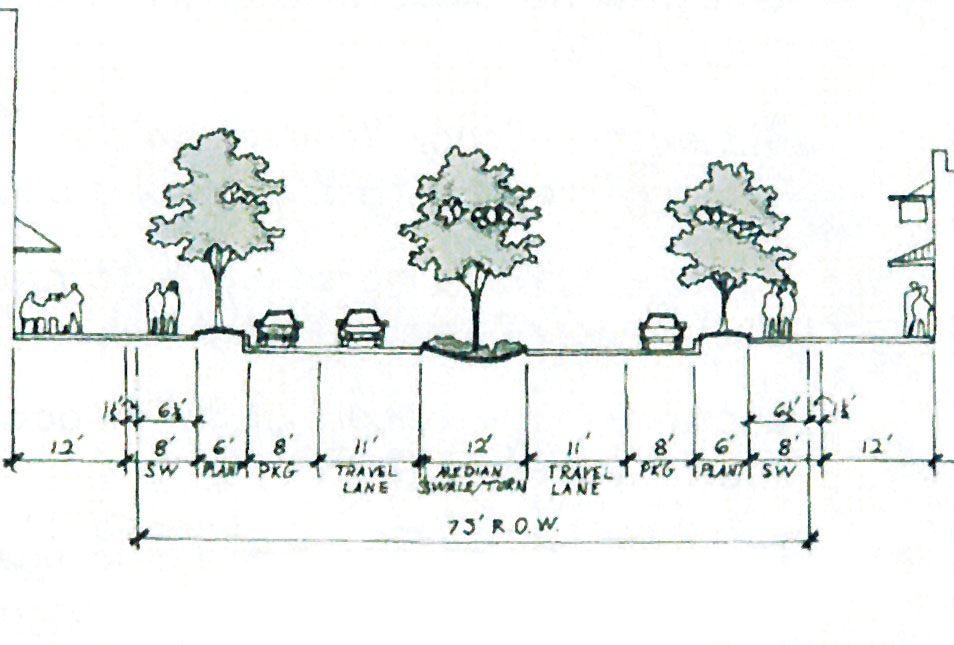
    In an effort to create a more walkable Town Center District in Blythewood, Council is considering fast-tracking a McNulty streetscape, and then doing the same for the section of Blythewood Road that runs through downtown instead of widening it to 5 lanes. In this proposed streetscape, that portion of Blythewood Road would include 9-foot-wide sidewalks, 6-foot-wide tree planters, 8-foot-wide parallel parking space on each side of the road and one lane in each direction with a 12-foot-wide median planted with trees. Proponents on Council say these improvements would be safer and more attractive than the currently proposed five lanes of traffic.
    In an effort to create a more walkable Town Center District in Blythewood, Council is considering fast-tracking a McNulty streetscape, and then doing the same for the section of Blythewood Road that runs through downtown instead of widening it to 5 lanes. In this proposed streetscape, that portion of Blythewood Road would include 9-foot-wide sidewalks, 6-foot-wide tree planters, 8-foot-wide parallel parking space on each side of the road and one lane in each direction with a 12-foot-wide median planted with trees. Proponents on Council say these improvements would be safer and more attractive than the currently proposed five lanes of traffic.

    BLYTHEWOOD (March 10, 2016) – After having spent the better part of a year planning and prioritizing Blythewood’s Penny Tax road widening and improvements projects that would, in its second phase, turn Blythewood Road into five lanes all the way from I-77 to Main Street, Town Council made an about face at its annual retreat on Saturday, opting instead to put that five-lane section of Blythewood Road on the back burner and upgrade the McNulty Road area with a walkable streetscape. That would include a road with two lanes and a median or a center lane, and then do the same for Blythewood Road but with parallel parking on either side, one lane each way and a landscaped median.

    The issue was raised by Town Administrator Gary Parker last week in notes in the agenda packet asking the town government to come to terms with whether they wanted the Town Center to be walkable as provided in the Town’s Master Plan or divided by a high-traffic, five-lane road.

    “The Master Plan calls for a walkable Town Center,” Parker told The Voice, “but that plan got set aside for a few years and I think the Council and residents lost sight of it.”

    “Businesses like a walkable downtown area,” Parker told Council. “People spend more time looking in store windows and spend more dollars. The difficulty, as I see it, for McNulty and Blythewood roads to be made walkable is their proximity to I-77. Traffic comes off those ramps and into the gas stations and fast food restaurants. That makes walkability difficult.”

    The current Penny Tax plan for Blythewood is divided into two phases. The first phase calls for the widening of Blythewood Road from I-77 to Syrup Mill Road. All the other projects are lumped into phase two, and include the McNulty Road and Blythewood Road (from I-77 to Main Street) projects.

    But Parker said the Penny Tax program just budgets the dollars for improvement, leaving it up to Council to prioritize the projects.

    Councilman Malcolm Gordge said when he recently broached the subject with Bob Perry, Transportation Director of Richland County, Perry seemed amenable to switching the priorities if they are brought to the Penny Tax committee’s attention in a timely manner.

    Councilman Tom Utroska said he “would like for us to come up with a plan first and have a public comment meeting before we go to the Penny Tax Committee. And we need to put our plan together and present it before SCDOT (S.C. Department of Transportation) gets started. We need to listen to the people on this. They may say we’re nuts,” Utroska said. “But do we want to be a sleepy, at-ease town? Or do we want to become a thoroughfare? That’s where we’re headed.”

    “This would be a wonderful opportunity for McNulty Road,” Mayor J. Michael Ross said, again stressing the importance of having a town hall meeting. “I think that’s the one (McNulty) we could showcase first, as a prototype, to see if it works. People could ride their bicycles and there wouldn’t be the traffic there that would get them killed. McNulty might be the very thing that we would say, let’s do this first and show what it’s like to have parallel parking downtown and it would be manageable.”

    “The intent is to brainstorm and not let it drop,” Parker said. “Staff and I need to set down and figure out a schedule on the streetscape. We need to see this through.”


  • Local Schools Earn Gold, Silver

    BLYTHEWOOD/FAIRFIELD (March 4, 2016) – Eight local schools earned Palmetto Gold and Silver Awards honoring academic achievement, the S.C. Department of Education said last week.

    In Blythewood, Bethel-Hanberry, Bookman Road and Round Top elementary schools, as well as Blythewood Middle and Blythewood High School each earned Gold for General Performance. Lake Carolina Elementary earned Gold for General Performance as well as Gold for Closing the Achievement Gap. In Fairfield County, the Magnet School for Math & Science and Geiger Elementary School also earned Gold for General Performance. Geiger earned a Silver award as well for Closing the Achievement Gap.

    “We are very excited about the recognition,” Dr. J.R. Green, Superintendent of Fairfield County Schools said. “Looking at the data for Geiger and the Magnet School, it’s not a surprise. They have continued to experience academic growth for the last several years.”

    The 2014-2015 Palmetto Gold and Silver Awards are based on data from the 2013-2014 school year.

    Phone calls to Dr. Debbie Hamm, Superintendent at the Richland 2 School District, were not returned at press time.


  • FMH Foundation Honors –

    FMH pic copy

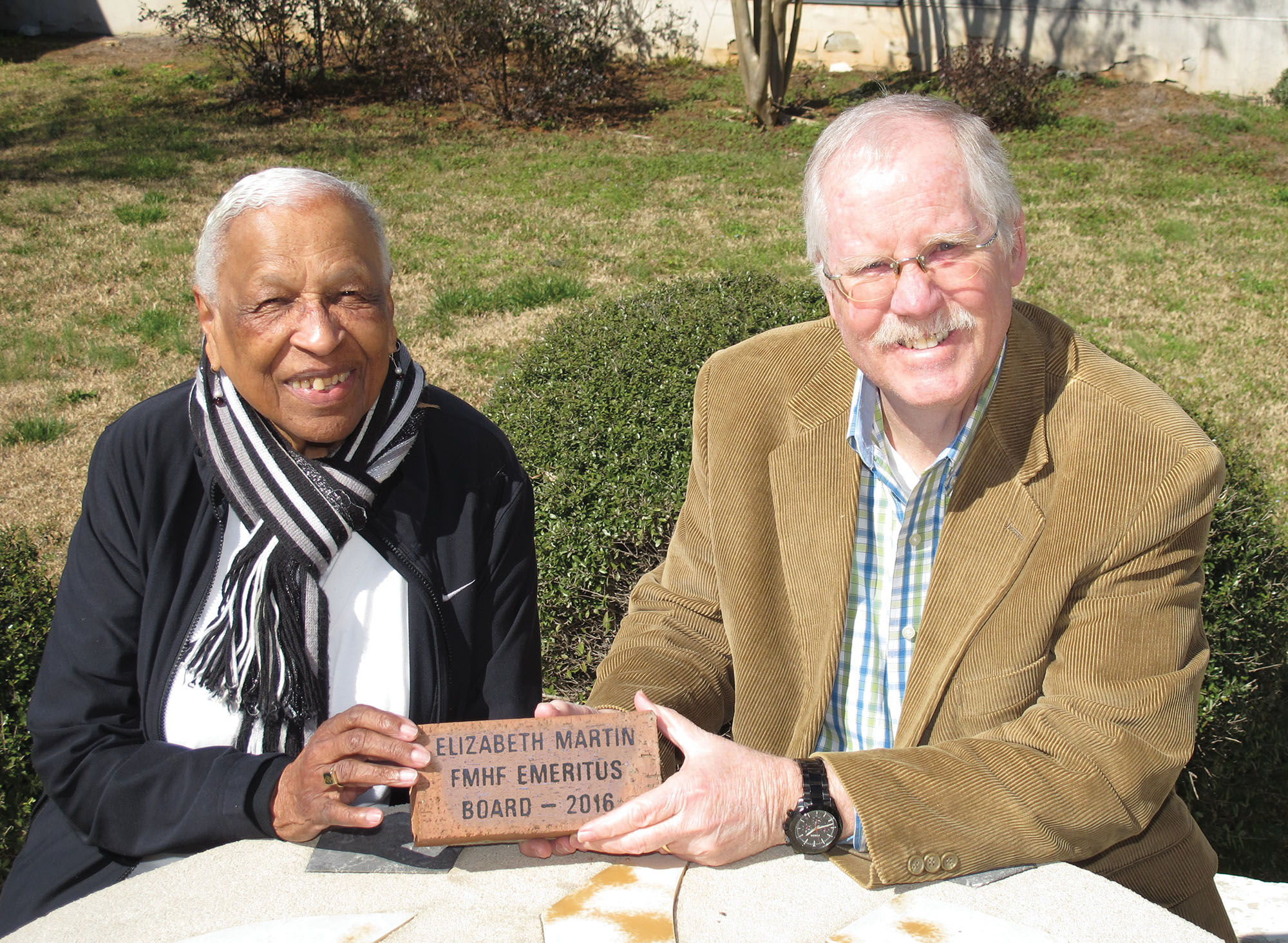
    Elizabeth Martin (left), well–known retired educator and longtime member of Fairfield Memorial Hospital Foundation board, was honored recently by the FMH Foundation as an emeritus member. She recently served as board secretary. “Mrs. Martin has been the consummate board member in every way,” Mike Quinn (right), FMH President said. “I am delighted to know she still plans to support us as an emeritus board member in ways only she can do.”


  • County Trims Animal Regs

    WINNSBORO – After months of work in committee, County Council during their Feb. 15 meeting pared down an animal control ordinance and shelved altogether a revised noise ordinance.

    Interim County Administrator Milton Pope told Council that the animal control ordinance had been modified to include definitions of restraint. Those included, he said, the “immediate control of a person” by means of a collar and leash, restraining an animal inside a fence, kennel or other area, or keeping the animal tethered with a “chain, rope, leash, cable or other device.”

    Pope said the law had also been revised to define “adequate shelter” as an enclosed, weatherproof area, or a shelter manufactured or constructed “expressly for housing a dog or cat” that protects the animal from the elements. The shelter must be accessible to the animal and of sufficient size, Pope said. It also must be elevated off the ground to keep water, snow or ice from entering.

    Examples of unacceptable shelter, Pope said, included but were not limited to: underneath or inside motor vehicles, garbage cans, cardboard boxes, animal transport crates, carriers, under houses, structures, decks or outside steps or stoops.

    District 1 Councilman Dan Ruff, however, said he felt the definitions of shelter might be too restrictive.

    “I’m really concerned because there are a lot of people in this county in rural areas that have pets, and I’ve had them where the dog won’t go in the dog house,” Ruff said. “I’m a little bit concerned about the ‘elevated of the ground’.”

    Ruff said the clause mandating accessibility and size to provide protection from weather was sufficient.

    “I thought that was enough,” Ruff said. “I think under houses is acceptable, too; as long as they’re protected from the weather and are dry and safe. I think we’re getting too nit-picky.”

    Councilwoman Mary Lynn Kinley (District 6) said that many houses are not closed in underneath, which would expose an animal to harsh weather. But Councilman Billy Smith (District 7) said the previous clause in the ordinance, defining adequate shelter as enclosed, would apply to the underneath of homes.

    Kinley agreed and the ordinance was adopted with Ruff’s amendments.

    Council scrapped entirely a revised noise ordinance that had been in committee for the better part of a year – making it as far as second reading before being sent back for further consideration. On Feb. 15, Council put aside the ordinance from the committee, opting instead to simply insert decibel levels into the existing ordinance.

    “We all remember that in the beginning what the Sheriff wanted was to go ahead with the current ordinance that we have on the books and put in place a decibel level limit in that ordinance,” Smith said. “What we want to do now is go back to what the Sheriff asked us for in the first place.”

    Council agreed to bring the matter forward during their March 14 meeting.


  • Town Reclaims Mt. Zion

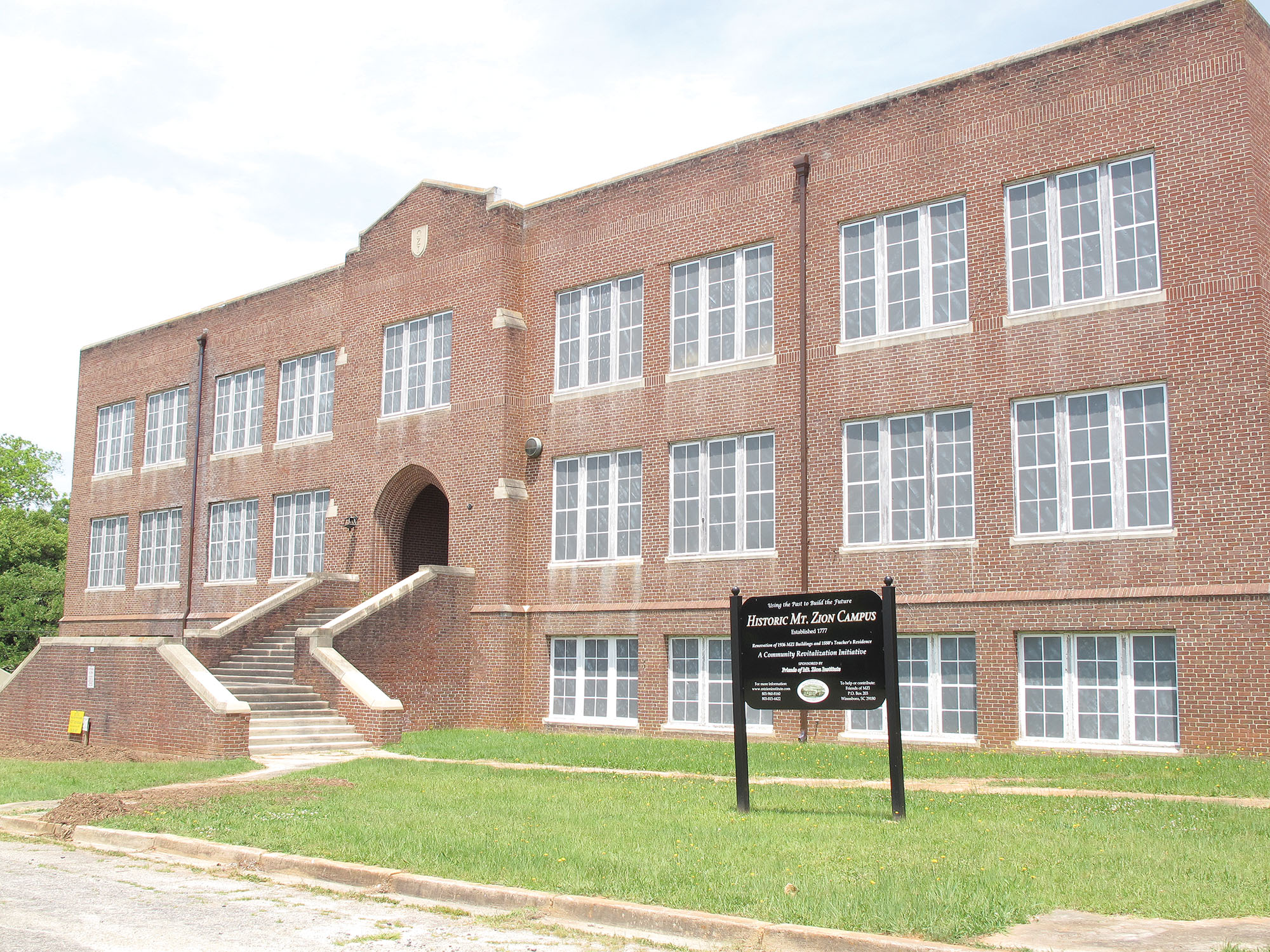
    IMG_3312 copyWINNSBORO (March 4, 2016) – After two years, efforts by a group of citizens to save and restore the Mt. Zion Institute at 205 N. Walnut St. may have finally come to an end.

    Town Council voted unanimously Tuesday night to begin the process of transferring the deed to the property from the Friends of Mt. Zion Institute (FOMZI) back to the Town of Winnsboro. The decision came after a brief executive session during Tuesday’s regularly scheduled Council meeting.

    “We had an agreement with FOMZI and the building was to be stabilized and we had an independent person to look at it and it’s not stabilized,” Winnsboro Mayor Roger Gaddy said after the meeting. “The deadline on that was September, so we’re about six months past that deadline. With them not being able to do that (stabilize the old school building), the agreement says we will transfer the deed back to the Town. That’s what we’re going to do.”

    Gaddy said transferring the deed back to the Town does not necessarily mean the wrecking ball is on its way. At least not right away.

    Council still has before it a proposal from the Banyan Foundation, presented in part to Council last month, to develop the former school building into market-value senior-living apartments. That proposal met with vociferous opposition during Council’s Feb. 16 meeting, but Tuesday night Gaddy said no decision had yet been made on the project.

    “We don’t know what’s going to happen with that,” Gaddy said. “The first thing we want to do is get the possession of it (Mt. Zion) so we can make a decision ourselves on what we’re going to do.”

    A major concern about the Banyan Foundation’s proposal, which Gaddy noted during the Feb. 16 meeting and reiterated Tuesday night, is whether or not the project would involve taxpayer dollars in the form of federal grants or loans. Federal money, Gaddy said, could eventually open the property to low-income housing – something Gaddy and Mt. Zion neighbors do not want.

    Vickie Dodds, FOMZI Chairwoman, said during the Feb. 16 meeting that she also opposed low-income housing on the site, but urged Council to give the developer, Rob Coats, time to do his due diligence.

    Reached by phone after Tuesday’s decision, Dodds said she was not surprised to learn of Council’s move to take the property away from FOMZI.

    The citizens group has had control of the property since purchasing it from the Town for $5 two years ago. The transfer of the property to FOMZI came with the stipulation that the buildings had to be stabilized within 18 months in order to meet Winnsboro’s Dangerous Building Code or else be demolished. Dodds said Tuesday night that FOMZI’s efforts failed for lack of general support.

    “From the get-go this has been a project that needed the Town, the County and the community behind it,” Dodds said, “but we haven’t gotten it from any of them. It’s just been a handful of us.”

    Following Tuesday’s meeting, Gaddy said there had been some suggestions from FOMZI supporters that the group may attempt legal action in order to prevent the Town from taking back the property. Dodds said later that while that may be true, it was a position she did not share.

    “We took it (the property) under the conditions they offered us and we didn’t do what they wanted us to do,” Dodds said. “But that doesn’t mean they (FOMZI board members) won’t do it (sue the Town). But they won’t do it with me as chairman.”

    John Fantry, Winnsboro’s legal counsel on utilities, said the transfer could be completed in as little as 10 days if FOMZI didn’t put up a fight. If FOMZI did contest the transfer, he said, it could take as long as 18 months.

    “I’m not sure what they’re going to do with it,” Dodds said. “If they tear it down, they’re making a big mistake.”


  • Growth, Taxes on Tap at Retreat

    BLYTHEWOOD (March 3, 2016) – The prospect of impending growth and serious consideration of a property tax to pay for that growth will be the focus of Town Council’s annual day-long retreat on Saturday at the Langford Nord House.

    “This is a time we need to be looking at what services can be provided to a growing number of residents by the town or through intergovernmental agreements and what services those residents are expecting to receive,” Town Administrator Gary Parker told The Voice.

    Parker will share various estimates at the retreat that show Blythewood’s population increasing to between 6,000 residents by 2025 and 12,000 by 2035. Parker said that growth likely won’t pay for itself.

    “In most cases, growth in residential development costs more in services provided by the municipality than what the municipality receives in revenues generated by that development,” Parker said. “Data collected from studies across the nation have determined that, on average, residential development requires $1.16 in community services for every dollar of tax revenue it contributes. So all this residential development that we’re seeing here in Blythewood will require more government services while very likely providing revenues that will only partially fund those services.”

    While a dozen or so of the town’s current services, including police, fire, EMS and election oversight, are now provided through low cost intergovernmental agreements with the County and water agreements with Winnsboro and the City of Columbia, Parker said the reality is that one day, with a much larger population, the town government may have to start providing some of its own services. Without a property tax, Council will not be able to fund a large enough budget to do this, Parker said. Parker sees the need for Council to initiate planning now to provide better revenue sources for the town in the not too distant future.

    “What we’re soon to be in need of,” he said, “is annual revenues to fund a larger annual operating budget.”

    Blythewood’s share of the Penny Tax revenue for road improvement projects will also be discussed. And Parker said he wants Town Council to give strong consideration to whether it truly wants to pursue what has been heralded in the Town’s Master Plan as a walkable Town Center District.

    “A pedestrian-oriented gathering place, while a laudable goal if achievable, is definitely challenging in the Blythewood Road and McNulty Road areas,” Parker said. “Also, there are currently no inviting sidewalk storefronts along McNulty Road or Blythewood Road to ease a transition from what is now an automobile-oriented ‘downtown’ to a pedestrian-oriented one.”

    Parker pointed out that, generally, a walkable town center has a mixed-use character to it with housing very close and somewhat mixed-in with commercial establishments.

    “That certainly isn’t the case now,” Parker said.

    He also noted that the town’s proposed walkability has been somewhat marginalized by changes the Town government has made in zoning since the Master Plan was adopted with the intent of accommodating and promoting walkability. Parker said he would talk about some ways Council could retrofit existing development into a more walkable community if that is what Council desires.

    Also included on the agenda will be discussions about economic development, a vision for the town and an action plan.

    “We’re going to be discussing some very important topics on Saturday, and the public is invited to have input,” Mayor J. Michael Ross told The Voice. “We will have a time for citizens to comment on agenda items at the beginning of the meeting and on discussion items at the end of the day.”

    The retreat is scheduled from 9 a.m. – 3 p.m., with a lunch break from 12 – 1. The Langford Nord House is located at the corner of Main Street and McNulty Road. For more information about the agenda, call Town Hall at 754-0105.