Category: News

  • Man Leads Narcs to Meth Lab

    Randy Branham
    Randy Branham

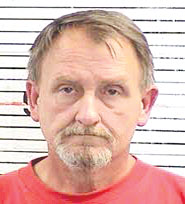
    WINNSBORO (April 22, 2016) – A Winnsboro man was arrested last week after Narcotics agents with the Fairfield County Sheriff’s Office discovered a methamphetamine lab in a shop outside his home.

    According to a report from the Sheriff’s Office, agents were responding to complaints about suspected drug activity at a home at 176 Doty Road Extension just before 4 p.m. on April 11. Agents were met at the door by Randy Branham, 54, who gave officers consent to search the home.

    Branham then told officers his meth-making equipment was located in a shop outside the home, where agents located what the report describes as a “one pot lab.” Fairfield County Sheriff Will Montgomery said the lab was a small “shake-and-bake” operation that consisted of Branham mixing ingredients inside a soda bottle and shaking the bottle to produce the methamphetamine crystals.

    Phillips Recoveries, Inc., of Pelzer, was called in to clean up the hazardous materials.

    In addition to a small amount of methamphetamine, officers also recovered homemade lab equipment and a package of over-the-counter cold medicine used in the manufacturing of meth.

    Officers also discovered that the electrical meter on the outside of the home had been tampered with. The Town of Winnsboro’s Utility Department later told officers that electrical service had been discontinued at the home last September and that Branham had apparently been stealing electricity from the Town since that time.

    Branham was arrested and charged with manufacturing methamphetamine, theft of electrical current and tampering with electrical services. He was booked into the Fairfield County Detention Center on April 13 and released the following day on a $25,000 surety bond.


  • District Budget Up, Millage Rate Flat

    WINNSBORO (April 22, 2016) – The Fairfield County School Board gave approval to first reading of the proposed fiscal year 2016-2017 District budget during its regular board meeting April 5. Kevin Robinson, Director of Finance for the District, presented the Board with a proposed budget of $38,470,384.

    The projected budget does not represent a millage increase, according to Robinson, although it is approximately $600,000 more than the current budget.

    On the revenue side, there is a projected increase in the local tax revenue base as well as increases in state reimbursement for bus driver salaries and projected transfers for teacher salaries and benefits.

    On the expenditure side, Robinson said the District plans to spend about $670,000 more next year than the current year. This is because of a proposed 2 percent state-mandated increase in the teacher salary scale, which will cost $510,530, plus increases in benefits, retirement costs and normal salary step increases. The District also plans to hire six new instructional positions.

    Robinson also budgeted for an increase in purchased services of $491,425. Purchased services are those items and services the District buys from outside vendors, ranging from energy costs to books, and also include substitute teachers that were previously accounted for under salaries and benefits. This projected increase is balanced by an anticipated reduction of about $100,000 in the legal services line, which has long been targeted by Board members Annie McDaniel (District 4) and Paula Hartman (District 2) as being artificially inflated to fund school trips and other miscellaneous expenses.

    Robinson also estimated a reduction of more than $300,000 in transfers from the general fund for food services, which he said is now projected to be self-sustaining. It was explained during the District’s audit last fall that this positive food service balance is primarily because of the District qualifying for and receiving $400,000 in enhanced U.S. Department of Agriculture (USDA) funding for school lunches.

    Hartman wanted to know how District salaries for teachers compared to those in the surrounding areas. Dr. J.R. Green, Superintendent, responded that the most recent salary study presented to the Board showed that the District is very competitive, especially for teachers who have been in the District for two or three years.

    Board member Henry Miller (District 3) wanted to know about the money the District transfers to Chester County for students living in the Mitford area. This payment is projected to be somewhat reduced because of fewer Fairfield County students attending those schools. Miller wanted to know why that was included in the District’s budget, making it seem higher than it was, when the students were not counted in the District.

    Board chairwoman Beth Reid (District 7) interjected that the District was not receiving state or federal funds for those students but was also not incurring any costs on their behalf. However, “the court ruling was that our local dollars follow those children to the (Chester) schools,” she said. Green pointed out that the number of students attending the Chester schools has been steadily dropping; in 2011-2012 there were about 190 students. In FY 2016-2017, the District plans to send Chester County $511,000 for about 127 students.

    The Board has scheduled a budget workshop on April 26, when it will go over the figures in more detail. The first reading of the budget passed 6-0-1.

    Also during the meeting, the Board heard from Dr. Claudia Edwards, Deputy Superintendent of Academics, on the proposed 2016-2017 Academic Calendar. The first day of the 2016-2017 school year will be August 15; spring break will be April 10 – 14, 2017, and mid-year exams will take place before winter break.


  • County Faces Shrinking LOST Fund

    WINNSBORO (April 22, 2016) – In spite of speculation last February by a member of the state’s Board of Economic Advisors that the loss of Walmart tax revenues could trigger a property tax increase, Interim County Administrator Milton Pope presented Council last week with a recommended 2016-2017 budget based on last year’s millage rates.

    “Based upon our budget recommendation, we’re using the existing revenues that we have,” Pope told Council during the April 12 work session. “We’re not requesting you to consider increasing the millage.”

    However, Pope said, there would be some fallout from the January closing of the county’s largest contributor to the Local Option Sales Tax (LOST).

    With the absence of Walmart’s contribution, Pope said the fund was expected to shrink by $497,444 – from $1,889,236 in 2015-2016 to $1,391,792 in 2016-2017 – a drop of around 30 percent.

    Robert Martin, who serves on the Board that governs the S.C. Revenue and Fiscal Affairs Office, told The Voice in February that it was unlikely that Fairfield County could maintain its then-current level of property tax relief without Walmart.

    Moreover, he added, “I don’t see how County Council is going to get around increasing property taxes somewhat next year.”

    But last week Pope told Council that while the allowable millage increase by law was 0.15 percent, the 2016-2017 budget was sticking with last year’s millage rate of 181.8. And while property tax relief is expected to diminish somewhat, Pope also said the fact that Fairfield County is a receiver county of LOST funds may help offset the budgeted 30 percent drop.

    “There could be – could be – some possible cushion in those numbers,” Pope told Council. “We’ve gotten some preliminary numbers on this, but keep in mind at the end of the fiscal year, because we are a receiving county in the Local Option Sales Tax, if all of the counties statewide are doing well, we receive monies based upon the Robin Hood provision that’s in the Local Option Sales Tax law.”

    How much cushion won’t be known until July or August, Pope said, when the 5 percent pool from donor counties is distributed.

    General Fund Expenditures

    Pope said general fund expenditures were up by more than $335,000 from last year – from $27,000,370 to $27,333,621. The biggest decreases in departmental spending come in the Fire Board’s general operations fund, down $102,446, and the Planning, Building and Zoning Department, down $63,687.

    Other decreases come in the County Attorney’s budget (down $18,882); Human Resources (down $5,191); Purchasing Department (down $10,524); Tax Assessor (down $5,959); Vehicle Maintenance (down $4,422); Solid Waste (down $19,949); Veterans Affairs (down $9,830); Recreation (down $8,381); and the County’s Summer Youth Program (down $5,000).

    The greatest increases come in the EMS Department, up $276,677; the Detention Center, up $214,541; and the Sheriff’s Office, up $118,392.

    Other increases come in the Finance Department (up $23,709); Data Processing (up $47,332); Economic Development (up $66,819); Animal Control (up $25,257); the Treasurer’s Office (up $25,233); Magistrate’s budget (up $45,745); Voter Registration (up $38,976); and Emergency Management (up $50,038.

    Overall, the budget is down a little more than 4 percent, with a decrease in special revenue funds and capital projects from $7,766,810 last year to $6,001,796 this coming year, for a total County budget that drops from $34,769,880 in 2015-2016 to $33,335,417 in 2016-2017.

    Budget documents can be found on the County’s website at www.Fairfieldsc.com.


  • Bus Lot Bid Sparks Debate

    WINNSBORO (April 22, 2016) – A proposed bid of a little more than $1 million for a school bus parking lot to house 50 buses set off a lively discussion during the Fairfield County School Board’s regular meeting last week.

    Based on a motion by Board secretary William Frick (District 6), the Board was asked on April 5 to approve a base bid award of $967,185 to AOS Specialty Construction in Lexington; however, the total cost of the bus parking lot is projected to be $1,165,237. In addition to AOS’s base bid, as well as sidewalk replacement costing $10,320, this amount includes site lighting, fencing, security beams, inspections and testing at $176,242, and technical costs of $11,480 for architectural and engineering work.

    Muddying the water of what was eventually voted on by the Board, acceptance of the AOS bid appeared to mean tacit Board approval for a 66 percent increase in an earlier cost estimate for the parking lot.

    Dr. J. R. Green, Superintendent, said that when the project was first presented to the Board back in 2013, it was approved at an estimated cost of $700,000. However, Green said, modifications to the original plans needed approval from the S.C. Department of Health and Environmental Control (DHEC) as well as other agencies, which increased the initial proposed cost.

    Boomerang, an N.C. engineering firm, was hired by the District to do the engineering and specifications for the project. Green said he was looking to “supplement the $700,000 with additional funding from the capital account to make up the difference, which will be approximately $400,000.”

    However, the motion was never amended to reflect the total project amount or to ask for the additional funds, before it was passed on a 5-2 vote.

    The goal of this project, Green said, would be to move all the buses from their temporary parking space behind Fairfield Middle School to a new, fenced-in lot at the District’s Transportation Office.

    In an email to The Voice last week to answer follow-up questions, Greg Twitty, Purchasing Supervisor for the District, said the project had been bid out previously. However, Green told The Voice following the meeting that this is the first time the project has been put out for bid.

    Annie McDaniel (District 4) voiced her concerns about the award to a non-county vendor, saying that she was aware of “three very capable contractors in the county for paving,” and wanted to know why none of the three had bid on the project.

    “What efforts were put in place to ensure that persons in the country that do paving were aware that we had this project up for bid?” McDaniel asked.

    Twitty stood up in the audience and said, “We did send a packet out to some of the local vendors in the area.”

    When asked which local vendors were sent the bid packet, Twitty told the Board he sent it to “Washington” (Washington Trucking and Paving in Winnsboro).

    However, in his follow-up email to The Voice, Twitty provided additional information that contradicted his statement to the Board. Twitty’s email listed 12 contractors who were sent bid documents for the bus parking lot, but Washington Trucking and Paving was not among them. The email stated that Washington and two other contractors had been contacted but they “did not request copies of the bid documents.”

    In his email, Twitty said four contractors submitted bids and that the advertisement for bids ran in The Herald Independent, South Carolina Business Opportunities and The Voice.

    “I could understand if we didn’t have anyone capable in the county,” McDaniel said, asking that the Board amend the motion and have the project rebid to make sure the package gets to all three of the vendors in Fairfield County.

    “What if we do that and they still don’t bid?” Frick asked. “I agree, I want our local vendors to participate – it’s their money, it’s our money, and putting it back into the community has a multiplier effect. But if it was advertised, and they are not bidding, how do we make them bid?”

    McDaniel said her amendment would just re-start the bidding process.

    “We have waited this long, and another month should not give us any heartburn to make sure we have considered local vendors,” she said.

    But Green spoke out against rebidding, saying it would add at least 45 to 60 days to the project. He added that the sooner they can move the buses off the parking lot, the sooner the District can start other renovations at the Middle School.

    The amendment to the motion failed with Paula Hartman (District 2) and McDaniel voting yes, and the other five Board members opposed.

    The Board then passed the original motion for approval of $967,195 for the bus parking lot construction award to AOS Specialty Construction.

    McDaniel asked the Board to ensure that, “when we put contracts out, we are making a concerted effort to contact the vendors in this county that perform the work.”

    AOS has sub-contracted the paving project to Armstrong Construction in Blythewood.


  • County Weighs Salaries

    WINNSBORO (April 22, 2016) – One of the main drivers behind a recommended $335,051 increase in 2016-2017 general fund expenditures, Interim Administrator Milton Pope told County Council last week, is bringing the salaries of County employees up to minimum standard levels based on a recently completed classification and compensation study.

    Also contributing to that increase, Pope said during the April 12 work session, is a proposed 2 percent cost of living increase for all County employees and the retirement system benefits and tax contributions that come with it.

    Deputy County Administrator Davis Anderson told Council that according to the study, completed by The Archer Company of Rock Hill in January, the salaries of 218 of the County’s 309 eligible employees fall between the study’s recommended minimums and maximums for their respective positions and will not have to be adjusted. Nineteen employees, he said, are currently paid above the study’s recommended maximum.

    That leaves 72 employees, Anderson said, who are currently being paid too little when compared to surrounding counties with which Fairfield competes for labor.

    According to Archer’s letter to the County dated Jan. 18, the company used as comparison data from Lancaster, Richland, Lexington, Horry, Chester, Marlboro, Kershaw, Laurens, Greenwood and Newberry counties, as well as surrounding water and sewer authorities, schools, libraries, housing authorities and some private sector employers.

    Of the 72 salaries falling below the recommended minimum, 50 positions are in what Anderson called “safety sensitive jobs.”

    “The impacted employees,” Anderson told Council, “are mostly correction officers, EMTs, safety sensitive employees.”

    Should Council adopt the plan, bottom-end EMTs currently making $27,419 would see their pay increase to $29,187. Correctional officers earning $27,391 would see their salary rise to $29,184. Sheriff’s deputies earning $29,500 would see their pay increase to $30,650. Telecommunications employees below the minimum at $23,108 would see their salary increase to $29,184.

    Bringing these employees up to the minimum recommended by the study, Pope said, will add $156,023 to 2016-2017 general fund expenditures. The 2 percent cost of living increase, which Pope said was the same figure currently being considered for state employees, will cost the County $256,481.

    “If we’re going to call it a ‘cost of living’ increase, maybe that should be tied to something like the CPI (Consumer Price Index),” District 7 Councilman Billy Smith said. “That’s just a thought.”

    Smith said he tended to favor merit-based salary increases, which Pope said could be an option – but not before the County’s lowest-paid employees were brought up to minimum basic standards.

    “If we want to go to a straight pay for performance, and I’ve been a part of those, I think the first thing you have to do is just to have everybody in the plan to have a viable plan,” Pope said. “If you want to do something with the 2 percent, that’s a debatable issue.”


  • DOT to Replace Fulmer Road Bridge

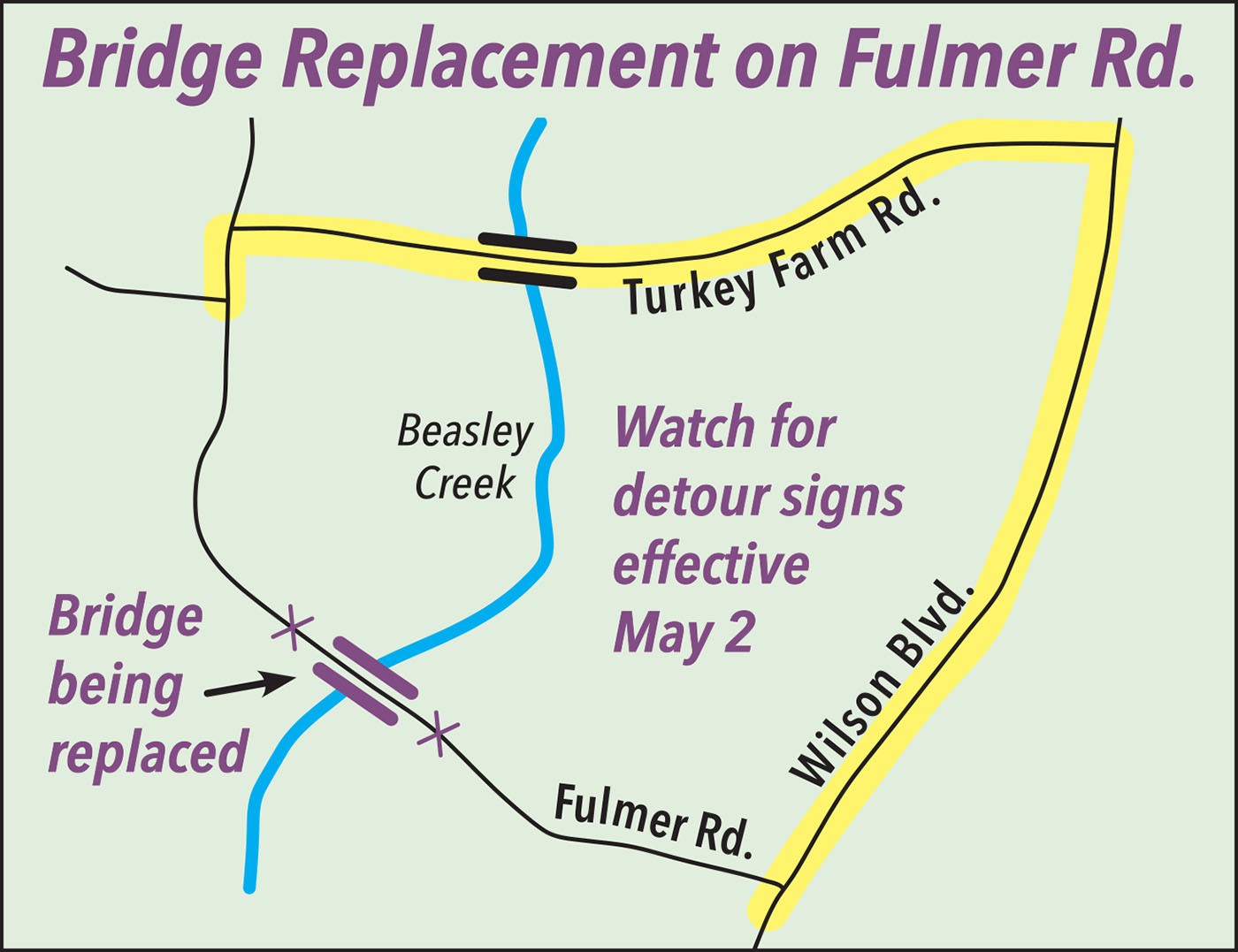
    Bridge Map April 22 copyBLYTHEWOOD (April 21, 2016) – A bridge on Fulmer Road in Blythewood is scheduled to be taken out and replaced beginning Monday, May 2, according to a letter of notification to Blythewood Town Hall from Robert Dickinson, Acting District Engineering Administrator with the S.C. Department of Transportation.

    Replacement of the bridge, which extends over Beasley Creek, is necessary because of structural deficiencies, Dickenson said. It will be replaced with a 110-foot pre-stressed concrete bridge.

    The bridge is expected to be closed for 11 weeks. Detours will be set up on adjacent roads, including Turkey Farm Road and Wilson Boulevard, during construction.

    “Pending any delays due to weather conditions and fabricator problems, the new bridge should be reopened to traffic by July 15,” Dickinson said.

    “Because of the relatively low traffic volumes, and in order to minimize the construction time, cost and impact to property owners in the area, the road will be closed and traffic detoured during construction,” Dickenson said. “The current plan is for the detour to use roads U.S. 21 (Wilson Boulevard) and Turkey Farm Road.”

    Dickenson said no major businesses will be impacted by the road closing. For more information about the road closing, Dickinson can be contacted at 803-737-6660.


  • To Grill or Not to Grill?

    Council Mulls Cooking Regs at Park

    BLYTHEWOOD (April 21, 2016) – During its monthly work session Thursday morning, Blythewood Town Council again confronted the need for policy to guide the use of grills, bounce houses and mechanical rides at Doko Meadows Park.

    Town Administrator Gary Parker emphasized the need for guidance and decisions from Council regarding the use of the park, and asked that it be put on the agenda for a vote in the near future. He said the Town is being hit with multiple inquiries about the use of grills, bounce houses and mechanical rides from businesses wanting to use the park for corporate events and from families wanting to have birthday parties and reunions.

    Parker also asked Council’s opinion about designating an area for picnics, noting that most of the larger state and county parks had designated areas for picnics and outdoor grills. He also said that from his perspective, bounce houses were just a liability for the Town and should not be allowed.

    Parker noted that folks are already picnicking and using barbecue grills at the park, and that there needs to be a designated picnic area where the Town can set up picnic tables and people can set up grills. He pointed out on a plat map a place already designated for a large picnic area. Another decision Council would have to make is whether people would bring their own grills or the Town would install fixed grills.

    Councilman Larry Griffin asked how it would work if two groups wanted to use the picnic area at the same time, thus highlighting some of the complexity in developing a comprehensive park use policy.

    “We are talking about two areas (for picnics),” said Cecil Moseley, lead maintenance engineer for the Town. “It’s a big field over there.”

    Parker said in his previous experience as a manager of a city where there was a park with picnic shelters that included tables and grills, people would reserve a picnic shelter. However, this was with a larger park operation with staff available seven days a week, and if there was a conflict (over use of the picnic areas), there was staff there to resolve it.

    “We are not there yet,” Parker said.

    Sitting in for Mayor J. Michael Ross, who could not attend the work session, Councilman Tom Utroska suggested that until the Town can come up with a policy and a designated area for picnics, groups can come and picnic, but it should be first-come, first-served with no reservations and no grilling allowed. Utroska was also opposed to bounce houses, largely due to the liability they would present for the Town. His concerns were echoed by Parker and other Council members as well.

    Councilman Eddie Baughman suggested allowing only gas-fired grills to avoid the mess and potential fire hazards caused by charcoal grills. He noted that the Park is a public park and he didn’t want to be so restrictive as to hinder the ability of groups to cook and serve food.

    When it looked like the group was leaning toward prohibiting grilling until a policy could be developed, Griffin interjected: “When I hear no grilling, are we talking just no charcoal grills? It’s really difficult to come into a park and have fun if you are having to cook food somewhere else and bring it to the park. . . . When you say park, when you say picnic or a cook-out, that’s grilling. There is no sense in me coming to the park if I can’t grill.”

    Finally, Council agreed that in the interim, until a comprehensive policy can be developed, Parker, when asked by groups interested in using the Park, would say “no” on allowing a bounce house, other inflatables, or rides and “yes” on the grilling.

    Signs and Hot Spots

    Council reviewed the recommended placement of new directional signs for Blythewood. One new sign will be placed at Blythewood Road and Boney Road, and the second sign will go at Blythewood Road and Main Street. Each will cost $1,000.

    Council also briefly discussed the expansion of Wi-Fi hotspots in the town, coming to the conclusion that it is not the role of the Town to provide Wi-Fi and internet to the community. Parker reported that after meeting with a representative of AT&T about providing hot spots, his sense was that “this is not something really the Town should be engaged in and providing to the community — this is something that is more under the authority of the individual businesses themselves if they want to provide a hotspot in their restaurant or motel.”

    Painting the White House

    Parker presented three bids he received for painting the Hoffman House. The painting bidders came from a list of contractors recommended by the Sherwin Williams store as having experience in painting 100-plus-year-old houses. However, the three bids were widely apart: $9,700; more than $47,000; and $19,500. Parker said the medium-priced bid was the one the Town will proceed with, especially since it was closely based on the specs that were done by a “professional in this field” and was slightly below the original estimated budget of the project. He said the work will start in a couple of weeks.

    Security System

    Council deferred further discussion on a security system for the Manor, Park and Hoffman House. While the Town has already received two proposals for a security system, given the number of options available and the diversity of the proposals and the costs, Parker said he has set up a meeting with the Richland County Sheriff’s Department to first get some input from law enforcement as to what their experience is with various systems.


  • The Art of St. Stephens

    Instructor Kitty Rabb of Winnsboro instructs Sharon Swofford of Ridgeway in watercolor technique. (Photo/Barbara Ball)
    Instructor Kitty Rabb of Winnsboro instructs Sharon Swofford of Ridgeway in watercolor technique. (Photo/Barbara Ball)

    RIDGEWAY (April 17, 2016) – St. Stephens Episcopal Church in Ridgeway began hosting a watercolor class last year with six students. Today, five of those students plus six more are still taking the class and have become accomplished artists.

    While art instructor Kitty Rabb said the students had little or no art background when they began taking the classes, several of them will be offering their work for sale at next month’s annual Arts on the Ridge Festival.

    From 10 a.m. to 1 p.m. on Saturdays, soft music wafts through the room as the women work on their projects under Rabb’s one-on-one guidance. Rabb said that while the atmosphere is relaxed, the work is intense and during each class the participants each complete a painting.

    While Rabb instructs most of the classes, concentrating on technique, guest artists like Esther Melton instruct special classes. Melton recently demonstrated how to paint on glass and silver.

    Rabb said newcomers are always welcome. The church is located at 307 Longtown Road in Ridgeway. For information about the classes, call 315-8006.


  • Plan Update Puts Leadership on Notice

    WINNSBORO (April 15, 2016) – As consultants continue their work on Fairfield County’s newest set of long-range plans, County Council during their March 28 meeting received a word of advice during an update on their Economic Development Plan: officially get behind the next Strategic Plan.

    “I will point out that that 2010 Strategic Plan was never formally adopted by County Council and that was a real obstacle to implementation,” Crystal Morphis, of Creative Economic Development Consulting, LLC, told Council during her presentation last week, “so one of the key recommendations for this update is for you to adopt it and endorse it and pass it on to your staff to implement it. Without that endorsement from Council, staff and the department was able to move forward really on a limited basis. They accomplished some things in the Strategic Plan, but they really needed the endorsement of this Council.”

    Morphis and her firm are working on an update to the County’s Economic Development Plan, while T.Y. Lin International is preparing an updated countywide Strategic Plan. Council voted in 2014 to launch the planning process to help prepare the County for the influx of money expected from fees-in-lieu-of taxes on two new reactors at the V.C. Summer Nuclear Station, the first of which may come online in 2020.

    Fairfield County has some things going for it, Morphis told Council last week. Unemployment is down, she said, and wages are growing. Home values are also growing, she said, while at the same time home prices are competitive when compared to the region.

    On the downside, she said, Fairfield County’s population is declining, and with it the labor force. Income is stagnant, while overall education attainment remains low.

    “That (education attainment) is a key factor for companies that are considering moving to the area,” Morphis said, “because they want to find a skilled and trained workforce.”

    SWOT

    Reviewing her firm’s SWOT (Strengths, Weaknesses, Opportunities and Threats) analysis, Morphis said the county’s key strengths are its location in relation to transportation access (I-77), and in relation to larger metropolitan areas (Columbia and Charlotte). Utilities in the county are also competitively priced, she said.

    Key weaknesses, she said, included a lack of direction and overall consensus, which she said an updated Strategic Plan should help address. And while the county is conveniently located near a major interstate highway, she said, the development of additional railway sites would be a “key advantage to this community.”

    Long-term poverty, Morphis added, was also a significant weakness in Fairfield County.

    “That (long-term poverty) is something that we find in other rural communities,” she said, “but it’s concentrated here and that’s why this economic development strategic plan is very important.”

    The projected revenue from the nuclear reactors, Morphis said, presents the county with a golden opportunity.

    “You have the opportunity with new revenue to create economic transformational projects,” Morphis said, “and the leadership on this Council is going to be critical in making key investments, especially in infrastructure and economic development.”

    The declining population and the difficulty in keeping youth in the county topped Morphis’s list of threats.

    “The millennials are now the largest part of the workforce and communities that do a really good job of retaining and attracting those young people will be the communities that are successful going forward,” she said. “Companies go where they can find a trained workforce.”

    Morphis also reviewed the county’s “product inventory,” or available buildings for prospective industry. The County has one spec building at present, she said, and recommended that the County consider adding at least one additional building.

    “Communities that have quality buildings are those that are getting looked at by companies,” she said. “You do have one building, but it would be good to have more than one, so we do recommend that you take this model that you have started with the spec building and carrying it forward.”

    There remain, she said, “a few due diligence items” at the Walter Brown 2 Industrial Park “that would really make that park stand out.” A virtual spec building, she added, should also be added to the County’s Economic Development website.

    Target Sectors

    Morphis identified four “target sectors,” upon which the County should focus its economic development plans.

    “When we talk about ‘target sectors,’ these are the sectors where you would focus your marketing dollars and where your regional alliance, the I-77 Alliance, is focusing its marketing dollars,” Morphis said. “That doesn’t mean you would not accept and welcome other companies, but this is where you’re focusing your marketing dollars.”

    For Fairfield, she said, those sectors are: Energy (services that can be provided to V.C. Summer); Advanced Material and Transportation Equipment (to serve the state’s aviation and automotive industries); Chemicals and Food Products (industries strong in Fairfield and Chester counties, she said); and Business Financial Services/Life Sciences (industries with a presence in Richland and York counties, she said).

    The 2010 Plan

    Reviewing parts of the 2010 Strategic Plan, Morphis said the County, which is still searching to fill the position of Economic Development Director, should also consider creating an Assistant Director for that department.

    “It is more work than one person can implement,” she said.

    Morphis also said that while the County had budgeted for product development, for incentives and for other economic development spending, “there was no funding in the department for things like marketing or existing business programs,” she said.

    Morphis recommended budgeting for marketing, including a business retention and expansion program.

    “In a small community like Fairfield, you cannot afford to lose even one company, because it is so hard to recruit a new company,” she said. “I believe that this has been a missed opportunity in this community when you have relied on others for your business retention and expansion program.”

    She also suggested that Council consider additional product development funds “to be put in the budget for engineering studies and additional due diligence on sites.”

    “I know that you do have some other product development money for long-range planning,” she added, “but this would be for studies that could quickly support projects.”

    Morphis also recommended expanding the Economic Development Committee to include more private-sector members, as well as upgrading the office of the Economic Development Department.

    “It has been my experience that companies will not invest in communities that do not invest in themselves,” she said.

    Internal Marketing

    Morphis said the County may also want to consider marketing itself to itself, to combat what she said was the County’s negative image within Fairfield County.

    “In everyone that we talked to, there is an undercurrent of negativity internally in this community,” Morphis said. “All of you (Council) present a very positive image to the outside, but internally there’s some public relations work to do.”

    That can be accomplished, she said, for little cost using social media and marketing tools. Internal marketing, she said, could be one of the roles for the Assistant Director of Economic Development.

    Next Steps

    “I would encourage this Council to adopt this strategic plan,” Morphis reiterated. “That was a shortcoming of the last strategic plan. It’s hard for you as leaders to hold your staff accountable to an economic development plan without adequate funding, support and your endorsement and leadership in the plan.”

    Morphis urged Council to work with an expanded Economic Development Committee, and to expand the staffing of the Economic Development Department and budget the funds for that department.

    But the tallest hurdle, she said, was leadership.

    “The main difference in communities that are successful and those that aren’t is leadership,” Morphis said. “I have worked in communities that have inherent assets and they should be prospering, but they’re not because leadership is not pulling in the same direction. And I have worked in communities that have lacked in significant assets and they’re making progress because their leadership has consensus in the community and they’re pulling in the same direction.”
     

  • Fairfield Square Lands Second New Business

    WINNSBORO (April 15, 2016) – After taking a big hit in January with the exodus of Walmart, Fairfield County is suddenly on a roll. State Sen. Creighton Coleman (D-17) and Interim County Administrator Milton Pope announced late last week that Roses has signed a lease to open a department store at 83 Highway 321 Bypass S., in the former Goody’s location in the Fairfield Square shopping center.

    The announcement came just days after Coleman revealed that an IGA grocery store had inked a deal to move into the former Food Lion location, also in Fairfield Square.

    Much like the IGA deal, Coleman said he and State Rep. MaryGail Douglas (D-41) worked to bring Roses together with the realtor, and the County together with the Town of Winnsboro to offer some incentives. Coleman said Terry Vickers, President of the Chamber of Commerce, has also been involved in attracting new retailers to help fill the Walmart void.

    Pope said Roses and IGA were essentially a package deal as far as the $50,000 contribution from the County to help the property owner upfit the locations to suit the retailers.

    It was not known at press time when Roses planned to open for business, and efforts to reach the realtor involved in the deal were unsuccessful at press time.

    The winning streak may not be over. While Pope would not elaborate on any details, he said last week that talks were ongoing with yet another potential tenant in the shopping center.