Category: News

  • Attempted Murder Charged in Wild Car Chase

    WINNSBORO/COLUMBIA (March 1, 2017) – A Goose Creek man was charged in Fairfield County last week with attempted murder for firing shots at State Troopers during a cross-county high-speed chase on Feb. 10.

    In addition to attempted murder, the S.C. Law Enforcement Division (SLED) said Thursday that Paul Anthony Walker, 20, of Red Bank Road in Goose Creek, was also charged with possession of a weapon during a violent crime.

    The charges against Walker were the latest in a list of charges made against a total of five suspects following the Feb. 10 car chase down I-77 South, including another attempted murder charge levied against a Charleston man.

    According to the S.C. Highway Patrol, Walker was the passenger in the right rear seat of a Toyota Camry that had been linked to the armed robbery of a Verizon store earlier that evening in Waxhaw, N.C. The Camry, driven by Dangelo Antonio Coakley, 27, of Mt. Pleasant, was spotted leaving the Wilco Hess gas station on Highway 200 just off I-77 in Fairfield County just before 10 p.m. on Feb. 10. Coakley steered the Camry onto I-77 South, and near mile marker 43, two State Troopers attempted a “high-risk stop,” the report states.

    Coakley accelerated, disregarding the blue lights, while a third Trooper joined the chase. Passengers sitting in the back seat fired several rounds from handguns at the Troopers as the Camry raced into Richland County with speeds reaching 130 MPH. None of the shots struck any of the pursuit vehicles, the report states.

    The second back-seat shooter was later identified as Malik J. Gadist, 20, of Charleston. Gadist was charged by the Highway Patrol with attempted murder, possession of a weapon during a violent crime and possession of a stolen vehicle.

    Coakley wheeled off I-77 at the Killian Road exit, at which time the lead pursuit Trooper performed a “precision immobilization technique,” the report states, disabling the Camry. Gadist, Walker, Coakley and a suspect later identified as Julius H. Washington, 26, of Summerville, fled on foot.

    Richland County deputies and their K9 units, as well as SLED agents, combed the area while an aircraft unit searched overhead. Walker and Coakley were apprehended a short time later. Gadist and Washington were captured at the Comfort Inn on Bush River Road. According to the Sheriff’s Department, a fifth suspect, Sandra Ray Mack, 27, had allegedly assisted Gadist and Washington in eluding police. The Sheriff’s Department said Mack has been charged with obstruction of justice, accessory after the fact of attempted murder and accessory after the fact of armed robbery.

    Coakley was charged by the Highway Patrol with possession of a stolen vehicle, reckless driving, driving under suspension, failure to stop for blue lights and attempted murder. Coakley was also charged under the Habitual Offender Act.

    Washington, Walker, Gadist and Coakley also face charges for the Verizon armed robbery in Waxhaw. The Highway Patrol said all four are linked to several other armed robberies throughout the Carolinas.
     

  • County Issues Seventh G.O. Bond

    WINNSBORO (Feb. 23, 2017) – Fairfield County Council has issued its seventh general obligation (GO) bond since February 2014. The bond, in the amount of $614,000, was recorded by the Fairfield County Clerk of Court on Feb. 9, 2017.

    Like the six previous GO bonds, this one will go toward paying off the $24.06 million bond that was issued not by the County but by a non-profit shell corporation called the Fairfield Facilities Corporation (FFC).

    The FCC shell was created by Council with a one-time vote on March 15, 2013 for the sole purpose of issuing the $24.06 million bond to pay for certain economic development projects Council wanted at the time, but could not afford.

    Council was not at that time legally able to take on $24.06 million of debt without a voter referendum or a revenue stream sufficient to pay it back.

    But a loophole in the FCC arrangement allowed the FCC to pay for the County’s economic development projects and then allow the County to purchase those projects back from the FCC through a mock installment purchase plan over 35 years.

    While the County is not, technically, paying off the bond directly, according to the bond document, the County’s installment purchase payments to the FCC are equal to the amount of the payments the FCC makes on the $24.06 million bonds.

    The loophole further allowed the County to make these installment purchase payments with an artificial revenue stream created from an unlimited number of GO bonds Council is allowed to issue under an ordinance it gave final approval to on April 15, 2013.

    So long as the GO bonds issued do not exceed the County’s 8 percent debt limit, Council can issue an unlimited number of the bonds without voters’ permission according to the April 2013 ordinance.

    Even so, the state statute provides a 20-day window (after a GO bond ordinance is passed) that would have allowed the voters of Fairfield County to initiate a petition that could have forced a referendum on the ordinance that could have halted the issuance of the GO bonds.

    But while the ordinance was passed in a public meeting (by title only at each of three readings),

    Council members at that time and newspaper accounts may have derailed any petition effort by wrongly, publicly and repeatedly identifying the ordinance passed on March 15, 2013; April 8, 2013 and April 15, 2013 as the $24.06 million bond, not the GO bond ordinance that was subject to the initiative petition.

    Adding further confusion, then County Administrator Philip Hinely and then Director of Economic Development Tiffany Harrison were quoted in The Voice as saying the $24 million bond would not increase taxes.

    But a chart obtained in 2014 from the County through a Freedom of Information Act request showed that it is actually the GO bond debt (that is continually levied each year to make the installment purchase payments on the $24.06 million bond) that will keep the County’s debt millage at an elevated level of approximately 10 mills (or about $1.27 million) each year until about 2042, at which time the debt millage will begin to decrease steadily, reaching zero by 2047.

    While the County borrowed $24,690,000 to pay for its economic development projects, it will repay $43,200,663 for the principal and interest on that bond debt, according to the bond document.

    Although the former County officials initially aligned the payments for the $24 million bond debt with the dates the County would begin to realize additional income from the second and third units at the V.C. Summer nuclear plant, then Interim Administrator Milton Pope noted during a joint meeting of the Fairfield County Council and the Fairfield County Legislative Delegation in 2014 that the semi-annual installment purchase payments on the $24 million bond do not depend on income from the V.C. Summer nuclear plant.

    Pope said it was planned from the beginning to pay off the $24 million bond with property tax revenue from the issuance of multiple GO bonds over a period of about 35 years.


  • Blythewood Mourns Mazyck

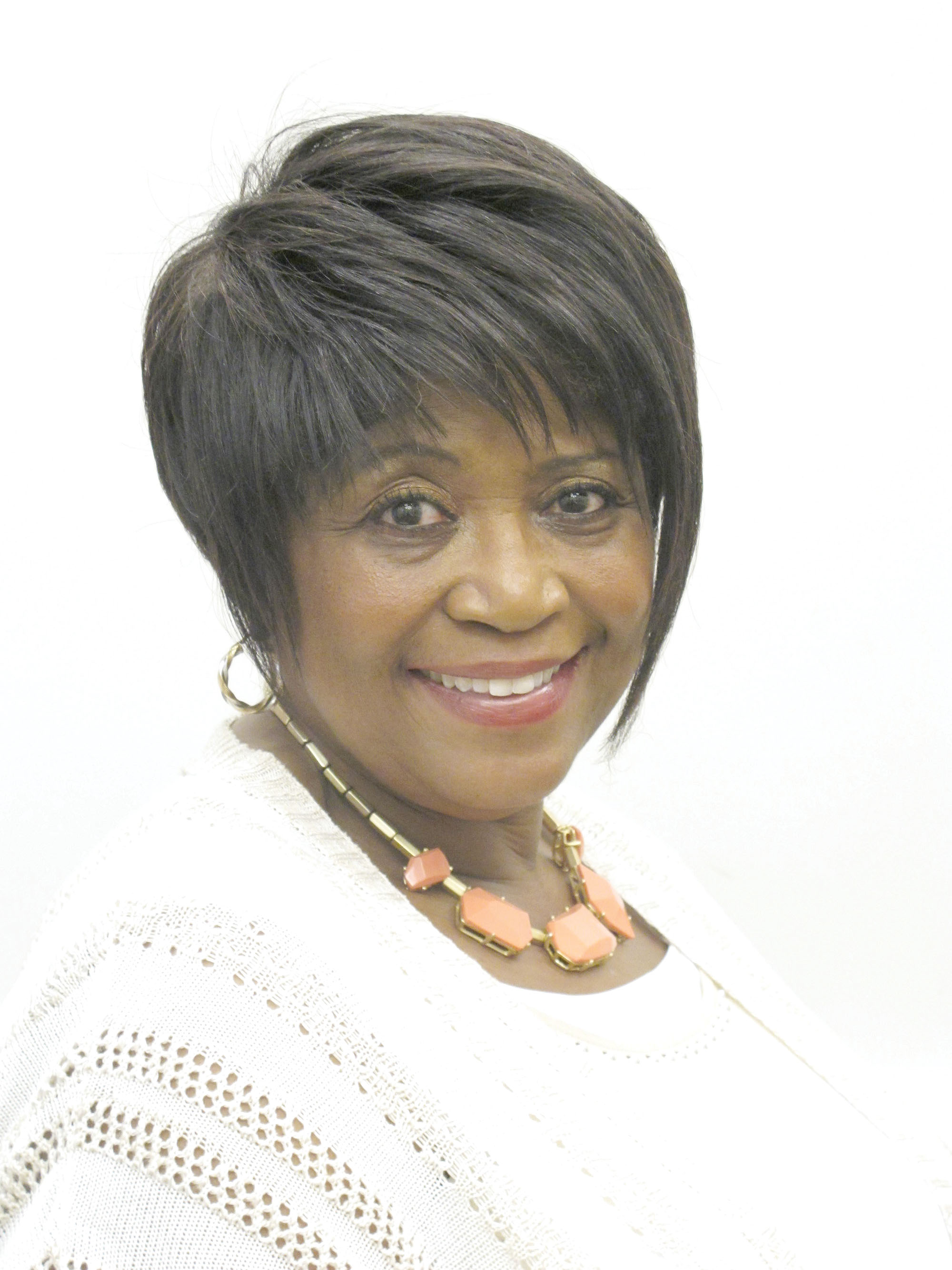
    Sabra Mazyck

    BLYTHEWOOD (Feb. 23, 2017) – The Blythewood community lost a longtime public servant with the death of Sabra Mazyck last week. Mazyck, 65, Chairwoman of the Town’s Board of Zoning Appeals, died unexpectedly in her sleep Wednesday morning, Feb. 15, at her home in Lake Ashley from lingering complications related to the brain surgery she underwent two years ago.

    Mazyck served on various boards in the Town government beginning in 2004. Appointed to the Planning Commission for two terms, Mazyck served one term as Chairwoman. She was later appointed to two terms on the Board of Zoning Appeals, serving the last three years as Chairwoman. As a quasi-judicial board, the BZA is charged with following stringent guidelines for approvals of appeals, and while Mazyck was calm, quiet and soft-spoken, she soon gained a reputation for having a tough-minded resolve in following the letter of the law when making decisions regarding those appeals.

    “We are still in shock over the sudden loss of Sabra,” Mayor J. Michael Ross told The Voice on Monday. “I’m so glad I got to see her last week during our Black History month celebration at The Manor. Sabra defined what a truly involved citizen looks like in a small town. I hope we told her enough how much we appreciated her service and leadership, especially on the Board of Zoning Appeals. Our prayers and thoughts are extended to Zeke and their family members. She will be dearly missed in our little town.”

    The flag at Town Hall was lowered to half-staff last week in Mazyck’s honor.


  • Town-County Water Talks Signal New Era

    WINNSBORO (Feb. 23, 2017) – Representatives from the County government met Tuesday night in an extended executive session with Winnsboro Town Council and Margaret Pope of the Pope Zeigler law firm to break the ice on the county’s long-term water and sewer needs.

    Emerging from the closed-door session, County Administrator Jason Taylor and Deputy Administrator Davis Anderson were reluctant to go into detail about the discussion.

    “I can’t talk about executive session stuff,” Taylor said. “I’m always willing to work with the town of Winnsboro on a number of issues, though.”

    Mayor Roger Gaddy, also careful not to divulge any privileged information, said the talks may bode well for improved relations between Winnsboro and the County in the future.

    “The County came to us to discuss the possibility of working together for the long-range planning of the community,” Gaddy said.

    That “long-range planning,” according to the agenda item noting the topic for the executive session, involves water. And, Gaddy said, sewer as well.

    While Tuesday night’s discussion was reminiscent of Winnsboro’s 2013 effort to establish a county water authority – an effort that was derailed primarily because of a lack of interest from the County to participate – Gaddy said it was “way too soon” to resurrect that plan.

    “There are probably other ways to cooperate other than that (a water authority),” Gaddy said, “but it certainly has opened the door for further deliberations and communications about infrastructure and the community that need to be solved to help with industrial recruitment and further growth of the county and community.”

    Gaddy said the next step toward a unified County-Town front on growth and infrastructure would be a joint meeting between Town Council and County Council.


  • Rimer Pond Road Zoning Battle Looms

    BLYTHEWOOD (Feb. 23, 2017) – Residents from the Rimer Pond Road/LongCreek Plantation area are expected to make their umpteenth trip down to Richland County Council chambers Tuesday evening to continue a years-long battle to keep their rural residential neighborhood free of commercial zoning.

    For the last three years, the battle has been fought over the same property, a 5.23-acre parcel across from Blythewood Middle School. The parcel is owned by developer Hugh Palmer, the father of longtime Richland County Planning Commissioner and commercial realtor Patrick Palmer.

    Hugh Palmer is asking that Council rezone the property to Rural Commercial (RC), a zoning designation that could, the Palmers say, allow such businesses as pizza restaurants and dry cleaners. It is the third time the rezoning request has come before Council in the last two years. In 2015 it was tabled, and later that year a tie vote resulted in denial of the request. Because it was denied, Palmer had to wait a year to reapply for the rezoning.

    When the issue came before the Planning Commission earlier this month, a split vote (3-3) resulted in no recommendation for or against the rezoning being forwarded to County Council. More than 75 people opposed to the rezoning attended that meeting and 34 spoke out in opposition to the rezoning.

    The County’s planning staff (employees of the County) recommended, as it has previously, that Palmer’s commercial rezoning request be approved, pointing out that, according to the County’s zoning summary, the RC District is designed “for areas within Richland County where residents of the more isolated agricultural and rural residential districts and residents located beyond the limits of service of the towns can receive convenience merchandising and services.”

    But residents, addressing the planning commission, pushed back, repeating again and again as they came to the microphone, that the area is neither isolated nor located beyond the limits of service.

    “Within a four-mile radius of my home, there are four pizza restaurants, three dry cleaners, a Dollar Store, a Dollar General, three large grocery stores and at least five service stations,” said LongCreek Plantation resident May Vokaty. “There are plenty of commercial resources available to this area.”

    LongCreek resident Jay Thompson disagreed with the planning staff’s suggestion that the requested zoning is in compliance with the county’s objectives for land use.

    “I hold in my hand a map of future land use. If you look at this map, this neighborhood is shown as medium density, not rural. That directly contradicts this proposed zoning for Rural Commercial. It does not fit.”

    Trey Hair of Rimer Pond Road pointed out that there is no commercial zoning anywhere on the road.

    “The only beneficiary of this zoning change will be the applicant who stands to make a large sum of money from the property,” Hair said.

    “The Palmers are the ones who came to Rimer Pond Road 10 or so years ago and changed the parcel from Rural zoning to Residential Medium Density (RS-MD),” Rimer Pond Road resident Ken Queen said. “We didn’t want that, but the Palmers wanted it. They never even came out to meet with anyone in the neighborhood and they have not this time.”

    Some of those who addressed the Commission hinted at the planning staff’s motives in recommending approval of the rezoning request again and again.

    “The Planning Commission is tasked to oversee the strategic growth of our County, to keep the big picture in mind and not make decisions based on personal requests that are not in the interest of the community,” Rhett Sanders said.

    “That a single person could do this to a neighborhood is unbelievable,” LongCreek Plantation resident Benny Solton told Commissioners.

    Hugh Palmer could not be reached for comment.

    County Council is scheduled to vote on the issue at 7 p.m., Tuesday, Feb. 28 in Council Chambers of the Richland County building at Hampton and Harden streets in Columbia. Those who wish to speak for or against the rezoning request should arrive a few minutes early to sign in.


  • Rate Hike Timing Remains a Mystery

    JENKINSVILLE (Feb. 23, 2017) – A vague water rate increase passed earlier this month by the Jenkinsville Water Company’s board of directors still has no specific numbers attached to it while the board president has refused to respond to inquiries on the matter from The Voice.

    During their Feb. 6 meeting, the board voted 5-1 to pass along Mid-County’s rate increases, but without providing any numbers for the public. Board member the Rev. Leon Thompson voted against the rate hike.

    “Mid-County has passed it, but we just didn’t have the paperwork in front of us to actually call out a certain number,” board president Gregrey Ginyard said after the meeting. “We’re going to look at the number from Mid-County and it will come out. So we voted to actually look at what the numbers are with Mid-County and stuff to try to keep pace of them.”

    However, the board did not vote to “look at what the numbers are.” The board voted “that the rate increase be accepted as discussed,” Ginyard said, reading out the motion before the Feb. 6 vote.

    After the meeting, Ginyard said the rate increase had been discussed at previous meetings.

    But Mid-County Water has not passed along a rate increase to the Jenkinsville Water Company since July of 2016. That increase – of just 1.4 percent – reflects the increase passed to Mid-County from Winnsboro when Winnsboro’s 2016-2017 budget was adopted.

    Ginyard has twice hung up on phone calls from The Voice without answering why the JWC board waited eight months before passing Mid-County’s rate increase on to its customers.

    According to the water operator’s report delivered to the board Feb. 6 by James Green, the JWC purchased 1,840,000 gallons of water from Mid-County last month.


  • Fortune Springs Pool in Need of Repairs

    WINNSBORO (Feb. 16, 2017) – Town Council during executive session at their Feb. 7 meeting received a report from Billy Castles on potential repairs to the swimming pool at Fortune Springs Park.

    Although Council took no action on the matter after returning to open session, documents provided by the Town to The Voice show that the swimming pool is in need of more than $82,000 in repairs and upgrades.

    The pool has had no major repairs in more than 10 years, according to the documents from Castles’ Building-Zoning-Streets-Sanitation-Parks Department. Deterioration of the pool floor and wall plaster, as well as cracked or missing tiles, have led to considerable leakage, the report states. The pool was shut down last season by the Department of Health and Environmental Control (DHEC), according to the report, because of leaks.

    The swimming pool is also in need of DHEC-required anti-skid steps and water depth tiles in the walls.

    Castles’ department received quotes on the repairs and upgrades from Upstate Pool Management of Simpsonville running to $82,580. That included installing a marcite surface ($53,500), installing water tiles and depth tiles ($12,030), upgrading filters and piping ($15,450) and leak detection ($1,600).

    Castles’ report concluded that the repairs should be made in March in order to have the pool ready for a June opening.

    The report also stated that Castles explored the option of installing a splash pad as an alternative to the pool. The cost range for such an endeavor, however, ran from $200,000 and up, leading Castles to abandon the idea.


  • Blythewood Honors Black History’s Heroes

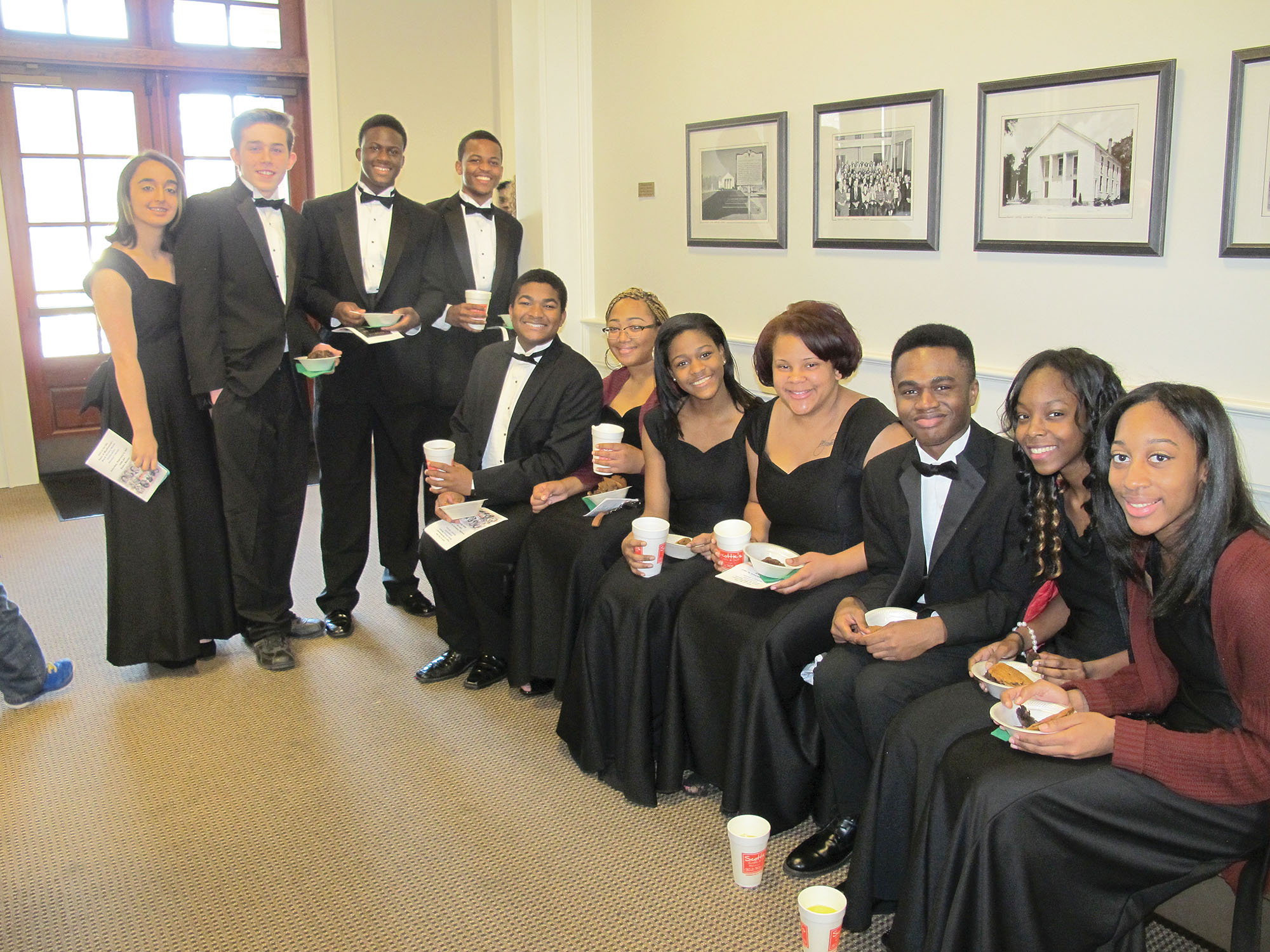
    After performing during the celebration of Blythewood’s Historic Heroes at Doko Manor on Saturday, these members of the Blythewood High School chorus took time out for refreshments: Lisa Ortuno (left), Jacob Rubino, Kiryl Lashley, Haven Davis, Will Stocker, Amyah Ritter, Kira Chiles, Jatoa Baker, Kalen Mattocks, Trinity Reese and Erykah Alford. Choral Director is Kristin Claiborne. (Photo/Barbara Ball)

    BLYTHEWOOD (Feb. 16, 2017) – The Blythewood Community celebrated and honored the heroes of its own black history on Saturday with a program at The Manor.

    Opening with a welcome from Mayor J. Michael Ross and Town Councilmen Larry Griffiin and Malcolm Gordge, the afternoon of entertainment and remembrance included performances by members of the Blythewood High School Choir and a dance team from Westwood High School. Blythewood Middle School student Ethan Harrell was announced the winner of the Black Heroes art contest, and Ray Smith presented a video documentary that included remembrances from several Blythewood women: Naomi Waden, Nettie Benson, Constelena Cunningham, Francis Davis, Ruby Brice, Dorothy Wilson and Mattie Lois Squirewell of Winnsboro.

    The program ended with a projection on screen of early editions of the yearbooks of the former Blythewood High School.


  • County, Hoof & Paw Strive for No-Kill Shelter

    WINNSBORO (Feb. 16, 2017) – Much of the news from County Council Monday evening came out of the public comment period at the end of the meeting. Kathy Faulk, a board member with Hoof and Paw Benevolent Society, announced the group would be launching an aggressive fundraising campaign to assist the County in its bid to become a no-kill County. She said the group will be working closely with the County’s Animal Shelter Director Bob Innes.

    “This is something Fairfield County could be so very proud of. It’s a movement that’s happening across the country,” Faulk said. “Fairfield County is capable of taking a lead in this and should not be just pulling up the rear. We need you to pass some good strong ordinances that will make a difference in Fairfield County,” Faulk told Council as she passed out photos of Fairfield County animals that have suffered neglect and abuse. Council is currently working on an animal cruelty ordinance.

    “It’s shocking,” Faulk said, referring to the photos. “But it’s happening all around you here in the county. We urge you to get behind this ordinance and lead the way.”

    In an effort to help the County reach its ‘no-kill’ goal, Faulk told Council members that Hoof and Paw will be working tirelessly to raise funds for the project. Following the meeting, Faulk told The Voice that Hoof and Paw, whose members she said have paid for some spay/neutering for the County’s shelter animals in the past, will now pay $650 for up to 10 spay/neuters each month until June 30, 2017 when a new budget is approved by the County that could provide more funding for spay/neutering.

    “When a cat or dog has been spayed or neutered, they are much easier to adopt out,” Faulk said. “That is something we can do to help move these animals out of the shelter and into adoptive homes more quickly. And the added benefit is that they will not then reproduce. The end result of fewer animals is a reduction in the cumulative burden on the County’s animal shelter.”

    Hoof and Paw board member Minge Wiseman, who spoke to the County’s oversight of neglected and abused horses, gave three shout-outs, the first to “whoever hired Bob Innes, the County’s new Animal Shelter Director,” the second to Deputy County Administrator Dais Anderson for supporting Innes and giving the go-ahead to fence in a small pasture next door to the animal shelter.

    “This (pasture) allows Fairfield County, for the first time, to house neglected and abused large animals,” Wiseman said.

    Her third shout-out went to Council members, encouraging them to “get behind this initiative to make the Fairfield County Animal Shelter a no-kill county and to help identify and aid neglected and abused large animals.

    “We need to pass stricter ordinances with harsher consequences for people who continue to neglect and mistreat animals in this county,” Wiseman said.

    Last month, Wiseman helped arranged for a large animal specialist to provide an educational session for the County’s animal control staff and law enforcement personnel on the care and recognition of large animal neglect and abuse.

    As the group begins their fundraising campaign, Faulk said they would be approaching individual Council members to lead the way with donations.

    “We appreciate what you’re doing, and you can stop by my store and pick up a check,” Councilman Jimmy Ray Douglas (District 2) told the group during Council Time following the public comments.

    New Bleachers

    During Council business, and without discussion, Council approved the purchase of new bleachers for the gym at the Recreation Center at a cost of $41,202 from Master Craft Renovation Systems. County Administrator Jason Taylor said the County received one other bid from Learning Environment, Inc. for $45,000. The new powered bleachers were budgeted and will replace the manual bleachers, Taylor said.

    Board Appointments

    Barbara P. Charles (District 4) was appointed to the Assessment Appeals Board, and Clerk to Council Patti Locklair announced that the County is seeking applicants to fill 23 seats that are or will soon become vacant on the County’s boards and commissions. (The vacancies are listed on The Voice’s website at blythewoodonline.com)

    Executive Session

    Council went into executive session to discuss a contractual matter, the “review of Fairfield Memorial Hospital and proposed information” and a legal matter, an “update on the Mega Site Litigation.” No votes were taken following executive session.

    Barbara Ball contributed to this story.


  • Council Forced to Re-Bid Arch Project

    RIDGEWAY (Feb. 16, 2017) – The Town of Ridgeway had to take a step back and reload last week on plans to stabilize the old school arch after the winning bidder pulled out of the deal.

    Council last month awarded the job to Ralph Goldman, whose bid of $15,007.20 came in under bids by W.C. Crosby Construction ($18,274) and H&H Masonry ($26,200). But during Council’s Feb. 9 meeting, Mayor Charlene Herring said Goldman was overwhelmed with work at his full-time job and had withdrawn his bid.

    After Goldman’s withdrawal, Herring said she contacted the other two companies and asked for new bids from each. On this second go-round, Crosby submitted a bid of $12,817.23, while H&H submitted a bid of $15,000.

    “The H&H bid is a little bit higher,” Herring said. “The reason it is, he said, is because there was prior work done on the arch that was not done correctly, and he feels like in order for it to really be stabilized some of it needs to be undone.”

    Ridgeway has received grant funds totaling $20,135 to finish the arch and fence in both the arch and the proposed playground nearby. Council accepted Herring’s recommendation and elected to award the arch work to H&H, leaving $5,000 for fencing.

    Last month, Council received two bids in the $6,000 range and one bid of $1,252 for fencing in the arch area. Concerned with the quality of the low-bid fencing submitted by JMS Fencing, Council during their Jan. 19 meeting agreed to ask the company for a quote on commercial grade fencing.

    Last week, JMS bid itself out of contention with an offer of $25,950 to fence in both the arch and playground sites. That left Council with a $6,481 bid from Guardian and a $6,338 bid from Fence It for the arch site. Guardian’s bid for the playground site came in at $6,975, while Fence It offered $8,600.

    Council chose Guardian for both sites, agreeing to make up the difference in grant funds with money taken from one of the Town’s CDs, which contain money from the insurance settlement after the collapse of the old school’s roof several years ago. Some, if not all, of the Town’s contribution could be reimbursed with phase two of a Parks and Recreation grant in two years.

    With all wheels now apparently in motion for a refurbished arch, the primary proposed use of the arch immediately raised another concern.

    Herring said the Town had received several inquiries about using the arch site for weddings, but for that use Councilman Donald Prioleau pointed out a serious deficiency at the site.

    “I can’t see a bride going in a port-a-john, or bride’s maids or grooms going into a port-a-john,” Prioleau said. “That’s a critical area I think we overlooked and we’re going to have to find the funds for that, too.”

    Prioleau pointed out that Council in 2015 had an opportunity for a facility near the arch that would have had rest rooms, when the County was considering the site for a recreation center.

    “If we had accepted that recreation center, we could have had all that for free,” Prioleau said. “And we’re still going to put in a playground, which is still recreation.”

    Councilwoman Angela Harrison suggested a remodeling of the Teacherage near the arch site could be a possibility for rest rooms. Councilman Doug Porter said Council may want to take additional funds from a CD and move forward with rest rooms right away.

    “If someone wants to do the homework on that for costs, we’d be glad to open it up,” Herring said.