Category: News

  • J. Gordon Coogler Poetry Contest

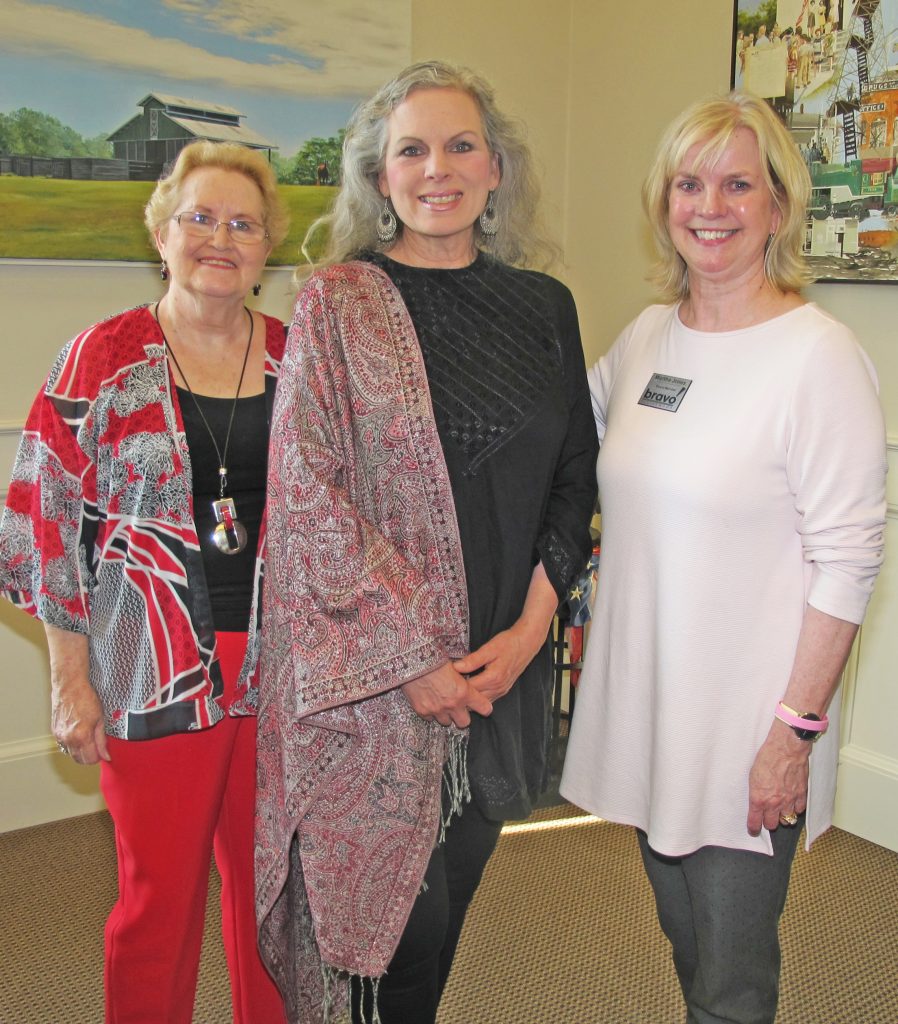
    BLYTHEWOOD – Winners of the J. Gordon Coogler Poetry contest were honored with an award reception at The Manor on Monday. Adult winners, in photo above, are Mary Nesbitt Garrison, Kelley Lannigan and Mike Sears (not shown). Martha Jones, right, is president of Bravo Blythewood, sponsor of the poetry contest.

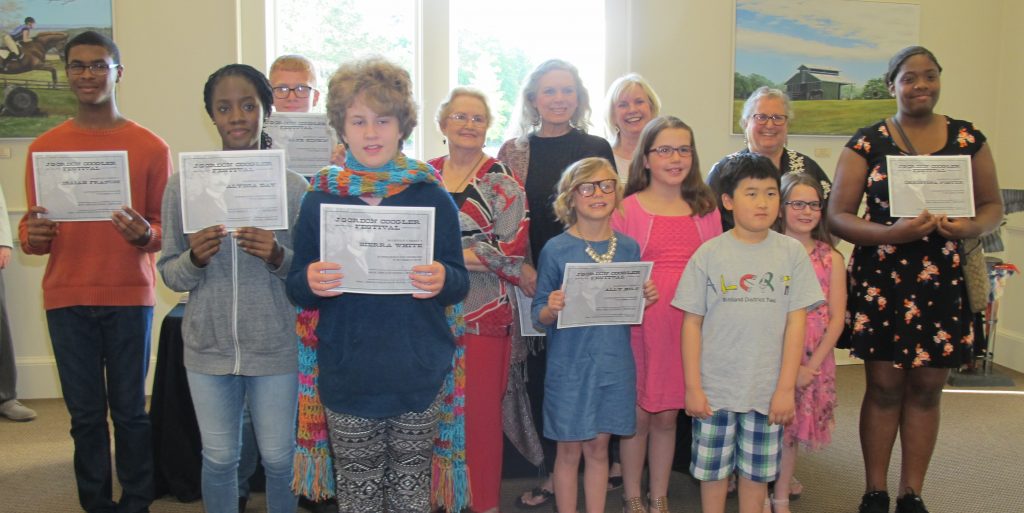
    In the photo below, youth winners show off their awards. There were 55 entries.

  • Art lovers yarnbomb Ridgeway

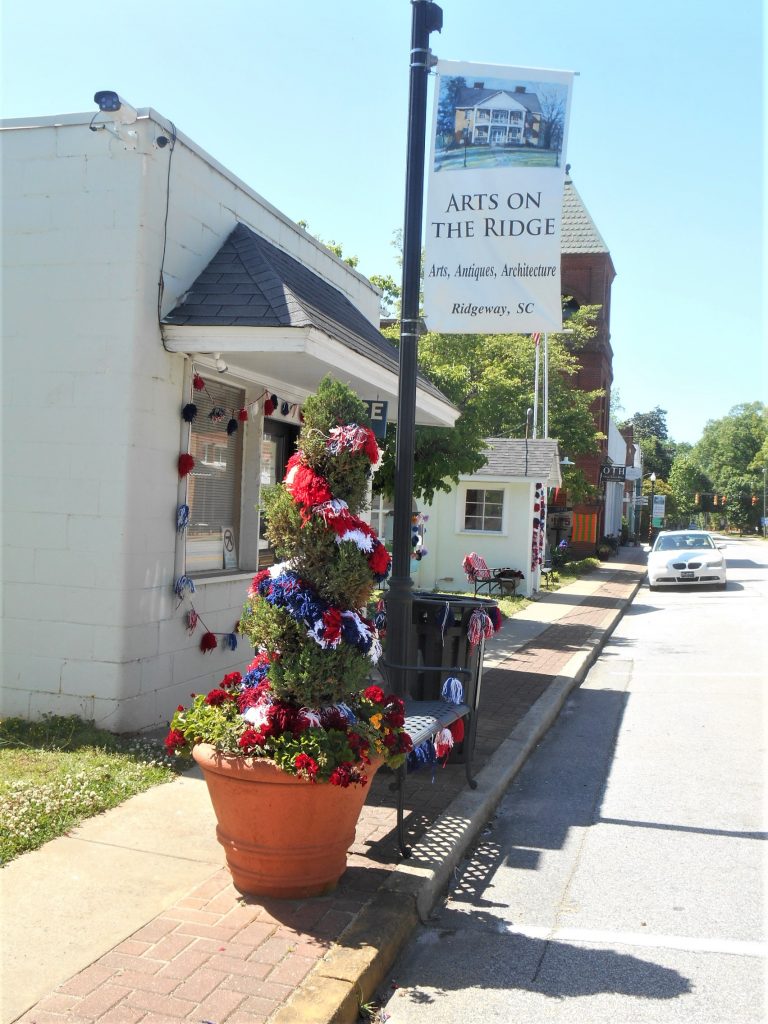
    Midlands STEM students pom-pomed the police station. | Darlene Embleton

    RIDGEWAY – Brenda Lord-McGrew is an instigator and her friend, Carol Jones agrees.  St. Stephen’s Art and Fiber Guild and friends have worked hard to create yarn art to display as part of the yarnbombing of Ridgeway in conjunction with the 12th Annual Arts on the Ridge Show & Sale on May 4th & 5th.

    “There is lots of talent in Fairfield County,” said Guild Chair Brenda Lord-McGrew.  “And art can be expressed in so many different ways.”

    Yarnbombing is certainly one of them.  You have to smile when you see the handmade work that brightens the static objects brought to life with color and imagination.

    The first volunteer to participate in the effort was Emily Minor and the students from the Midland’s STEM Institute in Winnsboro.  Each of the 200 students created a red, white or blue pom-pom to decorate the police stations in Ridgeway.

    Other creation participants were Ralph and Harriot Brown, Dale Mann, Lu Marley, Dee Bennett, Jan Smith, Flo Renford and family, Shirley Smith, Belinda Peters, Debbie Day and Karen Siegling.

    The yarnbombing will be on display through the month of May in downtown Ridgeway.  For more information you can visit RidgewaySC.org.

  • Richland Recycle Day, May 12

    COLUMBIA – Clean out your closets, garages and sheds and bring unwanted items to Richland Recycles Day to have them disposed of the right way. The County’s largest annual recycling event will be held from 8 a.m. – 4 p.m., Saturday, May 12 at the S.C. State Fairgrounds.

    The public should enter the fairgrounds through Gate 12 on Rosewood Drive, where they will be directed to the appropriate drop-off site. Workers will unload acceptable items, including paint, household chemicals and cleaners, computers, TVs, home electronics, tires (limit of eight per family), fluorescent light bulbs, pesticides and scrap metal such as washers and dryers, bicycles, metal chairs and lawn mowers free of oil and gas. Paper shredding will also be available.

    The S.C. Department of Agriculture will be on site to accept pesticides from any South Carolina resident. All other collections are for Richland County residents only. Motorists’ driver’s licenses will be checked for proof of residency upon entry. No commercial or business drop-off is permitted.

    Items NOT accepted this year include mattresses, cooking oil and wooden furniture. Not sure if you item will be accepted? Call Richland County Solid Waste & Recycling at 803-576-2446 during normal business in the weeks leading up to the big day.

  • Missing person in Ridgeway

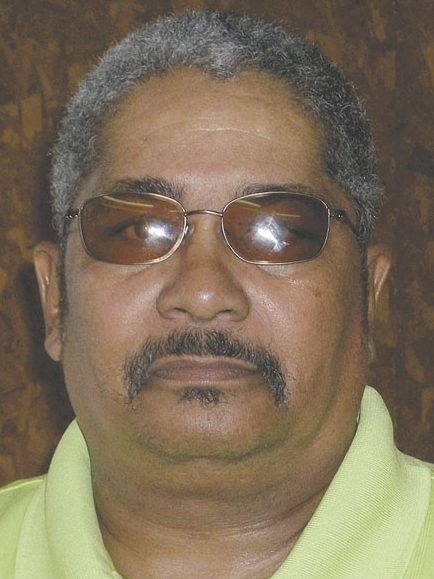
    Wise

    RIDGEWAY – On Monday, April 30, 2018, at approximately 5:00 PM, Randolph Wise walked away from his residence, 132 Jujube Drive, in the Ridgeway area near the Ridgeway Motel. Wise has several medical issues, including seizures and has a history of falling/tripping. He also may have mental impairment and may be acting irrationally.

    Wise was last seen wearing a black long-sleeve pullover, blue jeans, and black Nike shoes with a green Nike “check.”

    If you see Mr. Wise or have information about him, please contact the Fairfield County Sheriff’s Office (803-635-4141) immediately.

  • BREAKING – FC Chamber Board votes to become inactive

    WINNSBORO – The Fairfield County Chamber of Commerce announced in a press release on Monday that it will become inactive as of June 30, 2018.

    “After carefully evaluating its feasibility, the Board of Directors unanimously voted to take this action. The primary factors that led to this decision included limited financial support, reduced participation during the traditional Chamber structured events, as well as limited volunteers,” the release stated.

    Asked by The Voice if the Board will disband the chamber as of June 30, 2018, a source on the Board who asked not to be identified said the chamber is not filing with the Secretary of State to disband, but that it will become inactive as of June 30. Until that time, activities will go on as normal, the source said.

    The source also said that all Chamber employees will be let go as of June 30, but that the Chamber will remain in an inactive state after June 30, the end of the Chamber’s fiscal year.

    The Chamber is funded primarily by the County, at $87,500 annually, and by the Town of Winnsboro for Town sponsored events at $35,000 annually. Asked about that funding, County Council Chairman Billy Smith said he was surprised to hear that the Board’s decision to go inactive was, in part, due to limited financial support.

    “No, the County has not cut the Chamber’s funding,” Smith said. “We have contemplated the idea of reducing it, but only because their representatives couldn’t answer basic questions Council members had about their plans for the future during our second budget work-session.

    “Council then offered the Chamber every opportunity to keep their County funding the same as it has been in the past, even offering assistance on planning. Now I really don’t understand the suggestion of ‘limited financial support,’” Smith said.

    “Between County funding, the money the Town of Winnsboro gave the Chamber for the first time this year, and the proceeds from their golf tournament (which they said they aren’t going to do anymore),” Smith said, ” I’d think the Chamber had more financial support now than at anytime before, at least in recent history.”

    Chief John Seibles with the Winnsboro Department of Public Safety, which oversees the festivals in the Town, including Rock Around the Clock and the Pumpkin Festival, told The Voice that the crowd at last year’s Rock Around the Clock was large and orderly.

    “It [Rock Around the Clock]  was larger than in past years and it ran smoothly as I recall,” Seibles said.

    Board Chairman Harper Shull could not be reached for comment at this time.

    The Voice will update the story as it develops.


    Related: Council gives Chamber notice

  • County plans to move forward with traffic circle

    BLYTHEWOOD – After multiple community and council meetings over the last year about a proposed controversial double-lane traffic circle that would impact the entrance to Cobblestone Park and the retail, restaurant and office businesses located on University Village Drive in Blythewood, the pot was still boiling Tuesday during a Blythewood Town Hall meeting held on the issue at The Manor.

    With more than 50 people in attendance and many of them addressing the issue, the problem is not solved, but   Richland County government appears to be digging its heels in to proceed with construction of the traffic circle as well as widening Blythewood Road to five lanes.

    The proposed $10.5 million project is part of the Richland Penny Tax program and extends less than a mile along Blythewood Road from Syrup Mill Road East to the Southbound I-77 ramps.

    The posted project overview on the richlandpenny.com website shows the existing roadway would be widened to a five-lane section with two travel lanes in each direction and a two-way left turn lane, which is a paved 15-foot median.  Ten-foot shared-use paths are proposed on each side of the roadway for the length of the project to accommodate bicyclists and pedestrians.  A double-lane traffic circle is proposed near the intersection of Community Road and the entrance to Cobblestone Park.

    During a public project meeting held at Muller Road Middle School on March 22, by representatives from the Penny Tax Program, a large group of residents, primarily from Cobblestone Park, turned out to question the safety and effectiveness of the traffic circle.

    Responding to a phone call from The Voice inquiring about the results of resident input on comment cards after the Muller Road meeting, Project Manager Ben Lewis was clear.

    “The plan is to move forward with Option A – the 5 lane, offset, shared use option,” Lewis said.

    Twelve residents spoke at the Tuesday night meeting with the majority being Cobblestone residents speaking out against the creation of the traffic circle.

    “It appears the Penny Tax Committee has chosen an inadequate, short term fix for a longer term issue,” Cobblestone resident and former Town Councilman Tom Utroska said, reading from a two page letter in which he addressed a number of issues including how tractor-trailers would negotiate 270 degree turns on the circle without causing major backups.

    Another Cobblestone resident, Bethany Parler, said she was concerned about the large number of out-of-area visitors to the Cobblestone golf club and restaurant who would not be familiar with how to negotiate the traffic circle which requires drivers leaving Cobblestone Park to cross two lanes of traffic on the circle before turning left toward I-77.  She urged the Town of Blythewood concentrate on the McNulty Road to Main Street, Langford Road traffic problem and move the Blythewood Road project to number two on the agenda.

    There was a moan from the audience when Mayor J. Michael Ross suggested the hypothetical possibility of a fatal traffic accident happening while the project was on hold.

    Courtney Levett, another Cobblestone pointed to the traffic circle installed on Piney Grove Road in Columbia where, he said, there had been a lot of damage to the curbing and 3 foot tall reflective sticks by traffic trying to negotiate the turns.

    “I would like Richland County to delay their decision until this can be further explored,” he said, indicating that he felt that the issue had divided the town.  His suggestion to let the Town vote on it was met with applause from the audience.

    But Ross countered.

    “Almost three thousand people live in the town limits,” Ross said, “and the only people who’ve called me have been my [Cobblestone] neighbors.  These projects are to better the whole town of Blythewood,” Ross said.

    Former Blythewood High School teacher of the year Allison Byrd cautioned the County about how they use tax dollars.  She suggested pausing the traffic circle project until a study could be done on the installation of a traffic light at Syrup Mill Road to slow down traffic.

    Larry Sharpe, who owns large parcels on each side of the section of Blythewood Road that would be impacted by the traffic circle an opposes the project, talked about the influence that industrial growth on Community Road and near Syrup Mill and H.R. Horton’s continued building in Cobblestone would have on the traffic circle.  He also talked about the problem that would be created with motor homes or trailers and boats trying to navigate the circle.

    But not all Cobblestone residents were opposed to the project, including Buddy Price, a 19-year Blythewood resident.

    “Every year it has gotten worse, and it is getting less and less safe,” Price said.   He said he would have preferred a stop light be installed but he expressed support for the plan and encouraged the council to move forward quickly.

    Mike Switzer, Executive Director for the Blythewood Chamber, said he hopes the plan will go forward.  He said he had spoken with the businesses on University Blvd. Drive and the Food Lion Shopping Center and that they were concerned with their customers being able to get out onto Blythewood Road.

    “Cobblestone residents have a back way to those merchants,” Switzer said. “How would you feel if the merchants closed?” he asked.  “The Town will lose a lot of revenue if that happens.”

    At the suggestion of Ross, David Beatty and Ben Lewis from the Transportation Penny project followed up on questions that had been raised during the meeting.

    Beatty shared the history of the Penny Tax Resolution all the way back to its inception in 2012.

    “There were just 2 projects for this area and it is very restricted. We can’t create new projects beyond those covered in the referendum,” Beatty said.  “The current DOT traffic count is 11,000 a day and is projected to be 16,000 a day in 20 years.”

    Ben Lewis, the project manager for the Blythewood project, said that federal standards don’t currently warrant a signal at the intersection of Syrup Mill Road and Blythewood Road as previously suggested.  He also said it is not possible to put a signal instead of a traffic circle at the Community Road and Blythewood Road intersection because there is a minimum spacing requirement between signals of 1300 feet and it is only 730-750 feet to the traffic circle area from the signal at the I-77 ramp.

    “The benefit of a roundabout [traffic circle] is that it slows speeds,” Lewis explained.  “It reduces severity of accidents by 80% according to DOT statistics and 100% in South Carolina.”

    Regarding Utroska’s suggestion to restrict tractor-trailer traffic, Lewis said SCDOT makes those calls and that the heavily populated urban areas are most likely to be qualified.

    Richland County Council Chair Joyce Dickerson encouraged the Blythewood Town Council to be open-minded regarding the traffic circle.

    “When projects go on hold,” Dickerson warned, “the money will be spent somewhere else.”  She cited an Irmo area traffic circle project that had citizen concerns when proposed, but that, she said, had turned out to be very successful.

    “As Richland County grows, what you put in place now will work down the road,” she said.

    Looking back to the council meeting in May of 2012, Ross suggested that if they had known how things would have turned out, that council would likely have taken the McNulty Road project as their first choice.

    “But that isn’t possible now,” he said.

    The next step, Lewis said, is be to begin rights-of-way acquisitions.  He said plans are still to begin construction in the fall or winter of 2019.


    Related articles:  Traffic circle opposition picks up speedBlythewood traffic circle causing angstTraffic Circle Talks Continue 

  • Council gives Chamber notice

    WINNSBORO – When the new leader of the Fairfield County Chamber of Commerce failed to satisfy Council’s concerns last week, during a budget workshop, regarding the Chamber’s plans for the upcoming budget year, Council threatened to reduce the funding it provides for the Chamber from $87,500 to $25,000 unless the Chamber provided a financial roadmap for how it plans to spend that funding in the 2018-19 fiscal year.

    “I’m not opposed to continuing our full funding for the Chamber,” Council Chairman Billy Smith said, “but we need a plan to know what they’re going to do with it.”

    Chris Timmers, who was introduced by the Chamber Board as the Interim Director of the Chamber during a member breakfast on March 2, introduced himself as Executive Director of the Chamber when he came before Council during the April 17 workshop. Asked by The Voice following the meeting to clarify Timmers’ job title, Board Chairman Harper Shull said Timmers had not been hired to be the Executive Director.

    “He is the Interim Director,” Shull said.

    After announcing to Council that March 31 was the Chamber’s 73rd anniversary, informing Council that Providence Health was clearing ground to construct a new emergency facility in Fairfield County and that Lake Wateree is sold out and being developed to the max, Timmers said the Chamber had McMaster Enterprises, which is owned by Bill McMaster, Shull’s employer, to thank for having rent-free office space. Timmers said that was way the Chamber has saved Council money.

    However, Council has never funded office space for the Chamber according to several Council members. Prior to moving into its current offices at 120 N. Congress Street, which were offered by McMaster, the Chamber occupied rent-free offices in the Town Clock tower which is owned by the Town of Winnsboro.

    Timmers said the Chamber’s programs include the S.C. Railroad Museum, the Big Grab Yard Sale, Arts on the Ridge and Ag & Art. However, when asked about the Chamber’s involvement with the Railroad Museum and Arts on the Ridge, Susan Yenner, secretary of the Chamber, said those are not financially supported by the Chamber, but are included in the Chamber’s promotional material.

    When Council Chairman Billy Smith inquired about the amount of funding provided to the Chamber by the Town of Winnsboro and what that funding is used for, Timmers looked to Chamber Board Chairman, Harper Shull, for answers and then sat down.

    Shull said the Town provided the Chamber with about $35,000 last year, but that it was a one-time deal and was to be renegotiated each year. As for how that money was spent, Shull looked to Chamber Secretary Susan Yenner in the audience for guidance. Yenner, who has been managing the Chamber’s day to day business since former President/CEO Terry Vickers resigned last October, said the money went to such events as Pumpkin Fest and Spirit Fest, before Shull picked back up and continued.

    Shull expressed a dim view of whether the Chamber should be taking any money from the town government for events in the town.

    “We’re not exactly sure how we go forward with that just because there is a, I won’t say a conflict of interest, I mean, it’s the county seat of Fairfield County, and maybe previously we spent too much time in downtown Winnsboro versus the County as a whole,” Shull said.

    “Well, I think if the Town is giving you the money, it’s appropriate you spend it there,” Smith said.

    Shull also suggested changes that might be coming to the Rock Around the Clock festival, including an admission charge. He also announced that Sam Edenfield would not be able to run the car show aspect of the festival this year.

    “We had some feedback last year about Rock Around the Clock. We had a lot of mayhem,” Shull said. “We like to keep law and order as much as possible.”

    Chief John Seibles of the Winnsboro Department of Public Safety said he does not remember there were any problems at the festival last year.

    “It was a lot larger than in past years and it ran rather smoothly as I recall,” Seibles said.

    When Smith asked about the Chamber’s annual golf tournament fundraiser that he discontinued this year and questioned how the Chamber planned to make up for the $8,000 it would lose without the tournament, Shull said the tournament was solely on the back of Winnsboro Petroleum, which is owned by McMaster, and other corporate sponsors.

    “It became a lot for me to ask Coca Cola and Budweiser [for sponsorships],” Shull said. He also said the tournament had to be held out of county because there is no golf course in Fairfield County. He said the Board is tossing around another event that could be held in the county.

    At the end of the six-hour budget workshop, Council appeared satisfied with the administrative recommendations for allocations for all the agencies supported by the County, except for those recommended for the Chamber and for Fairfield County Disabilities and Special Needs. Council suggested omitting funding for a $19,000 vehicle for DSN, saying that some of DSN’s vehicles still had low mileage.

    “I wasn’t too impressed with some of the answers we received from the Chamber of Commerce tonight,” Smith told Council. “If they are not even sure they’re going to continue doing the things that we all know they have been doing, I think that leaves a question for us. If they don’t know what they’re going to continue to be doing, then how do we know how to continue to fund them?”

    “Are they going to be doing away with Rock Around the Clock?” Councilman Doug Pauley asked.

    “It kind of sounds that way,” Smith said. “I understand the Chamber is in a transitional period, but it seems the boat is rather rocky at the current time. Before we pass along any taxpayers’ monies, I’m just concerned about what the Chamber is going to do in the future,” Smith said.

    County Administrator Jason Taylor met with the Chamber Board the morning following the meeting, explaining what Council is looking for in the way of a spending plan for the coming fiscal year. The Chamber’s response is due to Taylor no later than May 9.

    In another funding concern, Council questioned Fairfield County Sheriff Will Montgomery’s request for funds in excess of Taylor’s recommendation. Montgomery requested additional funds for raises for his department that exceeded administrative recommendations. Smith said he would like to hear more details from Montgomery about the additional funding request.

    Council held a third budget workshop on April 24 and final reading on the budget will be held at the regular meeting on May 14.

  • May Vokaty goes from kitchen to farm

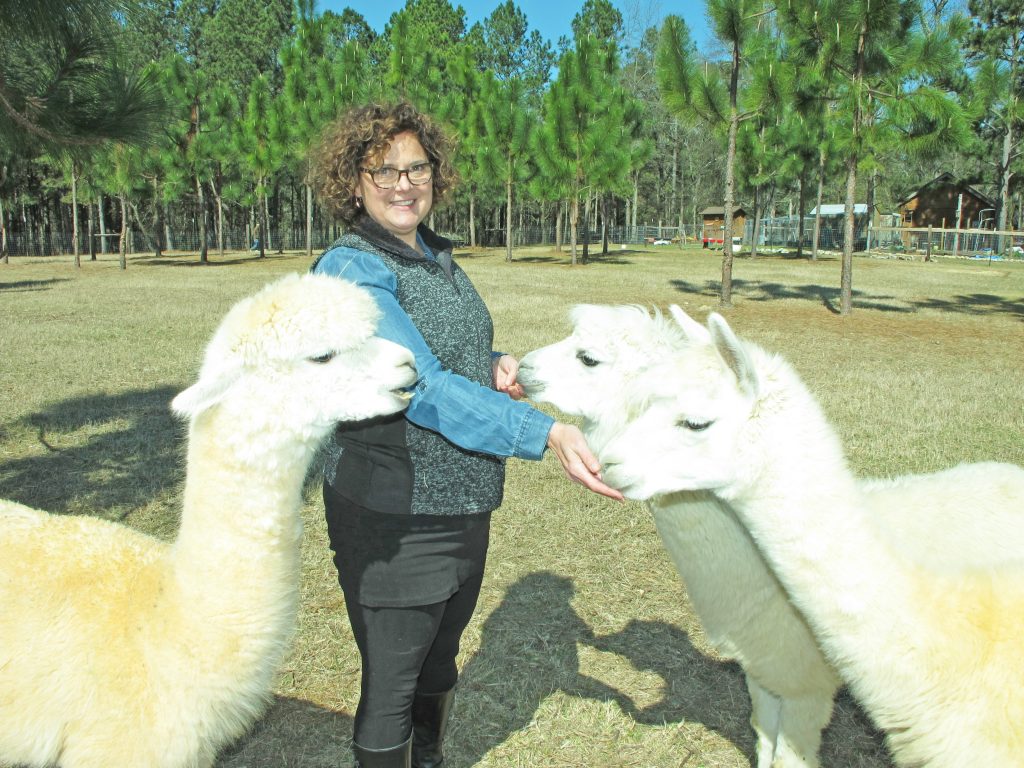
    May Vokaty shows off her growing herd of Alpacas. | Ashley Ghere

    RIDGEWAY – The Voice’s Foods Editor, May Vokaty, isn’t just a recipe wizard – she’s also an alpaca farmer. She was first smitten with the idea of owning alpacas while on vacation in Coeur D’Alene, Idaho, and then spent a few years researching the logistics. Last October, she finally took the plunge and rented 2½ idyllic acres in Ridgeway for The Alpaca Experience, a pastured farmstead where she tends a herd of fluffy, sweet-natured alpacas, curly-horned angora goats, Heritage chickens and a wriggly litter of Great Pyranees puppies.

    Vokaty said she’s delighted that the farm is coming together just like she envisioned – as a productive fiber farm, an educational venue for the public and a farmer’s market offering farm-raised meat and eggs, homemade nut butters and jellies, hand-dyed yarn and fiber-woven accessories like socks, gloves, hats and scarves.

    The next Farm Day Farmer’s Market will be held on Saturday, May 5. Vendors’ wares will include handmade sawmill furniture, glass and ceramic mosaics, decorative felted animal figurines, hand-painted wooden home décor, a produce vendor, macramé jewelry, a food truck and more.

    Vokaty’s daughter, Elli, 6, smooches a baby alpaca. | May Vokaty

    And even the farm’s bumper crop of alpaca manure has become a surprisingly popular purchase at $5 a bag.


    “Alpaca manure is low in nitrogen and turns into compost quickly, without having to age much. So you can take it straight from the pasture and put it in your garden. It’s a very practical resource,” she said. “I actually pay my farm rent in manure!”

    Held on the first Saturday of every month, Farm Day Farmer’s Markets are open to the public and packed with informative tours, interaction with the animals and learning about farm life. Vokaty plans to continue developing the farm into an educational resource, perhaps as a destination for field trips and as a summer camp. She also hosts events for kids with special needs.

    “The atmosphere here is peaceful, and kind of therapeutic in a way,” she said. “A friend of mine has an autistic son, and I noticed how much he enjoys spending time at the farm, just relaxing on a bench in the shade of a tree or spending a few moments petting a gentle, friendly animal. In March, we held an Easter egg hunt here for kids with special needs and their families, and it was a great experience. I’d like to do more events like that, such as harvest festivals in the fall and Christmas things.”

    Vokaty said her daughter Elli, 6, is a big help around the farm.

    “She’s very involved, and she can do just about anything,” Vokaty said. “We come out to feed the animals every day after she gets home from school, and if I said, Elli, you’ve got to take care of everybody today, she could do it! Of course, it might take her a while…she’s easily distracted by the puppies,” she added with a smile. “Elli especially likes caring for the chickens, and she’s told her classmates that she wants to be either a chicken farmer or a chicken scientist when she grows up,” she said. “I don’t think I could do all this without her.”

    And building the alpaca herd, Vokaty said, has been an adventure.

    The farm’s Great Pyranees caretaker keeps an eye on her pups. | May Vokaty

    “I don’t know that I was ready for the first three,” she said. “I heard about them on Facebook, and went to see them at a farm upstate. They were living in bad conditions, and I knew I couldn’t just leave them, so I bought them and brought them home in a trailer. I had been studying alpacas for three or four years, so when I got the animals, it was like – oh, I know what to do! Although, I didn’t,” she adds with a laugh.


    The next three hailed from an area with lots of red clay.

    “I call them my orange girls,” she said. “But their color has calmed down considerably now.”

    Four male alpacas from North Carolina have rounded out the herd, although the group will be growing again soon since all the females are currently pregnant.

    “I’m really interested in fiber,” Vokaty said. “Alpaca fleece is comparable to cashmere – it’s lightweight, very warm, water-resistant, hypoallergenic and doesn’t make you sweat or itch.

    But alpaca fiber is ‘greener’ and more environmentally sustainable. Cashmere goats tear up their pasture land and basically reduce it to desert, so the more demand there is for cashmere, the more it destroys the earth. Alpacas are different. Instead of hooves, they have soft pads with toenails, so they don’t tear up the earth. And they’re bigger, so you can get four-six sweaters from one alpaca in a year, while it takes four cashmere goats to make just one sweater. Plus, they eat less than cashmere goats.”

    She sends the fleece to an alpaca fiber pool in New England for processing.

    “Since there are so few alpaca farmers in the United States, it’s a way for us to pool our fiber together and make it workable for a large mill, like the Pendleton mill that my fiber pool uses,” she said. “If I send them, say, 10 pounds of fleece, then I receive 10 pounds of finished product.”

    Any unusable bits and bobs of alpaca fleece are stuffed into “bird balls” that she hangs in trees around the farm to provide grab n’ go nesting material.

    Vokaty said that every day on the farm brings something new, whether a big surprise – like a litter of puppies – or more fleeting, like witnessing the alpacas’ delight at being allowed to “clean up the garden” at the end of the season.

    “The alpacas are just four-legged stress relievers,” she said. “When I’m out here, in the pasture with the animals and working with them, my stress just seems to go away. It’s a busy lifestyle – there’s always something to do, and you never get any time off – but they just seem to emotionally soothe me, in a way that makes what I’m doing worthwhile.”

    More information about The Alpaca Experience is available on the farm’s Facebook page at facebook.com/thealpacaexperience1.

  • Trial for JWC, board set for May 7

    JENKINSVILLE – Motions relating to pending lawsuits against the Jenkinsville Water Company and some of its officers are scheduled to be heard in a Fairfield County courtroom this week. In all, four motions will be heard on Friday, April 27. A trial date of May 7 has been set in one of the lawsuits, according to Fairfield County court documents.

    Ginyard

    One motion on Friday’s docket seeks to merge two similarly worded lawsuits – one filed in 2014 and the other in 2016. Both suits were filed by the Broad River Campground.  JWC is named as the lone defendant in the 2014 suit, while JWC president Greg Ginyard and vice president Joseph McBride are co-defendants in the 2016 litigation.

    Both suits concern a dispute over water usage agreements between the campground and the JWC. They also dispute how rates were calculated. Many people living at the campground were workers at the V.C. Summer nuclear plant in Jenkinsville. More water service was needed to accommodate growth in the campsites, the lawsuits state.

    “Jenkinsville Water Co., led by Ginyard and McBride, unfairly, unreasonably, and dishonestly used an inflated estimated water usage rate rather than the actual water usage rate … in making the decision to deny the additional 49 campsites,” the campground states in its complaint.

    Another motion the campground filed seeks permission to amend its original complaint. Additional details were not contained in court documents, and will be presented during Friday’s hearing, court documents state.

    The court will also hear a motion for summary judgment filed by the JWC.

    In a memo, the JWC said water is a finite resource that must be regulated.

    “JWC’s actions did not harm the public interests, as the Company acted prudently to ensure that the water would be conserved properly and would be available to other customers and potential customers,” the memo states.

    Specifically, a 2009 letter the JWC wrote to Broad River Campground stated water usage was capped at 8,050 gallons per day, but the number would rise to 21,000 gallons per day if service to the additional sites was approved.

    JWC also disputes the assertion that the letter constitutes a contract.

    “The parties never had a meeting of the minds and never entered into a valid contract,” the memo states.

    Broad River Campground filed another lawsuit in December 2016 that alleges the JWC has violated the state’s Freedom of Information Act. That case is still pending and it is not on the docket Friday.


    Related articles: Water Company Faces FOIA LawsuitWater Company Officers Added to Lawsuit,

  • Builders push back over tree clearing

    BLYTHEWOOD – Talk about a frog strangler.

    As rain pelted Blythewood on Monday, stormwater gushed into the streets and onto lots in the Cobblestone Park neighborhood in Blythewood, causing several lots to flood. It’s become a common theme after any heavy rainstorm, residents say.

    Some homeowners think the root cause is traced to trees they say homebuilder D.R. Horton has been clearcutting in preparation for additional home construction.

    “We really don’t want to see any more lots that are left with zero trees,” said Bob Zedosky, who addressed Blythewood Town Council during public input Monday evening. “What happens when you cut down all the trees is, if you’re brave enough, put on your hip boots and go on these lots,” Zedosky said. “Be prepared to sink in … with mud and stuff. It’ll be a nice, muddy mess.”

    Zedosky and other Cobblestone Park residents want council members to reverse a section of the town’s landscape and tree preservation ordinance that, the town attorney says, can be interpreted to exempt developers from the town’s tree preservation requirements. Council members already have passed first reading on an ordinance repealing the exemption.

    On Monday, Council voted 4-1 to postpone second reading until May 10, with Councilman Bryan Franklin dissenting.

    Developers, however, oppose lifting the exemption. They sympathize with the flooding issues, which they characterize as temporary, but also insist lifting the exemption impedes their ability to do business.

    Jesse Bray with D.R. Horton, the developer building out Cobblestone Park, said the proposed ordinance singles out the homebuilder.

    “Developers and others will start looking elsewhere before doing business,” Bray said. “They want to know what the rules are from the start.”

    Shane Alford with Essex Homes took things a step further, playing what he said were audio recordings of council members showing support for the original ordinance that allowed the exemptions.

    Alford likened the effort to rescind the exemption to “finding soccer goals on the field at the end of a football game. We do not want rules to change halfway through the game. It may jeopardize the investment that we have,” he said. “It is our opinion that for the town to operate in a principled and thoughtful manner, repealing this covenant between it and the public would be wrong.”

    Blythewood Mayor J. Michael Ross, who supported removing the exemption, responded with a sporting analogy of his own.

    “So much water came from those lots because there’s no vegetation there. It ran into the drain on the opposite side of the street,” Ross said. “The fields have been torn up and there are no fields for anyone to watch any sport.”

    Tensions have been simmering for years since the ordinance exempting developers was enacted in March 2015.

    In 2017, two Cobblestone Park families sued D.R. Horton and the town, saying prior covenants were breached when D.R. Horton began subdividing lots near their homes for residential development.

    The suit contends that their properties were supposed to border a nine-hole golf course or greenspace if a golf course wasn’t built.

    The suit is still pending. On March 1, a circuit judge issued a temporary injunction barring development of the lots as the case proceeds.

    As for the landscaping and buffer ordinance, council members said they plan to revisit the issue during the council’s budget work session May 10.  An executive session for the receipt of legal advice concerning the proposed ordinance is likely to be added to the agenda, Ross said.


    Related Articles:  Town threatened over tree law