Category: News

  • Surprise! Grace Coffee complies with zoning

    BLYTHEWOOD – While it may come as a surprise to the owners of brick and mortar commercial buildings in downtown Blythewood, Grace Coffee, a small turquoise and white mobile home housed on a parking lot in downtown Blythewood, is now a business in good standing and is in compliance with the necessary zoning approvals from the Town of Blythewood, according to an interpretation of the Town’s Zoning Administrator Brian Cook.

    How that came about is confusing to many and being questioned by some who run businesses out of brick and mortar buildings and have spent years adhering to the Town’s zoning and architectural review standards or face stiff daily fines.

    But Grace Coffee is apparently not required to meet the Town’s standards for materials, landscape, paint color, sign and other things, yet is not fined for not doing so.

    As the Town’s Planning Consultant Michael Criss, explained to the BAR Board Monday evening, Grace Coffee’s owner was initially removing the trailer every night as it had agreed to do when it was allowed to set up shop. But as the business became successful, the owner, Matt Beyer, balked at removing the trailer at night, Criss said.

    Next, Grace Coffee wanted a Certificate of Appropriateness (COA).

    The BAR met on April 17, 2017 to consider Grace Coffee’s request for a COA for its location in the parking lot of 208 Main Street.

    Under what one board member described to The Voice as ‘pressure’ from Town Hall, the BAR reluctantly granted Grace Coffee a temporary COA for a period of one year. According to the Town’s former administrator, Gary Parker, the Town had no ordinance in place to address the vending stand, but Criss interpreted it to be a structure.

    The temporary COA was supposed to allow the Town time to review and create regulations to address vending stands.

    Adding another layer of confusion, Council was then presented Ordinance 2017.002 for consideration. The passage of that ordinance on April 24, superseded the temporary COA issued by the BAR a week earlier, and made Grace Coffee a non-conforming use, Cook wrote in a memo to the BAR. This also gave Grace Coffee the same zoning protections of other brick and mortar buildings. However there was no announcement at the time to that effect and former Councilman Tom Utroska, who voted for the ordinance, told The Voice that he had not been aware that, when passed, the ordinance would supersede the temporary COA.

    Section 155.276 of the ordinance offers definitions of itinerant merchants and vending stands. Item B of the ordinance says that vending stands are to be removed daily and cannot be stored on property within the TC District – but that does not apply to Grace Coffee. Item C addresses nonconforming uses.

    “Any vending stand in lawful operation upon the date of first reading of this section may continue to operate without regard to the daily removal requirement…” That, according to Town Hall, is Grace Coffee. It can now operate as a nonconforming vending stand in the Town Center District, according to the interpretation of the Town’s zoning administrator. And while Grace Coffee’s one-year COA has expired, the issue is moot if, indeed, Ordinance 2017.002 superseded it.

    Cook drafted a version of the City of Columbia’s Temporary Vending Ordinance that has the Blythewood Chamber’s backing and presented it to the BAR Monday night for information. It will next go to the Planning Commission’s June 4 meeting for a vote.

    Jim McLean, Co-Chair of the Board of Architectural Review, expressed his concern that the proposed ordinance will allow a temporary food truck vendor the potential to set up 365 days a year in Blythewood.  As long as they meet the zoning district requirement, locate at least 100 feet from the door of a lawfully established eating place, maintain within the food truck proof of written permission from the private property owner, receives annually a zoning permit to operate a food truck, move the food truck off the property each evening and operates for no more than 10 consecutive hours within a calendar day, does not operate between 9 pm and 9 am and the parcel on which the vendor operates is more than 400 feet from a parcel zoned residential., they would be eligible.

    “I really have a struggle with the fairness of this,” McLean said.  “Are the brick and mortar stores being undercut?  They have made a hard investment in the town and are abiding by the regulations and restrictions.  The caveat of unfair competition needs to be addressed.”

    There was general consensus that food trucks and temporary vendors associated with events would continue to be acceptable.  And there appears to be no problem with concessionaires and persons selling only seasonal merchandise, such as fireworks, pumpkin stands and Christmas trees are also permitted under the ordinance.

    BAR member Alan George brought a “what if” to the discussion regarding the possibility of a tattoo truck setting up shop.  Cook said that if the vendor met all other criteria he would be eligible.  The question was raised regarding sexually oriented businesses (SOBs) being eligible under this ordinance.  Criss confirmed that the TC (Town Center) zoning would not have to accommodate the SOB use.

    The BAR committee asked that there be some criteria addressed for mobile vending and standards dealing with the appropriateness of the vendors.

    Criss said there are several options including adopting an ordinance to accommodate vendors, go back to only allowing them for special events or seasonal sales or something in between.

  • FMH CEO takes unpaid leave

    Smith: Council Close to Making Offer on FMH Campus

    WINNSBORO – After a relatively short, uneventful meeting Tuesday evening, the Fairfield Memorial Hospital board came out of executive session and voted unanimously to give an unpaid, one month leave of absence, beginning in June, to the hospital’s CEO Susie Doscher. There was no other explanation concerning the leave.

    County Council Chairman Billy Smith told The Voice in an interview on Tuesday that Council is moving closer to making an offer on a portion of the hospital campus. He said the offer could come as early as the next council meeting.

    “We’re interested in the two medical office buildings – the one housing Fairfield Medical Associates and the John Martin Primary Care facility,” Smith said. “The appraisal for those two is right at $1.6 million. If we add the rehab facility, that appraisal jumps up to about $1.9 million.”

    Smith said the offer depends on removal of the liens from the property.

    “They need to remove the liens if we’re going to purchase the property,” Smith said. “We’re not going to make an offer so long as it has liens.”

    Smith said there are no other obstacles to the making an offer that he is aware of.

    The next council meeting is May 29 at 6:30 in the County building.

  • Citizens open up to Winnsboro Town Council

    WINNSBORO – Winnsboro’s Town Council’s meeting agenda was light last week, but all the chairs in the room were filled, and many of those sitting in the chairs had something to say to Council.

    Winnsboro resident Jenyfer Conaway kicked things off by introducing herself as a “damn yankee” who works in Charlotte. She said she loves Winnsboro and purchased a house here 10 years ago for $78,000 which, she said, is now worth only $35,000.

    “Our town is dying,” Conaway stated, initiating a dialogue with council members, asking if they knew their oath of office.

    Mayor Gaddy intercepted the exchange and instructed Conaway that dialogue was not part of the program.

    “I just want someone to listen to us,” she added, before sitting down.

    Vanessa Reynolds said her position as a national sales manager gives her access to businesses in all areas of the country.

    “Small towns are not trending down overall,” she said.  She said they are trending up and cited the need for Winnsboro to enforce their code 96.5 Section B ordinances. These ordinances address decaying exterior exposures of buildings including peeling or cracked exteriors, broken doors and windows, etc.

    Reynolds said the Town’s lack of enforcement is extending the problem and called for cooperation among residents.

    “We need to roll up our sleeves,” she said.

    Mayor Gaddy responded, thanking her for giving Council solutions and not just complaints.

    Attorney and Ridgeway Municipal Judge, Adrian Wilkes, requested that Council record their meetings.  He said it would be a big benefit to have something to look back to when issues arise.

    “I was taken aback that merchants don’t know that grant money is available for downtown revitalization,” Mitford resident Wanda Carnes said. Carnes said she owns four buildings and would like to have been able to use the unspent money for revitalizing the look of her storefronts.

    “A line was added to the application saying that only one revitalization grant is available per owner,” Carnes said. “When was that line added and who voted to add it?”

    Gaddy said he would get that information to her.

    Keryn Isenhoward asked Council’s for the use of Mt Zion Green trail for a four-hour breast cancer walk on Oct. 20.  Keep Going Fairfield County will be the event title.  Council agreed to support the event by providing use of Mt Zion, electricity and maintaining the trash bins for the day.  Councilman McMeekin championed the event, making the motion to allow the walk.  The motion passed 5-0.

    Fairfield Central Band Director, Sir Davis, asked Council to allow gratis use of the Old Armory Building on June 1, for the band’s banquet.  Council voted 5-0 in favor.

    Also on the agenda was the Chamber of Commerce relocation discussion, but Terry Vickers asked that it be deferred.

    Councilman Danny Miller said he had held a council position for 23 years and expressed his love for concerned people.

    “We are all in it together,” Miller said, “and we are going to get there through love and working together.”

  • Rules for behavior on Ridgeway agenda

    RIDGEWAY – In an effort to return what he termed respect and order to Ridgeway Town Council meetings, newly elected Mayor Heath Cookendorfer rolled out new rules for behavior for council members at the last meeting.

    “When someone has the floor and someone else has something to add, if that person will raise their hand, they will be called upon and be given the floor next,” Cookendorfer said. “That way, we won’t have interruptions in the meetings or be talking over each other. This will allow respect for each other and an orderly meeting.”

    And that’s what happened. There were no interruptions and the meeting was orderly.

    In one of the first items of business, Cookendorfer sought to clear the air in public session about the status of the Town’s contract with Norfolk about the status of the Town’s contract with Norfolk Southern Railroad to purchase the cotton yard. He called on attorney Kathleen McDaniels, who was hired by former Mayor Charlene Herring’s administration to negotiate the purchase of .6 acres of property (cotton yard) for which the Town agreed to pay Norfolk Southern $73,000 plus about $20,000 in additional expenses to include surveying, legal fees, an environmental soil study, etc.

    Although the contract was signed by the previous council on March 22, 2018, and can now be discussed in public session, McDaniels suggested she update council behind closed doors regarding the contract.

    Cookendorfer, however, repeated that he would like to have the update in open (public) session, and McDaniels proceeded to the podium.

    “The Norfolk Southern closing on the property is set for June 20, 2018,” McDaniels said. “During that period of due diligence, lots of things have to happen – an environmental study of the soil, a survey, a legal description, title commitment, etc.,” McDaniels said.

    “Can the Town still get out of the contract?” Cookendorfer asked. “Do we have the option of renegotiating the contract?

    “There is certainly the possibility to do that,” McDaniels said. “But the likelihood that Norfolk Southern is going to renegotiate the contract is pretty slim. The earnest money of $5,000 has been paid to Norfolk Southern, so if you terminate the contract, you’ll lose the earnest money and the costs that you have already incurred for surveying, the environmental study, legal and other costs,” McDaniels said.

    Cookendorfer thanked McDaniels for her presentation.

    Other Business

    Luke Law was unanimously appointed as the Town’s new zoning administrator to replace Rick Johnson who resigned April 6.

    Council passed, 4-1, first reading of the fiscal year 2018-19 budget in the amount of $774,840. Councilwoman Harrison voted against first reading, saying she did not have enough information to vote. Council will hold a public hearing and second reading on June 14.

    Council voted unanimously to select the paint color ‘aqua sky’ for the new water tower.

    A discussion of water rate increases proposed by the Town of Winnsboro was tabled until next meeting.

    Council voted 5-0 to terminate Southern Resource Advisors previous arrangement to find overlooked income for the town government. The company said it has found approximately $900 of annual income for the town, 50 percent of which will go to the Town of Ridgeway and 50 percent to Southern Resource Advisors for their efforts. Cookendorfer said the company advised, however, that there is little more they can do for the town in that regard and suggested not going forward with the agreement.

    FOIA Reminder

    Cookendorfer said he had sent out a letter to all town government committee heads reminding them that they are subject to the provisions of the S.C. Freedom of Information Act (FOIA) for public bodies.

    “Meetings must be open to the general public,” Cookendorfer said, “and must be properly posted 24 hours in advance.” Cookendorfer said that anyone wishing to be notified of these meetings can have their name placed on a list at Town Hall to receive emails of the agendas.

    Executive Session

    Two agenda items were discussed in executive session – an employee matter related to the police department and another related to the town’s municipal court. Following executive session, Rufus Jones made a motion to consider former municipal judge Gen Palmer as a backup for the town’s current municipal Judge, Adrian Wilkes. The motion passed 5-0. No motion was made concerning the police department item.

    The next regularly scheduled meeting of Council will be Thursday, June 14.

  • Chamber financials reflect inconsistencies

    BLYTHEWOOD – Whenever the Greater Blythewood Chamber of Commerce Executive Director Mike Switzer requests additional funding for the chamber, council members generally have been willing to cough up more money.

    As Blythewood council members plan to discuss increasing the total annual funding to the Chamber by more than $15,000 to $57,500, during a budget workshop Thursday, May 24, a review of public records, as well as a former chamber employee, signal several inconsistencies in chamber financials, raising questions about how accommodation tax funds and a town hall grant are actually being spent.

    At Town Council’s April 23 meeting, for example, the Greater Blythewood Chamber of Commerce Executive Director, Mike Switzer, said the chamber needed additional funding to cover non-specific, additional costs incurred in running the visitor’s center.

    “A lot of this deficit is startup costs of putting the extra hours into getting it (the center) up and running,” Switzer said. “The situation we have is the doors are open from 9-5. Before we signed the lease, we were already in there a year and our hours were 10-2. That’s what we could afford.”

    According to its most recent federal tax return, the chamber claimed a deficit of $4,885 just months after reporting a $5,755 surplus.

    Switzer called the numbers and their relation to visitor’s center finances “apples and oranges.”

    Payroll doesn’t add up

    In May 2017, Switzer requested $33,000 to run the visitor’s center, telling council members that $18,000 of that money would be spent on a part-time employee at a cost of $15 per hour for 20 hours plus FICA.

    Council voted to approve the $18,500 specifically for that employee.

    When contacted by The Voice, that employee, who is no longer employed at the visitor center, said she was only paid $10 per hour, not $15, for an annual payout of only $10,400.

    A visitor’s center report provided to council last January raises more questions.  The report, which is broken down into two columns (2017 July 1 – Dec. 31) and (2018 Jan. 1 – June 30), shows a total revenue for fiscal year 2017-18 of $18,500 and expenses of more than $26,000 causing a deficit of $4,885 for July 1 – Dec. 31, 2017 and an anticipated deficit of $2,758 for Jan. 1 – June 30, 2018 for a total of $7,643. A $300 addition error in each column of expenses would, if corrected, bring the deficits even higher. Council voted 4-1 on April 23 to give the Chamber the additional $7,643 to cover the two deficits.

    That’s where the report becomes difficult to follow. The visitor’s center payroll expenses are listed at $8,332 in each of the half-year columns. But the former visitor’s center employee said she only received $5,200, not $8,332 for the six month period ending Dec. 31, 2017. And the report anticipated another $8,332 the first half of 2018, leaving $3,132 in employee payroll unaccounted for in each half of the year for a total of $6,264.

    When asked by The Voice, Switzer was unable to provide a breakdown of the $8,332 listed for payroll. There is also no explanation of how a fourth of the Chamber’s rent, insurance utilities, accounting and other expenses including office supplies and other items that were previously charged to the Chamber are now charged to the $18,500 that was earmarked for the visitor’s center employee.

    In another instance, the chamber received $8,750 in accommodation tax funding for The 2017 Big Grab. Switzer charged $4,318 to staff expenses, breaking it down among three employees: the visitor’s center employee, $426; Switzer, $1,558 and Kitty Kelly (Switzer’s assistant), $2,234. But when contacted by The Voice, the visitor’s center employee said she was never paid the $426.

    Budget incongruities aren’t limited to visitor’s center funding. Mismatching revenue figures provided by the Chamber are apparent in funding to promote the 2017 solar eclipse.

    Eclipse the Park budget records list T-shirt revenues at “$5,000 (approximate),” although financial data obtained by The Voice pegs that figure at $9,991.

    Sponsorship revenues showed a similar gap, with $750 listed in budget records and actual revenues of $4,500, documents show.

    On May 4, The Voice issued a Freedom of Information Act request for annual budgets and profit and loss statements for the visitor’s center and chamber for the past five years.

    “There will be costs associated and I will get those to you as soon as time allows,” Switzer said via email on May 8. “We have, as always, a lot of work going on right now.  I will bring all of this to our next board meeting on the 15th and get back to you after that.”

    The Voice had not received the requested documents at press time.

  • Take a peek

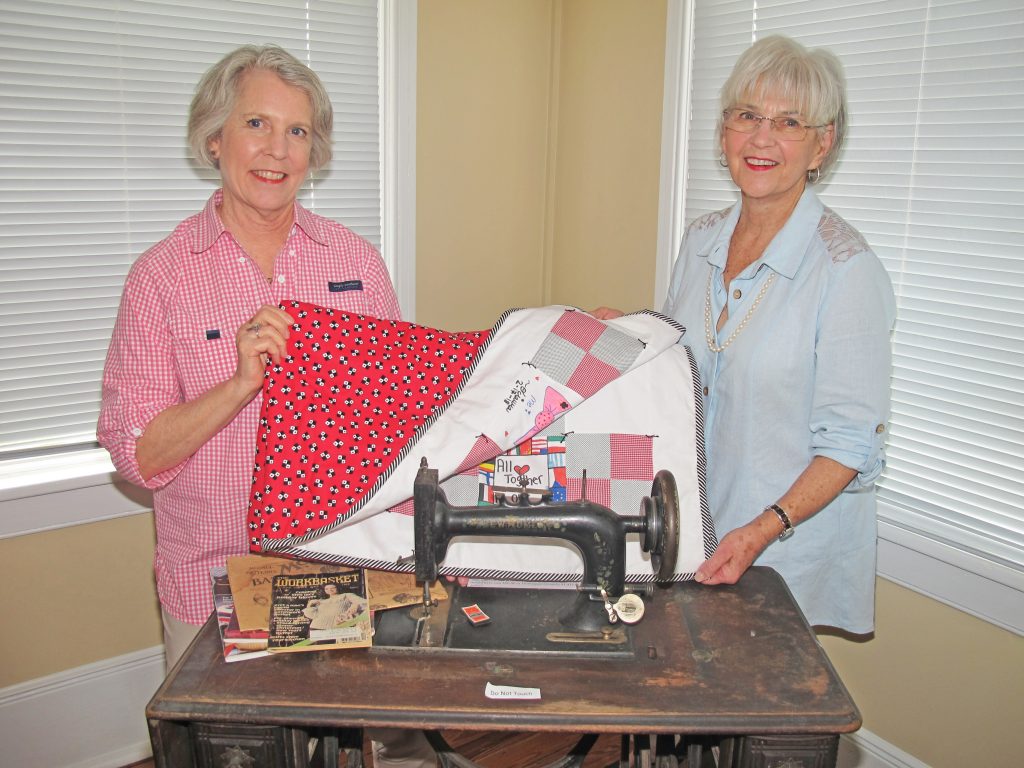
    BLYTHEWOOD – Margaret Kelly, Blythewood Historical Society Administrative Manager and community quilt organizer, and Frankie McLean, who had a hand in creating the quilts, show a peek of the children’s quilt, one of two community quilts that will be unveiled on May 31.

  • Farmer’s market attracting growers, artisans, musicians, more

    Ernest Manning of Winnsboro is a regular at the Blythewood Farmers Market, selling his very nice, home grown lettuces, cabbages, onions and Gerber Daisies | Barbara Ball

    BLYTHEWOOD – “It’s the melting pot of Blythewood,” proclaimed Blythewood Farmers Market Director Michaela Barno.   “Our vendors are either local residents from Blythewood, Ridgeway or Winnsboro or they are connected in some way to Blythewood. Plus we have Jeff Dowdy, The Shrimp Guy, with fresh Carolina shrimp.”

    Regular vendors include Murphy Farms of Ridgeway, Henry’s Kitchen, Off the Track Bakery, fresh eggs from REDs Farm in Ridgeway, grits from Ken DuBard’s Congaree Milling Co, Donna Bass’ This Butter Be Good skin care products, First Fruits produce stand, Ernest Manning’s fresh garden produce and flowers, fresh chicken from Cedar Knoll Farm, Grand’s Garden produce, fresh pork, lamb and poultry from Doko Farm and much more.

    “We offer live music and garden fresh produce every market day and free wine tasting every third Wednesday,” Barno said.

    “All of the vendors produce the products they sell and are DHEC certified,” Barno said. “Their farms are licensed through the Department of Agriculture.”

    “I am so proud of the quality of our regular vendors,” Barno said, “as well as the frequent visiting vendors.”

    Besides food products, artisan vendors are a regular feature of the market featuring colorful and unique handmade arts and crafts.

    “Each Wednesday also brings a new food truck,” explained Barno.  “Since opening May 2, we have already enjoyed barbeque, Belgian waffles, southern egg rolls and pizza, to name a few.

    “And next week, May 23, we will feature Roadrunner Cafe out of Winnsboro serving dinner. Music will be provided by Jubilee Trio,” Barno said.

    And remember to bring an empty cooler for carting produce home.

    The market is open from 4 to 7 pm every Wednesday through October and is located in Doko Park at 171 Langford Road in Blythewood.  Plenty of free parking available. For more information email blythewoodfarmersmarket@gmail.com.

  • Millions in debt, no rescue in sight

    Doscher, Board at odds over cutting expenses

    WINNSBORO – The harsh reality of Fairfield Memorial Hospital’s financial situation – millions of dollars in the red and no rescue forthcoming from Fairfield County Council – was the all-consuming topic of discussion during the Finance and Audit Committee meeting before the regular FMH Board meeting April 24.

    Committee chairman Randy Bright attempted to tackle the issue head on by asking hospital administration to look for more ways to cut costs. “In light of our fast-approaching $3.4 million in vendor payables, and $5.3 million in additional long term liabilities, and that we are dropping revenue and we are dropping traffic (patient) census in our operations” … expenses are “something we can impact… instead of looking back, we can look forward.” Bright said.

    “Also, the (Fairfield County) Council has committed to not giving us any extra money aside from the potential land sale,” he said.

    During Council’s April 16 budget workshop, Council declined to budget either the $4,000,801 that the hospital requested for 2018-19 or the $1,043,000 recommended at the administration.

    “So that being said, do you have any particular expense cuts you would like to propose?”  Bright asked hospital CEO Suzanne Doscher.

    “We evaluate the entire budget constantly,” Doscher responded. “I had the impression that if we were on target with the (current) budget then it wasn’t the board’s decision to redo the financials – the budget – again.”

    Bright agreed, but said “The only problem with that is, however, that budget through September is expected to lose a million six, and if we go all the way through December, then we are going to lose well over two million dollars.  We don’t have that kind of financing.

    “And the real kicker is,” Bright continued, “the county council is not going to give us any more money. We need to start looking at even more expense savings or anything that gets us away from losing two million plus by the end of the year. Because we are not going be able to sustain that.”

    Bright pointed out line items in the current hospital budget as examples of expenses that could be cut: “travel and education – we are going to shut down in December.  Do we really need this?  We have budgeted more than $12,000 (in the budget) for travel and education,” Bright said.

    “We evaluate it every time,” Doscher responded.

    “Give me an example, what do we have on the agenda for travel now…no seminars, no sessions for hospital staff in Greenville…” Bright persisted.  “Aren’t these things planned some time in advance?”

    “I can’t keep up with other people’s schedules to tell you that right now. I don’t get into the weeds like that,” Doscher said.

    Bright noted that hospital expenses are currently 80% of gross revenue versus 70% of gross revenue a year ago.  “It’s our balance in our revenues and expenses that has worsened and we have got to do more.”

    However, His comments did not go over well with Doscher, who quickly defended the hospital’s fiscal management.  “We are running operations and we are managing the operations. If you want to rebase the budget again, we can do that.  But we have to run the operations.”

    “Yeah, we were saying that right up to the point we got rid of – finally – three under-performing departments; that is my point. We did that way too late, two years too late.” Bright said.

    “In your opinion but not in everybody’s opinion.” Doscher shot back.

    “It was the opinion of the consultants.  No one wanted to get rid of them, we had to,” Bright said.

    “So we are exactly where you started from,” board member William Turner added.  “I don’t know how we do expenses and such when we don’t have any money?  …How much did we spend last month? I don’t see how we have the doors open now.  But every day it’s money lost, money lost.  I don’t see how we can spend anything without approving every penny and I don’t know how you approve money you don’t have.  And we don’t have any money.  That’s how simple it is!”

    “We are five million dollars in debt and we only have current assets of about 1.2 million dollars,” Bright added.

    Bright and other committee members continued to press for more specific cuts to the hospital budget. “We should look at memberships,” Trustee Ron Smith suggested.

    After discussion, the committee approved a motion to ask hospital administration to come back with more cuts.  At minimum, the categories of expenses for review would include dues, subscriptions, mileage, advertising, marketing, and hosting and participating in events except for the purposes of employee appreciation.

    Bright said the hospital has “carte blanche” to make any cuts to the budget as long as patient care was not affected.

    “And employee morale,” Fantry added.

    March Financials

    CFO Timothy Mitchell’s monthly financial briefing did have some good news – the month of March brought in extra revenue in the form of collections from the SC Department of Revenue of outstanding patient debt.  As a result, the hospital ended the month of March with $96,136 in revenue over expenses.   However, excluding bad debt recoveries and a premium refund, the hospital experienced operating losses of $241,777 for the month. For first six months of the current fiscal year (July through March, the hospital’s EBIDTA (earnings before interest, depreciation, taxes and amortization) was a negative $610,077.

  • County grants full Chamber funding

    WINNSBORO— In a span of two weeks, the Fairfield County Chamber of Commerce went from facing an inactive status to being fully funded.

    Fairfield County Council voted unanimously Monday night to appropriate $87,507 to the Chamber, satisfying the group’s annual funding request, but with some caveats.

    The Chamber had to provide the county with a plan for how it plans to spend the money.

    It must also allow the council chairman to appoint a council member to the board. The appointee will have voting powers, but will not be an officeholder, such as secretary or treasurer.

    “I appreciate folks at the Chamber stepping up and giving that to us,” Council Chairman Billy Smith said. “That was a big step.”

    After the meeting, Smith said the conditions boiled down to providing accountability for Fairfield County taxpayers.

    “We asked [the chamber] to come in and speak with us in regard to those type of concerns,” Smith said. “What I expected to be routine-type questions and answers turned into routine questions and strange answers.”

    Two weeks before the vote, the Chamber told The Voice it had voted to become “inactive” effective June 30, citing “limited financial support” as a driving reason.

    The vote to become inactive was held in a meeting that was not advertised as required by state open meeting laws.

    Citing concerns over the Chamber’s plans, Council members signaled they would slash annual funding from $87,500 to $25,000, and gave the Chamber a May 9 deadline to detail how it would spend council funding.

    The ultimatum paid off.

    Smith said he thinks the Chamber is now heading in a positive direction, noting former Chamber president and CEO Terry Vickers, appointed to temporarily lead the Chamber, is working to turn things around.

    “The chamber is a great asset to the county and it would be greatly missed,” said Councilman Dan Ruff.

    The council’s vote also drew praise from at least one member of the public.

    “I’m seeing more accountability. You’re holding people accountable, you’re holding each other accountable,” Ridgeway resident Randy Bright said during public input. “You held the chamber accountable and you got good results.”

  • Winnsboro man charged with animal cruelty

    WINNSBORO – A Winnsboro man was jailed after a pit bull he owned was found in a starving condition and with sores, chained behind a residence the man had moved out of.

    Shawn Wilson, 51, was arrested after officers were tipped off about a malnourished dog on a property he owned. When Officers escorted animal control officers to a residence on Dunn Street in Winnsboro on May 4, they noticed two healthy pit bulls freely roaming the fenced-in yard.

    Wilson

    When the officers walked behind the residence, they observed a brown pit bull chained up and in a condition they reported as extremely emaciated with mange and open sores from flea/tick infestation. While they reported that the dog had shelter and water, his food dish contained dried leaves and stems.

    When asked about the malnourished dog, the tenant said it was owned by the landlord (Wilson), who left the dog on the property but had not checked on it in a while. The tenant said he had been feeding the dog.

    After a phone call from the officers, Wilson agreed to let them take the pit bull, the report stated. Animal Control took the dog to a veterinarian who, after examining the dog, forwarded his findings to the Sheriff’s department on May 9.

    The veterinarian reported that the dog was extremely malnourished with longstanding ear and eye infections. The findings stated that it was the veterinarian’s belief that this was a clear case of neglect.

    Wilson was arrested on May 11 and taken to the Fairfield County Detention Center. He was released on a $5,000 bond.