WINNSBORO – A sixth judicial circuit court judge has ordered a Fairfield man charged with killing his parents to be released from a state mental hospital and treated on an outpatient basis.
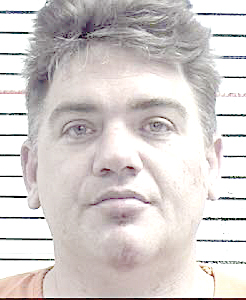
Matthew Richard Mahorsky
Matthew Richard Mahorsky, who was found not guilty by reason of insanity in the shooting deaths, will be sent to a residential care facility in Piedmont, S.C. where he will be treated and supervised by the Piedmont Mental Health Center, the S.C. Department of Mental Health Not Guilty by Reason of Insanity Outpatient Clinic (NGRI Outpatient Clinic), and the Department of Probation Parole and Pardon Services.
Mahorsky, 45, has been housed in a high security wing of the G. Werber Bryan Psychiatric Hospital in Columbia since the trial concluded in October 2017, according to prosecutors. He appeared in court June 28 for a hearing to decide whether to ease restrictions on his confinement.
Judge Brian Gibbons’ order for outpatient treatment was handed down on Monday, July 30. Mahorsky will remain at the current forensic inpatient facility until a bed becomes available at Gregory’s, according to the order.
The S.C. Department of Mental Health had asked Gibbons during the June 28 hearing to remove some restrictions on Mahorsky’s confinement. Solicitors and the Fairfield County Sheriff’s Office, however, vehemently objected to the Department of Mental Health’s request.
“They were recommending less restrictive measures on him as far as their treatment,” said Riley Maxwell, an assistant solicitor with the 6th Judicial Circuit. “We objected to that, we want him to remain where he is. He is behind a locked fence door. He is secure now.”
But DMH representatives declined to comment about the June 28 hearing, citing patient privacy laws.
A spokesman said, generally speaking, discharge hearings follow an intensive process that requires approval from a DMH review board, which then makes a recommendation to an agency deputy director, who must request a hearing if they believe one is warranted.
If so, it’s up to a judge to determine whether or not the patient should be released, said Mark Binkley with DMH.
“The Court may and usually does impose conditions when discharging an individual found [not guilty by reason of insanity],” Binkley said in an email. “The court’s jurisdiction over the defendant continues for as long as the defendant could have been incarcerated.”
Terms and conditions of Mahorsky’s outpatient treatment include strict compliance with keeping scheduled appointments, participation in scheduled activities and the taking of all medications.
Mahorsky must continue to live in a residence approved by his treatment staff and the Department of Probation, Parole and Pardon Services. Should Mahorsky at some point in the future establish residence in a county other than Greenville, responsibility for follow-up care, treatment and monitoring will be transferred to the mental health center and office of the Department of Probation, Parole and Pardon Services which serve Mahorsky’s new county of residence, according to Judge Gibbons’ order.
BLYTHEWOOD – Blythewood Mayor J. Michael Ross announced via email on Wednesday, July 25 that the 2018 Big Grab is on for Sept. 7 and 8, and that the Town would be organizing and funding the event this year since two vendors, the Greater Blythewood Chamber of Commerce and merchant Teresa McKenrick, had backed off their requests to manage the Blythewood section of the event after the council said it would only fund them for the actual costs of the event.
“Phil Frye, as chair of the chamber’s Big Grab committee, called me around noon today [July 25] and informed me of the [chamber] board’s decision to decline the town’s offer of $5,000 to organize this year’s Big Grab. Our staff, under the direction of Events Coordinator, Steve Hasterok, looks forward to this challenge and being ready Sept 7 for the 2018 Big Grab!” Ross stated in his email.
About 9 o’clock the next morning, however, Mike Switzer, Executive Director of the Chamber sent out an email he said was a ‘Big Grab Joint Press Release from the Town and Chamber,’ stating that he and the town (not council) had reached an agreement to jointly support the Blythewood section of the Big Grab. The email stated that the Chamber would continue to manage the Blythewood Big Grab web page and Facebook page, and continue to coordinate vendor sites as it did last year. For information about security, trash and portable restrooms, however, questions were directed to Steve Hasterok, Director of the town’s conference center and events, at 803-754-0501.
The Voice had not received the ‘joint press release’ from the Town Hall at press time.
The question of who would manage the 2018 Big Grab became an issue at the July 23 town council meeting. That ended without a decision being made as to who would be heading up this year’s Big Grab. Two applicants asked for $10,000 in A-Tax funding, but both presented much larger budgets. Merchant Theresa McKenrick’s budget came to $15,000 and Greater Blythewood Chamber of Commerce Executive Director Mike Switzer’s budget came in at $14,500. Both wanted to use the park for vendor setup, sell sponsorships to raise extra money and pay salaries for staffing – McKenrick, up to $4,000 and Switzer, $5,000.
Merchants had been vocal that they did not want vendors in the park, which they said hurt the sales in the town’s brick and mortar businesses; they did not want to have to pay sponsorship fees of $75 each and they objected to A-Tax funds going to pay thousands of dollars for salaries for the organizer’s staffs.
After council listened to both parties and other merchants, Ross offered $5,000 to cover actual expenses, with no allocation from A-Tax funds for staff salaries. McKenrick turned the offer down at the meeting, saying she would not run it without paid staff. After taking the option to the chamber board for a vote, Frye notified Town Hall on July 25 that the chamber, too, was turning down the offer.
“The Town of Blythewood is always sensitive to the needs of local merchants, businesses and individuals,” Ross stated in his email. “We recognize the desire to return The Big Grab to the way it was before, to have it ‘get back to its roots,’ to be a family friendly event that highlights small businesses and individuals selling items in a true ‘yard sale’ environment,” Ross wrote.
Ross stated that Doko Park would not be open to vendors during The Big Grab event this year. Instead, vendors will be encouraged to find spaces around the town and in empty lots where they can set up shop as they did during the first years of The Big Grab. Some of the merchants, including Blythewood Consignment, Bits and Pieces and Sweet Pea’s Ice Cream Parler, have offered vendors the opportunity to set up on their lots at no charge by calling ahead to reserve the spot. Others may charge nominal fees.
Ross assured merchants and vendors that town hall would pay the costs of whatever is needed to make the event safe, enjoyable and successful such as arranging for sheriff’s deputies for traffic control, trash receptacles and portable restroom facilities along Main Street and other areas where they are needed.
“We want to highlight the wonderful community that we have here,” Ross wrote. He referred questions to Hasterok at 803-754-0501 or at hasteroks@townofblythewoodsc.gov.
BLYTHEWOOD – Two football stadiums, a fine arts center and facility upgrades at several schools are among the taxpayer-funded initiatives Richland 2 voters will decide in a November referendum.
Richland 2 school board members, though, aren’t prepared to dive into a proposed $20 million aquatic center just yet.
On July 24, the board voted 6-1 to place $468.4 million worth projects on the November ballot. Board member Lindsay Agostini voted against the measure.
If approved, school district millage would increase about 10 mils, with the typical homeowner paying an extra $65 a year in taxes, said Harry Miley, the district’s chief financial officer.
Miley said the average Richland 2 home is valued at $167,000, the metric he used to define a typical homeowner.
Board member Cheryl Caution-Parker said it’s been 10 years since Richland 2 last passed a bond referendum.
“We always do what we say we’re going to do with the funds. There’s never been any question, there’s never been any doubt,” Caution-Parker said. “When we go for a bond referendum, it’s not spur of the moment. It takes a lot of time and effort.”
Before the vote, Agostini said she supported everything in the bond referendum, but also pressed for the inclusion of a $20 million aquatic center. She said swimming is a needed skill for Richland 2 students, referencing two recent drownings.
Agostini also said the Blythewood and Spring Valley high school swim teams lacked proper facilities to hold region swim meets.
“We just don’t have the facilities,” she said. “I would like to see a pool included in a referendum.”
Other board members were sympathetic, but also noted that upgrading existing facilities and making schools more safe were higher priorities. They also questioned whether voters would buy into an aquatic center with $468.4 million in projects already bundled into the referendum.
“It would just be absolutely wonderful to have an aquatic center here in Richland 2,” Caution-Parker said. “However, I think we need to do a complete study. We need to pick a site. We need to have partnerships. We need to have the plan completely in place to present to the community.”
Aquatic centers elsewhere in South Carolina, such as in Greenville, Myrtle Beach and North Myrtle Beach, are largely functions of county or municipal governments, according to the aquatic centers’ websites.
Other aquatic centers in which a school district is involved typically share costs with other government entities.
For example, the York County Aquatic Center is a joint venture between Rock Hill area YMCAs and local schools, according to the Rock Hill & Fort Mill Visitor’s Bureau.
The City of North Charleston and Dorchester 2 are joining forces to build a $20 million center, with Dorchester 2’s portion amounting to about $7.5 million, according to media reports.
The ballot measure that Richland 2 board members approved actually contains two separate questions, according to the school district’s website.
The first asks voters for permission to issue bonds totaling $381.95 million. Items covered under the bond issue include:
Safety improvements at all schools
Buying new buses and enhancing security in existing buses.
Replacement schools for Bethel-Hanberry Elementary, Forest Lake Elementary and Center for Knowledge North
Replacement school for E.L. Wright Middle, with renovations to the three-story existing building
Technology infrastructure improvements
Miscellaneous costs, including improvements to academic learning spaces, other unspecified improvements, and costs of land, engineering fees, and legal costs.
The second question is for a bond issue totaling $86.45 million. It includes:
Athletic facility upgrades at Richland Northeast and Ridge View high schools, including football stadium upgrades.
Miscellaneous costs, including improvements to academic learning spaces, other unspecified improvements, and costs of land, engineering fees, and legal costs.
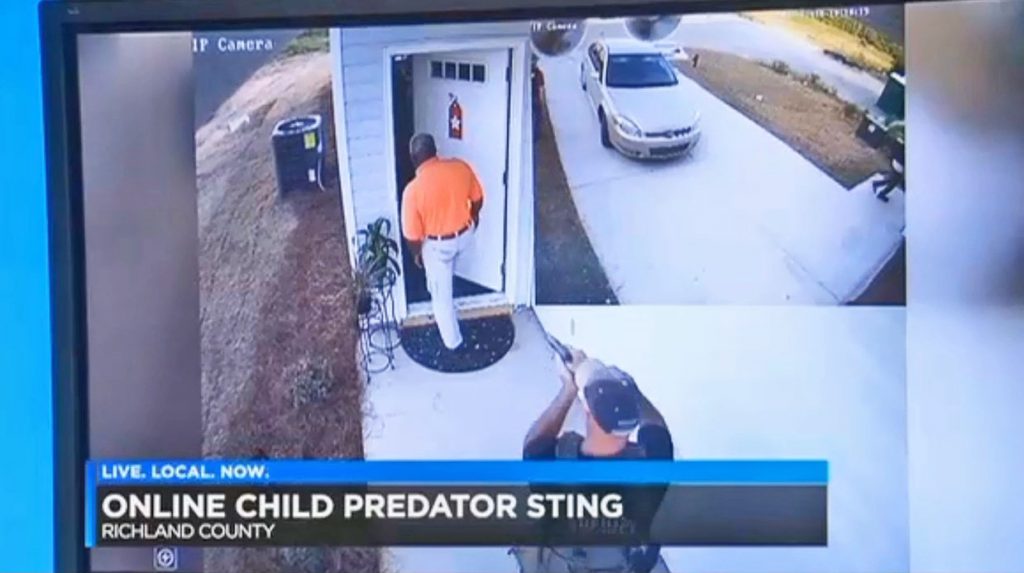
Police video shows arrest during online sexual predator sting. | WISTV.com
COLUMBIA – A Fairfield man was one of 38 arrested during what authorities are calling the most successful four-day online sexual predator sting in South Carolina.
Wendell Irby, 61, of Winnsboro was arrested July 11 in Columbia after he propositioned an undercover law enforcement officer for sex, according to a Richland County Sheriff’s deputy’s incident report. Irby paid $80 for sexual services and was arrested when he showed up at the agreed upon incident location, the report stated.
The Sheriff’s Department led the statewide sting that included the U.S. Attorney’s office, the U.S. Secret Service, the S.C. Attorney General’s office and other state and federal agencies.
The internet sting involved deputies posing as 13-year-old girls having conversations with adult men, Richland County Sheriff Leon Lott said.
“We made like we were that 13 or 14-year-old girl,” Lott said. ”Unfortunately for the men, they didn’t meet that young girl. They met us, law enforcement.
“All of us came together during this four-day period of time [June 10-14] with one mission, and that mission was to get these monsters off the streets,” Lott said.
The men were caught on police video as they drove up to a house, walked to the door and knocked. In most cases the men can be seen in the video being arrested as they start to enter the house where the sting was being conducted.
Lott said 12 men were arrested when they showed up at the location of the sting in anticipation of meeting the 13-year-old. An additional six people were arrested based on information gathered during the sting. He said 15 ‘johns’ were arrested along with five prostitutes.
The public index for Richland County listed June 11, 2018 arrest as Irby’s first, and he was released on a personal recognizance bond of $465. However, an article in The Voice dated Dec. 21, 2012, stated that Irby, the Fairfield County Tax Assessor, at the time, was arrested in a motel room on Two Notch Road on Dec. 13, 2012 for soliciting prostitution. The incident, the article states, was part of a two-day sting operation being conducted by the Richland County Sheriff’s Department. Irby was one of seven individuals lured to the motel with a bogus ad on the web site Backpage.com, a site used to advertise adult services, the article states.
A Fairfield County spokesperson said Irby was terminated by the County on Dec. 19 following the arrest and investigation.
Maria Yturia, a spokesperson for the Richland County Sheriff’s Department, said there is no record of the 2013 arrest.
WINNSBORO – As Providence Health prepares to open a new emergency room in Winnsboro, its parent company is being sold.
Tennessee-based LifePoint Health is being acquired by Apollo Global Management, a large venture capital firm, said Stephen Selzer, interim market chief executive officer of LifePoint.
Selzer made the announcement during the Fairfield Memorial Hospital’s monthly board of trustees meeting July 24. Apollo disclosed news of the sale in a July 23 news release.
“They [Apollo] are coming in basically to buy all of the stock of LifePoint and acquiring the company,” Selzer said.
With the move, LifePoint will essentially switch from a publicly held company to a private corporation.
According to the Apollo news release, LifePoint is merging with RCCH HealthCare Partners, which is owned by Apollo. Selzer said LifePoint would retain its name.
As of March 31, Apollo listed nearly $3.2 billion in total investments, according to a quarterly report filed May 8 with the Securities and Exchange Commission.
“We are excited that LifePoint and RCCH are combining to create a national leader in community-based healthcare, and are looking forward to the next chapter of the combined company’s growth,” Matthew Nord, a senior partner at Apollo, said in a news release.
Closer to home, hospital executives said the merger means only good things for Fairfield County health care.
“The company will not have to make decisions on a quarter to quarter basis,” Selzer said. “That’s a trap sometimes that you can only make decisions that make you look best in terms of your next quarterly earnings report. It’s a little bit difficult to think bigger long-term.”
Selzer added that Apollo has tremendous assets which he said would lead to greater investment in health care, though he didn’t say specifically how that would translate in Fairfield County.
“Once it [the sale] does close, we’ll be able to look at capitalizing on opportunities of having fair market here,” he said. “What I think is going to come out of this is something that’s much better for everybody.”
The one-level, 18,000-square-foot building, located off U.S. 321 bypass near across from Bi-Lo, will dedicate 12,000 square feet to emergency services and include 6,000 additional square feet of space for future expansion.
Lindy White, chief executive officer for Providence Northeast in Columbia, said the 6,000-square-foot expansion is part of Providence’s strategic plan for 2019.
Fairfield Memorial Hospital board members were pleased with the report.
“It is so apparent that you guys as of late are a hospital on the move and are trying to be on the forefront in the latest and greatest in the health care field,” said trustee Randy Bright.
“I’m encouraged to know that you are working on a strategic plan,” added trustee James McGraw. “You guys are working to get the word out. The test is going to be inform the people in the rural areas. It’s going to be a great benefit having you in this county.”
White said the facility’s clinical director position has been posted for a few weeks. She said Providence hopes to fill it in September.
“We’re charting down that path with hopes of having that person, the right person, who’s going to promote patient quality and experience,” White said. “We will begin interviewing once we find right candidate.
Other positions should be posted soon, if not already, White said, adding that job fairs will be held in late August.
Providence also recently toured the Fairfield rehab center, which is the subject of a pending real estate transaction between Fairfield County and Fairfield Memorial Hospital.
FMH has accepted Fairfield County’s offer of $1.3 million to buy three parcels, with an option to acquire the rehab center for an additional $285,000.
The county said it wants to see the rehab center remain where it is, but hopes a private buyer will operate it.
White said she was impressed with the energy at the rehab center, but also said Providence is still evaluating the feasibility of potentially running it.
“Hopefully with the size of our staff and the staff we have, we can operate the facility too at a little lower cost based on that scale,” White said. “We’re trying to incorporate those things and do that due diligence.
“The facility shows well and the team is very engaged,” White continued. “I was excited by the engagement. The team takes ownership, which is evident in the patient comments you see.”
WINNSBORO – Economic development discussions led a busy night at Monday’s Fairfield County Council meeting.
Council members voted to accept a $2 million grant for infrastructure improvements to the county’s megasite at I-77 and S.C. 34, as well as a series of ordinances that expand the boundaries of a regional industrial park.
Council members voted unanimously in favor of the measures.
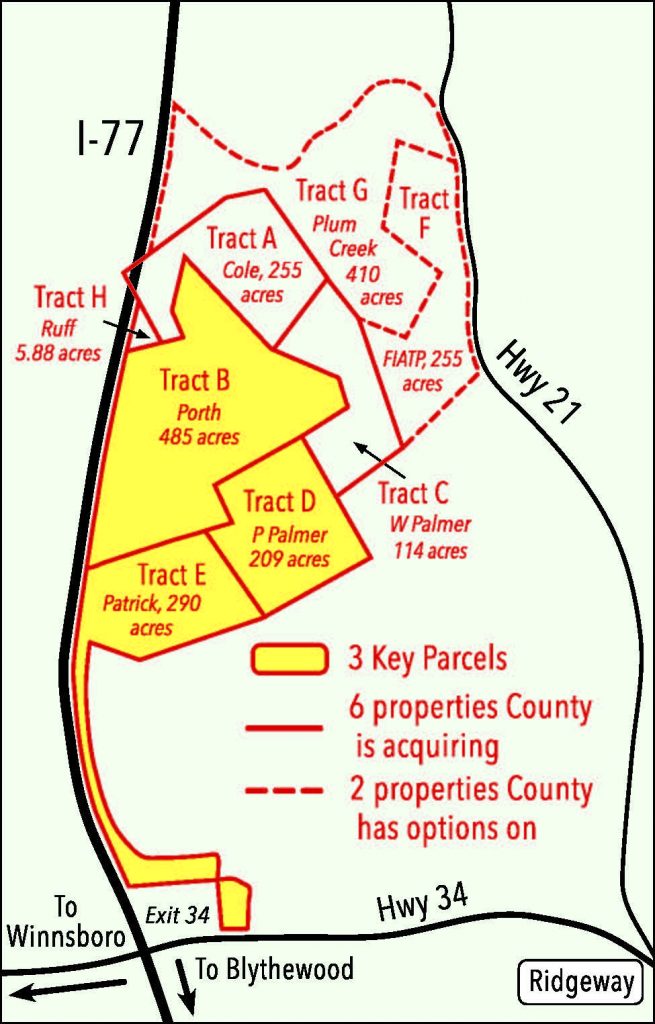
Awarded by the S.C. Department of Commerce, funds from the $2 million grant will subsidize the installation of infrastructure at the megasite, an approximately 1,000-acre site the county purchased with help from the state in 2016.
Megasite on Highway 34 and I-77
The $2 million grant is through the Department of Commerce’s LocateSC program. LocateSC is on online tool that showcases prospective industrial sites, according to the commerce department’s website.
County Administrator Jason Taylor said the county has been working closely with the Department of Commerce on the megasite. He noted the county pitched in with $3 million and the state spent about $6 million to buy the mega site property.
Getting infrastructure in place is critical to drawing large industries, such as auto manufacturers, Taylor said.
“Without infrastructure, we just have a piece of raw land,” Taylor said. “This is the first step to make this a true industrial site that would attract an industry to Fairfield County.”
Ridge Fletcher with the South Carolina I-77 Alliance com mended the county for its commitment to the megasite.
“That site, while owned by Fairfield County, has the potential to benefit the entire I-77 corridor when you land the right industry,” Fletcher said. “We’re really excited about that. We’re hopeful it’ll give a good portrait of the Fairfield County megasite. It is a regional asset.”
Fletcher added that the alliance soon plans to unveil a promotional video and website that targets Fairfield County, and the megasite, in particular.
“We’ve spent upwards of six figures on this on behalf of Fairfield County and the region,” he said.
Council Chairman Billy Smith asked about the potential impact of a possible trade war triggered by newly imposed tariffs might have on luring economic development prospects.
“Is there anything you’re doing to make sure the impact on companies along the [I-77] corridor is mitigated and backup plan on where to go to next?” Smith asked.
Fletcher responded by saying it wouldn’t have much impact on domestic companies and international companies looking to establish a footprint in South Carolina. The main impact, he said, is on international companies looking to export to the U.S.
“We don’t deal with the existing business side,” Fletcher said. “With us marketing toward the domestic side, it helps balance the fear sometimes. A lot of people are fearful about what the tariffs will do. In the international marketplace, fewer companies are thinking about coming to the U.S. to export.”
Ridgeway resident Randy Bright, a frequent speaker at council meetings, said during the public comments section that he’s also impressed by the county’s commitment of infrastructure improvements.
But he also noted the county needs a long-term plan to land permanent industry.
“Residential builders won’t come here without water and sewer,” Bright said. “With industry it’s the same thing.”
Another speaker, though, was critical of economic development efforts.
Jackie Workman of Blair said she’s concerned about high unemployment and job losses associated with reactor projects shutting down at the VC Summer Nuclear Plant.
Workman also questioned salaries paid in the county economic development office versus jobs created.
In related business, council members approved third reading of an ordinance that expands the I-77 Corridor Regional Industrial Park by 10.31 acres. The properties are located in the 1000 and 1100 blocks of Shop Road, according to council documents.
Council members also approved second reading of a second ordinance to add another 5.8 acres at 3800 West Ave. in Columbia, documents state.
The companion ordinances were similar to measures already passed by Richland County Council.
A third ordinance relating to the I-77 industrial corridor authorized the execution of the amended and restated master agreement, which involves the corridor.
COLUMBIA — Richland School District Two hosted a full-scale active shooter exercise at Jackson Creek Elementary on Tuesday, July 17, in partnership with the Richland County Sheriff’s Department, Richland County Emergency Services and the City of Columbia’s 911 Communications Center, Fire Department and Emergency Preparedness Department.
More than 100 teachers, school and district administrators played the roles of students and teachers. The exercise was an opportunity to test the district’s emergency response plan as and allow law enforcement and emergency services agencies to collaborate. The drill was the next step from the active shooter drills conducted in Richland Two schools at least two times a year. Some administrators relayed vital information to a 911 operator as a “shooter” roamed their halls firing a weapon. Others experienced what it was like to hear gunfire just outside a classroom, practice lockdown steps, how to remain calm under stress and utilize safety precautions under intense circumstances.
District Superintendent Dr. Baron Davis stressed that schools and districts must be proactive and prepared for any crisis. He noted that Richland Two is fortunate to have an emergency services manager with both law enforcement and emergency management experience to coordinate the event. He praised the collaboration between agencies and the district.
“It’s not enough to do a lockout or lockdown drill,” Dr. Davis said. “We needed this exercise to pinpoint the strengths and weaknesses of our plans and to prepare our staff to respond in the case of actual emergency when their adrenaline is pumping and emotions are high.”
The next day, the same “actors” convened to discuss the drill and work through the district’s family reunification plan.
In addition, the recently approved 10-year facilities plan calls for the rebuilding of several schools to improve building safety.
BLAIR – A Fairfield County man charged with killing his parents remains at a state mental hospital while a judge mulls his future.
Matthew Richard Mahorsky, who was found not guilty by reason of insanity in the 2013 shooting deaths, appeared in court June 28 for a hearing to decide whether to ease restrictions on his confinement.
Matthew Richard Mahorsky
Mahorsky, 45, of Blair, has been confined at the state mental hospital since the trial concluded in October 2017. He’s being housed in a high security wing, according to prosecutors.
The S.C. Department of Mental Health wants to remove some restrictions on Mahorsky’s confinement. Solicitors and the Fairfield County Sheriff’s Office, however, vehemently objected to the Department of Mental Health’s request.
“They were recommending less restrictive measures on him as far as their treatment,” said Riley Maxwell, an assistant solicitor with the 6th Judicial Circuit. “We objected to that, we want him to remain where he is. He is behind a locked fence door. He is secure now.”
Mahorsky is currently housed at the G. Werber Bryan Psychiatric Hospital in Columbia, according to the Department of Mental Health.
But agency representatives declined to comment about the June 28 hearing, citing patient privacy laws.
A spokesman said generally speaking, discharge hearings follow an intensive process that requires approval from a DMH review board, which then makes a recommendation to an agency deputy director, who must request a hearing if they believe one is warranted.
If so, it’s up to a judge to determine whether or not the patient should be released, said Mark Binkley with DMH.
“The Court may and usually does impose conditions when discharging an individual found [not guilty by reason of insanity],” Binkley said in an email. “The court’s jurisdiction over the defendant continues for as long as the defendant could have been incarcerated.”
The S.C. Department of Probation, Parole and Pardon Services normally monitors defendants found not guilty by reason of insanity cases.
In Mahorsky’s case, though, the DMH is the lead agency since no discharge hearings have been held, said Peter O’Boyle, spokesman for Probation, Parole and Pardon Services.
“We will not begin monitoring his case until and if he has a Discharge Hearing by [the Department of Mental Health],” O’Boyle said via email. “I believe this would be a determination that he is mentally stable enough to go back to society, but [the DMH] may have to define that for you.”
O’Boyle said that as of March 31, the agency was monitoring 126 people who had been found not guilty by reason of insanity.
Defendants found not guilty by reason of insanity are typically hospitalized at the G. Werber Bryan Psychiatric Hospital.
Patients with prior serious criminal charges are treated in a secure facility at the hospital called Forensic Services, separate from patients who are civilly committed through a Probate Court, Binkley said.
In April 2014, the state Supreme Court issued an order establishing interagency protocols spelling out the handling of defendants found not guilty by reason of insanity, or NGRI.
The high court ruled that persons falling under this designation are not considered prisoners because they’ve not been found guilty of a crime.
“Rather than incarceration, they are committed to care and treatment,” the order states. “The terms of that care and treatment are to be therapeutic and not punitive.”
The order further states that defendants considered not guilty by reason of insanity be committed to SCDMH custody for a period not to exceed 120 days “for the purposes of evaluation to determine the manner of future care and treatment of the Defendant.”
After 120 days, an initial evaluation report is submitted to a chief administrative judge, who then reviews the case, the order states.
Mahorsky was taken into custody shortly after the bodies of his parents, Ruth Marion Mahorsky, 70, and Richard F. Mahorsky, 71, were discovered outside their home off S.C. 215 in Blair.
His parents had been shot to death in the head. Matthew Mahorsky was charged with two counts of murder and possession of a firearm during the commission of a violent crime.
Mahorsky emerged from the home about 10 minutes after deputies arrived and surrendered.
Authorities were told Mahorsky had a history of mental illness following a separate incident in 2004, when he pointed a weapon at his father’s head. Mahorsky received a one-year suspended sentence with three years’ probation in the 2004 incident.
In May 2013, a judge granted a defense motion to conduct a psychological evaluation of Mahorsky, though his criminal case still went to trial, resulting in the not guilty by reason of insanity verdict four years later.
“Mr. Mahorsky has an extensive mental health history,” Mike Lifsey, the public defender representing Mahorsky, told Judge Brooks P. Goldsmith at the May 2013 hearing. “There were statements made at the time of his arrest that give issue there as to his competency to stand trial.”
Keith Loner of Blythewood and his daughter, Ashley York, take time out from shopping a previous Big Grab in downtown Blythewood to rest on a sale couch set along Highway 21. | Barbara Ball
BLYTHEWOOD – When two separate applicants appeared before the Town government’s Accommodation Tax (A-Tax) committee last week to vie for $10,000 the town council has allocated for someone to manage this year’s Big Grab yard sale, the tense, hour-long meeting erupted into a shouting match between the two applicants and their supporters until frustrated committee member Ken Shettles called a halt to the ruckus with a motion to recommend that council reduce its allocation for the event to $5,000 and also make the decision as to which group will be awarded the money.
History of the Big Grab, presented at A-Tax meeting
The two applicants, Mike Switzer, Executive Director of the Greater Blythewood Chamber of Commerce and Theresa McKendrick, owner of Postmarked 29016, a gift shop on McNulty Road, each made a case as to why he/she should be awarded the $10,000.
One committee member described the tug of war as a battle for the money.
“Oh, no,” Switzer said. “It’s not a battle at all. We’re totally fine if this group of volunteers would like to take it over.”
“So you’re withdrawing? Is that what you’re saying?” Shettles asked.
“No, that’s up to the committee,” Switzer said, but reminded the committee that this would be the chamber’s third year to oversee the Big Grab if awarded the money.
According to the chamber’s records, it made a profit from last year’s Big Grab, but how much is not clear. The Chamber did not turned over to the A-Tax committee a detailed listing of vendor fees and sponsorship sales for last year’s Big Grab, just a total number for each. One report showed a total Big Grab profit of $1,432.77, while other numbers indicated a possible profit of as much as $6,144.88.
The A-tax applications submitted by Switzer and McKendrick were similar.
Switzer’s application called for Big Grab to continue as a megasite in Doko Park as it did last year under the chamber’s direction. He listed project costs for the September, 2018 event at $10,000 but the revenue and expenses sections of the application each add up to $14,500, not $10,000.
Total revenue sources include $10,000 (A-tax funds), $3000 (sponsorships) and $1,500 (food and vendor sales). A proposed total of $14,500 in expenditures includes $2,240 (park rental for 28 hours), $2,560 (Sheriff’s Deputies), $800 (portable restrooms and trash bins) $500 (misc. supplies), $400 (ROTC), $5,000 (payments to chamber and visitor center staff) and $3,000 (advertising/marketing).
While McKendrick likened the Chamber’s Big Grab in the park to a flea market atmosphere, she, too, proposed locating vendors in the park but also in the town center.
McKendrick’s revenue sources mirrored Switzer’s at $14,500, but her proposed expenditures of $15,000 included up to $3,000 (park rental), up to $4,000 (municipal and county resources), up to $4,000 (administrative/event planner) and $4000 (marketing/promotions).
McKendrick justified payments of up to $4,000 for her staff as covering an event planner and “other support staff. If we have to hire day-of-event staff, then we would have that money available. We hope to hire a social media person and may have to pay to play if we hire social media influencers. We would pay them to post,” she explained.
While McKendrick said she was speaking on behalf of the owners of the town’s consignment stores, Bits and Pieces and Blythewood Consignment, neither of the stores’ owners were happy with Switzer’s or McKendrick’s proposals.
“Let’s start from the beginning,” Liz Humphries, owner of Blythewood Consignment said. “This is about a big yard sale, a glorified selling of junk. I don’t think we need to spend all this money. I think we all need to get together and volunteer for our community.”
Joe Benini, co-owner of Bits and Pieces agreed.
“The first Big Grab was awesome and easy,” Benini said. “Then the chamber took over and the next thing I know, it’s now a $15,000 budget, for what? My wife and I had to pay $50 just to be a sponsor. I paid for all my stuff, posters, etc. and posted the map that was in The Voice on our door,” he said.
“Let the local people make the money,” Humphries said. “The Big Grab started as a way to get people in to our brick and mortar [stores]. The park has nothing to do with my store except that it’s a huge competition. My sales dropped in half last year because everyone was at the park. I’m just here to protect my business,” Humphries said. “I’m all about people selling their junk. But I don’t think people should get paid to do this. If you love Blythewood, you need to volunteer and not expect to get paid.”
Susan DeMarco, who owns Sweet Pea’s Ice Cream Parlor, is a member of the Chamber and sits on the A-tax committee, agreed.
“We can tag each other on Facebook and say, ‘We’re all merchants in Blythewood and we’re all excited about the Big Grab.’ It’s going to happen no matter what we decide today. It’s on. It’s on. What you put in to it is what you get out of it,” DeMarco said. “If we spend a bunch of money, we aren’t changing the Big Grab. All we’re doing is having a power struggle between two parties.”
“We thought we were doing a good job,” Switzer said, defending the chamber’s management of the Big Grab. “We reached out to all the merchants. We thought we were working out solutions to try to help them because we’re all about businesses succeeding and thriving in this community. As for as being paid to run the event, we cover that cost with sponsorships and vendor fees.”
“But you’re still holding it in the park,” said Gail Banks, a vendor at Blythewood Consignment. ”You’re not getting it.”
“And last year the park looked like a disaster relief area,” committee member Kris White said.
“No matter what we do today, we aren’t going to come to a conclusion,” Shettles said. “Our committee only makes recommendations to council, and these arguments need to be in front of council. We could go on here for hours.”
With Shettle’s motion on the table, DeMarco offered a second motion recommending that no organizer would get any money for the event, but that the town would foot the bills for hard expenses like sheriff’s deputies, trash receptacles, portable restrooms, etc.
“People have to stop asking the merchants for sponsorships,” DeMarco said. “I don’t want to give A-tax money to someone to run the event and who then comes to ask me for more money to sponsor it.”
The committee voted 3-0, with DeMarco abstaining, to pass Shettle’s motion.
The Big Grab 50-mile community yard sale is set for Friday and Saturday, September 7 and 8, and will include Blythewood, Ridgeway and Winnsboro.
Applicants offered $5K; Mayor: Take it or leave it
BLYTHEWOOD – After the Accommodation Tax (A-Tax) committee passed last week on choosing one of two applicants (the Greater Blythewood Chamber and shop owner Theresa McKendrick) to receive $10,000 in A-Tax funds to run the Blythewood portion of this year’s Big Grab event, council was left to make the choice with the only recommendation from the A-Tax committee being that it limit funding for the event to $5,000.
Rich McKendrick, who addressed council Monday night on behalf of his wife, Theresa, criticized merchants who, he said, supported her to apply for the A-tax funds to spearhead the Big Grab, but on the day of the A-tax committee meeting did not support her application. Those business connections, however, said that when they found out McKendrick’s application included $4,000 in staff pay, the assignment of vendors to the park and the sale of sponsorships – expenses they said they opposed from the get go – they could not support it.
Those merchants said they were looking for an alternative to the chamber’s Big Grab megasite of vendors in the park last year that took much of their Big Grab business out of the town where it was originally designed to go. They also expressed their opposition to having to pay for sponsorships and for the A-tax money going to pay for thousands of dollars for staff pay.
Kitty Kelly, office manager for the chamber, told council that the chamber did not receive any of its staff pay from A-Tax funds.
“I don’t know where that’s coming from,” Kelly said.
“Kitty, on the application you filled out for A-Tax funds, you designated ‘Blythewood chamber/visitor center staff, $5,000.’ That’s what your organization asked the A-Tax committee for to pay the chamber’s staff…$5,000 to administer the Big Grab,” Ross said, holding up the chamber’s application.
“It’s $5,000 just to rent the park and pay Richland County (sheriff’s deputies),” Kelly said.
As Switzer approached the podium, Ross told Kelly, “I think you need to let Mr. Switzer explain this.”
“Yes, there are staff costs involved. Sponsorship and vendor fees have covered our staff costs,” Switzer said.
However, the chamber’s application for A-Tax funds for this year and past years clearly listed staff salaries as coming out of A-Tax funds. Further, while the chamber’s application listed its Big Grab budget at $10,000, the budget was actually $14,500. McKendrick’s budget was $15,000.
Ross said council wanted to cover all the essential expenses for putting on the Big Grab – sheriff’s deputies, port-a-johns, marketing, etc. – with the caveat that council would receive receipts for those expenses. He said he felt the $5,000 would cover those expenses.
“We’re not fools,” Ross said. “If we don’t give a dime to this, the Big Grab will happen and the vendors will set up in town and the businesses will do well.” He also suggested that the town could take over running the event but said he didn’t want to take an opportunity away from organizations that want to do it the right way.
“We don’t want to bring people into our park to take them away from the businesses,” Ross said.
Councilman Brian Franklin, however, ignoring merchant’s claims that the park vendors drastically reduce their business on Big Grab weekend, suggested still having as many as 50 vendors in the park.
Mayor J. Michael Ross first offered the $5,000 for management of the event to McKendrick who declined, saying she would not run it without staff pay ($4,000) and allocations for other things such as rental for the park.
Ross then offered the $5,000 to the chamber. Switzer said he was not turning the offer down but said the application was for $10,000 and that’s what he needed.
The mayor countered that the option was take it or leave it. Switzer left the room and did not return.
Council voted 4-1 to fund the chamber with the $5,000 if the chamber wanted to accept that amount and limit park vendors to 50. Councilman Eddie Baughman voted against. Otherwise, Ross said, the town would take over the Big Grab.
The chamber was to notify town hall of its decision by 5 p.m., Wednesday, Aug. 25. That decision had not been made before The Voice went to press on Wednesday.