Category: News

  • Update: Winnsboro man kills self after SLED arrives

    WINNSBORO – As the Fairfield County Sheriff’s Department assisted the South Carolina Law Enforcement Division (SLED) with serving fraud warrants on a Fairfield County man, deputies say the man put a gun in his mouth and pulled the trigger.

    John Wayne McCord, 64, who lived near the intersection of Highway 321 and Broom Mill Road in Fairfield County, died from a self-inflicted gunshot at his home shortly after 1 p.m., Saturday, March 22, Fairfield County officials report.

    As SLED officers arrived at two homes behind a brick wall in the Candlewood section of Fairfield County, they stated that they saw a man fitting McCord’s description back a white Ford pickup truck from one of the houses to the other, then go inside.

    “As we pulled into the yard and exited our vehicles, a female came out of the house, stating that, ‘John is inside,’” a Sheriff’s investigator reported.

    When a SLED agent called for the man to come outside, the report states, the man walked down a hallway in the house to another room, slamming the door shut. Officers report they broke through the door and found McCord sitting on a sofa with a shotgun under his chin.

    A short time after a SLED agent reportedly tried to convince McCord that the warrants “weren’t that bad,” McCord pulled the trigger, shooting himself in the head, the Sheriff’s report stated.

    After EMS arrived, law enforcement officials walked to the other house and spoke with McCord’s wife and notified the coroner.


    Fairfield County man dies from self-inflicted gunshot wound

    WINNSBORO – Shortly after 1 p.m. today, a black male reportedly died from a self-inflicted gunshot at a home in the Candlewood area of the county. The incident occurred near the intersection of  Hwy 321 and Broom Hill Road when SLED investigators came to the man’s home to question him, according to Fairfield County Sheriff Will Montgomery whose office is assisting SLED in the investigation. The man died at the scene.

    More information will be posted when it is available.

    03/22/2019 at 8:06 pm

  • Can Winnsboro’s 10M gallons of water per day keep Blythewood contract?

    BLYTHEWOOD – Mayor J. Michael Ross took the opportunity at council’s annual retreat on Saturday to call for public comment on the town’s 20-year water agreement with the Town of Winnsboro. The contract ends in July of 2020.

    “I would recommend that our next agreement not last for 20 years,” Ross said before asking town attorney Jim Meggs to weigh in on the issue.

    “Several years ago, council gave Winnsboro notice of termination [of the water agreement],” Meggs said. “Something different is going to have to be developed between now and July of 2020. A new plan for how we relate to Winnsboro or Columbia with regard to potable water supply and storage  is important and emerging – like tomorrow. It’s an issue for the town and council.”

    Blythewood council signed that notice of termination in April of 2014, effective July of 2016, but the agreement never came to fruition since it doesn’t end until 2020.

    The issue in 2014 was two-fold. A severe state-wide drought two years earlier had drained Winnsboro’s reservoirs until there was not enough water to meet Blythewood’s needs. As a result, Winnsboro Town Manager Don Wood signed an agreement with the City of Columbia to temporarily supplement the Blythewood area’s water supply.

    In addition, Ross said at that time that Blythewood had gotten wind that a private company had offered to purchase the Blythewood arm of the water system from Winnsboro. While Winnsboro council members said they never entertained such an offer, it set off a wave of panic within the Blythewood Town Council, prompting Blythewood to light a fuse that has yet to be extinguished.

    The resolution came as a shock to Winnsboro. Council members said it was passed without any warning. Ross told The Voice shortly afterwards that Blythewood feared that they could potentially be at the mercy of private industry and its water rates. Termination of the agreement, however, automatically triggers the sale of the system at fair market value, and it was at Blythewood’s behest that Columbia made a $1.4 million offer on Nov. 19, 2014 to purchase Blythewood’s system from Winnsboro.

    But the water contract also mandates arbitration in the event of a dispute between the two parties, and Winnsboro hired a mediator to make their case. Blythewood, however, did not, and the deadline to do so passed.

    Winnsboro, meanwhile, initiated steps in Sept., 2014 to construct a $12 – $13 million pipeline that would allow the town to draw as much as 10 million gallons of water per day from the Broad River.  Winnsboro Mayor Roger Gaddy said the Broad River project would make all of Blythewood’s concerns disappear, rendering Blythewood’s move to wriggle out of the agreement ironic.

    The water project has recently been completed and, according to Winnsboro water officials, is in the final phases of testing and certification.

    “The pumps will supply 8 million gallons per day,” Gas, Water and Sewer Director Trip Peake said, “but the project has actually been permitted to provide 10 million gallons per day.” Much of that water is earmarked for the county’s future industrial development.

    “Right now reservoirs are full and over flowing. And if the reservoirs drop in the summer, if there’s no rain, we will still have plenty of water” Peake said.

    Now, however, both Ross and Meggs cite other problems with Winnsboro water.

    “Since I’ve been here, a number of folks have come to complain to council about water service, rates, water quality, odor, you name it,” Meggs said. “Most of these complaints are related to the Winnsboro part of the system. Some large portions of the town are serviced by City of Columbia. “

    Lenore Zedwoski told council there is also a problem with responsiveness.

    “I’ve called Winnsboro water several times and received no response ,” Zedwoski said.

    “We will start a discussion about where we should go from a legal perspective with Winnsboro and Columbia,” Meggs said. “Our most immediate concern is with Winnsboro and how we will proceed.”

    “We will have an agreement eventually, or one that we propose and there’ll be give and take,” Ross said. “We think the agreement is written a little heavy for the Town of Winnsboro. We are a big customer, maybe bigger than the Town of Winnsboro,” he said.

    Until 2000, Blythewood had no water service. It was that year that the Ballow administration sought to bring economic development to the town in the form of a hotel. To do that, the town needed water. Lots of water. Ballew turned to Columbia but was refused.

    Winnsboro was the only water supplier who would agree to extend service to Blythewood. With cooperation from Fairfield Electric Cooperative, Blythewood got water that was followed by the eventual construction of three hotels that currently contribute close to $400,000 in hospitality tax revenue annually to the town’s coffers.

    To contact the Town of Blythewood, call 754-0501. To contact the Town of Winnsboro, call 815-2948 or go to townofwinnsboro.com, click on ‘contact’ and then on ‘contact us.’ Fill out the email form with any questions and hit send.

  • Coleman pleads; gets 20 years in prison for fire deaths of her children, husband

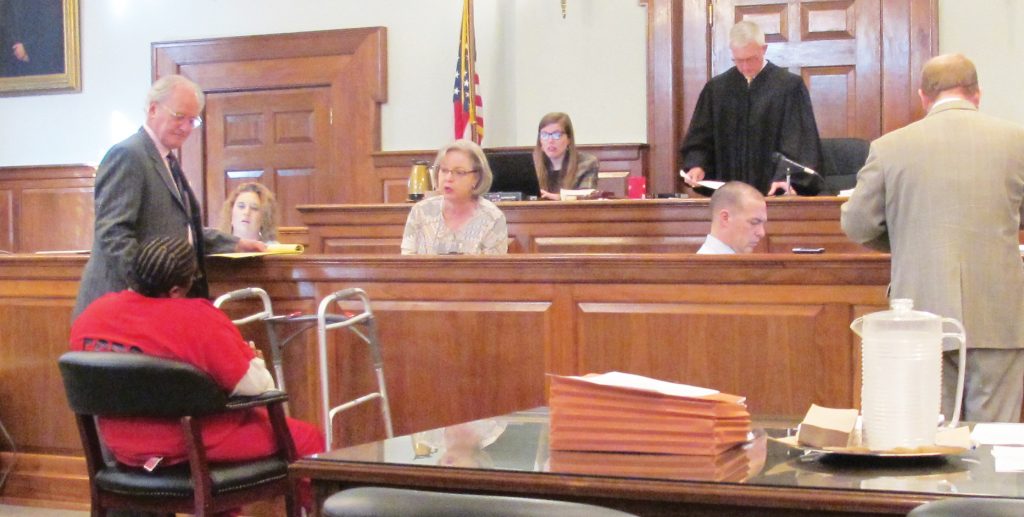
    Coleman is sworn in before Circuit Court Judge R. Keith Kelly. | Barbara Ball

    WINNSBORO – Sharon Coleman, 35, was sentenced to 20 years in prison Monday after pleading guilty in the Sixth Judicial Circuit Court in Winnsboro, to three counts of involuntary manslaughter and two counts of unlawful neglect of a child in the deaths of her two children and her husband last year.

    Circuit Judge R. Keith Kelly presided over the non-jury proceedings. Coleman had initially been charged with three counts of murder, first degree arson and two counts of unlawful actions toward a child. The arson charge was dropped and the murder charges were reduced to involuntary manslaughter in response to her plea.

    Coleman was arrested May 7, 2017 after she was accused of setting an early-morning house fire at 120 Robinson Avenue in Winnsboro that claimed the lives of her husband and her two children.

    According to Fairfield County Coroner Chris Hill, the bodies of Justin Wilson, 29, Kenya Coleman, 8, and Deshawn Wilson, 6, were recovered by firefighters inside the residence. An autopsy found the cause of deaths to be carbon monoxide poisoning and thermal burns.

    Assistant Sixth Circuit Solicitor Riley Maxwell told the Court that Coleman killed her husband and children by setting the residence on fire and failing to extinguish the fire while the victims slept inside the home. He said Coleman admitted leaving the home in the early morning hours of May 7 to go for a short walk, leaving her family asleep in the house, and when she returned the house was on fire.

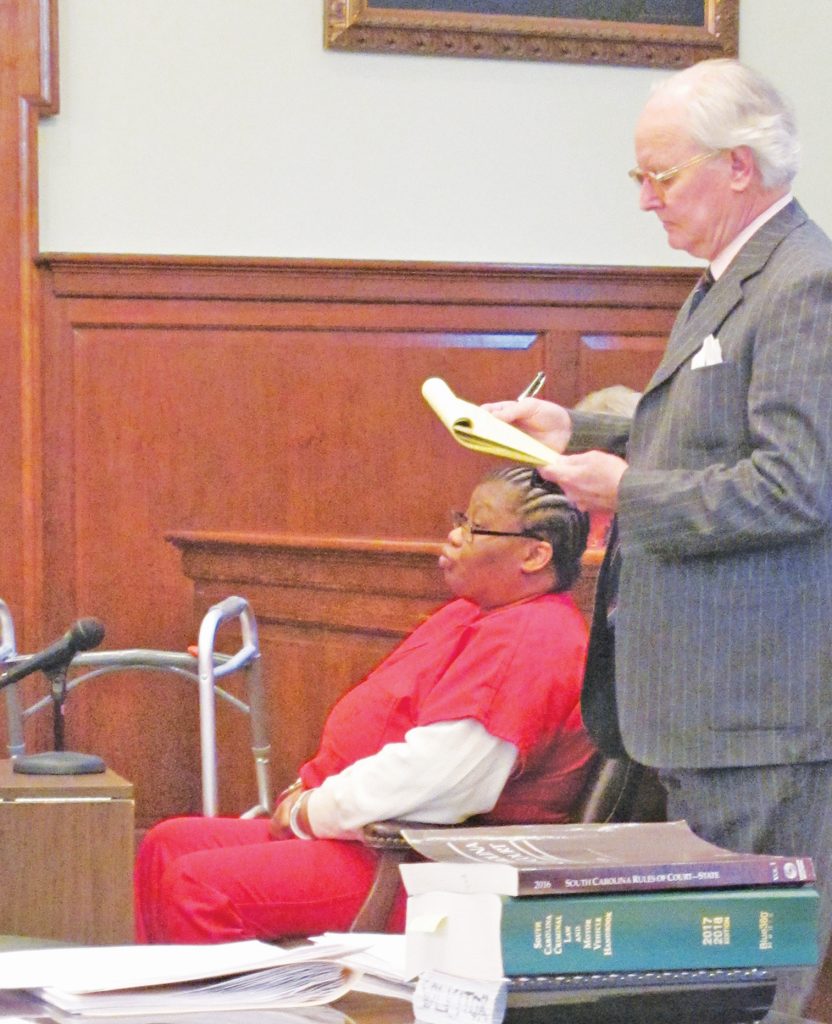
    Coleman and public defender Robert Fitzsimmons.

    Maxwell said Coleman’s version of entering the house through the burning kitchen and walking down a hall leading to the victim’s bedrooms before exiting the home and going to a neighbor’s home to call 911 was inconsistent with arson investigators’ findings.

    “The arson investigators were suspicious of Ms. Coleman’s story,” Maxwell said. “It was inconsistent with their findings. The kitchen would have been too hot to enter and her clothing did not appear to have smoke or ash on them,” he said.

    Maxwell said Coleman offered various reasons for the cause of the fire – faulty electrical wiring and that, as she left the home to go on her walk, she noticed a flame in a can in the kitchen that the family used to extinguish cigarettes, but she thought the fire would go out.

    Maxwell said investigators found no fault with the wiring, and could not determine the exact cause of the fire, although they did determine that the fire started in the kitchen.

    “No one knows the cause of the fire,” public defender Robert Fitzsimmons told the Court in Coleman’s defense. “There’s a lot of talk and investigation, but no one knows the cause of the fire. That’s why they dropped the arson charge.”

    Fitzsimmons said that while Coleman accepts responsibility for the deaths, he placed the blame for the three deaths on Justin Wilson.

    “Mrs. Coleman left her two children in the care of a responsible adult,” Fitzsimmons said. “She is here to take responsibility for her misjudgment that it was safe to leave her children with [Wilson.] All that talk about where the flame was and how hot it was, all we know is she left the house with her two children in the care of their father and they died.”

    In suggesting concurrent sentencing for all charges against Coleman or approximately five to seven years, Fitzsimmons said society has its own punishment in addition to what Coleman has already been through.

    “Her children are gone. She’ll suffer for the rest of her life,” Fitzsimmons said. “It’s very difficult to imagine the pain a mother goes through, the grief process. It’s difficult to get a picture of Sharon Coleman as she sits here. She’s taking anti-depressants. She’s lost two toes and is on pain meds. All this flattens her personality. And today she’s extremely nervous and hasn’t slept. She is always bereaved. Her two children and her husband are dead. No matter what else happens, she will always be a mother who lost two children before she was 35,” Fitzsimmons said. “She takes responsibility for the deaths of her children. It’s in her heart, her every waking moment.”

    Coleman, who Fitzsimmons said had suffered a broken foot, entered the Courtroom using a walker and sat throughout the proceedings.

    “I’m so sorry,” she told the judge in a soft voice that was barely audible, “I know I can’t bring them back, but…” Her voice trailed off, becoming completely inaudible before she placed her hand over her face and cried quietly.

    Justin Wilson’s brother, who was the only witness called, said he was visiting the home until late on the night of the fire.

    “I don’t know why she did it. There was no pot on the stove when I left, no wood in the stove, nothing was going on,” Wilson said during his length testimony. “I just wonder what was going on”.

    Each of the two unlawful neglect of a child indictments carry 10-year sentences and will be served consecutively. The three involuntary manslaughter charges each carry five year sentences and will be served concurrently with the two unlawful neglect charges for a total of 20 years. Coleman will receive 679 days credit for time she has already been incarcerated.

  • JWC cited over coliform testing

    JENKINSVILLE – The Jenkinsville Water Company was hit last year with a new drinking water violation, though it and other past violations have been resolved, according to the S.C. Department of Health and Environmental Control.

    The latest DHEC violation notice was issued Aug. 24, 2017. It stated that the JWC was in violation of the State Primary Drinking Water Regulation.

    Specifically, the water company failed “to collect all triggered source water samples and collecting source water samples during treatment,” according to documents The Voice obtained through the state’s Freedom of Information Act.

    The violation occurred during the August 2017 monitoring period, though DHEC said last week that the violation is no longer active.

    “DHEC has no current violations on record or pending actions against Jenkinsville Water Company,” DHEC spokesman Tommy Crosby said via email.

    Coliform test prompts violation

    The DHEC water violation website at https://bit.ly/2LjbJGk lists E. coli as the analyte, or substance, that it tested in August 2017.

    DHEC’s violation letter states the JWC was in violation of a regulation that requires public water systems to provide notice of follow-up testing after positive total coliform samples are found.

    JWC is required to collect “at least one ground water source sample from each ground water source in use at the time the total coliform-positive sample was collected,” the letter states.

    Coliform-positive tests do not necessarily mean E. coli is present. Positive readings simply mean coliforms are present, according to the Environmental Protection Agency.

    “Generally coliforms are bacteria that are not harmful and are naturally present in the environment,” the EPA website states. “They are used as an indicator that other, potentially harmful, fecal bacteria (indicated by the E. coli species) could be present.”

    The violation letter states the JWC must collect ground water samples before any treatment of the groundwater source. JWC is also required to notify customers of the violation within one year the letter.

    The purpose of coliform testing is to determine whether additional testing for E. coli and other harmful bacteria is necessary, the EPA website states.

    Some strains of E. coli can sicken humans. Symptoms include diarrhea, urinary tract infections, respiratory illnesses, pneumonia and other conditions, according to the Centers for Disease Control and Prevention.

    Although DHEC says the JWC is no longer in violation of water rules, the DHEC website lists two enforcement actions dated Nov. 2, 2017.

    One action is labeled “ST Violation/Reminder Notice.” The other states “ST Public Notif [sic] Requested.”

    DHEC had not provided copies of the enforcement actions to The Voice as of press time.

    Other violations

    This isn’t the first time the JWC has been in hot water with DHEC.

    In June 2016, DHEC notified the water company that the state agency found several deficiencies during a May 2016 sanitary survey of the Jenkinsville water system.

    “The intent of the survey is to evaluate a public water system’s ability to provide a continuous supply of safe drinking water to its customers following the guidelines established by the State Primary Drinking Water Regulations,” the letter states.

    The 2016 survey listed 12 items of deficiency, resulting in a “needs improvement” rating from DHEC, though the rating was upgraded to “satisfactory” a month later, documents show.

    Among the deficiencies listed in the survey were reports of cracks in Wells 11 and 13 and labeling issues of chlorine vats. Some backflow tests also had not been submitted and were missing.

    The Clowney Road tank was “in need of an inspection ASAP and repair,” documents state.

    “The paint is peeling and rusting at the bottom of the tank support along with rust and peeling paint on the legs and support rods,” the survey states. “If it is not addressed before the next survey, this item will receive an unsatisfactory.”

    Radioactivity case closed

    Documents The Voice obtained through FOIA state the water company also faced sanctions from DHEC over radioactivity levels in the public water system.

    In 2014, DHEC stated that Jenkinsville water levels exceeded maximum contaminant levels for Radium 226 and Radium 228.

    Radium 226 and Radium 228 are isotopes of radium, a naturally occurring radioactive element generally present in low levels in all soil, water and rocks, according to the U.S. Geological Survey.

    Federal drinking standards require radioactivity levels below 5 picocuries per liter. However, tests yielded readings ranging between 5.3 and 8.4 pCi/L, DHEC records state.

    Alpha particles were also found to be in excess of the federal standard of 15 pCi/L, with readings ranging from 18.1 to 24.7 pCi/L, documents further state.

    DHEC ordered the JWC to form a corrective action plan addressing the radioactivity levels. The water company faced a possible $8,000 fine for non-compliance.

    In March 2018, DHEC notified JWC that it had met the requirements of the action plan. DHEC also stated that the JWC complied with radioactivity requirements for a 12-month period.

    DHEC, though, noted that it would continue monitoring radioactivity levels on a quarterly basis.

    “Any future violations of the [maximum contaminant level] for combined radium 226/228 or gross alpha particle activity will result in further enforcement action which may include the assessment of civil penalties,” the March 16 letter states.
  • Chamber finances still in question

    Parler: There Was No Audit, Just a Review of Financial Statements

    BLYTHEWOOD – Former Blythewood Town Councilman Tom Utroska picked a scab at the Council retreat on Saturday when he suggested Council has never resolved its questionable financial relationship with the Greater Blythewood Chamber of Commerce.

    “I continue to harp on the Town’s fiduciary responsibility regarding the GBAC,” Utroska said. “My concern about the Octoberfest is that you are giving them [Chamber] $14,000, and they are going to make a $21,000 profit…16-18 months ago we required that the Chamber give [council] an accountable audit of their finances before you would give them any more money. In fact,” Utroska said, “you stopped giving them money for the Visitor Center. According to a former Town Council member, CPA Bob Massa, the Chamber gave you a bunch of numbers but didn’t give you anything to prove those numbers. Before the Town gives the Chamber more money, I’d like to see us have an audit [of the chamber]. I’d like to understand that what they say they’re spending is what’s actually happening.”

    For openers, Utroska criticized council for allowing the chamber to spend event advertising money provided by council on two of three newspapers, leaving out The Voice which he said is the one of the three that is a town business.

    “Don’t leave out someone that you’re supposed to be representing – a town business,” Utroska added. “The Council has done a good job with the Town’s finances. But I am concerned that you are not fulfilling your fiduciary responsibility [regarding the chamber.] I think you’re setting yourself up to be criticized more in the future.”

    Councilman Bryan Franklin defended the chamber saying it is having its books audited by the same auditor the town uses – Love Bailey.

    “As soon as that audit is completed, they are going to present it to the board based on the conversation we had before when we found out there were some issues with their internal auditing,” Franklin told Council. “So they have agreed to do an audit with our town auditor.”

    “Is there an actual audit that’s been done? That’s been completed on [the chamber’s] last year’s finances?” Mayor J. Michael Ross asked the Town’s Economic Development consultant Ed Parler, who also serves on the Chamber board as a liaison with town council.

    “As far as an audit that goes into depth – a management audit – no. It’s just purely on financial statements. We’ve been told that an organization the size of the Chamber really doesn’t need a certified financial audit, that their statements are accurate and are being independently reviewed by [Love Bailey].”

    Ross asked chamber board secretary Mark Cruise, seated in the audience, for a copy of that review.

    “We submitted a copy of that review with a final report on the A-tax Visitor Center funding at the year end and the numbers matched up,” Cruise said. “We made sure that Mr. Bailey’s review matched up independently with the chamber’s financials and they did.”

    Cruise went on to say that the reports are on the chamber’s website. A review of those reports by The Voice, however, revealed that the year-end report submitted to council in June, 2018 for the Visitor Center (and which is not posted on the website) does not match the financial review on the website produced by Love Bailey.

    According to a 2018 ruling by the S.C. Supreme Court, Chambers of Commerce in South Carolina are now only required to disclose financial information to the funding government which, in this case, would be the Blythewood Town Council.

    Both Parler and Town Hall have been unable to provide The Voice with the Chamber’s monthly financial statements since June, 2018, but Ross said he would be happy to meet with The Voice, Cruise and Parler to discuss the Chamber’s financials.

    In response to Utroska’s criticism of council voting unanimously to award the Chamber $14,000 for a fundraiser that is expected to raise $21,000 to benefit the Chamber, Ross explained council’s actions as, perhaps, a rushed decision.

    “We got that 48 hours before our meeting,” Ross said. “We sat up here looking at that for the first time and they needed approval for some of the vendors, performers, etc. and I think we rushed through that. But it’s [the event] not until 2019-20 budget approval, so we may have to revisit that.

    “For an organization to have a $21,000 profit, that’s great, but maybe they don’t need the money,” Ross said.

    “I wish the Chamber had gotten inside the true town center district, the businesses in town that should be the real nucleus of support,” Ross said. “I see new members being the United Way of the Midlands. But I still charge the Chamber to somehow be a voice for businesses in Blythewood…to reach out to the mom and pop businesses that really do make up Blythewood.”

  • Board spat erupts over notification

    WINNSBORO — A dispute over which members of the school board were notified ahead of the surprise presentation of a major teaching award caused tensions to flare at Monday night’s Fairfield County board of trustees meeting.

    Board member Paula Hartman voiced her displeasure that she was not informed in time to attend the surprise announcement – that Fairfield Central High School teacher Chanda Jefferson had been named a state teacher of the year finalist.

    State Superintendent Molly Spearman personally delivered the news to Jefferson during a surprise visit earlier last week.

    A majority of Fairfield school board members were also on hand, posing for photos. Hartman, however, was not there.

    “How was the board notified that Molly Spearman was coming out?” Hartman asked.

    District Superintendent Dr. J.R. Green said he sent a text and an email about a “special announcement” at the school.

    “She [Spearman] wanted it to be a total surprise so nobody knew about it,” Green said.

    “I’ve looked through my emails and I have not seen anything,” Hartman replied. “Can you send a copy that I received it? I’d like to have a copy. To my knowledge, I did not get notified.”

    The S.C. Department of Education routinely distributes news releases in advance of major announcements, such as teacher of the year finalists, though they’re usually embargoed until the event.

    Agency spokesman Ryan Brown said there’s no requirement that school board members receive advance notice about superintendent visits.

    “They are surprise visits and we only notify the district superintendent (for planning purposes) and media,” Brown said via email. “The district superintendent works with the principal to set up the surprise announcement at the school.”

    Green praised Jefferson for her distinction.

    “Ms. Jefferson is an example of the excellent education you can expect here in Fairfield County.”

    In other business, the board received a preliminary report about the status of the current budget.

    Documents included in the agenda packet list a current revenue shortfall of about $3.47 million, largely due to nearly $5.16 million in state funds that haven’t made it into district coffers yet.

    Total expenditures are down about $17.76 million, leaving a net windfall of $14.28 million, documents show.

    Board chairman William Frick cautioned that the budget report is a snapshot of district financials as they stand right now.

    Frick noted that figures will likely change as more revenues and expenditures are accounted for, though he said the district still anticipates a windfall from which teacher sign on bonuses, approved earlier this year, would come from.

    Earlier in the meeting, Frick said the district benefits greatly from the V.C. Summer Nuclear Plant, which provides the district with needed revenue.

    “I’m not sure folks realize how lucky we are in Fairfield County,” Frick said. “We’re not a wealthy community. If not for that facility [V.C. Summer], we would not be able to do it.”

  • Taxes, fees get second vote

    Tommy Morgan

    WINNSBORO – Fairfield County is one meeting away from enacting a pair of tourism-related taxes aimed at growing tourism and combating blight.

    Council members voted unanimously Monday night on two ordinances – a 3 percent tourism development fee and a 2 percent hospitality tax.

    The council also passed second reading of an ordinance establishing a business registration fee.

    Several residents spoke about the new taxes and fees during public participation and public hearings.

    Brad Hoffman of Blair raised concerns that the ordinances lacked specificity.

    Carol Turner of Mitford also thought the tax ordinances were ambiguous.

    “We need details on this. I too am a farmer, trying to make ends meet. We’d like to know just a little bit more about it,” Turner said. “These are issues that are a little bit cloudy. I know the idea is to get folks from outside of our county, but how will this affect people who already live in our county.”

    Randy Bright of Ridgeway, a supporter of the taxes, said they are needed to rejuvenate Fairfield County and make it more attractive.

    “The diagnosis is in. Fairfield County has been caught up in an epidemic,” Bright said. “Our property taxes have plummeted. County services are strained. Our attractiveness for new business has declined.”

    County Council retained the title “tourism development fee” in the 3 percent tax on accommodations, despite confusion over similar fees elsewhere in South Carolina.

    Tommy Morgan, county attorney, said several communities including Greenville, Lexington and Charleston counties, refer to their room tax as a tourism fee, even though it’s based on the accommodations tax law.

    Fairfield County would be no different, he said.

    “It doesn’t mean there’s anything wrong with that,” Morgan said. “That’s just a different way to provide a name for it. It’s trying to develop tourism by that fee.”

    In 2009, the City of Myrtle Beach adopted a tourism development fee.

    There, an extra 1 percent of tax was added on top of local accommodations taxes. It required a referendum to pass and included a property tax credit for locals as prescribed in state law.

    Morgan said the Myrtle Beach fee is unique, applying only to the Grand Strand tourism hub. He said state law was written specifically for Myrtle Beach.

    “It requires $14 million in sales taxes [and doesn’t] apply anywhere in the state,” Morgan said. “That’s not an issue that’s before the council today.”

    Fairfield County only collected about $37,000 to $38,000 in sales taxes last year, Morgan added.

    Some residents also questioned the hospitality tax, which adds 2 cents of tax to prepared foods.

    “We need to clarify what we have to charge and why our rates are going up,” Hoffman said.

    “I know the idea is to get people traveling thru our county to help fund some of the expenses of our county,” Turner added. “But this is focused on the unincorporated areas. I live at Exit 48, and there are a lot of locals who eat there.”

    Third reading could take place as soon as the council’s next meeting, tentatively scheduled for March 25.

    The third fee – a business registration fee – imposes a nominal $15 fee per business.

    Council members have said the reason for the fee is designed to help get an accurate count on existing businesses while also cracking down on businesses operating illegally.

  • McNulty’s Taproom hosts Wade Hayes, animal shelter fundraiser on Friday

    BLYTHEWOOD – When American country music artist Wade Hayes comes to McNulty’s Taproom in Blythewood Friday night, he’ll be making two appearances. One, his big show, will open at 10 p.m. inside the restaurant. The other will be from 7 – 8 p.m. out front in the WCOS tent, where Hayes will be partnering with the Fairfield County Animal Shelter to bring awareness to the needs of shelter animals and visiting with his animal-loving fans.

    “Wade’s newest release, ‘Who Saved Who?’ is about his own rescued dog,” McNulty’s Taproom owner Larry ‘Trippy’ Phillips explained. “He wants fans to bring donations of dog food, dog treats, dog toys, leashes/ collars, blankets, dog beds etc. to help with the needs of the Fairfield County Animal Shelter, and they will receive a free autograph and photo of Wade. They can even have a photo taken with him,” Phillips said.  “And there will be puppies and other pets on site for adoption,” Phillips said.  “It’s going to be lots of fun.”

    To hear Hayes perform his new release as well as his hits from the 90’s, purchase a ticket for $35, reserve a table (hightops, $50 and lowtops, $100) and stay for the 10 p.m. performance, where he will be singing fan favorites such as On A Good Night, Old Enough to Know Better, What I meant to Say and I’m Still Dancing with You.

    The WCOS tent will be out front from 6 – 8 p.m. Hayes will join WCOS from 7 – 8 p.m. The Yarborough Brothers will open the evenings’ entertainment at 9 p.m.

    “It’s filling up fast,” Phillips said. “It’s going to be a big night here in Blythewood – great music and great food. It’s a show you don’t want to miss.”

    For information or to purchase tickets, call 803-834-4037. McNulty’s Taproom is located at 420 McNulty St., in Blythewood.

  • Authority maps megasite infrastructure

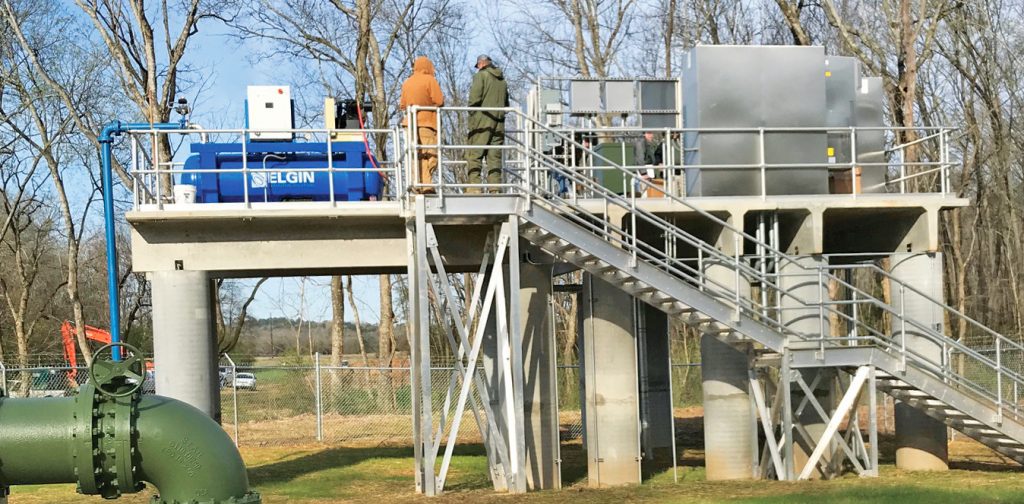
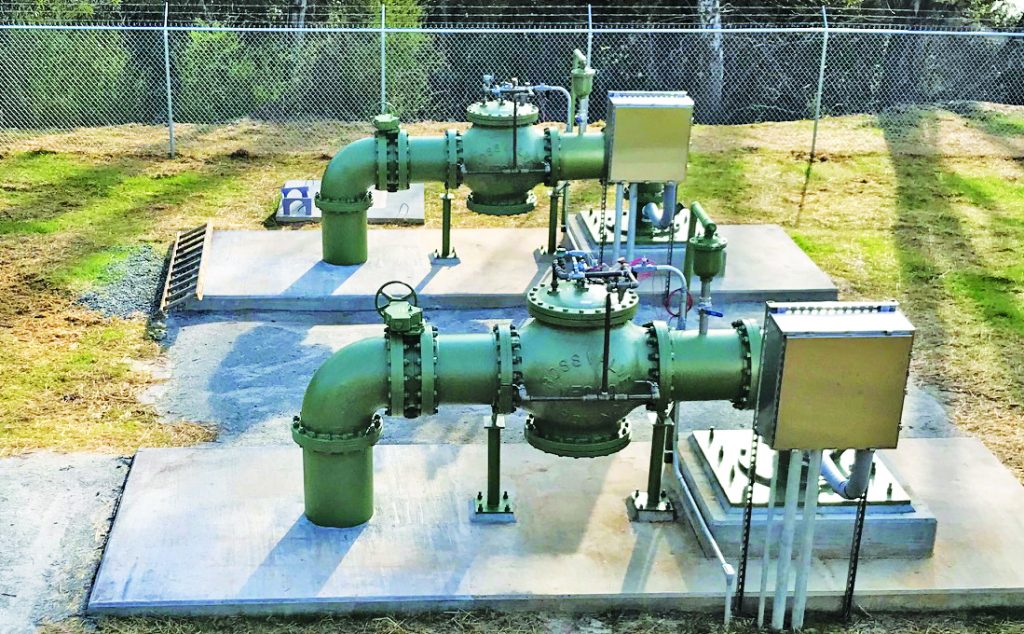
    On March 13, the Town of Winnsboro’s new Pump Station on the Broad River was turned on for testing. The Town of Winnsboro funded this approximately $12 million dollar project, encompassing a new raw water intake pipe and construction of this pump station, with a State Revolving Fund State Drinking Water loan through the EPA.

    WINNSBORO – Now that the initial paperwork is mostly finished, Fairfield County’s water and sewer plan is flowing closer to completion.

    At the second meeting of the Fairfield Joint Water and Sewer Authority on Monday, the group received detailed reports covering everything from environmental impacts, roads to laying water and sewer pipes.

    “They’re not in as [bad] shape as I thought,” said Neil Robinson, chair of Fairfield County Council and an authority board member. “They’re still going to need a lot of improvements.”

    Formed earlier this year, the authority’s goal is to bolster the county’s water and sewer system, particularly at the mega-site, a 1,113-acre parcel east of I-77 at exit 41 that the county has designated as an industrial hub.

    By installing proper infrastructure, Fairfield County and Winnsboro town officials believe it will make the megasite more enticing to industries interested in launching operations here.

    The authority predicts flow demand at the megasite to be about 1.11 million gallons per day.

    Another 1.09 million gallons per day would be needed to serve the Weyerhaeuser property to the north, totaling 2.2 million gallons per day for both properties, according to engineering estimates.

    The Town of Winnsboro, the area’s largest water provider, is currently permitted for 1.6 million gallons per day, but only has an available capacity of about 540,000 gallons, roughly half the projected capacity needs at the megasite.

    Prepping the megasite for industry will require a two-step process, officials said.

    In the early stages, the Town of Ridgeway would facilitate the construction of temporary water service while an outside party would use a “pump and haul” method to transport wastewater to an outside location for disposal.

    DHEC approval would be required for the latter process.

    “Initially temporary service is needed for what we call trailer city,” said Lisa Muzekari, also with Thomas & Hutton. “We are going to have a significant amount of workers on site, therefore water and sewer service needs to be provided for those employees while they are on site working.”

    Long-term, the Town of Winnsboro would play an integral role in establishing permanent infrastructure, Muzekari said.

    Water service would be provided by the Winnsboro water treatment plant. New distribution lines and an elevated water tank would be needed.

    The Town of Winnsboro wastewater plant would initially handle sewer services, but only temporarily.

    “A future wastewater treatment plant would be needed to accommodate the full build out of the mega site and any other development in the area,” Muzekari said.

    While ensuring sufficient infrastructure needed to entice industry is in place, expanding water and sewer also lays the foundation for potential residential growth, Muzekari noted.

    “Right now the proposed lines are to serve the megasite,” she said. “But the plant capacity is up to 2 [million gallons per day] with potential for 4 [million gallons per day]. Expanding for 4 [million gallons per day] would allow for that additional development.”

    Cost estimates for the proposed upgrades weren’t available, though Muzekari said she’s using a 2 million gallon per day facility as a baseline.

    Roads are another component of the megasite infrastructure formula.

    The site already benefits from interstate access; it’s located off I-77 between exits 34 and 41. A proposed interchange could improve that access.

    Brad Sanderson, also with Thomas & Hutton, said one interchange option is a divergent diamond pattern. The other would be a cloverleaf design, which he said would be built in the vicinity of Old Camden Road.

    There haven’t been any glitches from an environmental standpoint. Sanderson said a preliminary review looking at the Weyerhaeuser tract just north of the megasite found no problems with wetlands or negative impacts on protected species.

    He also said Thomas & Sutton is continuing with evaluating site work, utility and transportation costs.

    “We’re just trying to figure out the overall development cost for a large development at this site,” Sanderson said.

    Monday’s meeting also comes on the heels of recent investigative reports about the state of South Carolina’s water system.

    Officials at Monday night’s water and sewer authority meeting noted that Winnsboro’s water is of high quality.

    County Administrator Jason Taylor said statewide, authorities like the Fairfield group are becoming more common.

    “The state itself is pushing hard and heavy to move from small individual systems,” Taylor said. [The state is] “trying to more rationally provide water and sewer services.”

    In other business, the authority also voted to continue an agreement with the Pope Flynn Group law firm. Attorney C.D. Rhodes with the firm has been assisting the authority.

    Since the authority has yet to collect revenues, the deal approved Monday night continues the existing arrangement in which the county pays 75 percent and the town 25 percent.

    “It’s a basic continuation of the arrangement,” said authority chair and Winnsboro Mayor Roger Gaddy.

  • Senior Money

    BLYTHEWOOD – Mayor J. Michael Ross presents a check for $5,000 to Pam Dukes, Director of Senior Resources and Board members Warren Benson, left, and Ed Garrison.