Category: News

  • Council leases former fire station for Ridgeway retail

    Carol Allen, right, owner of Laura’s Tea Room, announced that she will bring a consignment store to the former fire station in downtown Ridgeway. Her daughter, Kelly Quinn, and grandson, Seamus, who are visiting from Ireland, will be helping with the store opening. | Barbara Ball

    RIDGEWAY – Continuing concerns about how Ridgeway’s new water tower turned out, prompted an executive session at the beginning of the Town Council meeting Thursday evening.

    ‘Contractual Matter regarding Civil Engineering of Columbia (CEC),’ was the stated reason on the agenda for the executive session.

    Following the session, Councilman Rufus Jones made a motion to hire an independent surveyor to measure the height of the town’s new water tower which was constructed by CEC. The tower sits adjacent to Geiger Elementary School.

    “We continue to have concerns about the height of the new tank,” Jones said. “And we want a representative from CEC to be present for the measuring.”

    In a follow up interview with The Voice, Councilman Dan Martin said the measurement is needed to determine whether there is a discrepancy between the height of the town’s new water tower and the old one.

    “If the new tower is shorter than the old tower,” Jones said, “that could adversely affect the water pressure for the town’s customers.”

    The motion passed 4-1 with Councilwoman Angela Harrison voting against.

    Allen Leases Fire Station

    A second discussion in Executive Session resulted in a unanimous vote in public session to accept a request from Ridgeway resident Carol Allen to lease the former fire station at 170 S. Palmer Street, commencing Aug. 8.

    Allen, who owns Laura’s Tea Room down the street in the same block, said she plans to open a consignment shop ‘of sorts,’ but will not have enough room for booth rentals.

    “But we will welcome individual consignments, crafts and handmade items. We also plan to feature an assortment of nice pet items, plus we’ll carry some neat things that we don’t have space for in the Tea Room,” Allen said.

    “I guess I need to get together with my tea gang and decide exactly what we’re going to do over there, but I’m looking forward to having sort of an open air market as we roll those big bay doors up every day,” Allen said.

    Business License Fee Up

    Council voted unanimously to pass a resolution to amend Ridgeway’s Business License Fee schedule by increasing fees 20 percent.

    “The Town has not adjusted the business license fee schedule for cost increases or standard inflationary factors since the fee schedule was originally adopted,” the resolution stated.

    Councilman Dan Martin said the across the board fee increase is necessary to cover some of the increase in costs of providing services in the town.

    Rates are predicated on the class of the business and the income generated. The lowest fee is $48 for $0 to $10,000 in income, plus $1.35 per thousand or fraction thereof over $10,000.

    There are also specific daily license fees for peddlers and a $5 license fee for a yard sale.

    Persons or firms not licensed by the Town of Ridgeway must provide proof of a minimum $2,500 performance bond before they can receive a permit to work in the town.

    Councilman Jones pointed out the difficulty in monitoring the contractors who come to Ridgeway and provide services.

    Mayor Cookendorfer agreed.

    “I try to keep an eye on trucks, etc. in town, and when I approach them, they typically go to Town Hall and secure a business license for Ridgeway,” Martin said.
  • Doko Depot almost there

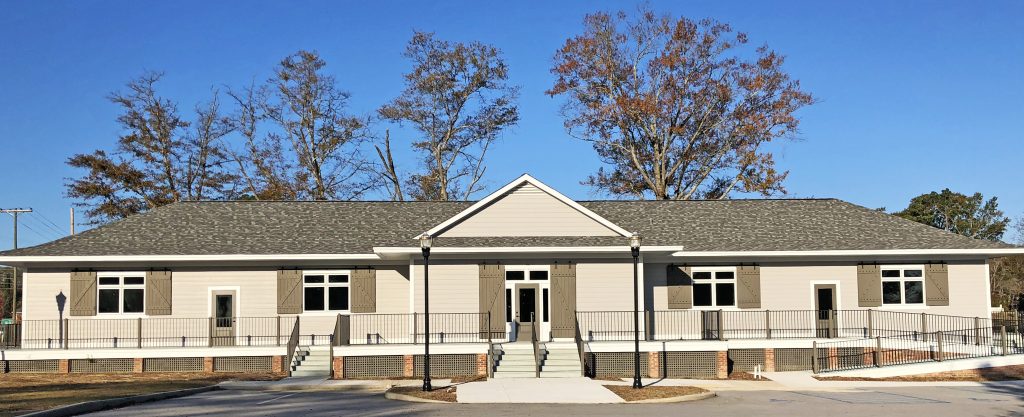
    Doko Depot

    BLYTHEWOOD – Four years and many meetings later, Doko Depot is on the cusp of being finished, purchased and open for business by sometime in September or October, according to Chris Hill of Hill Construction LLC.

    Representing Don and Sarah Russo of Freeway Music who are purchasing the building, Hill appeared before the Board of Architectural Review (BAR) Monday evening to request approval for a Certificate of Appropriateness (COA) to permit the alteration of the Doko Depot Building.

    The proposed alterations will address additional points of entry to the building to accommodate the music store on one end and a restaurant on the other.

    The proposal includes the replacing two rear windows with entry doors consistent in appearance with the doors present on the existing structure. Another alteration would provide entry to and from a music/storage room and accommodate food deliveries to the restaurant.

    Additionally, Hill is requesting a door located at the north end of the building be relocated to redirect traffic. The proposed doors will visually match the existing doors.

    The applicant also proposed the installation of two new windows on the rear of the building (side facing the railroad track). Those windows would provide additional light for classrooms in the music store. The windows will be identical to the existing windows, so that the character of the property will be maintained, Hill said.

    The board voted unanimously to approve the alterations

    Signage will be reviewed by the BAR at a later time in consultation with staff.

  • Hartman’s questions unanswered by Frick, Green

    WINNSBORO – After praising the Fairfield School District Honors Chorus’ recent trip to Italy, school officials couldn’t answer questions about how much the trip cost, how many people actually went or questions about funding.

    At Tuesday night’s board meeting, when pressed by board trustee Paula Hartman for participation and cost figures, Superintendent Dr. J.R. Green couldn’t specifically say.

    “It was less than 20 [students], Ms. Hartman. Apparently some were not able to make the trip,” Green said. “I won’t say definitively. I can’t remember what it wound up being, but it was less than 20. I would have to check to say for sure.”

    “And how many adults?” Hartman asked.

    “I couldn’t say for sure either,“ Green answered.

    Hartman then questioned the cost.

    “What was the total that the district paid for the trip?“

    “I couldn’t recall that off the top of my head, Ms. Hartman,“ Green replied.

    In January, the Fairfield County Board of Trustees called a special meeting where they voted to pledge $30,000 in taxpayer money toward a $35,000 down payment for the trip.

    In January, school officials said the $30,000 expenditure was necessary to meet a time-sensitive booking deadline. A school district memo estimated the trip would cost $129,000, with about 30 people attending at a cost of $4,300 per person.

    Green said in January that students would “contribute the vast amount of the cost” by fundraising. An exact breakdown of public versus private funding for the Italy trip was not available late Tuesday.

    Things turned heated when Hartman asked if some district students had been involved in cheating on an exam. Green and several board members pushed back on Hartman’s question, without offering an outright denial.

    “I’m not even going to address that,” Green said. “The fact that you cast that kind of aspersion, whether it’s a student in the STEM program, honors program or a student in a general program, I think is totally inappropriate.”

    Board Chairman William Frick chided Hartman for raising the issue in public because he thought it should have been discussed privately with the superintendent. He also suggested Hartman was opening herself to litigation.

    “Ms. Hartman, I would caution you to not bring up rumors that you heard on the street at a board meeting,” Frick said. “You are libeling a group of people and I would caution you to be careful about that.”

    Hartman defended raising the issue, saying she thought the board should be informed if student cheating was taking place.

    The discussion continued for a few more minutes, ending with Frick slamming his gavel on the dais and ruling Hartman out of order.

  • Credit history put new judge’s bond at risk

    Court Replaces Swearingen with Feaster as Chief Magistrate

    WINNSBORO – A recently appointed Fairfield County magistrate’s credit problems placed her in jeopardy of having her appointment invalidated.

    On July 11, the county’s Columbia-based bond insurer denied Danielle Miller’s application seeking to be bonded, citing Miller’s credit, according to documents The Voice obtained through the S.C. Freedom of Information Act.

    Magistrates must be bonded to serve, according to state law.

    Miller was one of four new magistrates appointed recently by State Sen. Mike Fanning, D-Great Falls. Fanning couldn’t be reached for comment.

    “Unfortunately, Ms. Miller’s credit didn’t meet the requirements for this bond. The application was denied,” a July 11 email from South Risk Management, LLC of Columbia stated.

    According to documents obtained through the S.C. Freedom of Information Act,  that email was forwarded to the S.C. Court Administration.

    “Don’t know what to tell you. (S)he must have a bond or (s)he cannot hold office,” answered an official with Court Administration. “I would have the county manager look into alternative bonding companies. If (s)he is unable to be bonded that is a problem. (S)he would have to take that up with the Senator.”

    Miller provides own bond

    The following day, however, on July 12, Miller submitted her own bond to the county through Travelers Casualty and Surety of Hartford, Connecticut, in the amount of $10,000.

    Had Miller’s efforts to acquire bonding not been successful, she would have been unqualified to serve as magistrate, according to state law.

    “Any magistrate not in compliance with this section shall be subject to immediate removal from office until he shows good cause to the Supreme Court for not obtaining such bond,” the law states.

    It’s unclear exactly what circumstances impacted Miller’s credit rating.

    A default judgment was entered against Miller in July 2008, when she was ordered to pay $7,519,57 to Hudson & Keyse LLC, a debt collection agency, according to Fairfield County court records.

    The judgment, however, was signed 11 years ago and most negative credit items typically drop off a credit report after seven years.

    Also, in 2017, the three credit bureaus ceased including most civil judgments on a person’s credit report, according to a Consumer Data Industry Association news release.

    Fairfield County court records don’t indicate whether or not Miller’s judgment was ultimately paid.

    Her case, however, is representative of the kinds of cases over which she would have jurisdiction. Magistrates preside over civil cases up to $7,500 and certain misdemeanor cases, as well as issue bonds in most criminal cases.

    Feaster Named Chief Magistrate

    In a related matter on July 12, the S.C. Supreme Court issued a surprise order naming Russell Feaster as chief magistrate of Fairfield County, reversing the reappointment of Paul Swearingen as chief magistrate – an appointment that was confirmed by the Senate just two weeks earlier. Swearingen, an attorney, will now serve as a magistrate. Swearingen has served Fairfield County as chief magistrate since July 1, 2017 and as magistrate since 2010. Feaster, who is retired from the South Carolina Law Enforcement Division, was appointed magistrate a little over a year ago.

  • School board votes to approve the Promise

    WINNSBORO – The Fairfield County Board of Trustees voted 6-0 Tuesday night to approve a detailed Memorandum of Understanding (MOU), pledging the district’s participation and $75,000 in taxpayer money to launch the program in Fairfield County.

    Trustee Paula Hartman abstained.

    Fairfield County Council has budgeted, but not yet awarded, an additional $75,000 for the Promise initiative. Council members discussed the Promise Program in executive session at its July 8 meeting.

    If approved by the County, school district and Midlands Technical College, qualifying Fairfield County students could attend MTC-Winnsboro at no cost. The county has yet to weigh in on whether the program would fund tuition only, or also include books and supplies.

    At Tuesday’s school board meeting, Hartman quizzed district officials about the MOU the district signed Tuesday night, which differs greatly from a document signed at a July 8 ceremony between the county, school district and Midlands Tech.

    “This particular document that’s in front of us, is that what was signed on [July] 8th?” Hartman asked.

    “No ma’am, it is not,” said Board Chairman William Frick. “There was some conversation about what the final agreement would be between the three parties. Since it [the signing] had been scheduled, we chose to go forward [with the shorter MOU]. It was very specifically a non-binding agreement, so essentially that was a ceremonial event that said ‘we intend to do this thing.’ This is the actual document that says ‘we are going to do this thing.’”

    Council has not signed the detailed document passed by the Trustees Tuesday night.

    Hartman isn’t the only person raising concerns about the Promise Program.

    County Councilman Jimmy Ray Douglas has been vocal about his belief that the Winnsboro campus can’t fill classes.

    Councilman Douglas Pauley thinks the details of the program are still too vague.

    Pauley said any money, if approved, should be dispersed in installments based on conditions instead of by lump sum. The final contract should also clearly state academic, administrative and financial details, he said.

    On Tuesday, Superintendent Dr. J.R. Green said approving the Promise Program is a no brainer.

    “To suggest Fairfield County should not engage in this kind of innovative thinking is a bit perplexing,” Green said.

    The detailed MOU passed by the school board requires applicants to have a 2.0 grade point average, which they must maintain at MTC to continue receiving aid.

    Students can receive aid for up to nine semesters and can wait 12 months before enrolling, according to the document.

    Kershaw County’s Promise Program, which also serves students in Sumter, Lee and Clarendon counties, restricts aid to six consecutive semesters. Students must also enroll in the summer or fall immediately after high school, the Kershaw Promise website states.

    Kershaw only offers tuition aid, not books, supplies, lab fees and other costs.

    Fairfield school district is proposing offering aid not only for tuition, but for books and supplies “pending availability of funds.” Greenwood covers tuition and fees.

    Greenwood County offers two-year and four-year aid to students attending Piedmont Technical College or Lander University, respectively, according to the Greenwood Promise website.

    There are no GPA requirements for high school seniors, though students in two-year programs must maintain a 2.0 and students in four-year programs must maintain a 2.5. They must also take at least 12 credit hours a semester and 24 hours a year, the website states.

    Research into the public benefits of Promise Programs is mixed.

    In April, NPR affiliate Michigan Radio published a report saying the Kalamazoo Promise Program, previously cited by Dr. Green as the gold standard of Promise Programs, has faced challenges.

    Less than half of the initial students receiving aid have successfully earned a college degree. Only 15 percent of those receiving degrees are of African-American or Latino descent, the report states.

    “It simply hasn’t changed the socio-economic numbers in our community,” Michael Rice, superintendent of the Kalamazoo school system, told the NPR affiliate.

    A 2018 study by The Education Trust, a nonprofit advocacy group focused on educational equality, states that Promise Programs are often underfunded.

    The report, though, states eligibility requirements tend to impair the effectiveness of Promise Programs.

    “Free college programs that require students to maintain more than half-time enrollment or a GPA higher than 2.0 may shut out the students who stand to benefit the most, including adult students and students who are working while in school,” the report said.

  • Goats could soon be living in Ridgeway

    RIDGEWAY – At last week’s town council meeting, council proposed an amendment to Ordinance 6-1001 which prohibits [live]stock and cattle from running loose on the streets of Ridgeway.

    While the amendment is not aimed at reversing the ordinance to allow farm animals to run loose in town, it will, if passed, allow them to live there. Well, not all of them. Just some of them. Goats.

    Mayor Heath Cookendorfer said the amendment tweaks an earlier amendment (Sec. 2 of the livestock ordinance) that was passed in October 2013 which reads:  “It shall be unlawful for any person or persons or corporations or firms or associations to keep swine, hogs, pigs, goats and horses within town limits of Ridgeway.”

    The newly proposed amendment, if passed, will remove the word ‘goats’ from the list of animals prohibited from living in the town.

    “With a situation that came up, we had discussion about removing ‘goats’ from the ordinance,” Cookendorfer said. “A resident has a goat and is asking to keep that goat.”

    Councilman Rufus Jones asked if the ordinance says residents can’t have a goat or horse in their back yard.

    “What the amendment is saying,” Town Clerk Vivian Case said, “is that someone is allowed a goat under the amendment, but they [goats] are still not allowed to run free.”

    “Every residence in town is not compatible to having a goat,” Councilman Dan Martin said. “If you don’t have a third of an acre then you might not be allowed to have a goat. They are farm animals and need to be treated as farm animals. There will have to be some stipulations for how many goats you can have on a certain amount of property,” Martin said.

    Goat Mowers

    The issue arose when town resident Natalie Weathers recently brought two goats to live in the side yard of her residential property on Peach Street. When the Town gave Weathers notice that she was breaking the town laws by keeping the prohibited livestock within the town limits, she emailed town hall, asking council to reconsider the ordinance. In the email, she said she acquired the goats to mow her lawn.

    While one of Weathers’ neighbors has complained about the goats in a letter to town hall and another in a phone call, Council dismissed the complaints and weighed in on Weathers’ side with a proposed amendment to allow goats to live anywhere in the town, with some guidelines.

    “Do you want to put a limitation on the number of goats [a resident can keep]?” Cookendorfer asked his fellow council members during the meeting.

    Councilman Don Prioleau suggested that council find a goat expert to say how much land a goat needs to live on.

    “Yes,” Councilman Dan Martin said, “they are farm animals and need to be treated like farm animals. So if you have one in a 12’ x 12 kennel, I’ll be coming down the street to check on that.”

    “We’re opening a can of worms,” Jones groaned. “Goats are farm animals…what’s the point? Goats are as smelly as cows.”

    “We’re restricting everything except goats and chickens. We’re saying we’re going to limit how many goats you can have on the size of your land,” Councilwoman Angela Harrison said.

    Weathers has both goats and chickens. While neighbors say she allows her chickens to roam free, that’s okay in Ridgeway, Councilman Dan Martin said. The town’s ordinance does not specifically prohibit chickens from running loose in the streets of the town.

    Weathers’ goats are currently housed in a 15’-or-so x 15’-or-so chain link fence kennel with several tarps draped over parts of it. Martin told The Voice that Council is allowing Weathers to keep the goats under those conditions until the amendment is resolved – passed or voted down – which likely won’t occur until mid-September.

    “We need to talk about minimum acreage and fencing. We need input on this,” Cookendorfer said, looking to his fellow council members for wisdom on the subject.

    Council members generally agreed they need more information before voting and tabled the issue until Martin can research how much land is needed per goat.

    So far, Weathers has not appeared at a council meeting to state her case. Council has taken the lead. Neither have any of her neighbors showed up to publicly address the issue, for or against the goats.

    Town Clerk Vivian Case told The Voice that a public hearing is not required for a text amendment to an ordinance.

    During the public comment session that followed, Randy Bright, a resident of the rural area outside the town, suggested Council contact the local Hoof and Paw organization to discuss the ramifications and space needed to adequately keep goats at a residence inside the town limits.

  • MSI names new principal

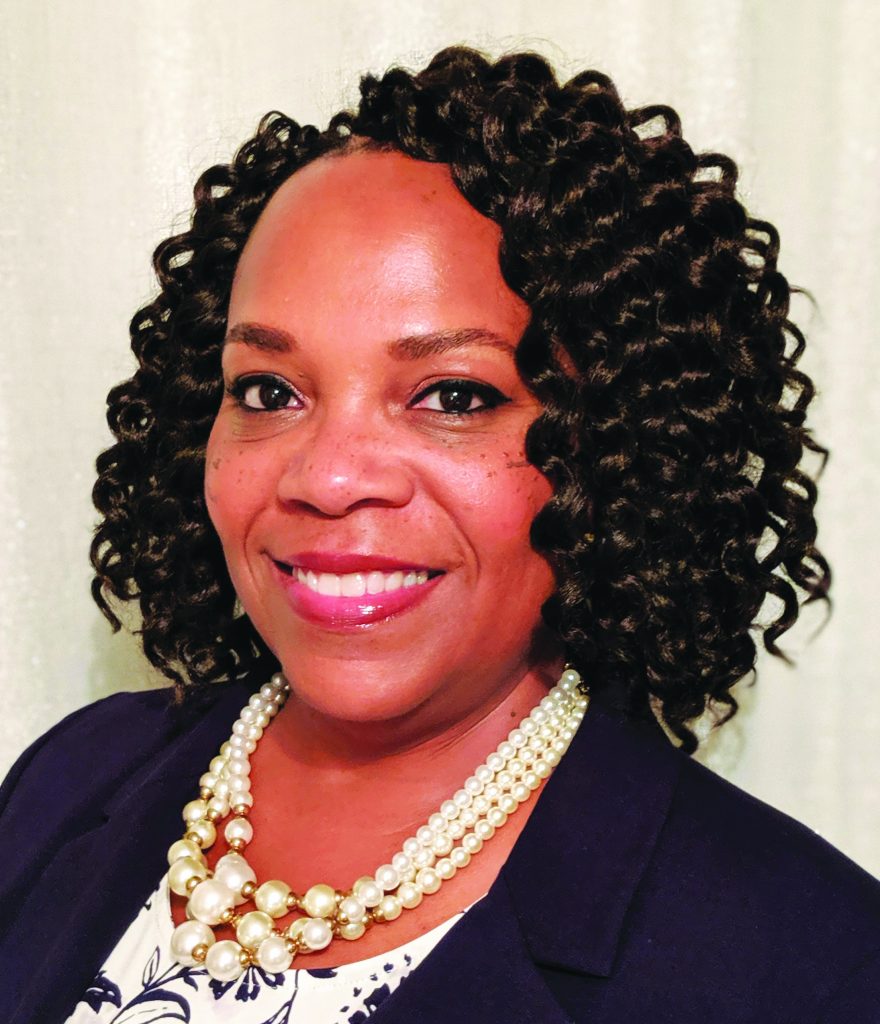
    WINNSBORO – Cynthia Prince has been named the new Executive Director/Principal of Midlands STEM Institute, a tuition-free public charter school.

    Prince

    “Ms. Prince has led successful outcomes in education for over 20 years as a clinical counselor, special education teacher and program director. She has also served as professional development speaker with the National Business Institute,” board chairman Kevin Thomas said.

    Prince holds a Master’s in Educational Administration from the University of South Carolina and is a licensed principal with the SC Department of Education.

    “Ms. Prince brings a wealth of talent and leadership capacity to the position and is looking forward to building strong and lasting relationships with MSI students, parents, faculty, staff and community stakeholders to ensure the school’s mission to produce academically and physically fit STEM proficient students,” Thomas said.

    Prince is the mother of three children.

    All students can attend MSI which is now enrolling students in grades K-10.

    MSI is located at 114 Crane Street in Winnsboro.

  • In the Middle of a Moment

    NEW ORLEANS – When Michelle Obama took to the stage as the keynote speaker of the Essence Festival in New Orleans last weekend, she was wearing a navy jumpsuit by Sergio Hudson, the Ridgeway designer who is currently in the middle of a moment. The Los Angeles-based designer’s clothes are becoming a constant within the wardrobes of some of the world’s most powerful women. In February, Amal Clooney stepped out in his tailored red jumpsuit during a trip to New York, while Beyoncé updated her Instagram with multiple shots of his bejeweled blazer later that same month. Back in May, Obama and her stylist Meredith Koop enlisted him to create a vibrant plum suit for the Atlanta stop of her tour, only to revisit his work this weekend. Given the warm response Obama’s Studio 54-inspired jumpsuit received, it’s safe to say this is only the beginning of a beautiful collaboration.

  • New is Better!

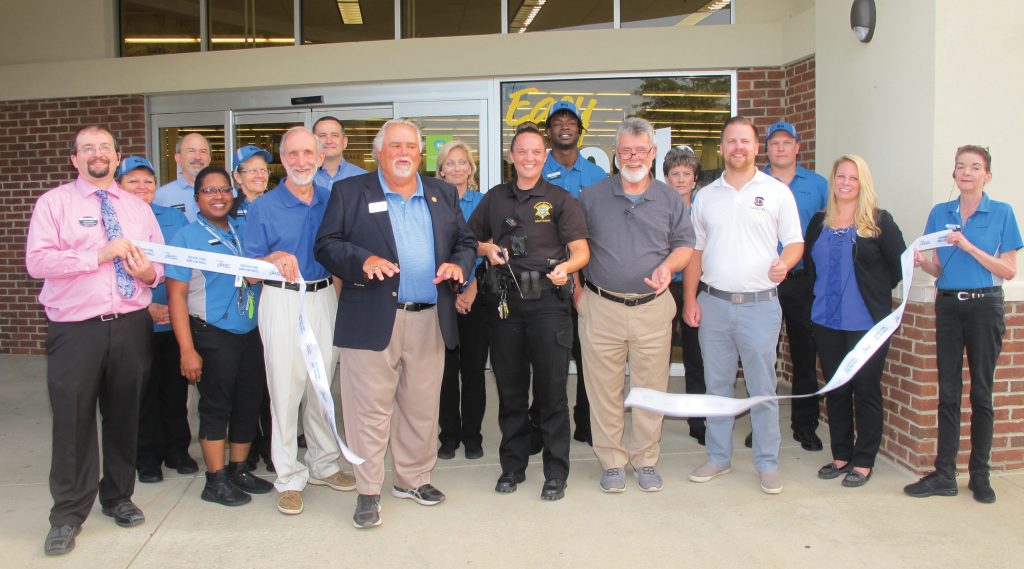
    BLYTHEWOOD – The Blythewood Chamber of Commerce and Mayor J. Michael Ross cut the ribbon Wednesday morning for Food Lion’s grand re-opening.

    Store manager Stephanie Hartford welcomed the community and handed out $10 gift cards to customers. The store boasts new checkout stands, more fresh produce, a wing bar and hand battered chicken in the deli.

    Below, Hartford presents the morning’s first customer, Barbara Voyles, with a bouquet of roses.

  • Chatman sworn in as Town Councilman

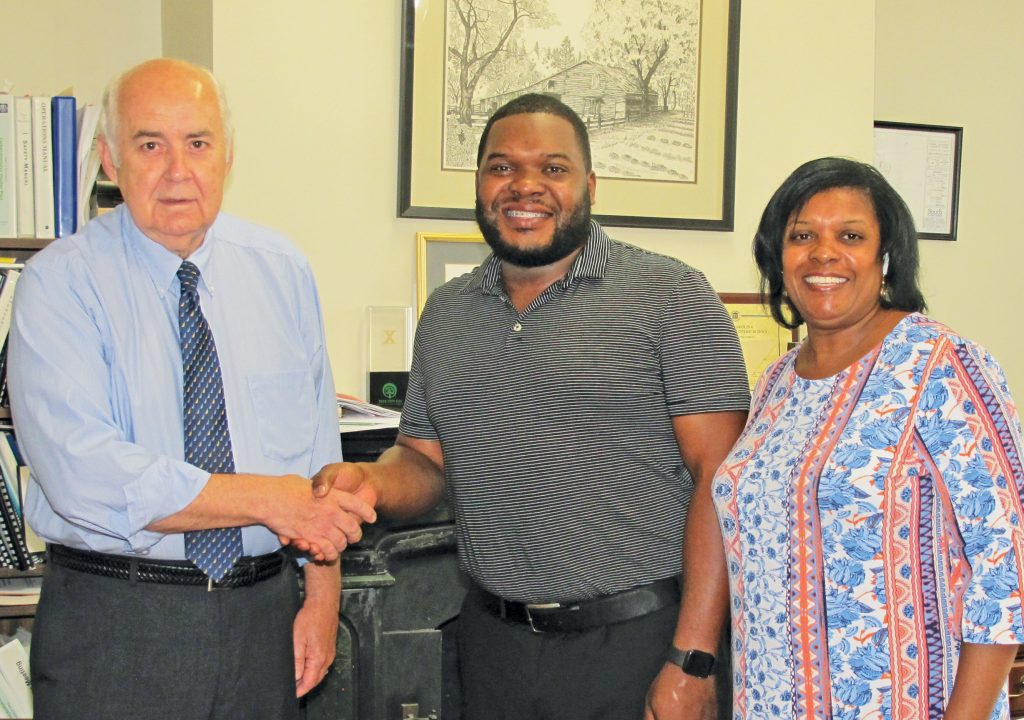
    Demetrius Chatman is congratulated by Winnsboro Town Manager Don Wood after being sworn into office. At right is his mom, Susan Chatman. | Barbara Ball

    WINNSBORO – Political newcomer Demetrius Chatman, 33, was sworn into the Winnsboro Town Council July 2 where he will take the seat for District 3.

    While it’s his first time to hold an elected office, Chatman said he is prepared.

    “I’ve been going to the meetings and talking to people in my district about things they would like to see brought forward,” Chatman said. “I think knowing what my constituents want is the key.”

    A native of Winnsboro, Chatman holds a Bachelor’s degree man holds a Bachelor’s degree in Business Management from South Carolina State University and an MBA from Webster University. He is also a graduate of Leadership Columbia.

    “I love Winnsboro, and that’s why I got into the race, to make things happen,” Chatman said.

    Chatman, a graduate of Fairfield Central High School, currently works at the University as a program manager for Title III, a federal grant program.