Category: Government

  • Campground Aims for Restaurant

    WINNSBORO – The owner of a campground near the V.C. Summer Nuclear Station in Jenkinsville, already embroiled in a legal battle with the Jenkinsville Water Company in his efforts to add campsites, has asked County Council to rezone a portion of his property there to accommodate a restaurant.

    Monday night, Council held first reading and public hearing on an ordinance to rezone 3 acres at 16482 Highway 215 S. from RD-1 (Rural Residential) to RC (Rural Community), which would allow the restaurant. The property is owned by Anne F. Melton. The applicant for the rezoning is D. Melton, who operates the Broad River Campground at the same address.

    While no one representing Melton spoke at the public hearing, one neighbor of the campground took to the podium in opposition.

    “We’d like the community to stay as it is, and not have so much going on across the road,” Carol Keever told Council. “We’ve got enough traffic problems with the V.C. Summer plant up there and we don’t need anything adding to the traffic problems. He (Melton) knew when he put that campground over there, there wasn’t anything close by for the people to go to. No store, no laundry mat, no restaurant; and now he wants to rezone 3 acres to put in a restaurant for the campers.”

    Speaking with The Voice Tuesday, Melton would not go into detail about his plans for the restaurant or what kind of feedback he has received from the community. Getting water for the enterprise from a company that has steadfastly denied the additional water necessary to expand the campground, however, would seem a bigger challenge than winning over the hearts and minds of neighboring residents. Melton said he plans to meet that challenge by drilling a well on the property.

    Melton’s lawsuit against the water company, filed last September, is still pending.

    First reading of the ordinance, as well as first reading of a similar ordinance to rezone 3 acres at 631 Longtown Road in Ridgeway, passed without dissent. The Longtown Road property, owned by Tom Brice Hall, is seeking rezoning to accommodate a special needs school, Councilman Dan Ruff (District 1) said Monday.

    Expenditures

    Council gave the unanimous OK for the purchase of three training mannequins for the County’s EMS service at a cost of $107,728.68. The purchase had been recommended to Council by the Administration and Finance (A&F) Committee from their Aug. 24 meeting.

    “We have no such simulation equipment now,” Interim County Administrator Milton Pope told Council, “and the cost to send our people, a group of 15, to Palmetto Richland, which is the closest location for training on their simulation mannequins, would be approximately $5,000 for just one class. We provide six different training classes of 16 hours each, minimally each year for our people.”

    The purchase of replacement radios for the Sheriff’s Office came to Council without an official recommendation from the A&F Committee, which had trouble deciphering paperwork associated with the request on Aug. 24.

    “This was forwarded on to the full Council without a recommendation until we took some corrective action with the Sheriff’s Office to more clearly identify how many radios we were purchasing,” Pope said. “At this time, we are purchasing 27 radios for the approved budget amount of $117,831.”

    Council approved the purchase, as well as an upgrade to the County’s 9-1-1 system, also recommended by the A&F Committee, at a cost of $528,231. Pope said 80 percent of that cost would be reimbursed to the County by the state.
     

  • FOMZI Makes Case for Mt. Zion

    WINNSBORO – Board members from the Friends of Mt. Zion Institute (FOMZI) spent more than an hour in executive session at Tuesday night’s Town Council meeting, trying to stave off the wrecking ball that lurks behind their contractual deadline.

    That deadline – to stabilize the buildings on the property to meet Winnsboro’s Dangerous Building Code – expired on Sept. 4, and until Tuesday night Council had not heard from FOMZI all summer long. Indeed, Winnsboro Mayor Roger Gaddy said after Council’s Sept. 1 meeting that the Town had seen little activity at the site since faux windows were installed on the front of the school building and auditorium last May.

    The backs of the buildings, however, have received much less TLC, and Gaddy said last week that might keep them from meeting code.

    And yet, FOMZI board members did not appear dejected as they exited Town Hall Tuesday night.

    “They encouraged us to save it,” FOMZI board member Don Laird said. “They want us to move forward.”

    Vicki Dodds, FOMZI Chairwoman, said after the meeting that while the backs of the buildings had not had the same faux windows installed as on the fronts, it was not without reason. Rear windows were left open, she said, to allow the interiors to properly dry in, she said. Additional faux windows were planned, she said, in future stages.

    Dodds also retained her optimism for the project after the hour-plus session with Council.

    “They didn’t tell us to stop all work,” Dodds said. “The buildings still have to be inspected.”

    Council took no action on the matter Tuesday night. Gaddy said after the meeting that the Town will inspect the buildings in the coming weeks, after which Council will meet with FOMZI again to determine the future of the old Mt. Zion Institute school.

    The Town transferred the property, located at 205 N. Walnut St., to FOMZI in March 2014. According to the agreement, FOMZI purchased the property and its four buildings (the Mt. Zion School, the auditorium and gymnasium, the cafeteria and the Teacherage) for $5, but with the caveat that the buildings had to be stabilized within 18 months to meet Winnsboro’s Dangerous Building Code or be torn down.

    FOMZI’s 30-month benchmark, which comes around one year from now, calls for the group to hire a contractor or developer for the historic rehabilitation of the buildings.


  • Candidates Square Off

    BLYTHEWOOD – A debate for candidates vying for Blythewood Town Council seats is scheduled for Tuesday, Oct. 20 from 6 – 8 p.m. at The Manor.

    Six candidates are running for three Council seats, two of which are currently held by Eddie Baughman and Bob Mangone. Baughman is seeking a second term. Mangone is not seeking re-election. Both seats are for four-year terms.

    A third seat with two years left on a four-year term was vacated by Bob Massa who resigned in June. Seeking four-year terms are Baughman, Bryan Franklin, Malcolm Gordge and Robert Rue Sr. Larry D. ‘Griff’ Griffin and Michelle Kiedrowski are seeking the vacant two-year term.

    Mayor J. Michael Ross is running unopposed.

    The debate is being sponsored by The Blythewood Chamber of Commerce and Blythewood High School. At press time the format had not been announced. The Manor is located at 100 Alvina Hagood Circle.


  • Consultant Pitches Spec Building

    BLYTHEWOOD – The Town’s Economic Development consultant, Ed Parler, made another pitch during Council’s work session on Tuesday for the Town to invest in a shell building to be built across from Town Hall where a restaurant was previously planned under former Town Administrator John Perry.

    In its aborted decision to build the restaurant, Town Council rezoned approximately 2 acres of the Town’s new park next to the railroad in front of Town Hall for a business park. The Town acquired a $240,714 grant from Fairfield Electric Cooperative and a $456,881 loan from Santee Cooper to pay for the construction. After a new Council majority, consisting of Bob Massa, Bob Mangone and Tom Utroska , elected in 2012, voted to dismantle the restaurant plans, the Town paid back the loan, plus $18,000 in interest to Santee Cooper. Now Council must use the Fairfield Electric grant money specifically for economic development or return it with a penalty and interest.

    “Therefore,” Parler told Council, “we have been moving toward a way to use that grant money.”

    Calling himself ever the optimist, Parler called on Council to consider investing the grant money into a shell building with three possible uses: a restaurant, an office building or an office/café combination.

    A couple of months ago the Town engaged Parker Poe law firm, which recently obtained a comfort letter from the S.C. Department of Revenue for the investment project. With that, Parler outlined a pathway he envisions for Council to effectively carry out the shell building project, which he envisions as a 3,800-square-foot shell to be built in the designated business park area of the Town park. Parler asked Council to give guidance as to what they feel is the proper use of the building.

    Parler said the exterior would be a replica of the former town depot as it had been planned for the restaurant.

    “But while the restaurant had been planned with the highest quality construction,” Parler explained, “we are going with industry standards for the shell building.”

    For the design of the project, Parler asked Council to consider engaging architect Ralph Walden, who previously designed projects for the Town before moving out of state for several years. Parler said he expects the design, plan and specs to be completed by Oct. 15 and the project to be awarded to a contractor by November. He told Council members he would present them with a bottom line budget for the project at the Sept. 28 Council meeting.

    Parler said he expects a sale to be consummated on the shell building around the first of the year.


  • Council Wants More from Comp Plan

    BLYTHEWOOD – After months of revisions by the Planning Commission, a final draft of the town’s Comprehensive Land Use Plan was presented in detail to Council by Gregory Sprouse, Director of Research for Planning and Development at Central Midlands Council of Governments (COG) during Tuesday morning’s work session.

    Although Sprouse has spent weeks shaping the Commissioners’ suggestions into a document for Council’s approval, after hearing the suggestions the Commission made to the eight elements of the Plan (population, economic development, natural resources, cultural resources, community facilities, housing and land use) Mayor J. Michael Ross and the other members of Council thanked the Commissioners for their work on the plan but asked for further revisions before it comes before them for a final vote at their next regular meeting on Sept. 28.

    Councilman Tom Utroska took exception to wording in the document that he said, “made things sound more important than they are.”

    As an example, he pointed to the document’s repeated use of the phrase “tremendous growth.”

    “Our growth is substantial, but not tremendous,” Utroska said, “and a lot of that growth came through annexation.”

    He said many of his problems with the document have to do with “perception and terminology that I think the public will misinterpret,” such as the repeated use the word “need.”

    “It says these things are ‘needs,’ but I think they are more opportunities than needs. A need says that is something we’ve got to have, not something we want. (In the document) we say we’re going to have a ‘park and ride’ on the west side of the interstate where the old community center is. That’s not realistic,” Utroska said. “We should say, ‘When we get bus service, we need to coordinate a park and ride with the bus service.’ But we don’t even know where that will be.”

    Councilman Bob Mangone said he felt the Plan had not adequately addressed the community’s public transportation and recreation needs.

    “Blythewood has not benefitted from the Penny Tax in terms of the public transportation section,” Mangone said. “To me, it’s criminal to have a population that has been identified as a growing population, yet no effort whatsoever has been made by regional government, the COG or Richland County to do anything about public transportation (for Blythewood). Give us a couple of buses. Throw us a bone,” Mangone chided. “So many people could benefit from bus transportation out here. That’s a real shortcoming.”

    Even more important to Mangone was the Comp Plan’s lack of attention to the community’s recreation needs.

    “We have only one recreational facility and it is not adequate,” Mangone said. “I don’t see a recreation complex in the town. Our recreation facilities haven’t kept up with our increasing population. Our population has increased by 10 times, but the (recreation facilities) have not increased since we had 170 people in the town.”

    Councilman Eddie Baughman agreed, citing Blythewood’s growth since 2000, “but our fire department and EMS (provided through intergovernmental agreements) have not grown at all since 2000. We need to ask for more adequate protection. The Sheriff’s Department is the only service that has grown.”

    “We pay for those services,” Utroska reminded Council, “and our additional population (should) pay for more protection. We should get what we’re paying for.”

    Sprouse explained that the Comp Plan is the general policy guide to help the Town plan for future short- and long-term goals and that it serves as the enabling ordinance for zoning in the town.

    “The proposed amended Comp Plan incorporates the Town’s Master Plan with revelations about what’s been done and what still needs to be done,” Sprouse said.

    He pointed out that Blythewood has an aging population and that the town’s amenities appeal to retirees.

    “You need to be adopting policies to accommodate this population,” he said.

    Sprouse said the amended Plan calls for, among other things, an economic development plan, better signage, a marketing plan for the town and a more traditional town look. He also said that because of the town’s affluence, it has not adequately addressed affordable housing, but that it can be addressed by providing more multi-family housing.

    It is expected that Council will send the Plan back to the Planning Commission on Sept. 28 for further revisions.


  • FOMZI Faces Deadline, Demolition

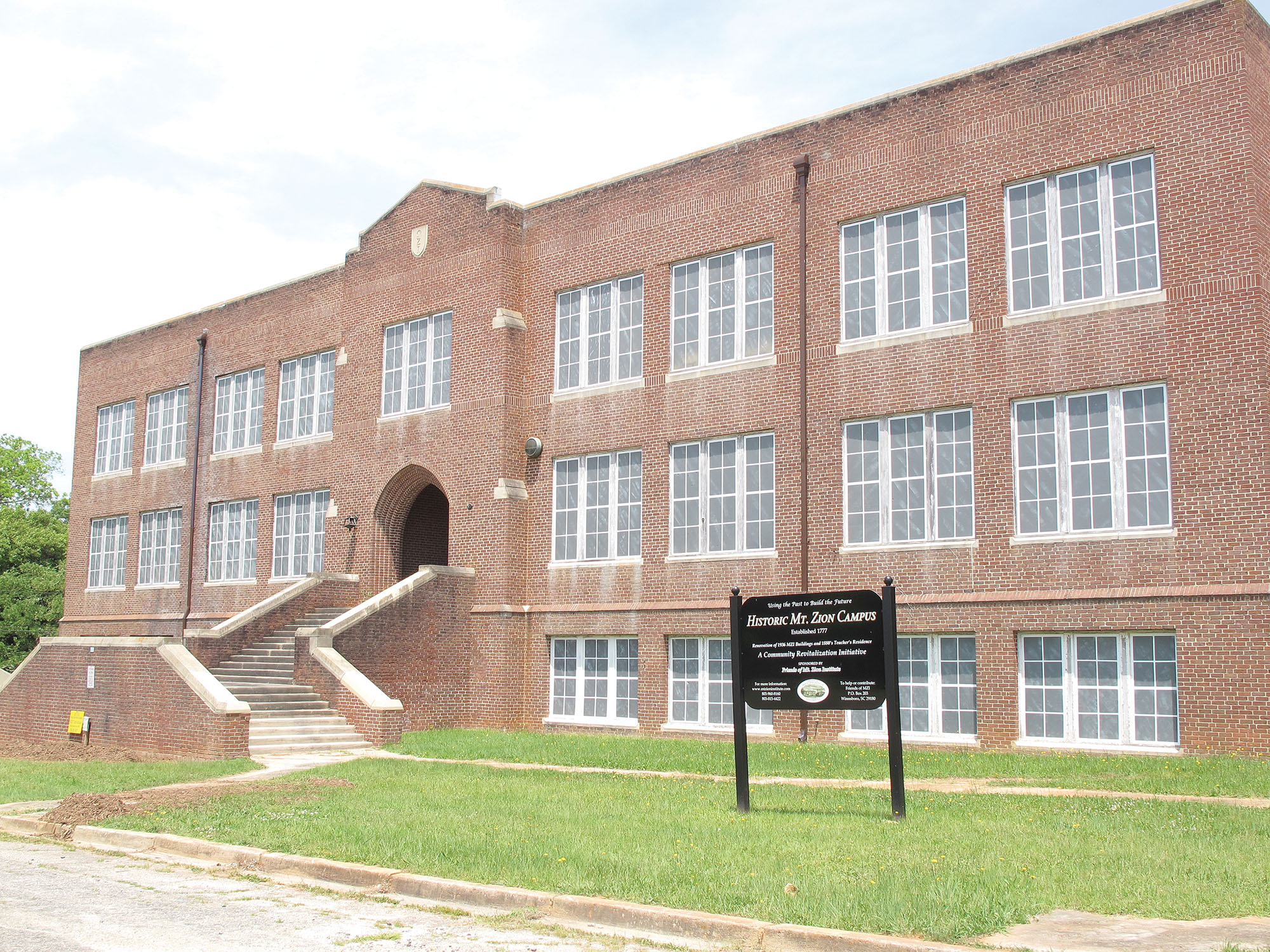
    Progress has been made on the old Mt. Zion Institute, but will it be enough and in time to save it from the wrecking ball?
    Progress has been made on the old Mt. Zion Institute, but will it be enough and in time to save it from the wrecking ball?

    WINNSBORO – With progress at the old Mt. Zion School slowing to a crawl over the summer, the Friends of Mt. Zion Institute (FOMZI), the community action group committed to the preservation and restoration of the site, once more finds itself under the gun and facing the potential of demolition.

    During their Sept. 1 meeting, Town Council discussed in executive session FOMZI’s progress and their looming deadline – the first of two deadlines stipulated in the March 2014 agreement that transferred the property at 205 N. Walnut St. from the Town to FOMZI.

    According to the agreement, FOMZI purchased the property and its four buildings (the Mt. Zion School, the auditorium and gymnasium, the cafeteria and the Teacherage) for $5, but with the caveat that the buildings had to be stabilized within 18 months to meet Winnsboro’s Dangerous Building Code or be torn down.

    Winnsboro Mayor Roger Gaddy said after the Sept. 1 meeting that the Town had not seen much activity at the site since faux windows were installed on the front of the school building last May, and the 18-month deadline was rapidly approaching.

    That deadline came and went last Friday, and Gaddy told The Voice this week that while a code enforcement officer had not yet made an inspection of the site, it appeared that the buildings were not up to code. Although the faux windows had been installed on the front of the school, Gaddy said, windows on the back of the building and on the gym were still open.

    “The reality of the situation is we’ve been dealing with Mt. Zion for 10 years,” Gaddy said. “The residents in the neighborhood think it’s an eyesore and we’ve had complaints of rats and snakes. I don’t think it’s up to code. If we get a written opinion (from code enforcement) that it’s not up to code, then we’ll have to abide by the terms of the agreement.”

    And those terms mean demolition.

    Vicki Dodds, FOMZI Chairwoman, admitted that progress has been slow over the summer and that her group has not updated Town Council on where renovation stands. But, she said, she feels like FOMZI is in line with the agreement.

    “Our understanding was to get it cleaned up, improve the appearance and get it secured,” Dodds said. “That would meet the 18-month benchmark. We got the grounds cleaned up and we keep them cleaned, and we completed the windows project. If that doesn’t meet the requirements, we’re in a boatload of trouble.”

    Dodds also said the roof on the school building has been repaired, but the roof on the auditorium was in much worse shape and would be three times as costly to replace. A smokestack rising from the auditorium also needs repair, she said, but couldn’t be addressed until FOMZI could begin on the roof. And all of that will take a lot more money than FOMZI currently has in the bank.

    “So much of what we’re running into,” Dodds said, “as far as grants and interest from developers – the first question they ask is ‘Do you have the backing of the Town and the County?’ The Town is happy for us to do whatever, but the County has said they don’t want anything to do with it.”

    Dodds said she plans to lobby County Council for their support of the project.

    FOMZI’s 30-month benchmark, which comes around one year from now, calls for the group to hire a contractor or developer for the historic rehabilitation of the buildings. Dodds said she may have some developer interest, but, she said, “We have to make sure it’s the right developer for the right thing.”

    Red Clay Development, a North Carolina firm that purchased the property for $100,000 in 2009, made a run at developing the old school as a retail hub. Those plans fizzled, and when Red Clay failed to even maintain the property the Town retained ownership in 2012.

    While Dodds and FOMZI search for a more appropriate developer, she said she plans to update Council at their Sept. 15 meeting.

    “I don’t think they’re going to take it away and tear it down,” she said.

    Gaddy, however, was less optimistic.

    “Everybody knows what’s expected. Everybody knows what the agreement is,” Gaddy said. “If everybody knows what the process is, that (demolition) is what FOMZI should expect. That’s what we have the agreement for.”

    Gaddy said he fully expects to hear from FOMZI at the next Council meeting.

    “Now that it appears that they did not meet their benchmarks, they’ll probably come plead their case,” Gaddy said. “We’ve bent over backwards to try to be accommodating to save those non-historic buildings on an historic site. When I became mayor, I said Mt. Zion would be torn down in 90 days.”

    That was 10 years ago, Gaddy added.

    Council meets at Town Hall, 207 N. Congress St., at 6:15 p.m. on the first and third Tuesdays of the month.


  • A.G.: No Crime in County/S2 Probe

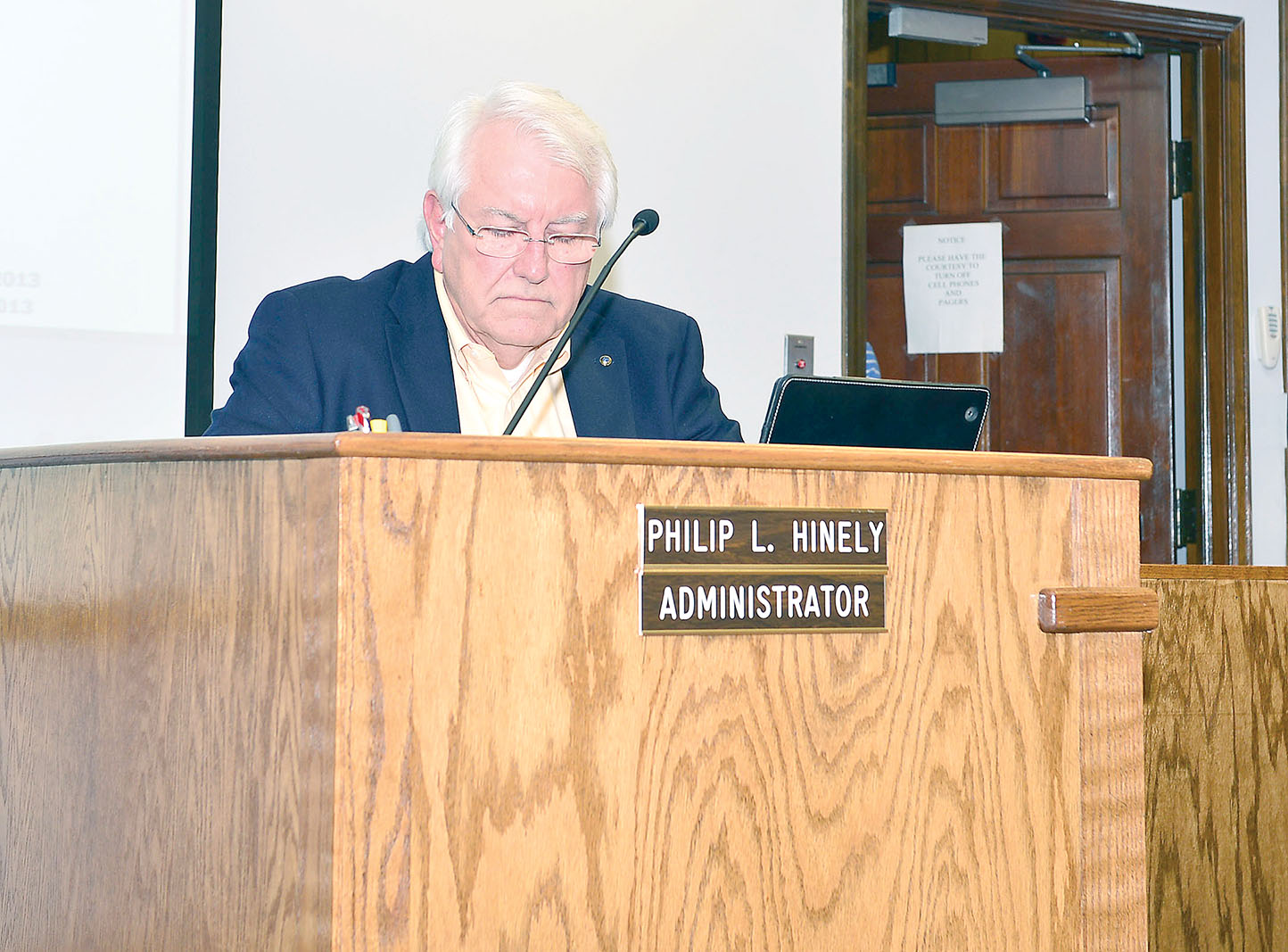
    Former County Administrator Phil Hinely during a July 2013 meeting.
    Former County Administrator Phil Hinely during a July 2013 meeting.

    WINNSBORO – More than a year after the S.C. State Law Enforcement Division (SLED) opened the case, and after a month under review by the state’s top prosecutor, the S.C. Attorney General’s Office announced this week that it would not prosecute Fairfield County administrators for alleged improprieties in the County’s procurement practices.

    “The evidence did not support a conclusion beyond a reasonable doubt that a crime had been committed,” a spokesperson for the Attorney General’s Office told The Voice Tuesday.

    SLED opened the investigation in February of 2014 and sources inside the County said then that agents had interviewed County employees and reviewed checks and invoices in the County’s Procurement Department. Shortly after news of the probe leaked out, former County Council Chairman David Ferguson said SLED was focusing on the County’s relationship with S2 Engineering, a firm with which the County spent more than $8.76 million between December 2009 and September 2013.

    Documents obtained by The Voice last year indicated that S2 projects over that time period ranged from improvements to the HON Building, to construction of the new Voter Registration offices, work at the County Courthouse and much more. Work also included the football field at Drawdy Park and its retaining wall, a portion of which collapsed in January 2014.

    Records indicate that the S2 projects were not put out for bid. Instead, S2 was selected for the projects from a pre-approved list of firms maintained by former County Administrator Phil Hinely. At the time the investigation first came to light, Ferguson said that while those procurement practices may have been unusual, he did not think they were illegal.

    In a declination letter regarding Hinely, and an identical letter regarding Deputy Administrator Davis Anderson, Assistant Attorney General Brian Petrano wrote SLED “I have concluded that criminal prosecution is not appropriate given the facts and circumstances presented.”

    Anderson told The Voice Tuesday afternoon that while he, like many other County employees, had been interviewed by SLED agents during their investigation, he was not aware that he was personally one of the focal points of the inquiry.

    “If people thought I had done something wrong, I hope this vindicates me,” Anderson said. “I always follow my leadership and the direction of County Council. I only do what my bosses and County Council tell me to do. I’m glad the investigation is over and that the Attorney General’s Office understood the facts as they were.”

    Hinely, who resigned in June 2013 and is now retired and living in North Carolina, said he was also glad to see the case come to its conclusion.

    “I knew that sooner or later when all of the facts were presented and the hysteria was over, I would be vindicated,” Hinely said. “It’s a shame the state had to expend all of this time, effort and money, but I’m glad it’s over. There was nothing to it to begin with.”

    SLED concluded its investigation in July and forwarded their findings to the Sixth Circuit Solicitor’s Office in Lancaster for a determination on whether or not the County’s practices merited a criminal prosecution.

    Citing a potential conflict of interest, Sixth Circuit Solicitor Randy Newman forwarded the matter to the Attorney General’s Office.

    “The case involves a lot of County officials,” Newman told The Voice last month, “and I sometimes make budget requests from the County.”


  • 7 File for Town Races

    BLYTHEWOOD – Seven candidates have filed to run for office in Blythewood’s Nov. 3 municipal elections. Filing closed at 5 p.m., Sept. 2.

    Mayor J. Michael Ross, who is seeking a second term, is unopposed for the office of Mayor. If there are no write-in candidates registered with Town Hall by Sept. 16, Ross will not have to face the ballot box on election day. If that is the case, Town Clerk Melissa Cowan said, Ross’s name will not appear on the Nov. 3 ballot.

    Three Town Council seats are open and all have multiple candidates. The four-year terms currently held by Councilman Eddie Baughman and Councilman Bob Mangone are being sought by Baughman, a resident of Lake Ashley; Bryan Franklin, a resident of Ashley Oaks, Malcolm Gordge, also a resident of Ashley Oaks, and Robert Rue Sr., a resident of Abney Hills neighborhood. Mangone did not file for re-election.

    Two residents, Larry G. Griffin of Langford Road and Michelle Kiedrowski of Cobblestone Park, have filed to run for the final two years of former Councilman Bob Massa’s four-year term. Massa resigned in June.

    Residents wishing to be listed on the ballot as write-in candidates must submit their intention in writing to the Town Clerk.

    Only residents of the Town who are registered by Oct. 3 are eligible to vote in the Nov. 3 election. To register, contact Richland County Board of Voter Registration at 803-576-2240 or go to www.richlandonline.com. For more information, call Town Clerk Melissa Coward at Town Hal, 754-0501.


  • Estate Zoning Clears Planning Commission

    The developer of a 202-acre parcel situated between Langford Road and Heins roads received approval from the Richland County Planning Commission to change the zoning of the property from Rural (RU) zoning to Residential Estate (RS-E) zoning, which would permit as many as 529 homes to be built on the site.
    The developer of a 202-acre parcel situated between Langford Road and Heins roads received approval from the Richland County Planning Commission to change the zoning of the property from Rural (RU) zoning to Residential Estate (RS-E) zoning, which would permit as many as 529 homes to be built on the site.

    COLUMBIA – A proposed 202-acre residential development in Blythewood that could contain as many as 529 homes in an area bordered on two sides by Langford and Heins roads received a 5-3 recommendation for rezoning from Rural (RU) to Residential Estates (RS-E) from the Richland County Planning Commission Monday afternoon. Under the proposed zoning, which calls for single family homes, lot sizes would be reduced from three-quarters of an acre per lot to less than half an acre.

    While the County’s Deputy Planning Director/Zoning Administrator Geonard Price reported that the Planning Department staff recommended the rezoning because they felt it complied with the County’s Comprehensive Plan, which calls for Neighborhood Low Density, a number of neighbors spoke out against the rezoning, asking the Commission to leave it zoned Rural.

    Carol Ward, who lives on 12 acres across from the proposed rezoning, told the Commission that 400-500 homes across the street would affect the quality of life in that rural area and recalled what had happened in Hunters’ Run, a similar but smaller nearby development that is zoned Rural.

    “They came in and clear-cut the land and then put up street lights that cause light pollution,” Ward said. “There’s sign pollution all up and down Langford Road directing people to Hunter’s Run. Because of that development, we’ve already had to alter our route to work and take all the back roads to be able to get through the traffic to Blythewood.”

    Ward, along with several other neighbors who addressed the Commission, took exception with the lots in the proposed zoning classification being described as ‘estate’ lots.

    “That’s misleading,” she said. “Those lots will be less than half an acre. I’m not opposed to thoughtful development, but building 400-500 homes in this rural area is not thoughtful development.”

    Commissioner Wallace Brown Sr. asked Price if the reason the developer wants to change the zoning from RU to RS-E is to be able to build more homes.

    “As it stands, three-quarter-acre lots are what’s permitted on that property,” Brown said. “Given the rural nature of all this property that’s out here, I question if that (RS-E) zoning is in the best interest of the neighbors and the county, just to be able to build more homes.”

    Patrick Palmer, Chairman of the Commission, answered Brown, saying, “The staff says ‘yes’.”

    When Brown asked if there were other RS-E developments in the area, Price said the nearest one is Cooper’s Pond, which is located on Rimer Pond Road near Highway 21.

    When Commissioner David Tuttle started to make a motion to recommend the rezoning, Commissioner Heather Cairns said she was against rezoning the property to RS-E with lots less than half an acre.

    “The Comp Plan calls for (this area to be) Neighborhood Low Density, which is three-quarter-acre lots,” Cairns said.

    She was also critical of calling the RS-E lots ‘estate’ lots, agreeing with Ward that ‘estate’ is a misnomer.

    “This is a part of the county that is predominately rural with very large lots,” Cairns said. “So I don’t believe the Comp Plan supports this (property) becoming less than half-acre lots. I don’t support it.”

    The request will next be heard by County Council during a public hearing on Sept. 22 at 7 p.m. in Council Chambers in the County Building at the corner of Hampton and Harden streets. Those wishing to address Council concerning the issue must arrive early to sign up to speak.

    To receive a packet containing detailed information about the rezoning request, contact Suzie Haynes at 803-576-2176 or haynessu@rcgov.us. Packets for both last Monday’s Planning Commission meeting and the upcoming Council meeting can also be found at richlandonline.com.


  • County Seeks Public Input on Strategic Master Plan

    WINNSBORO – Although Interim County Administrator Milton Pope reported to County Council during their Aug. 24 meeting that the projected completion date for reactor unit number 2 at the V.C. Summer Nuclear Station had been pushed back to June 2019, with unit 3 expected to come online a year after, the County’s strategic plan for how to deal with the associated influx of revenue is moving forward.

    To that end, Pope asked Council to be prepared to submit names at their Sept. 14 meeting for consideration to serve on the Project Advisory Committee (PAC), the public input component of the plan being developed by T.Y. Lin International and its subcontractors.

    “The PAC is typically made up from community leaders with experience in organizing people, presenting issues in a public forum and citizen outreach,” Pope told Council. “Generally each member is appointed for a specific geographic area so as to have representation of the entire county. Professional people including business leaders, clergy and successful career-minded individuals and those who have a long standing relationship with Fairfield County are recommended.

    “Individuals who have the respect and following of the local community should be included,” Pope continued. “Diversity is a requirement, and to that end the PAC should be represented by a cross section of Fairfield County in terms of the demographic strata. It is intended that the PAC can assure public participation in the development of the master plan and effectively reach out to the citizens of Fairfield County.”

    Council gave Pope the authority during their Aug. 10 meeting to finalize the $303,163 deal with T.Y. Lin to develop the plan. Pope said then that the plan would entail the revitalization of Winnsboro, Ridgeway and Jenkinsville, and would include an investment in infrastructure.

    The four phases of the Master Plan, Pope said on Aug. 10, would include a project set-up, a County assessment of existing plans, a community development action plan and an economic development action plan. The latter, he said, was already under way through the I-77 Alliance.

    Pope said the plan will include “extensive public involvement” through community meetings and workshops, as well as through meetings with the county’s other local governing entities.

    “The purpose of the PAC is to give overall guidance to the process,” Pope said Monday night, “but in the final analysis, everything has to be finally decided by County Council.”