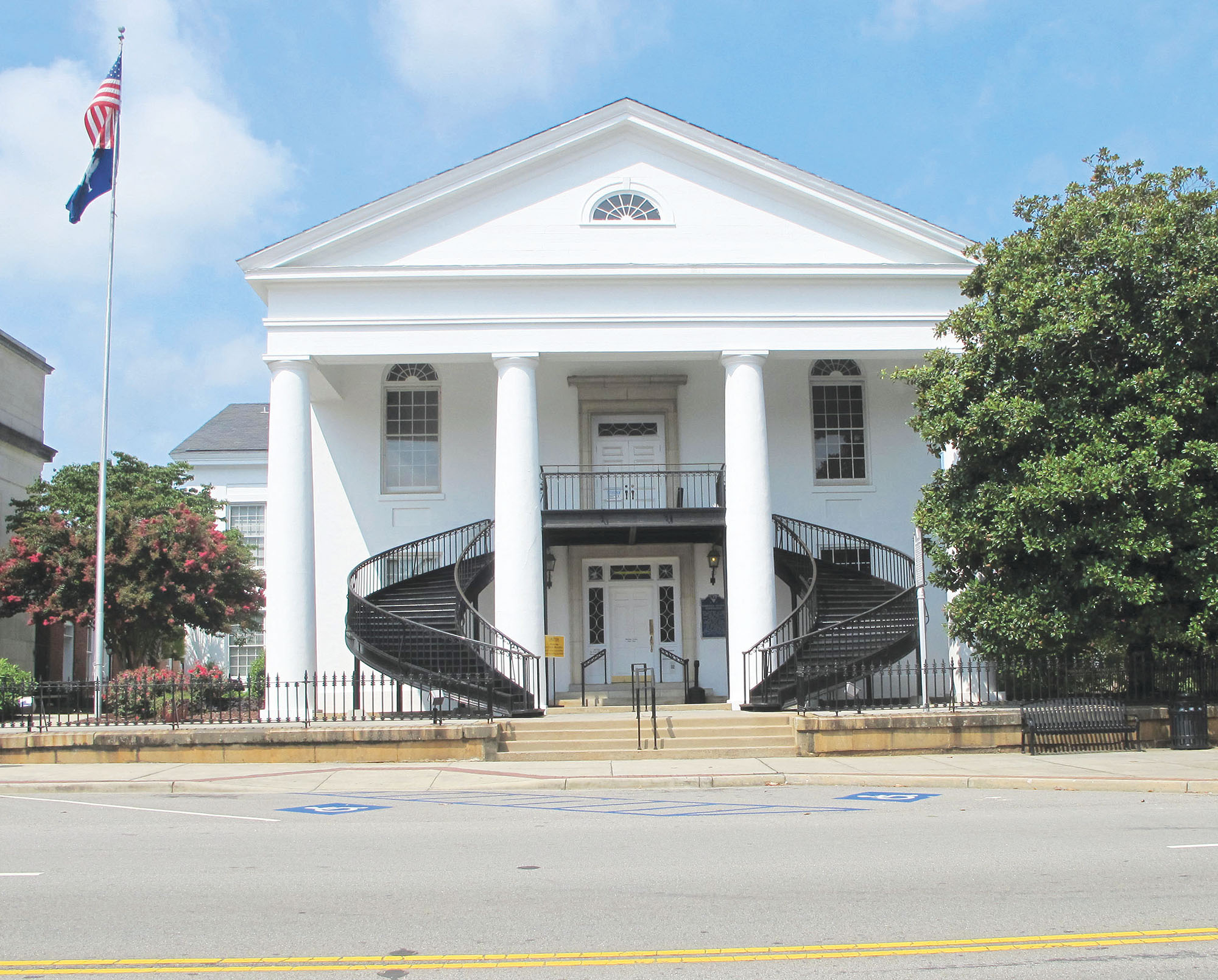
WINNSBORO (Jan. 22, 2016) – Fairfield Memorial Hospital is once again behind on its electric bill, and Tuesday night Winnsboro Town Council nixed the hospital’s proposal to waive late fees.
Council voted unanimously to reject the bid, opting instead for a counterproposal to waive the late fees only after the hospital has made good on 18 months of payments, provided the payments are made on time.
“What they want us to do is waive those late fees,” Winnsboro Mayor Roger Gaddy said, “and we have a history with Fairfield Memorial with their previous contract that they complied with for about four months and then came in arrears. They wanted us to delay them right off the bat; what we said is we will waive them after 18 months of prompt payment – 18 months of a 36-month contract.”
Gaddy, who is also a physician who serves on the Fairfield Memorial Board of Directors, abstained from the vote.
Fairfield Memorial, as of Dec. 8, owes the Town $188,699.99.
The counteroffer will be sent back to Fairfield Memorial and Council will officially vote on the measure during their Feb. 2 meeting.
Mt. Zion
Gaddy also said the Town has sent a letter to the Friends of Mt. Zion Institute (FOMZI) requesting a meeting with any seriously interested prospective developer of the former school property. Gaddy said Council would like the meeting to take place as soon as possible.
After meeting with Council in executive session on Jan. 5, FOMZI Chairwoman Vicki Dodds said her group had significant interest from a developer, who had made more than one visit to the site.
The Town officially transferred the property at 205 N. Walnut St. to FOMZI on March 4, 2014, with the caveat that the buildings had to be stabilized within 18 months to meet Winnsboro’s Dangerous Building Code or be torn down. After the Jan. 5 meeting, Dodds revealed the old school building had failed to pass inspection and was not up to code.
Tuesday night, Gaddy said any prospective developer should be committed to “immediately stabilizing the building,” for Council to give them serious consideration.
RIDGEWAY (Jan. 22, 2016) – Town Council members, during their Jan. 14 regular meeting, resolved to get tough with owners of a pair of downtown restaurants who have failed to remit any of their portion of Ridgeway’s hospitality tax. Both owners have since told The Voice that they intend to pay, although at press time no payments had been remitted.
Two of the town’s four establishments subject to the tax – Laura’s Tea Room and Ridgeway Station Café – have made no payments to the Town since the ordinance establishing the tax went into effect last August. The first payments were due on Sept. 20.
Over that same period of time, the Old Town Hall Restaurant and City Gas have combined to kick in more than $2,559 to the Town’s coffers.
The issue first came to light during Council’s Jan. 7 work session, and during the Jan. 14 meeting when Council learned that the Tea Room and the Station Café had ignored late notices, Council considered the strength of the ordinance and the possible consequences for failing to comply with it.
“I think the ordinance is good, but I think now we’re failing to follow through with the ordinance,” Councilman Heath Cookendorfer said. “We have to be more diligent as a Council to enforce it. I think we’re at the point now where we should be moving to the secondary section with this for some of these people, correct? We’re at that $500 penalty for some of these people.”
The ordinance, which passed final reading last May, imposes a 2 percent tax on the gross proceeds of the sale of prepared meals and beverages, to be paid to the Town by the 20th of each month, beginning Sept. 20, 2015. Any tax not timely paid shall be subject to a 5 percent penalty, the ordinance states, each month. Failure to comply “shall constitute a misdemeanor,” the ordinance states, punishable by a $500 fine or 30 days in jail, or both.
“The thing that we have to get in their minds is that it’s not their money,” Cookendorfer said. “It’s tax money.”
Indeed, the 2 percent has been collected by restaurants from customers, as an additional tax on their bills. But if a restaurant has failed to tack that 2 percent onto customers’ bills, the ordinance states the establishment is still responsible for paying that 2 percent of gross proceeds to the Town.
Karen Siegling, owner of the Station Café, confirmed Tuesday that she has been collecting the 2 percent from customers, but said her restaurant has been struggling to make ends meet.
“We had some difficulties here at the restaurant,” Siegling said. “We’ve just been struggling.”
Siegling told The Voice that she intended to pay this week.
“I’m not trying to cheat anyone on my taxes, I promise you,” she said.
Carol Allen, owner of the Tea Room, said she was planning to pay either Tuesday or Wednesday. She also confirmed that she has been collecting the 2 percent from customers.
“I just plain didn’t get it done,” Allen said. “I felt so horrible when it came out.”
The associated paperwork, Allen said, is a little more difficult for her business, which sells more than just food.
While failure to pay could land the offenders in some hot water, it also puts the Town in a precarious position when preparing its annual budget. At press time it was not known how much the restaurants owe.
“And the thing about it is, the merchants who are paying this,” Herring said, “part of the hospitality (tax) goes back to help support them to bring people here for tourism.”
During Council’s discussion of the tax last March, then Town Councilman Russ Brown, who introduced the tax, said that state law regulated how hospitality tax revenues could be spent. The revenue could, he said, go toward tourism-related, cultural, recreational or historic facilities, as well as highways, roads, streets or bridges providing access to tourist destinations.
The revenue could also go toward advertising and promotion of tourism development, and to water and sewer infrastructure serving tourism-related facilities. The funds could go toward preserving the arch on the old school property, and for promoting Pig on the Ridge, Arts on the Ridge and other Town events.
The ordinance, which only states the taxes should be “timely remitted,” gives Council considerable leeway as to when to impose the 5 percent penalty and when to enforce the $500 fine. But with the Tea Room and the Station Café four months in arrears, Council elected to send out one more letter with a copy of the ordinance, informing both that they owed not only the 2 percent in back taxes, but the 5 percent penalty for each month as well.
Those notices may be unnecessary, if Allen and Siegling pay as promised. However, if those notices go unanswered, Council said, the restaurateurs could find themselves facing a municipal judge.
Shoppers prepare for Walmart’s final days. (Photo/Barbara Ball)
WINNSBORO (Jan. 22, 2016) – With the announcement last week that Wal-Mart Stores, Inc. plans to shutter 154 stores nationwide, including its Walmart Express store at 721 Highway 321 Bypass S. in Winnsboro, local leaders have been scrambling for a plan to fill the enormous retail gap that will be left by the closing, or perhaps delay or even hold off for good the Jan. 28 closing date.
“The thing that is paramount in everyone’s mind is getting those people placed who are losing these jobs,” Terry Vickers, President of the Fairfield County Chamber of Commerce said.
Brian Nick, Senior Director of Corporate Communications at Wal-Mart Stores, Inc. said approximately 300 employees would be affected by the Winnsboro closing. Employees would be paid 60 days beyond Feb. 10, Nick said. Employees who qualify for severance pay (full- and part-time employees who have been with the company for more than one year) may begin receiving that pay after the 60 days has expired, he said. Some employees may be relocated to other stores, Nick said.
Downtown Renaissance?
Big box retailers can have a devastating effect on Main Street, U.S.A., particularly in small, rural communities.
According to a 2010 study by the Center for Community Planning and Development at Hunter College in New York, Walmart kills three local jobs for every two jobs it creates. A 2004 study by Pennsylvania State University found that U.S. counties with a Walmart suffer an increase in poverty over time compared to counties without a Walmart. And a 1997 study by Iowa State University found that small towns can lose half of their retail trade within 10 years of a Walmart opening in their community.
When Walmart opened its doors in Winnsboro in 1998, it quickly became the biggest kid on the block, drawing even more traffic away from Congress Street and onto the 321 Bypass. With its closing, a retail void opens that Vickers sees as an opportunity for downtown.
Bringing downtown back to life has long been a goal of the Chamber. Now there is considerable impetus to do so. For the transition to be successful, both merchants and consumers will have to adapt.
“We’re looking for things to service us when we lose Walmart,” Vickers said. “We’ve talked to the hardware store (Winnsboro Builders Supply, 340 S. Vanderhorst St.) and the Butcher’s Block (324 S. Congress St.) about the fact that they could see more business. We’ve asked them to take a look at their inventory and keep stock of what people will be looking for.
“The main thing is for our citizens to look here first,” Vickers continued. “And if there’s something that you don’t like about a business, make suggestions.”
Downtown merchants, Vickers said, may have to rethink how they have traditionally done business. In Winnsboro, she said, practically everything except the CVS Pharmacy and the Bi-Lo closes shop by 6 p.m. And some still observe that old Southern tradition of closing at lunch on Wednesdays.
“We’re definitely going to need to look at store business hours,” she said. “If a business is going to be competitive, they have to structure their hours so they are convenient to customers.”
Businesses may also have to consider adding staff, she said, and breaking them up into shifts in order to cater to customers who can only shop after 6 p.m.
A United Front
Filling the gap left by Walmart cannot be the Chamber’s cross to bear alone. If downtown is truly going to be the next destination for Winnsboro shoppers, it is going to take a joint effort between merchants, the Chamber, the Town of Winnsboro and County Council. At the very least.
For starters, Vickers said, downtown is going to have to look and feel like the place to be. Toward that end, she said, additional lighting may be necessary, particularly well-lighted parking areas. An expanded police presence also wouldn’t hurt, “so people can feel safe and relaxed shopping downtown after hours,” Vickers said.
The Town has done an excellent job, Vickers said, on downtown’s landscaping, and she hopes that can be expanded in the future. The walking trail on Mt. Zion Green is paved now, she said, and the growing monument park there has added an attraction for the downtown area.
During Tuesday night’s Town Council meeting, Winnsboro Mayor Roger Gaddy addressed the loss of Walmart in his closing remarks.
“It certainly will have a detrimental impact on the quality of life here in Fairfield County,” Gaddy said. “Hopefully we will be able to find some retailers to come in and fill the gap and the large void that Walmart is leaving us.”
After the meeting, Gaddy told The Voice that additional monetary support for the Chamber may be one of the things Council looks at when budget talks ramp up in March.
“I’m sure that our downtown development folks will be talking with the merchants to try to see if we can help them in any way to enhance their business,” Gaddy added.
The County’s role, meanwhile, remains unclear. Vickers said she had not yet spoken with the County, and our phone calls to Chairwoman Carolyn Robinson (District 2) were not returned at press time.
Can it be Undone?
The Winnsboro location is one of only three S.C. Walmart stores to call it quits by the end of the month. Gray Court in Laurens County, and Pacolet in Spartanburg County are the other two. Worldwide, 269 locations are going out of business, putting 10,000 out of work in the U.S. and 16,000 across the globe.
State Sen. Creighton Coleman (D-17) told The Voice this week that he had spoken with Gov. Nikki Haley and S.C. Secretary of Commerce Bobby Hitt about a possible plan of action.
“We’re meeting with Wal-Mart next week,” Coleman said, “to see if they may be willing to reverse their decision. And if not, we want to do everything we can to get people who will be losing their jobs into new positions.”
If a stay of execution is off the table, Coleman said the next concern was the physical building itself.
“Will they let someone else come in and use it,” Coleman said, “or will they tie it up and let it remain empty?”
And if the commercial winds blow back toward downtown, Coleman said he would have to have discussions with Hitt to determine if there were any state money that could help kick-start Congress Street.
Lemons to Lemonade
As she said in her letter to the editor this week (page 2), Vickers hopes to turn the sour news of the Walmart closing into a refreshing future for downtown. And she is confident that the building blocks are in place.
“We have the makings,” Vickers said. “We have two drug stores (CVS on the Bypass and Price’s at 110 S. Congress St.) and Bi-Lo. We want to talk to the manager of our farmers market to see if we can have a storefront where people can get fresh vegetables. Winnsboro Builders Supply carries everything Walmart did and more.”
As the process takes its first baby steps, Vickers said the Chamber is already courting grocery store chains to gauge their interest in Winnsboro. One of the community’s more immediate needs, she said, is a hunting and fishing supply outlet. Whether that is something that Builders Supply expands to take on – or, as Gaddy suggested, something Northside Feed and Seed tackles – remains to be seen.
The one thing that is certain is that it won’t happen overnight. There may be slim pickin’s for Winnsboro consumers for some months to come.
“The kicker at first is just going to be to keep the lights on and the doors open later,” Vickers said.
BLYTHEWOOD (Jan. 21, 2016) – Another Rural (RU) zoned property on Rimer Pond Road is on the block for rezoning; however, this one hasn’t drawn the ire of neighbors as have other recently requested rezonings on the road.
A request by Kevin Steelman, representing Land Tech developers, to amend the current RU zoning on a 41+ acre Rimer Pond Road property to Residential Low Density (RS-LD) zoning for single-family homes will be heard by Richland County Planning Commission at 1 p.m., Monday, Feb. 2.
The tract lies between the VillageChurch and a 5-acre parcel across from Blythewood Middle School that developer Hugh Palmer recently requested to have rezoned for commercial use. That request failed to win approval of Richland County Council in December when the motion died with a 5-5 tie vote.
“This property already has higher density zoning on both sides and RS-LD on the back side,” Steelman told The Voice. “We decided low density zoning would be more in keeping with the surrounding area. I live in the area and we want to keep a rural feel to the road.”
With a pond stretching along the road frontage leaving no room for a road, Steelman said he anticipates leaving a border of trees the length of the property with only one entrance into the neighborhood off Rimer Pond Road.
“Land Tech already owns a 30-acre track adjacent to the 40-acre property,” Steelman said. “We have the option of a second entrance through our other property onto Longtown Road West.”
Steelman expects to build about 60 homes on the site and has a commitment from Palmetto Utilities for sewer.
“As for water, we have the option of using the Town of Winnsboro line that runs through the property, or we can use the City of Columbia line that is being installed along Rimer Pond Road. It will depend on the timing of the project and the fees,” Steelman said. “We have spoken with both providers and don’t anticipate any issues with either.”
“I don’t think any of us really want any more development along Rimer Pond Road,” said resident Michael Watts who has frequently opposed other requested rezonings on the road. “But, realistically, something is going to go there. We don’t want commercial and we don’t want medium or high density, so this is probably the best we can hope for.”
To print a copy of the Planning Commission agenda and rezoning request packet go to richlandonline.com or contact Susie Haynes at 576-2176. Steelman can be reached at 540-3474.
BLYTHEWOOD (Jan. 21, 2016) – As Town Council’s proposed shell building, to be built in the park across from Town Hall on speculation, moves forward, there is no guarantee that the Town will reap a profit or even break even when the 3,800-square-foot building is sold, Ed Parler, the Town’s Economic Development Consultant, told Council members during their monthly workshop Tuesday morning.
“Whether the Town gets back all the money it puts into the shell depends largely on whether we sell the land with the building or lease it over a period as long as 99 years,” Parler said, explaining that the land is currently valued at $130,700 on the Richland County Tax books.
“The cost of the shell will be $456,881, paid for by a grant from Fairfield Electric Company. When you add on the $100,000 – $200,000 it will cost the end user to finish the interior of the building and the $130,700 cost of the land, the sale price could total up to $800,000,” Parler said. “I don’t think it is reasonable to expect that someone will offer that.”
Including the land in the sale will make it difficult to get the full value of the land, Parker said. “There’s no guarantee we’ll get every dollar of that back. We just have to look at this as an economic incentive project.”
Parler told Council that leasing the land is a more favorable option than selling it for several reasons. A lease would lower the purchase price of the project, making the sale more attractive to an end user, and a long-term lease might allow the town to recoup some of its investment. Parler provided a spread sheet outlining various returns the Town could realize from a multiple-year lease. Lease payments of $330/month at 1 percent over 40 years, for instance, would total $158,400. He said a long-term lease could be done without clouding the financing of the building.
Parker said that while a deed restriction on the land would allow Council to limit the kinds of businesses that could operate on the property, a lease would allow the Town to further restrict the use of the property by future owners.
The grant, which was originally to be used by the Town to build a restaurant for Sam Kendall three years ago, must be used for specific economic development projects or the Town must return it plus interest and penalties to Fairfield Electric.
A new timeline for the project is to put it out for construction bids in early February, to award bids in late February or March, begin construction in March, advertise for the sale of the building in April and close on the property in June.
While Council did not vote Tuesday on whether to move forward with the project, it did not stop the shell’s progress, prompting Parler and Ralph Walden, architect of the shell building, to go before the Board of Architecture Review (BAR) on Tuesday evening to seek a Certificate of Occupancy (COO).
BAR members approved the building, but because Walden was not prepared to present lighting, landscape, signage and a site plan, the BAR granted a conditional COO until which time those items were brought to the board.
WINNSBORO (Jan. 15, 2016) – During County Council’s annual retreat held Saturday in Richland County, Councilwoman Mary Lynn Kinley (District 6) had harsh words for the media, saying it was spreading misinformation to the public about the County and not letting people know what Council is doing.
Ironically, Kinley did not mention that the County did not give notice or information about the retreat to the media or the public until just before 5 p.m. on Thursday, less than two days before the start of the meeting, but still within public notice requirements. The retreat was held at the Midlands Technical College (MTC) off Farrow Road for the second consecutive year.
While Council Chairwoman Carolyn Robinson (District 2) told The Voice last week that there was no charge for the facility, sources on Council confirmed that the County paid $1,500 to a facilitator for the meeting even though Interim County Administrator Milton Pope ended up conducting the meeting.
Specifically, Kinley called for hiring a County Public Information Officer to combat what she called “misinformation that goes out (in the media).”
“There’s so much of it out there,” she said. “We need to put the word out there with our own spin about what we’ve done. I think we need to have something coming from our organization to the public. We need the information to come from one source – the County. That (public information) person could come and talk with each one of us to see how he/she could help us in our districts. That’s a caring touch we need to have right now with what the County has going on.”
Kinley gave as an example “misinformation put out against the pellet plant,” but gave no specifics.
“It takes a lot of time to get the details out there. And, to me, that would be the details of information for what we need to get out there,” she said.
Councilman Kamau Marcharia (District 4) agreed.
“Over the last two years, Council has constantly been under attack for not giving out information. Intentional misinformation is put out there. We need a professional person to give the public accurate information and do it with our right decision. We don’t even respond to attacks on Council,” Marcharia said.
Councilman Walter Larry Stewart (District 3) questioned the value and expense of creating such a position. District 7 Councilman Billy Smith agreed, saying he could not support hiring someone for that position.
“We have different views and opinions (on Council), so we might have someone putting something out that some of us don’t agree with,” Smith said. “Sometimes misinformation is a perception. It may not be misinformation at all. I think we need to tread lightly here.”
Kinley then backtracked, taking a different tack.
“The (public information) person could work with administration to let the public know what services are available in the County, where they could go to get information,” she said.
“Don’t we have someone who answers the County phones who could put callers in touch with the services they’re seeking?” Smith asked.
Both Kinley and Robinson shook their heads ‘no.’
“With more employees per capita than any other county, I find it hard to believe we don’t have at least one person who can help direct callers,” Smith said.
WINNSBORO (Jan. 15, 2016) – Although the Elliot Davis auditing firm noted two findings in its 2015 audit of Fairfield County, the firm reported to County Council Monday night that they had issued an “unmodified opinion” of the County’s financial statements.
“Based on our audit procedures, we in our opinion believe that your financial statements are materially correct,” Brian D’Amico told Council Monday. “As we performed our audit tests, we didn’t find any material misstatements as part of our audit work.”
The County’s bottom line, however, did diminish from 2014 as a result of new accounting standards that require local governments to show their share of the unfunded liabilities from the State Retirement System and the Police Officers Retirement System. Fairfield County’s share of that burden, D’Amico said, came to $19.3 million.
“It’s one of those thing that we have to put on our books,” Interim County Administrator Milton Pope said. “Through the process of this new accounting rule, we have to take on the liability for those things.”
The cash contribution the State is requiring the County to pay, D’Amico said, has not changed and is being remitted on a regular basis. How the liability will affect the County’s credit rating, he said, remains to be seen.
“This is the first year that any governmental agencies will be recording this, so what we haven’t really seen is how this ultimately going to affect your credit ratings,” D’Amico told Council. “The next time you would have a bond issuance and you should send them these financial statements, it’s almost like you’ll have to have a separate conversation (to say) here’s my balance sheet with the pension liabilities, but here’s what my balance sheet would look like without it for them to give you fair understanding of the true financial position of the County.”
Cedar Creek Road Property
D’Amico noted that last year’s sale of County owned property on Cedar Creek Road netted the County more than $1 million. However, that property had not been previously recorded in the County’s past financial statements. The Finance Department notified auditors of the error, D’Amico said, then went back and evaluated other properties that might also have not been recorded.
“In doing so, we calculated a restatement related to these pieces of property, and that totaled $923,000,” D’Amico said. “It was a handful of properties. That was one of our findings.”
When the properties were originally purchased, prior to 2003, financial statements were reported on a cash basis, D’Amico said, “So when you would make a land purchase, you didn’t have to capitalize it, you didn’t have to put it on your balance sheet.” In 2003, standards changed, he said, and the County hired a third party to reevaluate the County’s position to include all land, equipment and buildings.
“These pieces of property were just missed as part of that,” D’Amico said.
Treasurer’s Office
Auditors also found in the Treasurer’s Office that a third party is completing bank reconciliations on behalf of the Treasurer.
“That would be OK, except that we need someone else to review, preferably the Treasurer or someone in her office, to review those and make sure those reconciliations are taking place appropriately, correctly, accurately,” D’Amico said.
WINNSBORO (Jan. 15, 2016) – After two years of planning the renovation of the County Courthouse and the construction of a temporary Courthouse in the Hon Building to serve Fairfield County during that renovation, those plans may have to be scrapped due to cost, Interim County Administrator Milton Pope told Council members during their annual retreat Saturday. The news prompted Council members, at the end of the meeting, to place the Courthouse renovation at the top of their priority list for the coming year.
While renovation of the existing Courthouse will cost $1.9 million, and is within the project estimate outlined in the 2013 $24 million bond, that estimate did not include $3.5 million it will take to construct a temporary Courthouse in the Hon Building, Pope said.
“Nobody thought about that. The initial estimate was based on what someone kind of thought the project would cost. Now, we have the actual numbers,” Pope said. “And an estimate is not the same as actual cost. We’re going to have to restructure the projects’ estimates. It’s not that the money’s not there, but it’s not in a particular bucket.”
Pope said the problems with moving the Courthouse to the Hon Building and renovation of the current Courthouse are multiple.
“(The Courthouse in the Hon Building) is temporary and we aren’t going to be able to find a business (to move in to it) that needs a court room. We would be walking away from almost $4 million. Then the big question (with the current Courthouse) is it’s a challenging space based on how it was built for today’s needs. To make it ADA compliant, have jail cells in the back, a lot of people say they wouldn’t want to move back,” Pope said. “But the County Courthouse has to be located in a municipality in the County Seat. So we would have to annex the Hon Building property if we stayed in it.”
“What would be the estimate to build a new Courthouse?” Chairwoman Carolyn Robinson (District 2) asked.
“New construction is sometimes more cost effective than renovation,” Pope said. “If we were to decide to do that, it would be a new issue altogether. But we could use the engineering plans and architectural drawings we already have on any location.”
“There are some major decisions we need to make,” Pope told Council.
He said his recommendation would be to finalize the prices on some of the other bond projects before tackling the Courthouse renovation. Moving bond money from one project to another to cover costs would have to be affirmed with a resolution by Council, Pope said.
When asked about a timeline for completing the various bond projects, Pope said that would be worked out in this year’s budget process.
Other goals
After listing the Courthouse renovation as their most critical goal for the coming year, Council added the following as their next top priorities: 1) conduct a county department performance audit, 2) improve the quality of life for the county’s citizens, particularly seniors, and 3) provide water and sewer infrastructure for western Fairfield County.
Lesser priorities included:
–complete the fire/EMS/recreation projects
–adopt a new and revised animal control ordinance
–lower the tax burden on the maximum number of citizens
–install signage at the County lines and other locations
–implement the classification and compensation study
Pope also announced that the County was recently close to making an offer to a candidate for Director of Economic Development, but that it had not worked out. He said he had re-advertised for the position and, in the meantime, was handling the duties for that position with the help of the Central SC Economic Development Alliance.
Pope told Council that the County’s fiscal health is good and that the County’s total fund balances have grown from $8,457,166 in 2013 to $15,147,442 in 2015.
RIDGEWAY (Jan. 15, 2016) – A potential weakness in the plan to relocate the Ridgeway Police Department from its Palmer Street station and into the Century House was hashed out during Town Council’s Jan. 7 work session, but not entirely resolved.
Pointing to the arrest last month of a man wanted out of Tega Cay, N.C. on assault charges, Officer Christopher Culp asked Council to consider the potential risks of having to detain a violent suspect in a Century House office.
“On an average day, I’m trying to figure out how many times we bring an individual, if the police station moves here, how many times a day that you would actually bring someone here that could be potentially dangerous,” Councilman Heath Cookendorfer said.
Anyone, Cookendorfer argued, has the right to walk into the police station just as they do the Century House, so the danger to bystanders would be the same.
“The difference is, if they come into the police department, they already have a problem,” Culp said. “If they come in here, you’ve got people coming in to pay their water bill, or they’re coming in to look around or something. If I get somebody that’s committed a murder, attempted murder, assaulted an officer, and let’s say I bring him in and he decides (he’s) not going in, he decides to fight, so if we’ve got a group of people standing in the front door when I bring him in, I can’t control that.”
Cookendorfer questioned why such a dangerous suspect would even be brought to the local station in the first place, and not delivered directly to the Fairfield County Detention Center. Culp said paperwork is required to transport a prisoner to the Detention Center, paperwork kept at the police station.
“You’re not going to keep warrants inside your vehicle,” Culp said. “If I stop someone out there who has warrants on them, I have to come back, come into the police department and I have to bring them in because I can’t leave them in the car unattended, bring them in, get the warrant, and then transport them back to the police department.”
Culp acknowledged that assistance was available from the Sheriff’s Office; however, if all units were tied up at the time, he would be on his own.
Culp also said that the mere presence of a police station attracts more dangerous customers than just a town hall.
“See how we’re having this meeting tonight? The police department would be here and it would be active,” Culp said. “Let’s say (someone) walks in, battling mental illness, with a gun. All of our lives are in danger here, versus over there at the police department, there’s only one person and I’m trained to handle a situation like that.”
But Cookendorfer said the relocation of the police department was a financial issue, above all. According to Cookendorfer, it costs the Town $477 a month to operate the police station at its current location – and that is, he said, including the cost of Internet service, which the police station does not currently have. It costs the Town $408 a month to operate the Century House, he said.
Speculating that the Town could rent the police station for $600 a month, Cookendorfer estimated that the Town could add, after the Railroad took its cut, $2,304 to its budget every year.
Culp, meanwhile, said he has written more than 100 citations in his first two months of duty, with charges ranging from $200 to $1,275 per ticket. If that trend continued, the police department could more than make up for the rent and utilities.
Cookendorfer pointed out that of the $4,990 in fines collected in December, the Town’s share was $1,963, with the remainder going to the State.
“It’s a money thing,” Cookendorfer told Culp. “Talking about moving the police department here, we talked about (it) before you (Culp) came on staff. You knew about it and I understand during the interview you talked about moving here. Your salary was based on the fact that we thought we (were going to be renting out the police station). That was part of our decision, finding money.”
“However the town thinks is best, I’ll run that job,” Culp said. “I just want the employees and Councilmen to know that this is a big liability. It’s going to happen.”
RIDGEWAY (Jan. 15, 2016) – Owners of a pair of Ridgeway business could be on the hook for fines or even jail time for not kicking in their share of the Town’s hospitality tax, according to documents obtained from Town Hall this week.
The issue came to light at Town Council’s Jan. 7 work session as Mayor Charlene Herring suggested revisiting the ordinance to ensure it was clear on the payment schedule and that it included penalties.
“Some people were given the option to pay once a year, some people were given the option to pay every three months, some were given the option to may once a month,” Herring said.
But Herring was reminded by the Town Clerk that those options were only part of Council’s initial discussions of the tax. The ordinance, which passed second reading last May and went into effect on Aug. 1, clearly states that the tax (2 percent on the sale of prepared meals and beverages) is due once a month, no later than the 20th day of the month.
Of the Town’s four establishments subject to the tax, only two – the Old Town Hall Restaurant and City Gas – have made their monthly contributions. The Tea Room and the Ridgeway Station Café have made no payments.
In 2015, the Town took in a little more than $2,559 in hospitality taxes from the two businesses making their payments.
Town Clerk Vivian Case told Herring during the Jan. 7 meeting that the Town had sent out late notices to the Tea Room and the Station Café, but had received no response.
According to the ordinance, hospitality taxes not paid on time “shall be subject to a penalty of five percent of the sum owed for each month or portion thereof until paid.”
Failure to pay the tax, the ordinance states, “shall constitute a misdemeanor punishable by a fine of not more than $500 or imprisonment for up to 30 days, or both.”
Council is expected to revisit the issue during their Jan. 14 regular meeting.