Category: Government

  • Committee Proposes New County Courthouse

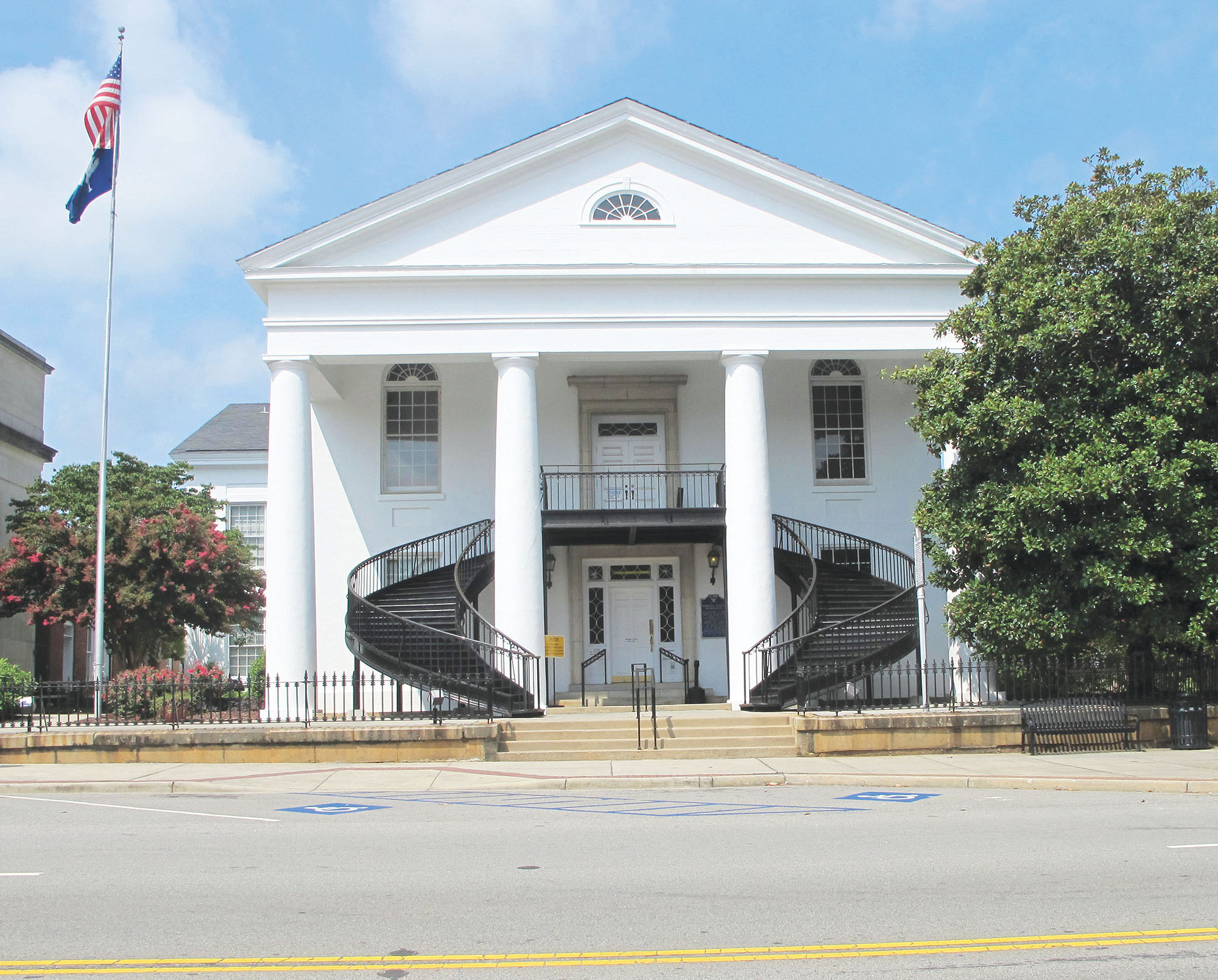
    FF Courthouse copyWINNSBORO (June 23, 2016) – It appears that there is a new plan for what to do about Fairfield County’s beautiful but aging County Courthouse.

    An ad hoc committee of the Fairfield County Council – consisting of Chairwoman Carolyn Robinson and Council members Kamau Marcharia and Dan W. Ruff – along with county administrator Jason Taylor and Deputy Council Administrator Davis Anderson met Tuesday night to discuss options for temporarily relocating the courthouse.

    The current courthouse, designed by famous architect Robert Mills and built in 1823 – 1824, has major mechanical and environmental problems. For example, the air conditioning system in the building is 50 years old, according to Anderson.

    Robinson recited some of the history of their efforts since 2013 to find a solution. The initial thought was to renovate The Hon Building as temporary location for the courthouse while the historic courthouse could be renovated. However, the cost of retro-fitting a temporary building for the courthouse increased to the point of being “unheard-of,” Robinson said, and that option has now been tabled.

    Instead, the committee agreed, with input from Taylor and Anderson, that they would present the following plan to the full Council for approval at its next meeting on June 27. The County will propose to build a new building on 1.54 acres it already owns just down from the courthouse on S. Congress Street in Winnsboro. There are already two County buildings for the Zoning and Planning Commission and Magistrates Court at that location.

    If the full Council approves this concept, the next step would be to get the approval of the 6th Circuit Court Judge, the Clerk of Court and the Chief Justice of the S.C. Supreme Court. Robinson emphasized that the County had to obtain the buy-in of these three individuals for any plans to proceed.

    Once that is accomplished, the next steps would be to meet with the engineers and architects on building plans and designs and to determine costs.

    When the new building is finished, the functions of the courthouse could be relocated there while the County fixes up the historic courthouse. The County already has $1.6 million earmarked for these renovations.


  • Budget Clears First Reading

    BLYTHEWOOD (June 23, 2016) – Town Council on June 14 passed first reading on their 2016-17 general fund and accommodation and hospitality tax budgets, which are expected to increase, respectively, by $15,200 and $35,700.

    The general fund is proposed at $1,596,679 for the coming fiscal year, up from $1,341,034 last year. The accommodations tax budget for 2016-17 is set at $240,700, up from $225,500. The hospitality tax budget is expected to increase by $35,700 from $ 346,800 last year to $382,500 next year.

    While the governing body’s salaries and benefits are down slightly, from $49,807 to $48,136, the general fund budget reflects an increase of about $100,000 in town employee salaries. That increase includes a 3 percent merit increase for those employees.

    On the revenue side, the town expects to bring in $100,000 more in building permits and fees next year ($238,000) than it did last year ($139,000). Council also expects an increase in Local Option Sales Tax (LOST) from $340,000 last year to $365,000 next year. Sunday liquor licenses are going to be up from $3,750 to $7,500. And a new source of revenue for the town is $2,400 in park rental fees, to help offset park and recreation expenses. Total administrative expenses will be up from $379,857 to $504,098.

    Public Works expenses are up $42,688 from $213,375 to $256,063 due primarily to landscape contracting, maintenance and repair of Town Hall and the streets and a $300 increase in clothing allowance for public works employees.

    The costs for maintenance and repairs in the park will be down almost half, from $9,440 to $5,000 while park improvements (preschool playground addition) will cost about $16,000 more than last year, increasing from $10,300 to $26,600.

    In the category of outside agency requests, the Blythewood Chamber of Commerce was hoping to increase its financial support from Town Hall to $20,000, but that number shrunk to $12,500 when the mayor suggested at the June 14 meeting that he would like to see the Chamber concentrating more on the local mom-and-pop stores in town than the larger retailers who are not located in Blythewood. Council also decided to up donations for both Transitions and Christian Assistance Bridge from $2,500 to $5,000 and continue giving $1,000 to the Jeep Rogers YMCA. New donations include $5,000 each to Meals on Wheels and Senior Resources for a total of $33,500 for outside agencies, up from $15,500 last year.

    Council may be faced with spending $25,000 of its $75,500 capital improvement fun on the EV Quick Charger electric car station at the Exxon station on Blythewood Road if the charger cannot be repaired. The current charger became unusable some time ago. Council will also be spending $20,000 of capital improvement funds on a video security system in Doko Park.

    Of the expected $240,700 the town will bring in from accommodation tax revenue this year, 112,347 is available to the Accommodation Tax Committee for donations to events in the town that attract tourists.


  • Mayor: Saving Mt. Zion Would Require County Money

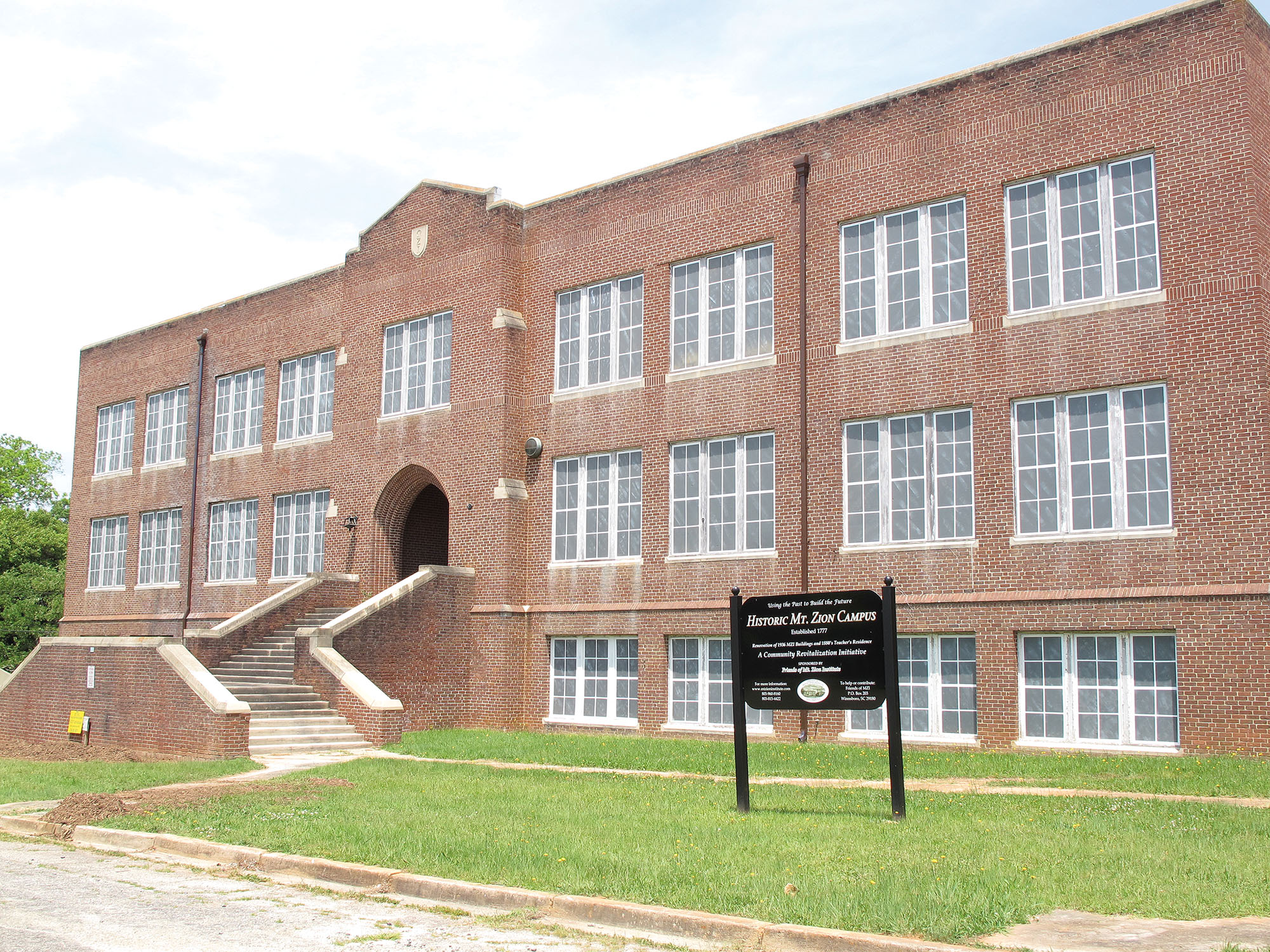
    Mt-Zion_IMG_3312 copyWINNSBORO (June 23, 2016) – As part of his report to fellow elected officials at Monday night’s Intergovernmental meeting at the Midlands Tech QuickJobs campus, Winnsboro Mayor Roger Gaddy told County Council that if the Mt. Zion Institute property was going to be saved, the County would have to get into the game.

    Winnsboro retained ownership of the school property, located at 205 N. Walnut St., last March after efforts to stabilize and restore the buildings there by the Friends of Mt. Zion Institute came up short of contractual deadlines. A proposal from the Banyan Foundation to convert the school building into market-level senior living apartments has since met with strong neighborhood opposition and has to date not progressed.

    The Town has held off on demolishing the buildings on the site, Gaddy said, until the details of the County’s long-range strategic plan can be made available.

    “I think we tried a developer – that didn’t work. We tried private citizens – that didn’t work,” Gaddy said Monday. “I think we’ve kind of bent over backwards to do what we could to save some of that facility, but I think the reality is it’s extremely expensive.”

    Monday night, Gaddy told County Council members that the County’s long-ranger planners, T.Y. Lin International, had, during their early planning stages, told the Town they thought it was important to save the Mt. Zion School property.

    Gaddy said he did not agree with T.Y. Lin’s initial assessment of the property, but added that saving the auditorium, at least, might be a possibility – but not without help from the County.

    “Being a realist, we know that if there is anything that wants to be done, we would have to have input – i.e. money – from the County for that,” Gaddy said. “I put this out because I would like County Council to think about that. If they don’t have any inclination, desire or ability to help with any significant funding of anything that this study might recommend, we would appreciate them letting us know and we’ll get rid of that eyesore.”

    The final draft of the T.Y. Lin study, the County reported later during Monday night’s meeting, was due on July 11. A 30-day review period will follow, the County said, and the final document will be available by Aug. 15.

    “Winnsboro certainly does not have the funds or ability to be able to do any significant renovations,” Gaddy said. “It would be nice to maybe save a minimal part of it, but if there’s not any significant viable partnership that can be done with that, then I have no problem, neither does the rest of Town Council, with making more green out of it.”

    Water Updates

    Gaddy also reported that the Broad River water project was running “a couple of months” behind schedule. The holdup, he said, was in securing all the necessary easements to run the water line from the river and into the Town’s reservoir. Gaddy estimated that half of the easements had been acquired, but for the rest, condemnation procedures would be necessary.

    The Town is also in the process of securing a $6 million bond for utility infrastructure improvements, Gaddy said.

    “Most small towns our size, their infrastructure – water, sewer – most of the stuff under the ground has been there for quite some time,” Gaddy said. “For years we’ve been doing a lot of patchwork, so hopefully we can do larger stretches of infrastructure and get it to where it’s up to snuff and we don’t have as many problems with it.”

    Gaddy also reported that the Town’s efforts to put in a permanent pump station in Blythewood in order to supply water for the Fairfield Commerce Park had run into a snag.

    “We haven’t hit a brick wall, but we have hit some speed bumps in that that were fairly steep,” he said. “(We’ve) run into easement problems with BB&T Bank and some contractual issues, and also trying to secure some property (where we can locate the) pump station. We’ll make progress on that and we’ll get that done, but it’s been somewhat arduous at best and slower than anticipated.”


  • County OK’s Surplus Land Sales

    Great North Road Repairs on Hold

    WINNSBORO (June 16, 2016) – County Council Monday night passed final reading on a trio of ordinances authorizing the sale of three Winnsboro lots deemed “surplus properties,” by the County.

    Chairwoman Carolyn Robinson (District 2) told Council the properties had been foreclosed on and the banks had turned the properties over to the County for sale. The properties, according to Fairfield County records, are each less than 1-acre lots.

    The ordinances authorized the sale of: 4459 Jackson Creek Road, which has a total market value of $44,300, according to County records; 128 Sixth Street, with a total market value of $7,000; and 550 Fourth Street, with a total market value of $7,500.

    Great North Road

    While Council agreed during their May 23 meeting to commit $83,000 from the road maintenance fund for the repair of Great North Road near Lake Wateree, County Administrator Jason Taylor told Council Monday that repairing the road now might be an exercise in futility.

    “I understand that the road is in poor condition and Council does wish to repair the road and fix the problems with it, and previously had allocated $83,000 toward that,” Taylor said. “But it has also come to our attention that there is a lot of logging going on in that area. If you pave the road now during the logging, the road will get damaged again.”

    Interim County Administrator Milton Pope told Council on May 23 that contractors were already in the area working on other County roads. Taylor told Council Monday night that to have those workers come back to tackle the road in September and October would only cost the County an additional $2,000.

    Council agreed to put off work on Great North Road until the fall.

    From Committee

    Council also gave approval to a new radio console for the Emergency Management Department at a cost of $81,636.39, paid for with a portion of the County’s 9-1-1 money from the state.

    The Emergency Management Department also got Council’s OK for $76,430 for the VitalClick Emergency Medical Dispatch program. VitalClick, Taylor told Council, is software and hardware that helps dispatchers narrow down the medical condition of 9-1-1 callers. Eighty percent of the cost for the program will be reimbursed by the state, Taylor said, with 9-1-1 funds covering the remaining 20 percent.

    Both purchases were forwarded for approval from Council’s Administration and Finance Committee.


  • Council OK’s Grass Ordinance, Police Department Funds

    RIDGEWAY (June 16, 2016) – Although one local resident urged Town Council to “take a step back” from the penalty included in a weeds and grass ordinance, Council unanimously passed first reading of the new law during their June 9 meeting.

    The ordinance will require residents to keep weeds and grass in yards mowed to less than 1-foot in height. Residents found in violation would receive a 14-day notice, after which time the Town would mow the lawn and bill the resident. Anyone failing to reimburse the Town for the mowing bill would have a lien placed on their property until the balance was paid.

    Dee Dee Ruff, speaking during the public comment portion of the meeting, told Council she felt placing a lien on someone’s property for tall grass “seems really extreme,” and she asked Council to reconsider that phase of the ordinance.

    During discussion of the ordinance, Councilwoman Angela Harrison said she empathized with Ruff’s feelings on the penalty, but then added that the Town gives residents “plenty of opportunities” to maintain their own property.

    Council will hold second reading during their July 12 meeting.

    Council also passed the final reading to an amendment to its fire hazards ordinance, upgrading the fines for the accumulation on property of debris and other material deemed by the Fire or Police chief to be a fire hazard. The existing ordinance carries a penalty of $50 or 30 days in jail. The amendment contains a $50 fine for first offense and a $100 fine or 30 days in jail for second offense.

    Police Department Funds

    Ridgeway’s police officer, Christopher Culp, reported to Council the need to include a new line item in the Town’s budget to cover the cost of travel for training sessions. Culp also told Council the $200 line item for uniforms needed to be increased to $500.

    Culp said he requires a total of 80 hours of ongoing training over the next three years in order to retain his certification with the S.C. Law Enforcement Division (SLED). Councilman Doug Porter recommended $600 for the new line item, leaving Council momentarily scrambling to find money within the 2016-2017 budget.

    Mayor Charlene Herring suggested taking the money from the utilities line item, where Council had budgeted a little more than $6,000. That figure, she said, was based on last year’s utility bills, which she said should be lower once the Town replaces the old and inefficient air conditioning unit in the police station.

    “I don’t think our utilities will be $6,000-plus a year when you get a new A/C unit in there,” Herring said. “You get that new unit in there and there’s the money right there. We could have saved money before now if it had been in there.”

    Councilman Heath Cookendorfer, whose committee has been charged with obtaining a new air conditioning/heating unit for the police station, explained earlier in the meeting that efforts to purchase the unit had thus far been thwarted by poor communication. On two occasions, he said, representatives of the Town had been told by a Columbia retailer that the unit was available for pickup, but when they arrived, the unit was not in stock.

    “We haven’t raised our millage rate since 2008,” Porter suggested. “That’s a source of income there.”

    Council agreed, however, to lift $1,000 from the utilities line item to cover training and uniforms. That would leave the utilities budget at $5,316.

    Water Rates

    Council OK’d second and final reading of an ordinance to amend water and sewer rates in advance of the 2016-2017 budget. In-town residential water rates will go from $15.10 to $15.25 for the first 1,000 gallons, and from $5.17 to $5.25 for overage costs. Out of town residential rates will go from $20.10 to $20.50 for the first 1,000 gallons, and from $6.42 to $6.50 for overage costs.

    In-town commercial rates will go from $18.10 to $18.50 for the first 1,000 gallons, and from $5.17 to $5.25 for overage. Out of town commercial rates will go from $23.10 to $23.50 for the first 1,000 gallons, and from $6.42 to $6.50 for overage.

    In-town residential sewer rates will go from $12.10 to $12.25 for the first 1,000 gallons, and from $4.52 to $4.75 for overage. Out of town residential sewer rates will increase from $13.10 to $13.50 for the first 1,000 gallons, and from $5.67 to $5.75 for overage.

    In-town commercial sewer rates will rise from $16.10 to $16.25 for the first 1,000 gallons, and from $4.67 to $4.75 for overage. Out of town commercial sewer rates will increase from $19.10 to $19.25 for the first 1,000 gallons, and from $5.67 to $5.75 for overage.

    Tap fees for in-town and out of town water will remain at $500 for non-bore three-quarter-inch taps and $900 for out of town non-bore 1-inch taps. Bore taps come at cost plus 10 percent. Sewer taps will be provided at cost.


  • Council Approves Amphitheater Architect

    BLYTHEWOOD (June 16, 2016) – Rick McMackin’s Landplan Group South has been selected by Town Council as the architect for the design of the proposed amphitheater in Doko Park. Because McMackin was the landscape architect for the original design work on the park, he was selected without issuing a Request for Proposal

    McMackin will be responsible for site prep/demolition, grading, stage retaining walls, concrete stage pad, dance pad, electrical, sound, lighting, landscaping and oversight of the construction of the band shell. McMackin’s contract is for $383,820.

    According to Town Administrator Gary Parker, the project is expected to be completed by mid-summer of 2017. Revenues for McMackin’s contract will come from the Town’s Hospitality and Accommodations Tax fund balances.

    Town Council gave its approval last month to an agreement with Palmetto Citizens Federal Credit Union for the naming rights for the amphitheater, naming it the Palmetto Citizen’s Amphitheater. The nearly $400,000 band shell is being funded with a grant and pledges from across the community, including $125,000 from the credit union for naming rights.


  • Council Up’s Chamber Budget

    BLYTHEWOOD (June 16, 2016) – During a four-hour budget work session on Tuesday morning, Town Council considered a request by the Blythewood Chamber of Commerce to more than double the Chamber’s funding from $9,500 to $20,000.

    Councilman Tom Utroska suggested only a 5 percent increase to $10,000, while on the high end, Councilman Malcolm Gordge, siding with the Chamber, suggested an increase in funding to $14,500. Councilmen Eddie Baughman and Larry Griffin favored a middle ground between $12,500 and $14,500. Mayor J. Michael Ross suggested instead a 25 percent increase to $12,000, which was approved unanimously by Council.

    But the vote came after a lengthy discussion of what the proposed increase would be used for and an airing of whether the Chamber was serving the smaller businesses in the town.

    “We’ve talked for three years now about the Town paying the salary of Mike Switzer, the Chamber’s Executive Director,” Utroska said. “Originally, it was presented to us by Mr. Switzer that other Town’s paid their directors. Then it was corrected that other towns do not, in fact, pay their (Chamber) directors’ salaries.”

    In an email to The Voice following the meeting, Switzer wrote that the requested increase in funding was needed to pay for office space for the Chamber, which now uses space in McNulty Plaza. That space is loaned to the Chamber by the building’s owner free of charge. The Chamber pays the cost of the office’s utilities, which comes to about $600 per year according to the Chamber’s published budget. But the office is for lease, so the Chamber might have to eventually move out, Switzer said.

    When asked by The Voice to explain a proposed $9,000 increase in the Chamber’s payroll budget from $21,000 in FY 2015-2016 to $30,000 in FY 2016-2017, Switzer said the increase would go to salary increases for him and the Chamber’s other employee Kitty Kelly, explaining that with increased membership, they were working more hours.

    With the proposed increase from Council, the Chamber’s overall budget would have increased from $41,000 to $71,500. Switzer told Council in April that besides a small monthly salary he receives 10 percent of the Chamber’s revenue.

    Griffin asked if the Chamber was doing “what we think it should be doing. If they are accomplishing what we want them to accomplish, that’s positive?”

    Later referring to Griffin’s suggestion that the Chamber should follow Council’s directions, Ed Parler, a Chamber Board member, told Council the Chamber functions independently of Council with a mission to serve its members.

    “The wishes of the Chamber members may not be consistent with the policies of the Town Council. We function as independent bodies,” Parler said.

    Ross suggested that the Chamber is doing a good job, that at the Chamber breakfast that morning, Switzer was talking about the big Kroger coming to Killian Road.

    “But it’s (Kroger) not in the town of Blythewood,” Ross said. “It’s on the outskirts.”

    As a member of the Chamber himself, Ross said the Chamber is in a better place than it’s ever been.

    “But I still think it does not seem to provide for the businesses in our Town Center District. Do those (Town Center) businesses get what they need from the Chamber? Is there a value for them in being a member of the Chamber?” Ross asked. “We can reach out to the (big stores), but they are not really in the town. Our Town Center businesses are Rimer’s Hardware, Blythewood Pharmacy, Pam’s Fashions, Papa John’s. These are our businesses. I think all of a sudden we’ve gone to a cloud above all that.”

    Ross said he did not feel comfortable increasing the Chamber’s funds to more than $12,500.

    “You’re moving forward,” he said to Parler, “and this ($12,500) is not going to buy you a building. But we don’t give funding to other organizations, not even Bravo Blythewood. They only get money from the Hospitality Tax funds for sponsoring events.”

    Utroska agreed with Ross that the Chamber had gone to a cloud that’s beyond the town of Blythewood.

    “Bringing businesses in from out of town is important, but I’d just like to focus on the local businesses too,” Utroska said. “The Chamber must show local businesses that it is of value (to them).”

    Ross said he and Town Administrator Gary Parker meet with Switzer, Parler and other Chamber Board members every two months.

    “We work closely with the Chamber and recently purchased way-finding signs for the town at the Chamber’s request,” Ross said. “I think the Chamber knows what we would like and that’s for even more to be done for small businesses, mom-and-pop businesses, that make up Blythewood. But we want all of them (businesses).”

    Before he finished, Ross said he was a little disappointed that the Chamber has abandoned the sponsorship of the town’s Christmas Parade.

    “I just think that was a perfect way to promote the Chamber,” Ross said.

    In an email to The Voice, Switzer said he was disappointed that Council did not approve the full funding request.

    “We are disappointed,” Switzer said, “and will make every effort to convince Town Council of the necessity and justification for our original request between now and final reading for the Town’s budget.

    Council passed first reading of the Town’s budget at the workshop and will take the final vote on Tuesday, June 28 at The Manor.
     

  • Runoff Likely in State Senate Race

    Sen. Creighton Coleman
    Sen. Creighton Coleman
    Mike Fanning
    Mike Fanning

    WINNSBORO/BLYTHEWOOD (June 15, 2016) – Voters across South Carolina went to the polls Tuesday for the statewide primaries, and at the end of the day, in one hotly contested local race, nothing was decided.

    In unofficial results in the Democratic race for the District 17 State Senate seat, incumbent Sen. Creighton Coleman came 92 votes shy of clearing the 50-percent-plus-1-vote majority threshold in the three-man contest. Unless those 92 votes can be found among provisional ballots across the district when local election commissions hold their canvassing Friday morning, Coleman will be headed for a runoff on June 28 with challenger Mike Fanning.

    Coleman racked up 4,575 votes (49.05 percent) Tuesday across a district that includes Fairfield and Chester counties and part of York County. Fanning, meanwhile, tallied 4,330 votes (44.65 percent), while Morgan Bruce Reeves was good for just 610 votes (6.29 percent).

    In Fairfield County, Coleman edged Fanning 2,281 votes (49.01 percent) to 2,066 (44.39 percent). Reeves picked up 307 votes (6.60 percent). Coleman fared better in Chester County, where he outpaced Fanning 2,097 votes (52.24 percent) to 1,681 (41.88 percent), while Reeves earned 236 votes (5.88 percent). Fanning did his damage in York County, where he earned 583 votes (56.66 percent) to Coleman’s 379 (36.83 percent). Reeves grabbed 67 votes (6.51 percent).

    According to the Fairfield County Voter Registration Office, in a three-person race the winner must pick up any amount above 50 percent of the total votes cast.

    Counties will certify their results Friday morning before sending them to the state. After the state also certifies the results, the State Election Commission will call for any necessary runoffs.

    Other Fairfield County Races

    Sheriff

    Will Montgomery will get another four years as Fairfield County Sheriff, beating out Marvin Willis 3,732 votes (79.93 percent) to 937 (20.07 percent) in the Democratic Primary. Montgomery is in the home stretch of the final two years of the slot left vacant when former Sheriff Herman Young resigned in 2014. No Republican filed for the race.

    Clerk of Court

    Judy Bonds, the Deputy Clerk of Court for the last 15 years, bested Dorothy Belton 2,384 votes (51.26 percent) to 2,267 (48.74 percent) in the Democratic Primary. With no Republican on the ticket, Bonds will be the County’s new Clerk of Court.

    Coroner

    After two terms on the job, Barkley Ramsey came up short Tuesday in the Democratic Primary, falling to Chris Hill, a Sheriff’s deputy, 2,660 votes (57.76 percent) to 1,945 (42.24 percent). There were also no Republicans on this ticket.

    Blythewood

    In Richland County races impacting Blythewood, Gwen Kennedy won the Democratic Primary for the District 7 County Council seat, topping Keith Bailey 2,143 votes (59.56 percent) to 1,455 (40.44 percent). In the Democratic Primary for the District 9 County Council seat, Calvin Chip Jackson beat out Julie-Ann Dixon 1,877 votes (60.57 percent) to 1,222 (39.43 percent). No Republicans were on either of those tickets.

    In the Democratic Primary for the District 19 seat in the State Senate, John Scott Jr. beat Torrey Rush 5,792 (61.84 percent) to 3,574 (38.16 percent). In the Democratic Primary for the District 77 seat in the State House, Joe McEachern won big over Raymond Mars, 3,747 votes (80.91 percent) to 844 (19.09 percent). There were also no Republican Primaries for these races.


  • Council OK’s Road Repair

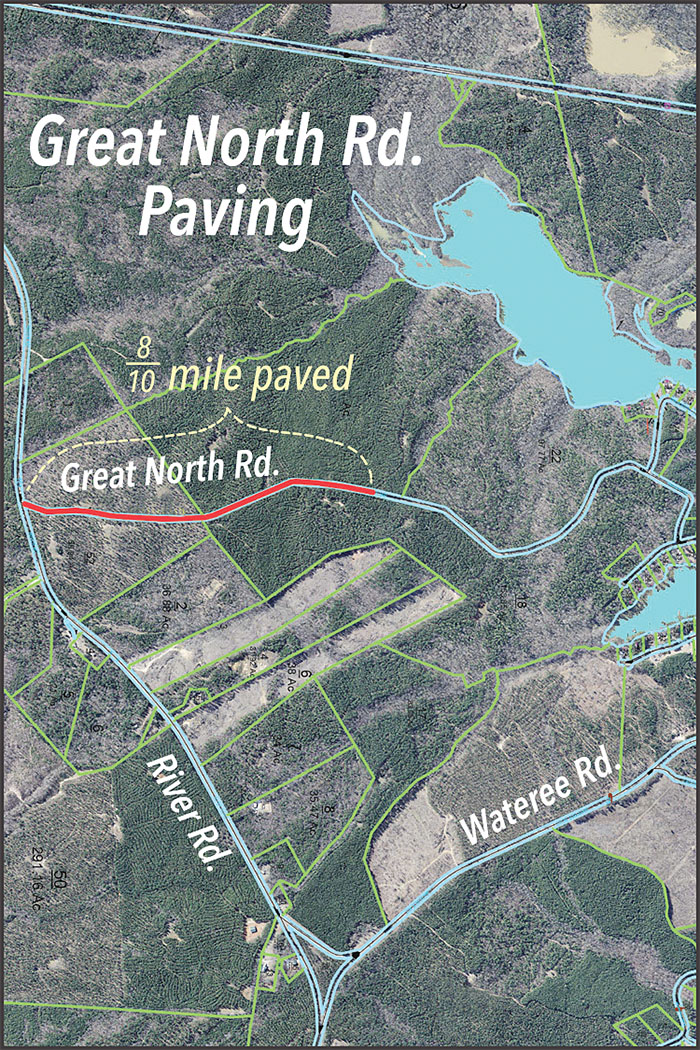
    Great North Rd map conv copyWINNSBORO (June 9, 2016) – During last week’s Fairfield County Council meeting, Interim Administrator Milton Pope requested that Council move repairs to the Great North Road to the top of the road repair priority list. The item had been favorably voted out of committee earlier in the day, he said.

    The estimated cost of $83,000 would be taken from the road maintenance fund. Also, he noted, contractors have already been deployed and are working on surface treatment on county dirt roads, so they would not have to be redeployed.

    Council voted unanimously to approve this request, but not until after some discussion. Councilman Billy Smith (District 7) pointed out that this road was in such bad condition that it was a serious safety concern.

    However, Councilman Kamau Marcharia (District 4) commented that he too had been to meetings about this road, “but it seems like it takes priority over many, many roads and bridges that have been washed out.” He wanted to know why this road takes priority over other roads which also have safety issues.

    Chairwoman Carolyn B. Robinson (District 2) pointed out that this was one of the roads initially paved when the road paving program started because it has the worst possible numbers in the entire county for paved roads, and this is taking care only of the parts that were damaged.

    “But it is a safety issue the way the road is buckled. If you go out there and drive at night you will probably have an accident and damage your car,” Robinson said.

    Smith said he understood Marcharia’s point but the condition of the road was so bad that it needed priority.

    Marcharia again pointed out that there were many roads in the county that needed repair.

    The vote passed 5-1. Reached by email after the meeting, Davis Anderson, Fairfield County Deputy Administrator, told The Voice the County Road Program has a budget of $123,570 for this fiscal year.


  • Board Spars Over FMS Project

    WINNSBORO – The Fairfield County School Board came a step closer to proceeding with an estimated $2.4 million expansion and renovation for Fairfield Middle School during its May 17 meeting. However, the project has not yet been brought to the Board to be authorized.

    During their Jan. 19 meeting, the Board voted 5-1-1 to approve a contract with FW Architects of Florence for engineering and design work to expand Fairfield Middle and Kelly Miller Elementary so that portable classrooms could be removed. Paula Hartman (District 2) voted against the approval, while Annie McDaniel (District 4) abstained.

    The plans call for more than 10,000 square feet in new construction at Fairfield Middle with renovations to another 473 square feet in order to tie into the existing school. According a presentation made by the architectural firm at the May Board meeting, the new construction will include collaborative learning spaces that could accommodate different activities.

    Dr. J.R. Green, Superintendent, told the Board he wanted to let the Board know the estimated costs before it was put out to bid.

    A number of questions about the project ensued after Director of Finance Kevin Robinson presented Green’s recommendation that the Board approve a second reading of the District budget for the 2016 – 2017 fiscal year.

    “Since we are talking about the budget, where is the money for the Fairfield Middle School renovation coming from?” Hartman asked.

    “We will get to that when we discuss it further,” Board Chairwoman Beth Reid (District 7) answered.

    “So when are we are going to discuss it?” McDaniel asked.

    “When it is presented to us,” Reid answered. “Those figures can certainly change, so when it is brought to the Board, then we’ll discuss it.”

    “Don’t we vote first before we do this (the renovations)?” Hartman asked again.

    When Reid repeated that the Board would discuss it when it has been presented before the Board, McDaniel jumped in.

    “The question is, whether we are going to talk about where the money is coming from,” McDaniel said. “Are you saying we are going to move forward with the project without the Board knowing where the funding is coming from? Is that what I hear?”

    “No ma’am, I did not say that,” Reid said. “That will be brought to us at the appropriate time. Everything will come before the Board. We won’t spend any money without the Board’s approval.”

    “So you will put the bids out first before we know where the money is coming from?” McDaniel asked.

    Green then stepped in and told the Board that the District had previously transferred money to the capital improvement account.

    “So we do have capital improvement money we could use for the renovation,” Green said.

    McDaniel pointed out, however, that at the time the Board approved the transfer into the capital improvement account, Green did not say specifically what the money was going to be used for.

    During the Board’s October 2015 meeting, Green asked the Board to approve a transfer of $2.25 million from a surplus in the general fund account to the capital improvement account. At the time, when asked what, specifically, the $2.25 million transfer would be used for, Green spoke in generalities.

    “This is something I’m going to bring back to the Board eventually,” he said in October. “But there are a few things we’re looking at.”

    He mentioned renovations that will allow the removal of portables behind the middle school and at Kelly Miller.

    During last January’s meeting, Green moved the project further along when he asked the Board to award a contract to FW Architects. While these projects had still not been approved, Green told the Board he planned to pay for them with the $2.25 million transfer of funds to capital projects fund.

    “Once we get these designs (for the school renovations) and you are able to prioritize, will you provide us a list of the capital projects you are looking to do?” Board member William Frick (District 6) asked Green during the January meeting. Green told Frick he would.

    Board policy for facilities planning and development states: “The board will authorize the construction of a sufficient number of school buildings to meet the demands of present and future student enrollments.”

    In addition, Board policy for fiscal management states: “The board will establish budget priorities for each fiscal year (July 1 – June 30).”

    Contacted by The Voice after the Board meeting Tuesday night, Green said that he never returned to the Board with a written list of capital improvement projects but that he believed the Board had in effect put a priority on replacing the portables when it approved the architects’ contract to design the renovations.

    Green also confirmed that putting the middle school expansion project out for bids does not commit the District or the Board.

    “I am committed to this project and am hopeful that we can move ahead with it,” he said, “but there is no guarantee that the Board will approve to fund it.”