Category: Government

  • Council OK’s Historic Sign Ordinance

    BLYTHEWOOD (Oct. 27, 2016) – Town Council Monday night passed second reading on an ordinance to amend the size of signage on historic buildings in Blythewood.

    The ordinance, initiated by the Board of Architectural Review, will increase the height allowed on ground-mounted signs in front of historic properties from 3 to 6 feet. All signage on historic properties, under the new ordinance, will have to be approved by the BAR. The ordinance will also encourage native and heirloom plants in landscaping around historic sites.

    Council OK’d second reading unanimously.

    Council tabled a decision on bids for construction of the amphitheater at Doko Manor until the architect, Rick McMackin, could be present. McMackin was scheduled to appear before Council Monday but was unable to attend because of travel delays.

    According to documents provided by the Town, Blythewood received four bids on the project. The “Base Bid” included the amphitheater stage and pavilion and the concrete pad in front of the stage. The “Add Alternate” bid included installation of the interior radial sidewalks that connect to the road and the handicap parking areas.

    The low Base Bid, according to Town documents, was submitted by AOS Contractors at $415,893. Their bid for the sidewalk alternative came in at $54,884, for a total of $470,777.

    The low bid for both the Base Bid and the Add Alternative was submitted by Digging Deep Construction. Their Base Bid came in at $426,900, with the Alternative adding $40,280 to the price, for a total of $467,180.

    Council postponed a decision on the bid until their next work session in November.

    Manor Report

    Steve Hasterok, Director of the Manor, told Council that the Manor was $35,000 ahead of where it was after the first nine months of fiscal year 2016.

    He also reported that the Manor had suffered some minor damage last Friday after vandals ripped out one of the lights near the back door, dismantled a section of railing and destroyed several planters on the back porch. The incident occurred between approximately 4:45 and 5:30 p.m., Hasterok said.

    The vandals left fingerprints behind, he said, and Richland County deputies are investigating.

    “I think we have a lead,” Hasterok told Council. “It was probably some kids.”

    “Maybe we’ll have some unhappy parents when they have to pay for all the damage,” Councilman Tom Utroska said.
     

  • Lawsuit Alleges Fraud in Industrial Site Land Deal

    WINNSBORO (Oct. 27, 2016) – Fairfield County Council made it official last July, passing third reading on a deal to partner with the S.C. Department of Commerce to purchase more than 1,000 acres of land near I-77 and Highway 34 to develop as a mega-industrial site.

    Last month, one of the owners of a key portion of that land filed a lawsuit in the Sixth Judicial Circuit claiming, among other things, that she was misled in the deal for her parcels to the point of fraud.

    Named as defendants in the suit are Long Leaf Land Co., an LLC organized by Parker Poe attorney Ray E. Jones; and Russell D. (David) Brown and Russell M. (Russ) Brown and their respective real estate companies. Also named are Ray E. Jones and the Fairfield County government. Jones also represents the County in the mega-site land deal.

    Cedar Tree Plantation, LP, and its general partner, Margaret Patrick, the plaintiff, is the owner of several key tracts along I-77. In the summer of 2014, Long Leaf Land Co., LLC began buying up parcels in the area ahead of the County-Department of Commerce deal.

    According to the lawsuit, filed Oct. 18, Russ Brown, a Ridgeway real estate agent, was in charge of acquiring the property for Long Leaf. But when it came time to approach Patrick about her land, Russ Brown asked his father, Winnsboro real estate agent David Brown, to do that particular piece of legwork. David Brown (a County Councilman at the time) and Patrick had known each other for more than 30 years, the suit states, and Russ Brown felt Patrick “would be more receptive to being approached by David Brown because of their long-standing relationship.”

    On June 23, 2014, the lawsuit states, David Brown became the dual agent for Long Leaf and Patrick. A little more than a month later, Cedar Tree and Long Leaf entered into an option agreement, which gave Long Leaf one year to purchase approximately 290 acres.

    Patrick alleges that David Brown promised her “top dollar” for her property. Two of her four tracts were priced at $9,000 an acre. Two other tracts for $7,000 an acre. Of the two $7,000 an acre tracts, Patrick claims, one should have been priced at $9,000 an acre. The price for that tract, the suit claims, was changed after Patrick signed the option agreement.

    The lawsuit notes that Patrick did not initial the individual pages of the option agreement, and the page containing the signatures of the parties is a separate page.

    Patrick later learned, the suit states, that another nearby property owner received more than $10,000 an acre for her tracts, meaning Cedar Tree did not, in fact, receive “top dollar.”

    The lawsuit claims that David Brown promised Patrick that, on behalf of Long Leaf, “he would get her ‘the rest of the money’ to match the price” of the other property owner. However, the suit states, he did not do so.

    There were also issues with the land survey under the option agreement, the lawsuit alleges. The survey, conducted by Glenn Associates at Long Leaf’s expense, included land that was not part of the option agreement, Patrick claims. Furthermore, posts marking the boundaries of the property where timber was to be harvested were removed and replaced with new posts. The new posts, the suit states, significantly reduced the amount of timber Cedar Tree was able to harvest and sell.

    The survey added nearly 241 feet to Long Leaf’s acquisition, the suit states, which would force Patrick to move a cabin located on the property while also cutting off Cedar Tree’s access to the railroad crossing. None of those things were part of the original option agreement, the suit claims; and had they been, Patrick would not have entered into the deal.

    The lawsuit alleges fraud on the part of David Brown, as well as negligent misrepresentation and breach of contract.

    “The Plaintiff is informed and believes it is entitled to judgment against the Defendants in an amount to be proved at trial,” the suit concludes.

    Glen Bowens of Winnsboro and Robert Hartman of Ridgeway are representing the plaintiff. The Browns are being represented by Michael Tighe of Callison and Tighe. The County has retained John K. DuBose of Dubose-Robinson of Camden.

    Reached by telephone Tuesday, both David and Russ Brown declined to comment on the lawsuit.


  • Hospital Freezes Out Public

    CEO Refuses to Allow Recording of Public Meeting

    WINNSBORO (Oct. 27, 2016) – The news story out of Fairfield Memorial Hospital’s monthly Finance Committee meeting Tuesday evening was that the Hospital’s CEO Suzie Dorscher refused to allow The Voice to record the meeting.

    When The Voice’s reporter started to record the meeting, which was held in the hospital’s board room, a staff member told the reporter that the meeting could not be recorded.

    “We don’t have any provisions for allowing our meetings to be recorded,” Dorscher said.

    Informed by the reporter that the S.C. Freedom of Information Act (FOIA) allows all public meetings of public bodies to be recorded by any citizen or reporter, Dorscher said she would check with the hospital’s attorney later.

    “It is clearly illegal to stop a citizen from recording a public meeting,” Bill Rogers, Executive Director of the S. C. Press Association, told The Voice. “When the reporter uses a tape recorder, accuracy is improved. I can’t understand what an objection would be. They need to check the law.”

    According to the S.C. statute, Section 30-4-90 of the FOIA, “All or any part of a meeting of a public body may be recorded by any person in attendance by means of a tape recorder or any other means of sonic or video reproduction, except when a meeting is closed pursuant to Section 30-4-70 . . .”

    The statute, in 30-4-20, describes a public body as, “Any public or governmental body or political subdivision of the State, including counties, municipalities, townships, school districts, and special purpose districts, or any organization, corporation, or agency supported in whole or in part by public funds including committees, subcommittees, advisory committees, and the like of any such body by whatever name known . . .”

    Each year the County funds the hospital with regular quarterly payments as well as emergency payouts that have amounted to more than $2 million since 2012. The budget payout to the hospital for the current year is $1,043,000.


  • Water Odor Now in Holly Bluff

    BLYTHEWOOD (Oct. 20, 2016) – Stinky water once again dominated discussion during last month’s Town Council meeting when Holly Bluff neighborhood homeowners Marlin Hinds and James Smith addressed Council about the odor of the water in their homes.

    “The odor comes out of the sinks and toilets. It’s so unbearable that you have to have additional odor eaters or plug-ins in your house. The minute one of those doesn’t work, you’re in a range of the odor. It’s unbearable,” Hinds told Council.

    “That’s the first time I’ve heard of the water concerns in Holly Bluff,” Mayor J. Michael Ross responded, recalling that some Cobblestone residents had earlier this year complained of foul odor in their water, which is provided by the Town of Winnsboro. At that time, Ross called on all residents using Winnsboro water to have their water tested and report any odor problems to the Town.

    But the water odor turned out to be isolated to the Cobblestone neighborhood and primarily in new construction sections, and testing proved the water to be safe at the source, Director of Winnsboro Water Otis Williams told the Voice.

    “We think more and more that it’s an internal plumbing issue,” Williams said at the time. Williams also noted that some complainants were not having issues throughout their homes – only in one or two faucets. Williams would not speculate about what kind of plumbing materials were used in construction.

    Nevertheless, Winnsboro took samples from fire hydrants in Primrose, Goldenrod and Summersweet Court in Cobblestone and sent them to the Engineering Performance Solutions labs in Jacksonville, Fla. for testing.

    Blythewood Town Council, during their Feb. 22 meeting, reviewed the results, and Town Administrator Gary Parker told Council that, in short, the test results verified that the water was fine and fit to drink.

    When asked Tuesday about the Holly Bluffs residents’ complaints, Parker speculated that stagnant water could be building up in lines in newly developed areas. Holly Bluffs has only 61 homes. In those areas not built out, Parker said, it may be that not enough homes are connected to the lines to provide a constant, steady flow of water.

    “You have water that isn’t being circulated enough through the water lines because there are not enough houses built onto that line drafting water out of that line and keeping water circulating,” Parker said. “That can lead to some people noticing a taste or odor. That’s a common problem in lines.”

    Williams told The Voice on Tuesday that Winnsboro had been out to Holly Bluffs and checked the fire hydrants and that the water from the source to the hydrants was fine.

    “When there is an odor complaint, we come out and check everything up to the meter. Beyond that is the responsibility of the customer,” Williams said, adding that the same is true of leaks.

    Hinds acknowledged that Winnsboro had been out to flush lines and that a customer contact person has been assigned to them to coordinate complaints and inspections. Smith said the next step is that his neighbors are now planning to systematically conduct their own testing through the Department of Health and Environmental Control (DHEC) and that should be completed in about 60 days.

    Hinds also informed Council that the water bills in his neighborhood are excessively high.

    “Since January, my (water) bills have ranged from about $290 to $520, averaging $300 per month,” he said, adding that at least one monthly bill reflected water usage of 25,000 gallons.

    “If that’s water only, that’s very high,” Parker said.

    “I’m looking at their (Winnsboro’s) website, at their water rates,” Councilman Eddie Baughman told Council as he scanned his phone during the meeting. “Looking at a residential, out of county (rate), over 20,000 gallons a month is $12.89 per thousand gallons of water. So if you figure 25,000 gallons, you are in the neighborhood of $300.”

    Hinds told The Voice that Winnsboro had come to his home and checked for leaks and found none.

    Parker offered to help look into the billing issue if Hinds and Smith would like to bring their water bills to Town Hall. But at press time, Parker said he had not seen any bills.

    “We’ll have our crackerjack town lawyer renegotiate that (Winnsboro water) contract in 2020,” Ross said, jokingly.

    “I’ve been paying water bills in South Carolina since 1967,” the Town’s attorney Jim Meggs replied, “so I’ve got a little experience with this. I’ll be happy to help you gentlemen get to the bottom of this. I can’t imagine your bills being that high.”

    “These bills will be priority for us,” Ross said.


  • Hurdle Remains for Sewer Line

    WINNSBORO (Oct. 20, 2016) – Last month, the Town’s long-awaited McCulley Creek sewer line project appeared ready to go. Council authorized John Fantry, the Town’s utilities attorney, to begin the process of obtaining rights of way on properties near the Town’s water treatment plant for the installation of the line.

    But Tuesday night, one holdout on those rights of way remained.

    After negotiating with Donald Swygert for more than an hour in executive session, Council once again authorized Fantry to work out a deal with Swygert, which Mayor Roger Gaddy said would be a “final offer.”

    “All we can do is make him a fair offer,” Gaddy said after the meeting, “and if he doesn’t accept it then we’ll probably have to go through the process of condemnation for a temporary easement.”

    Gaddy said Swygert’s property was forest land, and that the Town would have to reimburse Swygert for the timber value for the temporary easement.

    The project is being funded through a Community Development Block Grant, which has a time line for the expenditure of those funds. But with that deadline sitting at next July, Gaddy said it was likely the Swygert delay would not impact the Town’s access to those funds.

    Capital Expenditures

    Council also approved $3,900 for a new copier at Town Hall, as well as up to $3,000 to retrofit a truck from the Electric Department for the Wastewater Department. Council gave the OK as well to $12,845 to upgrade Department of Public Safety radios to meet state standards before Jan. 1.

    Council also approved $20,000 to upgrade the Town’s meter reading system, and up to $30,000 for a new truck for their newest meter reader.


  • Council Wavers on Itinerant Merchants

    BLYTHEWOOD (Oct. 20, 2016) – During a discussion last week in a Town Council workshop about the increasing prevalence of itinerant merchants in the downtown area, Town attorney Jim Meggs asked, “What exactly is the problem you’re trying to solve here?”

    “I don’t know if this is a big issue,” Mayor J. Michael Ross said. “I think it bothers some people. I’ve had a lot of people talk to me about it,” and added jokingly, “telling me how good the tomatoes are. But if it comes back that Mayor Ross is shutting them down, well . . .”

    Meggs offered guidance in the form of a model ordinance used by another town (Midvale, Utah) to regulate peddlers and itinerant merchants. That ordinance, Meggs said, covered licensing, exceptions, definitions, applications, badges and penalties for a wide variety of itinerant merchants including vending carts, seasonal produce, seasonal food stands, Christmas tree sales and fireworks stands. He explained that the Midvale ordinance is detailed and specific.

    “It’s a commencement to see how far you want to go with this,” Meggs said. “If you go with the full Midvale treatment, you’re going to have a pretty exhaustive comprehensive set of regulations. I’m not sure some of these peddlers/itinerants would be able to comply with it.”

    Meggs said there appears to be some concern in the community about the produce stand that stays on site on the corner of the former Blythewood Community Center property across Blythewood Road from the Food Lion.

    “Under the Midvale ordinance,” he said, “(that stand) would have to be moved at closing time every day. You might want to consider how this (ordinance) would interface with a zoning change. Or if you have some concerns about prohibiting these kinds of activities in the Town Center District (TCD), because it may not be consistent with what your vision is for business activity in the TCD, then we’re back to ‘What’s the problem you’re trying to address?’”

    Town Administrator Gary Parker suggested that if the focus is on the itinerant merchants in the TCD district, it could be handled as an amendment to the zoning ordinance prohibiting itinerant merchants in the TCD altogether.

    “We might say there are not going to be any peddlers licensed in the TCD and then they’re just down the road – still in Blythewood, but not in the TCD, if we want that,” Parker said.

    Ross said he was concerned that the produce stand across from Food Lion was becoming more stationary.

    “He’s moved in a port-a-john over there. This is getting a little bit more so . . . ,” Ross said. “We now have a peanut man – sells boiled peanuts and sets up under a tent every afternoon on somebody’s property. We have a chicken man who brings in a trailer and unloads paintings to sell. We have birdhouses selling at Larry’s Exxon and fireworks.

    “What brought my attention is that a peddler comes in and is usually there a little while, but this (produce stand) has been here two months,” Ross said.

    Councilman Tom Utroska asked if the produce stand owner was paying taxes.

    “To be fair,” Ross said, “this man selling produce just pays a $40 business license. The IGA, Food Lion and Red Barn pay taxes on everything they sell. They turn in their taxes to us.”

    Utroska suggested permitting so much per day for a peddler’s license with a minimum amount for a maximum number of days. Parker suggested prohibiting itinerant merchants in the TCD except for charitable groups for temporary fundraisers such as the Food Truck Fridays that are held occasionally at one of the churches in downtown Blythewood.

    But there was no definitive answer to Meggs’ initial question, ‘What is the problem you want solved?’

    “We’re sitting here right now with only three (itinerant merchants) in the town,” Ross said. “But when we’re sitting here and there are 12 – 13 and we didn’t do anything, then what?”

    Without Council nailing down how they hoped to solve their problem, or if there was a problem, Ross concluded, “I think I’m going to back off right now. If there is something you all think needs to be addressed . . .”

    “If you want me to write an ordinance, let me know,” Meggs told Council members.

    There was no indication that the issue is scheduled to be brought back to Council.


  • Lawyer Responds to Zoning Issue

    RIDGEWAY (Oct. 20, 2016) – As the battle over a rezoning request for .82 acres at the fork of highways 21 and 34 continues to unfold, Mayor Charlene Herring reported during the Oct. 13 Town Council meeting that the Town had received a response from attorney Danny Crowe to questions that arose after Council last month nixed that request on second reading.

    Herring said that, according to Crowe, “Zoning ordinance sections 1005 (Protest) and 1007 (Minimum Area for New Districts) are valid laws. The rezoning requests from R1 to C1 that we received were invalid. Thus the council at our next meeting must nullify the voting on C1, we must have first reading on C2 and (we) must vote to send the request for rezoning from R1 to C1 back to Planning for consideration, with a public hearing, with public notices and postings.”

    Russ Brown’s request for rezoning from R1 to C2, which cleared the Planning Commission 5-2 on July 12, was amended by Council at their Aug. 11 meeting to a C1 request. That amended request passed first reading 3-2. Second reading, which came on the heels of a formal protest by nearby property owners, failed 1-3.

    During the public comment portion of the Oct. 13 meeting, Brown called Council “a kangaroo court held in a banana republic,” and added that, regardless of Council’s decision he could clear the lot.

    “If you remand and approve the rezoning request, you will actually gain a larger vegetative buffer with C1 than I am required to keep if it remains R1,” Brown said. “I’m willing to adhere to the commercial setbacks, but if denied I will return with another request for rezoning and a cleared lot.”

    In his memo to Council, Crowe states that zoning ordinance sections 1005 and 1007 are “presumptively valid local laws and should be enforced, as applicable, with regard to this property.”

    Because the Planning Commission recommended a change to C2, Crowe’s memo states, Council’s votes on C1 “should not have been taken.” Council, at its next meeting, should declare those votes null and withdraw them, Crowe writes.

    Since Council has not acted on the Planning Commission’s C2 recommendation, Crowe writes, this needs to be placed on the agenda for a future meeting.

    As Council noted during their Aug. 11 meeting, Brown’s .82 acres does not meet the 2-acre minimum requirement for C2 rezoning. In his memo, Crowe writes, “Council should request an administrative determination from the Zoning Administrator on whether the minimum area size requirement of Zoning Ordinance section 1007 applies to the Brown property for a rezoning to C2,” prior to first reading.

    Crowe also said the protest to Brown’s request was valid, as it contained the signatures of at least twenty percent of the five contiguous property owners. Therefore, adoption of the zoning change would require a three-fourths vote by Council. And three-fourths of five, Crowe states, is four.

    However, in a separate memo to Council, Crowe writes that, while Section 1005 does not specify a time for submittal of a protest, “submittal at the time of the Council meeting may not give the Town time to verify the requisite number of signatures and, therefore, may not be a reasonable time.”

    A petition of protest was submitted to Council by Sara Robertson prior to the Aug. 11 first reading.

    Council had scheduled a work session with Crowe to review the Town’s zoning ordinance on Oct. 18.


  • Meeting Offers Peek at Road Project

    BLYTHEWOOD (Oct. 19, 2016) – The Richland County Transportation Committee will be hosting the first community meeting that will offer a glimpse at the promised road widening, traffic roundabout at the Cobblestone Park entrance and other improvements for Blythewood Road from I-77 to Mueller Road.

    The meeting is scheduled for Thursday, Oct. 20, from 5 – 7 p.m. at Mueller Road Middle School.

    The open-house format, according to Town Councilman Malcolm Gordge, will include an opportunity to view informational displays and make comments to the program development team for the project.

    “They will also include details of the proposed road widening and the options that are up for comment including the placement of bike lanes and/or buffers between the street and the sidewalk or combined-use sidewalks,” Gordge said. “One interesting aspect of the project is that Locklier Road will not have an access point on Blythewood Road with the new configuration. The plan is to bend Locklier Road to exit onto Community Road.”

    Drawings on the Richland County website show the basic improvements will provide for a five-lane section between I-77 and Syrup Mill Road reducing down to a three lane section from Syrup Mill to Mueller Road. Further widening of Blythewood Road as far as Fulmer Road is on the books at a later time.

    “What will be of particular interest is the proposed traffic circle or roundabout at the Cobblestone Park entrance,” Gordge said. “A traffic light is not possible at such a close proximity to the lights at the I-77 ramp so a roundabout is a viable and effective alternative.”

    “We hope there will be a good turnout of local residents and business owners,” Project Engineer Ben Lewis,” said. Lewis will be available at the meeting. “It will be some while before there is another meeting so now is the best opportunity for residents to learn more and express any concerns they may have,” Lewis said.

    Bill Wiseman, Blythewood’s representative on the Transportation Penny Advisory Committee (TPAC) will also be in attendance to answer questions.

    Comments can be submitted by email to info@richlandpenny.com or by mail to Richland Penny Program, 201 Arbor Lake Drive, Columbia, S.C. 29223. The comment period ends Nov. 3.

    For more information, go to Richland County’s richlandpenny.com.


  • Tolbert Exits County Council Race

    WINNSBORO – Mary Anne Tolbert has withdrawn from the race for the District 6 seat on Fairfield County Council.

    Tolbert made her announcement in a post on her Facebook page this week. She confirmed her decision to The Voice Tuesday.

    “I have to regretfully inform the citizens of District 6 of Fairfield County that, as of this time, I am going to withdraw my name from the ballot for the November 2016 election,” Tolbert wrote in her post. “I am in the process of trying to purchase a new residence, which falls in a different district, and I do not wish to waste your time or (County) money if a second election would possibly have to be held if I moved at a later time.”

    The Fairfield County Voter Registration and Elections office, however, said Tuesday that they had not heard from Tolbert, and that it was too late, at this stage, to revise the ballots. Tolbert’s name will therefore appear on the Nov. 8 ballot in District 6.

    In her post announcing her withdrawal from the race, Tolbert endorsed Gwen Harden for the seat.

    “She is smart, knowledgeable and fair,” Tolbert wrote.

    Mary Lynn Kinley is seeking reelection for the District 6 seat. In addition to Harden, Cornelius Neil Robinson is also looking to unseat her.


  • Committee Cautions on $100K Grant

    Retention Ponds Add $23,500 to Fire Station Costs

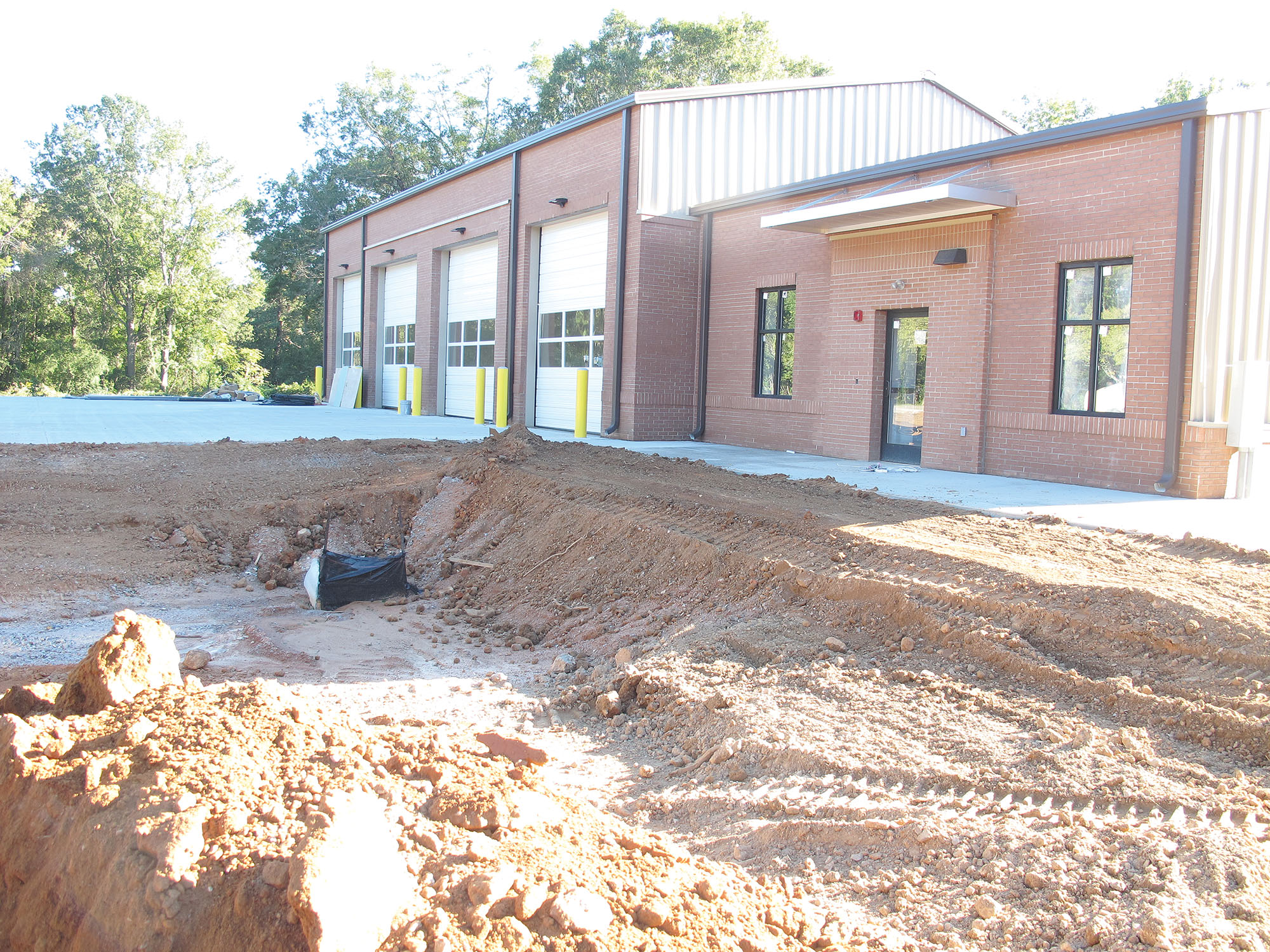
    The new Ridgeway fire station and the retention pond that slipped by County Council during the planning stages. The pond, and its counterpart at the Jenkinsville station, will be filled in and grassed over as a catch basin. (Photo/Barbara Ball)
    The new Ridgeway fire station and the retention pond that slipped by County Council during the planning stages. The pond, and its counterpart at the Jenkinsville station, will be filled in and grassed over as a catch basin. (Photo/Barbara Ball)

    WINNSBORO – During an Administrative and Finance Committee meeting Monday afternoon, the committee, led by Councilman Marion Robinson (District 5), balked at recommending Council apply for a $100,000 grant for the assessment of unnamed brownfield sites in the County – properties that are contaminated, vacant and not currently productive.

    “Through assessment, we can see if there’s a way we can make them productive. If we do find a way, then we can go back and apply for another $50,000 grant to remediate the site and get it back to a productive state,” County Administrator Jason Taylor told the Committee.

    While the grant comes with no match requirement and, according to Taylor, would not affect the County financially, Robinson said he wasn’t in favor of applying for the grant because of the potential for additional cost to the County.

    “First (the grant) states you have to have a specific project and we don’t have one,” Robinson said. “It’s open ended, and I find it hard to believe the federal government will give us $150,000 to go assess something, and we say, ‘OK, that’s good . . .’ and then we don’t have the money to go do something with the (assessed property).

    “What brought this about?” Robinson asked.

    “Steven Gaither, our Grants Manager, found this and thought it might be a good thing,” Taylor said.

    “We have a couple of sites – a plastics site and the Mack Truck site that are brownfield sites that we could use the grant money for,” Deputy County Administrator Davis Anderson added.

    “Yes, but we would have to have a special project? And I don’t see one mentioned here,” Robinson said. “I would like to know a little more about this before I vote on it.”

    Committee members Robinson, Chairwoman Carolyn Robinson (District 2) and Mary Lynn Kinley (District 6) voted to send it back for further study.

    The Committee did move forward with another item concerning the repair of inappropriately placed retention ponds proposed at the fire stations being constructed in Jenkinsville and Ridgeway as well as the recreation center in Jenkinsville.

    Taylor explained that the engineering designs for each of the three new construction locations had situated the retention ponds directly in front of the buildings.

    “These are unsightly, unsafe and difficult to maintain,” Taylor told the Committee.

    During a discussion at last month’s Committee meeting, Taylor said the ponds were not in the drawings, but were in the text. The misstep had not been noticed when the plans were originally approved two years ago.

    Taylor also suggested that there are several other things about the three projects that Council might not be happy with.

    “There’s no (outdoor) lighting on any of these sites,” Taylor said. “Considering safety and potential vandalism, we probably need to go back and consider lighting these sites. And at the Jenkinsville site, we have two buildings – the fire station and the rec center – and there is no connectivity between them. There’s a hill between them, and I think people will walk back and over it causing the grass not to grow and then erosion. So we may need to look at some type of stairs between the two buildings.

    “There is also no water at the recreation sites, no drinking fountains for the children,” Taylor said. “Some of these issues, you’re going to pay now or pay later. I can bring these issues back later to another meeting if you would like.”

    As for the retention pond issue, Taylor said he had met with the contractor and the solution is to place a drainage pipe in the catch basin and cover it with grass at a total cost of $23,500 for all three locations. He said there were no similar problems with the retention pond at the Mitford recreation center.

    Committee members voted unanimously to accept the proposed solution and the $23,500 cost and asked that Council add the item to that evening’s Council agenda for a vote since the construction at all three locations was already in progress. Council did add the item to their agenda later that evening and it passed unanimously.