Category: Government

  • Primrose Plan Rejected

    BLYTHEWOOD – The Town of Blythewood has rejected the initial sketch plan by developer D.R. Horton to construct additional homes on what residents say was promised to remain green space in the Primrose area of Cobblestone Park, Town Administrator Gary Parker told the Planning Commission Monday night.

    According to Parker’s letter to the developer, from which he read during Monday night’s meeting, “The zoning map amendment approved by Blythewood Town Council via Ordinance 2015.001 on (April 27, 2015) allows 143 additional single-family residential lots to encroach on the currently remaining open space. Your Sketch Plan proposes 158 new lots on that land.”

    Parker recommended removing the 15 additional lots and asked the developer to “maintain more of the existing tree cover buffering existing Primrose lots and homes from I-77 noise and air pollution.” Parker also asked D.R. Horton to “provide more separation of new lots and homes from I-77, and to help handle naturally some of the storm water caused by the development.”

    Cobblestone resident Lenore Zedosky told the Commission that residents in the Primrose area had been told by the developer when they purchased their homes that the section now targeted for new development would always be green space. Residents there, she said, paid premium prices for homes close to what they were led to believe would remain an undeveloped area.

    Doko Manor was filled to capacity with Cobblestone residents Monday, most of whom had questions for Ben Lewis, Project Manager for the Blythewood Road widening project, during his presentation on the project earlier in the evening – specifically concerning the proposed roundabout planned for Blythewood Road near the Cobblestone entrance. But Zedosky’s urging of the Commission to give careful consideration to even the 143 new homes in the green space, “before they clear-cut any more of the area we live in,” she said, brought a rousing round of applause.

    Parker’s letter stated that D.R. Horton, if they disagreed with the rejection of the sketch plan, could appeal at Monday’s meeting. And while no such appeal was issued Monday night, Parker told The Voice Tuesday that their appeal would be on the Planning Commission’s December agenda.

    Council approved zoning for the 143 new lots in April 2015, Parker said, but the actual land development – location of streets, open space, etc. – would have to be approved by the Planning Commission before D.R. Horton could begin construction.

    Pelican Snoballs

    Earlier in the evening, the Commission voted to forward to Council a recommendation to deny a request by Brian Keller to rezone from Multi-Neighborhood Office to Multi-Neighborhood Commercial at lot at 10711 Wilson Blvd. where Keller has designs on erecting a Pelican Snoballs franchise.

    Bryan Franklin, Commission Chairman, said his desire was to table the request. The Commission, however, voted 3-2 to recommend denial.


  • Incumbents Out in County Council Races

    Fanning Wins State Senate, Trapp Retakes District 3

    BLYTHEWOOD/FAIRFIELD – Two long-standing Fairfield County Council members were bumped out Tuesday night, while a former Councilman who was ousted in 2013 reclaimed his seat in local election results. Fairfield County voters also gave their approval to Sunday alcohol sales.

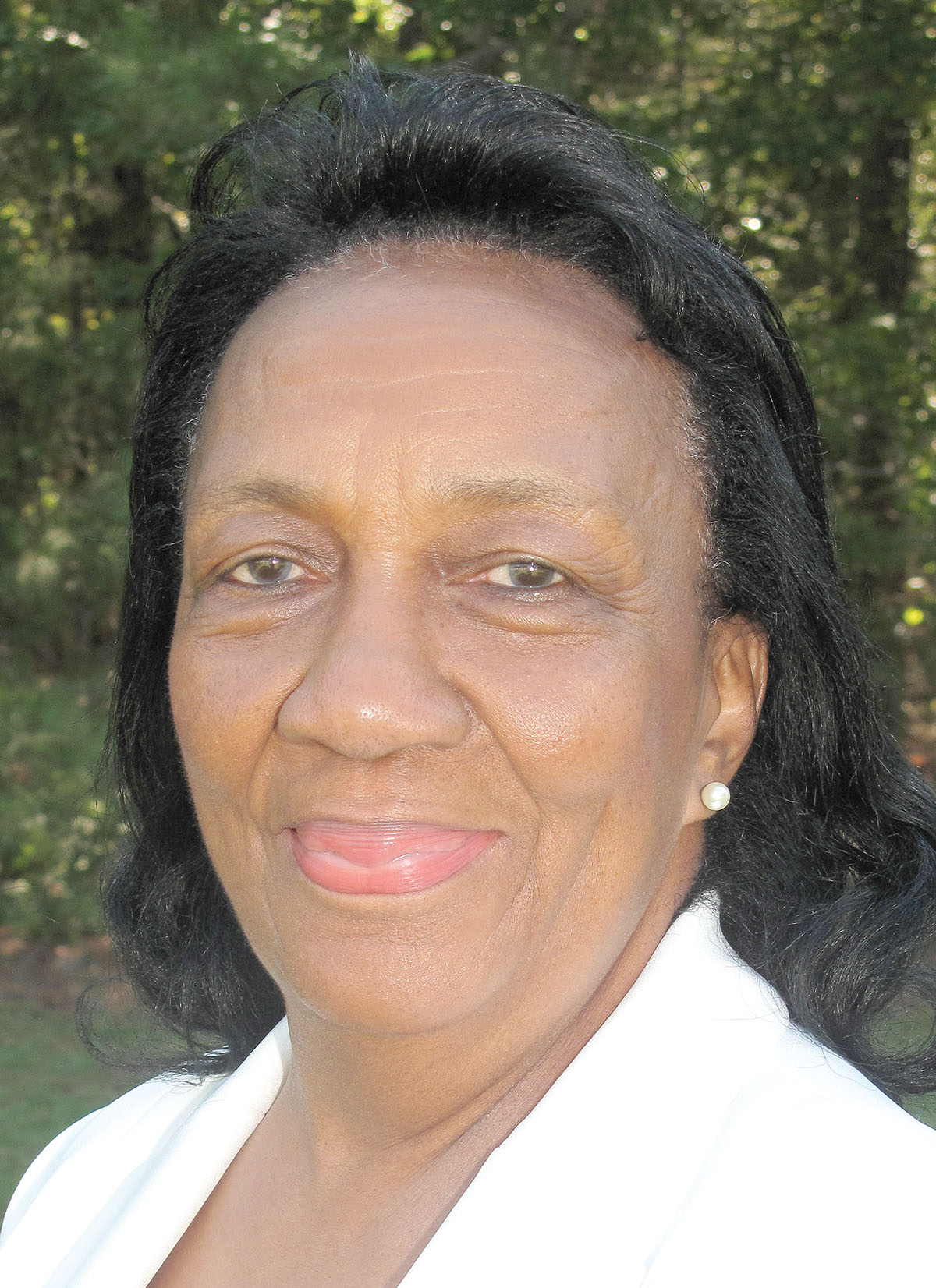
    Bertha Goins
    Bertha Goins


    District 4 Councilman Kamau Marcharia and District 6 Councilwoman Mary Lynn Kinley, both first elected in 1996, were handed defeats Tuesday.

    Bertha Goins bested Marcharia in District 4, 659 votes (43.36 percent) to 493 (32.43 percent). Quincy Pringle Sr. earned 365 votes (24.01 percent) in the race.

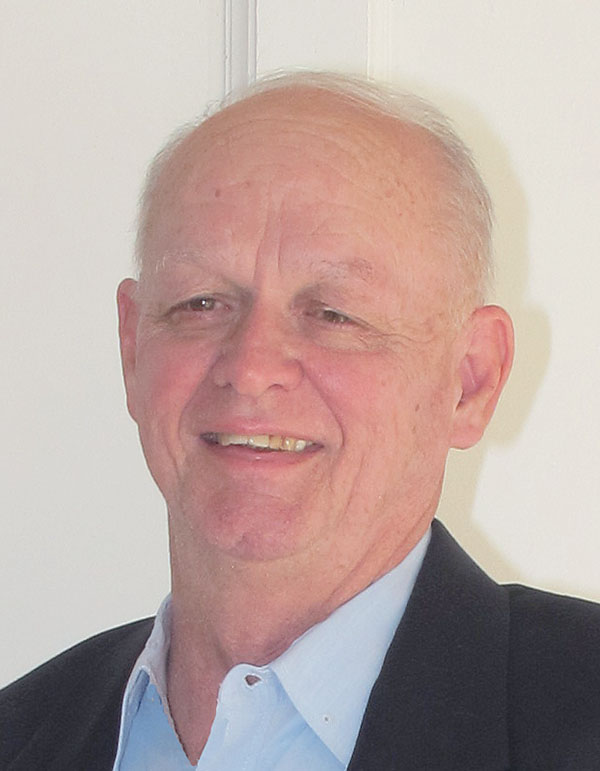
    Jimmy Ray Douglas
    Jimmy Ray Douglas

    In District 6, Cornelius Neil Robinson toppled Kinley 441 votes (39.8 percent) to 234 (21.12 percent). Gwen Harden finished second in the district with 357 votes (32.22 percent).


    Jimmy Ray Douglas cruised to a win in District 2 with 785 votes (49.53 percent). J. Renee Green earned 496 votes (31.29 percent) and Clyde Wade 302 votes (19.05 percent). District 2 Councilwoman Carolyn Robinson did not seek re-election.

    Mikel Trapp
    Mikel Trapp

    A late surge lifted Mikel Trapp to a District 3 victory Tuesday as his 651 votes (47 percent) were enough to beat out Peggy Swearingen’s 535 votes (38.63 percent) and Kirk Chappell’s 197 votes (14.22 percent).


    Trapp lost a 2013 re-vote after the 2012 results were overturned by the Election Commission. Col. Walter Larry Stewart, who defeated Trapp in the 2013 re-vote, resigned last summer for health reasons.

    The only contested race on the Fairfield County School Board went to Paula Hartman, who won reelection to District 2 with a narrow 694 (51.18 percent) to 653 (48.16 percent) win over Janet Mason.

    In the race for the District 17 seat in the S.C. State Senate, Democrat Mike Fanning notched a win over Republican Mark Palmer, 20,270 to 18,190 on a race that spanned Fairfield, Chester and York counties.

    Democrat MaryGail Douglas, meanwhile, was uncontested in her reelection bid for the District 41 seat in the State House of Representatives.

    Joyce Dickerson also won an uncontested reelection to Richland County Council’s District 2 seat.

    Lindsay Agostini (13,179 votes) and Monica Elkins (11,326 votes) were the top two vote-getters for the at-large seats on the Richland 2 School Board.

    Democrat Mia McLeod was the winner over Republican Susan Brill for the State Senate District 22 seat that spans Richland and Kershaw counties.

    In other uncontested Fairfield County races, Will Montgomery was returned to the Sheriff’s Office; Judy Bonds will be the next Clerk of Court; and Chris Hill the new County Coroner.

    Annie McDaniel (District 4) and William Frick (District 6) were also uncontested in their respective School Board races.

    Fairfield County voters overwhelming approved Sunday alcohol sales, 6,472 (64.45 percent) to 3,570 (35.55 percent). That matter will now go before County Council for approval.

  • Board OK’s Trips, Tables Education Foundation

    WINNSBORO (Nov. 3, 2016) – When the Fairfield County School Board was asked last week to once again approve out-of-state and overnight student trips, Board member William Frick (District 6), got right to the point.

    “As we typically have, just to clarify, are we approving trips listed or are we approving a trip to be funded?” Frick asked.

    “The Board has a policy that it must approve all overnight and out-of-state trips,” Superintendent Dr. J.R. Green said. “So what we are asking the Board to do is just approve the trips and not necessarily to provide any funding. This does not imply any request to the Board to approve any funding.”

    Green said, however, that the money for some trips would be raised by students and funds for other trips are already approved as part of the individual schools’ budgets. Of the 14 trips approved by the Board, trips that students would have to raise their own funds for included:

    • A trip for the high school marching band to Ahoskie, N.C., for a band competition, with a projected cost of $3,700 or $25 per student;

    • A trip to the Bahamas for the District Honors and Fairfield Middle School choruses to perform on Carnival’s “Rock the Boat Cruise,” with a total projected cost of $18,150 or $605 per student;

    • A science trip for Fairfield Magnet School of Math and Science fifth- and sixth-grade students to John’s Island, with a projected cost of $6,800 or about $50 per student.

    The trips already funded though the individual school budgets, at a zero cost to the students, included a trip to Asheville, N.C., for the elementary Gifted & Talented program, and annual Junior Beta Club trips to Myrtle Beach for the four elementary schools and Fairfield Middle School.

    The trips were approved 5-1 with Board member Paula Hartman (District 2) opposed. The Rev. Carl Jackson Jr., (District 5), was not present.

    Education Foundation Tabled

    Green also asked the Board to approve moving forward to establish a non-profit educational foundation for the District’s schools. Green said he had some conversations with financial institutions concerning his teacher housing proposal, and those institutions said a non-profit foundation would benefit the housing initiative. He also noted that all the districts surrounding Fairfield already have a non-profit educational foundation.

    “It puts us in a better position to go forward with the housing initiative, but even outside of the housing initiative, it gives us the ability to receive donations from donors and individuals in the community who can receive a tax advantage,” Green said.

    “What does ‘move forward’ mean?” Frick asked. “(Does it mean) we explore before we agree to this, or does it mean it’s going to happen?

    “‘Moving forward’ means I will ask the attorneys to file the paperwork to establish the foundation,” Green said.

    Frick said he was a little hesitant to agree to a foundation right now when he did not have a lot of experience with it.

    “I would like the opportunity to explore this a little bit . . . and then we could move forward with it in November once the Board has more information,” Frick said.

    The Board agreed 6-0 to table the matter.

    Student Records Policy

    The Board gave a second and final reading to revisions of the Student Records policy and administrative rule to define which should be designated for the District’s directory information (information that can be given out without a parent’s release) and which information would require a parent’s release.

    Green said he wanted to clarify why the policy revision was made. He said it was because technology has changed so much that when information is subject to the Freedom of Information Act (FOIA), anyone can file an FOIA request and get that information.

    The motion to approve the amended policy was approved 6-0.

    Change in School Calendar

    Green asked the Board to approve changes in the academic calendar to make up the three days the county schools were closed during Hurricane Matthew. The make-up days will be Oct. 21, 2016 and Jan. 3 and Feb. 20, 2017.

    Next week: Board votes to move a $2.2 million surplus from last fiscal year into Capital Projects account.


  • Candidates Meet in Final Forum

    WINNSBORO (Nov. 3, 2016) – Two of the three candidates for the District 4 County Council seat – Bertha Goins and Quincy Pringle – and all three of the candidates for the District 6 seat – Gwen Harden, incumbent Mary Lynn Kinley and Cornelius Robinson – answered questions from moderator Ron Smith, Chairman of the Fairfield Chamber of Commerce, during the last Candidate Forum on Oct. 31 at the Winnsboro Woman’s Club. The forum was sponsored by the Chamber.

    Kamau Marcharia, the District 4 incumbent, did not attend.

    After the candidates introduced themselves, Smith began asking questions, many of which most candidates were, to some extent, in agreement:

    • That property taxes in Fairfield County are too high (only Kinley disagreed, insisting taxes are just right);

    • That the county needs more and better paying jobs;

    • That the County should continue providing necessary financial support to Fairfield Memorial Hospital;

    • That businesses and industries in Fairfield County should attempt to hire Fairfield residents first;

    • That the County should enforce code enforcement ordinances to make the county more attractive;

    • That the construction of the football field at Drawdy Park is a prime example of County projects that were a waste of taxpayer money (Harden: “Half a million dollars and it doesn’t even have lights”) and

    • That the County needs to cooperate with Winnsboro to solve its water and sewer problems.

    Why are you more qualified than the other candidates?

    Gwen Harden (District 6) has served 14 years on the Board of Disabilities & Special Needs, 15 years as Secretary of Friends of the library and worked 25 years in the Winnsboro office of the S.C. Department of Juvenile justice. “I’ve been coming to Council meetings for a long, long time. I’ve been involved. We need a new vision for the County and I have one. We need a new way to operation County Council.”

    Mary Lynn Kinley (Current District 6 Councilwoman) is a former District Governor of Rotary and was the Director of Public Relations for Fairfield Memorial Hospital for 23 years. “In the next four years, this county is going to change. Experience matters. Do you want people on the team without experience?”

    Cornelius Robinson (District 6) served as a Deputy Sheriff for Fairfield County for 15 years and served in the Marine Corps. “I have the energy, the drive and the desire to go door to door. It’s time for change in Fairfield County.”

    Bertha Goins (District 4) has served her District 4 community as a member of the Board of Directors of the Jenkinsville Water Company and is a former employee at both V.C. Summer and Fairfield Central High School. “This county is at a point of needing someone to bring change. I know what it is to struggle, to face challenges, to be a mother who has to go 15 miles to the laundry. I know the struggles of my district in Western Fairfield County. We have to do better and we will do better.”

    Quincy Pringle (District 4) has been a coach at Fairfield Central High School for 20 years and serves as Chairman of the Behavioral Health Board of Directors. “I am willing to act for all the citizens of my district. We need a fresh outlook on Council with a different way of thinking. This seat is more than a pay check. I will represent the whole district.”

    Do you feel the Council has been transparent?

    Harden: “Transparency has been one of Council’s biggest problems. I attended an out-of-town Council workshop last year with only about 30 people in the room. I understand that the Chair held it out of town because a large enough room could not be found in Fairfield County. I feel it was held out of town to discourage the public from attending. I’ve seen this Council go into executive session without even a quorum and no explanation. The Chair signed a contract without a vote and without the public’s knowledge. I would like to see Council follow the advice of attorney Jay Bender, the Guru of the Freedom of Information law. I attended one of his seminars and if elected I will suggest Council have him come and explain to us what freedom of information is about and what we can and cannot discuss in executive session. A lot of what goes on in executive session could actually be discussed in front of the public.

    Kinley: “I disagree. We (Council) are as transparent as we can be. There are rules to go by and Council follows them. Ordinances direct our meetings. We cannot tell the public everything. I think we have changed a lot. But a lot of the things must be confidential, and I’m not going to go to jail. I apologize if you feel like we haven’t been open. A lot of people don’t come to our meetings because they don’t care.

    Robinson: “It’s difficult to judge what goes on behind closed doors. County Council members need to be more transparent. They need to be more open. There are too many times people don’t know what’s going on in Council. That core you have isn’t what you think it is. That’s vitality I’m talking about; youth and energy I’m talking about and one on one I’m talking about. That’s what I can bring to Council.

    Goins: “Some things discussed on Council cannot be shared with the public, but the way to solve a problem is usually for those things that can be shared, should be shared. To be even more forthcoming, if elected, I plan to have quarterly meetings in District 4 to keep my community informed as much as possible. And I will encourage all in my district, including the young people, to attend Council meetings. Whatever costs I incur (with community meetings) will be covered with what I get paid as a County Council member. I might consider using ROBO calls to remind people and increase attendance.”

    Pringle: “Transparency is much needed on Council. We need to give the voters the power back. We need to get more people, the community, involved and regain the trust of the people, let people know if Council is meeting tonight so they can see for themselves what’s going on. A lot of people don’t even know we have a County Council and don’t take it to heart. We have to change that.”

    What should Council’s long range goals be for the County’s economic development?

    Harden: “The long range goal should be to lower property taxes in the County. If we want people and businesses to move here, we must make changes. Fairfield County has the third highest property taxes in the state. That doesn’t look good to people who are thinking about coming here.

    Kinley: “My vision is to get more jobs and a better quality of life. Some families don’t have lights because their electricity has been turned off. We have a lot of people without education. The health care industry has been the biggest problem here. We brought in Midlands Tech so people could take classes and get better jobs. I keep hearing taxes are high. If we reduce taxes, SCANA will get the biggest tax reduction. (Residents) would only get maybe a $100 tax reduction. Plus we don’t have to pay any fees in this county as other counties do. If you want to cut taxes, what services do you want to do without? I think our taxes are OK. They aren’t that high. The only way to reduce taxes is to bring in more industry.”

    Robinson: “We need better jobs and industry, better schools, better housing, better health care and better fire and police protection. Why won’t businesses come into Fairfield County? Experience (on Council) may be good, but it’s not working. We need a new way of doing things. Experience has got us in this predicament we’re in today.”

    Goins: “I agree with Ms. Harden. Go back and lower taxes for the folks who live here and as a way to attract businesses and new residents. What are we getting for our taxes? Your young people are leaving because jobs are not available. We have to lower our taxes so we can attract these businesses and bring jobs to the county. When things are working well people will be attracted to us. We also need to renovate our community, fix up the houses and clean things up.”

    Pringle: “Once we get ourselves together, lowering property taxes will get our economic development going and we can see what we can do to get project management in here. We need change.”


  • Commerce Center Faces Funding Shortfall

    WINNSBORO (Nov. 3, 2016) – While the Oct. 24 County Council meeting agenda was light, it was not without controversy over how to fund infrastructure for Phase II of the Commerce Center.

    County Administrator Jason Taylor introduced the agenda item, a request of action from the Administration and Finance Committee that read: “Phase II on-site roadway, water and wastewater improvements to serve Fairfield Commerce Center.”

    Taylor fleshed out the agenda item and explained that a funding shortfall exists for the project.

    “We had $5,970,000 budgeted (from the $24 million bond) for this, but the bid came in at $6,542,214.50. With (bid) alternates of $497,120, the total comes to $7,039,334.50,” Taylor told Council. “That leaves a shortfall of $1,069,334.50.”

    To cover that shortfall, Taylor reviewed Council’s options to include applying for a $500,000 Rural Infrastructure Authority grant and a $300,000 Site Enhancement Grant from the S.C. Department of Commerce. He suggested Council could choose to take an additional $400,000 from bond money.

    “If they did not give us that total sum of grant money and if a match is required, then I would be erring on the high side in the additional bond money request. If we get full funding in the grant request, then the additional bond money needed would be less, by $130,666,” Taylor told The Voice.

    Another option to cover the shortfall would be to use the $1.1 million the County received this year from its Multi-County Park agreement, Taylor said.

    Council member Marion Robinson (District 5) ‘so moved,’ with the only discussion coming from Councilman Billy Smith (District 7).

    Smith said he could not vote in favor of the request for two reasons, the first being that Council did not receive the 400 pages of information on the agenda item to be voted on until Friday before the Monday meeting. He said he needed more time to read through it.

    Council recently had issues with the (construction of two) fire stations because documents were probably not looked at to the extent they should have been and then remediation work had to be done on retaining ponds, Smith said.

    “I don’t want something like that to happen here. Between Friday and today is not enough time for me to look at this document,” Smith said.

    Secondly, Smith said that while he was in favor of the Phase II infrastructure work at the Commerce Center, he had reservations about using bond money at this time.

    “Another thing that concerns me is the Courthouse and what we’re going to do to remediate the issues there,” Smith said. “The Courthouse is a top priority at this time. Considering we have the Caterpillar building about to come open and the spec building and other buildings and infrastructure that are open at this time, could this (bond) money be re-routed for use on the Courthouse if it was needed? Otherwise, I don’t know how we’ll pay for the fixes at the Courthouse and build another one.

    “If we plan to do that (Courthouse repairs) in the next three years, and if we spend this (bond) money now . . . you’re going to see another bond issued by this Council to pay for the Courthouse. That’s the only way it will happen,” Smith said. “That considered, I am in support of this (Phase II infrastructure work), but I can’t see us doing it at this time.”

    Robinson’s motion passed 4-1 with Smith voting against the measure. Councilman Dan Ruff (District 1) was absent, and the District 3 seat is currently vacant.

    Other Business

    Council voted unanimously to pass first reading, by title only, of Ordinance 673, authorizing an amendment to the master agreement governing the I-77 Corridor Regional Industrial Park to expand the boundaries of the park to include property in Richland County for Project Alimex.

    Taylor introduced Bob Ennis as the new Fairfield County Animal Control Director, taking over from former Director James Hill who was hired in July. Taylor praised Ennis’ background in animal care, explaining that Ennis came to the County three weeks ago from Pets, Inc. a non-profit rescue organization in West Columbia where he served as Executive Director.

    “We’re glad to have him here with us,” Taylor said.

    Council voted to go into executive session to discuss a contractual matter regarding Fairfield County Airport, a personnel matter (Clerk to Council’s position) and a pending legal matter regarding purchase of property. Parker Poe attorney Ray Jones was included in the executive session. No votes were taken when Council returned to public session.


  • Attorney: Errors in Rezoning Process

    RIDGEWAY (Nov. 3, 2016) – An Oct. 18 work session with attorney Danny Crowe reinforced what Town Council had acknowledged during their regular meeting just days earlier – that errors were made in a recent rezoning request, and that Council has some undoing to do.

    The original request came last summer from Russ Brown, who was looking to rezone .82 acres at the fork of highways 21 and 34 from R1 residential to C2 commercial. That request cleared the Planning Commission by a 5-2 vote on July 12. But when Council took the matter up for first reading at their Aug. 11 meeting, it was discovered that the property did not meet a 2-acre minimum requirement for C2. Councilman Heath Cookendorfer suggested, and Brown agreed, to amend the request to a C1 zoning, which passed first reading 3-2.

    Second reading on Sept. 8, which came on the heels of a formal protest by nearby property owners, failed 1-3, as Council members struggled with the definition of “contiguous,” what constituted a three-fourths vote of Council (which is required in the event of a protest) and if the protest itself should have been made in July before the Planning Commission.

    Crowe confirmed that the protest was indeed valid as it was signed by the owners of at least 20 percent of the properties contiguous to the Brown lot. Crowe defined “contiguous” as property touching, or that would be touching the Brown lot were it not for a road or a body of water.

    And while “contiguous” is good enough for a protest, Crowe said rezoning a property requires something more, per the Town’s ordinances. For a property to be rezoned, he said, it must be an extension of an existing district boundary, and that means the property must physically touch another property with the zoning classification for which the property owner is applying.

    In which case, Brown’s rezoning efforts may have been wasted over the last several months.

    “The big caveat on all that is that’s my opinion,” Crowe told Council. “You could probably find another lawyer who had a different opinion.”

    Council’s vote on a C1 classification, after the Planning Commission had approved a C2, was invalid, Crowe said.

    “As I see it, the Town Council could really only consider, up or down, the recommendation of the Planning Commission,” Crowe said. “It could not include in a lesser included zoning or come up with another zoning, but had to act on the recommendation of the Planning Commission, because that was the matter that the planning commission had considered, whether it could be C2.

    “You’re left with a situation where Council is voting on a C1 zoning that had never been before the Planning Commission,” Crowe said. “In my view, that is an error. Also the Council never voted, up or down, on the C2 recommendation that came from the Planning Commission. There’s still time to do that. There’s no time limit on that.”

    Crowe said Council would need to withdraw the C1 vote, then send the matter back to the Zoning Administrator to determine if Brown’s property meets the minimum acreage requirements for C2. And since Brown’s property is less than 2 acres, it would not meet that minimum – except . . .

    “That creates a little bit of a wrinkle,” Crowe said, “because that’s a request by Council and not by the owner, so the minimum acreage provision would not apply in that situation.”

    Contiguous property owners wishing to protest would have to file new papers, Crowe said, protesting a C2 classification, in which case second reading of the rezoning would require four votes.

    Council is expected to take the matter up once again at their Nov. 10 meeting.


  • Paramedics Fleeing County for Better Pay

    County Could Lose ALS License

    WINNSBORO (Nov. 3, 2016) – Members of the Administrative and Finance Committee were advised during their Oct. 24 meeting of a critical need to take immediate steps to stem the flow of paramedics leaving the County for employment in surrounding counties or risk its Emergency Medical System (EMS) losing its Advanced Life Saving (ALS) license.

    Should that come to pass, Director of Fairfield County Emergency Medical Services (EMS) Mike Tanner said, the County’s paramedics would be reduced to giving nothing more than basic care, which would exclude even administering medication.

    “Paramedics are the primary emergency health care providers in this county,” Tanner said. “(They) are the ones who save your life . . . but last month alone, we lost 30 percent of our paramedic staff.”

    He said the problem has reached a critical stage with 11 full time and 15 part time paramedic positions currently open in the County.

    “(Our ambulances) were fully staffed only one day in September. There were three days when half of our ambulances were shut down due to staffing problems. We have the best equipment in the state, the best substations. And that used to be enough to recruit and retain paramedics,” Tanner said. “But we are now so far behind on the pay scale that I can’t attract or retain them anymore.”

    Directing the Committee’s attention to a chart showing 15 or so area towns and counties where annual starting salaries for paramedics range from $31,000 to $56,000, Tanner pointed out that Fairfield County’s paramedic salaries are at the bottom of the list.

    “We lose them to Richland County, Lancaster County, V.C. Summer, Newberry, Piedmont, private services and plasma centers,” Tanner said. “We recently lost three paramedics to V.C. Summer. One had 30 years’ experience, one had 17 years and one had 15 years. V.C. Summer started them at $55,000. That’s $20,000 more than they were making here.”

    Tanner said there is a statewide shortage of paramedics, prompting employers throughout the state to offer better pay and more incentives. He said Piedmont offers signing bonuses.

    Not only is the pay better elsewhere, but the hours and shifts are shorter.

    “Fairfield County paramedics work 720 more hours a year and earn 30 percent less than paramedics in Lexington, Richland, V.C. Summer and other places,” Tanner said. “And in Fairfield County, they work 24-hour shifts. The others work 12-hour shifts.”

    Recent DHEC regulations have brought new pressure on the County to retain its paramedics, Tanner said.

    “Beginning July 1, DHEC now requires a paramedic be on the ambulance 95 percent of the time for an EMS service to maintain its ALS license. Without that (license), we are back to basics – no drugs, no intubations, no defibrillation, no true life-saving stuff. So it’s imperative I have paramedics on the truck,” Tanner said.

    Tanner said the County spends a lot of time training paramedics just to lose them, sometimes in a few months, to better paying jobs.

    “I have two paramedics right now who have offers from plasma centers for $49,000,” Tanner said. “I’ve asked them to hold off resigning until I can get more funding.”

    To make the County’s salaries more competitive, Tanner asked the Committee to recommend increasing the EMS budget by $187,778.40 to allow for new salary ranges: base pay, $45,000 – $48,000; sergeants, $49,500 – $52,500 and captains, $58,500 – $61,500. In addition, they would receive $300 per year credit for certification up to a 10-year limit.

    Without further discussion, Committee members – Chairwoman Carolyn Robinson (District 2), Marion Robinson (District 5) and Mary Lynn Kinley (District 6) – voted to move the request to Council and asked Tanner to make the presentation at the next Council meeting on Nov. 7.


  • Strategic Plan Gets Lukewarm Reception

    WINNSBORO (Nov. 3, 2016) – Fairfield County’s latest Strategic Plan was unveiled two weeks ago during a special called Council meeting, but it was not prefaced with much fanfare nor was it followed with much enthusiasm from Council members.

    The plan was created and presented by T.Y. Lynn International, a company hired by the County in early 2014, after a search effort and recommendation by the Central Council of Governments at the County’s behest.

    Following the 30 minute or so general overview of the plan on Oct. 18, members of Council expressed frustration with the plan as presented by David Gjertson, Project Manager for the plan.

    Councilman Marion Robinson (District 5) was critical that the Fairfield County map in the plan included the Town of Blythewood and that there were so many references to Blythewood during the presentation. Councilwoman Mary Lynn Kinley (District 6) and Councilman Kamau Marcharia (District 4) said they were overwhelmed with the amount of information and suggested a simple timeline could make the plan easier to follow and decipher. Councilman Dan Ruff (District 1) questioned whether the County would actually get $300,000 of benefit from the plan.

    Councilman Billy Smith (District 7) pointed out that little if any of the plan was devoted to education even though there had been considerable input about the county’s education system during community meetings this past year. Chairwoman Carolyn Robinson (District 2) said she would like to see the grammatical errors and incomplete sentences and duplications in the document cleaned up. County Administrator Jason Taylor suggested giving more information about some subjects that were of more importance to the County, such as sewer solutions, which only commanded a half page, and less information about issues the County had little control over, such as providing internet to the entire county, to which four pages were devoted.

    They each expressed a desire to have more time to look over the plan as a council and with other key participants including officials from other Fairfield County towns and sitting down with the project team to answer questions.

    While the 200+ page document is divided into four parts – Overview, Fairfield County in 2016, Fairfield County 2035 and Implementation, Gjertson focused on Part III, Fairfield County 2035, which deals primarily with the plan’s vision for the county.

    “The goal of economic sustainability in Fairfield County,” Gjertson said, “is to create a well-diversified economy that builds upon the county’s current strengths, economic assets and existing population’s skills to attract job opportunities.”

    He said Council should think in terms of environmentally responsible and innovative industries in order to redefine the county’s image as a destination for green and clean investment. He stressed, however, that the plan was not just about economic development but about community development as well.

    Throughout the presentation, Gjertson emphasized the importance of promoting the county’s assets – tourism, historic architecture, rural beauty, farmland and open spaces, and the need to develop a distinctive and attractive physical environment in the county in general and in the Town of Winnsboro, specifically.

    The plan stated that “Congress Street, located in the urban core of Winnsboro, currently presents a negative image and acts as a significant barrier in the redevelopment and economic development of Fairfield County.” Besides a general HGTV-type makeover of the downtown storefronts, the plan suggests fewer traffic lanes through the town and a landscaped median and streetscape amenities such as decorative paving and street furniture.

    Gjertson talked about ways to raise the livability quotient with higher levels of public services and facilities. He also suggested workforce housing for County employees, created, perhaps, in the Mt. Zion school building, the Mill District and in the area of the new mega-industry property along I-77.

    A recurring theme in the plan is branding and ways to bring visitors to the county, such as connecting with the Heritage Trail.

    “Make sure you have something to show you are moving forward,” Gjertson told Council.

    He said that while the big projects could take years and millions of dollars to complete, some things could be done sooner and at less cost, such as the creation of attractive gateway monuments at all the major highway entrances to the county. He showed an example of a gateway monument made from blocks of the county’s readily available blue granite.

    The plan also covered areas such as health care, recreation, possible uses for Mt. Zion Institute, transportation needs and solutions.

    Gjertson said the overall vision for the plan is for the county, in 2036, to be a network of urban and rural communities; a regional economic center; a balanced transportation system linking highways, transit, greenways, bikeways and sidewalks into a seamless mobility network and an age-friendly place that offers safe, inclusive and diverse neighborhoods with vibrant public spaces for all its residents and visitors.

    “And the vision is that the county will be a model of collaborative planning. But that can be a sticking point because you’ve got communities within the county that sometimes need to work in concert with the county as a whole,” Gjertson said.

    At the end of the meeting, Smith thanked the members of the citizen committee for their service.

    “I know you spent many hours and had a lot of input to the plan,” Smith said, “and we appreciate that.” Kinley asked for the committee members in attendance to stand.

    The Strategic Plan as it was presented to Council is available on The Voice’s website at blythewoodonline.com. At least one other update is expected before the plan is approved.


  • Candidates Field Questions at Forum

    WINNSBORO (Oct. 27, 2016) – Three candidates for the District 2 County Council seat – Jimmy Ray Douglas, Joyce Renee Green and Clyde Wade – and one candidate for the District 3 seat – Peggy Swearingen – answered questions for almost two hours from moderator Ron Smith, Chairman of the Fairfield Chamber of Commerce during a Candidate Forum on Oct. 17, at the Winnsboro Woman’s Club. The Forum was sponsored by the Chamber.

    Two candidates seeking election in District 3 did not attend. Chamber president Terry Vickers said she received no response from an invitation to candidate Kirk Chappell, and she said candidate Mikel Trapp told her in a phone conversation the day before the forum that he had not received the invitation nor her follow-up phone and email messages and that he had made other plans for the evening.

    After self-introductions by the candidates, Smith asked some questions posed by the Chamber and others from the audience.

    All the candidates agreed on some issues – that sufficient infrastructure should come to the County before industry is brought in; that the County should continue to (financially) help save the hospital; and that County employees should not be fired as a way to cut back on the County’s expenses. But they disagreed about other issues. For instance, when asked how to improve recreation in the county, Green said she was happy with the local mini parks in different areas of the community because she felt many in the county lack transportation to go to a central recreation facility. Wade debunked the idea that transportation was a problem and agreed with Swearingen that there should be a recreation facility that would include a sports complex, swimming pool and other offerings that would especially benefit youth and senior citizens in the county.

    Asked why each was more qualified than his/her opponents, they said:

    Douglas, a life-long resident of Fairfield County, has owned and run a business for over 40 years.

    “I’ve always tried to stay up with what’s going on around town. A few years ago, I had some questions about the Fairfield County government. My concern for the misappropriation of funds led me and a friend to hire a CPA group to complete a forensic audit on the expenditures of the County for 2009, 2010, 2012 and 2013. This audit prompted a SLED investigation.

    “Through this process of reading each entry piece by piece and item by item, I learned a lot about the workings of our County and about how our County was spending our tax dollars. I feel this knowledge has given me a unique insight into what is going on in our County government and, as a result, I am optimistic that I can make a real difference when elected to the County Council.”

    Green has been a teacher in Fairfield County schools since 1989 when she moved to the county.

    “I’ve been working in Fairfield County with the population and the community people, teaching and working with parents and their children. I’ve had the opportunity to interact with a number of income brackets, educational levels and social behaviors and with that I will be representing a diverse population. I am able to have empathy, I communicate with people and I’ve always enjoyed communication with them through that interaction with themselves and love for children. I’ve worked with the NAACP, the youth, lower income children, 911, individual life instruction and I am a team worker.”

    Wade is retired from DuPont and is now a cattle rancher in Fairfield County where he raises Certified Black Angus Cattle.

    “I had 34 years of supervisory experience with DuPont in management in the power business in two different states and two different manufacturing sites. I managed a power and energy budget for DuPont while making operating, mechanical and electrical decisions on a daily basis. I developed and administered a multi-million dollar power operating budget for the stockholders of the DuPont Company.”

    Swearingen, a longtime employee in the insurance industry who grew up in the ‘Dark Corner’ community of Fairfield County, said she has a good understanding of what the underserved areas of the County need.

    “I feel I’m qualified because I’ve worked in the insurance business all my life helping people solve problems. And I would like to help Fairfield County solve some of its problems. I am my church’s treasure and I know we have to have a balanced budget. I work for a family owned business and there are similarities between running a business and running the County.

    “I am not afraid to help move this County forward. I’m not afraid of hard work. I’ve worked on a farm, cut hay, fixed the fence and run the cows. I’m ready to go to work for Fairfield County residents.

    What are the two most important issues in the County?

    Douglas: 1. High property taxes and wasteful spending of tax payer dollars. 2. The need to bring good paying jobs to the County.

    “Because of the high tax rate, no one wants to invest in Fairfield County either by starting a business here or moving to our county.” He said there are currently more than 100 foreclosures in Fairfield County, due in part to high taxes.

    There must be accountability for the money the County spends, and profit and loss must be given highest consideration, Douglas said.

    “Without good jobs for residents and good financial management by the County, we will never be able to improve our quality of life in Fairfield County.”

    Green: Adopt strategic plan.

    “The most important thing is economic development and that part of the strategic plan that offers it. If the County would adopt the strategic plan, then we would have options for improvement of all our situations. But it has to be adopted by the County. We need a strategic planning staff person to address the economic development components of the plan so we can implement those that are appropriate for our whole community.”

    Wade: 1. Recreation, transparency, citizen awareness. 2. Taxes and jobs.

    “Recreation in the County leaves a lot to be desired. I believe there is money available to build a central recreation complex for use of all citizens in Fairfield County. Continuing to build and maintain mini parks is not the answer. Youth programs in adjacent counties are drawing our youth to their programs because our facilities are less than standard. Directors in other counties tell me they will not come to Fairfield County to play our teams, which are very few now because our facilities are not up to standard. A modern complex would bring to the County new revenue through hosting various tournaments and will increase the level of youth participation in our programs.

    “Council already has the right process in place to deal with taxes and jobs. Economic development is a work in progress.

    Swearingen: 1. Transition from volunteer to paid firefighters and better pay for EMS personnel. 2. Recreation

    “We need to pay our volunteer firefighters and pay our EMS personnel enough to keep them here. We need to bring their salaries up.” Swearingen said there are places in the county where, if a house caught on fire, it would burn up because there is not adequate personnel to put the fire out. She said the County goes to the expense of training EMS personnel, then when they’re trained, they go to neighboring counties for higher salaries. She said having adequate emergency personnel might favorably influence industry recruitment.

    “We have to address recreation. We have health issues in the county. Chester has a YMCA where they can do aerobics and swim. It helps all ages, but especially for our elderly who could exercise all year inside.”

    How would you improve the economy in Fairfield County?

    Douglas: Lower property taxes.

    “We can’t improve the economy in Fairfield County until we lower property taxes.”

    Green: Hire an Economic Development Director

    “We need to offer small businesses training for longevity. We should hire an Economic Development Director to offer ideas and make suggestions. We can work with our City Council to help local businesses improve their situation, to train them and let them know what’s out there to improve their situation.”

    Wade: Keep our economic development people busy.

    “I think they’re working hard to draw business to the County. I don’t have a magic wand. It’s a work in progress and just continue that.”

    Swearingen: 1. Help small businesses. 2. Promote tourism.

    “We have to build on present assets. Maybe some small business incentives, a planning/financing team to help small businesses with ideas. We have small businesses that are still thriving. Walmart’s gone. Mack’s gone. We have to look at tourism – Lake Wateree and Lake Monticello, the Clock. If we could get our economy going, we could grow.”

    Do we need two County Administrators (explaining that County Council retained the previous Administrator, Milton Pope, for $3,000 per month for six months as a consultant after hiring Jason Taylor as the new Administrator)?

    Douglas: No. Davis Anderson could answer any questions that might arise.

    “No, we do not. Davis Anderson ran the County when Milton (Pope) was there and he’s there now so we can ask him any questions if we need to.”

    Green: Pope is training new County Administrator

    “I think that he (Pope) may be training our new Administrator. He may be hired for two months for training just like substitute teachers are trained or any other job that has an administrator. If you have the education but you may not have the experience. Pope had the experience and the education and so he may be training, obviously. But we don’t need two for the long term.”

    Wade: This is a transition period.

    “No we don’t need two administrators. This is a transition period for a new man coming in and not knowing anything but what he’s read in the newspaper or on the street, but once that transition has been made he (Pope) needs to disappear.”

    Swearingen: New Administrator knows what he’s doing.

    “I believe he (Pope) was hired for six months for a transition period. But Mr. Taylor was an Administrator before he came here and I think he knows what he’s doing.”

    To view the candidates closing statements, which are lengthy, go to blythewoodonline.com or our Facebook page The Independent Voice of Blythewood and Fairfield County.

    Douglas: If elected, I would propose an in-depth look at the money allotted by Council to build buildings in hopes of bringing industry to our county. I would expect there to be a cost analysis to determine if ‘build it and they will come’ has produced anything other than overwhelming debt and empty county owned buildings.

    I support innovative ways to bring diverse businesses to Fairfield County to create jobs for the residents. My long-range goal for our County is to lower taxes for its residents. This can be accomplished by electing a County Council whose first priority is to eliminate wasteful endeavors and practices that result in wasteful spending.

    Electing County officers dedicated to what is right and best for this county as a whole is the only way a change for the better is possible. Lower taxes will entice businesses to locate in Fairfield County, increase job opportunity and population to offer a better quality of life and a better Fairfield County for all of us.

    Green: I have the best interest in our community. I think the strategic plan should have a lot of bite to it and we should investigate that. My aim is for us to become more self-sufficient. We had jewelry stores, restaurants, drug stores. We can go back to that with the right planning. I will be acting on your behalf. A – accountable and assessable; C – a conduit, communication for all; T – truthful and transparent and S – a steward and supportive. I will work for the weak. It is better to give than receive.

    Wade: We are headed in the right direction. Transparency has improved and cooperation between Council members is better. I will work to make that even better. It won’t be my district. It will be Fairfield County’s district. I will represent all the people in Fairfield County.

    Swearingen: You know who I am and what I’m about. I promise to work hard. I don’t mind getting my hands dirty. I will work for District 3 and I will work for Fairfield County. I’ve been attending Council meetings and if elected, I will attend all the meetings. I want to pay our firefighters and EMS personnel higher salaries. We need a full house of EMS personnel for our county to flourish and bring in new businesses. If elected, I will serve faithfully.