Category: Government

  • FMH struggles with pitfalls and profits

    WINNSBORO – The Fairfield Memorial Hospital Board of Trustees is looking for multiple ways to deal with the hospital’s declining revenues and empty beds, but its financial picture improves.

    During the Finance and Audit Committee meeting Tuesday evening, Board members heard from the hospital’s consultants, Brent and Doug Rollins, of Receivable Solutions (RSI), which has been assisting FMH in improving its collection of money owed by patients and insurance companies. FMH trustees and management also learned ways to avoid payment denials from Medicare and insurance companies and how to attract more patients to the inpatient floor with swing beds.

    It was explained that under Medicare rules, small rural hospitals can participate in the swing bed program, meaning that a bed can be used for either an acute care patient or a post-acute patient who has been discharged from a hospital stay of at least three days but who still requires skilled nursing care. For example, a patient, after undergoing heart surgery at a Columbia hospital, could be transferred to a Fairfield Memorial swing bed if they needed additional skilled care.

    Putting patients into swing beds provides an important source of revenue for the inpatient side of FMH, because the rate the hospital receives is more than its normal charges.

    However, during the Finance and Audit Committee meeting held before the full Board meeting, Chief Financial Officer Timothy Mitchell expressed his concern about the drop of revenues from the swing beds for the current period compared to the previous year.

    “Our swing bed program has been decimated,” he said.

    “The problem is not in the outpatient business, it is in our swing bed business,” hospital CEO Suzanne Doscher added.

    Statistics reviewed by the Board showed that the average daily patient census for March 2017 was .52 (i.e., on some days there were no patients in the hospital) compared to 2.65 in March 2016. However, ER admissions and other outpatient admissions were up in March 2017 compared to the same month a year ago.
    During the full Board meeting, Darlene Hines, Chief Operating Officer, described steps the hospital is taking to try to fill its swing beds, including an outreach initiative to identify Fairfield county residents receiving acute care services in other medical centers who could be transferred into a swing bed for continued recuperation.

    The consultants cautioned that “denied claims” is another area where the hospital could lose money. Claims for payment of services can be denied by insurance companies and government payers such as Medicare and Medicaid when the hospital does not meet conditions necessary for payment, even if it provided the services.

    The two biggest reasons for denial of claims, Mitchell said, are failure to obtain proper pre-authorization for a procedure or a hospital stay, and billing for a service deemed not medically “necessary”.

    Board member Randy Bright wanted to know why the hospital was making these kinds of errors and asked where the gap is in terms of hospital procedures and staff training.

    “Do we have the right training in place?” Bright asked.

    Rollins said that insurance companies are always changing the rules on what must be pre-authorized, but noted that the hospital has more work to do and needs to do a better job in training staff to follow appropriate policies and procedures in order to avoid claim denials.

    On the down side, Mitchell said that patient revenues continue to decline and are down more than $950,000 from the previous year. FMH also took a hit in March because its CAT scan machine was down for repairs. The hospital’s imaging service line is one of its primary revenue generators. However, the Board was assured by staff that the scanner is now 100% operational.

    Although March was a bad month for patient revenues, Mitchell said, the hospital’s year to date financial report for March 2017 looked hopeful compared to the same period last year. Year to date earnings (before depreciation and taxes) was about $308,000 compared to a negative $847,471 in 2016. Mitchell said that in April the hospital earned enough money to meet its budget, and that it also had a significant inflow of cash due to increased collections through the South Carolina Department of Revenue G.E.A.R. program and tax refund set-off.

    Finally, Mitchell said the hospital continues to cut its operating costs, which have decreased by more than $683,000 since last year.
  • PC votes to restrict zoning

    BLYTHEWOOD – The Blythewood Planning Commission recommended that Town Council not adopt a zoning ordinance that would have deleted the R-5, R-8 and R-12 zoning districts from the Town’s zoning map and leave hundreds of parcels of land to be rezoned. Instead, Commissioners recommended downzoning 30 selected parcels from either R-5 or R-12 zoning districts to D-1, with the exception of 150.19 acres of The Abney Hills Estate after representatives of the builder in that development objected.

    “We’re suggesting an alternative that will leave the text alone, leave those districts in place and keep the development rights in tact for those projects that are already developed on top of those districts but downzone select parcels that have either the R5, R8, or R12 zoning,” Planning Consultant Micheal Criss told the Commission. Chairman Bryan Franklin compared the alternative recommendation to using a “scalpel” approach instead of the “sledgehammer” approach.

    Representatives from Essex Homes, the owners of the Abney Hills Estate, attorney Steven Harvey and planner Frank Berry were in attendance to argue that the Abney Hills Estate would be negatively affected if it were downzoned.

    “Changing this zoning on us in mid-stream is going to have a big impact not just on us as the landowners but also on our residents in the neighborhood. They will see increased association dues due to the lost number of lots that could have potentially been there,” Berry said.

    “It was a plan there and we looked at that plan and made the numbers work. We in this industry have to rely upon you doing what you say you’re going to do, it’s the only way we have for projecting our needs in the future and investing our dollars in areas. There has to be a level of certainty there and that’s really all I wanted to say,” Harvey added.

    Builder Mike Shelley began developing Abney Hills in 2008. After his death, the property was transferred back to the bank, and the bank in turn sold lots to Hurricane Homes. When looking to offload the property to a developer the bank reached out to Essex Homes in 2013.

    Franklin saw downzoning the Abney Hills Estate as an undue burden on homeowners in the neighborhood who could potentially see their homeowner’s association dues increase by as much as three times, due to smaller lot sizes.

    “The issue I have is the existing homeowners, like in Oakhurst. So, if you live in Abney Hills Phase 1 right now, and you’re paying a regime fee or homeowner’s association dues, based on so much per year or per month, all of a sudden that’s going to triple in cost,” Franklin said.

    Commissioner Cynthia Shull disagreed with that assessment. While acknowledging that she would be out-voted, Shull pointed out that the developers “have had four years to do something.” Shull leaned towards rezoning all 31 parcels of land listed by the Commission including the 150.19 acres of the Abney Hills Estate.

    Commissioner Donald Brock worried that changing the zoning rights to Abney Hills Estate would not only be in bad taste, but could open the Commission up to potential legal ramifications.

    “It seems to me that rocking the boat on that particular development would be a little bit of a bad taste. Probably would get us in a little bit of legal trouble, and I don’t really feel like fighting a lawsuit from a volunteer Commission position. So I’m for exempting your property from the downzoning with the understanding that you will build in good faith,” Brock said.

    Criss said neighborhoods such as Oakhurst and Cambridge Point, that are in the R-8 zoned districts were excluded from the list of the 31 locations to be downzoned, because they have already been constructed or have gotten approval to begin the process.

    “We’re not proposing that the zoning be changed, downzoned to a lower density, because they’re either already built like Oakhurst, like Dawson’s Creek and Dawson Pond or they’ve been through the approval process like Cambridge Point so don’t pull that zoning rug out from under them,” Criss said.

    In, addition R-12 zoned parcels that did have at least 20,000 square feet were left off of the list because downzoning them to a D-1 zoning classification would create a non-conforming lot or structure. Non-conforming lots can lead to a number of headaches, particularly in the private sector, including issues with titles, financing, insurance and marketability.

    Of the 30 lots listed, excluding Abney Hills, only two R-5 zoned lots were included. (what were the rest?) This led Donald Brock to propose that the two current R-5 zoned parcels be rezoned, and then remove just the R-5 classification.

    Criss said this was possible with a new ordinance, but pointed out that removing the R-5 zoning from the text would remove an important tool in limiting commercial development from encroaching into the Town Center.

    “R5 is the only residential district that allows multi-family, maybe you don’t want multi-family but suppose at some point in the future the commission and/or the council decides that we have enough apartments there already in the Town Center District,” Criss said. “We got a good project just outside but we don’t want to allow a lot of commercial encroachment too far beyond the town center, that R5 is a surgical district, it says ok you can do the multi-family but you can’t do all kinds of commercial on it.”

    The motion to recommend downsizing the selected 30 parcels to D-1, from either their R-5 or R-12 designation with the exception of the Abney Hills Estate, passed. Donald Brock abstained from voting and Cynthia Shull voted to downsize all 31 parcels.

  • JWC billing under fire again

    JENKINSVILLE – The question of how much water customers are being billed each month by the Jenkinsville Water Company is again under the microscope.

    According to water reports delivered at the company’s regular monthly Board meeting on Monday evening by JWC’s water operator James Green, the company billed its 400+ customers for 2,829,285 gallons of water in March and 3,221,260 gallons in April – a 2 million gallon per month drop from what the company billed those same customers in January (5,307,070 gallons) and February (5,106,022). Prior to January, records show total monthly customer billings averaging in the 3 million range, just as they did in March and April.

    “Something doesn’t match up here” customer Dee Melton told the JWC Board members. “You billed more than 5 million gallons of water in January and again in February, and then dropped back to about 3 million gallons in (each of) March and April. Those numbers shouldn’t fluctuate that much.” Melton said. “Is there a reason for this?”

    “The plant shut down?” Board member Julie Brendell offered with a shrug of her shoulders.

    “The readings come from water sales out of the office here,” Greg Ginyard, President of the JWC Board, said. “The amount of water that’s produced, the amount of water we purchase from Mid-County Water, Ms. Hollins does the amount of water we bill and that’s where those numbers come from,” Ginyard said.

    “And we had a computer glitch,” Board member Preston Peach added, interrupting Ginyard, “and we had some double billings go out. But we caught it and changed that. I’m not sure,” Peach said.

    “Does the Board approve these water reports?” Melton asked.

    “We have to see them before we show them to the public,” Ginyard said.

    “Is that an approval process?” Melton asked.

    Several Board members mumble but give no answer.

    “My question is why is there a 3 million gallon difference (in customer billing) between the January and February reports and the March and April reports?” Milton asked.

    “Put that in writing and we’ll give you all that information,” Peach said.

    “Mr. Melton, we can’t say how much water you used this month or how much anyone else used this month,” Ginyard said. “You don’t use the same exact amount of water every month. All we can go by when the guys read (the meter) and they bring it in the office and put it in the computer and it’s billed out by the number of gallons that were used, there’s no way we can say you may have had a leak. Things happen to change the meter reading.”

    “My question is specifically about the amount of water billed to customers. Why was it 2 million gallons more per month in January and in February than it is in March and in April,” Melton repeated.

    “We’ll get back to you at the next meeting,” Peach told Melton. “There are other reasons for the numbers being different. There are several reasons together that cause this.”

    Questions about the monthly water report from those who attend the board meetings are an ongoing point of contention between the customers and the Board. There is frequent criticism from those in attendance that Green gives his report at the beginning of the meetings, then leaves without taking questions.

    Earlier in the Monday evening meeting, following Green’s water report, Melton again asked if he could ask Green about the report.

    “No Sir, not at this time,” Ginyard said as Green left the room.

    “We’re going to move on,” Ginyard said. “Next we have open discussion for customers and visitors.”
    But when customer and water company member Bertha Goins asked, “How did you arrive at the amount of increase (in water bills) for residents and commercial users?” more than a minute of silence ensued as Ginyard sat silent, looking down at the table.

    When urged by others in the audience to answer Goins’ question, Ginyard spoke up.

    “What we the Board had said was, any questions that anyone has, bring any questions to the office and we’ll answer them at that time. We would use up a lot of time and get into a back and forth, so I was instructed by board members that we would not be doing that (answering questions) at meetings.”

    “Then, why should we even come to the meetings?” customer John Hones said, speaking up from the audience.
    “To see what’s going on,” Ginyard said.

    “These people here are not unruly. They are very polite and respectful. Gee whiz, courtesy calls for a simple answer,” Jones said.

    Ginyard called for the next speaker.

    Following an executive session that lasted more than an hour to address agenda items “contractual (new well), personnel and legal matters (Broad River Campground lawsuit),” the Board reviewed the company’s monthly financial statement. When The Voice asked for a copy of the statement, Ginyard refused, saying the Board had not yet approved it.

    Following the meeting and approval of the financial statement, The Voice again asked for the statement.

    “No, Ginyard said. “I will have to check with our attorney to see if we can give out financial reports…it’s not public information.”

    JWC Board meetings are held the first Monday of each month at the company’s office at the intersection of Hwy 215 and Hwy 213 in Jenkinsville.

  • County budget, fund balance up

    WINNSBORO – The County’s budget for FY 2017-18 passed second reading Monday night, weighing in at $38,852,148, up $5,574,341 over last year’s budget of $33,277,807.
    While the budget allows for a two percent one-time bonus for county employees, it does that and more without a tax increase. With more revenue than was budgeted last year, the county’s fund balance grew by over $5 million.
    While most of Council’s budget discussion took place during two budget workshops, the draft ordinance suggests the biggest increases in spending went to Behavioral Health ($500,000 toward a new facility), the Sheriff’s Department ($307,201), the Detention Center ($224,524), Emergency Management ($206,976), EMS ($276,301) and Animal Control ($162,962.)
    Other increases in expenses come in the Recreation Department ($75,518), Fire Department ($74,793), Building and Maintenance ($57,049) and Planning/Building/Zoning ($56,519.)
    The biggest decreases in departmental spending come in Data Processing ($61,967) and Human Resources ($56,900.)
    Revenue Up
    On the revenue side, Property Taxes are expected to bring in an additional $875,482, with the Multi-County Industrial Park accounting for $650,000 of that amount. Revenues from the State are up $573,514 and total Special Revenue Funds are up $1,037,411.
    Budget documents can be found on the County’s website at www.Fairfieldsc.com.

  • Council rejects high density zoning

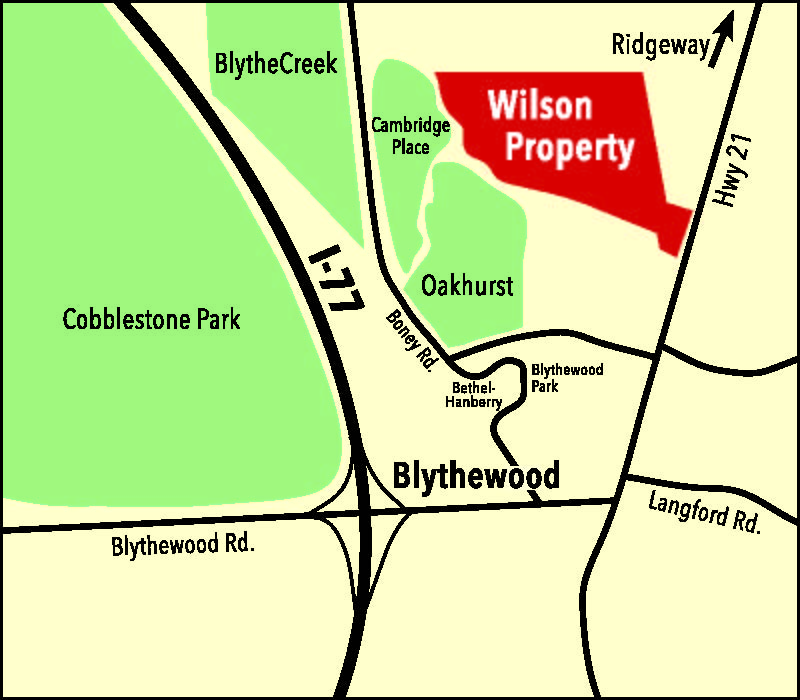
    BLYTHEWOOD – After a lengthy discussion about their desire to downzone Blythewood’s R-5, R-8 and R-12 high-density zoning districts to the D-1 zoning district with minimum lot sizes of 20,000 square feet, Council sallied forth Monday evening to vote unanimously against a zoning request from developer D.R. Horton for those same high density zoning districts on 89.65 acres on Wilson Boulevard.
    Horton’s request came with a recommendation of denial from the Planning Commission who had voted against the request two weeks earlier.
    “It seems a challenge to approve this considering what we have just been discussing,” Councilman Malcolm Gordge commented. “It is illogical to approve this zoning,”
    “I agree,” Mayor J. Michael Ross said. “We just talked about the Planning Comnmission to downzone and here we would be approving something to be actually R-5 and R-8 which is what we want to get away from. Until we get the infrastructure that we need and that we have planned for, it seems we are making a mistake to not slow down and go to a larger size lot so the density is reduced.”
    The audience applauded, and Councilman Tom Utroska continued with that thought.
    “A lot of towns have this (high density) zoning,” Utroska said. “But we don’t have a property tax here. If we do (what they do) we’re going to wind up with a property tax so we can afford all these subdivisions. The residents who contacted me are totally opposed to high density.”
    “The people who called me want that 98 acres downzoned to larger lots,” Councilman Eddie Baughman said.
    After several other similar testimonials from Council members, Utroska called for the vote and it was unanimous against Horton’s request.
    Council had initially discussed eliminating R-5, R-8 and R-12 zoning altogether. Acknowledging that eliminating the three zoning districts could turn in to a mountain of administrative work for the Town staff and Council, Utroska asked Town Planner Michael Criss if there was another way to accomplish their desired goal of less density without the peripheral problems that might be created with the complete elimination of the three zoning districts.
    Criss suggested an alternative approach that involved selecting undeveloped parcels of land within the R-5, R-8 and R-12 zoning districts and rezoning them to a lower residential density.
    “This would declare the Council’s concern about the density and pace of residential development in Blythewood and at the same time preserve the zoning of existing or vested developments,” Town Administrator Gary Parker told Council.
    Council can not vote on the issue until it goes before the Planning Commission for a recommendation.

  • SLED clears Fanning

    COLUMBIA – State Senator Mike Fanning has been cleared by the State Law Enforcement Division of accusations by an Estill woman last fall that Fanning had an inappropriate relationship with her when she was a teenager and a student in his class.
    In a report filed with the Hampton County’s Office Sept. 30, 2016, the woman said the relationship lasted into her college years.
    “Based on a review of the materials provided and research of the applicable law, the information given would be insufficient to support any general sessions charges,” SLED investigator Sean P. Thornton stated in a memo last month. “I would note that the law prior to 2010 did not include a specific section dealing with teacher student relationships,” Thornton wrote.

  • New proviso threatens RW funds

    RIDGEWAY – A Victim’s Assistance Program proviso approved by the State Legislature July 1, 2016, threatened to force the Town of Ridgeway to forfeit up to $35,000 of the slightly more than $60,000 in its Victim Assistance Fund (VAF) to the State Office of Victim Assistance (SOVA), Ridgeway Town Council members Angela Harrison and Heath Cookendorfer explained to Council during their regular monthly meeting last week.

    The newly implemented Proviso 93.95 provides that if the Town does not spend 90 percent of the funds it collected in previous years for victims’ assistance, it will have to forfeit any amount over $25,000 or 10 percent, whichever is higher, to SOVA. Only the balance in the fund can be rolled forward to the next year. Prior to the new proviso, all monies remaining in a town or county’s VAF could be rolled forward indefinitely.

    The new proviso came as a surprise to Council members last month since no notification had been sent to the Town by SOVA, and Harrison said information has not been easy to acquire. An email from Ethel Ford, Deputy Director of SOVA, to Harrison stated, “As you can see from the Proviso, we are not mandated by law to notify entities of current legislative changes.” SOVA, Ford wrote, provides training and technical assistance regarding the acceptable use of the funds.

    “We’ve always rolled the money forward,” Harrison told The Voice. “We didn’t know the proviso existed until we were recently looking at ways we could help victims in our town with these funds. In the past, we didn’t have anyone who was certified to work with victims, so we usually referred them to the Fairfield County VAF or Sistercare, so the money in our fund just rolled forward every year and built up. Now that we have Police Chief (Christopher) Culp who is certified as a victim’s advocate, we wanted to see what we could do to start using our funds to better help victims in our community,” Harrison said. “That’s how we found out about the new proviso.”

    Ridgeway’s victim assistance revenue comes from a percentage of the money brought in from traffic tickets written by the Ridgeway Police Department. The fund has grown to about $60,000 according to Harrison.

    After meeting with Ford in early April to clarify the details of the proviso, Harrison and Cooendorfer agreed there is still considerable confusion about a number of the proviso’s directives, however, Council moved forward to disperse 90 percent ($50,000) of the money in the Town’s current VAF through donations to local organizations authorized to distribute funds to victims.

    Cookendorfer introduced a motion to send $30,000 to Fairfield County’s VAF and $20,000 to Sistercare, with the Ridgeway Council reserving the right to say how those funds would be spent.

    Before that motion could pass, however, Harrison said she would like to see the more significant portion of the funds go to Sistercare.

    “Fairfield County has its own VAF. Sistercare needs the money more than the County. Sistercare recently had to house a family of five. Do you know what it’s like to have to feed a family of five every day and pay for their rent and all their needs on top of that?” Harrison asked.

    “We also have to remember that Fairfield County is our backup. They help us out when we don’t have an advocate,” Cookendorfer said. “We could even flip the number with $30,000 going to Sistercare and $20,000 to Fairfield County. Again, $50,000 is on the table. I think we can make both parties extremely happy.”

    Cookendorfer suggested the remaining $10,000 might go towards advocate training for Culp. Council also discussed using Ridgeway’s VAF to supplement a percentage of Culp’s salary in the future. That percentage would be determined by SOVA based on a 90-day time and activity paperwork filed with SOVA along with other documentation concerning the number of victims served and other data.

    Council voted to donate $50,000 to Fairfield County VAF and Sistercare with the split to be determined after research on the two groups is presented at the next Council meeting.


  • Blythewood journalist vindicated in court


    On Jan. 19, Pinewood Lake Park Foundation CEO Liewendelyn Hart went to the Richland County Sheriff’s Department and filed an incident report with a deputy containing false claims against Quorum publisher Ron Aiken.

    Hart is currently under FBI, South Carolina Attorney General and Secretary of State investigations for her handling of hundreds of thousands of hospitality-tax dollars first reported by Quorum.

    The officer who took the report closed the report as “unfounded” and referred Hart to civil court.

    On Feb. 24, Hart repeated the false accusations to Blythewood Magistrate Court Judge Josef Robinson, and Aiken was issued a Magistrate Restraining Order summons.

    Monday, Aiken appeared without legal representation at the Magistrate Court in Blythewood to defend himself against the charges of harassment and stalking brought by Hart and her attorney, Nathaniel Roberson.

    After Hart and Aiken’s testimony under oath, cross examination and closing statements, Judge Robinson ruled that no proof had been given to show any actions by Aiken as rising to the level necessary for a restraining order, as Aiken contacted Hart just twice by phone and twice by text in the course of his reporting and, when asked in December not to contact Hart, did not do so again.

    “I am thankful that the truth of this matter was recognized and commend Judge Robinson tremendously for being able to distinguish it clearly,” Aiken said. “I contacted Ms. Hart responsibly, as any journalist would when seeking comment on a story, and when she asked not to be contacted any more back in December I respected her wishes completely and documented that request online.

    “There are very real cases of stalking and harassment that occur, and it’s unfortunate that someone called twice by phone and texted twice to comment for stories involving them would use our court system to bring improper harassment charges against a reporter, charges that included multiple lies, because they don’t like the consequences of accurate reporting.

    “In that way, it’s a small victory for journalists and the First Amendment, because reasonable contact by a journalist seeking information from a subject who is the recipient of hundreds of thousands of public dollars as to how that money was spent is speech protected by the First Amendment.”

    As the non-prevailing party, Hart was assessed a filing fee of $55.


  • Intergovernmental meeting takes new tone

    Compared to some of the Fairfield County intergovernmental meetings in past years, the one held at the Century House in Ridgeway on Monday evening was a virtual mutual admiration fest, focusing on the the leadership’s desire for cooperation and moving forward together.

    County Administrator Jason Taylor set the tone, saying that while the County is, fiscally, in good shape, he and other town and county government officials are looking toward greater economic and community development.
    Repeatedly throughout the evening, talk turned to water and sewer.

    “If we don’t address our needs with water and sewer, economic and community development is going to be difficult for us to achieve,” Taylor said. “We’re losing population now, and if we don’t do something to address the basic infrastructure we need, we aren’t going to attract the jobs and houses so that our community can grow and thrive.”

    Taylor said he wasn’t just talking about the County but about the towns as well.

    “We really need to work together. Right now, we’re trying to set the initial legal framework so we can see how we can put our assets, our revenues together to grow our system to where it needs to be so that in the future we can grow and thrive,” Taylor said, receiving several enthusiastic. ‘Amens!’ around the room.

    Each government leader assembled as well as the legislative delegation presented, Read more about those presentations in the April 27 issue of The Voice.

  • Blythewood fights high density growth

    BLYTHEWOOD – In an effort to slow high density growth in the town, Council voted last month to pass first reading to amend the Blythewood zoning ordinance text. The goal was to start the wheels turning to, sooner rather than later, repeal R-5, R-8 and R-12 zoning districts which allow minimum lot sizes of 5,000, 8,000 and 12,000 square feet respectively within the town boundaries.

    “The major concerns are that we have gotten developments and neighborhoods that have so many houses in them, and we don’t have infrastructure to take care of them. We have tried to eliminate some of the smaller lot districts and request that they be a certain size,” Mayor J. Michael Ross said at the April Council meeting.

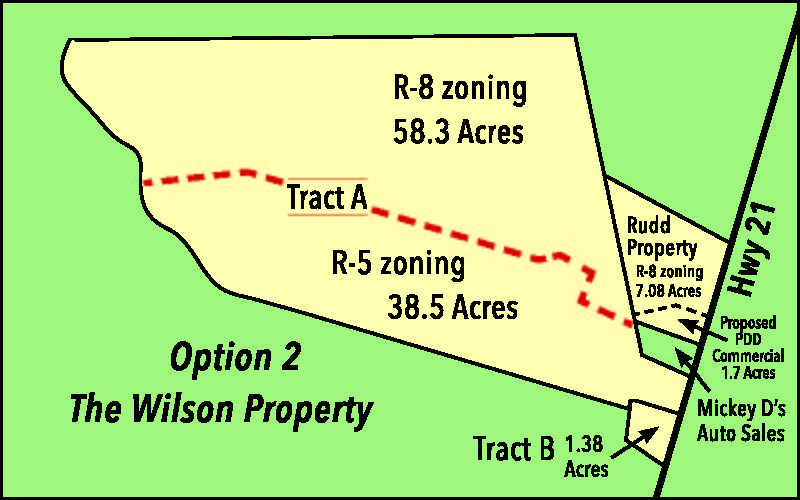
    Following on the heels of that vote was a request to the Planning Commission from developer D. R. Horton to rezone approximately 98 acres on two tracts of land located on Wilson Boulevard between Oakhurst Road and Highway 21 to accommodate the lot sizes that Council had voted a week earlier to banish. That property is currently zoned Development (D-1) with a minimum lot size of 20,000 square feet.

    That request, presented by D. R. Horton representative Jordan Hammond, was not well received by the Commissioners who unanimously sent a recommendation to Council to deny D. R. Horton’s request, citing the high density allowed by all three of the developer’s requested options: PDD zoning (including R-5, R-8 and some commercial zoning which is a mixed-use requirement of PDD zoning), a combination of R-5 and R-8 zoning for the entire property and a third option of all R-8 zoning for the entire property.

    While the Planning Commissioners as well as the Town’s Planning Consultant, Michael Criss, questioned whether only 1.7 acres of commercial zoning in the requested PDD actually met the requirements for true mixed-use zoning which is a required component of PDD zoning, Hammond countered at last week’s Town Council work session that it did meet those requirements.

    “Whether it’s the prototypical, exemplary PDD zoning you see in San Antonio, Texas on the river (River Walk), it may not be that, but it’s a true mixed use of residential commercial and recreational uses,” Hammond said.

    But the PDD requirement wasn’t the only thing the Commissioners had trouble swallowing. In his presentation to the Planning Commission, Hammond discussed the higher density that is possible for the property.

    Commissioner Donald Brock challenged whether the density that could be approved for the property, should be approved.

    “If you left it up to homebuyers looking to move to Blythewood, the answer would be absolutely yes,” Hammond said. “The demand for homes out here and in Cobblestone is huge. We’re in touch with homebuyers every day and the demand for this area is more than the density we’re proposing.

    “Yes,” Brock said, “but I don’t know if the demand for yards you can mow with a weed eater is there. Your rezoning request is a very nice masking job, but it’s nothing more than that. It’s skirting the requirement to get the high density zoning that you’re looking for.

    “The Town of Blythewood is a great place where people want to live,” Hammond told Council last week. “It’s a great community. We want to be involved in it. From the development side of it, if there are ways that we can be creative, there are things like Neighborhood Improvement Districts that we want to have conversations about with the Town. There are negatives a development is going to have, yes, but D. R. Horton, a large developer, can contribute and participate in the (Master) plans the Town has and we want to have that conversation. We don’t want just denial. We want recommendations and feedback,” Hammond told Council.

    “So, with that, could we have a breakout meeting with Council or could I talk with (each of) you individually or just try to meet with you on Tuesday for breakfast and have this conversation?” Hammond asked at the end of his presentation.

    “I think all the options are open” Ross said, “but I think I need to remind you that the people who sat on the Planning Commission are the citizens of this town. They were appointed to be there and they certainly listened to your proposal and I have seen the minutes from that and their opinions and they are valued. They represent the people in this town….This has been through the proper channel of the Planning Commission. They gave their determination. I think you want us to look at something different.”

    Ross said Council would be open to considering other options presented by the developer.

    Acknowledging that eliminating R-5, R-8 and R-12 zoning districts could turn in to a mountain of administrative work for the Town staff and Council, Councilman Tom Utroska asked Criss If there was another way to accomplish their goal of less density without the peripheral problems that might be created with the elimination of the three zoning districts.

    “Instead of eliminating the three zoning districts from the zoning map, you could consider leaving them in the text as is, but down zoning select parcels throughout Blythewood to lower residential density,” Criss told Council. “That approach would declare Council’s concern about density, but still preserve the zoning of existing or invested development in neighborhoods like Oakhurst (55 parcels), Cambridge Pointe (92 parcels proposed), Dawson’s Creek (25 parcels), Dawson’s Pond (25 parcels), Abney Hill Estates, Phase 1 (93 parcels) and Abney Hill Estates, Phase 1 (53 parcels proposed).”

    Criss explained that if the R-5, R-8 and R-12 zoning districts are eliminated from the zoning test, they also become void on the Town of Blythewood zoning map causing each of the hundreds of affected parcels to be rezoned to another remaining district, presumably a residential district with a larger minimum lot size.

    “That would create many nonconforming lots” Criss said. “And along with larger minimum lot sizes come larger minimum building setbacks. That would create many nonconforming structures which couldn’t be rebuilt in the same location if they sustained damage beyond 50 percent of their replacement cost. In the private sector, zoning nonconformity of lots or structures can also affect issues such as titles financing, insurance and marketability,” Criss added.

    An alternate proposal is expected to be on the agenda for the May 24 Council meeting to be held at 7 p.m., at The Manor.