Category: Government

  • Switzer to hand over financials

    BLYTHEWOOD – Town Council again addressed the growing issue of the Blythewood Chamber of Commerce and Visitor Center financials at the May 26 Town Council meeting. And, again, Council asked Mike Switzer, Executive Director of both the Chamber and Visitor Center, to produce the complete financial records for both organizations. The Town and The Voice have requested the financials several times over the past month without results.

    Switzer said the Chamber’s treasurer, Dennis Drozbak, would submit the information to the Town on or before June 12. At the meeting, Switzer explained again why the financials had not been presented to Council.

    “We’ve been creating all these sub-categories with much more magnification. We don’t have these categories filled in so we have to go back and reclassify every single thing,” Switzer said.

    “We need those before we can approve the numbers for the next budget year,” Mayor J. Michael Ross said.

    “I thought you only wanted the budget,” Switzer said. “We haven’t finished the budget.”

    “We want the financials, everything. Anything that’s been written in the paper or questioned,” Ross said. “We want you to present this Council with something we can look at and we are either going to say the paper wasn’t right or, if it is right, then we’ve got a problem.”

    While former Town Councilman Tom Utroska has on several occasions called for an audit of the Chamber’s funds, the Council as a whole has never asked for an audit and, until recently, rarely questioned how the Chamber spent money it receives from the general fund or how the Visitor Center spends the money Council awards it from the accommodation tax funds.  The Town has given Switzer more than a month to work on the Chamber and Visitor Center financials in order for them to be reviewed by Council.

    Switzer insisted, however, that he has been open about the Chamber’s finances with the Town.

    “We actually give monthly P & L statements to the town’s representative on the Chamber board,” Switzer said.

    “We’re not just talking about profit and loss,” Ross said. “We’re talking about financials that we can look at. More detail on salaries and everything. Let us look at everything so we can make a determination.”

    Ross notified The Voice last weekend that he, Councilman Brian Franklin and the Town’s representative on the Chamber board, Ed Parler, met with Drozbak on Wednesday, June 6 to discuss the Chamber and Visitor Center financials.

    “Mr. Drozbak brought no documents with him. We told him we want to look at all the Chamber and Visitor Center financials,” Ross said.

    Ross, town attorney Jim Meggs, another  Councilman and Town Administrator Brian Cook were to meet on Wednesday, June 13 with Switzer and Drozbak, who agreed to hand over the requested documents. That meeting was scheduled shortly after The Voice went to press.

    The Chamber has never responded with financial documentation requested by The Voice through a S.C. Freedom of Information request submitted on April 4. Detrimental to that request, the S.C. Supreme Court issued a ruling on May 23, in a case brought against the Hilton Head Chamber of Commerce that strips the media and citizens of their ability to use the S.C. Freedom of Information Act to find out how Chambers of Commerce in the state spend taxpayer money awarded them by governments. With the ruling, the government that awards the money is now the only entity that has recourse to find out how a chamber spends that money.

  • McDaniel wins House Dist. 41 primary

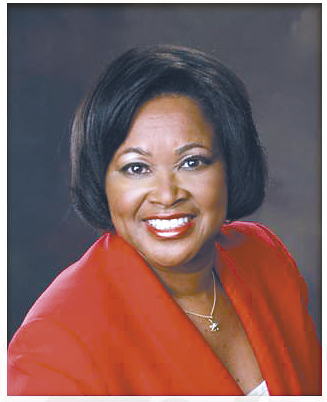
    Annie McDaniel

    WIINNSBORO – The South Carolina House District 41 seat turned over in Tuesday’s election with School Board Trustee Annie McDaniel taking the win over incumbent MaryGail Douglas in Fairfield, Chester and Richland Counties.

    With 2,483 votes (56.66%) to Douglas’s 1,899 votes (43.34%), McDaniel handily took western Fairfield County, both precincts (Kelly Mill and Lake Carolina) in Richland County and all but three in Chester County. Douglas took Chester precincts Baldwin Mill and Eureka Mill and split Chester Ward 4 for a 50-50 tie with McDaniel. In Fairfield, Douglas easily took Lebanon, most of Winnsboro and most of the upper Northeast part of the county and Lake Wateree.

    Fairfield County had a 27.39 percent voter turnout, higher than either Chester or Richland Counties. In the race for District 41, 4,382 votes were cast.

    Neither Douglas nor McDaniels could be reached for comment before press time.

  • Chairman contests response to proposed ordinance

    WINNSBORO – Fairfield County is shooing any notion that it’s trying to coax the Town of Winnsboro into adopting the tougher animal control laws that the County is considering.

    But that’s the perception Winnsboro Town Council expressed during its June 5 meeting.

    Mayor Roger Gaddy called the county’s proposed ordinance “cumbersome,” and he and other council members questioned the town’s ability to enact it.

    County Council Chairman Billy Smith, however, said the ordinance is in the very early proposal stages.

    Smith said it’s subject to change, and there aren’t any plans to nudge Winnsboro into passing a similar measure. He was especially surprised the document was presented and debated by Winnsboro Town Council.

    “I think that discussion was probably premature,” Smith said, noting he first learned about the Winnsboro discussion by reading about it in The Voice.

    Smith said staff prepared the draft ordinance, and that it hasn’t been presented to county council.

    “We haven’t even seen it (the ordinance),” he said. “I was told it was not something meant to go to any other council.”

    At its June 5 council meeting, the Winnsboro Town Council accepted as information a proposed county ordinance it said was aimed at strengthening animal control regulations.

    Gaddy held a copy of the proposed ordinance in his hands as he told council members about the county’s request.

    He and others, though, expressed concerns about the town’s ability to enforce a stricter animal control ordinance.

    “I think the ordinance is relatively lengthy and cumbersome and may impose some difficulty and cost in enforcing it,” Gaddy said. “We still have to deal with issues with animal control without passing something consistent with the county.”

    Gaddy also opposed a provision that limits dog ownership to three, noting he owns six dogs.

    “I don’t want an ordinance limiting the number of dogs I have as long as they behave and believe me, they’re treated right,” the mayor said.

    During the meeting, council members expressed general support for prosecuting overt acts of animal cruelty, but were reluctant to implement comprehensive changes to the law.

    Winnsboro Police Chief John Seibles said manpower remains a challenge, noting the town doesn’t have a full-time animal control officer.

    Seibles also said fines don’t always deter lawbreakers, noting penalties are set “at the discretion of the court.”

    Animal control and financial data, and how it relates to the number of animals the county houses, are elements that Fairfield County officials are reviewing with its proposed ordinance.

    Smith declined to comment about specific numbers, but acknowledged he’s interested in learning the percentage of animal calls originating from within Winnsboro town limits that county officers respond to and foots the bills for.

    “I have the concern, but I want to figure out to what extent,” he said.

  • Town of Winnsboro resists tougher animal control laws

    WINNSBORO – Winnsboro leaders think Fairfield County is barking up the wrong tree by asking the town to emulate the county’s animal control ordinance.

    On Monday night, Winnsboro Town Council members resisted the request, saying the county’s law is overly superfluous and restrictive.

    “I think the ordinance is relatively lengthy and cumbersome and may impose some difficulty and cost in enforcing it,” said Winnsboro Mayor Roger Gaddy. “We still have to deal with issues with animal control without passing something consistent with the county.”

    For example, Gaddy said he opposes a provision that would limit households to owning three dogs or less.

    “I have six, and as far as I know they’re not a nuisance,” Gaddy said. “I don’t want an ordinance limiting the number of dogs I have as long as they behave and believe me, they’re treated right.”

    Councilman John McMeekin said he was open to enacting a reasonable animal control ordinance, but noted the town needs adequate resources to enforce the law.

    Councilman Clyde Sanders agreed with Gaddy that the county law was burdensome, but also said he’d support higher fines for animal abuse. He proposed increasing animal cruelty fines to $500.

    “The one thing I would like to see the town do is have a fine of that amount,” Sanders said. “I can’t stand seeing dogs chained in the yard without anything to eat. If we catch someone, the fine ought to be high enough to prevent them from doing it.”

    Winnsboro Police Chief John Seibles said officers handle several animal cruelty cases, including a few felonies. He noted manpower is the greatest challenge.

    “We don’t have a full-time dedicated animal control officer, though our officers do a good job with that,” Seibles said. “If it is on the books, we’d be charged with enforcing it in some kind of way, but we don’t have the means to.”

    Council members accepted the county’s request as information, but took no action.

    “We have ordinances on the books that we don’t enforce now unless someone complains about it,” Gaddy said. “I don’t want us to vote on something if we’re not able to fulfill the letter of the law.”

    In other business, the council voted unanimously to appoint McMeekin as an ex-officio member to the Fairfield County Chamber of Commerce.

    The vote mirrors a similar action Fairfield County Council took last month.

    On May 14, the council voted to authorize the chairman to appoint a county council member to the board as a condition of receiving its annual grant of $87,507 in its entirety.

    The county’s appointee can vote, but cannot hold an office, such as president or secretary. The town’s appointee, however, would serve as an ex-officio member with no voting powers.

    “I think it would be a great idea. I think it would help give the chamber input from the town, and give a liaison from the town the opportunity to let us know what’s going on with the chamber,” Gaddy said. “There can be a line of communication, but not conflicted when it comes to voting on matters affecting the chamber.”

    First reading of the budget and annual tax levy by title only was also on the agenda Monday night.

    Second reading and a public hearing on both budget ordinances will take place at the next council meeting.

  • Commision endorses vendor ordinance

    BLYTHEWOOD – After more than a year of handwringing over whether to allow temporary vendors in the Town Center District, the Planning Commissioners voted Monday night to recommend that Council adopt the City of Columbia’s vending ordinance, presented by Town Administrator Brian Cook, with a few tweaks. That modified ordinance, basically, allows temporary vendors and food trucks the same rights and privileges as brick and mortar buildings, but with almost none of the costly architectural or other restrictions imposed on brick and mortar buildings.

    That modified vendor ordinance would allow vendors to sell merchandise, goods, services, or forms of amusement from a temporary structure, such as a tent, awning, canopy, umbrella, stand, booth, cart, trailer, from a vehicle, or from his person. A temporary vendor does not include a person who conducts the majority of his business from within a permanent and enclosed building located upon the same lot.

    Unlike brick and mortar buildings, vendors would not be required to provide handicap restrooms or any restrooms at all.

    While the Commissioners initially worried that aesthetics of temporary vendor’s vehicles, tents, trailers, etc, could become a problem, they concluded that aesthetics for vendors would be too difficult to regulate by ordinance and moved on. Brick and mortar buildings in the Town Center District are required to adhere to certain types, quality and colors of building materials, architectural styles, signage, lighting and landscaping. There are no such restrictions on vendor vehicles, tents, trailers, etc.

    Cook said he presented the same modified ordinance to the Board of Architectural Review two weeks ago and they expressed concern regarding the fairness issue when it came to food trucks locating within 100 feet of a brick and mortar food establishment.  The Commissioners responded by requiring a distance of 250 feet between vendors and certain businesses.

    Commission member Rich McKenrick suggested that multiple temporary vendors might want to set up on a single property.  Cook indicated that the ordinance itself did not prohibit that but that other restrictions regarding number of parking places, safety regarding ingress and egress would apply.  The modified ordinance also restricts vendors from operating within 400 feet of residences.

    After flirting with a few concerns, the Planning Commission voted unanimously to adopt the modified City of Columbus ordinance with the following tweaks:

    Allow the Town Administrator to have sole authority to give written permission for a temporary vendor to operate in the Town Center District,

    Increase the distance between a vendor and the front door of a lawfully established restaurant from 100 feet to 250 feet, and

    Limit occupancy of a vendor to no more than 10 hours a day (24 hours). At all other times the vendors must vacate the parcel they occupy.

    It was confirmed by the Planning Commission Chairman, Donald Brock, that the modified ordinance would not affect Grace Coffee. After Grace Coffee refused to continue moving its trailer off the parcel every night as it had initially agreed to do, Cook interpreted the Town’s zoning laws to confirm that Grace Coffee is now a business in good standing, compliant with the Town’s necessary zoning approvals.

    Town Council will vote on the Commission’s recommendation on the vendor ordinance at its next regular meeting on June 25.

  • Gilbert, Brandenburg seek District 7 seat

    WINNSBORO – As County Council Chairman Billy Smith has announced that he will not seek re-election to his council seat representing District 7, two candidates have announced their intentions to run for that seat.

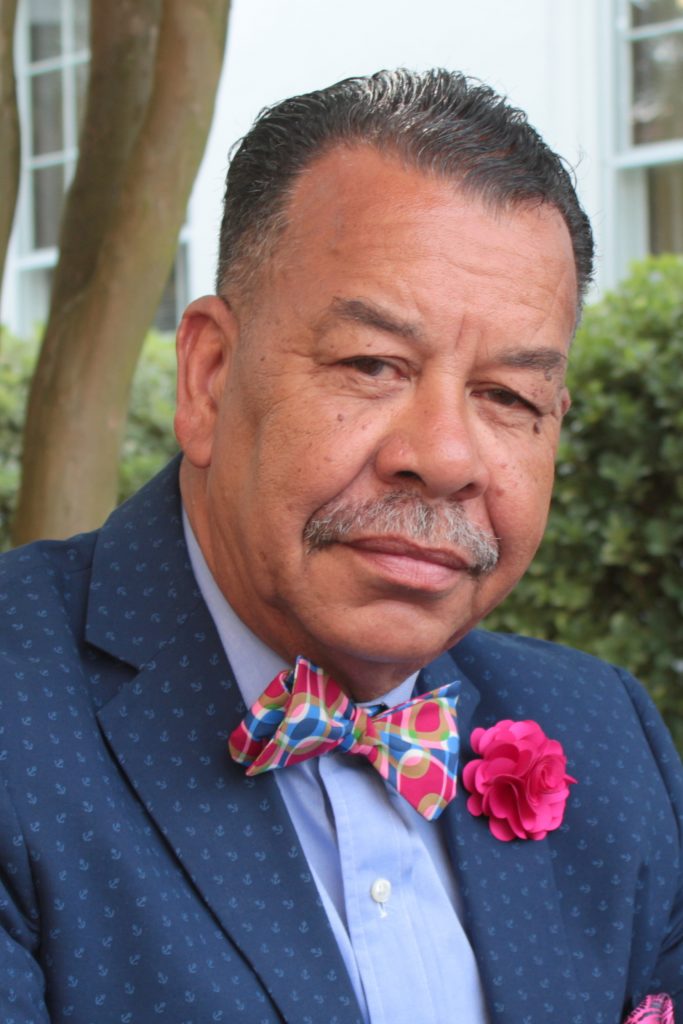
    Gilbert

    Clarence Gilbert sent a letter to The Voice this week declaring his intentions to seek Smith’s seat.

    A Fairfield native, Gilbert, 65, is not new to political life. Although he has not run for public office, he is currently the vice-chairman of the Fairfield Memorial Hospital Board. He has also served on the Behavioral Health Substance Abuse Board for six years and serves on the Deacon Board at St. Mark Baptist Church in Simpson where he also serves as chairman of the stewardship ministry and is a founding father of the Brotherhood Ministry. He also sings in the Brotherhood Choir.

    Gilbert has owned his own business, Gilbert’s Landscaping and Lawn Services, for 18 years. He is married to Deloris Gilbert and they have two adult sons and four grandchildren.

    Brandenburg

    Lisa Brandenburg has also filed to run for Smith’s seat. Brandenburg, who is employed as Coordinator of Intervention in special services for the Fairfield County School District, has been employed by the District for more than 30 years, serving as a teacher, assistant principal and principal. While Brandenburg has not held public office, she was recently a candidate for the Fairfield County School Board.

    Brandenburg is married to David Brandenburg and they have two adult children. David Brandenburg ran against Smith for the District 7 county council seat in 2014.


    Related: Smith: ‘I won’t seek reelection’,  Letter: I am Running for District 7


  • Voters reject Jenkinsville annexation

    Turnout was High: 34 of 54 registered voters

    JENKINSVILLE – Annexation appears to be off the table in Jenkinsville.

    The controversial measure, which would have annexed 143 properties into the town limits, failed by a 19-15 vote, according to unofficial results.

    There were 36 ballots cast, but two under-votes – one absentee and one in-person – were discounted, said Debby Stidham, the county’s director of voter registration and election.

    Certification of election results is scheduled for 10 a.m. Friday, June 8 at the Fairfield County Voter Registration and Elections office at 315 S. Congress Street in Winnsboro.

    Turnout was comparatively high, with 34 ballots counted out of 54 registered voters.

    Only registered voters living in the proposed annexation area were eligible to vote Tuesday. There will be no mandatory recount.

    Contested ballots, allegations of voter intimidation and even threats of legal ac tion emerged during the election process, according to observers.

    Jenkinsville Mayor Gregrey Ginyard, who supported the ballot question and was present at the polling location Tuesday, said in a brief interview Wednesday that he doesn’t anticipate filing any election protests.

    Ginyard also couldn’t say whether or not Jenkinsville Town Council would consider pursuing annexation in a future referendum.

    “The outcome of the election is the outcome of the election,” he said. “As far as I’m concerned, the people spoke. It is what it is.”

    Others in attendance, however, said moments after election results were announced, Ginyard spoke openly about filing a protest and consulting a lawyer.

    “He was shocked, upset. He got loud,” said Fairfield County Councilwoman Bertha Goins, who was also present at the polling location and opposed annexation.

    “It was unbelievable. He said, ‘I’m going to protest, I’m going to call a lawyer.’ He was beside himself,” Goins added.

    The Voice was unable to ask Ginyard about Goins’ remarks because the call ended Wednesday before press time.

    Election controversies

    Unless a protest is filed, the 19 votes against annexation mean the measure dies. Stidham said according to state law, a majority of votes counted is required for a referendum measure to pass.

    In the case of the Jenkinsville vote, the magic number was 18, since 34 votes were counted, Stidham said.

    Tuesday’s election didn’t come without controversy. Several sources confirm at least one ineligible voter, who didn’t live in the proposed annexation area, cast a ballot. It’s unclear how that person voted.

    In addition, Ginyard spent most of the day at the polling location.

    At times, the mayor called voters over so he could speak with him before they could sign in with poll workers, Goins and Stidham said.

    State law prohibits public officials from campaigning inside a polling location, but the law does permit officials to have casual conversations. It’s unclear what Ginyard discussed with the voters.

    A state election official said Ginyard calling out to voters before registering would be questionable.

    “That certainly would not look good and could be construed as campaigning, interfering, or intimidating voters,” said Chris Whitmire, spokesman with the S.C. Election Commission.

    “In that case, the managers could ask him to stop that activity or leave the polling place,” Whitmire said.

    Stidham said she spoke to Ginyard about calling out to voters. She also said at least one voter telephoned her office to complain about the activity.

    “I just asked him to let people come into the precinct,” she said. “He was telling them if they could or could not vote.”

    Goins said she was angered by the mayor’s conversations with voters.

    “He was on the side and he would call them over to the area before they came in to vote,” she said. “It was not professional and it was not right.”

    There were also reports of Ginyard jokingly asking poll workers to count the ballots quickly.

    If the results are challenged, Goins said she’d file a counter-challenge.

    Contested ballots?

    Goins and Stidham both said Ginyard did verbally dispute a vote cast by a woman living outside of the proposed annexation area.

    Stidham said the woman’s name appeared on a voting list, but it shouldn’t have been there. She didn’t know how the woman was able to vote.

    Ginyard, observers say, claimed the woman voted against annexation because she sent him a letter stating that was her intention.

    Stidham said strictly looking at ballots, there’s no way to know how any person voted.

    There was no mistaking Ginyard’s reaction to the vote, with Stidham and Goins saying he was shocked. Stidham said Ginyard raised the issue about the woman’s address.

    “The mayor was standing there saying she shouldn’t be allowed to vote, but he didn’t challenge the ballot,” Stidham said.

    Stidham added that she doesn’t know whether any formal election protests will be filed. Any protests must be filed by noon Monday, June 11, she said.

    Goins said she was thankful the measure failed.

    “Thank God and thank the people,” she said. “I thank them for responding the way they did, for stepping up to the plate and did what needs to be done for the good of the community. It makes me very proud to be a representative in this area.”

  • Smith: ‘I won’t seek reelection’

    Council chair ushered in meeting order, efficiency

    WINNSBORO – Fairfield County Council Chairman Billy Smith told The Voice on Tuesday that he will not see re-election to his council seat representing District 7. His term ends Dec. 31.

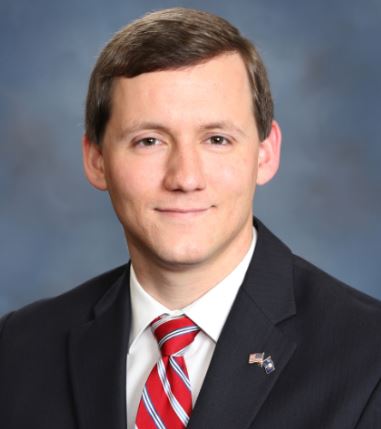
    Smith

    “My wife has accepted an associate professor position at Louisiana State University, so we’ll be moving to Baton Rouge over the course of the next year. She’ll be moving a little bit earlier than me. I’ll finish out my term on Council and wrap up some other things here, and then I’ll move as well, after the first of the year,” Smith said.

    Smith was, by at least 20 years, the youngest member of council when he was elected to represent District 7 in 2014, during a tumultuous government turnover that changed the council’s balance of power. In spite of his youth, Smith was soon elected chairman by his fellow council members and assumed a strong leadership role. Smith brought a new era to council, conducting orderly, efficient meetings with a strict adherence to parliamentary procedure.

    “Rachel and I would have preferred staying in Fairfield, but we’re having to make the decision that’s best for us and our future. It’s a really good opportunity that we just can’t pass up. It’s one of those things in life that you don’t have much control over,” Smith said.

    The couple was married last month following Rachel (Williamson) Smith’s spring graduation from the University of Georgia with a PhD in industrial-organizational psychology.

    While Smith, who grew up in Fairfield County, said he is looking forward to the couple’s new adventure, he said he is disappointed to have to leave the work he and the council have been devoted to for the last three and a half years.

    “Serving on council has been an extremely rewarding and humbling experience. I was elected at a time that I was able to really kind of dig in and help the county move forward,” Smith said. “We have a good, cooperative council now, and I think we’ve made a lot of big strides. A couple highlights of my time on council are that we managed to find and hire one of the best, most talented administrators in the state, and that we’ve helped to keep 24-hour emergency medical care in the county. Now we’re working, among other big things, toward keeping doctor’s care, primary care, local, and that’s important. We’ve made some good headway in economic development by setting a path for infrastructure improvements, so that the county can capture some of the projects as they come to the state,” Smith said.

    Smith said he feels the county is on a firm footing right now.

    “We’ve made great progress. The good news is that with a combination of citizens who care, council members who care and an administration that cares, we are doing the right things,” Smith said. “The county is on the right track, a positive track, and is headed in the right direction. Now we just need to keep it there and continue to invest in infrastructure, water and sewer, and our future. We should be successful if we do that, if we focus on the right priorities.”

    County Administrator Jason Taylor said he and the staff that works closely with Smith will miss him greatly.

    ”Working with Chairman Smith has been a pleasure,” Taylor said. “He is smart, fair and has proven to be a decisive leader. I have always appreciated his approach to decision making. He makes every effort to make an informed decision, based on facts, while also taking into consideration what is best for all of our citizens. His tenure as chairman coincided with some of the most difficult days in the County’s history, but throughout the abandonment of reactors 2 & 3 at VC Summer, Chairman Smith stood strong, and never wavered in his commitment to doing everything he could to improve things for the citizens of Fairfield County. I am proud to have worked with him.”

    Smith said he will continue to work hard on council until his term ends on Dec. 31.

    “We’ve got some important work to do,” he said. “I’m not just going to sit back for the rest of my time here. No one who knows me, I’m sure, expects that I will become disengaged just because my tenure is ending. I’m not that type of person. I’m driven and I’m going to keep focused on what we have to do, to help set the table for Fairfield County’s future.”


    Related: Gilbert, Brandenburg seek District 7 seat

  • Council makes offer to FMH

    Liens, Other Conditions Pose Threat to Sale

    WINNSBORO – In a 6-1 vote Tuesday, council members voted to negotiate a purchase agreement with Fairfield Memorial Hospital to acquire select properties, including doctor offices and the rehab center.

    Councilman Mikel Trapp dissented.

    “[The hospital] knows if they don’t have an infusion of cash by ‘X’ date what that means to them,” Council Chairman Billy Smith said after Tuesday’s meeting. “That was one reason for putting this out tonight, to put the ball in their court to show the citizens that the county is willing to work something out.”

    The motion from Councilman Dan Ruff and approved by council Tuesday night authorizes the Fairfield County administrator and attorney to enter into negotiations with the hospital for purchase of some of its property.

    It also requires a conveyance of clean title and other conditions before any deal is reached, and also for a contract to be brought back for council member review.

    The vote came following a lengthy executive session that also included discussion of a legal update on the county’s lawsuit against SCANA, another legal matter concerning a former employee, and an economic development update of potential contracts.

    Council members only voted on the hospital negotiations. There was no discussion from the dais regarding the measure.

    Tuesday’s vote comes two weeks after the rehab center’s director spoke openly about problems employees face at the hospital.

    “We question and don’t quite understand decisions made by administration, such as finances, priorities at this stage of the game and treatment of employees,” Laura Willingham, the hospital’s rehabilitation director, said. “Of course we’ll do what we’re asked to do. But it’s still disconcerting.”

    “We’re interested in the two medical office buildings – the one housing Fairfield Medical Associates and the John Martin Primary Care facility,” Smith said. “The appraisal for those two is right at $1.6 million. If we add the rehab facility, that appraisal jumps up to about $1.9 million.”

    Smith said there is no timeline, nor a specific dollar figure the county has in mind.

    “We discussed a price, but don’t have a solid number yet,” Smith said. “We’re not settling on a dollar figure.”

    Money, however, isn’t the only issue.

    Smith said the hospital is facing several liens, including one he said was in the neighborhood of $400,000 from the S.C. Department of Revenue.

    The Voice couldn’t independently verify late Tuesday the extent of liens the hospital faces because that information wasn’t available on the Fairfield County Clerk of Court/Register of Deeds website.

    Smith said the immediate concern is ensuring the hospital can get its liens removed. He hopes a deal can be made as soon as possible to preserve general practitioner offices and the rehab facility.

  • Council grills chamber director

    Switzer has until June 12 to submit financial reports

    BLYTHEWOOD – Town Council’s second workshop for the 2018/19 budget, held Thursday, May 24, quickly jumped the rails from a budget discussion to an intense interrogation of the Greater Blythewood Chamber of Commerce Executive Director Mike Switzer about chamber and visitor center financial inconsistencies reported earlier that morning in The Voice.

    The session culminated in Switzer taking cover behind a S.C. Supreme Court ruling issued the day before the meeting in a case brought against the Hilton Head Chamber of Commerce, that strips the media and citizens of their ability to use the S.C. Freedom of Information Act to find out how Chambers of Commerce in the state spend tax-payer money awarded them by governments. With the ruling, only the government who awards the money now has recourse to find out how a chamber spends that money.

    Before Council could take its first swing, however, Switzer ducked, pointing out that Council, itself, has approved of how the chamber has conducted its business and spent its money.

    “I just want to say thank you to the council for the vote of confidence with the increases that you’ve proposed for the upcoming budget. We appreciate your vote of confidence in the work that we’re doing and we’re looking forward to continuing to grow that work,” Switzer said.

    “Despite the very misleading and sometimes often outright false statements that were put out there, we are completely of the upmost integrity at the Chamber, and I think a good testament to that is that the town has had a representative on our board for many years,” Switzer said. He made it clear that the mayor, himself, had served as that representative for a year before Ed Parler, the town’s economic development consultant, took the role.

    “He (Parler) attended every single board meeting where our treasurer’s report is given out and all our financials are laid out,” Switzer said. “The $4,500 increase [$2,500 to the chamber and $2,000 to the visitor center] that you have in the budget for us will cover ¾ of our rent increase of $6,000,” Switzer said.

    The chamber rents space in a building in McNulty Plaza that Mayor J. Michael Ross and a partner own. According to chamber documents acquired by The Voice, annual rent for the chamber/visitor center space was $600 in 2015/16, increased to $12,000 in 2016/17 and $18,000 in 2017/18. The increase of $6,000 will bring the annual rental fee to $24,000. Ross said that increase goes into effect July 1. While Ross recused himself from voting on $7,000 council awarded the Chamber to renovate the space last year, he has voted on all other allotments to the chamber and visitor center.

    “There are some questions being raised…,” Ross said, “and I think that we need a little bit more [information] than what you gave us the last time – a one sheet page. We [the Town] just did our budget proposal and it’s 19 pages long.  Whatever your financials are, I think it’s very important for this council to look at real numbers. And I mean salaries.”

    Ross said the Town government’s books are open for viewing and that the chamber’s should be also.

    “We know how much we’ve spent, how much we’ve got left, what we’re going to do. And I would think y’all are in the same boat. But this council needs to look at that to give you, truly, either a tremendous vote of confidence or have some pointed questions, as does this article, about how your allocations are being made and what salaries are being paid,” Ross said.

    While Switzer said the chamber/visitor center has never denied or refused to answer questions, Councilman Eddie Baughman pointed out that the story in The Voice stated that the newspaper had submitted an FOIA request to the chamber on May 4 and had not yet received any of the requested documentation.

    “I have 30 days to answer it,” Switzer said.

    “If your books are up to date, it shouldn’t take 30 days to answer,” Baughman shot back.

    Ross pointed out during Tuesday night’s council meeting that the same financial information had been requested of the chamber and to the Blythewood Historical Society and that the historical society provided their information the next business day.

    Switzer blamed the delay on several reasons. He said the chamber’s treasurer had been out of town a lot due to his wife’s illness and was only in the office a limited amount of time. Switzer said for that reason the chamber’s financials will not be available until June 12, when the treasurer returns.

    “He’s the one who does all of our billing, does all of our check writing, does everything [financially],” Switzer said. He also said the treasurer had never used a QuickBooks system prior to taking over the chamber’s books less than a year ago.

    While documentation in council member’s packets in January showed that the chamber spends $3,650 for accounting services, there was no explanation as to who receives that money.

    “Angie, who did the books the previous two years, worked with him [the chamber’s treasurer] from July to October, and then she kind of cut him loose. Almost every month, we find things that have to be fixed and corrected, so I’ve identified a couple more things that we need to be making sure they’re in the right category. So, yeah,” Switzer said, “I can promise you, we’ve been working many hours on this. We have always just lumped breakfast [meeting] expenses together, whether it was the rent for the Manor, the cost of a poster, or the cost for the food, we’ve just put it all under breakfast expenses,” he said. “We didn’t sub-categorize. We have since, between our last board meeting and the one upcoming, over the past couple of weeks, we’ve been working on building QuickBooks so that it itemizes everything out into sub-categories, so every event has rent, advertising, marketing, etc. So it’s not just all dumped into one category. You won’t believe the amount of detail,” Switzer said.

    “Well, we look forward to seeing that detail,” Ross said.

    But former Councilman Tom Utroska, who spoke during public comment time, pointed out that while council has been quick to appropriate increasing amounts of funds to the chamber, it has done little to hold the chamber accountable for those funds.

    “Last year at budget time, a representative from the chamber asked for continuing financial support, plus, he offered to operate the Blythewood Visitor Center if town council would fund it,” Utroska said.

    “Reluctantly, council agreed to fund the venture for one year, provided that the Chamber would provide verification [justification] that they were sufficiently increasing Town visitors/tourism,” Utroska said. “Based on council’s concerns at the time, the budget was passed with the oral stipulation that the Chamber would only receive partial funding in July 2017 and would be required to provide documentation of its success in order to receive the balance of the funds in December 2017.

    “At the January 2018 council meeting, the chamber made that presentation, which I would describe as a dog and pony show,” Utroska said.  “Chamber members stated that they were not able to present factual information to verify the visitor center’s operational success. Evidently, however, that presentation was sufficient to keep it funded [by council] through the end of the current fiscal year,” Utroska said.

    “Here we are at the town’s budget process, again, planning to fund the visitor center when, in fact, we have no idea if it is successful or if it is just a financial instrument helping keep the chamber afloat.

    “At the January 2018 meeting, I requested that council hold in abeyance future funding for operations of the visitor’s center until such time as the Town has received an audit that verifies that visitor center funds are providing the Town with the intended results and, that their use complies with state law concerning accommodation tax expenditures for tourism,” Utroska said.

    “If you don’t question their performance and use of funding,” he said to council members, “you are shirking your fiduciary responsibility.”

    The first reading of the 2018/19 budget, which was approved 5-0 Tuesday evening at the regular council meeting, proposes to increase the chamber’s economic development grant from the Town’s general fund from $15,000 to $17,500 and increase the accommodation tax award to the visitor center from $18,500 to $20,500. The mayor also suggested at the May 24 workshop that it might use approximately $10,500 in unspent state accommodations tax revenue to boost the chamber’s allotment to a total of about $48,000 annually.

    Ross is giving Switzer an additional three weeks, until June 12, to get its books in order before presenting them for town hall’s inspection. It is not clear, however, whether council is seeking the chamber’s past years of financials or just the budget for 2018.

    Council will have second reading of the budget June 25.

    Michael Smith contributed to this story. 


    Related articles: News Analysis: Are chambers laundering government money?,  Council considering $56K for Chamber, Visitor’s CenterChamber financials reflect inconsistencies