Category: Government

  • Counties differ on animal abusers

    WINNSBORO  – A man convicted of setting a dog on fire is serving a five-year prison sentence, the maximum allowed under state law.

    Another man who dragged a dog with a truck more than a mile didn’t spend one day in prison.

    So what makes these cases different?

    One was prosecuted in Richland County; the other in Fairfield County.

    Hykeem Dontavious Jabar Golson, 23, of Columbia, was sentenced to five years in prison and fined $5,000 after a Richland County jury convicted him in December 2017 of one count of felony ill treatment of animals, according to Richland County court records.

    Golson is one of only two South Carolina defendants to receive the maximum sentence, according to media reports.

    Billy Ray Huskey, 51, of Great Falls, pleaded guilty in July 2016 to dragging a nine-month-old dog with his Dodge Ram pickup truck in Fairfield County.

    Two other dogs were later found emaciated and had to be euthanized.

    Huskey had been charged with ill treatment of animals, torture – also a felony.

    But instead of going to prison, Huskey was allowed to plead to the misdemeanor charge of ill treatment of animals and sentenced to 90 days in prison, suspended to three years of probation.

    Richland throws book at abusers

    The disparity between the Richland and Fairfield cases is representative of how both counties traditionally handle animal abuse cases.

    A recent investigation by The Voice found that of 14 ill treatment of animals cases prosecuted since 2016 in the 6th Judicial Circuit, which includes Fairfield County, very few resulted in actual jail time.

    Often times, defendants either received probation or the cases were nolle prossed, meaning the cases weren’t prosecuted.

    Richland County, however, has quickly developed a reputation for a no-nonsense approach to animal cruelty.

    “Our pets need to be properly cared for and treated with love because they are a part of our families,” Richland County Sheriff Leon Lett said in a news release announcing Golson’s arrest.

    A lot of Richland County’s assertiveness appears to be in allocating resources to combat animal cruelty.

    In 2015, the Richland County Sheriff’s Office founded an animal cruelty task force.

    That year, its founder, senior investigator Holly Wagner, also investigated at least four dog fighting rings, according to a sheriff’s office news release, landing her honors from the American Society for Prevention of Cruelty to Animals and Humane Society of the United States.

    Judicial discretion

    Often times, how defendants are prosecuted hinges on the presiding judge, a point raised during a recent Winnsboro Town Council meeting.

    In June, Police Chief John Seibles told council members that officers have charged several people with cruelty to animals, with some facing felony counts.

    Penalties, however, are set “at the discretion of the court,” Seibles said. Katera Alexander, however, was arrested by a police officer in Seibles jurisdiction and charged with only a misdemeanor after it was discovered that she had tied a pit bull to her porch and starved it to the point that it had to be euthanized by the County’s Animal Control. Seibles’ comments were part of a larger discussion council members were having about proposed revisions to the Fairfield County animal control laws.

    While some Winnsboro town leaders were reluctant to follow the county’s lead, others were open to tougher penalties in more severe cases.

    Councilman Clyde Sanders, for example, said he thinks the town should mirror the county’s $500 fine for cruelty cases.

    “I can’t stand seeing dogs chained in the yard without anything to eat,” Sanders said. “If we catch someone doing that, the fine ought to be high enough to prevent them from doing it again.”

    In the Huskey case, Assistant Sixth Circuit Solicitor Melissa Heimbaugh, who prosecuted, told the Court she thought the state would not win a felony case with the available evidence.

    The presiding judge grudgingly agreed.

    “The State (solicitor) is right, they would have had a high burden to prove your guilt,” Gibbons said. “We have no evidence of intent, so I’m giving you the benefit of the doubt, which I have to do under the law.”

    Huskey faced up to five years in prison, but escaped prison by pleading guilty to the misdemeanor charge. He was also ordered to perform 30 hours of community service and banned from owning a dog.

    “I want to sentence you to the maximum jail time that I can under the guidelines,” Gibbons said. “I’m going to give you not two years of probation but three.”

    Lax laws

    Prosecutorial leniency is one reason most Fairfield defendants have escaped accountability in animal abuse cases, but not the only reason.

    One S.C. House member says South Carolina lags when it comes to meaningful protections for pets.

    “The laws need to be strengthened,” said Rep. Bill Taylor, R-Aiken. “It’s common knowledge that people who torture and abuse other animals are one step away from torturing or harming human beings.”

    In 2014, Taylor introduced a bill that would’ve toughened penalties for animal abusers, making most cases felonies. The measure, however, failed to gain traction.

    That year, though the General Assembly did revise animal abuse laws that cases are now heard in general sessions court versus magistrate or municipal court, where penalties tend to be lighter.

    But it’s not enough, Taylor says.

    “There’s a myriad of bills filed every session about this,” he said. “Very few of them ever get passed.”

    As recently as February, the S.C. Senate introduced a bill, which among other things, tightened anti-tethering laws. The Senate passed the bill, but it died in the House.

    Penalties for violating the tethering law would’ve included up to 90 days in prison and a $1,000 fine.

    The law also required magistrates to receive animal cruelty training and improving shelter standards, but the anti-tethering provisions drew opposition.

    “Serial killers over the years tortured animals at some point,” Taylor said. “These are serious crimes that can lead to other crimes, we need to be serious about this.”
  • Council defunds RWPD and Culp

    RIDGEWAY – After failing on Aug. 9, to finalize a vote to defund its Police Department, the Ridgeway Town Council held a special meeting Saturday, Aug. 11, at 10 am to pass the vote.

    Following executive session at the Aug. 9 meeting, Councilman Dan Martin moved to ‘implement a reduction in force by eliminating funding for the town’s police department personnel, non-personnel and capital expenditures effective Friday, Aug. 10, at 9:01 a.m.”

    Mayor Heath Cookendorfer seconded the motion.

    Before council could vote, however, Councilman Don Prioleau made what he called a substitute motion to call a town hall meeting before defunding the police department. Council, in its confusion, then stumbled into increasingly familiar territory – another parliamentary faux pas.

    “I would call for a town hall meeting where the citizens of the town would be able to help and guide council which way we might proceed,” Prioleau said. “So I offer a substitute motion that would have a town hall meeting for deciding on the police department.”

    A lengthy discussion then ensued on which motion to vote on first and whether or not to vote on the first (Martin’s) motion at all after the second motion failed 3-1.

    At one point, a woman from the audience walked up to the council table, interrupted proceedings and addressed the mayor and council without identifying herself or asking permission to speak.

    “I’m very concerned about something that happened while you all were in executive session,” the woman said as she laid a paper on the council table and pushed it toward the mayor and Prioleau. She then walked back to her seat to the bewilderment of council and the audience.

    Then, without comment, Cookendorfer and Prioleau, returned to bantering over whether to vote on the first motion.

    Finally, Cookendorfer warily accepted Prioleau’s parliamentary tact that the first motion actually won without a vote since the second motion failed.

    Councilman Dan Martin objected to that reasoning, insisting that the first motion still needed a vote. Prioleau prevailed, however, and Cookendorfer announced that the first motion, to defund the police department, passed, 3-1 without a vote.

    Martin then made a second motion to authorize the mayor to sign an agreement of understanding with the Fairfield County Sheriff’s Department to provide law enforcement for Ridgeway.

    “What we’re doing,” Martin said, “is hiring off-duty Fairfield County Sheriff’s deputies to come and patrol our town for however many hours we contract an officer to be here. We will have that officer here to protect the town, and he will not leave during the time he’s on duty,” Martin said.

    “When the contracted officer is not on duty, we will still have the same round-the-clock service from the Sheriff’s department we’ve always had, just like when Chief Culp was not on duty. We still had 24-hour protection provided by the Fairfield County Sheriff’s Department. Plus we’ll have a contracted officer five days a week here in town.

    Councilman Rufus Jones added that Culp would receive three weeks’ pay plus pay for three weeks of vacation upon separation from the Town.

    “It’s a bad day in Ridgeway!” former mayor Charlene Herring, a Culp supporter, shouted out immediately after council voted to adjourn the meeting. She continued to talk loudly as the audience dispersed, but what she said was not clear.

    Armed with advice from the S.C. Municipal Association that the non-vote for the first motion, to defund the police department, was just that – a non-vote, Cookendorfer, on Friday, called a special meeting for Saturday, at which time council voted 3-1 to pass the motion to defund the police department, effectively immediately.


    NOTE: Following the Aug. 9 meeting, The Voice obtained the handwritten note the unidentified woman left on the dias. Titled ‘Evidence of Collusion,’ it stated that Councilman Rufus Jones winked his eye at a person the woman said is well known to be obsessed with causing harm to the chief of police.

    Asked about the wink, Jones said it was a common practice for him to smile and wink at people he knows.

    “Everyone who knows me knows I do that,” Jones said.

  • Legal loopholes complicate R2 code

    BLYTHEWOOD – It’s being billed as a way to simplify the school district’s procurement code.

    But loopholes in state law could pose legal and ethical complications to the Richland 2 school procurement policy.

    Approved at its July 24 meet­ing, the Richland 2 Board of Education voted to strike a se­ries of policy revisions, includ­ing one that prohibited the dis­trict from doing business with board members.

    “No purchase of materials or services shall be made from any member of the Board,” the stricken measure states.

    Dr. Harry Miley, the district’s chief financial officer, said via email that the probation al­ready exists elsewhere in the board’s policy. He also said the district follows state law.

    “A board member may not provide services or sell prod­ucts to the district or to in­dividual schools,” the policy states.

    “We are undertaking a com­prehensive review and update of all of our policies with par­ticular attention to trying to eliminate places where the same topic is addressed in mul­tiple policies,” Miley said. “We are also undertaking a review of our procurement code to see if there are revisions needed.”

    State law, however, appears to provide an escape route for public bodies whose elected members could potentially be awarded contracts.

    The law states that: “A public official, public member, or pub­lic employee may not have an economic interest in a contract with the State or its political subdivisions if the public offi­cial, public member, or public employee is authorized to per­form an official function relat­ing to the contract.”

    “Official function” is defined in the law as “writing or pre­paring the contract specifi­cations, acceptance of bids, award of the contract, or other action on the preparation or award of the contract.”

    Similar verbiage appears on the State Ethics Commission website. But the law was revised in 1995, with an amendment that appears to allow elected officials to bid on contracts if they don’t participate in awarding the contract.

    “Nor does it [the law] prohibit the award of contracts awarded through a process of public notice and competi­tive bids if the public official, public member, or public employee has not performed an official function regarding the contract,” the amendment states.

    On July 24, Richland 2 board members voted unanimously to approve the revised purchasing policy. There was no discussion of the policy change prior to the vote.

    Miley said during the June 26 board meeting that the changes were made merely to simplify the district’s pro­curement code.

    “We think the policy should be very simple,” he said. “We have a procurement code. We think the policy should state that we adhere to the procure­ment code.”

  • BW still looking to expand ball fields

    BLYTHEWOOD – For at least five years, town council has, off and on, been looking at ways to expand and improve the ball fields available to Bly­thewood baseball and softball teams. While the county made several hundred thousand dollars of improvements to the town’s current (county-owned) ball fields about four years ago, adding new fencing and restrooms, it did not add ball fields.

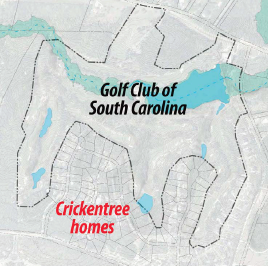
    Golf Club of South Carolina proposed for Blythewood ball fields.

    During council members’ comment time at the July coun­cil meeting, Councilman Bryan Franklin, whose children play on the fields, brought up once again the town’s need for more ball fields.

    “Ten days ago, the last of our Bly­thewood Youth Baseball teams fin­ished their run for the Dixie Youth Little League World Series,” Franklin said. “Four of our teams made it to state playoffs this year. With the help of Town Administrator Brian Cook, we are going to go to the Richland County Recreation Commission with some of our statistics on the last five years and how good our teams have gotten and how badly we need an upgrade of our Blythewood Park fields.”

    Franklin said he had received some communications from Crickentree residents that, since the golf course in the Crickentree neighborhood had gone into foreclosure, it would make a great venue to put some ball fields on the course.

    “I know that’s not in the town lim­its,” Franklin said, “but it’s a great idea. If we can’t get Richland County to move forward with more fields in Blythewood, then maybe we can get them to create a few new fields in some of those open [golf course] spaces,” Franklin said. He said Katie Rummel, secretary of the Blythewood Youth Baseball and Softball League, suggested that youth ball fields might be preferable for those concerned res­idents of Crickentree neighborhood who own property right on the golf course and are worried about homes being built on the course.

    Rummel told The Voice that she hopes the county, as a preventative measure, might buy the golf course property and use it to build a new sports complex for all sports including baseball, softball, lacrosse, football, soccer, etc.

    Franklin said he plans, with Cook, to take some of these ideas to the county.

    Another option for more ball fields, Franklin told The Voice, is the prop­erty where Bethel-Hanberry sits if and when the school district rebuilds the school on property behind the current school building and demolishes the current building.

    “When that happens,” Franklin said, “I would like to see that property used for more ball fields. That would help expand the current overcrowded park.”

    Franklin said he is working on an opportunity to go before the Richland County Recreation Commission and discuss these issues in depth.


    Related:

  • Hilton’s Home 2 Suites eyes Blythewood site

    A new hotel brings site plans to Blythewood Planning commission.

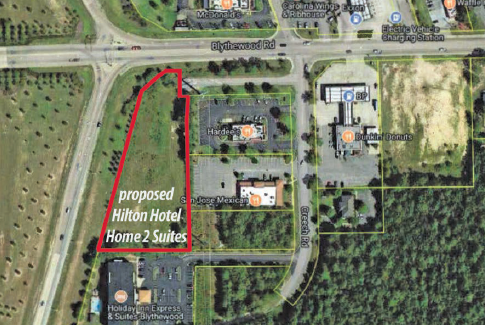
    BLYTHEWOOD – Hilton Hotel’s Home 2 Suites is considering putting down roots in Blythewood. The hotel’s owners are seeking permission from the Town to build a four-story, 88-bed hotel building on a 1.93 acre vacant lot adjacent to the I-77 ramp. But without considerable adjustments to the entrance to the property, the 55,672 square foot building would have no direct access to Creech Road.

    The parcel is tucked between I-77, the Holiday Inn Express & Suite, Hardees and San Jose’s Mexican restaurant. A site map shows access to the parcel off Creech Road across from the west side of the Sharpe BP Service Station.

    But that access doesn’t meet SCDOT standards.

    Civil Engineer Jeff Carter, of Georgia-based Carter Engineering Consultants, presented Paragon Hotels’ plans to the Blythewood Planning Commission Mon­day night.

    Consensus of the Commission members was that it is a good project for Blythewood but the access is problematic.

    Commission Chair Donald Brock ad­dressed the lack of a traffic study and said traffic access to the site presents problems.

    “Ingress and egress to the site is a prob­lem,” he said. “I see that the right-in and right-out onto Creech Road is going to send everyone down a dead end street. What are drivers supposed to do when they get there and have no place to go?” Brock asked.

    Town Administrator Brian Cook said staff has been working with SCDOT on this issue, and that SCDOT has conditionally granted access to the site using SCDOT’s right-of-way.

    “The existing service road would have to be removed and replaced to enable two-way traffic,” Cook told the commissioners. “The access road would need to be a mini­mum of 24’ wide with an appropriately designed connection to Creech Road so as not to negatively impact Creech Road or Blythewood Road which is directly adja­cent,” Cook said.

    Cook said the design would need to in­clude proper radii and an approximate median enforcement to satisfy the SCDOT requirement that this access be a right-in, right-out due to the proximity to Bly­thewood Road.

    Carter expressed his concern that even after doing a traffic study the options would still be very limited and driven by what SCDOT would allow. He said he felt that the developer would agree to install­ing a turnaround at the end of Creech Road where it dead ends.

    Councilman Rick McKenrick asked Carter whether the hotel owners were considering buying additional lots around the site to improve the traffic pattern. Carter said he felt they are still considering that possibility.

    Councilman Marcus Taylor cited the ex­treme traffic problems that already exist on Blythewood Road during high traffic times and said this would significantly add to the problem.

    After lengthy debate and persistent ad­monition by Brock that even conditional approval would not be the best way to proceed, a motion was made to defer the agenda item until the Sept. 4 Planning Commission meeting. The motion was seconded and all council members voted in favor of deferral.

    Cook told the commissioners that he would continue to work with SCDOT and the engineers to address the traffic pattern concerns.

    Blythewood Consultant Michael Criss announced that his services to the Town would end on Aug. 31, 2018 and expressed that he had enjoyed working with the Commission members.

  • FCSD Board approves $2.2M loan

    WINNSBORO – Fairfield County school board members are taking out another line of credit, one of many the district has sought to help pay for building and facilities projects.

    At its July meeting, the board voted 6-1 to borrow $2.2 million to fund a variety of building and facilities projects. Board member Paul Hartman cast the lone dis­senting vote.

    Hartman asked for the record to show that she favored using alternative funding sources as op­posed to seeking a loan.

    “I feel like we should use the re­mainder of what’s left over from the calendar year, finishing up than borrowing money,” she said.

    Superintendent Dr. J.R. Green said the bond was necessary be­cause the district has recurring capital needs.

    “You still have to put roofs on buildings. Air conditioners do not last forever,” Green said. “We’ve not had one single year where we’ve not done things to upgrade our facilities. We’re in a much bet­ter place but we aren’t where we need to be yet.”

    Borrowing has become a com­mon theme as of late for the Fair­field County School District.

    In June, the board approved a $5.4 million loan in the form of a tax anticipation note, a short-term

    loan to help the district cover temporary shortfalls until tax revenue starts rolling in beginning in January 2019.

    The board took out a similar note worth $5 million in 2017, according to district documents.

    Two years ago, they approved a $2 mil­lion general obligation bond to renovate Kelly Miller Elementary School.

    And in 2013, the board approved a $20 million bond to help build a new career center, resulting in a tax increase from 24 mils up to 34 mils that the district, at the time, said would only be for two years.

    The loan included $15.6 million for the building, with the remaining $4.4 mil­lion diverted to finance other facility and equipment needs in the district.

    All told, the sampling of loans totals about $29.6 million, according to district documents and reporting by The Voice.

    The most recently approved bond in­cludes a laundry list of various facility projects, with line items ranging from $16,000 to $300,000.

    Interior and exterior LED lighting and bathroom renovations led the list at $300,000 each, followed by $250,000 from bleacher renovations.

    Also included within the $2.2 million is a district-wide contingency fund of $274,000, school board documents show.

    A breakdown of what contingency funds would cover was not available, and Green couldn’t be reached for follow-up comment as of press time.

    The bond itself would take about a year to repay, and debt millage would remain constant at 20.6 mils, according to district documents.

    The interest rate wasn’t immediately available, though board documents state the district could receive a competitive rate through the S.C. Association of Gov­ernmental Organizations (SCAGO), which the district is utilizing to issue the bond.

    “The SCAGO program pools other school district bond issuances, which results in lower issuance costs and potentially bet­ter interest rates due to increased compe­tition for the purchase,” board documents state.

    In addition to quizzing Green about identifying funding sources other than borrowing, Hartman also asked for the amount of the district’s current outstand­ing debts.

    Kevin Robinson, the district’s director of finance, said he couldn’t provide an exact amount.

    “I don’t know the exact amount. We are still paying on the career center,” Robinson said. “That debt has not been extinguished as of yet. And that’s per the schedule that was initially approved.”

  • Taco Bell finds a spot on Blythewood Road

    BLYTHEWOOD – It has been rumored for over a year that a Taco Bell might be coming to Bly­thewood. A public hearing on Monday, Aug. 13, will confirm that rumor.

    An application for the hearing before the town’s Board of Zoning Appeals (BZA) requests a variance to permit a reduction in the width of the buffer transition yards between adjoining commercially zoned lots at 209 Blythewood Road (Richland County TMS# R1-5112-03-01) so that a Taco Bell restaurant with a drive-thru can be built on that lot.

    The permit comes to the BZA after being denied by the town’s zoning official on the grounds that the proposal would be in violation of the town’s zoning ordinance 155.384 (B) (2).

    Town Council amended the town’s zoning or­dinance last year to allow fast food restaurants to have drive-thru service on the front side of the buildings located along Bly­thewood Road between Main Street and I-77.

    For the BZA to grant the variance for the proposed Taco Bell property, the board must find that the ordinance will result in an unnecessary hardship on Taco Bell. The standards for granting a variance, as set by state law, and the or­dinance must meet five facts of finding.

    Before the variance application can be heard by the BZA, a quazi-judicial board, all surrounding property own­ers must be notified by the Town and a public hearing is required.

    Public testimony regarding the vari­ance application will be held at The Manor, at 6 p.m., Aug. 13.

    A public notice of the meeting states that texts and documents related to this variance application are available for public inspection in the office of the Town Clerk at Blythewood Town Hall, 171 Langford Road, Blythewood, South Carolina, during regular work­ing hours, and also will be available at the public hearing.

  • Update: Doko hitch

    Doko Depot

    BLYTHEWOOD – Further de­lays are expected in the closing of the Town of Blythewood’s con­tract for the purchase of the Doko Depot facility.

    Possible defects in title in some of the underlying land have been revealed and the Town is in the process of remedying those is­sues. A portion of the land under contract was originally conveyed to the Blythewood Volunteer Fire Department by Charles W. Proc­tor in 1971. In his deed, Proctor reserved a reversion of title if the property ceased to be used for fire department or other community uses. The same parcel was con­veyed to the Town after the volun­teer service was discontinued but subject to the reservation by Proc­tor. Proctor passed away in 1976 leaving no children. His wife died shortly thereafter.

    The sale of the former Proctor land for uses unrelated to fire or other community use might cause a reversion in title. Town attor­neys are working to find a solu­tion.

    – Mayor J. Michael Ross

  • Element blames closing on tariff

    Smith: It’s crazy… a 25% tariff on the only TV assembler in the United States. County pressing for tariff exemption

    First layoffs for Element Electronics will be Oct. 5. | Callie Sims

    WINNSBORO – Just months after Element Electronics sought the county government’s help to begin looking to expand its footprint and potentially increase employment and tax revenue in the county, the company announced this week that it will be closing.
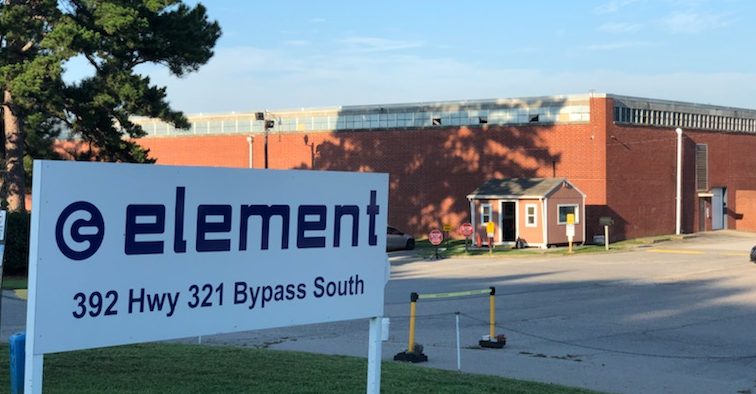
    In a letter issued to employees on Monday, Element’s Vice President of Human Resources, Carl Kennedy, announced that the company would be laying off most of its employees and closing its facility located at 392 Hwy 321 South in Winnsboro.
    “We hope the closure will be temporary and that we will be able to re-open in three to six months,” Kennedy said in the letter. “But we cannot predict this with any certainty at this time.”
    Kennedy said the closing would begin on Oct. 5, when most of the plant’s 134 permanent, full time employees will be laid off. Smaller groups of employees will be separated on a rolling basis from then until the end of the year, Kennedy said. A skeleton crew of approximately eight employees will remain at the facility, according to Kennedy.
    In a separate letter to employees, Mike O’Shaughnessy, Manager of Element, put a finer point on the situation.
    “Our closure is entirely due to ongoing and increasingly difficult tariff related matters,” O’Shaughnessy wrote. “Element, the only U.S. based television assembler, will soon be subject to duties on our parts far in excess of those of any foreign importer.”
    O’Shaughnessy said the tariffs would make it impossible for Element to continue its U.S. production. He said the duty inversions would cause Element’s factory to pay more in duty on its parts than foreign companies would pay on TVs built and exported from Mexico into the United States.
    Fairfield County Council Chairman Billy Smith said officials in the county and Winnsboro were contacted on Tuesday by several national news outlets about the closure. Smith spoke with CNBC Tuesday afternoon. He said he took that opportunity to press for the components imported for Element to be exempt from the tariff.
    “Our goal at this point,” Smith said, “is to bring attention, from the state and local level, to hopefully get the parts used by Element exempted from the tariff. It’s crazy that, first, a new 10 percent tariff and now the threat of a 25 percent tariff is effecting the only television assembler in the United States, while companies that build and import complete televisions from Mexico and other countries are facing zero increase in tariffs,” Smith said. “These companies contribute nothing to employment in the United States. Element has 134 employees and wants to expand.”
    “This is especially hard to swallow when, just a few months ago we [the county] were assisting Element in finding a suitable building to expand its footprint and potentially grow its employee base more than two-fold. That was after the Administration signaled the new tariffs were going to be placed on fully assembled televisions being imported, which would have given Element a leg up on the foreign competition. That isn’t what happened though,” Smith said. “Now this.”
    On July 10, the Trump administration announced a new 10 percent tariff on $200 billion of goods produced in China. Those goods, O’Shaughnessy wrote in a letter to employees, included the LCD panels and motherboards that Element uses.
    Then, last week, the administration announced that it plans to raise that tariff to 25 percent.
    “No tariffs were placed on fully assembled TVs arriving in the US from China or Mexico,” O’Shaunessy said. “This contrast makes it impossible to sustain our U.S. production operations.”
    O’Shaughnessy said, however, that Element’s management had not given up the battle to get back the company’s ability to produce Element TVs in the United States.
    It was in August, 2013 that Element Electronics, a Minnesota based company, announced its plans to relocate manufacturing operations from China back to the United States, tapping the former Perry Ellis Menswear building in Winnsboro as their new home.
    Vlad Kazhdan, vice president of product for Element, said during the announcement that expected the new venture to create 500 new full-time jobs over the next five years.
    Purchase and Lease
    As part of the agreement, Fairfield County purchased the Perry Ellis building from a Perry Ellis subsidiary for $2 million in a deal that closed on Oct. 14, 2013. But the County only ponied up $600,000 for the property, while the Department of Commerce, through an economic development grant, put up $1.25 million. Element, meanwhile, kicked in the remaining $150,000 for the purchase. An additional $50,000 in DOC grant money went toward the cost of upfitting the building, transforming it from a clothing manufacturing center into a high-tech electronics plant. Fairfield Electric Cooperative and SCANA offered to reimburse Element $100,000 each for upfit costs.
    Element leased the property from the County for $1 a year for 30 years with the option to purchase the property for $1 if, by Dec. 31, 2018, it had created at least 500 new, full-time jobs and had invested at least $7.5 million in taxable property; or, if by the same date, Element had created at least 350 jobs, invested at least $5.25 million, repaid a pro rata amount of the grant money and paid to Fairfield County an additional amount based on the following formula:
    400-499 jobs by Dec. 31, 2018 = $120,000;
    350-399 jobs by Dec. 31, 2018 = $200,000.
    Payments were due to the County by June 1, 2019. Element could also continue to lease the property for $1 a year for an additional five years, but must have created at least 250 new, full-time jobs, invested at least $2.5 million by Dec. 31, 2018, and paid to the County $600,000, plus the pro rata grant amount. Failing to have met those conditions, Element could then lease the property at market value, but still must repay the County’s $600,000 investment.
    Fee in Lieu of Taxes
    Manufacturing property in South Carolina is taxed at 10.5 percent, while commercial and other property is taxed at 6 percent. To level the playing field and help attract industry, Tiffany Harrison, Director of Fairfield Economic Development at the time said, local governments often offer as an incentive fees equivalent to the 6 percent rate that companies may pay instead of taxes. Such an agreement is known as a Fee in Lieu of Taxes, or FILOT. Perry Ellis, however, had no such agreement and their property at 392 Highway 321 Bypass N. was listed on the tax rolls. And once a property is on the books, Harrison said, it cannot be removed. Element, therefore, did not qualify for a FILOT on the property itself, but instead was offered by the County an annual tax credit of 42.8 percent for 30 years to bring their contributions to Fairfield County coffers down to the 6 percent level. Like the lease agreement, that tax credit was contingent upon Element creating at least 500 new, full-time jobs and investing at least $7.5 million over the next five years. Otherwise, the credit decreases by the following formula:
    • If, by Dec. 31, 2018, Element has created less than 500 jobs, but at least 400 and invested less than $7.5 million, but at least $6 million, tax credit = 33 percent;
    • Less than 400 jobs, but at least 350 and an investment of less than $6 million but more than $5.25 million, credit = 23 percent;
    • If, by Dec. 31, 2018, Element has failed to create at least 350 new, full-time jobs and has invested less than $5.25 million, the credit agreement terminates and all property taxes shall be paid retroactively.
    Although the building does not qualify for a FILOT, equipment does, Harrison said, and for their equipment Element will pay a FILOT equivalent to the 6 percent property tax rate for 30 years, provided Element has met the 500 job and $7.5 million investment threshold. Otherwise:
    • Less than 500 jobs, but more than 400 and less than $7.5 million, but at least $6 million = 7 percent;
    • Less than 400 jobs, but at least 350 and less than $6 million but more than $5.25 million = 8 percent.
    • If, by Dec. 31, 2018, Element has failed to create at least 350 new, full-time jobs and has invested less than $5.25 million, the FILOT terminates.
    Typical jobs at Element will pay about $12.50 an hour, on average, Harrison said. Element plans to create 250 jobs in the initial phase of start-up. An additional 250 jobs will be added over the course of five years. Element is a main supplier of electronics to Wal-Mart, as well as Target and QVC.

  • Citizens call for audit of Chamber

    Gordge: Chamber Hopes to Continue Visitor Center Funding

    BLYTHEWOOD – Town council has yet to publicly address questions that have been raised recently about the Greater Blythewood Chamber of Commerce’s finances and how it spent thousands of dollars of the town’s A-tax money. However, several citizens who addressed council on Monday night called for an audit of the chamber’s books.

    “I’ve expressed previously that I think we need to audit how the town’s A-tax money is spent [by the chamber],” former councilman Tom Utroska said. “I don’t know whether the allegations about the chamber’s use of A-tax funds made by Mr. [Bob] Massa in The Voice are correct. But he is a CPA and I trust his judgement when he says the numbers don’t add up,” Utroska said.

    “Council needs to look at how this money is spent. You need to request an audit to determine if what was said is accurate,” he continued. “You need receipts, you need check stubs and bank statements. Spreadsheets look good, but they don’t give you documentation to back it up.”

    Utroska told council they are remiss if they don’t get an opinion and understand if [the chamber’s books] are correct or not.

    Cobblestone resident Doug Shay also addressed reported discrepancies in the chamber’s financials.

    “I can remember the chambers in my career were always self-supporting. If we did get money to do a project, we had to report our exact expenses. Reading the articles in The Voice, they [the chamber] are way off,” Shay said. “If [council] gives them more money for anything, there should be an accounting of it, right to the penny.”

    Lenore Zedosky expressed her concern about the town’s funding of the chamber.

    “I regularly attend council meetings and at almost every meetings and at almost every one of those meetings, people question money the town has given to the chamber and where was spent. The financial records have not been available to council in a timely manner and the same ones are asked for over and over again. And, just recently, we received a copy of The Voice and the numbers were appalling, frightening,” Zedosky said.

    “So, I plead with you to require quarterly reports – not a spreadsheet – from the chamber, with receipts attached. Ask for documentation for expenses, line by line, and cancelled checks,” Zedosky said. “And I ask that you cease funding them until such time as you do get this information. I also urge you to ask the chamber to do what council has just done – get a certified audit of their books and get a system set up so they know how much they have spent and where it went. As a citizen of the Town of Blythewood, I urge you to hold their feet to the fire. It’s critically important.”

    In a report published in the July 19 issue of The Voice, CPA and former town councilman Bob Massa said the visitor center, which is run by the chamber and funded by A-tax money, appeared to be little more than a conduit for laundering A-Tax money to the chamber to cover its operating expenses. Massa said the chamber’s operating expenses are not an approved use of those funds.

    In early June, while facing growing criticism for charging a quarter of the chamber’s operating expenses to the $18,500 A-Tax funds the town gave the visitor center last year for a dedicated employee, Switzer increased the amount of operating expenses he was charging to the visitor center from one-quarter to one-third, effectively immediately.

    Town council also funds the chamber with an annual $17,500 grant which a state official told The Voice, does not meet the criteria for a grant because it is designed for the chamber and is not offered to other eligible applicants.

    In May, Council called for the chamber to turn over its complete financial records by June 12. Copies of those documents were subsequently provided to The Voice by two different council members. After reviewing the documents, Massa concluded they were “confusing, lacking in detail and sometimes impossible to follow and understand.”

    On June 25, council voted to stop funding the visitor center after Dec. 31. However, that vote also continued full funding ($9,250 for six months) through Dec. 31. During that meeting there was no specific criticism of the chamber’s financial records by council and council did not set forth any clear expectations for how the chamber was to spend the $9,250. There was no mention of the chamber’s plan to increase the amount it was charging the visitor center for the chamber’s operating costs. Councilman Eddie Baughman said he “wanted to be fair to the chamber,” and not pull the rug out from under them.

    At an earlier council meeting, it was suggested by Ross that the visitor center could be moved to town hall where questions from visitors could be fielded. He said that, with the internet, most travelers now check out events and facilities in a town on the computer before coming to the town, leaving little reason to fund an expensive visitor center.

    However, according to a report last week from councilman Malcolm Gordge, who said he recently met with the chamber’s executive director, Mike Switzer, and newly elected president, Matt Cunningham, the chamber hopes to continue operating the visitor center after Dec. 31 even though council voted to defund it at that point.

    “We will have to find an alternative source for funding,” Gordge told council. “We may continue to explore this. It just depends on where another source of funding comes from.”

    In addition, Gordge said the chamber operatives are now questioning whether the town actually owns the visitor center.

    “It seems it’s not an entity, as such,” Gordge said, “but a service the town provides.”

    Rich McKendrick addressed council later on the agenda, asking Gordge how council could use A-Tax funds to fund something that is not an entity. No one on council responded.

    Gordge said it is difficult to provide direction and accountability for the visitor center.

    “That’s something we need to think about more clearly,” Gordge said, “whether or not the town is responsible for the visitor center or should offer it out to someone else who wants to provide that service.”