Category: Government

  • R2 Board extends Super’s contract

    COLUMBIA – On Tuesday, Sept. 18, 2018 the Richland School District Two Board of Trustees met to conduct the superintendent’s performance evaluation for Dr. Baron Davis.

    Davis, Superintendent for Richland School District Two,  was given an overall distinguished evaluation for the 2017-18 school year, his first year as superintendent of the district, by the School Board, it was announced at Tuesday evening’s school board meeting.

    Board Chair Amelia McKie also announced that the board approved a motion to extend Davis’ contract with the district by one year, to June 30, 2021, and to increase the contribution to his annual annuity by 2.5 percent effective Sept. 30, 2019.

    Board members assessed Davis’ performance in the areas of policy and governance; planning and assessment; instructional leadership; organizational management; communications and community relations; and professionalism.

  • Green, Douglas spar over millage

    WINNSBORO – They came to tout their successes as governmental agencies.

    But an emerging kerfuffle over the distribution of property tax revenues quickly became the focal point at a Fairfield County intergovernmental meeting Monday.

    At the previous week’s council meeting, Councilman Jimmy Ray Douglas publicly called out the Fairfield County School District, saying that the district had improperly collected more than $11 million in tax revenues.

    Douglas said inflated millage rates attributed to the school district overages. He noted that the windfall is on par with the $11.5 million price tag associated with renovating the old Mt. Zion institute to serve as a new Fairfield County Administration building.

    “Fairfield County can’t support and pay for the new office complex at Mt. Zion if we can’t control the extra money the school system has been taking from the county funds,” he said. “Since 2012, someone in the school system has secured $11,198,389.90 over the 9.9 school debt millage they should have received.”

    District superintendent Dr. J.R. Green vehemently denied any improper tax collections. Green spent about 10 minutes Monday refuting Douglas’ claim.

    “The suggestion the school district is taking the county’s money is not grounded in fact,” he said. “When you start making suggestions that people are doing things illegal or unethical, that challenges and ques tions someone’s integrity.”

    Other county officials were reluctant to weigh in. County Administrator Jason Taylor deferred comment to Council Chairman Billy Smith. Smith said he understood why Dr. Green defended the district’s position, but stopped short of staking a position on Douglas’ claims.

    “It’s not an issue council is discussing or addressing in any way. It’s just an issue that a councilman raised,” Smith said. “I don’t see anything happening next unless Mr. Douglas develops a compelling argument to get enough people behind him for us to move forward.”

    Douglas said the windfall is the result of a series of millage errors dating to at least 2012.

    A year later it leaped to 32 mils, where it remained for two years. Those are the years following a school board vote to issue a $20 million bond to build a new career center.

    At the time, the bond included $15.6 million for the career center, with the rest reserved for miscellaneous facility and equipment needs.

    Originally the bond called for an increase to 34 mils, but in actuality it only rose from 9.9 mils to 32 mils. Millage then trickled to 23.6 mils in 2015, and then 20.6 mils in subsequent years, according to county tax documents.

    Green said the district was able to issue the bond without a referendum because it met criteria that said local governments are allowed to issue bonds up to 8 percent of the assessed value of all taxable property in the county.

    He also said the debt would be retired in 2025. Debt service would revert to 9.9 mills at that time.

    In a telephone interview Monday, Green said it was always the district’s intent for debt service millage to gradually reduce until the debt is retired.

    The Voice reported in 2013 that the debt service millage would increase for two years before dropping back down.

    “It [millage] is down further than we thought it would come down,” Green said. “It’s not as if you can pay for the career center in two years.”

    Douglas, however, maintains the district is reaping a windfall.

    In an interview with The Voice, Douglas said he was informed by the county treasurer’s office that the district has received $175,000 in the past month alone from the county. He wrote in a memo to Taylor, the county administrator, that he thinks the district isn’t allowed to raise millage.

    “State law gives the school system the right to increase millage by 3 mils each year or the cost of living increase, whichever is the least amount,” the note reads. “The millage cannot be increased at a larger amount without the Fairfield County Council’s approval.”

    Green said Douglas is conflating operating millage and debt service millage. He noted the 3 percent rule Douglas cited refers to operating millage, not debt service millage.

    “People are conflating two things that aren’t the same,” Green said.

  • Solicitor Johnson of Blythewood indicted

    Charges Include Mail and Wire Fraud, Theft of Federal Funds

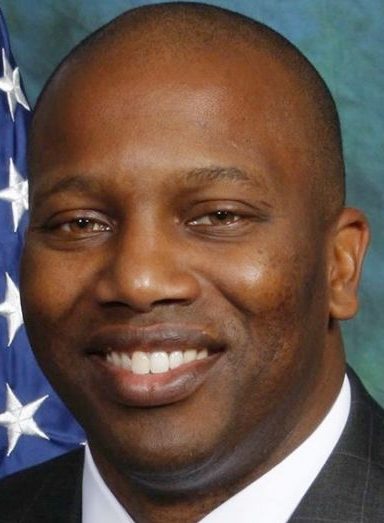
    COLUMBIA – Blythewood resident and Fifth Circuit Solicitor Daniel Johnson, 47, was charged on Tuesday in a 26-count indictment for wire fraud, mail fraud, conspiracy to commit wire and mail fraud and theft of federal funds.

    Johnson

    Also indicted on the same charges was Nicole Halliett Holland, 49, Director of Communications for the Solicitor’s Office.

    The defendants are facing penalties of up to 20 years with a potential fine up to $250,000 for the first three charges and imprisonment up to 10 years with a potential fine of up to $250,000 for theft of federal funds.

    Johnson and Holland are accused of siphoning public funds from the Fifth Judicial Circuit to finance their private lifestyles, according to the indictment.

    Holland is accused of aiding and abetting Johnson, who was her boss.

    Johnson, who was elected solicitor in 2010 and re-elected in 2014, and Holland are accused in the indictment of having used solicitor’s office credit cards to pay for personal expenses including travel, vacations, romantic liaisons, medical expenses and double-reimbursements for military training.

    If convicted, Johnson and Holland would have to forfeit a sum of money equal to all proceeds the defendants obtained from the offenses charged in the indictment – a minimum of approximately $55,000.

    The case was investigated by the Federal Bureau of Investigation and South Carolina Law Enforcement Division.

    Gov. Henry McMaster on Wednesday formally suspended Johnson from office and appointed state deputy Attorney General Heather Weiss as interim solicitor.

    Weiss will serve until early January, when an election will be held for a new solicitor.

  • Mt. Zion/Admin forum set for tomorrow night

    WINNSBORO – “Council will be bringing good news to the public forum Thursday evening [Sept. 20],” Council Chairman Billy Smith reported to The Voice earlier this week, regarding the proposal to repurpose Mt. Zion for new county offices.

    “An important part of making this project affordable for the county is for the developer to be able to receive about $5.4 million in tax credits,” Smith said. “To get a majority of those credits, the property must be listed in the National Register of Historic Places.”

    To that end, Smith said that on Sept. 12, the county received word from the United States Department of the Interior, which certifies properties for listing status in the National Register of Historic Places, that the Mt. Zion property ‘will likely be listed in the National Register if nominated by the State Historic Preservation Office.’

    “And we have also received notification from the SC Historic Preservation Office stating that, ‘The property appears to meet national Register Criteria for Evaluation and will be nominated,’” Smith said.

    “This is a big step towards being granted these historical preservation tax credits,” Smith said. “It’s great news for the taxpayers of Fairfield County.”

    The two-part tax credit proposal consists of a New Market tax credit of $2.2 million and a historical tax credit of $3.2 million. The state and federal tax credits may also include abandoned building tax credits, according to Rory Dowling of 1st and Main, the North Carolina firm working with the county to renovate the building.

    The developer owns the building and will bear the costs of the renovation. To help finance the project, the developer will sell the tax credits to a third party at a discount.

    Smith has said the project will cost about $11.4 million total and will be paid for by 1st and Main from several sources – the $5.4 million in tax credits, $1.1 million in equity, and (after the property is developed) the county will buy the building via interest free annual lease payments of approximately $4.9 million over seven years. At the end of those seven years, the county will make a final payment to purchase and take ownership of the property from 1st and Main.

    “Getting the tax credits is what makes this project possible,” Smith said.

    While project naysayers have criticized the county for not renovating the current administration building or building a new one, Smith said to do either is cost prohibitive.

    “[Mt. Zion] is the only thing we can do and afford to do,” Smith said. “It’s not the ideal situation, but when you’re $40 million plus in debt and unable to borrow any more, you have to dig out.”

    Smith blamed Fairfield County’s financial predicament on past council members who, he said, borrowed $24 million in 2013, banking on revenues from the failed VC Summer nuclear plant to repay the bond –   revenues that never materialized.

    “Replacement of just the electrical, HVAC and roof of the current county building would cost over $4 million,” Taylor said. “To renovate and expand that building would cost much more than it would cost to repurpose Mt. Zion, which will offer so much more space.”

    “Even if we had the up-front money to renovate the current county building, there would be additional costs to find offices for employees while the renovations were being done,” Smith said. “Building out a temporary location would cost just as much, if not more. In 2015 it was estimated that housing the Courthouse temporarily in the HON building during renovations would cost $3.6 million. That would bring the cost of renovating the current building to right under $7 million and would not include any expansion to meet even our current needs. Those costs would be even higher if quoted today. That would not make sense financially.”

    County leaders say the 45,000 square foot Mt. Zion Institute would more than double the existing 21,000-square-foot building to include not only council chambers and county offices, but possibly the recreation, sheriff’s and other departments as well. There would also be space to house the Courthouse offices while renovating the current Courthouse.

    The proposed renovation of Mt. Zion would feature more parking, increased police presence and could lead to the county’s 120 employees shopping and eating in downtown Winnsboro, spending more money downtown, Smith said.

    Council could take a third and final vote on the project as early as Sept. 24.

    Council will hold a public forum on the proposed project Sept. 20 to answer questions that have been submitted by the public and to review and explain the financial and construction details of the project.

    Smith said the public will have a chance to talk informally with the developer and council members prior to the developer’s presentation and council’s discussion of citizen’s submitted questions.

    If you are going to the public forum, here are the details: Thursday, Sept. 20, 6 p.m. at the Midlands Technical College campus, 1674 U.S. Highway 321 N in Winnsboro.
  • Element TV spared from tariffs

    WINNSBORO – Element Electronics has been notified that the components it uses to manufacture television sets in Winnsboro are no longer subject to federal tariffs. The latest U.S Department of Commerce list of tariffs was released yesterday, and Element was not on it.

    “All is well that ends well,” County Council Chairman Billy Smith said. “We could have done without the unnecessary scare, but we’re glad the administration listened to our pleas and has removed the tariffs from the parts Element imports for their products. I know there had been some public reporting about Element looking to possibly expand. I don’t know whether that’s on the table right now; but to Element, if you’re thinking about expanding in Fairfield County, we’re here to help you do that in every way we can.”

    Element announced in early August that it would be closing beginning Oct. 5, due to the issuance of federal tariffs on the parts. In a letter issued to employees, Element’s Vice President of Human Resources, Carl Kennedy, announced that the company would be laying off most of its employees and closing its facility located at 392 Hwy 321 South in Winnsboro.

    Element Manager Mike O’Shaughnessy blamed the closure entirely on ongoing and increasingly difficult tariff related matters.

    The announcement that it would close came just months after Element Electronics sought the county government’s help as it began looking to expand its footprint and potentially increase employment and tax revenue in the county.

    On Wednesday, Element released a statement, that “Our South Carolina factory will remain open!”

    “Our South Carolina and Fairfield teams really came together on this, working with Element to make this possible, and I’m ecstatic at this news that all the hard work paid off,” Smith said. “It’s a great day in Fairfield County.”


    Related: Element blames closing on tariffs; Fairfield asks feds to exempt Element

  • Attorney pitches plan to preserve McCreight House

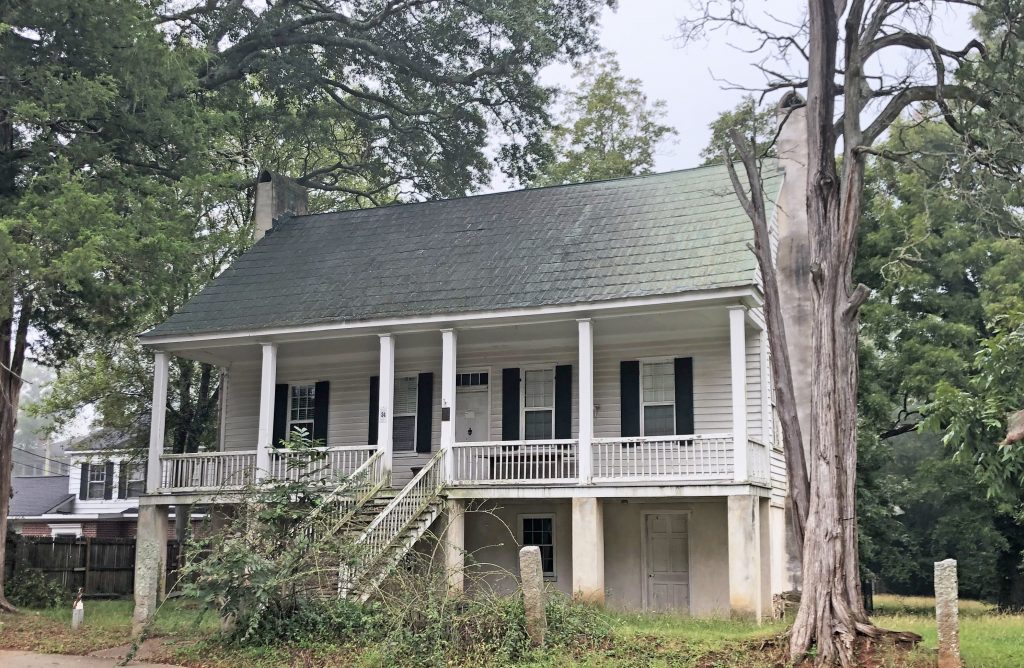
    The McCreight House (circa 1774-1800)

    WINNSBORO – Mike Kelly thinks there’s more value beyond dollars and cents when it comes to a historic home in the Town of Winnsboro.

    At the Sept. 4 town council meeting, the local attorney pitched a plan he says will rejuvenate the McCreight house located on North Vanderhorst Street in Winnsboro and honor deed stipulations at the same time.

    “The odds of your having any legal liability of doing what I suggest are about the same as a meteor dropping and hitting us all in this room,” Kelly told town council members last week. “I’m not going to have any second thoughts or regrets about what I’m going to say.”

    In a presentation to council members, Kelly proposed deeding the house (c1774 – 1800) to Palmetto Trust for Historic Preservation, which would repurpose the property.

    Doing so, he said, helps relieve the town of some responsibilities associated with upkeep while also serving a public benefit.

    Believed to be the first ‘board’ house in Winnsboro, the house was built by a member of the McCreight family. There are three stories, with two large rooms on each floor.

    “Let them undertake it and put a historic preservation easement on it so that there’s no way that anyone will do anything other than the intent of the will,” Kelly said.

    Winnsboro attorney Paul Swearingen, who accompanied Kelly, suggested the repurposed property could be marketed, with proceeds divided between the Palmetto Trust, surviving relatives and the town.

    Though deed restrictions technically prohibit selling the property, Kelly and Swearingen said the family is indifferent to those restrictions.

    “Most of the stipulations died with Ms. Quattlebaum,” Swearingen said. “The only important ones that didn’t were that the Town government maintain and preserve the property, which you all have been doing for all these years, and that it not be sold.

    “Ultimately what she wanted is going to happen, whether the Town pays to upkeep this property in perpetuity or the Town gets help from the preservation society,” Swearingen continued.

    Council members expressed intrigue over the proposal, but the town’s attorney John Fantry suggested instead that Kelly and Swearingen look at a quitclaim deed accompanied by a resolution of abandonment.

    “The town would get no benefit from the sale, period,” Fantry said. “It would be an abandoning of the property and transfer of any rights, which may help you in your economic endeavors.”

    A quitclaim deed is a deed in which a property transfers ownership without being sold, according to www.realtor.com.

    “No money is involved in the transaction,” the website states.

    Mayor Roger Gaddy agreed with the quitclaim deed option. He thought it would be pointless for the Town to profit from the sale, and asked Kelly and Swearingen to develop a proposal that could be voted on at the next council meeting.

    “I don’t have a problem abandoning and deeding it over to them with a quitclaim deed,” Gaddy said. “I don’t think the property is worth much money. It might not do much more for the family than give them dinner out one night somewhere.”

  • Judge punts on dismissal of SCE&G lawsuit

    WINNSBORO – A Circuit Court judge declined to rule last week on a request by SCE&G to dismiss an injunction against the utility that was filed by the county.

    The case came before Circuit Judge John C. Hays early in the day in the Fairfield County Courthouse. However, because the judge said he felt it was a complicated case, he wanted to think about it and deferred it until the end of the day.

    When the case came up later in the afternoon, he once again declined to hear the case.

    “I’m going to punt. I’m going to let another judge take this,” Hays said. “I think I’m going to contact the Supreme Court justice and ask that one judge be assigned to all SCE&G cases.”

    “Other than that, there was not a whole lot of comment about our case,” Fairfield County Administrator Jason Taylor told The Voice. “It was not a ruling. He did not hear the case. He said he did not have the time to deal with this,” Taylor said.

    “This is a prolonging of the process now, to have another judge hear it,” Taylor said.

    The county filed the lawsuit on Nov. 21, 2017, against SCE&G/SCANA and any other necessary parties based upon SCE&G/SCANA’s failure to comply with the terms of the fee-in-lieu contract between SCE&G/SCANA and the county, and to also file a temporary restraining order to prevent SCE&G from abandoning the project and not protecting the assets at V.C. Summer.

    “The council owes it to the citizens of our county to do whatever we can to recoup the financial losses created by SCE&G’s decision to abandon the project,” County Council Chairman Billy Smith said. “The county is not looking for any kind of financial windfall. We just hope that this litigation can get our county closer to the position it would have been in had SCE&G acted in good faith, diligently completed these projects and not chosen to abandon the construction of the plants.”

  • Admin forum scheduled for Sept. 20

    WINNSBORO – Fairfield County residents with a vested interest in an $11.5 million project that would repurpose the old Mt. Zion Institute into new county offices will have a chance to have their questions answered at an upcoming public forum.

    The forum is scheduled for Thursday, Sept. 20 at the Fairfield County campus of Midland Technical College. It will be held from 5 to 8 p.m., and residents are asked to submit written questions in advance.

    Thursday’s forum follows considerable debate on the proposed administration office project, which for the third meeting in a row, received considerable discussion among County Council members and residents alike.

    At least four supporters addressed the council Monday night, each saying repurposing the Mt. Zion property is exactly what the Town of Winnsboro needs.

    “It has sadly become a tragic site,” retired State newspaper columnist Bill McDonald said about the Mt. Zion property. “I can’t understand why a certain group of people oppose the reincarnation of the Mt. Zion Institute.”

    Donnie Laird, also speaking during public input, said the current proposal of seeking tax credits to help pay for the work is the only feasible option.

    “The county cannot borrow any more money,” Laird said.

    The strongest comments, however, came from Bill Haslett.

    “It’s very difficult to see a town dry up like Winnsboro has done. People don’t want to live in Winnsboro because it looks like the devil,” Haslett said.

    “I’m disappointed in the two council members who have sat on the fence,” Haslett continued. “I believe that’s a political move to get votes in the next election.”

    The latter remarks drew a response from Councilman Dan Ruff, one of two council members Haslett indirectly referenced. Ruff denied that he is on the fence.

    “It’s about trying to make the best decision you can make. If you don’t know and you’re not sure, you can’t vote,” Ruff said.

    Some candidates seeking office and other private residents opposed to the Mt. Zion plan took to the podium as well.

    “It’s a neighborhood that needs to stay a neighborhood,” local resident Pam Smith said. “We’ve spoken to an attorney to see what we would have to do to protect the properties.”

    As proposed, about half of the $11.5 million project would come from a series of state and federal historic tax credits totaling $5.4 million.

    Another $4.5 million would come in the form of a construction loan, as well as $1.1 million in equity from money the developer would raise.

    If built, the new administration building would more than double the square footage of the existing 21,000-square-foot space of the old one.

    Council members discussed the proposal in executive session later in the meeting, but took no action.

    In other business, the council unanimously approved second reading of an ordinance accepting the conveyance of 2.72 acres on Old Windmill Road near Ridgeway.

    Councilman Jimmy Ray Douglas, who’s spearheading the plan, said it’s his hope that a four-bay public safety building can be built on the property.

    Two bays would serve fire engines, one would serve the sheriff’s office and the final bay would be dedicated to EMS.

    Lake Wateree Presbyterian Church is providing the property. Land would revert back to the church if the station isn’t built.

  • Hotel vote set for Sept. 17

    BLYTHEWOOD – After not receiving a vote from the planning commission last week for lack of a quorum of commission members, representatives of Hilton Hotel’s Home 2 Suites will have another go at it on Monday evening.

    The hotel chain is seeking the commission’s approval to situate a hotel on a 1.93-acre parcel located behind San Jose’s restaurant and adjacent to I-77. The building is proposed to be four stories with 88 beds.

    The representatives must also meet with the Board of Architectural Review (BAR) before they can receive a Certificate of Occupancy. To eliminate an extra trip, Town Hall arranged for them to meet with both boards on Sept. 17. The BAR will meet at 6 p.m. and the planning commission at 7 p.m. at the Manor.

    The request first came before the commission in early August but was deferred by the commission until the September meeting so the commissioners’ concerns regarding what they considered problematic traffic access to the hotel off Blythewood Road could be resolved.

    Town Administrator Brian Cook said last month that Town Hall staff had been working with SCDOT on the issue and that SCDOT had conditionally granted access to the site using SCDOT’s right of way.

    While those attending the Tuesday evening meeting were waiting for enough planning commissioners to arrive for a quorum, engineer Jeff Carter, representing the hotel chain, reviewed for the commissioners the conclusions of a traffic study conducted by Seneca engineer Roger Dyar which stated that the overall effects on the peak hour traffic flow on the hotel access are minimal.

    The report recommended that the proposed site’s access plan should be approved since the increase in traffic will result in only very minor additions to delays and queues in the study network.

  • Councilmen go to Washington

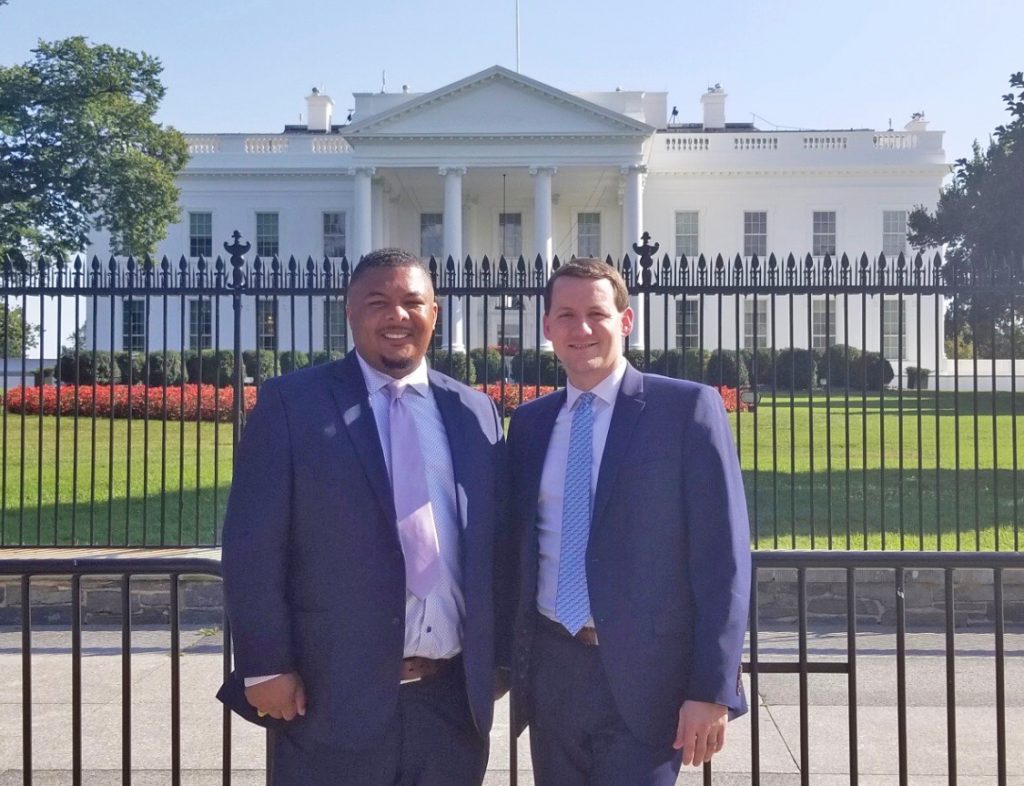
    Robinson, left, and Smith

    WASHINGTON, D.C. – Fairfield County Council Chairman Billy Smith, fellow Councilman Neal Robinson and Fairfield County Sheriff Will Montgomery were invited with a group of other South Carolina officials to tour the White House and meet with administration officials to discuss how national issues and the administration’s policies toward them affect our local communities.

    They also were able to network and get contact information for people in positions that might allow them to help the county with various matters now and in the future. Among other high level administration officials, Smith said they met with OMB Director Mulvaney and Special Counselor to the President, Kellyanne Conway.

    “We discussed a lot of issues, but trade and tariffs, the need for more and better infrastructure, and addressing the opioid crisis were the leading topics,” Smith said