Category: Government

  • Providence Health-Fairfield ER opens

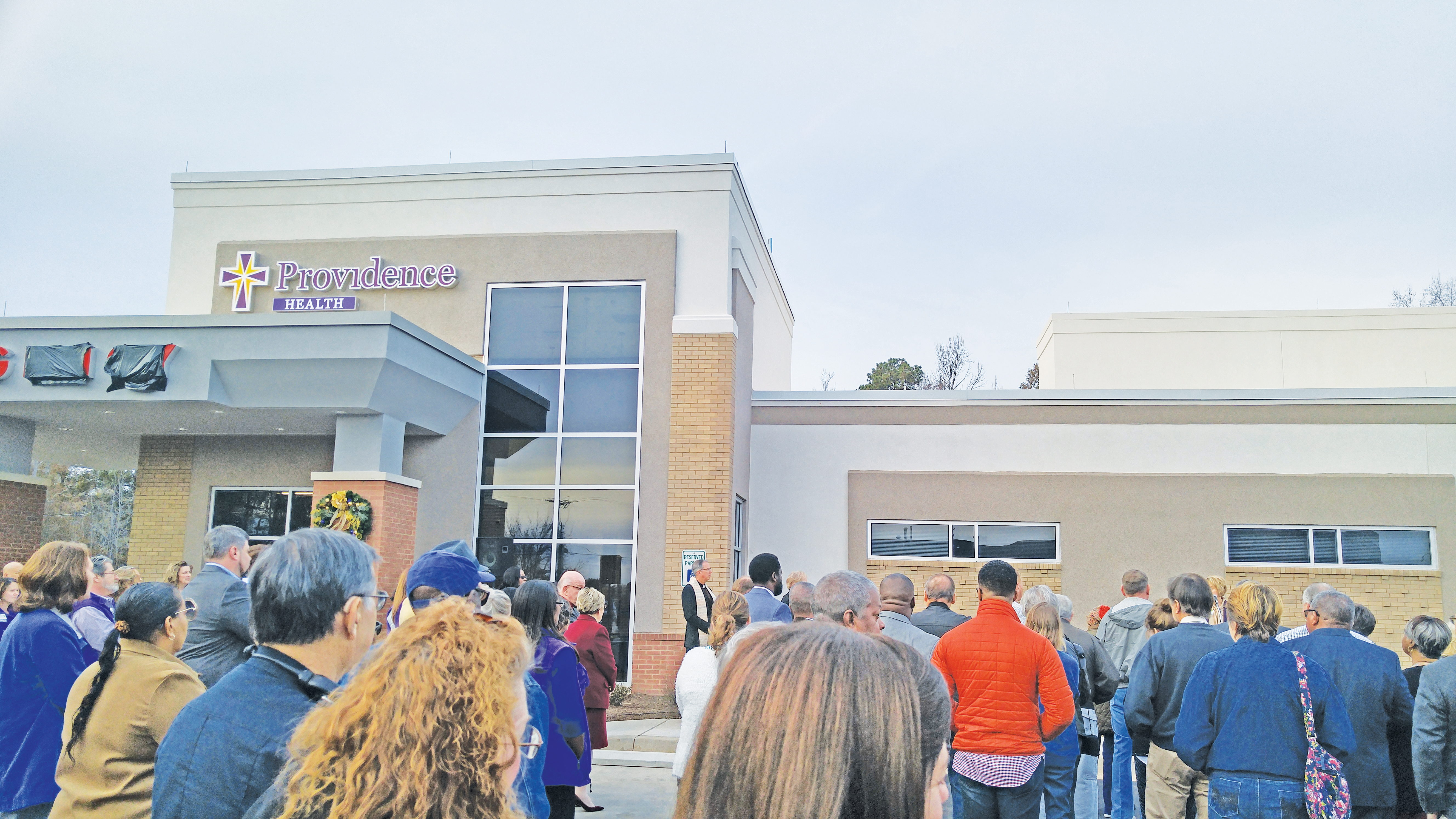
    After a grand opening for the community (above) on Dec. 13, the new Providence Health-Fairfield Emergency Room on Tuesday.

    WINNSBORO – As the baton passed from Fairfield Memorial Hospital (FMH) to Providence Health-Fairfield Emergency Room on Tuesday, citizens in Fairfield County were not without health care service for a minute. As FMH officially closed its doors forever, the county’s new ER opened its doors the same day to a new world of state-of-the-art emergency health care for Fairfield County.

    The opening of Providence Health’s emergency room comes after almost three years of planning and cooperation between the FMH board and administration, Fairfield County administrative staff and Providence Health and legislative intervention from the county’s former State Sen. Creighton Coleman and former State Rep. MaryGail Douglas.

    And there could be more good news to come as the FMH board continues to market (through ROI Commercial out of Columbia) the available 25-bed hospital building for another health care entity.

    The new ER facility, located across from Bi-Lo, near the intersection of US 321 and Highway 34, includes 12,000-square-feet for emergency services, featuring six exam rooms (including four treatment rooms and two for future expansion), two trauma rooms, an onsite laboratory, imaging services such as computerized tomography (CT) scan, ultrasound and x-ray.

    An additional 6,000 square feet of space is available for future expansion of services as needs in the community are identified.

    If the new facility to provide continuity of health care in the Fairfield community was a long time coming, some close to the project say it is a modern miracle that it came at all as hundreds of other rural hospitals have closed in recent years, three of those in South Carolina. But for the infusion of millions of dollars from the county in recent years, Fairfield Memorial might have shuttered much earlier.

    Funded by $12M from LifePoint Health for construction of the new facility and $10M ($1M a year for the next 10 years) from Fairfield County, the free standing Providence Health ER was also made possible in part by nearly $4M in transformational funding from South Carolina’s Hospital Transformation Program which supports rural access to healthcare resources.

    Those transformational dollars, appropriated by the legislature, are earmarked to go to large hospitals like Providence to encourage them to partner with rural hospitals that are in danger of closing. Because talks between the hospital and Providence were still in the early stages as the deadline for application for the funds loomed, it was through the significant efforts of Coleman and Douglas that the house and senate extended the application deadline for the Providence project.

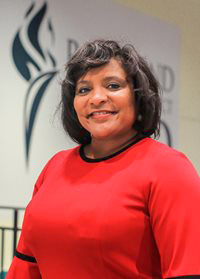
    “This Emergency Room is a shining example of what can occur when multiple organizations work together to do what’s right for the community,” Providence-Northeast Hospital CEO Lindy White said in a statement on Tuesday. “The new facility will serve the county’s patients during their times of greatest need and, at the same time, keep them close to home.

    “It is a blessing and an honor,” White said, “to serve such a welcoming part of the country.”

  • Richland 2 board members fail Ethics 101

    BLYTHEWOOD – Most sitting members of the Richland 2 Board of Education have major gaps in their state-mandated ethics filings, a review of public records shows.

    Three board members failed to file Statements of Economic Interest forms for at least one calendar year.

    Two of those three board members also haven’t filed quarterly campaign disclosure forms since 2016.

    And virtually everyone currently on the board has either been late or missed at least one quarterly report, according to the S.C. Ethics Commission online database.

    Craig Plank, who did not win election to the board last month, filed his SEI form on time every year. He also filed an initial report, one quarterly report and a final report, documents show.

    The Richland 2 school board plays a direct role in developing the district’s annual budget, which for the 2017-2018 fiscal year totaled $273.9 million, according to the school district website.

    The board also recently voted to place a referendum question on the November ballot that asked taxpayers for permission to borrow an additional $476 million to pay for school facility projects.

    Voters approved the referendum, resulting in a property tax increase for homes and businesses in Richland 2.

    Because Richland 2 board members are entrusted with spending millions of dollars in taxpayer money, greater scrutiny of their ethics filings is appropriate, said Jay Bender, a media law attorney representing the S.C. Press Association.

    “You have all these people who take office who pay no attention what the requirements are, and that’s unfortunate,” Bender said.

    Forgotten forms

    As of Tuesday, Richland 2 board member James Shadd III still had not filed Statements of Economic Interest forms for 2017 or 2018. SEI forms disclose an elected official’s income and potential conflicts of interest.

    Shadd III, who ran a separate campaign for solicitor, hasn’t filed quarterly campaign disclosure statements since Oct. 31, 2016. State law requires quarterly reports to be filed in January, April, July and October.

    “All candidates with contributions on hand must file a quarterly report covering from the last report through the end of the calendar quarter,” the Ethics Commission web site states. “The quarterly report is required of all candidates once they have begun to file, whether there has been any financial activity or not.”

    Shadd III couldn’t be reached for comment Tuesday.

    Board chairwoman Amelia McKie (2015-2018) and newly elected board member Teresa Holmes (2018) also missed filing SEI forms.

    The forms weren’t filed with the Ethics Commission until Dec. 4, nearly a month after the general election. They were due March 30.

    Both McKie and Holmes filed their SEI forms after The Voice informed them that they hadn’t been filed.

    McKie said she had filed her forms “months ago.” The Voice has been unable to reach Holmes for comment.

    Richland 2 board member Cheryl Caution-Parker, who was more than a month late in filing all of her 2018 quarterly campaign disclosure reports, said she saved her work when filing online, but forgot to click ‘File.’

    As with McKie and Holmes, Caution-Parker filed shortly after being contacted by The Voice.

    “It just didn’t cross my mind to double check because I thought everything was fine when I sent it,” Caution-Parker said.

    “A lot of times when you’re smack in the middle of the campaign and things are coming at you from so many different directions, it’s very hard to keep up with everything,” she continued.

    Walker said filing dates published on the Ethics Commission website are considered the official filing dates. She said that “it’s the duty of every candidate” to file the forms correctly.

    Two other Richland 2 board members have late or missing ethics forms, according to the agency’s online database:

    James Manning – Campaign Disclosure Initial Report not filed. Initial reports must be filed within 10 days of spending or receiving the first $500 of campaign funds. Manning reported receiving a $1,000 contribution from Brownstone Construction Group, LLC on Aug. 21, 2018.

    Monica Elkins – Quarterly campaign disclosure reports not filed since April 10, 2017.

    Board member Lindsay Agostini’s last Campaign Disclosure report on file was a final report dated March 24, 2017.

    Final reports are filed only after a candidate’s campaign account is closed. To qualify, a candidate must have a zero balance and no outstanding campaign debts, according to the Ethics Commission website.

    “Once a final report is filed, a candidate may not accept or spend any funds for the campaign,” the website states.

    Agostini’s final report listed a zero balance on her form. She would have to file a new initial report once she spends or receives at least $500 in new donations, according to the commission.

    Her last SEI report was properly filed March 29, 2018.

    More trouble for McKie

    Walker, the ethics commission spokeswoman, said she “can neither confirm or deny” whether any new complaints have been filed against Richland 2 board members.

    Complaints only become public when the commission determines that probable cause exists.

    So far, McKie is the only sitting board member who’s been fined for prior ethics violations, according to ethics commission records.

    In July 2018, the commission fined McKie $41,000 as part of an eight-count complaint for failing to disclose campaign contributions.

    The agency’s online database states McKie hasn’t filed any campaign disclosure reports since February 2015.

    McKie has until Dec. 30 to pay the first $20,000 and if she doesn’t, the fine increases to $51,750, public records show. She hadn’t paid any of the money as of Tuesday, Walker said.

    In addition to ethics fines, McKie recently faced legal troubles in Richland County civil court.

    McKie is listed as a co-defendant in a foreclosure lawsuit that was filed in June 2017.

    According to the suit, McKie’s homeowner’s association placed a lien on property located on Hunters Pond Road after $1,800 in assessments went unpaid. The HOA later foreclosed on McKie’s home.

    “The Defendant(s) has failed to make consistent payments of the assessments and interest, although demand for payment has been made,” the suit states.

    The suit also sought legal fees and expenses, bringing the total bill as of August 2018 to about $6,050, court filings state.

    On Oct. 2, a judge signed off on the foreclosure and request for sale at public auction.

    The case, however, was disposed Nov. 29 after court documents were filed stating that sufficient funds had been paid to satisfy the judgment.

    How did this happen?

    As ethics reporting deadlines have eluded Richland 2 board members, tracing how the tardy filings went unchecked remains equally unclear.

    Section 8-13-1110 of state law says no public official “may take the oath of office or enter upon his official responsibilities” unless a Statement of Economic Interest form is filed.

    According to that definition, it would mean that McKie has illegally served on the school board since 2015, the first year she failed to file an SEI form. The oath of office statute likely doesn’t impact Holmes since she only filed a month late.

    Chris Whitmire, spokesman for the State Election Commission, said the agency is only responsible for ensuring that candidates file statements of candidacy.

    Whitmire said the agency would only remove from the ballot any candidate who fails to file that form. He noted campaign disclosures and SEI forms fall under the Ethics Commission’s purview.

    “I would think compliance would be a question for that body,” Whitmire said.

    Walker, the ethics commission spokeswoman, said only the election commission has the power to remove a candidate from the ballot.

    Instead, the ethics commission only fines candidates, and only for violations of campaign finance and ethics laws, Walker said.

    “We don’t file an injunction or anything,” she said.

    Fines wouldn’t kick in until after candidates are notified by mail and a formal complaint is filed.

    Complaints aren’t made public until the commission determines “probable cause” exists that a violation occurred, Walker said.

    Failing to file SEI forms previously carried dire consequences for more than 200 candidates in one recent election.

    In 2012, the S.C. Supreme Court ruled anyone failing to file SEIs when officially filing for public office must be removed from the ballot.

    “We fully appreciate the consequences of our decision, as lives have been disrupted and political aspirations put on hold,” the ruling stated.

    “However, the conduct of the political parties in their failure to follow the clear and unmistakable directives of the General Assembly has brought us to this point. Sidestepping the issue now would only delay the inevitable.”

    In 2013, the General Assembly passed a new ethics law which placed the election commission in charge of candidacy filings and the ethics commission in charge of campaign finance and ethics-related reporting.

    The issue of public officials being sworn in after failing to file economic interest forms has yet to be tested in court.

    In August 2017, the S.C. Attorney General’s Office issued an opinion relating to economic interest forms.

    The opinion, though, only affirms that candidates must file an SEI form after either filing a statement of candidacy or if the candidate has an open campaign account. It doesn’t address what happens if a candidate fails to file an SEI, and is subsequently sworn in.

    An attorney general spokesperson couldn’t be reached for comment.
  • China-based mattress manufacturer coming to former Mack Truck plant

    WINNSBORO – China-based Healthcare Co., Ltd., announced Monday that it plans to establish new operation, Healthcare US Co., Ltd., in Fairfield County. The company’s $45 million investment is projected to create 250 new jobs in the county.

    Healthcare US Co., Ltd. is expected to launch its new, 650,000-square-foot, Fairfield County facility in the first quarter of 2019. Located at 1 Guardian Way in Winnsboro, where Mack Truck was previously housed, the operation will specialize in the production of memory-foam mattresses for a variety of customers. Hiring is also slated to begin early next year, and interested applicants should contact healthcare.us@hkfoam.com for more information.

    At Monday night’s council meeting, council members gave second reading to an ordinance authorizing the execution of a fee in lieu of taxes and incentive agreement with the company. Third and final reading will likely occur in January, 2019.

    Besides mattresses, Healthcare Co. Ltd. also produces pillows and sofas and is the largest memory foam manufacturer in China. It has doubled its production capacity every year since it was established in 2003.

    Company global export volumes exceeded $250 million in 2015, the company’s website reported.

    “Fairfield County is beyond excited and thankful that Healthcare USA Co., Ltd. has chosen to locate its first U.S. factory in Winnsboro,” said Fairfield County Council Chairman Billy Smith. “The representatives of this company with whom we’ve worked throughout this process have been a pleasure to do business with, and we look forward to their future operation and success within the county. We welcome them with open and supporting arms and are hopeful that others will see this and know that Fairfield County is open for business and focused on the kind of growth that will be beneficial both for our citizens and the businesses that choose to locate and invest with us.”

    Smith said one feature of Fairfield County that appealed to Healthcare Co. Ltd. is its proximity to I-77, and that it is strategically located between Columbia and Charlotte.

    Smith also said the region has a skilled workforce, a trait he attributed to the state’s technical college system.

    “It’s a big plus, a big positive for Fairfield County,” Smith said. “It’s one of the globally leading manufacturers in China, and they are expanding. We look forward to welcoming them here.”

    “We’re happy to be establishing this new facility in Fairfield County, and we are very appreciative of the ongoing support from both the local and state governments,” Healthcare Co., Ltd. President James Ni said. “This is a milestone for our company, and we are excited to support the community we will soon be calling home.”

    Founded in Jiangsu, China in 2003, Healthcare Co., Ltd. is the first publicly-traded, memory-foam mattress manufacturer in China. Becoming a global industry leader, the company has established overseas production operations in both Serbia and Spain, with approximately 3,600 workers globally.

    The S.C. Coordinating Council for Economic Development has awarded a $300,000 Rural Infrastructure Fund grant to Fairfield County to assist with the costs of building renovations.

    “South Carolina’s ongoing economic success can be attributed, in part, to our manufacturing prowess and ability to recruit foreign direct investment,” Secretary of Commerce Bobby Hitt said. “This $45 million investment in Fairfield County only reinforces that notion. We look forward to this new partnership.”

    FIVE FAST FACTS

    Healthcare US Co., Ltd. is launching new Fairfield County operations.

    $45 million investment to create 250 new jobs.

    Healthcare US Co., Ltd. is a China-based manufacturer of memory-foam mattresses for a variety of customers.

    Located at 1 Guardian Way in Winnsboro, the company is expected to launch its new, 650,000-square-foot facility in the first quarter of 2019.

    Hiring is expected to begin simultaneously, and interested applicants should contact healthcare.us@hkfoam.com for more information.

  • Richland 2 chair owes $41,000 in ethics fines

    BLYTHEWOOD – Amelia McKie, chair of the Richland 2 Board of Education, owes at least $41,000 in fines to the S.C. Ethics Commission, according to agency documents obtained by The Voice.

    McKie

    McKie has until Dec. 31 to pay the first $20,000. The remaining $21,000 is due June 30, 2019, documents state.

    The fines are spelled out in an order the ethics commission issued July 3.
    According to an eight-count complaint the commission filed, McKie failed to file quarterly campaign disclosure reports on seven occasions in 2015 and 2016 for the 2014 election.

    The eighth count says McKie failed to disclose expenditures on a campaign report, documents show.

    As of Thursday, the forms still had not been filed. The most recent quarterly report appearing on the ethics commission’s online database is dated Jan. 10, 2015.

    Campaign disclosure reports for the 2018 election also don’t appear on the ethics commission’s website.

    If the fines aren’t paid, McKie faces a judgment of $51,750, the order states.

    Attempts to reach McKie by phone and email were unsuccessful.

    More ethics forms remain unfiled

    McKie’s $41,000 fine is in addition to any additional fines or penalties she may face for failing to file Statements of Economic Interest forms with the ethics commission.

    On Dec. 4, McKie filed her 2018 economic interest forms, hours after The Voice telephoned her about the forms not being filed, according to the ethics commission website and an agency spokeswoman.

    The forms were due March 30, according to state law.

    In a telephone interview Tuesday, McKie told The Voice that she had filed her 2018 form “weeks ago.”

    “I’ll try to find out where the disconnect was,” McKie said. “There here shouldn’t have been a problem. Certainly I want to get to the bottom of whatever the disconnect is.”

    The ethics commission stood by its assertion that the form was filed Friday, Dec. 4, not weeks ago.

    “The statements were filed on the date and time shown on the website,” the agency said via email. “I am aware of no glitch in the application that would cause a document to become ‘lost’ in the system.”

    In addition to 2018, McKie also didn’t file economic interest forms for 2015-2017 until Dec. 4, 2018.

    McKie filed her 2014 form on Aug. 15, 2014, the ethics commission online database shows.

    The ethics commission spokesperson declined to comment about the potential for additional fines relating to McKie’s economic interest forms, but reiterated that the online database is correct.

    “Everything on the website is accurate but may not contain the latest information,” the spokesperson said.
    According to state law, a $100 civil penalty is levied to candidates failing to file on time following a five-day grace period. Penalties increase to $10 per calendar day starting 10 days after the commission provides notice by certified or registered mail.

    Daily fines increase to $100 for every day the form isn’t filed, with total fines capping at $5,000. Criminal penalties kick in if forms still aren’t filed.

    The ethics commission website also lists McKie on the agency’s debtor’s list, a list consisting of public officials with unpaid fines and civil penalties.

    As of Dec. 6, the list said McKie owes $233.30 stemming from an unspecified 2016 debt. It’s unclear whether or not that debt is associated with the $41,000 judgment.

    The ethics commission said it couldn’t respond to The Voice’s inquiries about McKie’s inclusion on the debtor’s list.

    Why McKie owes $41,000

    McKie’s $41,000 fine includes a “reduced late-filing penalty” of $24,245, a $16,000 civil penalty and a $575 administrative fee, documents show.

    According to the order, McKie’s failed to file campaign disclosure reports after January 2015. The ethics commission fined McKie $600 for late filings of her 2015 and 2016 quarterly contribution reports.

    Daily fines began accruing in August 2016. A complaint was then filed after the ethics commission said it received no response from McKie.

    The filing further states that an agency investigator telephoned McKie on Sept. 29, 2016, instructing her to file the required paperwork.

    “From October 27, 2016, and January 10, 2017, Commission investigators made multiple attempts to bring Respondent into compliance with no success,” the order states.

    Investigators visited McKie’s home on Jan. 10, 2017, “to advise Respondent of the accruing penalties and the need to file the requisite reports,” the order continues.

    McKie made an appointment with the agency the following day, but failed to file the reports, according to the order.

    At that point, the ethics commission subpoenaed McKie’s campaign bank records. The last check written from that account was dated April 3, 2016.

    “Respondent’s campaign bank account records revealed no other activity with the exception of bank fees in the amount of $10.00 per month until the bank account was force-closed on January 30, 2017,” ethics documents state.

    The commission issued a Notice of Hearing to McKie in May 2018. The hearing took place June 21, but McKie didn’t appear, agency records state.

  • Council says goodbye to Smith

    WINNSBORO – Billy Smith is going out like Ted Williams.

    Since his election four years ago, the departing Fairfield County Council chairman has set a new standard for Fairfield County government from bringing parliamentary procedures to meetings to getting things done. Smith, his council and administration have challenged a major utility over a failed nuclear plant, successfully fought for the repurposing of the crumbling Mt. Zion Institute for administrative offices, helped broker major economic deals, including one this week that promises to create 250 jobs, brought state of the art emergency health care to the county brought civility and efficiency to county council meetings – no mean feat.

    Councilwoman Bertha Goins thanks Council Chairman Billy Smith for his service. | Michael Smith

    Not bad for a 28-year-old.

    Elected at age 24, Smith is moving to Louisiana where his wife has accepted a position with LSU. Smith announced in June that he wasn’t seeking re-election. He officially steps down Dec. 31.

    “Being on council has been a very challenging and humbling experience,” he said. “But most of all it’s been self-rewarding, both internally and externally. It’s given me experiences that I never thought that I would have had.

    “I hope in the next few years I’ll be able to see the progress that’s been built on the foundation the county laid, and see the positive benefits from that,” Smith continued.

    Council members honored Smith at Monday night’s council meeting, his last as chairman.

    They presented him with an award honoring his service and held a reception following the meeting. Councilman Dan Ruff, who is also stepping off council, was honored as well.

    Bertha Goins, vice-chairman of the council, said Smith was, “an excellent team leader” who led by example.

    “You’re a tough, young man and you need to stay that way,” Goins said. “You’ve had concern and compassion for the team and for the public as well. May God bless you and continually open doors for you.”

    Ten people signed up to speak during the first public input session, and two more in the second session. Several took time to thank Smith for his service.

    One woman, who fought tears from the podium, said Smith has developed into “such a fine young man,” saying he always kept residents in mind.

    Fairfield County resident Kathy Faulk, a spokeswoman with the Hoof & Paw Benevolent Society, has worked closely with Smith over the past several months on a new animal control ordinance, which passed third reading Monday night.

    “Thank you to Mr. Smith for your service and your hard work. You will be missed, and we wish you well in this next phase of your life,” she said.

    Representing District 7, Smith was elected to County Council in 2014. He was elected chairman two years later, making him one of the youngest – if not the youngest – council chairs in the state.

    But don’t mistake his youth for inexperience.

    Smith possesses a deep understanding of the issues, allowing him to confront difficult political topics, from the failed V.C. Summer nuclear plant to the school district’s proposed Teacher Village.

    Smith scored several political victories over the past several months.

    He successfully lobbied to repurpose the Mt. Zion building into a new county administration building.

    Under his leadership, the county is on the verge of finalizing a major economic development deal with Healthcare US Co. Lt., which has announced plans this week to expand operations into the old Mack Truck building, creating 250 jobs and investing $45 million.

    Smith’s preparedness allowed him to run fluid, efficient meetings, in which he breezes through agenda items like an auctioneer. He said his style helped bring consistency and order to meetings in which complex topics are often up for debate.

    “When you make up rules as you go along, you unfortunately apply those rules differently as well,” Smith said. “I wanted to get away from that. I wanted to get everyone on the same page and have them understand what the rules are. The goal of a meeting is to conduct the business of the county.”

    As for the future, Smith doesn’t know if he’ll seek public office again after making the move to Louisiana, though he didn’t rule anything out.

    “I saw an opportunity to help the place (Winnsboro) I call home, then help it improve, and I took that opportunity,” Smith said.

  • Council OKs animal ordinance

    WINNSBORO – For a brief moment, Fairfield County’s new animal control ordinance seemed like it might freeze in its tracks.

    In the end, however, Fairfield County Council voted 5-0 Monday night on final reading of the new ordinance, which increases fines up to $500 and more specifically defines offenses.

    Councilman Dan Ruff abstained and Councilman Mikel Trapp was absent.

    With a motion to approve third reading on the floor, Ruff introduced a motion to table third reading. The motion to table failed 4-1.

    Ruff said he agreed with the spirit of the ordinance, especially areas addressing animal cruelty, but he also thought other elements required further review.

    “There is still some fine print before this is finalized,” he said. “I think it would be better to totally have it clear.”

    Council Chairman Billy Smith asked Ruff for specifics, and Ruff pointed to previous comments from William Coleman, a farmer from Blair who expressed concerns during the opening public input session.

    Like Ruff, Coleman said he supports cracking down on animal cruelty, but also argued that some provisions aimed at residential owners shouldn’t apply to farmers.

    For example, he thought leash laws shouldn’t apply to hunting dogs, nor should they apply to herding dogs.

    “I’m in the cattle business,” he said. “Does this mean a cattle dog has to be under restraint when we go to work our cows?”

    Council members said the ordinance’s intent isn’t to leash farmers, and Smith pointed out that most of the concerns mentioned were already addressed in the ordinance. Council also noted the ordinance adopted Monday night was merely a starting point to close loopholes governing mostly residential owners.

    “It’s definitely better than what we have in place right now,” said Councilman Cornelius Robinson. “It’s like a car, we can fine-tune it in the future.”

    It’s been 11 years since Fairfield County last updated its animal control ordinance.

    It also took more than a year of discussions between the county and concerned residents to craft the revised ordinance.

    Two council members, including Ruff and Smith are leaving the council at the end of the year, which would’ve placed the ordinance’s fate up in the air after new council members are sworn in January.

    “I find it necessary we go ahead and do this ordinance tonight,” said Councilwoman Bertha Goins. “We need to lock this in tonight so that we have something to start with.”

    Fairfield County’s updated ordinance comes following a series of investigative reports by The Voice, which found that almost nobody charged with animal cruelty in the past 18 months received any jail time.

    Though those prosecutions were for state crimes that the solicitor’s office prosecutes in state court – the county ordinance only addresses magistrate level offenses – the lack of prison sentences galvanized public interest in updating the county ordinance.

    Highlights of the new law include:

    Mandatory reporting of any pet struck by a motor vehicle or bicycle

    More detailed definitions of nuisance animals

    Pets must be fed at least once a day and have potable water

    Tethers are allowed, but must be at least 12 feet long and no more than 15 percent of an animal’s body weight.

    Smith, the council chairman, had said during the Nov. 26 meeting, that he hoped tighter rules regarding swing chains could be incorporated. On Tuesday, though, he said, there wasn’t enough time to include that verbiage as it was difficult to clearly define and since he said his chief goal was for the ordinance to pass by the end of the year.

    “Our regard for life, human or animal, is all related. It’s so very important and a reflection of who we are as human beings,” Faulk said.

  • Blythewood Council wants water contract re-do

    BLYTHEWOOD – The town of Blythewood is looking to open discussions with the Town of Winnsboro in the coming new year as it prepares to renegotiate the town’s water supply contract.

    During the Nov. 26 town council meeting, Mayor J. Michael Ross said that the town’s contract with Winnsboro as its fresh water supplier will expire in 2020, and that he hopes that in the next year the town can come to new terms in its usage agreement.

    “We believe that we are probably one of their largest users. We would like to even suggest that we might use as much or more water than the town of Winnsboro, and we hope that we can use that position in the negotiations,” Ross stated.

    In addition to rate concerns, Ross said that Blythewood has compiled an agenda list of approximately ten other items residents have brought to the attention of Blythewood’s administration that will be brought to Winnsboro.

    “We have gotten what seems like constant complaints about bills, the billing system and even the smell of the water,” Ross stated.

    While he said Winnsboro has attempted to resolve some of the issues, including flushing the water system on several different occasions, he said he has “some real concerns” regarding the issues.

    Resident Dennis Drozdak, who opened the discussion Monday night during the citizen remarks forum of the meeting, told the council that he had conducted an at-home test of his water that same day.

    “It registered at .83 particles. That’s pretty high and that might be the reason why the water smells,” Drozdak stated.

    Drozdak also said that he once received a water bill of over $600, and that he believed the town of Winnsboro owed answers to the Blythewood community.

    While Drozdak alleged that, over the summer, the town of Blythewood was marked the third highest in the state for water usage rates, that ranking is not reflected on the state’s Rural Infrastructure Authority website.

    Drozkak also said that Winnsboro’s water rate recently increased by over nine percent.

    Winnsboro Town Clerk Lorraine Abell told The Voice, however, that the increase came last July and was levied by the City of Columbia for water it sells to Winnsboro, and that Winnsboro only passed along Columbia’s rate increase.

    Blythewood’s contract with Winnsboro began in 2000, when the Town of Blythewood needed water and the City of Columbia showed no interest in supplying water service requested by the Town. Until that time, the water source for Blythewood residents and businesses had been from private wells.

    “The water was bad at both Bethel-Hanberry Elementary School and Blythewood Academy, plus we needed fire hydrants and improved fire ratings,” Jim McLean, a town councilman at the time, told The Voice. “Plus, we needed water for economic development.”

    “Winnsboro stepped in and came to Blythewood’s rescue,” McLean said. “It was because of Winnsboro supplying us water when no one else would, that we were able to get fire hydrants and significantly better fire ratings for homeowners, better water for our schools and considerable economic development leverage for the town. We were able to bring in three hotels as well as residential development including Cobblestone Park.”

    McLean recounted how Winnsboro’s then-mayor, Quay McMaster, sat down with Blythewood’s then-mayor, Roland Ballow, and the two worked out the contract that is still in effect.

    “They probably should have had the advice of an attorney,” McLean quipped, “but they were just trying to do the right thing for Blythewood, to supply us with a much needed water source at a time when the Town had little money to work with.”

    Winnsboro supplied the water lines to the Town and Fairfield Electric Cooperative and SCE&G covered most of the cost of the water tower.

    Today, the hotels and restaurants in the town bring in more than $400,000 a year in accommodation and hospitality revenue for Blythewood.

    While Winnsboro’s reservoirs have been so low at times in the last few years that it has had to purchase water from Columbia, Winnsboro water reserves are expected to increase dramatically when a new direct line into the Broad River becomes operational early next year, according to Town of Winnsboro officials.

    Ross said that he will keep the public updated as the town navigates the negotiations of a new agreement with the town of Winnsboro.

    “We don’t want the water to smell bad or taste bad, and we want it at a fair and reasonable price,” Ross stated.

  • PC could rezone dormant Red Gate property

    BLYTHEWOOD – The Blythewood Planning Commission elected to hold further discussions next month on an intensely debated item that would allow the town to rezone three separate areas that have sat dormant for the past decade.

    Presently zoned as a Planned Development District, or PDD, the areas include two zones titled Red Gate Farms I and II, and a third area presently owned by Sharpe Properties. Because the areas have sat dormant for the past ten years, with no signs of development at any point according to town officials, town ordinances require the planning commission to open discussion on the matter and consider rezoning, if applicable, or charge the developer with violation of the zoning chapter.

    Red Gate Farms I and II are presently owned by Arthur State Bank, with the original plans under the PDD to develop the areas into housing communities. Red Gate I includes 143 acres with a proposal to build 135 single family units and 23 acres of general commercial, while Red Gate II plans propose building 97 single family units and 300 multi-family units with 13 acres of general commercial.

    One consideration for the commission has been to return the area’s zoning to Rural, as it was prior to the property being annexed into the city from Richland County in 2007.

    Attorney for Arthur State Bank, Bob Fuller, addressed the commission Monday night and said the bank had been unable to sell the properties because of the lack of availability of utilities and infrastructure services to the property. Fuller said that now, on what he said could potentially be the eve of acquiring those services to the area, changing the area’s zoning would be a “terrible blow” to the property owner.

    Almost four years ago, however, in January, 2015, the Town of Winnsboro issued a Water Capacity Availability and Willingness to Serve Letter to the Arthur State Bank for 40 acres of the 142.5 acre tract. That availability and willingness to serve was conditional upon Arthur State Bank selling the property to a ‘bona fide’ subdivision development entity (approved by the Town of Winnsboro) within 18 months of the issuance of the letter, and that any successors or assigns to the rights issued Arthur State Bank under the letter, enter into a mutually agreed to Water Utility Development and Service Agreement for the proposed subdivision within 24 months of the date of the Town of Winnsboro’s Water Capacity Availability and Willingness to Serve Letter. No sale transpired.

    “We understand there are community interests, there are neighboring interests, and there is a town interest, but the owner also has a very important interest in this. Not that it is to be developed exactly how the PDD says, but that it be given the opportunity to follow the path of development that was initially designed for that property,” Fuller told the panel.

    Fuller alleged changing the property’s zoning from the PDD to a “radically changed proposition” of Rural would prevent the bank from recouping any of its investment and was “too big of a pill to swallow”.

    Planning commission chairman Donald Brock told Fuller that while the commission was respectful of the position the bank was in, it was not the commission’s responsibility to make the bank whole on an investment.

    “It is my opinion a Rural designation would fit with the surrounding land area out there,” Brock stated.

    According to Brock, even if the commission did make a motion to rezone the property to Rural, the bank would have the opportunity to reapply for a zoning change.

    As a discussion-only item on the agenda, the commission was not required to take action on the matter Monday night and agreed to pick up the discussion to include all interested parties next month.

    Before moving to other items, panel member Mark Cruise asked that the minutes of the meeting reflect that by holding the meeting with all parties next month that it is the commission’s intent to get the item off docket next month and resolved.

    “We want to take care of all interested parties, but – so there is no sleight of hand here – you’re hearing the intent,” Cruise stated.

  • Council to finalize animal law

    Fairfield County Attorney Tommy Morgan (right) explains why the county cannot issue fines greater than $500 for violations of a new animal control ordinance that received second reading Monday night as Kathy Faulk with the Hoof and Paw Benevolent Society (left) looks on. | Michael Smith

    WINNSBORO – It could cost up to $500 per violation in the enhanced animal control laws under consideration by Fairfield County Council.

    Second reading of the draft ordinance passed unanimously last week.

    While animal rights advocates applaud higher fines and greater guidance for law enforcement, they say the new law, which hasn’t been updated for 11 years, should go further.

    Kathy Faulk, community outreach director for the Hoof and Paw Benevolent Society, which lobbied for more teeth in the law, commended the council supporting the ordinance.

    “Updating this animal ordinance is, as you know, long overdue. We are hopeful and very excited that this ordinance may go through,” Faulk said. “It will help improve the quality of life of animals that are living in Fairfield County. It will help animal control and law enforcement do their jobs.”

    The old law, last updated 11 years ago, included only rudimentary definitions of offenses. A version of the ordinance that passed Monday night included several additional provisions, including:

    Mandatory reporting of any pet struck by a motor vehicle or bicycle

    More detailed definitions of nuisance animals

    Pets must be fed at least once a day and have potable water

    Tethers must be at least 12 feet long and weigh no more than 15 percent of an animal’s body weight

    On tethering, Faulk said she’d like to see it outlawed in its entirety. She also pressed for a $1,000 maximum fine for offenses.

    “Our views on tethering remain unchanged,” she said. “We believe it is inhumane for animals to spend their lives on the end of a tether. However, we believe this ordinance provides some much needed guidelines and it’s a start.”

    Faulk also called for the use of swing chains as tethers to be outlawed.

    Councilman Dan Ruff also pressed for tougher penalties.

    “I agree that we should look into raising the fine to $1,000,” he said.

    Fairfield County Attorney Tommy Morgan said state law limits fines counties can charge for ordinance violations.

    Morgan said the maximum fine allowed in magistrate court for ordinance violations is $500. He noted that state law contains tougher penalties for felony violations, with higher maximums on fines and offenders facing up to five years in prison.

    County law enforcement officers have the option of charging felonies under the state’s “Ill Treatment of Animals” cruelty law. Those charges are heard in General Sessions Court.

    “In a nutshell, the state restricts counties in what penalties we can put in animal control ordinances,” Council Chairman Billy Smith said.

    Smith agreed that he, too, would like the proposed ordinance revised to outlaw swing chains. He also called upon the General Assembly to update its animal abuse laws.

    “In my mind if there’s a state provision in law that we’ve addressed, it should be charged under the state provision because there are higher provisions,” Smith added. “We need to push state legislators to draft legislation to that effect.”

    Ruff called upon the solicitor’s office to prosecute cases more vigorously.

    “I guess we need to encourage our solicitor to prosecute these cases to the fullest extent of the law,” Ruff said.

    Sixth Circuit Solicitor Randy Newman couldn’t be reached for comment.

    In previous comments, Newman has said it’s unrealistic to expect prison time in every animal abuse case, and that plea bargains are necessary.

    “It is simply not possible to go to trial on every case or even a majority of cases,” Newman said in an email to The Voice. “This would cause an even greater delay in justice for victims of crimes, defendants and their families.”

    Newman also criticized media coverage of how animal abuse cases are handled.

    “You guys get an initial incident report and have the guy tried in the news and guilty before the case is even indicted,” Newman said. “This newspaper seems to be concerned with folks being sentenced to prison.”

    A recent investigation by The Voice, which reviewed publicly available court records online, found that virtually none of the Fairfield County animal abuse cases prosecuted by the solicitor’s office resulted in a prison sentence.

    “The likelihood of a person with little or no previous record going to prison is very slim,” Newman said.

    Final reading of the county’s animal control ordinance is tentatively scheduled for Dec. 10.

  • County, District cite ‘Village’ legal issues

    WINNSBORO – Fairfield County Council wants several conditions met before agreeing to participate in a school district project to build a subdivision in Winnsboro catering to teachers.

    School leaders, however, say they fear delaying action could cause Gorelick Brothers Capital, a Charlotte, North Carolina developer willing to bankroll most of the project, to walk.

    At a special meeting Monday, county and school leaders found little common ground regarding the “Teacher Village,” a $3.6 million subdivision the district wants built on property the district currently owns behind the district office off U.S. 321 Bypass.

    Dr. J.R. Green, superintendent of the Fairfield County School District (right), argues in favor of the proposed “teacher village” during a special county meeting Monday night. Looking on at left is a County Administrator Jason Taylor. | Michael Smith

    The district wants a multicounty business park agreement in place and a seven-year, $600,000 property tax abatement for the developer. Both require County Council approval.

    Citing a litany of potential legal issues, county attorney Tommy Morgan called attention to a pending lawsuit challenging a similar project involving multifamily housing in downtown Columbia.

    “We don’t know if this case in Richland County is going to be upheld, if it’s going to be overturned. It’s still going. I don’t know,” Morgan said.

    Morgan also alluded to a 2010 attorney general opinion that raised further doubts as to whether the county would be protected if similar litigation were filed over the Teacher Village.

    “It does give some cause for concern in my mind whether the special source revenue credit agreement would be the best way to accomplish what I understand the school district is wanting to do,” Morgan continued.

    Dr. J.R. Green, district superintendent, brushed off concerns about potential litigation.

    As to the Columbia case, Green doesn’t think the appeal will succeed, stating that Columbia is moving forward with another housing project targeting law enforcement and teachers.

    “Personally I think it is highly unlikely that it is going to be overturned on appeal,” Green said. “Obviously, in Richland County, they have not been deterred by this appeal that has occurred.

    “I disagree if the sentiment is that the county doesn’t want to move forward because there is an appeal or there is a case that has been previously judged,” Green continued.

    Morgan and Council Chairman Billy Smith also asked if it’s possible for the district to work out its own credit agreement with Gorelick, paying for $600,000 outright, bypassing the county altogether.

    William Halligan, an attorney representing the district, said only the county can approve or deny multicounty park agreements. The district cannot do it, he said.

    “Nowhere in [the law] do we have the legal right to pay a third party not relating to buildings of the school district,” Halligan said. “We pay teachers, but we can’t buy their food and we can’t pay for their housing.”

    Procedural and zoning issues represent added concerns for the county.

    Smith said the county hasn’t received any formal requests from Gorelick, only from the Fairfield County Schools’ Education Foundation, a proxy of the school district.

    The land also remains in the district’s name, Smith noted.

    No site plan has been submitted to the Town of Winnsboro for rezoning, and there has been no request to the Town for rezoning.

    “All of that are steps that have to be undertaken, whether it’s by the school district, the foundation or Gorelick Brothers,” Morgan said. “There has to be these steps with regard to the property before it can even be considered by the county whether it needs to be included in a multicounty industrial park.”

    “I don’t think that’s accurate,” Green responded. “You’re telling me the property has to be rezoned before it’s considered for a multicounty project.”

    Morgan replied by saying the Teacher Village can’t be a Gorelick project when the land is still in the district’s name.

    Teacher Village conditions set

    Filed in 2016, a Richland County lawsuit that also names Columbia and Fairfield County as codefendants, states that a student housing development was improperly included in another multicounty business and industrial park.

    Fairfield County partnered with Richland County and the City of Columbia in that park agreement.

    “I had similar concerns about that project and I raised them at the time. Ultimately, Council approved that deal because the developer agreed to indemnification– to pay for any legal fallout,” Smith told The Voice after the meeting. “That’s all I’ve requested on this project to that point, but it seems like we’re being asked to bear all of the risk in this project. We’re being asked to follow the framework from the previous deal in every way except for the indemnification.”

    A circuit judge sided with the counties and City of Columbia, though the suit has been appealed to the S.C. Court of Appeals.

    “There has been caution presented to us based on the case in Columbia,” Council Chairman Billy Smith said during the meeting. “If we would be the ones to accept the risk for what many of us see as a school district project, then there are some conditions that we’d like to talk about.”

    Thumbing through his phone, Smith read a list of conditions he’d like met regarding the Teacher Village:

    An agreement with Gorelick to indemnify Fairfield County in the Teacher Village project

    An agreement to cover Fairfield’s legal expenses incurred in association with the Teacher Village

    A legal description of the Teacher Village property

    The Town of Winnsboro agreeing to place the property into the multicounty park since it’s in the town limits

    Winnsboro agreeing to rezone the property

    “If they don’t rezone the property as requested, it’s over with,” Smith said. “It doesn’t make much sense for us to spend good money on something when we’re not sure whether it has a chance of happening.”

    School officials took issue with Smith’s proposed conditions. Green called them “not reasonable,” and voiced concerns that Gorelick Brothers may walk.

    “If that’s the takeaway, that’s not reasonable,” Green said of Smith’s conditions. “I don’t know how Gorelick is going to respond to this. The longer this stretches out, the more the likelihood Gorelick pulls out.”

    Asked after the meeting about Green’s contention that the conditions being unreasonable, Smith said, “What’s unreasonable is to ask someone else to bear all of the risk for a project that is yours and that primarily benefits you. I realize the potential of this, and I’d like to support it in some way, but I’m not going to allow the County to be the only entity involved accepting risk. If it were our project, I wouldn’t expect the School District to accept all of the risk for it.”

    The Teacher Village, as proposed, calls for building up to 70 single family homes on 22 acres behind the district office, starting with 30 homes and building more if the development takes off.

    Teachers would be given first priority and would receive a taxpayer subsidized credit of $300, reducing their rent to the $600 to $900 per month range, depending on the home.

    District office staff would receive second preference, followed by law enforcement and first responders. Only teachers, though, would qualify for the credit.

    School and foundation leaders have said the Teacher Village is vital in recruiting and retaining teachers by providing them with affordable, attractive housing that generally doesn’t exist in Fairfield County.

    “People who live in a home are going to stay longer than in an apartment,” said Dr. Sue Rex, chairwoman of the Fairfield education foundation. “This is going to bring a lot of energy to Fairfield County.”

    A video of the Nov. 28 meeting in its entirety is available on The Voice’s Facebook page.