Category: Government

  • Here’s how to make government work

    BLYTHEWOOD – Want to learn more about services that are available to residents who live in the unincorporated areas of Richland County and gain a better understanding of the roles of different County departments?

    You can start by attending a workshop called ‘Making Government Work for You,’ from 6 – 7:30 p.m., Thursday, Feb. 21, at the Decker Center, Sheriff’s Annex, 2500 Decker Blvd.

    The session is part of Engage Richland, a series of events to encourage public input and to improve communication between the public and the county.

    To learn more, visit richlandcountysc.gov and click on the Engage Richland link.

  • Council retreat set for Mar. 16

    Mayor Invites Community for Lunch and Input

    BLYTHEWOOD – The Blythewood Town Council is throwing its annual retreat on March 16 and inviting the community for lunch.

    “We always invite the community to all of our meetings, but I especially like them to come to our annual retreat. That’s when we plan for the next year and I think everyone in the community should have input into that planning,” Mayor J. Michael Ross said.

    To that end, Ross is hoping to entice them with a lunch buffet. The retreat, set for March 16 at Doko Manor, will include the mayor, town council and administrative staff.

    There will be a community lunch open to the public from 12 – 1 p.m.

    “So even if someone can’t stay all day, we hope they will at least stop by for lunch and talk to us about what they would like to see done in the town,” Ross said. “We call it the Taste of Blythewood.”

    Restaurants are invited to contribute food items for the luncheon. Those wanting to participate should bring food items to Doko Manor for set-up by 11 a.m.

    “This is a great opportunity for the public to have a say in our government and become familiar with various tasty cuisines in our town…all at the same time,” Ross said.

    Restaurants or food vendors who wish to participate, can call Hazel Kelly at Town Hall  (754-0501) or email kellyh@townofblythewoodsc.gov.

  • Town OKs first vote on Teacher Village

    FCSD Board Chair William Frick discusses a zoning map with FCSD Education Foundation president Dr. Sue Rex and fellow board member Henry Miller following Town Council meeting Tuesday night. | Barbara Ball

    WINNSBORO – After the Teacher Village property request for R3 zoning flew through the Winnsboro Planning Commission faster than a speeding bullet, the feat was duplicated at the Town Council meeting Tuesday evening.

    There was no discussion at either meeting, only a motion in favor and a unanimous vote to approve.

    “This will be the first residential teacher village in the state,” Sue Rex, president of the Fairfield County Education Foundation said, addressing Council. “We are asking you to rezone this 22 acres from C-2, commercial, to R3, residential zoning. [The project] will cost $3.6 million, and the developer is putting all that money into it. The developer will then own the land and rent out the homes but only to teachers in the district,” Rex said.

    “If there are several homes not rented to teachers, they will be available to help recruit law enforcement and first responders. This will contribute to the economic stimulus of the Winnsboro community,” Rex told council members.

    To make the project a reality, however, the school district wants a multi-county business park agreement in place and a seven-year, $600,000 property tax abatement for the developer. Both require County Council approval.

    At a special meeting in November between county and school district officials, there seemed to be little common ground. Citing a litany of potential legal issues, county attorney Tommy Morgan called attention to a 2010 attorney general opinion that raised doubts as to whether the county would be protected if litigation were filed over the Teacher Village.

    “It does give some cause for concern in my mind whether the special source revenue credit agreement would be the best way to accomplish what I understand the school district is wanting to do,” Morgan said.

    Dr. J. R. Green, district superintendent, brushed off concerns about potential litigation.

    But procedural and zoning issues represent added concerns for the county.

    Former Council Chairman Billy Smith said the county hasn’t received any formal requests from the developer, only from the Fairfield County Schools’ Education Foundation, a proxy of the school district.

    Smith suggested a list of conditions he’d like met regarding the Teacher Village:

    • An agreement with the developer to indemnify Fairfield County in the Teacher Village project.
    • An agreement to cover Fairfield’s legal expenses incurred in association with the Teacher Village.
    • A legal description of the Teacher Village property.
    • The Town of Winnsboro agreeing to place the property into the multicounty park since it’s in the town.

    Town Council will have a public hearing and final vote on the rezoning of the property on March 5.

  • Blythewood Visitor Center moved to Town Hall

    BLYTHEWOOD – The Blythewood Visitor Center has a new home – in the lobby of Blythewood Town Hall.

    “Since funding for the Visitor Center is no longer provided to the Blythewood Chamber of Commerce after Dec. 31, we have moved the source of our information for visitors from the Chamber to the Town Hall,” Mayor J. Michael Ross told the Voice on Tuesday.

    “We have all sorts of information about Blythewood and our surrounding area for people who stop in and are looking for something,” Ross said. “We have information about our hotels, our businesses, our local events, and we always have someone here to help visitors find what they’re looking for.”

    Ross said the town government no longer recognizes or funds another physical location as a Visitors’ Center. To that end, Council voted last June to defund the Blythewood Visitor Center as of Jan. 1, 2019.

    The vote to defund came after a six-month investigation by The Voice that called into question how the Chamber spent the $18,500 accommodation award provided by Council each year to fund the Visitor’s Center.

    After the Chamber failed to produce satisfactory accounting documentation for how the funds were spent, citizens increasingly called on Council to order an audit of the Chamber’s books. Council stopped short of a full investigation/audit of the Chamber’s funds, choosing instead to no longer fund the Chamber to operate the Visitors Center.

    “Since we have brought the Center in house,” Ross said, “we probably have more visitors than the Chamber had and we’re not spending $18,000. So many come here to sign up for their water service and other reasons. So it’s a great opportunity for us to let them know other things about the town,” he said.

    “The park is a big draw over here, plus our website certainly directs visitors here and to the park,” Ross said. “And the signage at the bridge over I-77 still points this way,” he said, laughing. “I think it’s all working out very well for us and for the town’s visitors.”

    Town Hall is located at 171 Langford Road. For more information about the Visitor’s Center, call 803-754-0501.

  • Presidential candidate Corey Booker stumps Fairfield

    SC House Rep. Annie McDaniel, Tangy Brice Jacobs, Dr. J.R. Green and candidate Corey Booker. | Barbara Ball

    WINNSBORO – Democratic presidential candidate Corey Booker brought his campaign to Fairfield County Sunday afternoon. About 200 people packed the Fairfield Central High School cafeteria to hear him speak.

    Instead of taking the stage, Booker, a senator from New Jersey, hopped the stair railing and spoke to the audience from the floor for almost half an hour. He then introduced SC House Rep. Annie McDaniel, Tangy Brice Jacobs and School Superintendent Dr. J. R. Green.

    Booker then proceeded to questions the three on topics of interest to the County and talked about ways to solve some of the county’s problems. Then it was back to the floor to take questions from the audience, touching on a number of issues like gun control, homelessness, better pay and better race relationships.

    “My first campaign stop as a candidate for presidency, I wanted to come to this community because my whole career is about going to the places that people often don’t go to, don’t talk about, don’t face and confront,” Booker said.

    While in the Columbia area, Booker made several other campaign stops.

  • BZA OKs electric substation

    BLYTHEWOOD – More electrical power is needed in Blythewood for Fairfield Electric Cooperative to keep up with demand, a company representative told members of the Blythewood Board of Zoning Appeals (BZA) Monday evening. The BZA approved that request unanimously.

    Fairfield Electric vice president of engineering, Thomas Black, applied for a special exception to construct an electrical substation at 861 Community Road (TMS#15100-03-06) within the Blythewood Town Center zoning district.  The +/- 1.93 acre site is located across Community Road from the Midlands Storage facility.

    Black said the need for the electrical substation is driven by the steady construction of housing in the Cobblestone Park subdivision and in the surrounding Blythewood area.  The proposed substation would be the third substation in the Blythewood area and the closest to the town’s commercial “load center.”  The other two stations are each four miles away from downtown.

    Black responded to the Board’s concerns regarding each of five specific criteria necessary to grant a zoning exception.

    Regarding (1) the traffic impact – “The traffic impact will be zero. There will probably be just one pickup truck visiting the site daily to perform inspections,” Black said.

    Regarding (2) vehicle and pedestrian safety – Black showed the Board a section of the 6-foot high fencing they plan to use – a black painted steel screen, mini louver, 75-mesh Guardiar fence.

    “This fence is not climbable and is bullet proof,” Black said.  “It will be reinforced to withstand up to a 95 mile-per-hour wind,” he added.  The board reacted positively to the sample.

    The potential impact of noise, lights, fumes or obstruction of air flow on adjoining property (3) was questioned by Board Member Marlon Hinds.

    “What about the lighting at the facility,” Hinds asked.  Black explained that “The normal lighting would be one 100-watt LED bulb.  There would also be LED,” Black said. “Downward facing lights will be off normally but available during a power outage or emergency maintenance.  The only noise generated would come from cooling fans during the summer that generate 65 decibels.”

    Hinds questioned the security and signage at the site.  Black responded that there would be 11” X 17” alert signs and gate alarms.

    Regarding (4) the adverse impact of proposed use on aesthetic character of the area, Black said there is already a SCE&G substation at the end of Community Road and that the new one will be very similar, but there won’t be as many lines as the SCE&G site has, and the SCE&G site doesn’t have the black steel screen fencing that we are proposing.”

    Regarding (5) Criteria, Orientation and spacing of improvements of structures, Black said the sub-station would be located toward the center of the property.

    Chairwoman Pat Littlejohn asked about the disposition of the trees currently on the site.

    “The trees on the site will have to come down,” Black said.   “We try to buy the most compact sites available to save money on the overall project.  There will be a retention pond. We take all the issues into account when we choose the most practical sites,” he explained.

    Because the Board is taxed with consideration of additional criteria for Special Exceptions due to the proposed electrical substation being in the TC Town Center District, the question of land use capability came up.  Black referenced the site map saying nearby parcels were zoned industrial and cited plans for a potential commercial project.

    Black said this project will consist of two power transformers having capacity to serve 2500 to 3000 households.

    Town Administrator Brian Cook said because the site is located in the TCD, a 10-foot landscaping buffer requirement all around the perimeter of the property would be addressed by the Board of Architectural Review next week.

    Black balked, saying Fairfield Electric plans were to keep 6 to 8 feet of stone laid outside of the fencing and that no plants were currently planned for the site.

    A motion was made by Board member Hinds to approve the special exception with the condition that the BAR approve the landscaping plan when it meets Feb. 19.

    In other business, the Board re-elected the same current officers with Pat Littlejohn remaining as Chair and Derrek Pugh remaining as Vice Chair.

  • County honors native son Isaac Woodard, Jr.

    Fairfield County Councilwoman Bertha Goins reads a resolution from the County during a ceremony honoring Winnsboro native Sgt. Isaac Woodard. Behind her are Woodard’s nephew Robert Young (to Goins’ right) and his family. | Francine Goins

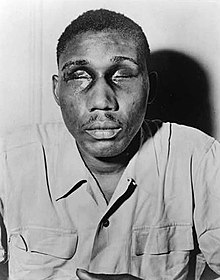
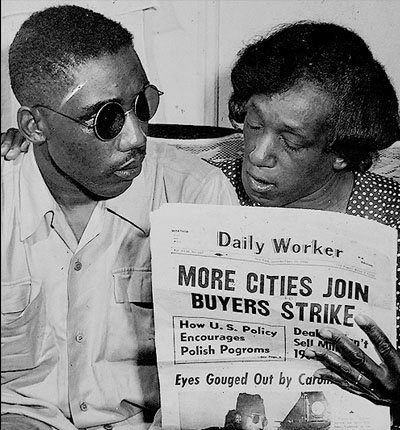
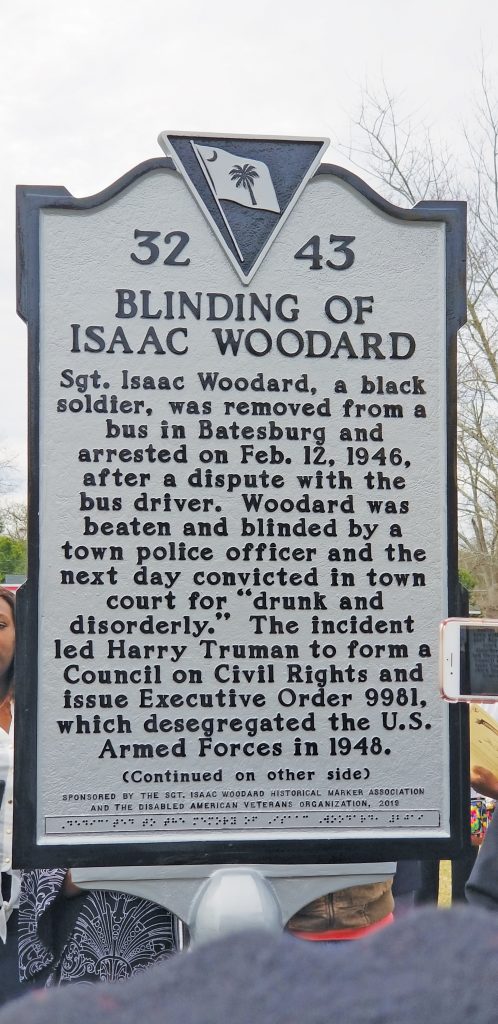
    BATESBURG-LEESVILLE – A commemoration and unveiling of a historical marker in Batesburg-Leesville on Saturday honored Winnsboro native Sergeant Isaac Woodard, a World War II veteran whose savage beating at the hands of a callous, intolerant sheriff helped inspire civil rights in America.

    Woodard

    Fairfield County Councilwoman Bertha Goins, addressing Woodard’s nephew and his family along with a large group of dignitaries from across the state, read a resolution from the County, recognizing Woodard as an American hero. She also recognized his inhumane treatment as a catalyst in this nation’s civil rights movement.

    In a letter read at the ceremony, Winnsboro Mayor Roger Gaddy wrote that he was honored to acknowledge the life of Woodard, recalling Woodard’s and his family’s years in Winnsboro.

    After recounting the events surrounding Woodard’s brutal beating, Gaddy said, “It is with great honor that we are proud to see this historical marker be placed in Batesburg-Leesville to honor and acknowledge his life and service.”

    A booklet at the commemoration titled the “Blinding of Isaac Woodard, Jr,” recounted the events that led up to Woodard’s blinding and to the eventual elevation of civil rights in the United States.

    Isaac Woodard, Jr. was born in Fairfield County, but grew up in Goldsboro, North Carolina. He enlisted in the U.S. Army on Oct. 14, 1942, at Fort Jackson, and served in the Pacific as part of a labor battalion. Woodard received an Honorable Discharge at Camp Gordon, GA, in early February, 1946.

    Along with a contingent of other discharged soldiers, black and white, Woodard boarded a Greyhouse bus on Feb. 12 to travel back home to North Carolina.

    Isaac Woodard, Jr. with his mother

    A conflict was triggered when the bus driver belittled the Army veteran for asking if there would be enough time for a bathroom break during a scheduled bus stop. It is reported that Woodard argued back. At the next stop, Woodard was met by Chief of Police Linwood Shull of Batesburg who, along with his deputies, beat Woodard savagely with their nightsticks.

    Woodard was later charged with drunk and disorderly conduct before finally being taken to a veteran’s hospital in Columbia.

    The NAACP took up Woodard’s case in the spring of 1946, pressing military officials to provide assistance to the gravely injured veteran while also calling for legal action against Chief Shull.

    By September of that year, NAACP officials met with President Harry Truman who expressed outrage over this assault on a veteran. Shull was tried in federal court but released after the jury deliberated only 30 minutes.

    As news of the attack circulated in the national media, President Harry Truman created the first President’s Committee on Civil Rights (PCCR) which published, ‘To Secure These Rights’ in 1947.

    This groundbreaking report led to the desegregation of the military in 1948 and new federal attention to racial inequality as a matter of both domestic justice and out of concern for Cold War politics.

    For many Americans, Isaac Woodard became a sympathetic figure representing the larger conflicts of Jim Crow emerging after World War II. The public’s response to the vicious attack upon Woodard, as well as the response of President Harry Truman, signaled a major shift in public support for civil rights during the 1940’s.

    Isaac Woodard died on Sept., 1992 in the Bronx, New York where he lived with his nephew, Robert Young, and his family. But Woodard’s death was not the end of his legacy.

    On June 7, 2018, Robert M. Cook II, Municipal Court Judge for the Town of Batesburg-Leesville, issued an order re-opening the case against Woodard and subsequently dismissed all charges against him. The order was granted upon receiving a request from Town Attorney Christian Spradly and Chief of Police Wallace Oswald.

    The Town also moved to dismiss the charges against Woodard.

    “It was a beautiful, emotional, meaningful ceremony,” Goins said. “It did not undo the crime, the injustice or the injury, but it brought well-deserved honor to this man who, through his pain and suffering, made so much possible for the rest of us.

    “It was a privilege to be part of it,” Goins said.

  • Mt. Valley residents want road gated

    BLYTHEWOOD – Mt. Valley Road residents are asking the Blythewood Planning Commission to close off public access to the south side of the road from the Abney Hills area, saying the heavy construction traffic has nearly destroyed the only entrance to their homes.

    Charles Bayne appeared before the commission Monday night to make the request after he said he had taken all the necessary steps to resolve the issue on his own with Essex Homes.

    In his previous conversations with Frank Berry of Essex, Bayne said he had been promised that construction traffic would cease and that a ‘No Entrance’ sign would be placed at the secondary entrance to Abney Hills where the third phase of construction has been taking place.

    Bayne said no sign had been placed by the time of the meeting, and that just one week ago he had seen a cement truck driving along the one and a half lane dirt road. He said the ruts caused by the heavy traffic makes for a driving disaster after a single day of rain.

    “The county has had to come scrape the road twice since December and it has already become a slick clay mud hole again,” Bayne stated.

    The biggest question that looms over Bayne’s struggles is the legality of the commission’s ability to block off the road. According to commission chairman Donald Brock, Mt. Valley Road is a private road with limits on who may access it, but also poses limitations to the authority of the town and county. Bayne said the county does have a maintenance agreement for the road, but that it only applies to scraping and some rock distribution upon request of the residents.

    “What we have to collectively figure out is what can be done, legally, that will be satisfactory,” Brock stated.

    One option that was tossed around during the meeting was to install a gate activated by a key or “squawk box” that would allow emergency vehicles access to the road under emergency circumstances.

    Bayne and another resident who owns sixth tenths of the roadway agreed to the gate, but Bayne has no ownership in the road and he said he doesn’t know who else has ownership in it.

    No action was officially taken, however, as Brock said he wished to give Essex Homes a chance to speak on the situation.

    A representative of Essex is expected to appear before the commission next month.

  • Water authority becoming reality

    WINNSBORO – It’s been years since Fairfield county and municipal leaders first floated a concept of a regional water and sewer authority.

    Now that its composition has been finalized, the group plans to chart new waters as it attempts to define and fulfill its mission of enhancing economic development in Fairfield County.

    “Industry absolutely has to have basic infrastructure,” County Administrator Jason Taylor said. “The Town of Winnsboro and other entities need to come together because none of us can do it alone.”

    On Tuesday, County Council unanimously approved a resolution approving the final composition of the water authority.

    Winnsboro Town Council approved a similarly worded resolution last week.

    The resolutions passed by the Fairfield and Winnsboro councils shave the authority board from seven to five members, drawing two Fairfield County representatives – Council Chairman Neil Robinson and Taylor. Winnsboro Town Manager Don Wood and Gaddy.

    Kyle Crager, the authority’s fifth member, was jointly appointed by the county and town.

    Ensuring Fairfield County has sufficient infrastructure is particularly important as it relates to the mega site off I-77, where sufficient sewer capacity doesn’t exist.

    Taylor said new sewer lines potentially cost tens of millions of dollars more than water lines. The state recently awarded a $2 million grant for infrastructure design and prep work and though helpful, it’s only a fraction of what’s needed.

    “The Town [of Winnsboro] has done a wonderful job in getting water infrastructure in place so we have sufficient water capacity. However sewer is much more expensive.” Taylor said.

    As the authority board mulls ways to generate funds, other ideas were put forward at Monday night’s council meeting.

    Ridgeway resident Randy Bright repeated his call for a penny sales tax to fund water and sewer upgrades.

    “Infrastructure is an imperative,” Bright said. “If we had started this five years ago, we would already have $10 million that we could put forward to water and sewer to bring families, homes, industry new jobs and grow the economy.”

    Councilman Jimmy Ray Douglas proposed taxing agricultural real properties that receive a tax break from the state.

    Douglas proposed adding a $1 per acre tax on qualifying properties, which he said would generate $450,000 a year that could be applied to water and sewer expenses.

    “I have ag land that I own and I’m paying next to nothing,” he said. “Everyone else who has less than five acres is paying a lot more taxes. I feel like every [agriculturally exempt] acre in Fairfield County needs to have an extra dollar in taxes on it.”

    In South Carolina, agricultural real property is taxed at 4 percent of its fair market value. Non-agricultural property is taxed at 6 percent.

    For the owner of property valued at $100,000, a Fairfield County landowner receiving the tax break pays $814 less than owners not receiving it.

    Critics, however, say the exemptions unfairly benefit developers who claim the exemption on undeveloped property, most harvesting trees to technically qualify for the exemption.

    The 2 percent tax break isn’t permanent. Once the land use changes, the rate rolls back to 6 percent and landowners are responsible for paying the difference, according to state law.

  • Richland 2 Board awash in discord

    Members Vote 4-3 Against Removing Officers For Cause

    COLUMBIA – Despite several members facing ethical and criminal sanctions, the Richland Two Board of Trustees voted against a policy designed to increase their accountability.

    On Tuesday night, the board voted 4-3 against a board policy revision that would have empowered the board to discharge office holders by a supermajority vote.

    ​“The board may, with a vote of five members, remove a board officer from his/her office, for cause, as determined by the board,” the proposed policy change states.

    “In such a case, or in any case where there is a vacancy in a board office, the board may as soon as practical elect a member to fill the vacated office for the remainder of the term.”

    Board chair Amelia McKie and board members James Shadd III, Cheryl Caution-Parker and Teresa Holmes voted against the policy change.

    Board members James Manning, Lindsay Agostini and Monica Elkins-Johnson voted to support the policy.

    The vote comes in the wake of a disorderly conduct charge filed against board secretary Monica Elkins-Johnson.

    A Richland County Sheriff’s Office report states Elkins-Johnson was involved in a shoving match with Erica Davis, the sister of state Sen. Mia McLeod, following the Jan. 22 board meeting.

    A second report states that Elkins-Johnson threatened Stacy McKie, husband of Amelia McKie.

    It also comes amid the S.C. Ethics Commission fining Amelia McKie $51,750 for failing to file numerous campaign disclosure reports.

    Several other board members failed to file various ethics reports, doing so only after a series of investigative reports by The Voice.

    Elkins-Johnson issues statement

    Elkins-Johnson, 51, turned herself in to the sheriff’s office on Jan. 31 and was charged with disorderly conduct. She was released on a $237.50 personal recognizance bond, and the next court date is scheduled for March 18, according to Richland County court records.

    At Tuesday’s board meeting, Elkins-Johnson read a prepared statement, her first public remarks since Jan. 31.

    In her statement, she apologized for “the language that I used” following the Jan. 22 board meeting, and also thanked friends and family for their support.

    However, she also placed some blame on “the misconduct of others,” though she didn’t identify those people by name. She said her behavior after the meeting was out of character.

    “When several people violated my space, it took me to an unfamiliar level, which I am not proud of as a servant leader and as a result I ask for your forgiveness,” Elkins-Johnson said.

    “As always I have learned from this and will certainly use this as a teachable moment. Therefore, one moment out of my character does not and will not define me.”

    Caution-Parker also addressed board behavior, saying all board members are responsible for their own actions.

    “When we’re going to criticize a board member, take everybody into consideration, not just one,” Caution-Parker said. “We’re responsible for our passions, no matter what we do, no matter the circumstances. We are fully grown people and we are responsible for what we do and what we don’t do.”

    Board member Teresa Holmes summed up her own comments with, “Let’s just all hold hands and say kumbaya.”

    Board members mull policy

    Those voting against the policy Tuesday night said it was too vague. McKie took issue with the phrase “for cause.”

    Shadd III, who was fined $13,000 by the ethics commission in 2014, also took issue with the “for cause” terminology.

    He suggested the policy proposal was reactionary, saying sanctions for legal troubles some board members face already exist in state law.

    “What does ‘just cause’ mean?” Shadd III asked. “Failing to file reports with the ethics commission; there is a consequence to that. Failure to pay fines; there is a consequence to that.”

    Caution-Parker said she would only support the policy revision if it went into effect July 1. She vehemently opposed any application of the policy that went into effect immediately.

    “I have a major, major problem about how this all came about,” Caution-Parker said. “It’s almost like a mob mentality. Somebody did something, so we’re going to pass this.”

    Manning said all policies the board has ever passed went into effect immediately upon approval and asked why this one should be different. He also disputed assertions that the policy targets anyone. He said it has many hypothetical applications, including absenteeism, misrepresentation or other actions.

    “It’s made us review the policy and realize there’s a gap in the policy that needs to be addressed,” he said. “We have a gap that needs to be corrected, not a mob mentality about any individuals.”

    Agostini emphasized the policy wasn’t designed to remove a member from the board, only to strip them of officer positions, which include chair, vice-chair and secretary.

    “This policy is not removing somebody from the board,” she said.

    Later in the meeting, Agostini read aloud an email from a constituent who expressed embarrassment over McKie’s ethics fines amid the recently approved $468 million bond referendum funding various school construction projects.

    “How can I reasonably expect that our chairwoman can manage nearly a half billion dollar bond when she cannot manage a simple ethics filing,” Agostini said, reading from the letter.

    Superintendent addresses ethics

    In related matters, Dr. Baron Davis, district superintendent, acknowledged a blemish existed in his own ethics filings.

    Reading from a prepared statement, Davis said shortly after his hiring in 2017, he was unfamiliar with an ethics commission requirement that superintendents file Statements of Economic Interest, or SEI, forms.

    Davis said while filing his 2019 forms, he noticed that he didn’t file his 2018 form (for the 2017 year) within 10 days of officially becoming superintendent.

    “I did not know that and I did not file. I admitted those things once I started overlooking the process of our filings,” he said. “After realizing my oversight I quickly alerted the commission who never contacted me about the oversight.”

    Davis said he’s since filed an amended SEI form and paid a $100 fine.

    “I share this information on my own free will and in an effort to remain transparent and honest in my community,” he said. “That’s something I wanted to share publicly so we can close the chapter and move forward with the day to day operations of this outstanding district.”