Category: Government

  • Board spat erupts over notification

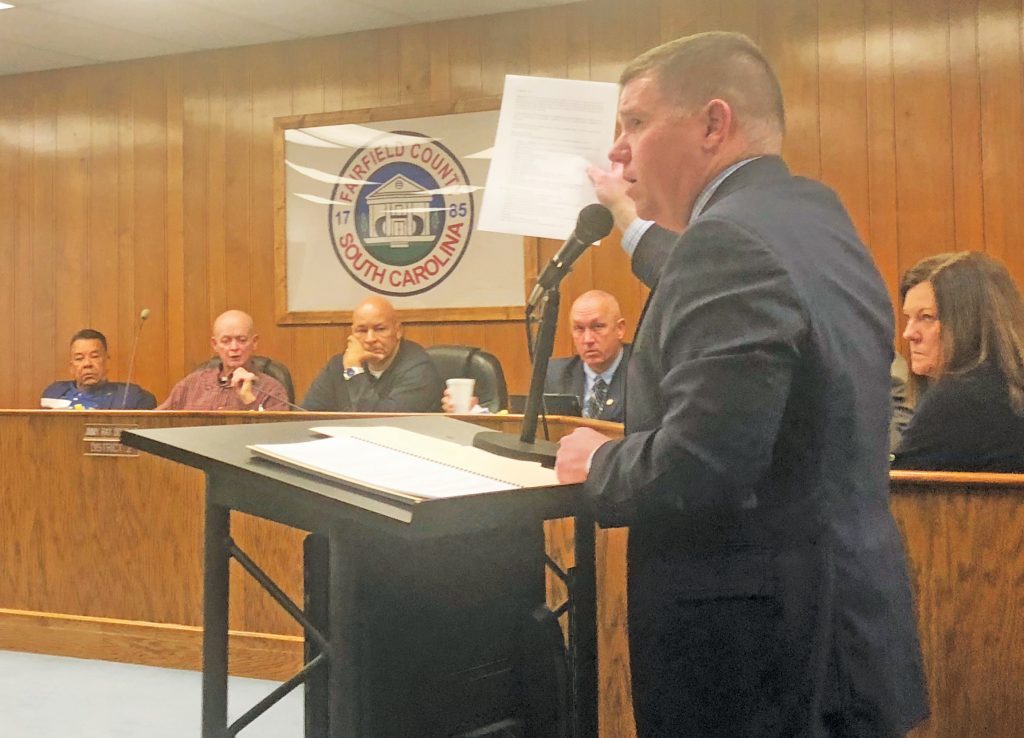
    WINNSBORO — A dispute over which members of the school board were notified ahead of the surprise presentation of a major teaching award caused tensions to flare at Monday night’s Fairfield County board of trustees meeting.

    Board member Paula Hartman voiced her displeasure that she was not informed in time to attend the surprise announcement – that Fairfield Central High School teacher Chanda Jefferson had been named a state teacher of the year finalist.

    State Superintendent Molly Spearman personally delivered the news to Jefferson during a surprise visit earlier last week.

    A majority of Fairfield school board members were also on hand, posing for photos. Hartman, however, was not there.

    “How was the board notified that Molly Spearman was coming out?” Hartman asked.

    District Superintendent Dr. J.R. Green said he sent a text and an email about a “special announcement” at the school.

    “She [Spearman] wanted it to be a total surprise so nobody knew about it,” Green said.

    “I’ve looked through my emails and I have not seen anything,” Hartman replied. “Can you send a copy that I received it? I’d like to have a copy. To my knowledge, I did not get notified.”

    The S.C. Department of Education routinely distributes news releases in advance of major announcements, such as teacher of the year finalists, though they’re usually embargoed until the event.

    Agency spokesman Ryan Brown said there’s no requirement that school board members receive advance notice about superintendent visits.

    “They are surprise visits and we only notify the district superintendent (for planning purposes) and media,” Brown said via email. “The district superintendent works with the principal to set up the surprise announcement at the school.”

    Green praised Jefferson for her distinction.

    “Ms. Jefferson is an example of the excellent education you can expect here in Fairfield County.”

    In other business, the board received a preliminary report about the status of the current budget.

    Documents included in the agenda packet list a current revenue shortfall of about $3.47 million, largely due to nearly $5.16 million in state funds that haven’t made it into district coffers yet.

    Total expenditures are down about $17.76 million, leaving a net windfall of $14.28 million, documents show.

    Board chairman William Frick cautioned that the budget report is a snapshot of district financials as they stand right now.

    Frick noted that figures will likely change as more revenues and expenditures are accounted for, though he said the district still anticipates a windfall from which teacher sign on bonuses, approved earlier this year, would come from.

    Earlier in the meeting, Frick said the district benefits greatly from the V.C. Summer Nuclear Plant, which provides the district with needed revenue.

    “I’m not sure folks realize how lucky we are in Fairfield County,” Frick said. “We’re not a wealthy community. If not for that facility [V.C. Summer], we would not be able to do it.”
  • Taxes, fees get second vote

    Tommy Morgan

    WINNSBORO – Fairfield County is one meeting away from enacting a pair of tourism-related taxes aimed at growing tourism and combating blight.

    Council members voted unanimously Monday night on two ordinances – a 3 percent tourism development fee and a 2 percent hospitality tax.

    The council also passed second reading of an ordinance establishing a business registration fee.

    Several residents spoke about the new taxes and fees during public participation and public hearings.

    Brad Hoffman of Blair raised concerns that the ordinances lacked specificity.

    Carol Turner of Mitford also thought the tax ordinances were ambiguous.

    “We need details on this. I too am a farmer, trying to make ends meet. We’d like to know just a little bit more about it,” Turner said. “These are issues that are a little bit cloudy. I know the idea is to get folks from outside of our county, but how will this affect people who already live in our county.”

    Randy Bright of Ridgeway, a supporter of the taxes, said they are needed to rejuvenate Fairfield County and make it more attractive.

    “The diagnosis is in. Fairfield County has been caught up in an epidemic,” Bright said. “Our property taxes have plummeted. County services are strained. Our attractiveness for new business has declined.”

    County Council retained the title “tourism development fee” in the 3 percent tax on accommodations, despite confusion over similar fees elsewhere in South Carolina.

    Tommy Morgan, county attorney, said several communities including Greenville, Lexington and Charleston counties, refer to their room tax as a tourism fee, even though it’s based on the accommodations tax law.

    Fairfield County would be no different, he said.

    “It doesn’t mean there’s anything wrong with that,” Morgan said. “That’s just a different way to provide a name for it. It’s trying to develop tourism by that fee.”

    In 2009, the City of Myrtle Beach adopted a tourism development fee.

    There, an extra 1 percent of tax was added on top of local accommodations taxes. It required a referendum to pass and included a property tax credit for locals as prescribed in state law.

    Morgan said the Myrtle Beach fee is unique, applying only to the Grand Strand tourism hub. He said state law was written specifically for Myrtle Beach.

    “It requires $14 million in sales taxes [and doesn’t] apply anywhere in the state,” Morgan said. “That’s not an issue that’s before the council today.”

    Fairfield County only collected about $37,000 to $38,000 in sales taxes last year, Morgan added.

    Some residents also questioned the hospitality tax, which adds 2 cents of tax to prepared foods.

    “We need to clarify what we have to charge and why our rates are going up,” Hoffman said.

    “I know the idea is to get people traveling thru our county to help fund some of the expenses of our county,” Turner added. “But this is focused on the unincorporated areas. I live at Exit 48, and there are a lot of locals who eat there.”

    Third reading could take place as soon as the council’s next meeting, tentatively scheduled for March 25.

    The third fee – a business registration fee – imposes a nominal $15 fee per business.

    Council members have said the reason for the fee is designed to help get an accurate count on existing businesses while also cracking down on businesses operating illegally.

  • Authority maps megasite infrastructure

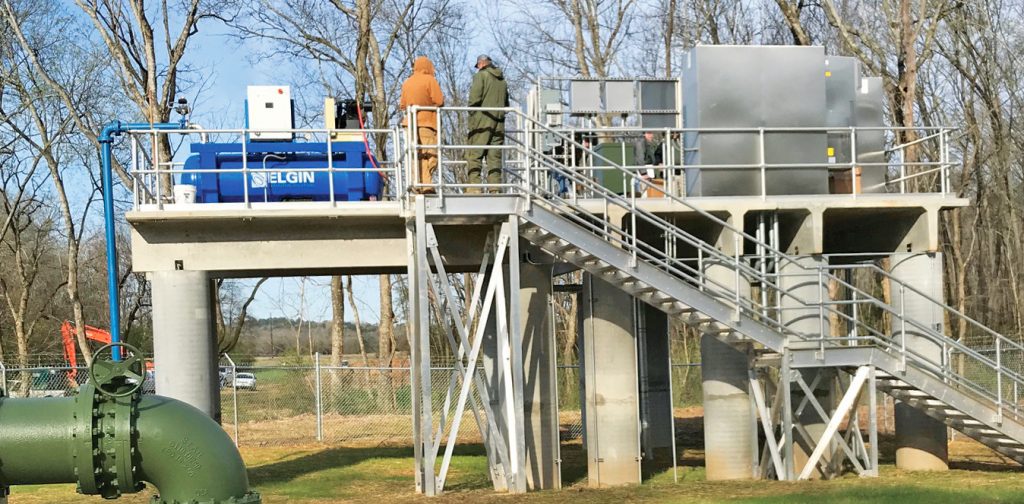
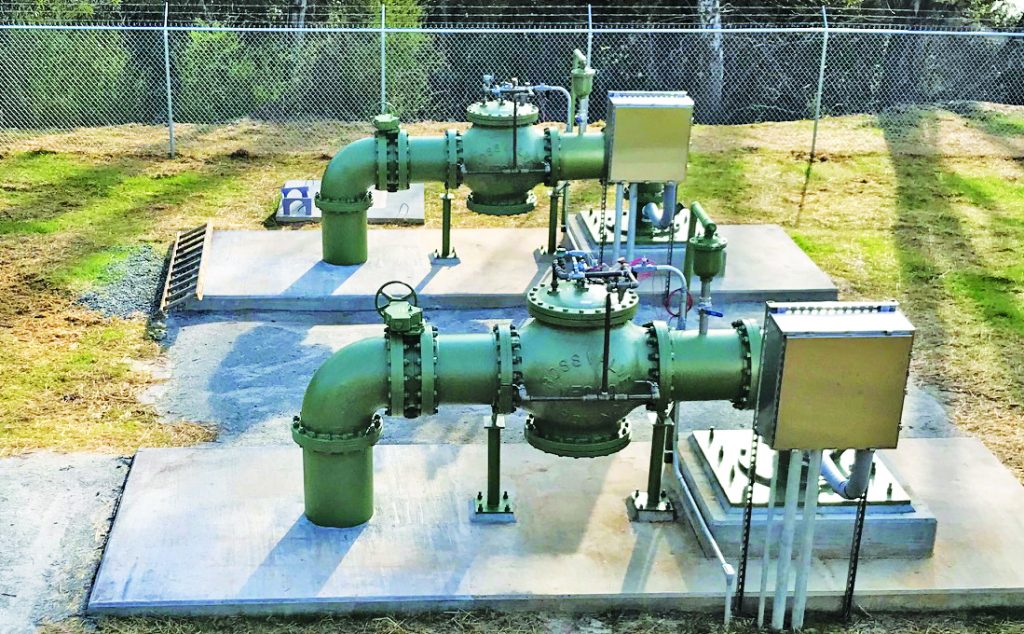
    On March 13, the Town of Winnsboro’s new Pump Station on the Broad River was turned on for testing. The Town of Winnsboro funded this approximately $12 million dollar project, encompassing a new raw water intake pipe and construction of this pump station, with a State Revolving Fund State Drinking Water loan through the EPA.

    WINNSBORO – Now that the initial paperwork is mostly finished, Fairfield County’s water and sewer plan is flowing closer to completion.

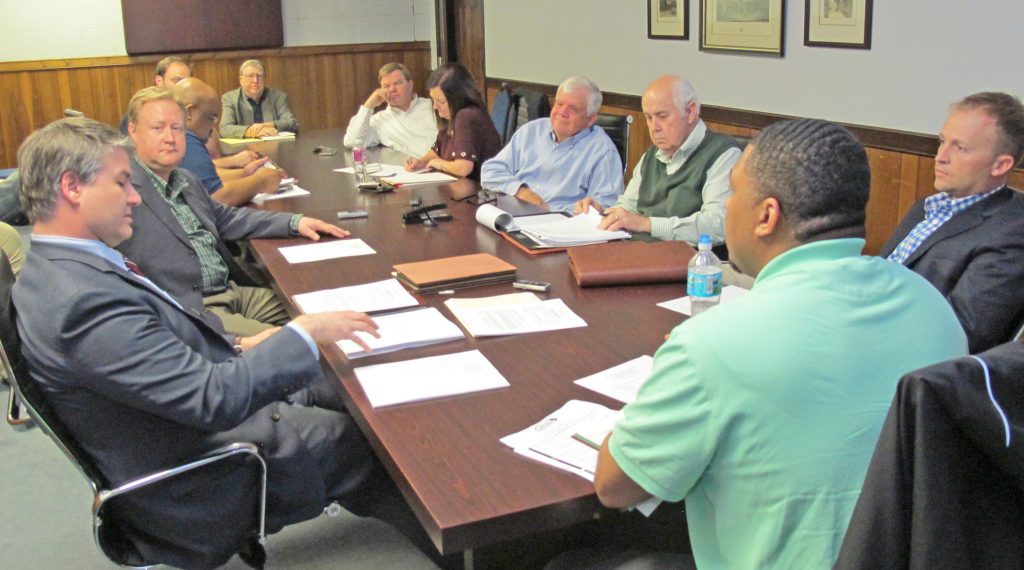
    At the second meeting of the Fairfield Joint Water and Sewer Authority on Monday, the group received detailed reports covering everything from environmental impacts, roads to laying water and sewer pipes.

    “They’re not in as [bad] shape as I thought,” said Neil Robinson, chair of Fairfield County Council and an authority board member. “They’re still going to need a lot of improvements.”

    Formed earlier this year, the authority’s goal is to bolster the county’s water and sewer system, particularly at the mega-site, a 1,113-acre parcel east of I-77 at exit 41 that the county has designated as an industrial hub.

    By installing proper infrastructure, Fairfield County and Winnsboro town officials believe it will make the megasite more enticing to industries interested in launching operations here.

    The authority predicts flow demand at the megasite to be about 1.11 million gallons per day.

    Another 1.09 million gallons per day would be needed to serve the Weyerhaeuser property to the north, totaling 2.2 million gallons per day for both properties, according to engineering estimates.

    The Town of Winnsboro, the area’s largest water provider, is currently permitted for 1.6 million gallons per day, but only has an available capacity of about 540,000 gallons, roughly half the projected capacity needs at the megasite.

    Prepping the megasite for industry will require a two-step process, officials said.

    In the early stages, the Town of Ridgeway would facilitate the construction of temporary water service while an outside party would use a “pump and haul” method to transport wastewater to an outside location for disposal.

    DHEC approval would be required for the latter process.

    “Initially temporary service is needed for what we call trailer city,” said Lisa Muzekari, also with Thomas & Hutton. “We are going to have a significant amount of workers on site, therefore water and sewer service needs to be provided for those employees while they are on site working.”

    Long-term, the Town of Winnsboro would play an integral role in establishing permanent infrastructure, Muzekari said.

    Water service would be provided by the Winnsboro water treatment plant. New distribution lines and an elevated water tank would be needed.

    The Town of Winnsboro wastewater plant would initially handle sewer services, but only temporarily.

    “A future wastewater treatment plant would be needed to accommodate the full build out of the mega site and any other development in the area,” Muzekari said.

    While ensuring sufficient infrastructure needed to entice industry is in place, expanding water and sewer also lays the foundation for potential residential growth, Muzekari noted.

    “Right now the proposed lines are to serve the megasite,” she said. “But the plant capacity is up to 2 [million gallons per day] with potential for 4 [million gallons per day]. Expanding for 4 [million gallons per day] would allow for that additional development.”

    Cost estimates for the proposed upgrades weren’t available, though Muzekari said she’s using a 2 million gallon per day facility as a baseline.

    Roads are another component of the megasite infrastructure formula.

    The site already benefits from interstate access; it’s located off I-77 between exits 34 and 41. A proposed interchange could improve that access.

    Brad Sanderson, also with Thomas & Hutton, said one interchange option is a divergent diamond pattern. The other would be a cloverleaf design, which he said would be built in the vicinity of Old Camden Road.

    There haven’t been any glitches from an environmental standpoint. Sanderson said a preliminary review looking at the Weyerhaeuser tract just north of the megasite found no problems with wetlands or negative impacts on protected species.

    He also said Thomas & Sutton is continuing with evaluating site work, utility and transportation costs.

    “We’re just trying to figure out the overall development cost for a large development at this site,” Sanderson said.

    Monday’s meeting also comes on the heels of recent investigative reports about the state of South Carolina’s water system.

    Officials at Monday night’s water and sewer authority meeting noted that Winnsboro’s water is of high quality.

    County Administrator Jason Taylor said statewide, authorities like the Fairfield group are becoming more common.

    “The state itself is pushing hard and heavy to move from small individual systems,” Taylor said. [The state is] “trying to more rationally provide water and sewer services.”

    In other business, the authority also voted to continue an agreement with the Pope Flynn Group law firm. Attorney C.D. Rhodes with the firm has been assisting the authority.

    Since the authority has yet to collect revenues, the deal approved Monday night continues the existing arrangement in which the county pays 75 percent and the town 25 percent.

    “It’s a basic continuation of the arrangement,” said authority chair and Winnsboro Mayor Roger Gaddy.

  • R2 ethics debate smolders

    Residents: Some R2 Members Could Face Charges

    COLUMBIA – Calls for the resignation of Richland Two board members once again punctuated an otherwise mundane agenda filled with student appeals, a diploma petition and votes on policy revisions.

    And this time, one resident says some board members could face criminal charges for failing to comply with state ethics laws.

    Gus Philpott, a frequent critic of the Richland Two board, said during Tuesday night’s board of trustee’s meeting that board chair Amelia McKie and board member Teresa Holmes should step down immediately.

    Speaking during public participation, Philpott said both McKie and Holmes are serving illegally.

    Philpott said neither McKie nor Holmes filed Statements of Economic Interest, or SEI, forms until after they were sworn in, and pledged to keep publicizing their ethics woes until they step down.

    “It’s going to continue to come up until the problem is resolved. I believe that there are two board members not legally entitled to sit on the board,” he said. “I believe you must leave your seats immediately. I hope the attorney for the school district is here to advise you now.”

    State law says it’s illegal for public officials to be sworn in if they’ve not filed their SEI forms. McKie and Holmes filed their SEI forms on Dec. 4, 2018, nearly a month after the November election.

    Citing another section of state law, Philpott said violating the ethics law is a misdemeanor crime.

    “The proper action is for Ms. McKie and Ms. Holmes to stand up now and step away from the board immediately,” Philpott said. “Ms. McKie is not legally a board member and cannot be chair of this board.

    “If she does not immediately leave the board, then all of you become complicit in the illegal functioning of this board,” Philpott added.

    Section 8-13-1520 of the state law says violations of the ethics chapter are misdemeanors punishable by up to a year in prison, a $5,000 fine or both.

    McKie didn’t comment on Philpott’s demand.

    Holmes said she’s taken responsibility for not filing her SEI forms on time, and repeated prior explanations that nobody informed her of the requirement.

    “No one comes to even tell you that you have to file a Statement of Economic [Interest form] by a certain amount of time or anything like that,” Holmes said. “I had no clue, no clue at all.”

    Meghan Walker, the ethics commission’s director, has previously said the onus of complying with the state’s SEI form mandate falls to the candidate.

    “It is the duty of every candidate to understand the law when filing,” Walker told The Voice.

    Holmes went on to say she thinks board member ethics issues have become sensationalized.

    “What bothers me is that I’m not going to be one of those board members that sits by idly and accepts when things are done for personal reasons, or things are being done to be sensationalized,” she said. “I don’t like being used for personal reasons of other people.”

    Ethical and legal issues have haunted Richland Two board members and the district’s superintendent since early December.

    Six of seven board members were late filing either SEI forms or quarterly campaign disclosure reports.

    Dr. Baron Davis, district superintendent, reported last month that he also was late with an SEI form. He has since paid the fine.

    McKie, however, has garnered the most attention.

    She owes nearly $52,000 in ethics fines stemming from multiple violations of failing to file campaign disclosure reports.

    She had been fined $41,000 previously, but the fine increased to $51,750 after she missed a December deadline to make a partial payment, according to public records.

  • Council retreat open to public

    BLYTHEWOOD – The community is invited to the Town Council’s planning retreat on Saturday, March 16, from 9 a.m. – 4 p.m., at Doko Manor.

    “We always invite the community to all of our meetings, but I especially like them to come to our annual spring retreat. That’s when we plan for the next year, and I think everyone in the community should have input into that planning,” Mayor J. Michael Ross said.

    Topics of discussion include the budget, town planning, the Winnsboro/Blythewood water agreement, Richland County road projects, business signage and more, a town press release stated.

    A Taste of Blythewood will be featured at noon, featuring fare donated by some of Blythewood’s restaurants. Lunch is open to all who attend the retreat.

    Doko Manor is located in the town park adjacent to Town Hall. For more information, call 803-754-0501.

  • Two county employees promoted

    WINNSBORO – Deputy County Administrator Davis Anderson recently announced the promotion of two county employees. Jennifer Leaphart has been named Fairfield County Human Resources Coordinator. Leaphart’s former position as the county’s WIOA Program Director, was filled with the promotion of Diana Robinson.

    Leaphart holds a master’s degree in Psychology from American Military University in Charles Town, West VA, and will receive another master’s degree in Public Administration/Management later this year.

    Robinson previously served as WIOA Lead Youth Case Manager.  She holds a master’s degree in Organizational Leadership from Bellevue University and has obtained several other degrees and certifications.

  • Auditor: County managed well

    WINNSBORO – Fairfield County did well managing its finances following the nuclear plant and hospital closings, but faced challenges over rising retirement costs, the county’s annual audit states.

    “In our opinion we think the county is in good financial position as of June 30, 2018,” said Brian D’Amico, an auditor with Elliott Davis, at Monday night’s Fairfield County Council meeting.

    The 2018 audit found no material weaknesses, though it did list a “significant deficiency,” a less severe rating.

    Specifically, the audit said the Fairfield County Family Court and Treasurer’s Office didn’t “perform timely preparation and review of the reconciliation of bank accounts held by the County.”

    Fairfield County outsources the preparation of bank account reconciliations to a third party service for some accounts, according to the audit.

    But there aren’t any policies to ensure reconciliations are handled in a timely manner, the audit states.

    As a result, the county exposes itself to increased “risk of not identifying potential fraud or material errors in a timely manner,” the report continues.

    The audit recommends that the county establish a formal policy to review bank statements in a timely manner, and also that it reviews third party services.

    “This issue has been discussed with the third party service provider. If improvement is not made, the Clerk of Court will consider changing providers,” the auditor stated.

    “Moving forward, the Treasurer’s Office will implement policies and procedures to timely receive and review all bank reconciliations,” the audit continued.

    Councilman Jimmy Ray Douglas expressed frustration that copies of the audit hadn’t been circulated sooner to council members.

    “I would suggest we get this information before he [the auditor] comes up to speak,” Douglas said. “We haven’t had a chance to look at this information. I would’ve liked to look at it first before he made his talk.”

    Council members didn’t discuss the significant deficiency designation during the meeting. Councilman Moses Bell, though, asked D’Amico what the county was doing right and wrong.

    D’Amico responded that the county did a great job managing finances after construction ended on nuclear reactors at the VC Summer nuclear plant. He also commended officials for how they handled the closure of Fairfield Memorial Hospital.

    Last summer, the county purchased several parcels of the former hospital property for $1.3 million, with an option to acquire the rehabilitation center for an additional $285,000.

    The intent was to preserve the properties long enough to find a private buyer willing to purchase them.

    On Monday night, council members voted unanimously to approve a sales listing agreement for the properties. County attorney Tommy Morgan said it’s too soon to say when the county would formally list the properties.

    In addition to the significant deficiency rating, the county weathered some increased costs and decreased revenues, largely due to escalating retirement costs.

    D’Amico said changes in accounting standards in how Other Post Employment Benefits are calculated caused OPEB liabilities to climb from $2 million to nearly $4.9 million.

    In addition, net pension liabilities rose from $23.1 million to $25.2 million.

    “That number is out of your control,” D’Amico said of the net pension liability. “That number is dictated based on South Carolina retirement system and police officer retirement system, and that is controlled by the legislation of the state.”

    Fairfield’s general fund balance also shed $400,000 as of June 30, 2018, falling to $21.5 million. About $13.2 million of that amount is designated as “unassigned,” according to the audit.

    “That money can be spent in any way council sees fit,” D’Amico said.

    Fairfield currently has enough in reserve to cover about 5 ½ months of expenses. Last year at this time, the county had seven months in reserve funds available, D’Amico said.

  • Doko film festival seeking volunteers

    BLYTHEWOOD – Blythewood filmmaker Ray Smith is conducting an informational meeting at the Blythewood Library for those interested in the upcoming Doko Film Festival. Smith will talk about the festival and volunteer opportunities. The meeting is set for March 14, 2019 at 6:00 pm.

    The Festival is set for April 26 and 27 and is dedicated to developing the skills, knowledge and confidence of young filmmakers in South Carolina and beyond. Tickets range from $5 – $20 and can be purchased at www.dokofilmfest.com.

    The first night of the festival will be held at Doko Manor on April 26, from 7 – 9:30 p.m., featuring a reception for Blythewood native and Oscar winner Michelle Eisenreich, who will also help judge the film submissions. A silent auction will include a knife signed by James Jude Courtney aka Michael Myers of Halloween, along with jazz music, drinks and heavy hors d’oeuvres.

    The second full day of the festival will be held at Westwood High School from 8:30 a.m. to 5:30 p.m., featuring screenings of selected films made entirely by high schoolers. Throughout the day, there will be master classes held by Eisenreich and other video professionals on tips and tricks needed to produce a winning and engaging film.

    There will also be representatives from the University of South Carolina and Savannah College of Art and Design discussing the two schools’ media arts and film courses.

    Awards in various categories will be presented at the end of the day as well as Best in Show.

    From 6 – 9 p.m., that evening, there will be a concert in the park behind Doko Manor.

    Tickets range from $5 – $20 and can be purchased at www.dokofilmfest.com.

  • Joint water authority board sets sail

    The new board of the county and town’s joint water/sewer authority met during an organizational meeting to elect officers, discuss incorporation and receive an engineering update. Attending the meeting were C. D. Rhodes, III, clockwise left, attorney with Pope Flynn, who represents the new joint water/sewer authority board; County Administrator Jason Taylor; Deputy County Administrator Davis Anderson; Winnsboro Town Attorney John Fantry; County Economic Development Director Ty Davenport, County Clerk Patti Locklair Davis; Mayor Roger Gaddy; Town Manager Don Wood; Fairfield County resident and engineer Kyle T. Crager, senior project manager of water/wastewater operations for Michel Baker International and County Council Chairman Neal Robinson.

    WINNSBORO – Fairfield County is gathering all the trappings to lure big industry and with it, more jobs.

    It has interstate access, a megasite roughly equidistant between Columbia and Charlotte and a $2 million state grant targeting infrastructure for that site.

    Now the county and town have created a joint water authority – the Fairfield Joint Water and Sewer System – whose mission it is to facilitate infrastructure growth at the I-77 megasite.

    “I’m excited because it just shows growth for the town and the county,” said Fairfield County Council Chairman Neil Robinson. “I was told we were delusional just thinking about this, but I think we’re on the right path.”

    Appointments of a five-member board were made Monday night and board officers were elected. Plans are to meet monthly, with the next meeting scheduled for March 20.

    Winnsboro Mayor Roger Gaddy was named the Authority’s board chairman and Robinson was named vice-chair. Other members include Fairfield County Administrator Jason Taylor (treasurer), Winnsboro Town Manager Don Wood and Fairfield County resident and engineer Kyle Crager, senior project manager of water/wastewater operations for Michel Baker International.

    “We have to address water and sewer issues if we’re going to grow,” Taylor said. “Without water and sewer the county cannot realize its full potential.”

    Talk of forming a water authority has occurred on and off for the past four years, but gained steam in the past year.

    The S.C. Department of Commerce recently pumped $2 million into the megasite, seed money that will fund an engineering study with the ultimate goal of building a wastewater facility at the I-77 megasite.

    To that end, the state requested that an authority be formed.

    Moving forward, the authority said a critical first step involves mapping out existing infrastructure in the county. The board tentatively plans to review those plans at the next meeting.

    “I think it would be important to see all the plans that have been done on the sewer and at the same time work on the water so we’re all up to speed,” Gaddy said. “I think it’s important for us to all be on the same page and prioritize things.”

    Taylor suggested reaching out to other water providers as the authority’s work moves forward.

    Taylor said at this point, merely mapping the size and location of current water and sewer lines is a prerequisite in developing infrastructure at the megasite.

    “With all of these little fractured systems, it’s not necessarily a rational way to provide infrastructure to the county,” Taylor said. “We’re going to start approaching other providers of water and sewer and see if there’s an opportunity to work with them.

  • Seibles takes one-man election

    WINNSBORO – Former Geiger Elementary Principal Joe Seibles was elected to the FCSD board of trustees, representing District 4, on Tuesday. Seibles had no opponents in the race.

    Seibles

    Of the 2,323 voters in District 4, 61 cast votes for Seibles, and there were no write-ins, Director of Voter Registration for Fairfield County Debbie Stidham said.

    Seibles, who spent his entire 36-year teaching career in Fairfield County, fills the seat vacated by longtime board member Annie McDaniels, who was elected to the House of Representatives in November.

    “I ran for the seat because the district needed to be represented by someone who has experience and knows how the district operates,” Seibles said. “I’m looking forward to serving the County’s schools.”

    The vote breakdown for District 4 precincts includes:

    Greenbrier – 24, Jenkinsville – 15, Horeb-Glenn – 5, Monticello – 10 and 7 absentee ballots.

    Stidham said the votes will be certified on Friday.

    “We used two different types of voting equipment from Hart,” Stidham said, “one being a ballot marking system and the other a hand marked system. Both have the paper verifiable rail that the state is looking for.”

    Stidham said the machines are the first two to be tested by the state as they look for voter machines to replace the current machines.