COLUMBIA – Richland Two’s board of trustees has new leadership.
James Manning is now chairman, taking over for Amelia McKie, who remains a voting member.
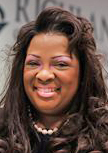
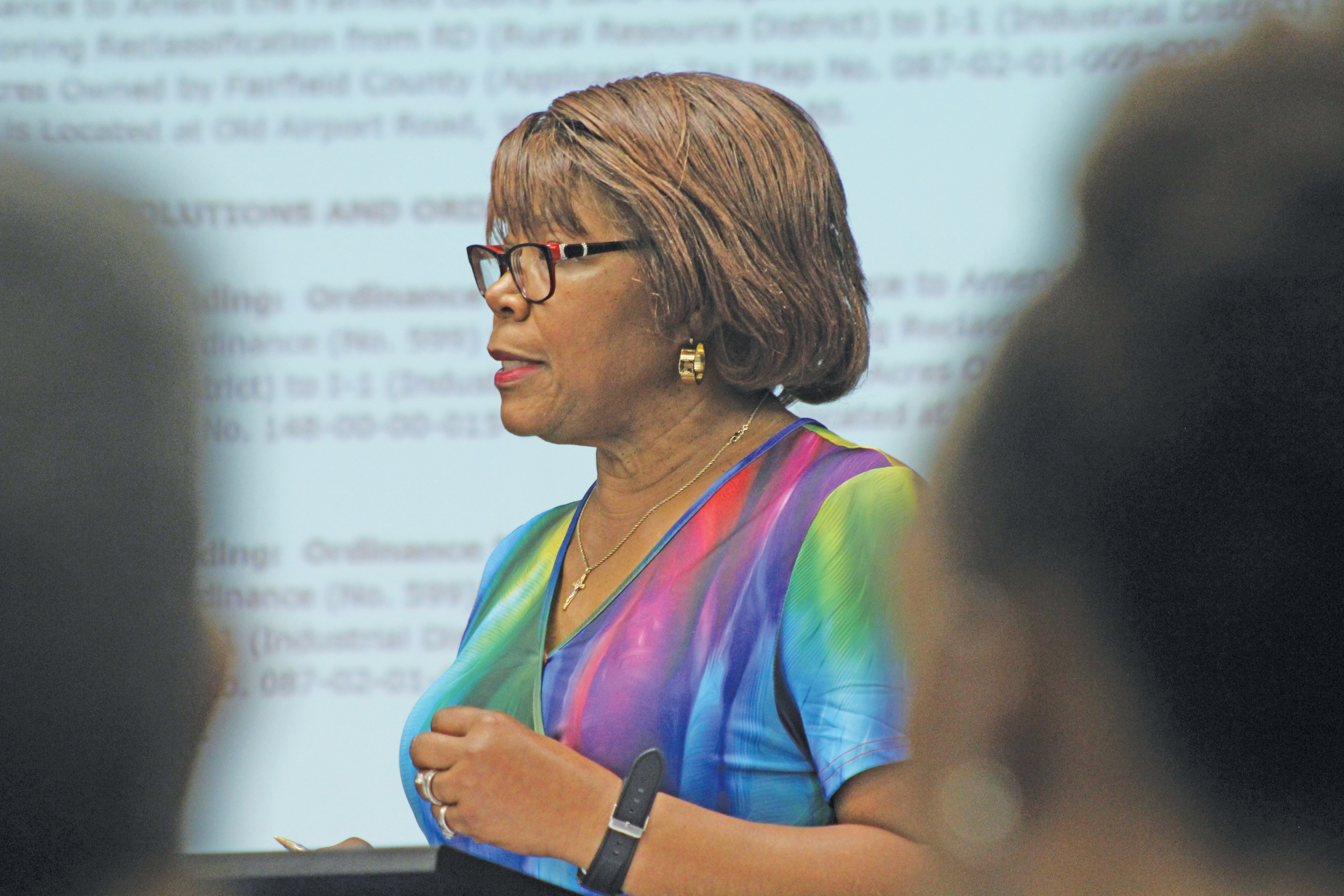
Teresa Holmes was named vice chairman and Cheryl Caution-Parker became secretary, according to votes taken at the June 25 meeting.
Manning and Caution-Parker were unanimously voted into their new positions. The board voted 4-1 to make Holmes vice chair, with McKie and Caution-Parker abstaining. James Shadd cast the lone dissenting vote.
Holmes
McKie had nominated Shadd for vice chair, but that vote failed 4-3, with McKie, Caution-Parker and Shadd voting in the minority. Shadd declined a separate nomination to serve as secretary.
Manning said he’s appreciative of the support the board displayed in nominating him as chairman. His goals include successfully managing the school’s building program, improving school safety and boosting student achievement.
“I want to continue to focus on those things, to make sure that we do the best we can,” he said.
Caution-Parker
One board issue that’s arisen lately is public participation at meetings. In recent months, some residents have complained that the former chair altered the order in which speakers registered to muffle public criticisms.
Manning said he plans to follow board policy.
“Public input, like everything else, is managed through our policies,” he said. “I do think that’s something we need to take a look at, but ultimately the board chair should not have any undue influence in that process.”
The board officer turnover comes at a controversial time for the Richland Two board, with one member owing nearly $51,000 in ethics fines and another facing a criminal disorderly conduct charge.
In July 2018, the S.C. Ethics Commission fined McKie $41,000 for various campaign violations.
The most current ethics commission’s debtor list available online, which is dated Jan. 3, 2019, still lists McKie’s fine at $41,000.
However, documents obtained by The Voice state that the fine increases to $50,750 if McKie misses certain deadlines.
Documents state that McKie was supposed to pay the first $20,000 by Dec. 31 and the remaining balance by June 30.
An Ethics Commission representative said via email Monday that there has been no change in McKie’s status.
Richland County resident Gus Philpott, a frequent critic of the board, said he’s looking forward to seeing positive changes with new board leadership at the helm.
However, it still doesn’t change his belief that McKie and Holmes should step down from the board.
Philpott maintains that McKie and Holmes aren’t legally allowed to serve because neither filed Statements of Economic interest forms until after taking the oath of office. State law prohibits elected officials from taking the oath when SEI forms haven’t been filed.
“They are, in my opinion, not legal board members,” Philpott said. “Teresa Holmes was nominated for the position of vice chair and was elected. My contention is since she is not a board member, she cannot serve as an officer.”
Asked about Philpott’s comments, McKie provided the following response:
“One of the most sacred aspects of our American democracy is that every citizen is entitled to his/her own opinion, regardless of the accuracy of the same. The day that ceases to be is the day we no longer embody a democracy.”
Holmes said she doesn’t plan to step down, and disputes that she’s not legally qualified to serve on the board.
“There is no reason that he should continue to say that,” Holmes said. “He knows that that’s not true.”
Elkins-Johnson is also facing legal difficulties.
In January, the Richland County Sheriff’s Office charged her with disorderly conduct following an altercation occurring after a board meeting.
According to a police report, the suspect shouted obscenities and threatened relatives of a state senator and the board chair.
The Richland County Public Index lists a tentative court date of July 22, though the case has been continued several times.
More Than 120 Crickentree Residents Attended to Oppose Rezoning
COLUMBIA – Richland County Council dimmed the hopes of more than 120 Crickentree residents who were in attendance at a public hearing Tuesday night, that council would save their quiet, treed, large-acre neighborhood from hundreds of homes being built on a former golf course along the border of their neighborhood.
At the urging of their county council representative Joyce Dickerson, Council voted against them, 7-3, Tuesday evening to approve the first reading of a request by Texas investment firm E-Capital to rezone the 183-acre former golf course property from TROS (Traditional Recreational Open Space) to RS-LD (Low Density Residential).
While the County planning staff recommended the zoning, the county’s planning commission voted 5-2 on June 3 to recommended that council reject the rezoning request on the basis that “a substantial portion of the property in question is zoned TROS and in light of the stated purposes within section 26-85, including preservation of conservation and open space, and to lessen the potential diminution of property values and to provide for a community-wide network of open spaces.’
Councilman Bill Malinowski said he had researched TROS zoning and that he found it had been created by the Richland County Conservation Commission for government owned land only and that it would not be appropriate zoning for a golf course.
E-Capital’s attorney Robert Fuller spoke at the beginning of the public hearing, but he did not mention the number of houses proposed on the property or the width of the buffer promised as he had done in past meetings.
“E-Capital’s silence on the number of homes and width of buffer promised leaves the residents in the dark, now, as to what the company plans to build,” Resident Russ St. Marie said following the meeting.
In previous meetings the numbers have ranged from 249 homes down to, more recently, 207, but according to the county’s planning information on the rezoning, as many as 672 (less 20 percent for infrastructure) could be built on the 183-acre parcel under RS-LD zoning.
According to the County’s Planning/Zoning Director Geonard Price, the developer would be allowed to build the maximum number of homes allowed and would not be held to the promised amount.
Before calling for the vote, Dickerson took the opportunity to vent her feelings about the Crickentree residents, Blythewood town government, LongCreek Plantation neighborhood and others.
Without further explanation, Dickerson said she had watched as Round Top neighborhood “has been squeezed by Crickentree and LongCreek Plantation.”
And she didn’t stop there.
“I have been challenged with numerous threats and correspondence containing fabricated information, for instance, that Blythewood requested to put a park…that community is not in Blythewood. So for someone on Blythewood planning commission to tell you they can put a park there, that’s fabricated information,” Dickerson read from a prepared speech.
Crickentree is located in 29016 which is in the Blythewood community, but not the town limits.
When asked if she would provide the threatening emails to The Voice, Dickerson said she would have to check with the county’s attorney before she could share them.
Dickerson also reported that she had received many emails urging her to vote for the rezoning. However, no one except the E-Capital representatives spoke in favor of the rezoning during the public hearing.
Noting that residents had said over the past year that if the TROS in their neighborhood were rezoned, it could cause a domino effect for other nearby golf communities, Dickerson pushed back.
“I am not looking at Windermere, Woodchuck [sic], Spring Valley, Wildwood, Longtown [sic]. All of you seem to be in a gated community with deed restrictions on some of your properties.
Due to a large turnout, many of those residents who came to the meeting were held in the lobby until near the end of the meeting. They were told by a security officer that seating was over capacity. Some left while others, including The Voice reporter, were not allowed in until the proceedings were almost over.
Council will have two more votes on the issue. Tuesday night was the only opportunity residents will have to publicly address the issue before council.
BLYTHEWOOD – Town Council passed the first of two readings on its $1,670,875 FY 2020 budget Monday night, exceeding last year’s budget by $105,761.
The only change to the town budget since the final workshop in early June is an $80,000 expense from the town’s hospitality fund for a SC Department of Transportation (SCDOT) project to add decorative, 8-foot high, black-coated safety fencing and sidewalks along each side of the Blythewood Road bridge over I-77.
Reviewing the General Fund revenue, Cook said building permits and fees are projected at $180,679, down slightly from the $202,111 budgeted for 2019. Building and permit fees came in at $173,389 in 2017; $200,437 in 2018 and the actuals at the end of April were $150,565.
Cook said fees for business licenses from both inside and outside the town are expected to be slightly higher than the current year, and that revenue for franchise fees next year is looking good, projected to be $273,457, up from $250,000 in 2019.
Revenues and expenses for the governing body for 2020 are on par with 2019, Cook said. Total administration budget is projected to increase almost $45,000, going from $396,096 to $441,978, with almost $40,000 of that increase allocated for a 2.5 percent cost of living raise and a 3 percent merit increase for town employees.
Administrative salaries are up about $10,500 over last year’s budget. Part of that increase is attributed to a 20 percent across the board raise for the mayor and council members. With the pay raise, the mayor will receive $10,800 annually and council members will each receive $7,200 annually.
Mayor J. Michael Ross said he requested a $5,000 increase in community promotions from $7,500 to $12,500 for advertising and other promotions that he said might come up during the year that are not budgeted for.
Costs for VC3, the Town’s computer software company, that Cook said maintains the town’s computer systems, will increase from $46,350 to $58,320. Some of that cost, he said, is a one-time cost that will go down some next year.
In anticipation of updating the Town’s comprehensive plan, contracted services with the Central Midlands Council of Governments will increase from $20,000 to $35,000.
The increase from $261,820 to $268,444 for Public Works is attributable to increased costs in contracted services for additional irrigation and landscape beautification projects in the Town. The Christmas committee also received an increase of $1,000 over 2019, and inspections and code enforcement expenses are expected to increase about $10,000.
The budget for Parks and Recreation will be reduced by about $40,000 in 2020 due to an annual cost savings of $19,000 as the result of eliminating the park mowing contract and purchasing a mower for Town Hall to do the mowing in-house.
Cook said there will be some increase in the Parks and Recreation budget, however, to allow for the purchase of a new piece of playground equipment and the addition of benches and possibly a shade in the playground area.
Council addressed the Blythewood Chamber of Commerce’s financials at the May 23 meeting, and the Chamber declined to make its annual request a $17,500 economic development work subsidy (previously called a grant by town officials.) The chamber did however, ask for and receive $3,500 for an ‘elite partner’ chamber membership for the Town government at the premiere level.
WINNSBORO—Fairfield County’s plans to replace a wood chipper with an incinerator is leaving some area residents feeling burned.
On Monday night, the Fairfield County Council voted unanimously to postpone final reading of an ordinance to rezone 11 acres of county-owned property off Old Airport Road that would allow for the installation of an incinerator.
County Administrator Jason Taylor said the incinerator option comes with less cost than the current wood chipping facility.
Fairfield resident Shirley Seibles and others spoke against replacing the chipper with an incinerator. | Michael Smith
“Some time back we had examined what we were doing out at the chipper site and determined it would be more cost effective to put an incinerator in as opposed to the chipping,” Taylor said.
The rezoning vote is now tentatively scheduled for July 8.
Councilman Moses Bell requested the postponement so council members could tour a Richland County facility that utilizes a much larger, but otherwise similar incinerator.
Bell said he also wanted residents to have an opportunity to tour the facility. A date for the tour hasn’t been set.
“Could we get a delegation of council to go look at the one in Richland County so we can make sure that we understand all the implications of this piece of equipment so as we vote, we’ll be inclined to know what we are voting for?” Bell asked.
The council’s vote came following spirited comments from nearby residents, all of whom opposed the incinerator.
Several residents complained that smoke from burning debris posed a health hazard. They also thought the machinery added blight that would drag down property values.
“I am so afraid for our community. I feel that our health is at risk,” said Winnsboro resident Shirley Seibles. “Burning releases ashes and hot cinders into the atmosphere. Ash settles and it settles where it may, on porches, vents, shingles, flowers, cars and trucks, children’s toys and lungs. There is a small playground next to where you want to put this incinerator.”
Seibles said the debris pile has become an eyesore.
There will be “a mountain of wooden debris across from our homes,” she said. “How long is it going to take to put a dent into this mountain? How are we allowing Fairfield County to be a dumping ground for every surrounding county?”
Others thought the incinerator posed a public safety threat.
“I’m in the business of fighting fires and we haven’t been able to control smoke yet,” said John Seibles, police chief for the Winnsboro public safety department and a resident who lives near the chipper site. “How are you going to control that smoke with an open heater? I don’t want to wake up every morning smelling fire, smelling smoke.”
Brad Caulder, the county’s public works director, sought to assure residents that the incinerator was actually safer, more strictly regulated and less costly than wood chipping.
“If I wasn’t confident of the results of the machine, it certainly wouldn’t be something I’d be pushing myself. It is a far cleaner process than the chipping now,” Caulder said. “You have carcinogens released every time that you chip. We have more pollutants in the air with the grinding. You have far fewer DHEC restrictions with the grinding than you do with the incinerator.”
The rezoning request proposed changing the zoning from RD-Rural Resource District, to I-1, Industrial District.
The wood chipper site sits on 11.32 acres the county purchased off Old Airport Road. The final sale price was unavailable, though the land has a fair market value of $780,000, according to Fairfield County property records.
Taylor said the county acquired additional property to further increase the buffer zone between residents and the incinerator.
“The machine is small, no larger than a tractor trailer,” he said.
WINNSBORO – On Tuesday, state senators reappointed the four Fairfield magistrate candidates – Jannita Gaston, Danielle Miller, Katina Capers-Washington and Vanessa Hollins – who were nominated by Sen. Fanning and initially appointed by the Senate on May 20 and May 21.
The reappointment was ordered by Gov. McMaster after it was learned that none of the Fairfield appointments had passed the required examinations when they were originally appointed in May, according to legislative records.
Election Commission
Fanning posted on the county website Feb. 7 and again on Feb. 26 for applicants to apply for the Fairfield election commission. The deadline to apply was March 15.
Fanning’s office reported that only the six sitting commissioners applied after the first post and that only the six and one other applied by the March 15 deadline. There is no word yet whether Fanning will be appointing any new members to the commission.
Fairfield County Councilman Douglas Pauley asked if there were efforts to replace the county’s election commissioners. He said if revamping the board is the goal, phasing people out over a period of time is preferable to cleaning house all at one time.
“I would say keep some experienced people, maybe put some new people on there,” he said. “Over time, if you wanted to replace all of them, as people get more experience, then you can replace them.”
Pauley’s remarks came moments after Monday night’s council meeting, where he publicly raised concerns about costs associated with replacing experienced magistrates with untrained ones.
“Do we have any idea what this magistrate situation is going to cost us?” Pauley asked during council remarks.
County Administrator Jason Taylor replied that he planned to meet with Fanning on Wednesday to discuss budgeting issues. That meeting was scheduled after The Voice went to press.
“He [Fanning] thinks he has some ideas. He thinks he can help us in that respect,” Taylor said.
Pauley also raised concerns that the new magistrates would be paid retroactively.
When the Fairfield magistrate candidates were first approved in May, they were appointed to serve four-year terms retroactive to April 30, 2018, according to Senate Journal records.
Taylor said the county would follow state recommendations on pay, but couldn’t say definitively how pay would be structured or if pay would be retroactive.
Taylor previously told The Voice that part-time magistrates would likely earn about $25,000 a year, with full-time judges making a little more than twice that amount.
“Once they’re appointed, they start getting paid,” Taylor said.
After methodically plowing through budget vetoes for nearly two hours Tuesday, senators breezed through magistrate approvals, finalizing the appointments of Gaston, Miller, Capers-Washington and Hollins.
Though initially approved May 20 and May 21, none of the candidates took two required exams until at least May 23, according to documents The Voice obtained through the Freedom of Information Act.
Applicants are required to pass the tests before they’re appointed, according to state law.
S.C. Gov. Henry McMaster, following recent reports in The Voice newspaper, asked the Senate to reconfirm the magistrate candidates during Tuesday’s special session.
The governor’s office has also begun requiring proof that magistrate candidates have passed their exams before senators can vote on them, McMaster spokesman Brian Symmes told The Voice.
“We will now require the Senate delegation to confirm to our office, along with the nomination of these individuals, that they have taken their tests,” Symmes previously said. “That way, we will not have this particular issue arise again.”
The legislative do-over became necessary following news reports by The Voice that some Fairfield and Chester magistrate applicants failed to achieve passing scores on exams all magistrate appointees must take.
Documents further show that some nominees took the tests multiple times and one candidate was tested as late as June 10. According to reliable sources, one candidate passed the test last week.
S.C. Court Administration Ginny Jones has said the department cannot release scores of individual test takers, nor can the agency specify who has passed or failed.
While reliable sources told The Voice that at least one magistrate took the test at least three times, finally passing it last week, that information could not be independently verified through the administrative court before press time.
On Tuesday, Jones said the agency had no updates on Fairfield candidates, but noted Chester County magistrate Jeffery Garris took the exams on June 10. Garris was not among the four Chester applicants who had already taken the tests, Jones said.
State law requires magistrate applicants to meet only minimum requirements to be appointed.
They must possess a bachelor’s degree and pass the two exams that quiz candidates on basic knowledge on par with a sixth grade education level.
Newly appointed magistrates aren’t required to possess a law degree provided they observe at least 10 trials conducted by a sitting judge.
In 2016, the S.C. House of Representatives passed a bill that would have significantly strengthened the magistrate screening process.
House Bill 4665 would have required magistrate candidates to follow the same screening process as circuit court judges, which must be interviewed by state lawmakers in a public setting, according to legislative records.
The vote passed 82-24, but the bill died in the Senate and hasn’t been brought back, records show.
BLYTHEWOOD – Approximately 60 residents filled the Blythewood Town Council chambers Monday night in Doko Manor to protest myriad aspects of a proposed rezoning of 143 acres, referred to as the Red Gate property, located along Blythewood Road between Syrup Mill and Muller Roads. The property lies across Syrup Mill Road from Cobblestone Park and in an area of horse farms and large acre residential properties.
The rezoning was recommended to Town Council for approval by the Planning Commission on June 3.
Originally zoned PDD (Planned Development District) in 2007 under the jurisdiction of Richland County, the property was subsequently annexed into the Town of Blythewood as a PD (Planned Development) zoning designation. That PD, which is still in place, allows for 232 single family units, 300 multi-family apartment units and 36 acres of general commercial.
Before it was developed, the property went into foreclosure, and is currently owned by Arthur State Bank. Hoping to now develop the property, developer Harold Pickrel has requested an amendment to the property’s current zoning map that would actually reduce the density – from 232 to 138 single family homes, from 36 to 28 acres of commercial use and eliminate the 300 multi-family dwellings.
But even that density seemed, Monday evening, to be a world away from what surrounding rural residents said they feel is appropriate for the area.
Fifteen of those neighbors attending the meeting came to the microphone to ask council to send the rezoning request back to the planning commission for a re-do that would be more in character with rural properties in the area. In general, they called for ‘smart planning’ that would better transition the housing development to the rural area around it. Specifically, they asked for minimum 20,000 square foot lots, thus reducing the housing density further than 138 homes. They also asked for the addition of buffering around the development to protect the privacy of the surrounding properties.
George Walker
“We’ve been blessed with [large acre neighborhoods] like Surrey Woods, High View Farms, Camry Farms, Birch Springs and Center Creek that value trees and set the stage to create the kind of environment that makes people want to keep coming back,” Persimmon Fork Road farm owner George Walker said, addressing council.
“We aren’t opposed to development and we appreciate that this developer has already made concessions in regard to multi-family units,” Walker said. “We aren’t trying to drive him [Pickrel] away, but we are trying to come up with a plan that is farsighted and works for everybody.”
Walker reminded council that they had set a 20,000 square-foot minimum on lots in the town, and he urged them to honor that in the PD as well.
“Backing homes on 10,000 square-foot lots up to a property that the town annexed under a Rural (RU) designation is overly aggressive,” Walker said.
Another Persimmon Fork resident, Attorney Stuart Andrews, said he counted 15 areas of discretion in the project that are open to the developer.
“He could make modifications on the plans that are presented with regard to boundaries and actually in changing the density of houses without any input from town council, the planner or the community,” Andrews said. “I suggest having a thorough study of this proposal before the plans are adopted, and then have the plan and the rezoning meet [requirements] that would be consistent with the rural character of the community.”
John Moore, a resident of Cobblestone Park and a former planning commissioner, said the plan was one of the poorest he had seen.
“There’s no mention of price points or the homes’ square footage,” Moore said. “Why are the 10,000 square foot lots even in this document?” Moore asked. “There should be a traffic study before the development is approved and it should be conducted during the school year when school is in session,” he said.
Rue, who owns a horse farm in the area, asked council to protect her “little slice of heaven.”
Mayor J. Michael Ross defended the planning commissioners’ decision to recommend approval of Pickrel’s rezoning request, noting that the current zoning allowing 232 homes, 36 acres of commercial and 300 apartment units could be built today without town council’s consent.
“The commissioners probably thought they were doing a pretty doggone good thing to get the 300 apartments taken out and get some 20,000 square foot lots,” Ross said. He also said he empathized with the residents.
“I thank all of you for coming, and I hear your passion,” Ross told the crowd, “and I understand it. I’m just like you. I used to live on Dennis Lane. So if I was there now and this [development] was coming in, I would be one of you sitting out there, too. But this land has been there since 2007, and it has been zoned so that if [a developer] came in, he could build on 5,000 and 8,000 square-foot lots. That’s what’s approved right now,” Ross said. “So there is a risk that if somebody else came in here and wanted to develop this property as it is now, then that is how it is zoned. This requested zoning is a new PD. The old PD that was established in 2007 is still on the books,” he added.
“That being said, we don’t want that either, so we hear you. I do think a lot of the things you said are very important – a traffic study before action is taken, traffic and other safety issues,” Ross said.
Council voted unanimously to send the rezoning request back to the planning commission for reconsideration.
BLYTHEWOOD – Tuesday night’s Richland County Council meeting could be a turning point for the residents of Crickentree concerning a rezoning request they oppose for the 183-acre golf course property that adjoins their neighborhood.
The meeting will include a public hearing on the issue and the first of three votes to deny or approve a request from the property’s owner, E-Capital Management, to rezone the property from Traditional Recreational Open Space (TROS) zoning to Low Density Residential (RS-LD) zoning.
While the council has three votes, the first vote – yay or nay – more often than not portends the final outcome. If council members vote against the rezoning on the first vote, that’s the final vote. If council votes to approve the rezoning, it will have two more votes. If the second is a vote for approval, the third vote will determine the outcome.
If, like the last time it came before council, E-Capital pulls the request before it is considered, the request could return as another zoning classification, perhaps Rural (RU), and re-enter the rezoning cycle.
The residents and the rezoning applicant will only be allowed to express their concerns prior to the first vote.
Tuesday will be the second time around the block for a rezoning request. It was initially recommended earlier this year by the county staff for Medium Density Residential (RS-MD) zoning, but subsequently recommended for denial by the Planning Commission. On April 23, E-Capital’s attorney Robert Fuller pulled the item from council’s agenda before it came up. After a new zoning request for RS-LD was recommended by the county planning staff in the Spring, the Planning Commission balked again, recommending on June 3 in a 5-2 vote that Council deny the rezoning request.
The ball is now back in council’s court. The issues are still myriad.
Some residents say TROS is not subject to rezoning.
Resident Russ St. Marie said chapter 26 of the county’s zoning ordinance directs that TROS zoned properties and their current uses are to be preserved and protected.
Planning Commissioner David Tuttle, one of the two Commissioners who voted for the rezoning, disagreed. He explained that TROS is just like any other zoning classification that comes before council.
“Prior to the creation of TROS zoning,” Tuttle said, “golf course properties within neighborhoods were subject to being reverted to their previous zoning without coming before council. The purpose of TROS was to insure that the property would go before council before it could be rezoned.” He said that process served as a protection for adjoining property owners, that it gave the neighbors a say in the rezoning process.
Fuller reasoned that the RS-LD zoning, allowing 3.63 homes to the acre, is the same as the current Crickentree property zoning, Low Density Residential.
County zoning administrator Geonard Price pointed out, however, that Crickentree lots are actually larger with 1.04 homes to the acre, possibly making Low Density zoning of the golf course property incompatible with surrounding properties.
“In RS-LD zoning, lots would be restricted to no less than 1,200 square feet,” Fuller told the panel. “We would restrict the number of homes to 207 with a 150-foot buffer between the golf course property and the Crickentree neighborhood. This is the only way the owner can make anything of it.”
The issue will go before County Council at 7 p.m., Tuesday, June 25 for first reading and a public hearing.
WINNSBORO – State senators will reconvene next week, in part to reconsider four controversial magistrate appointments in Fairfield County, according to S.C. Gov. Henry McMaster’s Office.
Specifically, Jannita Gaston, Danielle Miller, Katina Capers-Washington and Vanessa Hollins must go through the reappointment process again. That process includes verification of whether they have passed two required eligibility examinations, said McMaster spokesman Brian Symmes.
Senators were already scheduled to head back into session Tuesday to finalize the state budget, though lingering issues over Fairfield magistrate appointments will also be addressed.
“The Senate recognizes that those appointments are not effective because of the status of the tests,” Symmes said. “They [senators] are going to take up these appointments.”
McMaster and the Senate pressed the reset button on the magistrate appointments following an investigation by The Voice, which found multiple candidates had to take the exams more than once, that none of the four had taken the exams prior to their appointment and that at least one nominee had reportedly not passed the exams at all.
Due to the exam debacle, Symmes said magistrate nominees are now going to have to provide proof of having passed the tests before appointments can move forward.
“Because of this issue that was pointed out to our office by Court Administration, there have been changes put in place in our boards and commissions appointment process to make sure that this doesn’t happen again.” Symmes said. “We will now require the Senate delegation to confirm to our office, along with the nomination of these individuals, that they have taken their tests. That way, we will not have this particular issue arise again.”
Magistrate shortage
Fairfield County could potentially see a magistrate shortage for months, while also putting a strain on the county budget.
State law prohibits new magistrates who don’t possess a law degree from hearing cases unless they first observe another judge preside over at least 10 cases. It could take six to nine months for the new magistrates to fulfill that requirement, said Fairfield County Administrator Jason Taylor.
During that time, the county would have to hire interim magistrates in addition to paying the salaries of the county’s four magistrates in training.
Taylor said he has not seen any signs yet of the magistrate’s office experiencing any backlogs.
However, he fears it’s a possibility, noting that the office advised him that operations previously became “strained” with two vacancies.
“I’m working with our chief magistrate, Paul Swearingen, on scheduling issues and such to see how we can manage to do this while they are still in training,” Taylor said. “I’ve got to look at our budget and see what we can do.”
In the recently adopted 2019-2020 budget, Fairfield County appropriated $559,114 for the magistrate’s office.
Taylor said part time magistrates make about $25,000 year, and estimated full-time magistrates make a little more than twice that amount. The magistrate budget covers other operational expenses as well.
Strain on County Budget
If the county has to utilize interim magistrates, which are unbudgeted, the money would have to come from elsewhere. How much money depends on from which county the interim magistrates come, Taylor said.
“We may have to borrow [magistrates] from surrounding counties,” Taylor said. “Obviously Richland County magistrates make a lot more than ours do.”
The Fairfield magistrate vacancies occurred when Sen. Mike Fanning, D-Great Falls, who represents Fairfield County, opted not to reappoint two experienced incumbent magistrates. He also filled two additional vacancies due to retirements.
None of the four candidates Fanning nominated took their required exams until after he announced their appointment on social media, teeing up the magistrate appointment do-over.
Fanning couldn’t be reached for comment.
In announcing the appointees, Fanning in a May 21 Facebook post called them “outstanding individuals” who he said would “bring a wealth of diverse experiences to the position.”
Fanning’s post said the magistrates would begin serving May 22. However, the earliest a candidate had even taken the test was May 23, according to documents obtained from Court Administration through a Freedom of Information Act request. At least one candidate hadn’t taken the tests until June, documents show, and it is reported that another still had not passed the tests after multiple tries.
State law requires magistrate nominees to pass two exams – the Wonderlich Personnel Test and the Watson-Glaser Critical Thinking Appraisal II – before they can be appointed.
“A senatorial delegation must use the results of these eligibility examinations to assist in its selection of nominees,” the law reads. “No person is eligible to be appointed as a magistrate unless he receives a passing score on the eligibility examination.”
Candidates are expected to be capable of reading at a sixth grade reading level. They must also know how to tell time, know the days and months of the year and understand basic skills in math, measurements and monetary units, according to Court Administration.
Magistrates have numerous responsibilities. They issue arrest warrants, conduct bond hearings, preside over misdemeanor cases and hear small claims civil cases.
Planning Commissioners recommend allowing sandwich board signs in town.
BLYTHEWOOD – The prohibition of sandwich board signs in the town has long been the bane of many shop owners in Blythewood. Those days may be over if a recommendation made to Town Council last week by the Planning Commission comes to fruition.
At the June 3 Planning Commission meeting, Town Administrator Brian Cook proposed an amendment to the current sign ordinance for options that would allow all the town’s businesses to advertise with sandwich boards so long as the signs meet certain size requirements and are set up and taken down at specified times.
The signs can be any A-frame sign consisting of two boards hinged at the top hanging back to back.
Sandwich board sign regulations were added under a section for exempt signs. One sandwich board sign can be permitted to an onsite commercial owner/operator only during the hours when the establishment is open. The sign can be no larger than three feet tall and two feet wide, with a maximum of two sign faces.
Town’s PC recommends prohibiting feather flags.
Cook said the town can remove any sign that causes interference with vehicular or pedestrian traffic, or in the event of any emergency situation, or that interferes with any work that is to be performed on the public sidewalk and/or right-of-way by or on behalf of the town.
In all instances, the amendment specifies that the sign shall be placed on the business’ lot, at least five feet outside of right of way, shall be constructed of a material and weight to ensure general stability and shall not block visibility.
While sandwich signs are currently prohibited, many businesses such as Bloomin’ Bean Coffee Bar and others have set them out for the last few years with little interference from Town Hall.
That’s not to say that a business can stake out other types of signs in front of the business.
Cook clarified that feather flags, which have been popping up around town the last couple of years, are prohibited under the amendment.
Other prohibited signs, according to the proposed ordinance, include “any sign (other than a government sign), banner, feather flag, festoon, or display placed on any curb, sidewalk (except where otherwise permitted in this subchapter), post, pole, hydrant, bridge, tree or other surface located on, over or across any public street or right-of-way, or any banner, placed on stakes on a property, unless a permitted temporary or grand opening banner, otherwise permitted.
The proposed sign amendment was approved unanimously and will now move to Town Council for the first of two votes on June. 24 at The Manor.
WINNSBORO – It took multiple attempts for some recently appointed Fairfield and Chester county magistrate appointees to pass two basic skills exams required by state law, and one appointee couldn’t pass the tests at all.
Katina Capers-Washington and Vanessa Hollins, both appointed to magistrate posts on May 21, passed on the first attempt, an agency spokeswoman said.
Two other Fairfield magistrates, Jannita Gaston and Danielle Miller, also appointed on May 21, have taken the two exams on multiple dates, according to S.C. Court Administration.
At least one of the Fairfield appointees still has not passed the exams, a source with knowledge of the exams said.
Two Chester County magistrates also took the exams multiple times. The other two passed on the first try.
State law requires magistrate candidates to pass the Wonderlich Personnel Test and the Watson-Glaser Critical Thinking Appraisal II before they can be appointed.
The exams are designed to test rudimentary skills, Bob McCurdy, assistant director of Court Administration, said in a 2018 memo.
“Successful examinees will need at least a sixth grade reading level, knowledge of basic mathematics, how to tell time, days of the week and months of the year, and a basic knowledge of U.S. monetary units and the U.S. Customary System of weights and measures,” the memo said.
A Court Administration representative wouldn’t disclose how the candidates scored, nor would she verify if any candidate failed to pass.
“This information is confidential,” agency spokeswoman Ginny Jones said. “If you would like to request it, you will need to file a motion with the Supreme Court.”
Jay Bender, an attorney with the S.C. Press Association, of which The Voice is a member, said it’s critical for the public to know whether or not magistrate candidates have passed the required exams.
“It’s a serious problem if we put people on who are not qualified,” Bender said.
Testy Situations
The testing revelations raise new questions about whether all the Fairfield and Chester candidates are truly qualified to serve. They also cast doubt on whether the nomination process was as transparent as previously advertised and whether it complied with state law.
According to S.C. statute 22-2-5, magistrate candidates must pass the two exams prior to being appointed.
“A senatorial delegation must use the results of these eligibility examinations to assist in its selection of nominees,” the statute reads. “No person is eligible to be appointed as a magistrate unless he receives a passing score on the eligibility examination.”
Sen. Mike Fanning, D-Great Falls, announced the appointment of the four Fairfield candidates via Facebook on May 21.
“Earlier today, these outstanding four individuals were officially appointed and will begin their 4-year service on Wednesday, May 22, 2019,” Fanning posted.
However, as of May 22, none of the four nominees had even taken the required exams, let alone passed them.
Capers-Washington was first to be tested. She passed on her first try on May 23. Hollins came next, also passing the test on the first try on May 28.
Miller didn’t take the tests until May 30. She took the exams again on June 7.
Gaston wasn’t tested until June 4, and took the exams again on June 10.
Other Requirements
In addition to passing the exams, candidates for appointment must also hold a bachelor’s degree. If magistrates aren’t lawyers, they must observe 10 magistrate court trials before they are allowed to hear cases.
More magistrate troubles
To help appoint magistrates, Fanning created screening committees in Fairfield and Chester counties, tasking them with conducting interviews and making nominations for magistrate appointees.
Three Chester County representatives – Dwayne Robinson (a Chester County deputy sheriff), Calvin Gore (also a Chester County Sheriff’s employee and former magistrate), and Angel Underwood (current Chester County chief magistrate and wife of former Chester County Sheriff Alex Underwood) – comprised the list of the selection committee for Fairfield magistrate applicants according to documents provided by Fanning’s office in response to a Freedom of Information Act request from The Voice.
Two names, however, were missing from that list – Alex Underwood and Fanning, himself. At least one magistrate candidate said the selection committee that interviewed her included Alex underwood and Fanning along with Angel Underwood and Gore.
Alex Underwood, 55, is one of three Chester County law enforcement officials indicted in an unlawful arrest and excessive use of force case filed on May 7.
Charges were filed after the FBI raided the Chester County Sheriff’s Office in late April.
It was not immediately clear why Alex Underwood’s and Fanning’s names were not included in documents that Fanning’s office provided to The Voice.
Attempts to reach Fanning by phone were unsuccessful. An email seeking comment was not immediately returned.
On April 28, in a Facebook post appearing after the raid but before the indictments, Fanning, who lives in Great Falls and represents all of Fairfield and Chester counties, urged people not to rush to judgment.
Fanning also threw his support behind Underwood.
“Our Chester County Sheriff has gone above and beyond what is required of him as a law enforcement professional,” the post states.
“Let us not allow this to lead us to forget his many accomplishments, achievements, and his genuine love and decades of service to Chester County,” Fanning continued. “This is the time to stand behind the man who would lay down his life for us all.”
If convicted on all counts, Underwood faces more than 50 years in prison. Underwood has pleaded not guilty, according to court records.
Underwood in the room
Weeks before his arrest, Underwood participated in at least some magistrate interviews, according to Mattie Stewart Smith, one of several candidates the screening committee interviewed.
Mattie Smith
Speaking with The Voice on Monday, Smith went into greater detail about Alex Underwood’s involvement, including the kinds of questions she says he asked.
Smith said one of Underwood’s questions centered on her availability to sign warrants, regardless of the time.
“He was explaining that law enforcement individuals have to come and get warrants signed,” she said. “He said ‘would you be willing to have them come to your house to get them signed?’”
“I said, ‘yes, I don’t have a problem with that,’” Smith recalled. “He said, ‘oh that’s good because it is a problem sometimes.’”
Smith also recalls Underwood asking her if she had any issues working a four-day workweek. She said she didn’t.
“I did not have a problem with that. I explained to them that basically I was retired, that my time is my time,” Smith said.
Smith said she’s certain Underwood was present for the interviews, despite a recent media report that cited an anonymous source disputing Smith’s account.
She said he remained for the entire interview, which was conducted in executive session. Smith remembers Underwood stating he helped provide security a few years ago during her 30th wedding anniversary vows renewal.
“He said ‘Your food was good and the ceremony was really nice,’” Smith said.
Smith added that this was her second attempt seeking a Fairfield magistrate post, and that it’s unlikely she’ll try again, noting the process has become too political.
“Looking back, it soured me to the whole process. I’ve worked for government for 36 years and I’ve always done my job, I’ve never played politics,” she said. “I just feel that there are a lot agendas here that I’m not aware of. I’m not interested in anything here because I don’t like the maneuvering.”
Record of legal challenges
Although Alex Underwood was indicted after magistrate interviews occurred, the pending case is the latest in a long line of legal challenges the sheriff’s department has faced under Underwood’s leadership, according to judicial records.
Since 2014, Underwood has been listed as a defendant or codefendant in eight federal lawsuits. Additional lawsuits have been filed and adjudicated in state court, according to court records.
Some cases were filed by private citizens, which like the pending criminal case against Underwood, allege unnecessary use of force or failure to follow protocol.