Category: Government

  • Filing Closes for 2012 Candidates

    Incumbents on both County Council and the Fairfield County School Board face challengers in November, the Fairfield County Voter Registration Office confirmed last week, as a full slate of candidates filed their paperwork for local offices before the July 17 deadline.

    County Council

    District 2: Carolyn Robinson (I); Vernon Pylant.

    District 4: Kamau Marcharia (I); Mary Brown.

    District 6: Mary Lynn Kinley (I); John McMeekin.

    School Board

    District 2: Danielle Miller (I); Paula Meisner Hartman.

    District 4: Annie McDaniel (I); Arthur Lathan; Carrie Suber-O’Neal.

    District 6 (No incumbent): Thomas Armstrong; William Frick.

    Soil & Water

    (No challenger): Kerry Matthews.

    The Voice will publish a profile of the candidates in early October.

  • Winnsboro Town Council OK’s Voting Districts

    Winnsboro Town Council approved the second reading July 17 of an ordinance to approve and put into place a redistricted voting map for the single-member district inside the Town limits. The redistricting aligns Winnsboro’s voting districts with Federal Census data collected in 2010.

    The ordinance is the next step in a process that began May 15 when Council heard a presentation on the process delivered by Wayne Gilbert of the S.C. Office of Research and Statistics.

    The process of redistricting, or redrawing the lines that separate elected representative’s districts, takes place every 10 years following a census cycle. Based upon that data, new lines are drawn that must adhere to federally mandated criteria set in the Voting Rights Act of 1965 to prevent the “cracking” and “packing” of minority districts. These criteria include creating equal populations, districts that do not dilute minority voting strength or communities of interest.

    The ordinance will now face a public hearing, and the scrutiny of the U.S. Department of Justice. Gilbert said in May that the U.S. Department of Justice, which must eventually approve the plan, will have up to 60 days to review and clear the plan.

    Gilbert said in May that based upon a town census of 3,550 persons, each of the Town’s four districts would need to target a number of 888 persons, which the plan presented May 15 would do. Currently, Gilbert explained, there are 689 people in District 1, 1,338 in District 2, 758 in District 3 and 765 in District 4.

    “The overall district plan now is way out of balance,” Gilbert said. “The overall balance should be within a 10 percent deviation between districts.”

    According to the Census data, District 1 (represented by Danny Miller) gained 15 voters, while District 2 (represented by Bill Haslett) lost 15. District 3 (represented by Clyde Sanders) picked up six voters, while District 4 (Jackie Wilkes) lost eight.

    Municipal Court

    After an executive session July 17, Council voted to preserve its Municipal Court system of three judges. In order to do so, Council approved the hire of two new judges to serve as associate judges under the current Chief Judge.

    In June, Council had approved first reading of an ordinance that would have dissolved their relationship with the Municipal Court, handing over that department to the Fairfield County Magistrates Court. At that time, the County had agreed to provide Magistrate Judge William F. Pope to the Town of Winnsboro for a contracted sum of $6,000 plus FICA and retirement annually for each of six judges that would have been contracted to the Town of Winnsboro. The July 17 vote put an end to that proposal.

    Other Business

    Council voted July 17 to purchase three new truck for the Town’s meter reading department at a total cost of $54,000 from Wilson Chevrolet, which Council said was the lowest bidder. Council also approved the replacement of the air conditioning system at the Old Armory by Smarr Heating and Air at a cost of $7,600.

    Freddie Lorick, Chief of Public Safety, was authorized to hire a new police officer to replace Ed White, who passed away last month. Council also OK’d the hire of one new staff member for the Gas, Water and Sewer Department. The department currently has three vacancies, Council noted. Council had previously approved the hire of a staff member for the department during their July 10 meeting.

  • Chairwoman Chastised in Secret Session

    An executive session during the July 17 meeting of the Fairfield County School Board may have violated the state’s open meetings law and thwarted efforts of one Board member to discuss a recent Atlanta field trip in open session.

    Board member Marchella Pauling (District 6) said she had asked for the Atlanta field trip to be placed on the agenda prior to the meeting. When, arriving shortly after the meeting was under way, she found it had not been included on the agenda, Pauling attempted to amend the agenda to include discussion of the trip.

    Ken Childs, the District’s attorney, advised the Board of a recent Appellate Court decision that states agendas cannot be amended after meetings have begun and Pauling’s efforts were unsuccessful.

    Board member Henry Miller (District 3) suggested the matter be discussed in executive session; however, the S.C. Freedom of Information Act (FOIA) is quite clear on what can and cannot be discussed in executive session.

    “I cannot think of an exemption that allows discussion of a tax-payer funded trip to be held behind closed doors,” said Bill Rogers, executive director of the S.C. Press Association, an advocate for open government. “The exception would be if they were discussing discipline of a student, and they must state this purpose in advance as the reason for the executive session.”

    Board member Beth Reid (District 7) said last week that there was no discussion of student behavior during the closed session. The S.C. FOIA allows for the discussion of personnel issues, legal matters and contractual negotiations in executive session, and states that the specific nature of the discussion must be stated prior to entering into an executive session.

    After the Board had voted to enter into executive session, and before they retired into the closed session, The Voice reminded Board Chairwoman Andrea Harrison that discussion of a field trip was not executive session material under the law.  Harrison affirmed that she was aware of that fact.

    However, according to one Board member who telephoned The Voice the following morning, the Atlanta field trip was discussed in great detail during the Board’s executive session.

    “The Atlanta field trip was discussed in executive session,” Pauling said.

    Pauling’s statement was confirmed by Board member Bobby Cunningham.

    “We hit on it (the field trip) pretty good,” he said.

    According to Pauling, the Atlanta field trip was never approved by the full Board or even brought to the attention of the full Board before the trip was undertaken. Harrison reportedly initiated the June 28-30 trip to the Hilton hotel in downtown Atlanta, which was to attend a conference on school bullying, and selected four Fairfield students to participate.

    Pauling said she wants to know who paid for the trip. There was no money at that time in the high school’s budget for such a trip, Pauling said. Furthermore, Pauling said she wants to know who paid for the rental of the SUV and who approved the use of a District car.

    Sources told The Voice last week that Harrison reportedly sought to obtain a District bus for the trip, but was denied by the Director of Transportation when he learned that the Board had not approved the outing. Harrison said that was not true.

    “It was not that we couldn’t get a bus,” Harrison said, “but that a bus was not cost effective. We only had four students going on the trip.”

    Harrison said the District’s social worker rented an SUV for the trip and Harrison used her District mileage to provide gas.

    Harrison said the high school did not have the necessary funds in its budget to pay for the trip and that she asked Dr. David Eubanks, who was serving as the District’s interim superintendent at the time, “if we could find funding.”

    “It slipped through the cracks about bringing it to the full Board,” Harrison said. “But there was no malice. I think the intent of the executive session was to show that I had not done this with malice.”

    Harrison said she did not know how the trip was ultimately financed.

    “The money may have come out of the Board’s contingency fund. I’m not sure,” Harrison said. “I asked Dr. Eubanks if he could locate funds and I didn’t follow through with any details on it.”

    Dr. Eubanks, however, said he did not recall anyone asking him if money was available for the Atlanta trip.

    “I don’t recall anyone asking me ever if the money was there,” Eubanks said. “Board members do not ask permission of a superintendent to do anything. That’s not just in Fairfield County. That’s across the board.

    “I was aware of the trip,” Eubanks continued, “and I think the subject matter of the trip was very timely. Bullying is a problem. But students were not part of the trip when the original discussion came up. The superintendent’s job is not to police Board members in terms of what they can or should not do.”

    The trip, according to several sources, did not go quite as planned. Two of the students who attended the conference got into an altercation, while one of the female students was caught with a 27-year-old man in her hotel room. After only one day at the conference, Harrison’s party was ready to wrap it up and return to Fairfield. At that time, Board member Danielle Miller (District 2) arrived at the hotel, having acquired a District car for the trip, and tried to convince the group to stay another night.

    The group reportedly returned home in spite of Miller’s efforts.

    “It was a good conference, until the trouble started,” Harrison said.

    Harrison described the altercation between the two students as “hair-pulling,” and said the 27-year-old man was only in the other student’s room for “a few minutes” before being detected and escorted out.

    “All of that was handled,” Harrison said.

    Harrison said the Atlanta police were never involved, but things had gotten to a point that the trip was cut short. On their way out, she said, she saw Danielle Miller for the first time.

    “We got up to leave on Saturday (June 30), and on our way out, Miss Miller was coming in,” Harrison said. “She was supposed to have been there Thursday.”

    Miller said she had been at the conference since Thursday, attending different sessions.

    “I went separately from Miss Harrison,” Miller said. “I was down there as a Board member and didn’t do anything with Miss Harrison’s group. I ran into them Saturday.”

    Miller said Dr. Eubanks approved the use of the District car, which Eubanks confirmed.

    Pauling said she has requested all documentation of the trip. In addition, she said, the matter should have been discussed in open session.

    “This was not an executive session item,” she said, but it appears from District emails that discussion of the field trip in executive session had been predetermined well before the July 17 meeting.

    Just before 3 p.m. on July 13, Pauling sent out an email reiterating her request for the item to be placed on the agenda. This set off a string of emails between Board members between 3:27 and 5:45 p.m. July 13, beginning with Harrison’s denial of Pauling’s request to have the item placed on the agenda.

    “After consulting with (J.R. Green, the District’s new superintendent) in regard to the Atlanta trip, it was agreed that the issue had no direct impact on student achievement, therefore I chose not to place the item on the agenda,” Harrison wrote. “I have advised Mr. Green that it would be in the best interest to provide the documentation in an attempt to answer any questions surrounding the policy and process which was followed. As I have stated, I will be willing to accept any responsibility for any actions which were not in alignment with protocol. If there are any questions that I need to answer or any action that any Board member would like to take against myself after the information has been received, that is your right. Thanks for your understanding.”

    Reid then injected the secret session suggestion.

    “Perhaps that discussion could take place in Exec. Session,” Reid wrote.

    Harrison’s reply appears to indicate a contradiction with what she said she knew was not executive session material July 17.

    “That is certainly fine with me Mrs. Reid, if that is the desire of the Board,” Harrison wrote. “Thanks so much. Have a great weekend.”

    Board member Annie McDaniel (District 4) summed up the conversation in a single sentence: “(I)t appears that we need (a) retreat real soon, so everyone knows their role and which lane to stay in,” McDaniel wrote.

    The emails also appear to contradict what Harrison says now about the closed-door meeting.

    “I was more than willing to discuss the trip in open session,” Harrison said. “Then Mr. Miller said he would like to discuss it in executive session. Probably because it was an assault on me. Maybe it was to protect the image of the Board, because there were some harsh things said.”

    Henry Miller said he felt the need to discuss the matter in secret so that rumors about the trip could be properly dispelled.

    “I wanted to hear it from the person who took the trip,” he said. “It wasn’t secret. I just wanted to know the truth. Sometimes it’s better if you can sit down and ask questions and not have it blow out of proportion.”

    “There were several Board members who were involved in it,” Reid said. “It was an inter-Board discussion on a field trip and we didn’t think it needed to be public.”

    In spite of the emails, Harrison maintains that she would have preferred to have the matter aired out in public.

    “I wish it could have taken place in open session,” she said, “so I could have addressed some of the misconceptions.

    “I cannot wait until November,” Harrison added, “so I can give up this seat (as Chairwoman). Because it is a very hot seat.”

    Although the Board has not asked her to do so, Harrison said she would be willing to reimburse the District for the trip, if necessary.

    “I’m willing to bight that bullet,” Harrison said. “I am willing to take responsibility. I don’t want (the District’s social worker) to get into trouble. She was just trying to do something good for students. I’m not going to let her take the fall for it.”
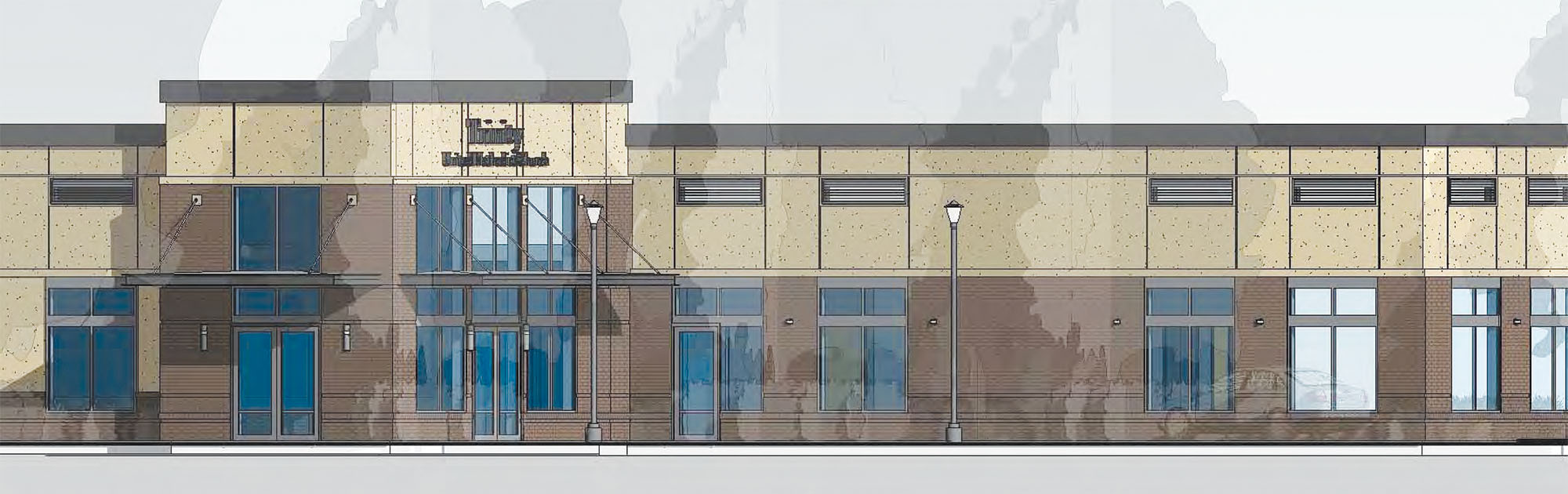
  • Trinity UMC Asks BAR to Approve 25-year Renovation Plan

    After filing an application for a Certificate of Appropriateness with the Town of Blythewood July 19, Trinity United Methodist Church presented a church expansion plan to the Board of Architectural Review Monday night.

    “We would like to be under permit and ready to go in five to six weeks,” John Powell, of LTC Associates Architects, told the Board.

    On behalf of the church’s planning committee, Powell presented to the Board a proposed master plan that included new construction renderings of a youth ministry gathering space, additional classroom facilities and a larger capacity sanctuary to accommodate the current growth and membership forecasts of the church.

    The proposed plan for the church, which sits in the center of downtown Blythewood and takes up a good portion of the block bordered by Blythewood Road, Boney Road and McNulty Street, must meet the Board’s approval regarding the architectural review aspects of construction of new facilities and the reconstruction of the existing structures, including the parking site improvements, the current church sanctuary and child care facility currently in operation.

    The five-phase architectural plan is projected over the next 25 years, depending on growth forecasts and funding sources, according to Powell.

    Since the plan did not address tree, landscaping, parking space allocation and signage, the church received only conditional approval at the meeting.

    “The basic plan is sound,” board member Bob Mangone  said, expressing the general consensus and optimism of the Board. But as these key pieces of the plan were not addressed at the hearing, the church must go before the Board again either at a special called meeting Aug. 13, or at the next calendar meeting Aug. 20.

    The Board expressed general approval with the overall look of the church’s plans.

  • County OK’s Zoning Officers

    With two of its members in attendance at the Town of Winnsboro’s water authority meeting and one member out for personal reasons, a bare quorum of Fairfield County Council gave the final OK July 9 to administration to hire two new code enforcement officers as well as create an assistant director of planning and zoning position. The move is designed to help the County enforce new and stricter zoning laws put in place by Council earlier this year.

    The new code enforcement officers will have to complete training with the S.C. Criminal Justice Academy in order to be certified as Class 3 officers (with the ability to issue citations) within a reasonable amount of time after hire, Council Chairman David Ferguson said. The assistant director of planning and zoning will essentially be an understudy of the director, Hinely said at Council’s June 25 meeting, and will move into the director’s spot when that position comes open in the next two years.  At that time, the assistant director position will be discontinued.

    Hinely also said it was his plan to divide the department into two sections – building inspection, and planning and zoning/code enforcement – as well as initiate community outreach programs in order to notify property owners of County’s intent to enforce the more rigid codes.

    “We’ll have some community awareness meetings to let people know what’s going on before we start mailing out notices,” Hinely said July 9.

    Fergus said he had already received some negative feedback from the community regarding the County’s new codes, but said the tighter codes were necessary if Fairfield County is going to move into the future.

    “First of all, we didn’t have a plan to help people realize just how negative these housing situations have gotten,” Ferguson said. “And since we never brought it to anybody’s attention, everyone just accepted that that’s what our expectations are. Well, those are not what our expectations are. Unless we move forward, Fairfield County is never going to be the place we all dream it can be.”

    Ferguson later addressed the absence of Council members David Brown and Carolyn Robinson, both of whom attended the Town of Winnsboro’s meeting to consider the viability of creating a county water authority instead of the County Council meeting.

    “We have a couple of Council members who chose to go to the water meeting the Town of Winnsboro chose to have tonight,” Ferguson said. “Their hope is to get all five purveyors of water on board to form a water authority.”

    Councilman Dwayne Perry said he would have liked to have attended the Winnsboro meeting, but felt the regularly scheduled County Council meeting took precedence.

    “If there’s another meeting, I hope to have the opportunity to go,” Perry said.

    Council member Mary Lynn Kinley said the Town of Winnsboro was aware of the conflict in County Council’s schedule and knew the majority of Council members could not attend a July 9 meeting.

    “We did have an opportunity to tell them when we could and could not meet,” Kinley said. “The Town sent us a letter and I think all of us stated that on the second and fourth Mondays we could not be there. But they chose tonight.”

    Ferguson said County Council sets its meeting schedule at the beginning of the year, but that his impression was that most of the people who were invited to the Winnsboro meeting could only attend that night.

    “We vote on our meeting schedule the first meeting in January,” Ferguson said, “and we don’t deviate from that unless an emergency comes up. We all would like to have been there (at the Winnsboro meeting), but Council’s agenda is Council’s agenda. I didn’t postpone this meeting or have an early meeting because this is the appointed Council time on this appointed night and the four of us are here to do business.”

  • Town, Government Meetings on the Horizon

    The Board of Architectural Review will meet on Monday, July 23 to hear a proposal from Trinity United Methodist Church to expand its campus. That meeting is a regular meeting to be held at the Community Center on Blythewood Road across from the Food Lion Shopping Center.

    There have been a number of committee meetings held recently, including the Tree Ordinance committee meeting, which is scheduled to next meet on Tuesday, July 31, at 6 p.m. at Town Hall.

    Some committee meetings are planned but not scheduled. One of the most anticipated meetings will be held by the Municipal Improvement District (MID) committee.

    Town Administrator John Perry said he is waiting for more information before scheduling the meeting. Perry told Council recently that he doesn’t know how much money an MID could generate to fund improvements, nor was he certain how the properties inside the MID would be assessed. Perry said he expects to hammer out some of these answers during the upcoming meetings, expected to be scheduled soon.

    Another committee still trying to gain traction is the Baseball Committee, headed by Bob Mangone.

    “I’ll be emailing the committee members in the next couple of days to get a meeting date set so that we can try to figure out a way to get some more baseball fields going in the town,” Mangone said.

  • Blythewood Town Council Awards Contracts at Special Meeting

    In a special called meeting at Town Hall Monday, Blythewood Town Council voted to award bids for three contracts.

    Land Plan Group South was lowest bidder ($5,500) of three companies vying to rewrite the town’s Tree and Landscape Ordinance. The other two bidders were Sustainable Site ($9,500) and HBG Engineering ($9,700.)

    RABCO, a company owned by Richard A. Branham, the father of Councilman Jeff Branham, was the low bidder, at $25,000, for a contract to clean up the railroad right-of-way in the downtown area from McLean Road, along Highway 21, to a point that is approximately across from the entrance to Blythewood High School.

    While Councilman Branham recused himself from voting to award the bid, he did not submit a written statement at the meeting explaining his recusal nor did he leave the room during the discussion and vote on the matter as required by the state ethics commission. It was also not made clear during the meeting that the Councilman’s father was the low bidder.

    Mayor J. Michael Ross asked Town Administrator John Perry if there was a conflict. Perry and Councilman Branham both said only that the bidder was a relative of Councilman Branham’s.

    When the mayor asked Perry what RABCO stood for, Perry answered that it was the name of the company that submitted the low bid.

    Perry said there were four bidders on the railroad right-of-way clean-up project, but did not disclose who the other three were or the amount of their bids. He did say the bids ranged from $25,000 to $133,000.

    Asked by Councilman Ed Garrison how long the project would take, Perry said “a few months.” He said the goal of the project is to clean, shape and plant the right-of-way to be more attractive.

    Following the meeting, Councilman Branham was asked by The Voice to explain his recusal. Branham said RABCO was the name of his father’s company that won the bid, and that R. A. B. are the initials for his father’s name, Richard Aaron Branham.

    Councilman Branham said he knew nothing about the bid except that Perry had called him sometime during February or March to ask for his father’s phone number because he (Perry) had a project he (Richard Branham) might be interested in bidding.

    A third bid was awarded to SCE&G ($25,600) for lighting  (lamp posts) to be installed along McNulty Road with the wires to be buried underground. Perry said SCE&G was the only bidder.

    Other Council action…

    Council also approved the Park Committee’s recommendation that the fountain in the formal garden and parts of the Sprayground fountain not be built at this time to leave enough money in the initial $5.5 million to pay for two rest room facilities to be located in proximity to the sprayground and children’s park.

    In his remarks, the mayor suggested including one student from Blythewood High School and one from Westwood High School on the Park Committee.

    Following the open meeting, Council voted to go into executive session to discuss negotiations incident to proposed contractual arrangements. Council discussed the matter but took no action.

    The Council was also scheduled to receive legal advice in executive session relating to a pending, threatened or potential claim, but that item was postponed until a later date because Jim Meggs, the town’s attorney, said Mr. Wren could not be there.  While a specific claim was not mentioned, Michael B. Wren, with the Davidson Morrison and Lindemann law firm of Columbia, is the lead attorney representing the Town of Blythewood in a lawsuit that was brought last December by South Capital Group, Inc. against the Town, Councilman Ed Garrison, Crescent Hills Partners LLC and/or Crescent Partners SRES LLC, which the complaint alleges was formed by Garrison, either individually or with others.

    According to the lawsuit, South Capital Group, Inc. is asking for damages in excess of $10 million.

  • Judge Rules for Chester in Mitford Case

    After more than two years of litigation and nearly $2 million in invoices from the Chester County School District, a Fifth Circuit Court judge handed down a ruling Monday afternoon in what has commonly become known as the “Mitford Case.”

    Judge J. Ernest Kinard ruled Monday in favor of Chester County Schools and against the Fairfield County School District in the two-year battle over who should pay for students living in the Mitford area of Fairfield County and attending schools in the Great Falls area of Chester County. Judge Kinard also authorized the Fairfield County Treasurer to release to Chester County Schools nearly $2 million in funds, for which Chester has invoiced Fairfield since the 2009-2010 school year and which had been held by the Treasurer by order of the Court.

    The lawsuit was brought by the Fairfield County School District in June of 2010 following an act of local legislation providing for the continued funding of the approximately 200 Mitford area students who attend Chester County Schools. The District’s lawsuit claimed the legislation, introduced and passed by Sen. Creighton Coleman and Rep. Boyd Brown in the spring of 2010, was unconstitutional in that it conflicted with general law as set forth by Article III, Section 34 of the S.C. State Constitution.

    In his ruling Judge Kinard noted that Article III “generally prohibits special legislation where a general law can be made to apply,” but also said that “the prohibition of special legislation is not absolute, and special legislation is not unconstitutional where the General Assembly has a logical basis and sound reason for resorting to special legislation.”

    Kinard’s ruling stated that the Fairfield County School District “presented no evidence” that the General Assembly had abused its discretion in enacting this special legislation. The ruling also stated that the General Assembly did, in fact, have “a logical basis and sound reason” for enacting the special law.

    “I think it’s a fair ruling,” Coleman said Tuesday afternoon. “It seems to me that the Fairfield County School District could have come to the table and could have resolved it a lot easier and a lot cheaper for the taxpayers, but they chose to litigate it.”

    The ruling details some of the circumstances that led up to the litigation, particularly that, for several decades between 100 and 200 students living in the Mitford area have attended Chester County Schools and, since at least 1973, the two districts had agreed upon a financial arrangement in order to cover the cost of educating those students. That agreement began breaking down in 2007, the Court document states, and finally ended in the 2009-2010 school year when no agreement was reached. Prior to that time, the Fairfield County School District had transferred $25,000 annually to Chester County Schools to help offset the cost of educating Mitford students.

    The ruling also notes that, on May 21, 2010, Annie McDaniel, then Chairwoman of the Fairfield County School Board, wrote to Sen. Coleman “and made clear (the Fairfield County School District) had no agreement with (Chester County Schools) for payments to educate the Mitford students and that (the Fairfield County School District) ‘does not pay tuition for students desiring to attend schools out of the District’.”

    Because of that stance by the Fairfield County School District, the court document states, the General Assembly enacted special legislation to provide for the Mitford students.

    Kinard’s ruling also stated that, based on Fairfield County’s local per student funding level of $8,875 versus Chester County’s local per student funding level of $3,452, Chester County Schools are “not unduly profiting” from the arrangement and Fairfield County Schools are not being “unreasonably burdened.”

    “(The Fairfield County School District) is actually spending over $5,000 less per student than its per student revenue,” the ruling states.

    Under the Coleman-Brown special legislation, the Chester County School District is to be reimbursed by Fairfield County Schools based on Chester County’s level of local per pupil funding.

    Andrea Harrison, current Chairwoman of the Fairfield County School Board, declined comment on the ruling at press time.

  • Mayor: Winnsboro Determined to Form County Water Authority

    The Mayor of Winnsboro had some strong words at the close of Monday night’s meeting of key county and neighboring players, who gathered at the Winnsboro Woman’s Club to consider the first steps toward forming a county-wide water authority, words that spelled out the hard facts regarding the future of water supply in Fairfield County.

    “The Town of Winnsboro is committed to forming this water authority. I can tell you that right now,” Winnsboro Mayor Roger Gaddy said. “If nobody else comes on board, what’s going to happen? Well, I don’t want to be ugly, but Mid-County gets their water from us on a contract basis every two or three years. The Town of Ridgeway does, too. If we don’t have the cooperation from everybody and don’t have the funding to do whatever needs to be done, to guarantee water for everybody, there’s a real possibility that, at some time in the future whenever you go to renew your contract, Winnsboro says ‘I’m sorry, we just don’t have the water capacity, you’re going to have to get it someplace else.’

    “That’s not being used as a threat,” Gaddy said. “That’s just the reality. We’ve done about all we can do by ourselves. We really need the authority to be formed.”

    Gaddy noted that changes and upgrades to the Town of Winnsboro’s aging water treatment plant have been funded by the Town of Winnsboro, which, because the water is sold on contract and the rates are locked into those contracts, cannot pass the costs on to those to whom the water is sold.

    “We’ve got to have a cooperative agency,” Gaddy said, “where we’re working toward the same goal, where we work on solutions together, instead of Ridgeway saying, ‘Gee, you know we’ve got this line that goes down to the gold mine and we can’t get it to pass the tests, so God knows we’re putting 20,000 gallons of water on the ground every week to purge the lines. Winnsboro, do you think you can switch from chlorine to chloramine?’ Sure, we’ll help you out on that. Guess what: That cost us $50,000, if not more. That cost can’t be passed on to Ridgeway because we’ve got a contract that says what we’ll sell them water for. So who picks up the $50,000 tab and who eats it?”

    Representatives from the Town of Ridgeway, Fairfield County Council, the Town of Winnsboro, the Town of Blythewood, Mid-County Water, the Jenkinsville Water Company and Mitford Water heard from representatives from Santee Cooper on what a water authority might look like and how it could help Fairfield County move forward. Santee Cooper has helped form two similar entities, in Lake Moultrie and Anderson County, and is exploring the possibility of another such entity in Hampton County, according to Margaret Pope, an attorney for the Pope Zeigler law firm, which represents the power company.

    Water authorities can be formed with a tremendous amount of flexibility built into their bylaws, Pope said, allowing the members (individual water distributors) to maintain much of their own autonomy while sharing some or all of the costs of system upgrades. The borrowing power of a single authority, she said, would also be much greater than that of any individual member on its own, which would allow for easier compliance with federally mandated upgrades, as well as expansion of the current water system. Expansion of the system, Pope said, leads to lower water rates for customers, as does the pooling of customers under the authority.

    “It is so important if you want your area to grow,” Pope said.

    But a central water authority is only one of the challenges facing customers of the Winnsboro water system. A severe drought and an overextension of water sales into neighboring Blythewood have put Winnsboro in the position of having to purchase water from the City of Columbia just to relieve some of that stress. While SCE&G has agreed to allow Winnsboro to draw 1 million gallons a day out of Lake Monticello, the infrastructure necessary to do so won’t be in place for at least a year. A study by the Army Corps of Engineers to assess other potential sources, such as the Broad River or Lake Wateree, is also two years away from completion.

    Nevertheless, a water authority is paramount, Gaddy said, particularly when it comes to funding the kind of infrastructure necessary to pull in the Lake Monticello water.

    “Now is the time we all need to be sitting at the table,” Gaddy said. “We all need to know what the situation is, what challenges we have, what are we going to have to do to move forward, what are we going to have to do to be sure that we can guarantee that we’re able to supply the water that we have at the present time and what are we going to do make sure we can supply the future. Not so that everything stays status quo, but so that our communities can grow, and that if they put in a 600-acre industrial recruitment site, they can get water to it. There’s been very little communication. One of the things this authority does is it puts everybody around the table together.”

    Gaddy asked all of the potential joining entities to weigh their options and make contact with Town Manager Don Wood within the next two weeks. Once it is determined who will be on board, the group will meet again to being hashing out the details of a cooperative.

  • State Democrats Deny McDaniel Protest

    The Chairman of the S.C. Democratic Party has denied a request for a hearing to protest the results of the June 26 runoff election in the Democratic Primary for the District 41 seat in the S.C. State House.

    Annie E. McDaniel, who lost to MaryGail Douglas by 742 votes in the June 26 runoff, submitted the request for a hearing to the State Party June 28. Dick Harpootlian, Chairman of the State Democratic Party, issued a denial in a letter dated July 2.

    “Your request has been denied on the grounds that your complaint is improperly based on S.C. Code Section 7-17-560, which merely applies to the procedure by which a candidate my protest the results of an election, and not to whether or not a candidate improperly appears on the ballot seeking party nomination,” Harpootlian’s letter states.

    McDaniel’s campaign claimed in their request for a hearing that Douglas was not properly certified by the Fairfield County Democratic Party to appear on the ballot and that Douglas failed to file a Statement of Economic Interest (SEI) at the same time that she filed her Statement of Intention for Candidacy (SIC) in accordance with a June ruling by the S.C. Supreme Court (Florence County Democratic Party vs. Florence County Republican Party).

    Ernest Yarborough, who is serving as a media consultant for the McDaniel campaign on the issue, said he was confused by Harpootlian’s decision.

    “Once a candidate files a protest, the State Party must meet and hold a hearing,” Yarborough said. “They don’t have any choice. They don’t have the authority to deny a hearing.”

    According to S.C. Code Section 7-17-560, “The state executive committee must meet in Columbia at such place as may be designated by the chairman to hear and decide protests and contests that may arise in the case of federal officers, state officers, State Senate, State House of Representatives, and officers involving more than one county.”

    Yarborough noted that the law states “must,” and referred to a similar protest filed June 12 with the State Republican Party by District 3 Representative B.R. Skelton. Like McDaniel, Skelton requested his hearing under 7-17-560 and was heard by the State Republicans.

    “If you look at (Skelton’s protest), he did the exact same thing,” Yarborough said, “and he got a hearing with the Republican Party.”

    The State GOP this week overturned the results in the District 3 primary, naming Skelton the winner over Ed Harris.

    Yarborough said that McDaniel will likely have to ask the Party to reconsider, but because of Harpootlian’s decision, McDaniel’s case has become suddenly more complex.

    “Now the question becomes how can she get a fair hearing after the Chairman denied her initial hearing,” Yarborough said. “This is a bigger issue now. The question is if Annie McDaniel is getting any justice.”

    Yarborough said that 7-17-560 is the only statute by which a candidate can file a protest, that the Party has no choice other than to hold a hearing and then judge the protest on its merits.

    Sources said Tuesday afternoon that McDaniel plans to appeal the decision.

    Attempts to reach Harpootlian were unsuccessful at press time.