Category: Government

  • County Administrator Resigns

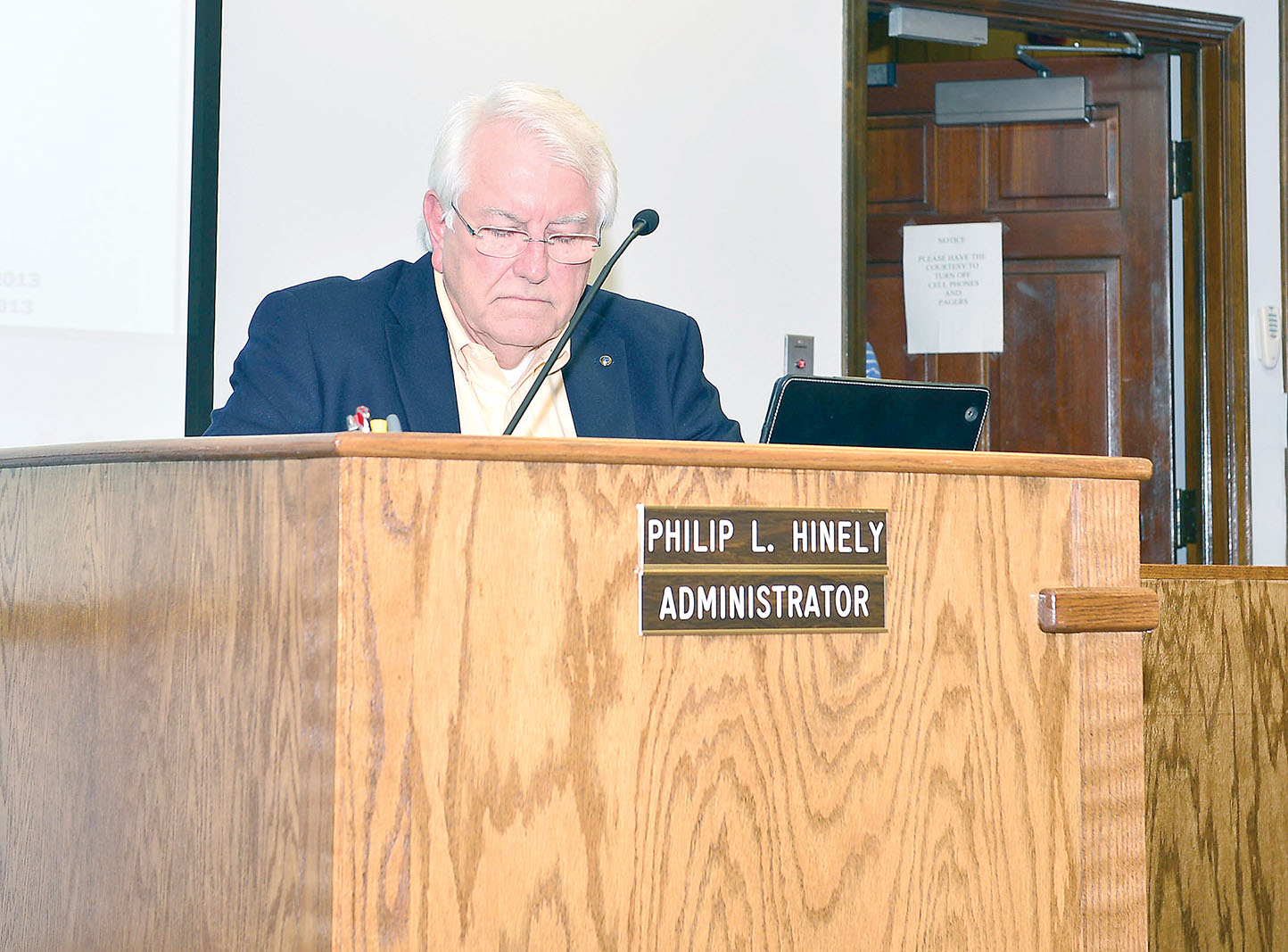
    Phil Hinely, at a recent County Council meeting, resigned from his post as County Administrator Monday night.

    FAIRFIELD – County Administrator Phil Hinely has resigned from his post at Fairfield County, effective June 28. Council announced the resignation at the end of Monday night’s work session.

    “Monday’s meeting (June 24) was just all he could take,” Chairman David Ferguson (District 5) said after the work session. “He’s been beaten up over this pretty bad.”

    Hinely’s departure from Fairfield County comes amid a firestorm of accusations and speculations about whether or not he used his County email account to forward emails containing pornographic images three years ago. The State Law Enforcement Division (SLED) was made aware of the allegations in February, but closed their file on the matter after consulting with Sixth Circuit Solicitor Doug Barfield, who determined that none of the alleged images in SLED’s possession violated South Carolina’s obscenity laws. Hinely denied that the contents of the SLED file had come from his computer, and, as SLED closed the case without conducting an investigation, the origins of the alleged emails could not be verified. Hinely did admit to forwarding emails that contained “tasteless jokes,” but said none of them were pornographic or anything resembling the material in the February SLED file.

    When a Columbia television station attempted to access Hinely’s emails through the S.C. Freedom of Information Act, the County offered to grant that access, but only for a fee of nearly $30,000. The Voice was allowed to review Hinely’s emails, although without the aid of Information Technology (IT) expertise, and found nothing resembling the contents of the February SLED file.

    In a special called meeting June 5, County Council voted unanimously to sanction Hinely. Hinely was placed on probation by Council, to be reviewed by the Chairman, Vice Chairman and County IT Director at the end of a six-month period. Hinely’s salary of $130,292 was reduced 5 percent by Council for the duration of the probationary period, and he was required to submit an official letter of apology to Fairfield’s local newspapers. Council also voted to include contract employees under the same policy manual as regular, at-will employees, except where the manual conflicts with the contract.

    But that failed to satisfy a number of Fairfield residents who, for the last two Council meetings, have choked Council chambers, scolding Council for their perceived leniency and calling for Hinely’s head.

    A second set of emails, also alleged to have been sent from Hinely’s Fairfield County address, surfaced during Council’s June 24 meeting, presented to Vice Chairman Dwayne Perry (District 1) by Kevin Thomas, Chairman of the Fairfield County GOP, during the public comments portion of the meeting. Thomas’s comments sparked a disagreement with Hinely that threatened, briefly, to derail the proceedings.

    “I’ve heard that some Council members have not seen the pornographic emails that Mr. Hinely sent,” Thomas said.

    “Allegedly sent, please sir,” Hinely interrupted.

    “My time is running quick,” Thomas said. “Please don’t interrupt me.”

    “I am going to interrupt you, because you lie about me,” Hinely said.

    When Thomas was finally allowed to continue, he said he had recently received a second set of alleged emails, dated as late as May 28, 2011, which he then presented to Perry. Thomas later told The Voice that the February SLED file had been verified as coming from Hinely’s computer by Barfield and that the second packet of alleged emails contained similar dates, subject lines and content. Thomas and Fairfield County Democratic Party Chairwoman Tangee Brice Jacobs issued a joint statement late last week calling for Hinely to resign.

    Barfield, meanwhile, was unhappy to learn how his name had been attached to the scandal.

    “I did not verify anything about where this stuff came from,” Barfield said Monday morning. “I was told who it was attributed to, but I didn’t do anything to verify that information.”

    “I have no file. No file was left with me,” Barfield continued. “I met with a SLED agent and he asked me to take a look at it and to determine if there was any illegality. I determined that there was not.”

    Perry said the Thomas packet contained images more graphic than those in the SLED packet, but that he was still unsatisfied with their authenticity.

    “The whole thing has become a wildfire,” Perry said last week. “People are taking these emails as gospel, as factual. I feel like I have an obligation to make a good decision and not be influenced by people in the room telling me what I should and shouldn’t do. I do want to know if he (Hinely) did it.

    “This thing is so much deeper than people realize,” Perry said. “Why is this coming out now, if the emails were allegedly sent three years ago?”

    Ferguson said he and Perry had met with Barfield on June 26 for about 45 minutes to discuss the matter. After that meeting, Ferguson said, the decision was made, per Barfield’s suggestion, to instruct County attorney John Moylan to remove Hinely’s hard drive from his computer and ship it to a California company, recommended by Moylan, to be analyzed.

    “My only regret is that I didn’t do that two months ago,” Ferguson said. “I should have had our IT department take Mr. Hinely’s computer apart and send that hard drive off right then.”

    Ferguson said Hinely was aware of the County’s intent to remove his hard drive and supported the decision.

    “I told him I wished I had done this from the start,” Ferguson said. “Mr. Hinely said, ‘I wish you had, too’.”

    As Council began its own internal investigation, SLED, at the request of State Sen. Creighton Coleman (D-17), became involved again and arrived Thursday (June 27) to seize Hinely’s hard drive.

    “We don’t need a whole lot of help getting to the bottom of this,” Ferguson said last week after learning of SLED’s involvement. “If there was not a criminal act that took place, what’s the purpose of an investigation? The first emails have not been substantiated, yet.

    “I don’t know what got him (Coleman) in that favor (to call in SLED),” Ferguson said. “For two and a half months he hasn’t said anything. But he brings SLED back into it, and you know, that kind of scares me, to be honest with you.”

    Coleman told The Voice on June 27 that, because of the uproar in the community surrounding the allegations, he asked SLED to launch the investigation.

    “There have been questions in the community about it and we need to get to the bottom of it,” Coleman said. “If (Hinely) didn’t do it, his name needs to be cleared. If he did do it, then County Council needs to take action.”

    A SLED spokesperson confirmed on June 28 that SLED was indeed conducting an official investigation this time and therefore would not answer questions from The Voice about why, if no criminal activity was determined in the first SLED case file on the matter, a formal investigation was launched now, or why the results of the first SLED case file were turned over to Ferguson instead of, or in addition to, the original complainant.

    Ferguson said SLED took the hard drive on Friday (June 28) and provided the Council with a copy Monday afternoon. Ferguson said the Council would continue to pursue its own internal investigation independently of SLED’s efforts and in spite of Hinely’s resignation.

    “There’s going to be a lot more names in this before it’s all over with,” Ferguson said last week. “I think when this thing all comes out, there will be mud on a lot of people’s faces. But Phil Hinely is gone, and that was the chore at hand.”

    Ferguson said he attempted to talk Hinely out of stepping down and admitted that the decision did not look good in light of the investigations.

    “This thing has been eating on him and his wife so bad,” Ferguson said. “He called me Monday night he said he was going to resign. The man gave us 12 good years of service. He’s a good guy.”

    Ferguson also said he was not concerned with the potential political fallout from the scandal.

    “Not one voter from District 5 has been in one meeting we’ve had since this stuff started,” Ferguson said. “My voters told me, ‘When we think you’re doing something wrong, we’ll let you know’.”

    Councilwoman Mary Lynn Kinley (District 6) said Council would release their report on the contents of the hard drive at the conclusion of Council’s investigation. Council was to hold a special meeting Wednesday (July 3) at 6 p.m. to discuss Hinely’s resignation further.

    Numerous attempts to reach Hinely for comment were unsuccessful at press time.
  • School Board Approves Budget, Tax Note

    FAIRFIELD – The Fairfield County School Board gave the final OK to their 2013-2014 budget Tuesday night. Weighing in at $34, 358, 564 and with a static millage rate of 203.1 mills, the budget passed on a 5-0 vote, with Board member Annie McDaniel (District 4) abstaining.

    In order to keep the District afloat until tax time, the Board gave unanimous consent to a Tax Anticipation Note (TAN) for up to $6.15 million. The District will tap into the S.C. Association of Government Organizations (SCAGO) program for the bond, a program that pools other districts in the state in order to obtain a lower interest rate. The bond will be paid back once property taxes begin coming in in January. Last year the District floated a TAN of $5.5 million.

    The Board also unanimously approved the recommendation of J.R. Green, Superintendent, to increase the salary of the District’s School Resource Officers (SROs) from the $28,000-$29,000 range to $32,130, provided the officers become SRO and D.A.R.E. certified.

    Green’s request to transfer $18,000 in state special revenue funds into the general fund also sailed through without objection Tuesday night. The funds, according to Kevin Robinson, Finance Director, had not been utilized for their state-designated programs and had to be either transferred to the general fund or returned to the state by June 30. A similar transfer – $33,743 in Barnwell Funds, allocated for instructional facilities projects – narrowly passed on a 3-1 vote. McDaniel voted against the transfer because, she said, there was no built-in oversight to ensure the money would be used for instructional purposes. Board members Andrea Harrison (District 1) and Paula Hartman (District 2) abstained.

    The Board also passed first reading of an amendment to the District’s policy on acceptable use of technology. The amended policy represents a shift in the District’s attitude toward students bringing their own portable electronic devices (iPads, iPods, etc.) to school, encouraging instead of discouraging students to do so in order to utilize those devices in the education process. The District will have to upgrade its wireless capabilities in order to meet the growing demand of these devices, Green said, which will cost approximately $100,000. The first reading passed 5-0, with McDaniel abstaining.

  • Western Fairfield Recreation Facility Remains in Limbo

    FAIRFIELD – A much anticipated and long-awaited vote by County Council on the fate of a recreation facility for Western Fairfield County will have to wait a little longer. After hearing impassioned pleas from citizens of Western Fairfield – the likes of which Council has been hearing since mid May – Council voted 4-0 Monday night to table any decision on construction of a recreation building until their next meeting, July 8. Council members David Brown (District 7) and Mikel Trapp (District 3) were absent Monday night.

    The vote to table was clearly not what residents of Western Fairfield had come to hear Monday night.

    “We have some dire needs in terms of serving the people of the Dawkins community,” the Rev. Vandell Davis, pastor of Dawkins Church, said during the public comments portion of Monday’s meeting. “Our young people have no place to go and play, and swim or to even walk in the community. We hope that after this evening, things will change. Whatever we can do as a church and a community, we will be glad to pull up our sleeves and help.”

    Councilman Kamau Marcharia (District 4) asked for the delay, citing the absence of Trapp, who represents part of that community. Marcharia also said he had asked County Administrator Phil Hinely for a site evaluation of the land – 8.12 acres off Ladds Road – to determine what it would cost to prepare the land for construction, and asked that the results of that evaluation be brought to the July meeting. Carolyn Robinson (District 2) also requested an economic impact study to determine the cost of erecting and outfitting the building.

    “I don’t believe we put anything in the budget that will start July 1 to actually man this building and this facility and anything else that goes into running that facility,” Robinson said.

    The building itself, she said, is already in the hands of the County, and that is one of the things many members of Western Fairfield find frustrating.

    “We want to know when you are going to deliver and install the building that you approved, purchased and have somehow put into storage for years,” Dawkins resident Jeff Schaffer said during his turn at the public comments microphone. “What the people of Western Fairfield want is to know when you are going to deliver on your promise to erect the building you approved and purchased years ago for Western Fairfield’s recreation center. We want that building delivered. We want it immediately. Tonight you have the opportunity to do the right thing for the people who elected you. Show us you can do it.”

    Council’s commitment to recreation in Western Fairfield reaches back eight years when, according to minutes from their Feb. 28, 2005 meeting, Council voted 5-1 “to provide to the (now defunct) Recreation Commission $500,000, in addition to their budget, to provide a county-wide recreation plan, beginning with a facility in Western Fairfield.” Councilman Brown voted against the measure, which was put forth by then Councilman Carnell Murphy, who was also Executive Director of the Recreation Commission at the time.

    By May of 2006, the Recreation Commission had inked a contract with MAR Construction of Lexington, S.C. to begin work on the site, which included $10,000 for clearing the property and installing a septic tank, $5,000 for sidewalks and $453,710 for delivery and construction of a building, purchased from a company in Alabama. The property for the facility had been leased to the Commission by S.C. Electric & Gas (SCE&G) in 1989 for the sole purpose of recreational facilities.

    “The County gave the Recreation Commission $500,000 and asked them to sit down with us to plan where the building would go,” Hinely explained recently. “Before we could, they began construction on the site. There was no bid on the building purchase, which came to nearly $500,000, leaving nothing left over for staffing, plumbing, things like that.”

    In the meantime, Council and the Recreation Commission had fallen into a legal battle over dual office holding (in the case of Murphy) and a political struggle over whether or not the Commission was an independent body or an arm of the County government. In the end, the County prevailed, replacing independent-minded Commission members with members whose only official act would be to dissolve the Commission, thereby paving the way for the County operated Recreation Department. In the midst of this struggle, the County used a clause in the lease agreement between SCE&G and the Commission, which stated that no permanent improvements could be made to the property without prior written consent of SCE&G, to halt construction at the site.

    Fast forward to 2008: With construction stopped, the County now faced a lawsuit by MAR, which had a prefabricated building on its hands, ready to deliver. According to County documents from the negotiations, the County had the option of either paying $79,500 and receiving the building, or walking away empty handed for $39,000.

    “I recommended to Council that we pay the $39,000 and be done with it,” Hinely said. “We knew nothing about the building, if it was the right size to meet the needs of that area, or whatever. But Council opted to take the building.”

    A few weeks later, the building was delivered, in crates. Hinely said it is currently stored at the Armory on Old Airport Road. In the intervening years, Hinely said, the County has learned that the building does not meet the current fire codes. The property off Ladds Road, meanwhile, has reverted back to its natural state, grown over with pine trees. Hinely speculated that there was at least $50,000 in prep work to do to make the property ready for any building. The balance of the $500,000 designated for the aborted project, he said, remains in the County’s budget.

    The strange and terrible saga of the recreation building with no home, however, does little to assuage the residents of Western Fairfield.

    “I’m not asking you why you did what you did,” Schaffer said Monday night. “I’m not concerned with that. If you think a rational comment like ‘other districts are entitled to a recreation center too,’ well, we won’t disagree. Just be sure you make them wait as long as we’ve waited, after you’ve approved it, before moving on. Dawkins is no longer the dark and forgotten corner.”

  • Fees Waived for Farmers Market

    WINNSBORO – With the new downtown farmer’s market slated for a June 29 opening, the Chamber of Commerce found itself behind the eight ball recently with Town ordinances. Terry Vickers, Chamber President, told Town Council during their June 18 meeting that while the Chamber is not charging growers and artisans during this first year of the market, growers would, she said she recently discovered, be hit with the Town’s peddlers’ license fees.

    Don Wood, Town Manager, said peddlers’ fees were $50 a day, which was a little steep for the burgeoning market, and suggested Council consider an annual farmer’s market fee of $20. Council voted 3-0 to waive the peddlers’ fee entirely, until a new ordinance could be devised to cover the market.

    Vickers said the market will open temporarily at the old Ford dealership on Congress Street and will move to the first floor of the Town Clock once renovations there are completed. She said she hoped to expand the market to the promenade behind the Clock as well, eventually moving into the former Voter Registration building on E. Washington Street, if that building can be rescued from the wrecking ball. Christ Central Ministries is currently in talks with the County for the revitalization of that building.

    Council also approved the purchase of a pair of service trucks – one for the Maintenance Department for $12,380, and another for the Gas, Water & Sewer Department for $21,000. Council also OK’d a request by Councilman Clyde Sanders to donate $200 out of his community funds to donate to Christ Central Ministries, as well as a request from Councilman Jackie Wilkes to donate $250 from his funds to the local 4-H Club’s summer camps.

    In his last meeting as a Councilman, Bill Haslett requested $150 to cover mileage expenses incurred by HandMade in America for their last visit to Winnsboro.

    Following executive session, Council voted to send the Town of Ridgeway a bill for $13,677 to cover the cost of converting their water treatment from Chlorine to Chloramine. The total cost of the conversion, Council said, was $172,000, the balance of which was paid by Winnsboro.

  • Council OK’s $1.2 Million Budget

    BLYTHEWOOD – At its regular Monday night meeting, Town Council passed an administrative ordinance to adopt a $1.2 million budget for the Town for the fiscal year 2013-14 that includes an Enterprise Fund to cover the costs of maintaining the Doko Manor. Council also passed a laundry list of final readings including zoning and annexation of Dusty Broom’s 11.43 property on Blythewood Road close to the intersection of Fulmer Road. Council voted to change the zoning from Rural to Community Commercial zoning. Council also finalized an administrative ordinance amending residential and commercial building and inspection fees in the town and an ordinance establishing a schedule of fees for development permits and related reviews, zoning map amendments, proceedings before the boards of Zoning Appeals and Architectural Review, and providing for other permit fees.

    Mayor J. Michael Ross announced that the Town Hall has posted new hours and will now be open from 8 a.m.- 5:30 p.m. Monday through Friday.

    “We have a full staff now — five full-time office employees and one part time,” Ross said, “so I think this is one way we can better accommodate the public.”

    Ross also announced that staff members would now be available to assist the Town’s various volunteer committees like the ball field committee, the park committee and others.

    Town Administrator John Perry reported that the I-77 landscape work at Exit 27 is nearing completion and that the several dead trees among the new plantings will be replaced by the landscape contractor in the fall. He said the landscape company who did the work is under the direction of the S.C. Department of Transportation (SCDOT), which has assured the Town that the work will be completed satisfactorily. Perry also announced that, starting next week, SCDOT will begin maintaining and mowing the grass on a 6-mile expanse along I-77. He also reported that the Town is in contract negotiations for the completion of the playground in the park and that he hopes the work will be finished by the end of the summer.

    Council voted to go into executive session to discuss “matters relating to the proposed location, expansion or the provision of services encouraging location of expansion of industries or other business in the area served by the public body.” No action was taken.

  • Blythewood Councilman Steps Down

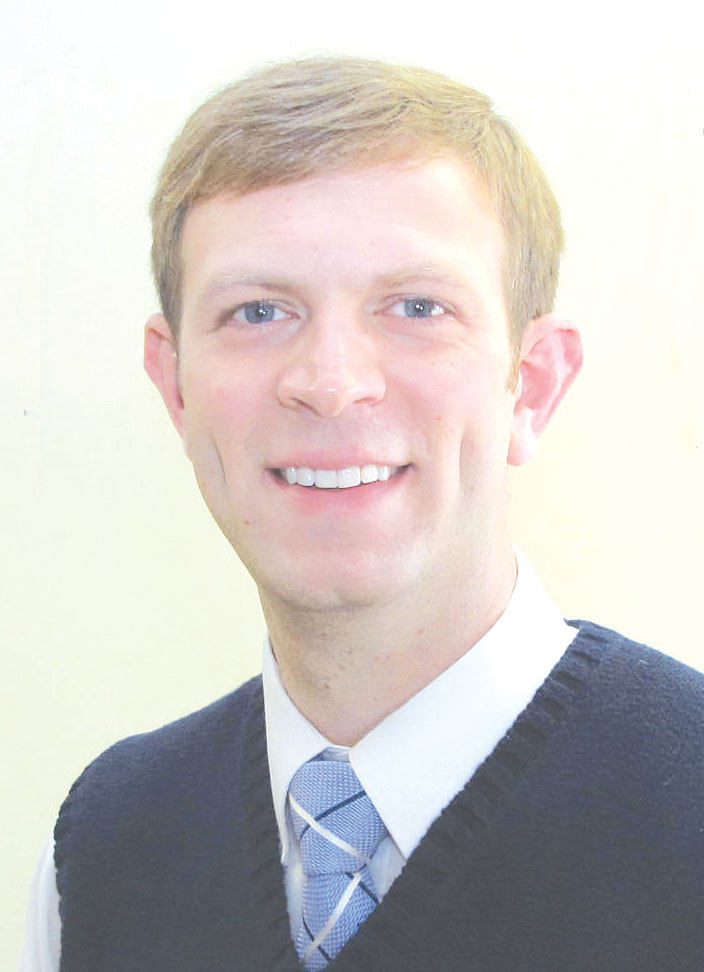
    Jeff Branham

    BLYTHEWOOD – Town Councilman Jeff Branham has announced his resignation from Town Council, effective July 31. Mayor J. Michael Ross read Branham’s resignation letter at the beginning of Monday night’s Council meeting. Ross explained that Branham has accepted a position with a chemical company in Jackson, Miss., and is already at that location working.

    Branham told The Voice that he will be moving his family to Jackson later this summer.

    “I’ve enjoyed the time I spent on Council,” Branham said, “and I didn’t want to leave Blythewood. I grew up here. But it is a great opportunity for me, professionally, so we made the decision to go. However, we don’t plan to stay there forever.

    “Our families are here and we hope to be back in this area in a few years. Maybe I’ll be back before the 2016 election,” he quipped.

    Ross announced that a special election will not be held to fill Branham’s seat, but that the Town will wait for the next regular election on the first Tuesday after the first Monday in November 2013. The Town elections were previously set for January; however, last year Council voted to align the Town’s elections with the dates of national November elections.

    Branham was elected to Council in January 2012.

  • Ridgeway OK’s Budget with Eyes on New Revenue

    RIDGEWAY – Town Council gave the final OK June 13 to their 2013-2014 budget, which includes rate increases for water and sewer customers, increases that originated with the source of Ridgeway’s water, the Town of Winnsboro (see The Voice, May 17). As Council took their last look at the coming budget, which balances the general fund at $198,550 and the water and sewer fund at $337,632, Councilman Russ Brown suggested Council search for more revenues for the 2014-2015 budget.

    “Maybe next year we can look at a couple of places where we can save a little money and increase revenues,” Brown said.

    Councilman Doug Porter said those revenues just might be right under their noses.

    “We haven’t raised water rates by more than $1.50 since 2008,” Porter said. “The increases we’ve passed on were just to offset the increases from the Town of Winnsboro.”

    Porter suggested that Council may want to consider a gradual step-up of rates, perhaps by 50 cents per year, over the next several years. This would not only increase revenues, but would help offset costs associated with upgrades and maintenance to the water system.

    Mayor Charlene Herring, however, said Council may want to wait out the future of the proposed water authority, which is still in the exploratory stage of development. Should a water authority come into being, she said, rates will go up for certain.

    Brown also said that an increase in fines could also help generate revenue, but added that it was not a popular option.

    “Nobody wants to hear that,” Brown said.

    As Council turned to their review of their strategic plan priorities, talk again turned to revenue.

    “There are a lot of things going on in every town around us that we’re not doing and it hurts us,” Brown said.

    And one of those things, Herring said, was a hospitality tax.

    “More than half the counties in the state have one,” Brown said.

    Council also voted to hire Donald Johnson as the Town’s new part-time police officer, replacing Gregory Miller, who left in late May to take a position as a School Resource Officer with the Fairfield County School District, via the Fairfield County Sheriff’s Office. Johnson, who is from Winnsboro, previously served as a patrol supervisor for the Chester Police Department from April 2011 to August 2012, the S.C. Department of Mental Health State Police from May 2007 to March 2011 and the Elgin Police Department from February 2004 to April 2007. Johnson also did five years with the U.S. Army Reserve, where he received military police training.

  • Politics Paves Way for Water Deal

    WINNSBORO – After months of stalemate and stagnation, the Town of Winnsboro and the City of Columbia at last have a new water deal. The agreement, signed by Columbia June 4 – the same night Winnsboro Town Council voted to authorize Mayor Roger Gaddy to sign – ups Winnsboro’s take from Columbia from 400,000 gallons a day to up to 1 million gallons a day, and looks to be the final piece in the infrastructure puzzle to Fairfield County’s new industrial parks.

    “Now we’ve got to sit down with everyone and figure out how to go from 400,000 gallons a day to 1 million gallons a day,” Fairfield County Council Chairman David Ferguson (District 5) said last week. “We’re going to get that park where it needs to be.”

    Ferguson said the County was footing the bill to bring the water into the Highway 34 water tank and some additional engineering may be necessary to go from 400,000 to 1 million gallons. He also said that now that the water is on its way, the future for the park looks good.

    “I would be really surprised if by the end of the year we didn’t have someone in there,” Ferguson said. “We’ve got a pretty good prospect for the new park.”

    During Town Council’s June 4 meeting, when the tentative water deal was announced, Gaddy said the sticking points that had essentially killed previous negotiations – clauses that would have allowed Columbia to increase rates or decrease flow without notice, and that would have freed Columbia from water quality assurances or any maintenance responsibilities on their end of the line – had been removed from the current proposal. He also indicated that State Sen. Creighton Coleman (D-17) had played a significant role in bringing Columbia back to the table with a contract Winnsboro could sign.

    Coleman said last week that he had indeed played a little politics in order to bring water to the industrial parks. About three weeks ago, Coleman said, he was approached by a lobbyist for the City of Columbia who asked him if he would consider amending a bill he had introduced, the S.C. Abandoned Buildings Revitalization Act (S.0234, introduced by Coleman, Kevin L. Johnson [D-36] and Thomas McElveey [D-35]), so that the bill would also encompass the Palmetto Compress Building, recently purchased by the City of Columbia.

    “I told him it wasn’t going to happen unless Columbia signed a water deal with Winnsboro,” Coleman said. “Within a week, it was done.”

    The House version of the bill (H.3093), which gives developers a 25 percent tax credit to revitalize buildings across the state that have been sitting idle and not generating income for at least five years, ultimately passed both chambers and was signed by Gov. Nikki Haley June 10.

  • Blythewood Roads Get Second Look

    BLYTHEWOOD – An ad hoc committee of local residents, appointed by Town Administrator John Perry, met June 13 to refine the list of Blythewood road projects that had previously been prioritized to receive funding from the new Richland County Penny Tax revenue. Bill Wiseman, Blythewood’s representative on the County’s Penny Tax watchdog or advisory committee, will chair the local committee.

    Wiseman said things have changed on Blythewood’s list of priorities established by the County several years ago. Blythewood Planning Consultant Michael Criss explained to the group that Town Administrator John Perry wants to reallocate some of the tax revenue that was earmarked for certain projects that are no longer a priority for the Blythewood area.

    Criss suggested that, instead of spending $21 million to widen Blythewood Road all the way from Syrup Mill to I-77 as prioritized, the widening could be limited to between Syrup Mill Road and Surreywood Lane. He said that would help ready the Fulmer Road intersection for a new school, perhaps another public safety station and other things planned for the area. Another $??????? of the $21 million could be reallocated for the town’s ‘complete street’ plan to connect a grid of streets between Blythewood and McNulty roads in the downtown area to make it more pedestrian and biker friendly. Another $??? could be reallocated for three roundabouts at the intersections of Blythewood Road and Creech Road, Blythewood Road and Cobblestone and Langford Road and Sandfield Road.

    Other projects of greater priority are a new connector from Creech Road to Main Street and sidewalks on Blythewood Road from I-77 to Main Street/Wilson Blvd. and a bikeway along Blythewood Road just to Fulmer Road.

    Wiseman will take the committee’s recommendations for Blythewood project re-prioritization back to the County committee. He suggested to the Blythewood committee that, in designating priorities, they consider improvements as they affect the entire county, not just Blythewood.

    “There has to be a systematic approach to the whole county area,” Wiseman told the group. “Our prioritization must be based on sound logic or it will become politicized.”

    Other members of the Blythewood committee are Malcolm Gorge, Mike Maginn and Bill McCoy. A fifth board member, Sean King, did not attend the meeting.

    Wiseman said the next County meeting was June 17 and that he would keep the Blythewood group informed of the Penny Tax Committee’s actions.

  • Richland 2 Superintendent Resigns

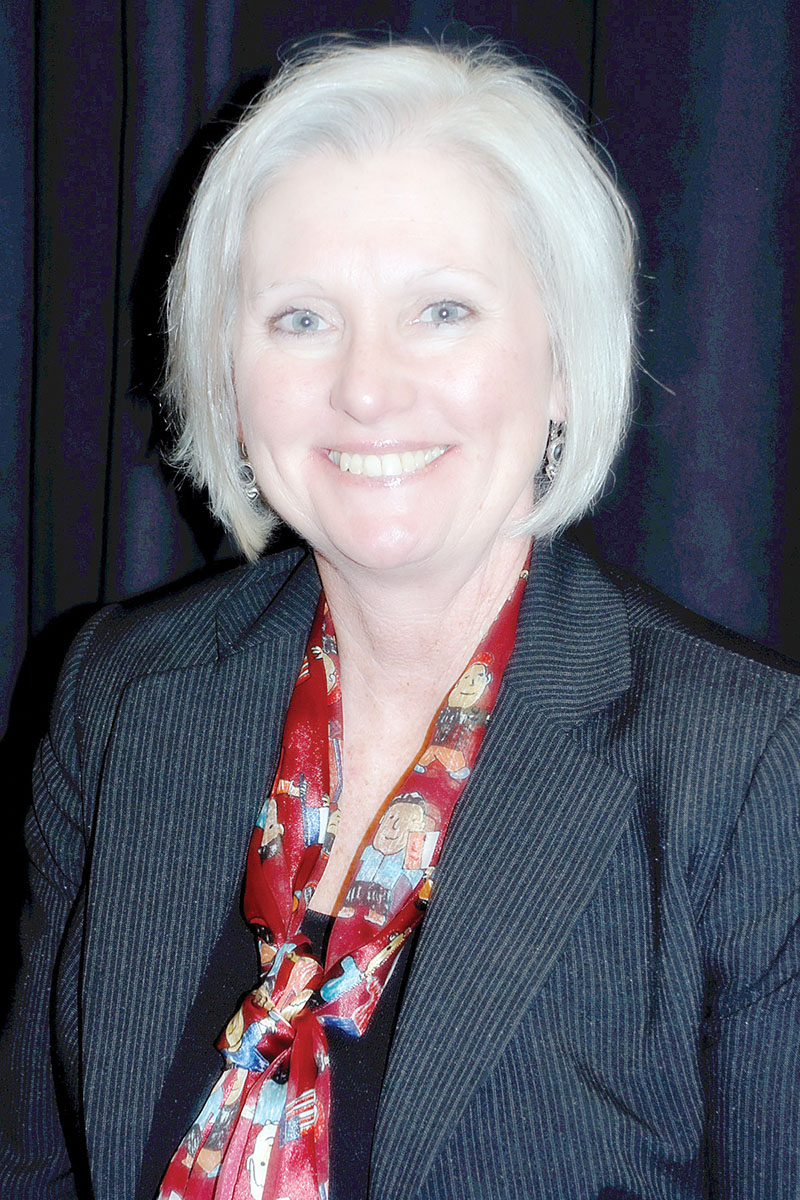
    Dr. Katie Brochu

    RICHLAND – At a hastily called meeting June 13, the Richland 2 School Board voted to accept the resignation of Superintendent Katie Brochu, naming Dr. Debbie Hamm, a long-time Richland 2 administrator as Interim Superintendent. There was no comment or discussion about the resignation from the Board or District staff during the meeting. While a prepared statement from the District expressed Brochu’s readiness to move into the ‘next chapter’ of her professional career, Brochu refused any comment or clarification as to what that ‘next chapter’ entailed.

    Just hours prior to the meeting, Brochu e-mailed a letter to the District Office staff and school administrators, calling them “the best school district key leaders on the planet.” She continued, “I feel good about my decision and want the Richland Two community to know I believe the timing is right. It has been an honor and pleasure to serve as Superintendent of Richland School District Two. I am confident that through your leadership Richland Two will continue to partner with the community to prepare all students for success by providing meaningful, challenging and engaging learning experiences . . .”

    The vote marked the end of the Brochu era at Richland 2 – a tumultuous three years marred by soaring professional development expenses (more than $3 million in three years for Schlechty training), unprecedented flight of experienced teachers and administrators to neighboring schools (more than 100 positions are currently open for the 2013-14 school year) and a 71-point drop in Richland 2 scores on national testing. Many parents and teachers in the District blamed the increasingly dismal report cards on Brochu’s strict adherence to the Schlechty model of education — the model Brochu had brought with her and integrated into Richland 2 from day one of her administration. Schlechty methods propose that only a complete, radical shift in the role of community members and school administrators toward guiding students to their passions will ignite a student to become interested in learning. Igniting a student’s curiosity is the goal of the Schlechty-trained teacher. Schlechty further postulates that this is accomplished by the teachers talking less and the students talking more. Very few measurements of student performance, however, have supported this model.

    Yet, throughout her often controversial tenure, Brochu was not without her supporters in Richland 2. Some Board Members, including Chairman Bill Flemming, have remained staunch allies of Brochu’s programs, reluctant to the end to entertain concerns of many of the parents, teachers and the public.

    “I was a supporter of her,” Flemming said last week. “I thought she brought the change and direction that we needed. I think she only had two years of basic results. I just think with three years you would have had a better picture. I would have liked her to stay. She decided she didn’t want to.”

    Brochu’s resignation is effective July 1 (see Johnson’s column, page 5).