Category: Government

  • Bylaws Vote Creats Stir

    Weak Attendance Policy Sparks Public Outburst

    WINNSBORO – While Fairfield County Council ran down a list of amendments to its bylaws at a special meeting Monday night, approving each of the 11 changes on unanimous 6-0 votes, one amendment didn’t have quite enough teeth in it to suit at least one member of the public.

    As Council discussed a new attendance provision to its bylaws, Beth Jenkins, one of many outspoken critics of Council in recent months and a regular attendee of Council meetings, erupted, screaming at Council as she stormed out of chambers just ahead of Sheriff’s deputies. Just prior to her outburst, Councilwoman Carolyn Robinson (District 2) was in the midst of explaining the weakness of Council’s attendance provision.

    “I look at everything from a legal side, and there is nothing that would allow us to censure him for not being here,” Robinson said, referring to Councilman Mikel Trapp (District 3), who has missed 21 of Council’s 45 total meetings this year, including Monday’s. “There is nothing, unless it is a criminal matter, for the House and the Senate of South Carolina, to censure a person. The way you take care of that is through the ballot box.”

    As Robinson spoke, Jenkins, incensed, stood up and began shouting: “Everything you’re saying is a lot of crap!”

    When Chairman David Ferguson (District 5) called for the deputies, Jenkins railed on.

    “Do it!” she cried. “I’m outta here! But you’re full of crap! Everything that you’re saying is a bunch of B.S.”

    As Jenkins reached the chamber doors, she delivered her parting shot.

    “Don’t pay them if they don’t show!”

    Once the disturbance had died down, Milton Pope, interim County Administrator, concurred with Robinson’s assessment. Pope said he had researched with the state, the Association of Counties and the Municipal Association, and found no law mandating attendance for elected officials.

    “You can take any level of government, there are no attendance requirements,” Pope said. “One member from the Association of Counties said the same thing (as Robinson): the recourse is with the ballot box.

    “We don’t customarily review things that are maybe just an outburst,” Pope continued, “but I would say in regards to salary, that’s something I researched as well. Clearly, any public body can actually enact things by ordinance . . . however, whether or not is it lawful or not is another question. Some type of punitive reaction to (excessive absences), that is just not enforceable by law.”

    Scott Slatton, Legislative and Public Policy Advocate with the S.C. Municipal Association, on the other hand, said Council could, in fact, enact a ‘paid for attendance’ ordinance if they wished.

    “There’s nothing in state law that prohibits a city council from using a pay for attendance system,” Slatton said.

    At least two S.C. towns have made their council’s salaries commensurate with attendance – Heat Springs and Furman.

    Council’s new provision regarding attendance reads as follows:

    “Fairfield County Council respects the state of South Carolina’s constitution as it relates to fulfilling the duties of office as an elected representative of Fairfield County and our oath of office. Each member of council should attend every public meeting as scheduled by a majority of council. If, however, for any reason a member of council cannot attend a scheduled public meeting, he or she should notify the clerk to council prior to the beginning of the meeting to notify the council and the public of the reason for the absence.”

    Council also passed a new code of conduct, which Pope said applied to Council and to the public, which reads:

    “Fairfield County Council believes that the public interest is best served when meetings are conducted in an atmosphere of mutual respect and civility. Every person, including public officials and private citizens, who participates in a Fairfield County Council meeting is requested to adopt the following pledge of conduct: I pledge that I may disagree but will be respectful of all. I will direct all comments to the pending issues. I will refrain from personal attacks.”

    Council also opened up their meetings to an additional public comment section. Currently, public comments occur only near the beginning of meetings and are limited to three minutes per person. Those comments will now be limited only to items on the agenda.

    “The reason we made changes to this is so that we could have the public comment on items that are on the agenda,” Pope said at Council’s Nov. 14 work session, when the details of the amendments were hashed out. “So before you take action on something, there will be an opportunity for the public to have dialogue on whatever that action is before you debate it or have a vote on it.”

    A second public comment section, near the end of the meeting, will be open for items not on the agenda. This additional public comment portion will be open only on the last regular meetings of the month and will be limited to five minutes for an individual or 10 minutes for an individual representing a group of five or more. Total time for each public comment section is limited to 30 minutes. Persons speaking during either public comment portion will be required to state their name, the county in which they live (if not Fairfield County) and the district in which they reside. Additional information, including address, contact number and, if representing a group, the name of the organization, its officers and its official designation, if any, shall also be provided on the public comment sign-in sheet.

    Council also voted 6-0 to return to a committee form of government, with the creation of the Administration and Finance Committee and the Policy and Development Committee to go along with the standing Economic Development Committee.

    The bylaw changes will go into effect at the next regular meeting, Nov. 25. The committees will go into operation in February. A complete list of changes to the Council’s bylaws is available on the County’s Web site at www.fairfieldsc.com.

  • Anderson Denies Intimidation Report

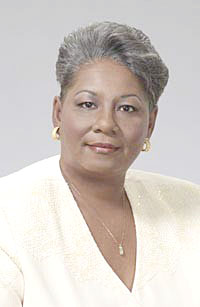
    Melinda Anderson

    BLYTHEWOOD – A Richland 2 School Board member has denied the contents of an Oct. 31 Richland County Sheriff’s Department incident report linking her in a case of intimidation with a local football coach.

    According to the report, Richland 2 Board member Melinda Anderson dispatched 69-year-old Clero Evans, of Rockingham Road in Columbia, to the Westwood High School football field on Oct. 30 to watch practice. Westwood head coach Rodney Summers told deputies he felt threatened by Evans’s presence, the report states, and requested an official report for the record. Evans reportedly told deputies he had been sent by Anderson, and “after a verbal altercation” between Evans and Jason Nussbaum, the team’s trainer, Evans left the scene.

    Nussbaum later told The Voice that the reported “altercation” was “more like a conversation” and that Evans left the field when asked to do so.

    Late last week, Anderson denied dispatching Evans to the football practice.

    “I did not send anyone,” Anderson wrote The Voice in an email. “My grandson has a father and mother who love and care for him dearly.”

    Anderson did not respond to a follow-up email from The Voice asking her why she thought Evans would tell deputies she had sent him to watch the practice, or what, if any, was her relationship to Evans.

    Anderson was also named in an Oct. 7 incident report after allegedly threatening Summers’s life during a meeting with then Acting Superintendent Debbie Hamm and the District’s Human Resources Officer, Roosevelt Garrick Jr. Hamm, who filed the report, told the Sheriff’s Department that during the meeting Anderson said, “I’m so angry I just want to kill the coach, and I have a gun.” Summers was not present at the meeting and no charges were filed in either case.

    Anderson has also denied making the threats, telling The Voice that the incident was nothing more than “some foolishness cooked up by certain administrators.”

  • Tax Break Clears Final Hurdle

    WINNSBORO – County Council Monday night gave the final OK to an ordinance to offer a one-time tax credit in order to attract an international company. The ordinance amends the fee-in-lieu-of-taxes agreement between the County and Lang Mekra North America, LLC, offering them a one-time tax credit of $35,000 in exchange for Lang Mekra lowering its sales price on a building they own in the Walter Brown Industrial Park, Tiffany Harrison, Director of Economic Development, explained. Lang Mekra reduced its asking price for the building by more than the $35,000 tax credit, Harrison said, and the deal would result in more than what the one-time credit is worth in annual property taxes from the proposed new company slated to purchase the building. Lang Mekra, Harrison said, currently pays approximately $220,000 a year in county property taxes.

    Harrison said the undisclosed company plans to make a $1.5 million investment in the County that would result in approximately $36,000 a year in annual property taxes. Harrison said the company plans to create 25 jobs over the next five years.

    The ordinance passed on a 5-1 vote (Councilman Mikel Trapp [District 3] was absent), with Councilman Kamau Marcharia (District 4) voting against.

    “Year after year, we’re giving these companies all these tax breaks, I just need to understand specifically what are we getting and what are we getting in return,” Marcharia said after his vote.

    Marcharia also cast the lone dissenting vote on the final reading of an ordinance to expand the I-77 Corridor Regional Industrial Park to include property in Richland County.

  • SLED: No Criminal Violation in County Porn Probe

    Coleman: Emails Did Not Meet ‘Obscenity’ Threshold

    WINNSBORO – A final report issued by the S.C. State Law Enforcement Division (SLED) has closed the case against former Fairfield County Administrator Phil Hinely, who was accused last summer of disseminating pornographic images from his county computer. Sixth Circuit Solicitor Doug Barfield, who has been weighing SLED’s findings for months, told SLED in a letter dated Oct. 20 that Hinely had not violated the state’s obscenity laws and that, therefore, there would be no criminal prosecution in the case.

    “I examined the contents of the hard drive pursuant to Section 16-15-305 of the Code of Laws of South Carolina,” Barfield’s letter states. “That statute and its subdivisions first require that for the material to constitute a violation, the material must be obscene under very detailed and specific definitions. That statute also requires that the material be disseminated.”

    “To determine whether Hinely violated the (obscenity) statute, I needed to know whether Hinely disseminated any of the questionable items on the hard drive (seized by SLED on June 28) as that term is defined in the statute,” Barfield’s letter states. “I asked Agent (Britt) Dove to answer that question for me. He reexamined the files using another software program and responded to me that he could not find that Hinely sent the files to anyone else after he received them. Therefore, I conclude Hinely did not violate Section 16-15-305 of the Code of Laws of South Carolina by merely having this material on his computer.”

    This marks the second time SLED has closed the case file exploring questions of pornography being sent from Hinely’s computer. On Feb. 21, SLED also closed the case after receiving information on Feb. 5 that Hinely had been “disseminating pornography to a number of people via the Fairfield County computer system,” according to the original case file report. Barfield reviewed a collection of printouts, allegedly sent from Hinely’s computer, and determined then that the images were not illegal. A SLED spokesperson later told The Voice that SLED had not conducted an investigation into the accusations at that time, and that Hinely’s computer had not been examined, nor had anyone been interviewed in the case. That left the door open for rampant speculation and rumors in Fairfield County, and only a few short months later a second envelope of alleged email printouts appeared and began making the rounds throughout the county. During a June 24 County Council meeting, Kevin Thomas, Chairman of the Fairfield County Republican Party, publicly presented Vice Chairman Dwayne Perry (District 1) with what he said was a second set of pornographic emails sent from Hinely’s county computer.

    Perry later said the Thomas packet contained images more graphic than those in the original SLED packet, but that he was still unsatisfied with their authenticity.

    “The whole thing has become a wildfire,” Perry said last June. “People are taking these emails as gospel, as factual. I feel like I have an obligation to make a good decision and not be influenced by people in the room telling me what I should and shouldn’t do. I do want to know if he (Hinely) did it.

    On June 27, SLED, at the request of State Sen. Creighton Coleman (D-17), reopened the case and that afternoon agents were dispatched to the County’s Administration Building to interview Hinely and collect his computer hard drive. According to SLED’s investigative report, however, agents found that Marvin Allen, the County’s IT Director, had, under the direction of County Council, already removed the hard drive and had mailed it to Santa Maria, Cal., to be analyzed. SLED contacted the Post Office and had the package put on hold. Allen, meanwhile, was interviewed by SLED. Allen reported that he had never removed or deleted any files, including pornography, from Hinely’s computer, nor had he been asked by anyone to remove any files from Hinely’s computer.

    On June 28, Allen and a SLED agent met at the Post Office. Allen retrieved the package containing the hard drive and turned it over to SLED. That same day, another SLED agent met with Sen. Coleman, who provided SLED with a sealed envelope that Coleman reported “contained printed photos that were sent from Hinely’s work computer.”

    Barfield’s conclusions, however, based on the forensic examination of Hinely’s hard drive by Agent Dove, indicate that, while Hinely received “questionable items,” he did not forward those to anyone.

    But Coleman, reached for comment Tuesday morning, said Barfield’s letter only indicates that Hinely did not forward illegal material. Coleman maintains that Hinely did forward pornographic material, and noted that, in law, there was a difference between pornographic and obscene.

    “He sent stuff out,” Coleman said. “You know it and I know it.”

    Phone calls to Barfield, as well as to Capt. Tommy Robertson, who supervised the investigation, were not returned at press time. The Voice’s FOIA request for the full contents of the SLED case file is still outstanding.

    “If that’s the standard we’re using – the criminal standard – on whether or not to employ somebody, we’re in bad shape,” Coleman said.

    At a June 1 wok session, Council Chairman David Ferguson (District 5) announced Hinely’s resignation, effective June 28.

  • Receipts Required: Council OK’s New Reimbursement Policy

    WINNSBORO – County Council Monday night unanimously passed a revised policy governing how Council members would be reimbursed for mileage and other expenses.

    Prior to Sept. 23, when Council voted to rescind the policy that had stood since July 2010, Council members had been receiving a flat monthly allocation of $795 for expenses. Those expenses included $195 a month for their “computer fund,” $210 a month for mileage, $125 a month for office expenses and $265 a month for a “Blackberry allowance.” That monthly allowance was paid in addition to Council’s base salary of $15,000 a year (plus an additional $4,800 for the chairmanship and an additional $3,000 for the vice chairmanship).

    Monday night, Council adopted a new policy, which Interim County Administrator Milton Pope said would be based on receipts of actual expenses.

    Council members will be reimbursed directly for expenses incurred, Pope explained, with claims for payment submitted at the end of each month to the County Administrator’s office. Receipts, invoices and mileage logs must accompany the claim or payment will be delayed until such items are provided. Expenses submitted 90 days or greater after occurrence will not be eligible for reimbursement. One monthly check will be issued to each council member on the 15th of following month. Expenses covered under the new policy include:

    Communications, to include internet connectivity and smart phone, up to $175. Rates for internet service will vary based on where a council member lives, Pope said, as more rural areas incur a greater fee.

    Business miles logged in a Councilperson’s personal vehicle will be reimbursed using the IRS rate of 56.5 cents per mile. Miles to be recorded on a mileage log.

    Up to $75 a month for office supplies, to include ink, paper, envelopes, stationary, constituent non-political postage or other office supplies, with documentation.

    Council passed the measure 6-0. Councilman Mikel Trapp (District 3) was absent from Monday night’s meeting.

  • Precincts 1 & 3 Swing Election

    BLYTHEWOOD – It only took about 320 voters to seat a new majority to the Blythewood Town Council last week. With 1,551 registered voters in the Town, that’s approximately a 21 percent voter turnout. While the exact number of votes cast for candidates in the election was certified, only an approximate number of total ballots cast in all the Blythewood precincts was available from the Richland County Election Commission at press time. Low voter turnout was the norm in Richland County last Tuesday with only a 12 percent turnout for the entire county.

    Blythewood’s two Town Council incumbents, Ed Garrison and Paul Moscati, both of whom reside in Lake Ashley, skimmed by their challengers Bob Massa and Tom Utroska in Garrison’s and Moscati’s home Precinct 2 with 64 votes for Garrison and 66 for Moscati. Massa with 61 votes and Utroska with 55, were not far behind. Ernestine Middleton, also a Lake Ashley resident who was vying for former Councilman Jeff Branham’s unexpired 2-year term, was the big winner in her Precinct 2 with 83 votes over Bob Mangone’s 46.

    But Massa, Mangone and Utroska sealed their wins with big numbers in Precincts 1 and 3. Precinct 1 consists mainly of voters in Cobblestone (Mangone’s and Utroska’s neighborhood) and the area along Syrup Mill and Muller roads. Garrison, Moscati and Middleton, respectively, took 14, 17 and 12 of those votes to Massa’s 60, Utroska’s 63 and Mangone’s 64.

    Precinct 3, consisting of Ashley Oaks, Dawson’s Pond, Dawson’s Creek and rural properties in those areas, heavily favored the winners with the following counts – Massa with 68 and Utroska with 66, approximately twice as many votes as Garrison with 27 and Moscati with 35. Mangone captured 63 votes over Middleton’s 40.

    Fairfield County residents eligible to vote in Town elections, and who live in proximity to Lake Ashley, cast 3 votes for Garrison, 4 for Moscati, 4 for Middleton and none for the other three candidates. No votes were cast by the several eligible voters along Rimer Pond Road, which is in the LongCreek Precinct.

    The following absentee votes were cast: Garrison, 5; Massa, 4; Moscati, 8; Utroska, 1; Mangone, 5 and Middleton, 4.

    Blythewood Precincts 1, 2 and 3 all turned down the $59 million library bond, but by small margins. Precinct 1 voted against it 81-57, Precinct 2 voted 108-101, and 3 voted 78-75. The LongCreek Precinct had no votes cast by Town residents.

    Blythewood’s three Councilmen-elect will take office during a swearing-in ceremony at the next regular Town Council meeting at 7 p.m., Nov. 25 at the Doko Manor. The public is invited.

  • Mt. Zion Vote Delayed

    WINNSBORO – While Town Council once again deferred to a later date any final decision on a proposal by the Friends of Mt. Zion Institute (FOMZI) for renovating the former Mt. Zion Institute property, a parade of FOMZI supporters lined up at the microphone Tuesday night to encourage Council to give the historic, yet beleaguered, Winnsboro landmark one last stay of execution and turn renovations of the former school over to the local citizens group.

    “I don’t want to be from the generation that let 200 years of history go,” Pelham Lyles told Council. Lyles was one of nine members of the public to address Council in favor of saving Mt. Zion Tuesday night.

    Pam Smith, who lives in the Mt. Zion neighborhood, said the building represented an “awesome opportunity” for the potential future home of the Dru Blair College of Art, and reminded Council of the campaign promises from last spring.

    “During the election, many of you said you wanted to save it,” Smith said. “Give FOMZI three years, just like you gave Red Clay (the N.C. development company that most recently had control of Mt. Zion’s future, but failed to even adequately maintain the grounds). They had no money, no plan. FOMZI at least has some money and people willing to work with them.”

    One of those willing to work with FOMZI was on hand Tuesday night to offer his help in restoring the windows on the old school house. John “Chuck” Herin, who 10 years ago restored the old Greenbrier School on Highway 269, offered up $26,000 worth of the aluminum materials that he used to restore the Greenbrier School.

    But after a one hour and 20 minute executive session to discuss handing over the Mt. Zion reins to FOMZI, Council emerged to make no decision other than to hold a work session in the next “week to 10 days,” Winnsboro Mayor Roger Gaddy said.

    “We only had three Council members here tonight (Stan Klaus [District 2] and Danny Miller [District 1] were absent) and I don’t want to make a decision on something this important with just the input from three of us,” Gaddy said. “I think the importance of the situation is such that we ought to have adequate representation from everyone.

    “We’ve all been dealing with this issue for a long time and we’re ready for it to be resolved,” Gaddy said.

  • Commission OK’s Primrose Lots

    BLYTHEWOOD – The Planning Commission voted unanimously to allow developer D. R. Horton, who owns most of Cobblestone Park, to add two single-family lots (each lot 0.21 acres) in the Primrose (formerly The Farm) section of the development. Town Administrator John Perry said the lots will encroach into the green space causing a .28 percent reduction in that space.

    Robert Schneider, Executive Director of Central Midlands Transit (The Comet), gave a presentation on the CMT and its new branding and identity. He told the Commission that he hoped at least limited bus service would come to Blythewood in the next three years. He also said he would like to see the service eventually connect with Fairfield County.

    In other business, Perry said the draft Landscape and Tree Preservation Ordinance for the Town was being fine-tuned by the Town’s attorney and would be presented to the Commission at the Dec. 2 meeting. Perry said the sign and lighting sub-committee would give the Commission an update at that meeting, as well. No public notification has been given of the sub-committee meetings. A representative from the County’s Penny Tax Committee will also give an update at the Dec. 2 meeting.

  • Election Signals Shift in Balance of Power

    Winners of the Blythewood Town Council election, Bob Mangone, Bob Massa and Tom Utroska, celebrate at a reception after their victory.

    BLYTHEWOOD – With the balance of power at stake in the Blythewood Town Council election Tuesday evening, two of the challengers, Bob Massa and Tom Utroska, came away with a clear victory over incumbents Paul Moscati and Ed Garrison. Ernestine Middleton lost her bid for a two-year term to Bob Mangone. Middleton, who returned to Blythewood last year after an embattled two-year stint with the Arkansas Lottery, joined Moscati and Garrison on a platform based on the recent rapid expansion of construction of high-dollar facilities in the town park.

    Massa, a CPA and self-described fiscal conservative, said he was confident the residents wanted a change in the Town’s direction.

    “I think everyone wants a nice town and I appreciate what has been done to make it so,” Massa said. “But the financial slope was getting steep quickly and I and a lot of other residents were getting worried. I think we need to step back and, along with the Town’s CPA, Kem Smith, analyze our spending before encumbering the Town with more big debt.

    “We have a Master Plan and I would like for us and the Town’s people to re-look at it before moving forward,” Massa said. “I want to make sure we are all on the same page, not just doing what a few leaders have decided is best for the Town.”

    Massa, the leading vote getter with 195 votes, said he was “overwhelmed.”

    “It’s just the start of the hard work, though,” Massa said. “Blythewood is growing. We have to not only manage that growth, but do so with financial soundness. I’m humbled by the vote of the people.”

    Massa is the Financial Director of the City of Forest Acres. He serves on Blythewood’s Board of Zoning Appeals and is a Board member of the Blythewood Chamber of Commerce. A resident of the Oakhurst neighborhood, Massa said he plans to retire in January and focus on his duties as Town Councilman.

    Utroska, a resident of Cobblestone Park, said he was “pleased that the voters in the Town have given me, Mr. Massa and Mr. Mangone the opportunity to serve in this capacity. I promise that we’ll do our best to fulfill our campaign platforms. Now, I’m looking forward to getting to work.”

    A native of Canada, Utroska is retired from the Canadian National Railway and is a partner in a railway consulting firm. He is a member of the Town’s Board of Zoning Appeals, Chair of the Town Park Committee and is past President of the Town’s Planning Commission.

    Both Massa and Utroska will serve four-year terms on Council. Bob Mangone will serve the two years left in Jeff Branham’s term following his resignation last summer for employment in another state.

    Although Mangone ran on a separate platform from Massa and Utroska, he said he shares their desire to manage the Town’s growth appropriately and in a way that is good for the residents and businesses in the Town. He campaigned for fiscal responsibility, integrity of office and for targeted growth. Mangone said he wants to make sure the growth benefits the entire town and preserves its history, charm and values.

    “I’m humbled by the confidence the voters have shown in me and I will work to follow through with everything I promised in my campaign. My door and my phone are always open. I plan to listen to what the residents have to say,” said Mangone who currently serves on the Town’s Board of Architectural Review and is Chair of the Athletic Fields Committee.

    Councilman Ed Garrison, who has served two terms on Council, told The Voice Tuesday night following the election, “The election speaks for itself. I guess the Town has a new set of visioneers and I wish them the best and all that it holds for them.”

    Councilman Paul Moscati and Ernestine Middleton did not return phone calls and emails from The Voice.

    The newly elected Town Councilmen will be sworn into office at the next meeting on Nov. 25, which will be held at the Doko Manor in Doko Meadows. The public is invited to the meeting and swearing in ceremony.

  • Tax Credit Passes First Reading

    WINNSBORO – An ordinance to offer a one-time tax credit in order to attract an international company cleared its public hearing and second reading by County Council Monday night. The ordinance amends the fee-in-lieu-of-taxes agreement between the County and Lang Mekra North America, LLC, offering them a one-time tax credit of $35,000 in exchange for Lang Mekra lowering its sales price on a building they own in the Walter Brown Industrial Park, Tiffany Harrison, Director of Economic Development, explained. Lang Mekra has reduced its asking price for the building by more than the $35,000 tax credit, Harrison said, and the deal would result in more than what the one-time credit is worth in annual property taxes from the proposed new company slated to purchase the building. Lang Mekra, Harrison said, currently pays approximately $220,000 a year in county property taxes.

    While Harrison would not disclose the name or the nature of the proposed new industry, she said the company plans to make a $1.5 million investment in the County that would result in approximately $36,000 a year in annual property taxes. Harrison said the company is a relatively small venture, which plans to create 25 jobs over the next five years.

    Council also passed second reading of an ordinance to sell the former location of their Voter Registration offices at 117 E. Washington St. in Winnsboro to the Fairfield Community Development Corporation, Inc. (FCDC), a non-profit that has designs on the historic building as part of the downtown farmers market.

    At a Council work session on Sept. 18, Terry Vickers, President of the Fairfield Chamber of Commerce, presented a proposal to Council on behalf of the FCDC. Vickers said the FCDC would purchase the building for $100 “and considerations,” during the work session, and the building would be remodeled to serve as the cornerstone of the next phase of the Winnsboro Farmers Market. Christ Central Ministries had a tentative proposal for the building, but pulled their proposal before it ever came to full Council once they learned the FCDC was interested in the property, Chairman David Ferguson (District 5) said Sept. 18.

    The 6,200-square-foot building will be known as the Fairfield County Farmers Market Artisan Center Community Kitchen, and will include commercial kitchen space, space for classrooms, as well as an area for the farmers market. Vickers said last month that the FCDC had received a pledge of $125,000 from three donors wishing to remain anonymous to begin refurbishing the building. The FCDC will also write a Rural Business Enterprise Grant proposal for an additional $200,000, she said. In early 2014, she said, a third phase grant through Eat Smart Move More South Carolina will be written for equipment, technical assistance, professional services, start-up operating costs and working capital. Vickers said the FCDC will insure the building at the time of purchase from the County and will have the facility fully operational by the fall of 2014.

    In a symbolic gesture, Council also passed 5-1 a resolution in opposition to House bill 3290 and Senate bill 203, officially known as the “Business Freedom to Choose Act,” but more commonly known as the solid waste flow control bills. Councilwoman Carolyn Robinson (District 2) voted against the resolution. The bills have created considerable controversy among the counties who claim the legislation will open up the state to all manners of out-of-state waste. Proponents of the bill, including one of its co-sponsors, State Sen. Creighton Coleman (D-17), say the legislation merely prevents counties from forming waste hauling monopolies.