Category: Government

  • Winnsboro Poised to Close Mid-County Water Taps

    WINNSBORO – With negotiations for a new contract at a stalemate, Winnsboro Town Council unanimously passed a resolution at the end of its April 1 meeting to close all valves supplying water to the Mid-County Water Company, effective April 16 at noon.

    The cutoff could affect as many as 5,600 customers, as well as fire protection in the area, according to Herb Rentz, Mid-County’s manager. Kelly Miller Elementary School would also be impacted by the decision, Rentz said, as would the Jenkinsville Water Company, which purchases a portion of its water from Mid-County. Rentz said that last month, Jenkinsville purchased 100,000 gallons from Mid-County and that over the years they have purchased millions more.

    The resolution to cut off water came as a surprise, Rentz said, as the two parties have been informally discussing a new agreement for the better part of a year and Mid-County has been operating under a two-month contract extension since February. While the Mid-County Board of Directors was scheduled to meet last week to finalize an agreement, Rentz said there were some delays in getting the Board together. Back-to-back severe winter storms, as well as coping with high manganese levels in Winnsboro’s water, diverted attention that otherwise would have been spent on finalizing a new agreement.

    John Fantry, legal counsel for water issues for the Town of Winnsboro, said that while informal talks are fine, Mid-County was notified by mail in January that the time had come for formal negotiations and that the situation was serious.

    “I would say we’ve had zero negotiations,” Fantry said. “It was languishing. We sent them a letter in 2012 letting them know that we wouldn’t just roll the same contract over. There was no attempt to do anything for nearly a year, until January. We received on March 31 the first real indication of things they didn’t like.”

    The major sticking points in the new proposed contract include a rate increase from $3.75 per 1,000 gallons to $5.83 per 1,000 gallons, as well as penalties for using more water than stipulated under the contract. Fantry said the existing agreement allocates a maximum of 5 million gallons a month for Mid-County. Over the last 24 months, Fantry said, Mid-County has purchased less than that maximum only once, with their average sitting right around 6.4 million gallons a month. Mid-County is seeking even more water in a new deal, Fantry said.

    “They presented what we would call an inappropriate wish list,” Winnsboro Mayor Roger Gaddy said. “Everybody’s rates are going to have to go up, there’s no doubt about it. That was one of the reasons we spent so much time and money trying to develop a water authority, so we could all be at the table when these decisions were made.”

    The Town of Winnsboro has an annual water budget of about $15 million, Gaddy said, and last year they made around $2,800 in water sales.

    The deadlock also puts the Fairfield County School District at the mercy of the negotiators.

    “We don’t really have a contingency plan,” J.R. Green, Superintendent of Fairfield County Schools said. “We are hopeful they will resolve the issue by the 16th. If not, there’s no way we could have school (at Kelly Miller) with no water.”

    Green said he was not aware of the stalemate until he received a phone call Monday from The Voice newspaper.

    “I have to take some responsibility,” Rentz said, “for not realizing that at the end of this two-month window if we didn’t reach an agreement they would actually cut our water off. We’ve been good customers for years. Paying customers.”

    Rentz said the Board was scheduled to meet this week in an effort to reach a consensus before the April 16 deadline. Meanwhile, Mid-County has asked for another extension on its existing contract for one month.

    “We’re going to make every effort to work with (Winnsboro),” Rentz said. “We’re going to get it done, and in a timely manner.”

    A special meeting between Mid-County representatives and Town Council was scheduled for 1 p.m. Wednesday.

    “It’s not dead,” Fantry said. “But there’s got to be a meeting of decision-makers. If there’s nobody there who can say ‘yes’ or ‘no’, then there’s no real proof we won’t be right back here seven months from now.”

  • Getting Around the Debt Limit

    Decoding Municipal Bonds

    WINNSBORO – When the members of Fairfield County Council wanted to borrow $24 million last year to finance the costs of designing, acquiring, constructing and equipping various projects (see list of Projects on page 6), they chose a somewhat controversial, albeit legal, method to avoid bumping up against the County’s constitutional debt limit.

    While revenue bonds do not need voter approval, they must be secured with a lien on a designated stream of revenue (not taxes) from county-owned revenue-producing entities such as a water plant or toll bridge, which Fairfield County does not have. General obligation bonds must be secured with ad valorem property taxes. Without voter approval, County Council can incur no more general obligation debt than 8 percent of the assessed value of taxable property in the County. For Fairfield County, that constitutional debt limit is currently $4.5 million, far short of the $24 million Council wanted to borrow.

    Unable to use either of these methods to borrow so much money, Council turned to an unorthodox financing scheme based on something called Installment Purchase Revenue Bonds (IPRBs.) This complex process of borrowing money involved the County first passing a resolution on March 25, 2013 to create a separate, nonprofit (501 c 3) corporation called Fairfield Facilities Corporation (FFC) that could legally issue $24 million in IPRBs that it, not the County, would use to design, acquire, construct and equip the County’s various projects.

    To make this happen, the County entered into various agreements with the FFC. A base lease agreement conveyed ownership of the County’s projects (to be improved) to the FFC. In an agreement between the FFC and Regions Bank (the Trustee for the FFC), the proceeds of the $24 million bonds were deposited with Regions to pay for the improvements to the projects. And a Purchase and Use Agreement between the County and the FFC gave the County use of the projects for the next 30 years and provided for the County to make annual lease payments to the FCC for use of the projects. Those lease payments paid for the principal and interest on the bonds. These annual payments incrementally buy the projects back from the FFC so that, at the end of the 30 years, the County will again own 100 percent of the projects and their improvements.

    Howard Duvall, retired Executive Director of the S.C. Municipal Association, put it simply, “In short, the Council set up a non-profit corporation to borrow the money to finance the County’s projects. This allowed the County to finance $24 million of improvements without exceeding its 8 percent debt limit and without having to get the voters’ approval. The County then pays the FFC back for the bond using whatever funds are available each year.”

    And the ‘whatever funds’ part becomes the rub.

    While general obligation bonds cannot be levied to pay for traditional revenue bonds, one characteristic of IPRBs is that, unlike traditional bonds, they can be paid for with any revenue stream, even a mock revenue stream created by ad valorem taxes. To that end, on April 15, 2013, less than a month after establishing the FFC, which issued the $24 million IRPB, the Fairfield County Council passed Ordinance 614 authorizing a general obligation bond that would create a de facto revenue stream for making annual payments on the $24 million bond.

    “The FFC issued the$24 million bonds and then Fairfield County can issue the general obligation bonds one year at a time to make the annual payments,” Duvall explained.

    But this plan was not spelled out for Fairfield County voters at Council meetings or in newspaper interviews. In addition, Ordinance 614 did not specify an amount for the bonds to be issued, a date of issuance or the number of bonds authorized by that ordinance. At the same time, at Council meetings and in newspaper interviews, former County Administrator Phil Hinely and members of Council further confused the issue, whether intentionally, inadvertently or negligently, by referring to the ordinance as authorizing the $24 million bond, not a general obligation bond that would be issued to make interest payments on the $24 million bond.

    Almost a year later, on Feb. 14, the first general obligation bond authorized by Ordinance 614 was issued in the amount of $769,177.88. Forty thousand dollars of that amount went to the County’s bond counsel, Parker Poe Adams & Bernstein, LLP, for bond issuance fees, and $5,900 went to BB&T (who purchased the bond) for unspecified fees. The remainder was applied to the first interest payment of $744,047 on the $24 million bond. The County will pay an additional $69,674.25 in interest on the new bond over the next seven years for a total payout of $838,852.13. It is not known if the County plans to issue similar general obligation bonds to make additional annual interest payments on the $24 million bond, but the sum of the annual principal and interest payments due in 2019 totals a little less than $4.5 million, which is the amount left on the County’s bonded debt limit. In other words, the County could issue annual general obligation bonds in that amount without asking voters’ permission. According to the payout schedule for the $24 million bond, the larger debt payments start in 2019 when the new property taxes from the second nuclear reactor at the V.C Summer Nuclear Station in Jenkinsville are expected to begin pouring in to cover the payments.

    While Fairfield County Interim Administrator Milton Pope has assured The Voice that no new tax will be levied to pay for the $769,177.88 general obligation bond, an official with the State Treasury Department who asked not to be identified said that, in reality, the tax payers are on the hook for not only the $838,852 payout of the $769,177.88 general obligation bond, but they are technically on the hook for the entire $43,200,664 payoff of the $24 million bond.

    “If anything should happen that the County did not have the revenue sources it’s planning to meet those debt obligations,” he told The Voice, “the fine print in the $24 million IRPB and the smaller general obligation bond says the County is obligated to levy ad valorem taxes to pay for the debt.”

    According to several state officials who were contacted by The Voice but who also asked not to be identified, these nonprofit corporations such as the FFC are shell corporations created solely for the purpose of evading the County’s constitutional debt limit. Explaining how Blythewood’s Town Council created the Blythewood Facilities Corporation (BFC) in 2010 as a way to issue a $5.5 million bond, the Town’s attorney, Jim Meggs recently told Council that the BFC “is a way to get around certain regulations and restrictions.”

    While IPRBs have been ruled to be legal by the Supreme Court, primarily because they are issued not by the County but by a separate nonprofit, they have been in the cross hairs of the General Assembly since at least 2006 when the Greenville School District ran up $1 billion in debt by financing school facilities in this manner. The General Assembly put an end to the practice by tightening up loopholes in the law that allowed this kind of high risk financing. In recent years, counties and cities having increasingly favored IPRB financing, which some state officials and legislators say is chicanery. In an attempt to stop counties and cities from financing with IPRBs, S.C. House Representative F. Gregory Delleney Jr. (R-43), Chairman of the House Judiciary Committee, sponsored House Bill 3105 in January 2013, to end IPRB financing, which he calls a rouse. He says the nonprofit corporation is a shell.

    “This (financing with IPRBs) is crazy,” Delleney said. “It allows counties and cities to escape a public bond referendum for enormous amounts of borrowing. If the people choose to take out that much debt, OK. But they should be able to vote on a bond referendum of that magnitude. Counties should be subject to the debt cap. The bonded indebtedness cap is intended to keep the tax payers from being left holding the bag.”

    Delleney said he had support for his bill from legislators, but was inundated with opposition from county and city governments. The bill, stalled in the House Ways and Means Committee, will likely die there this term. But Delleney said he plans to introduce it again next year.

    “Fairfield County did not think up the IPRB scheme,” a State Treasury Department official told The Voice. “It is frequently peddled to counties and towns, particularly smaller ones, by companies that specialize in selling the IPRB product. They provide financial advice and service, and put the transactions together, then go in and say, ‘Tell me what your needs are for the next several years.”

    But Duvall said, “Installment purchase revenue bonds cost about twice as much as if they were issued as straight general obligation bonds. And one of the problems with backing payments up so that little interest and principal are paid up front is that you are increasing the cost of issuance by probably half. “

    And Delleney asked the big questions – Does the county or town really need the stuff they’re funding with these IPRBs, and do IPRBs make it too easy for them to borrow large sums they could not otherwise borrow without the voters’ consent. Delleney said this kind of financing by counties and cities can ultimately spell trouble for tax payers.
  • Bill Fails to Fully Mend Rift in District 5 Lines

    WINNSBORO – Although a bill signed by Gov. Nikki Haley on March 4 successfully returned Fairfield County School Board member Bobby Cunningham to District 5, it was confirmed by The Voice last week that the legislation only applied to Cunningham’s school board districting – not his districting regarding County Council.

    “I am in District 5 for the School Board,” Cunningham said after receiving his new voter registration card last week, “and District 6 for County Council.”

    Following the 2010 census that showed a shift in racial demographics in areas of the county, County Council initiated a federally mandated redistricting process, which it completed in 2011. At that time, Cunningham, then in the middle of his four-year term on the Board, was inexplicably drawn out of District 5 and into District 6. That left the School Board without representation from District 5 and placed two representatives – Cunningham and William Frick – in District 6. Cunningham said he was not made aware of the change until he showed up to vote in the 2012 elections.

    In February, State Sen. Creighton Coleman (D-17) and State Rep. MaryGail Douglas (D-41) introduced legislation to put Cunningham back into District 5. When Gov. Haley signed the bill into law, Cunningham and the bill’s sponsors were confident the law applied to both the School Board and County districts, which since the passage of the Home Rule Act of 1975 have traditionally followed one another. But last week, that assumption was proven to be premature.

    “County Council has exclusive jurisdiction over drawing their lines,” Coleman said, “so I could only change the School District lines, not the County Council lines.”

    The main thrust of the legislation, to ensure the School Board didn’t later come under fire for actions taken without full representation, was successful Coleman said; but making the lines conform to one another would be up to County Council. Phone calls to David Ferguson (District 5), Chairman of County Council, were not returned at press time, so it was not known if Council would indeed be initiating such a change.

    Cunningham, meanwhile, said the divergent lines make no sense.

    “If I was in District 5 with County Council and the School Board before, why am I in two different districts now for two different offices?” Cunningham asked.

    As the bill to return Cunningham to District 5 reached the governor’s desk last month, the entire process that led to him being drawn out came under scrutiny.

    When redistricting becomes necessary, the State Budget and Control Board (BCB) provides county councils across the state with district maps for their consideration, according to Will Roberts of the BCB’s Office of Research. Residences of incumbents are clearly marked on the maps, Roberts said, “to make sure they don’t get drawn out.”

    Last month, Ferguson said he was not aware Cunningham had been drawn out of the district the two men share, nor was he aware of the legislation to return Cunningham to District 5 until the bill had already made it through both houses of the General Assembly. Ferguson also said he was not certain if the homes of incumbents were marked on the map provided to Council by the BCB.

    If he had known that Cunningham had been drawn out in the middle of his term, “I would have made every effort to get him back in his district,” Ferguson said last month.

    It was not known at press time if Ferguson would now make that effort.

  • Water Study Up for Review

    WINNSBORO – The continuing search for additional supplies of water enters its next phase in coming weeks, as the Town of Winnsboro and Fairfield County prepare to meet with the Army Corps of Engineers to discuss the Corps’s recently completed water supply study. The meeting is tentatively slated for April 16.

    The Corps first came to Fairfield County in September 2012 at a time when the Town of Winnsboro’s reservoirs were just under 50 percent full, a statewide drought was in full force and negotiations between the town and the City of Columbia for the purchase of water were running hot and cold. Since then, the environment has improved considerably. A wet winter in 2012, followed by an uncharacteristically wet summer in 2013, helped restore Winnsboro’s native water supply, while a deal with Columbia, inked in June 2013, secured an additional 1 million gallons of water a day.

    During the Corps’ initial visit, several ideas were kicked around for sources of additional water, including the Broad River, Lake Wateree and Lake Monticello, each with price tags soaring into the tens of millions of dollars. Local government leaders, however, who are still reviewing the more than 400-page study, said the Corps appears to be leaning toward recommending a status quo solution.

    “They feel the best way to go is to continue to get water from Columbia,” Winnsboro Mayor Roger Gaddy said last week. “But Winnsboro doesn’t want to be dependent on Columbia, or continue to pay the price for it.”

    County Council Chairman David Ferguson (District 5) said that was his impression of the study as well, but added that the study, which the County received in January, was in draft form and could change.

    “There are still some things that could change,” Ferguson said. “It is a draft. We’ll just have to see.”

    A water line out to Lake Monticello, Ferguson said, could run as much as $12 million to complete. After the April 16 joint meeting, Ferguson said, meetings would likely be scheduled with Rep. Mick Mulvaney’s office to seek out grants or low-interest loans to help fund such a potential project. But if such an ambitious project even ever gets off the ground remains to be seen.

    “We (the County) aren’t in the driver’s seat,” Ferguson said. “We’re going to more or less do what the Town of Winnsboro wants to do, as much as we can.”

  • Blythewood Hires New Clerk

    Beverly Griffin Colley

    BLYTHEWOOD – Born and raised in Blythewood, Beverly Griffin Colley is now the new Blythewood Town Clerk. She was hired by Council Monday evening by a unanimous vote. Colley has worked the last nine years in the office of Congressman Joe Wilson in West Columbia.

    “I was raised right down the street,” Colley told Council, “and I’m looking forward to coming back to work in my hometown and serving to the best of my ability.”

    Colley, who still lives in Blythewood, replaces former Town Clerk Martha Weaver. Interim Town Administrator Jim Meggs told Council there were about 15 applicants for the Town Clerk position and that at least a dozen were interviewed. Colley will assume her duties at Town Hall in about two weeks.

  • Ridgeway’s Race for Mayor: Herring Makes Her Case

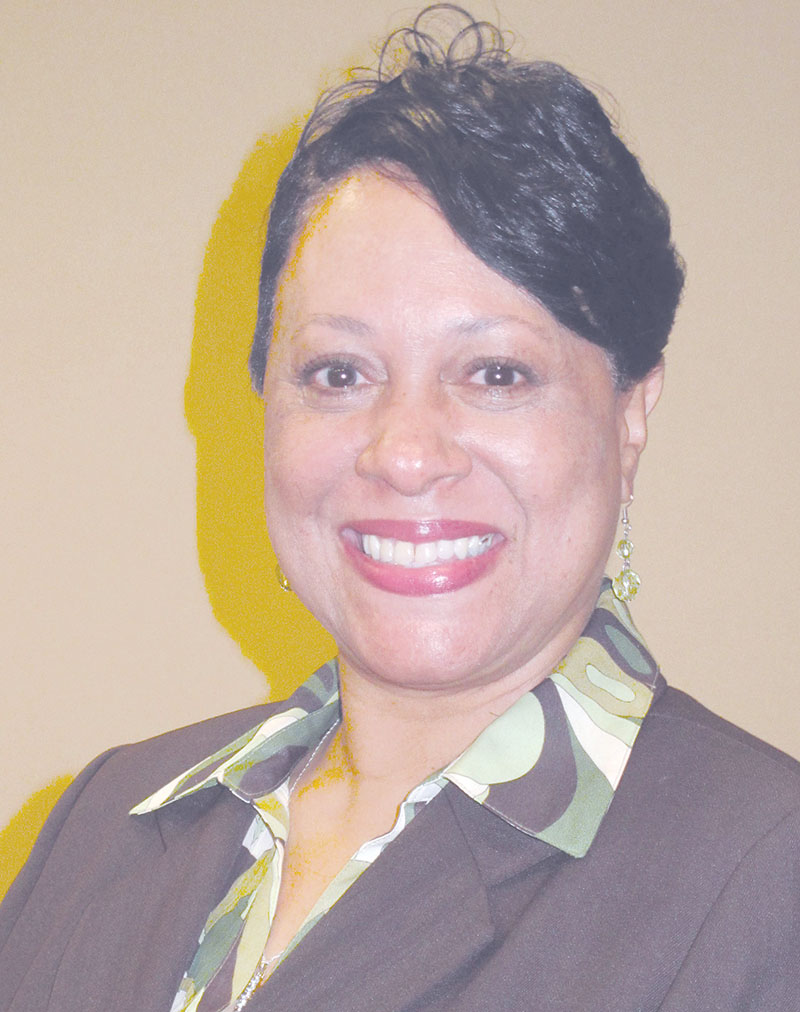
    Mayor Charlene Herring

    I am an educator by profession having obtained a BA in History from Columbia College and a Master’s Degree+30 hours in Elementary Education and Administration from USC. I am currently serving as an Educational Consultant having retired from Richland School District Two where I was the Chief Academic Office, a principal, an assistant principal, curriculum coordinator and teacher. I have garnered awards such as State Teacher of the Year Finalist, Administrator of the Year, and One of One Hundred Most Influential Leaders by Columbia Business Monthly Magazine.

    I became Mayor of Ridgeway in 2006 and have completed my eighth year in office. I have lived at 110 W. Ruff Street in Ridgeway for 16 years with my husband and former council member, Roger Herring. I have two daughters and two grandchildren. I am 64 years old. I am a member of Aimwell Presbyterian Church.

    I am running for re-election as Mayor of Ridgeway. I can answer affirmatively the proverbial question “Are we, Ridgeway, better off than we were eight years ago?” Absolutely! The quality of life and work has improved not only because of my vision and leadership but because of the good work of council, businesses and the citizens of Ridgeway.

    I have built my leadership and service as Mayor on three words: Revitalization, Responsibility and Relationships. Ridgeway has been revitalized through streetscape improvements, restoration of buildings, and attraction of downtown businesses, grants received for water expansion and upgrades, and recognition at the state level as recipients of awards for leadership, business growth and technology.

    Responsibility can be defined by the involvement and ownership of the Town by the mayor and citizens through the creation of a Strategic Plan, management of a fiscally sound budget, adoption of a town logo and brand, and promotion of safety with the addition of police officers, community meetings and implementation of a Crisis/Disaster Plan.

    A community is as vibrant and strong as the citizens who live there. Ridgeway is a strong community. Relationships have been built and nurtured through the work of Town committees, events such as Pig on the Ridge, Arts on the Ridge, Ridgeway Reads, Easter Promenade, Holidays on the Ridge, 43 Mile Yard Sale and First Fridays, awards such as Citizen of the Year and Entrepreneur of the Year and the creation of The Ridgeway Museum. I have also strengthened relations with other cities in the county, the Midlands and across South Carolina through meetings, joint projects and presentations. Ridgeway is known throughout the Carolinas as a progressive yet quaint southern town. Our population doubles each month as persons come to visit, shop, dine and tour.

    I am asking the citizens of Ridgeway to re-elect me for four more years. There is still much to be done such as the creation of a town park, additional street, water and capital improvements, continued attraction and sustainability of downtown businesses, a new strategic plan and further engagement of citizens in the community. Help me continue to lead by example, influence and involvement so Ridgeway remains a great place to live and work.

  • Council Amends Budget

    BLYTHEWOOD – Town Council took the second and final vote Monday night to amend the Town’s budget for fiscal year 2013, to more accurately reflect the operational losses of Doko Manor this past year. The 2014 budget that was set last July projected a $20,000 loss in the Manor’s operating funds in the 2014 fiscal year, which ends June 30, but in only six months that loss was already at $22,000 and climbing. The budget adjustment revised the projected loss from $12,000 to $44,000 for General Maintenance/Service Supplies and from $33,000 to $49,000 for Program and Oversight Salaries for the fiscal year. Councilman Bob Massa, a CPA, had advised Council in January that state law requires a budget adjustment when the budget veers from its projections by more than 5 percent.

    Other revisions to the budget included: appropriation for Ground Maintenance was reduced from $8,000 to $2,500; General Maintenance/Major Repairs from $10,000 to $5,000 and Utilities from $22,000 to $14,000.

    Council Sets Term Limits

    By a 3-2 vote, Council also finalized an ordinance that sets term limits for the Mayor and Town Council members at two consecutive terms each.

    New Rates for Manor

    Council passed a resolution revising rental rates and charges for The Manor. Councilman Tom Utroska said he and the Director of Events at the Manor, Booth Chilcutt, have addressed the changes at length.

    “Most of the rates are raised, but they are still lower than those at Saluda Shores, which is what we use as a basis for setting our prices,” Utroska said. “We have set a flat rate for local civic and community groups ranging from $35 to $60 per hour, based on a minimum of two hours’ usage and a maximum of four hours’ usage. These groups, as well as those who pay the rental rates, would also be charged extra for use of equipment such as table cloths, projectors, etc.”

    Accommodations Tax Funds Awarded

    Council voted on A-Tax Review Committee recommendations, awarding funds for those events that they feel bring visitors to Blythewood. Of the six applicants, the Diamond Invitational Baseball Tournament received the most at $15,000. The USC equestrian team, which won the 2014 SEC Championship at One Wood Farm on Saturday, received $5,000 and was earlier awarded another $5,000 for a total of $10,000. Three other groups/events that requested funding, Blythewood Chamber of Commerce ($20,000), Jon Godwin Racing Team ($10,000) and Blythewood Rodeo ($10,000), were denied their requests for funding. Blythewood Rodeo was asked to resubmit a more concise application and the Blythewood Chamber was asked to resubmit next year.

    The awards are recommended by the A-Tax Committee based on how much business it is thought each group/event would bring to the town. Council then votes on the recommendations.

    History Recognized

    The Blythewood Historical Society kicked off the agenda Monday night to honor and thank the Blythewood Town government for 40 years of service. After historian and former Councilman Wade Dorsey presented a short history of the Town’s first election in 1974, Mayor J. Michael Ross asked those first elected officials and/or family members who were there to represent them, to stand and be recognized.

    In other regular business, Council members voted to defer an ordinance to amend the Landscape & Tree Preservation Subchapter until they have more time to study it.

    Council voted to go into executive session to discuss employment, appointment, compensation, promotion, demotion, discipline or release of an employee, a student or a person regulated by the public body or the appointment of a person to a public body. It was also to discuss negotiations incident to proposed contractual arrangements for the Doko Depot Restaurant. No vote was taken on either matter.

  • Zoning Errors Top 100 Parcels

    WINNSBORO – Nearly 150 properties were left with incorrect zoning last year when the County and its consultant, Dan Vismore & Associates, went through a major rezoning process en route to adopting a new land management ordinance, according to a presentation made to County Council Monday night. Council then took the first steps to correct those errors with a public hearing and first reading of ordinance 627.

    Tim Roseboro, Director of Planning & Zoning, told Council that two properties in Jenkinsville were incorrectly zoned, while five on Highway 321 Bypass were also erroneously rezoned. All seven should have been zoned B2 (General Business), Roseboro said, as should have 10 parcels near Washington Street in Winnsboro. Three parcels along the Ridgeway town limits that should have been zoned as RC (Rural Community) were also incorrectly zoned. But the major problem, Roseboro said, was in South Winnsboro, where 95 parcels were incorrectly zoned that should have been zoned as R2 and 35 that should have been zoned as R1, both residential designations.

    Milton Pope, Interim County Administrator, said that even though it is obvious the corrections need to be made, Council was obligated by law to go through the legal stages of three readings and a public hearing before adopting the changes. The proposed corrections, Pope said, will make the zoning maps consistent with the overall comprehensive land management plan.

    First reading passed 6-0. Councilman Mikel Trapp (District 3) was absent.

  • Recreation Back on the Table

    WINNSBORO – Milton Pope, Interim County Administrator, told Council Monday night that the plan on how to spend $3.5 million in bond money to develop recreation in the county had entered its next phase. Pope said his staff had met last week with Ken Simmons & Associates (KSA), the consulting firm selected by bid to guide the County through the process, and that the firm would be meeting with each Council member individually in the coming weeks to review their wish lists for recreation.

    Pope said KSA would be reviewing all extant recreation information complied by the County over the years, including the study conducted by the Central Midlands Council of Governments several years ago.

    “They’re bringing their recreational experience to the county to see how we can maximize the use of $3.5 million that we have county wide,” Pope said.

    Once the master list of projects is reviewed, Pope said, it will come back before full Council for a vote on how to proceed, “because we could wind up with a situation, based upon the master list, where those costs could exceed the $3,.5 million and they may not,” Pope said. “But we need to know what those costs are and if in fact there are going to be any continual costs or operational costs that we need to consider.”

    Bruce Wadsworth, a resident of the Dawkins community who has been a strong supporter of erecting a rec center in Western Fairfield, said he was glad to see the subject up for discussion once again.

    “I’m glad to see recreation is back on the agenda,” Wadsworth said during the meeting’s second public comments session. “My dad always told me that if two people are going to have something, they are going to have to work together. There are eight of you. You guys need to work together.”

    Still, Wadsworth expressed frustration that Western Fairfield was still waiting on a facility after years of neglect.

    “(Councilman Kamau) Marcharia says he’s been trying for years to get a rec out in the Dawkins community,” Wadsworth said. “It shouldn’t take years for eight people in your positions to get your heads together and do the right thing.”

    On another recreation front, Pope reported that the engineering consultants Goodwin, Mills & Caywood, were given the go-ahead to begin reviewing the disaster at Drawdy Park, as well as reviewing other work performed by S2 Engineering in the county. District 1 resident Randy Bright, during the meeting’s opening public comments session, said Drawdy Park had gone from disaster to eyesore, and urged Council to take some action to preserve it.

    “Council members, have you been to Drawdy Park lately? It’s an absolute embarrassment,” Bright said. “It’s in disrepair, there’s trash everywhere, there are accidents waiting to happen at every ball field. There’s big deep holes, drainage holes that have fences around them, trash has been thrown in them, busted pipes, exposed wire everywhere, exposed junction box.”

    While Wadsworth would later lament the fact that Council was willing to spend more and more money on Drawdy Park while Western Fairfield did without, Bright questioned spending the money at all.

    “I wonder what good will it do to spend $3.5 million on recreational projects if they’re going to fall into such disrepair like Drawdy Park has,” Bright said. “Drawdy Park is a sincere embarrassment.”

  • County Tables Vote on Cars, Road Name

    WINNSBORO – After considerable debate, County Council tabled two items on Monday night’s agenda – what to do with surplus vehicles and whether or not to approve a name change for a road in Western Fairfield County.

    The County has only recently upgraded its fleet of vehicles with eight new cars last month and plans on adding eight more, pending the recommendation of the Administration and Finance Committee, which met prior to Monday’s full Council meeting. Chairman David Ferguson (District 5) said that in the past, the County has donated used vehicles to Fairfield Memorial Hospital, the towns of Ridgeway and Winnsboro and has contributed several to the Fairfield County School District for use at the Career Center’s auto mechanic’s courses. Ferguson placed the motion on the floor to “continue that policy” of donation, and while it received a second from Councilwoman Mary Lynn Kinley (District 6), Councilwoman Carolyn Robinson (District 2) said the “policy” was not actually a policy and that Council may want to consider selling some, if not all, of the used vehicles at auction.

    “It was a motion from 2002 for the administrator to do as he saw fit and some of the recommendations were to give to the town of Winnsboro and to the hospital,” Robinson said, “But that’s only a motion, that’s not a policy, per se; therefore, motions as I see them are only good for two years. They’re not like ordinances that last.”

    Robinson said she felt that some of the vehicles might fetch at least $1,000 or more at auction; although, she added, the ones worth much less – between $200 and $300 – might still be donated to the Career Center.

    “A Crown Victoria will bring $900 to $1,200 at sale,” Councilman David Brown (District 7) said. Notices should be sent to the county’s municipalities, as well as the hospital and the school district, he said, to see if they are in need of vehicles before they are sent to auction.

    “Maybe we can get some feedback on this process when we have taken vehicles out of circulation and put in position when they’re taken to auction,” Vice Chairman Dwayne Perry (District 1) said. “What has that process looked like and what kind of financial return have we gotten from taking those vehicles there? Maybe we can have that information brought back to us before we make a decision on it tonight.”

    But Ferguson amended his motion to include potential donations to any municipality that would come before Council and request a used vehicle. Robinson amended the motion further to include contacting the various potential recipients of used vehicles to assess their need.

    “I just don’t see us sending all eight vehicles out to the school,” Robinson said. “Those kids can only do so much work on so many vehicles in a year. I would like to see this motion tabled.”

    Ferguson ultimately agreed and tabled the motion until Council’s April 14 meeting.

    “OK. I would just like to make it absolutely clear that the school system in this county does not have the funds to buy cars and equipment for those young people to learn on,” Ferguson said. “It’s the cheapest way to educate the young people in this county, these things we’re taking off the road and getting a small amount of money for.”

    Just last week, however, when discussing the distribution of funds from the County’s many fee-in-lieu of taxes agreements with local industries, Ferguson told The Voice that the school district was doing just fine financially.

    “With the school funding where it’s at, being near the top in the state, we’re not in bad shape as far as that goes,” Ferguson said last week.

    A motion to rename High Hill Lane to Wylie Lane was also tabled after Robinson noted that the petition on the application, which came through the County’s Planning & Zoning Department, appeared suspect.

    “The first three names on the list were signed by the same person,” Robinson said, examining the petition through reading glasses.

    Milton Pope, Interim County Administrator, said that the list of signatures was provided by the applicant, whom Planning & Zoning Director Tim Roseboro confirmed as Thelma W. Brown.

    “She’s the third name on the list,” Robinson said.

    Councilman Kamau Marcharia (District 4), in whose district the road lies, suggested sending the application back to Planning & Zoning for verification. In order to change the name of a road, Marcharia noted, the applicant must first acquire the signatures of 75 percent of residents owning property on the road.