Category: Government

  • Council Names Finalists

    BLYTHEWOOD – Following an executive session at the end of Monday evening’s Town Council meeting, Council voted to select four finalists for the Blythewood Town Administrator position. One Council member said it was the same top four chosen by the selection committee.

    The four finalists are T. Lloyd Kerr, Development Services Director for Escambia County, Fla.; Gary Parker, Town Manager for Sunset Beach, N.C.; Wade Luther, Economic Development Director for Camden; and Stevie Cox, Town Manager for Chadbourn, N.C.

    Council interviewed the four candidates on Tuesday and Wednesday; however, Councilman Tom Utroska told The Voice that he did not know when Council would select the winning candidate. When the search began in February, criteria for candidates for the position included relocation to the Town, four to six years’ experience and a degree in public administration or a related field. The salary range for the job is $70,000 – $90,000. The candidate selected will replace John Perry who left the position last December.

  • Threats Darken Council Meeting

    WINNSBORO – A Winnsboro man was escorted out of Monday night’s County Council meeting by Sheriff’s deputies after threatening Chairman David Ferguson with bodily harm during the second public comment portion of the meeting.

    Mike Ward, who had spent his allotted 3 minutes at the podium reviewing a portion of Councilman Kamau Marcharia’s history with the New Jersey State Penal System, refused to surrender the microphone after his time had expired. Instead, Ward asked Ferguson, “Who sits in that seat?” indicating Marcharia’s District 4 Council seat. When Ferguson only thanked Ward for offering his comments, Ward said, “That’s not an answer.”

    “Yes, it is,” Ferguson said.

    “No it ain’t,” Ward said. “Try again. Work on your verbiage.”

    When Ferguson invited Ward to take a seat, Ward said, “I know where I can have a seat.”

    As Ferguson motioned to a deputy posted directly behind the podium, Ward issued remarks that set the audience on edge.

    “If he touches me,” Ward said to Ferguson, “you’re going to get dropped.”

    At that point a second deputy swooped in and the two lawmen escorted a stone-faced Ward from the chambers.

    The Sheriff’s Office said Tuesday that no charges had yet been filed on Ward, but investigators were consulting with 6th Circuit Solicitor Doug Barfield to consider the best course of action. A DVD of the meeting was also being reviewed by investigators.

    Ward had spent his public comment time rehashing a few lines from the 72-page parole transcript from Marcharia’s arrest and conviction by an all-white jury in New Jersey for assault, kidnapping, rape and carrying a concealed weapon in 1964. At that time, Marcharia was known by his birth name, Robert Lewis. Although the victim in the incident maintained that Lewis had not been involved in the crime, he was nonetheless sentenced to 50 years in prison. His official age was listed as 19, but Lewis was actually 16, having lied to avoid what he was told was a worse New Jersey juvenile penal system, according to “Parole as Post Conviction Relief: The Robert Lewis Decision,” by Andrew Vachss, published in the New England Law Review, Volume 9, Number 1, 1973.

    Lewis was paroled in September of 1973.

    During his time at the podium, Ward said Marcharia’s “violent and uncontrollable rantings have not changed on this council.”

    “But I got my G.E.D. (high school diploma equivalency), I went to college, I tried to better myself as a human being,” Marcharia said. “Even the victim, even the police will tell you, in writing, if you read the transcripts, that I did not commit that crime. That doesn’t mean just because you’re innocent you won’t go to jail. I’m not going to be labeled. I’ve been on this council for 16 years and everybody knows my background. If people believed what (Ward) said, you think that the good people of my district would have elected me over and over?”

  • Town to Repay General Fund for Doko

    BLYTHEWOOD – At their Monday night meeting, Town Council passed a formal payment plan to reimburse the Town’s general fund for disbursements that were made for the Manor this past fiscal year in the amount of $162,000. The intent, according to the resolution, is that the Manor become a self-supporting enterprise, and that the repayments to the general fund be made as cash becomes available from an enterprise fund established for the Manor.

    The resolution states: “No reimbursement will be made until the unrestricted Manor cash account exceeds $10,000. At month end for balances from $10,001 to $19,999, 10 percent will be returned to the general fund cash account until the entire payable is reimbursed. For all month end balances in excess of $19,999, the general fund cash account will be reimbursed $5,000, plus 10 percent of the remaining balance in excess of $10,000 until the entire payable is reimbursed.”

    Patrick Connolly, the newly hired assistant to Booth Chilcutt, Director of the Manor, reported that estimated gross revenue for the Manor during the fourth fiscal quarter of 2012-14 (April, May and June), is $22,190. The report did not include an estimate of expenses for the quarter. Councilman Tom Utroska explained that beginning July 1, the Manor will operate under the new rental payment guidelines including minimum use fees established by resolution last month and no longer book at the previous rates, though previously booked rates will be honored. According to the event schedule presented by Connolly, 23 events previously booked by Richland County School through the end of June average $118.26 per booking.

    New Christmas Decorations for Town

    A newly formed Christmas Committee presented a proposal to Council for new, more appropriate Christmas decorations for the Town. Faye Kelly, representing the committee, suggested the Town adopt a traditional green wreath, 60-inches in diameter with LED lights and a 24-inch red bow to be attached to the side of existing light poles. She said the group made a survey of the poles to determine whether appropriate electrical connections existed. Kelly said the committee felt the wreaths would be appropriate décor for a small town like Blythewood and that the committee would like to initially purchase 17 wreaths at a cost of $8,500. Additionally, Kelly said the committee planned to continue using some of the town’s current star decorations in conjunction with the new decorations until they could afford to buy more wreaths. She suggested displaying all the Harold Branham-painted decorations in the Town Hall/Park area.

    Kelly said the committee hopes to get donations to help purchase and maintain the decorations in the future, but asked Council for financial assistance more immediately to have new decorations for the coming Christmas. Ross said the item will be put on the agenda for the next Council workshop to be held May 13.

    Following an executive session, Council voted to approve four finalists for the position of Town Administrator.

  • Water Rate Increase Part of Budget Talks

    RIDGEWAY – Town Council took its first tentative steps toward beginning their budgeting process for the 2014-2015 fiscal year April 10, with discussions centering on how to pass along a water rate increase from the Town of Winnsboro.

    “I’d like to keep it in line with what we’ve traditionally done, without it being excessive,” Councilman Russ Brown said.

    The 78-cent increase per 1,000 gallons would take Ridgeway’s residential base rate to $14.72, but Councilman Doug Porter suggested raising the rate to $15 to help offset the costs of two upgrades to Ridgeway’s system that are pending. The Town’s water tank is in need of repair, Councilman Donald Prioleau said, and Mayor Charlene Herring said the Town is in need of a new wastewater pump. The water tank project has already been tabled for nearly a year, Porter said, and this year it would have to be tackled.

    While no final decision was made Thursday, Council will address the rates in detail when budget work sessions begin later this month.

    During Thursday night’s mayor’s report, Herring told Council that Raymond Brown had expressed interest in opening a florists shop in the building once occupied by Judy Miller’s shop Just Around the Corner. Herring also announced that Croom Hunter would be resigning his post as the Town’s Zoning Administrator and that Council would have to begin a search for Hunter’s replacement.

  • Council Members Face New Ethics Fines

    WINNSBORO – Four more County Council members have been hit with fines by the S.C. State Ethics Commission after irregularities were found on their Statements of Economic Interests (SEI) forms, dating as far back as 2010. A hearing has been scheduled for July 16 at 12:30 p.m. for Council members David Brown, Kamau Marcharia, Dwayne Perry and Carolyn Robinson, but three out of the four told The Voice that they would forgo the hearing and pay their respective fines.

    According to documents obtained from the Ethics Commission, Brown misstated the gross income he received from Fairfield County on his SEI forms in 2010, 2011, 2012 and 2013. The Ethics Commission alleges that Brown received a gross income in 2009 from Fairfield County of $22,359.98, but on his 2010 SEI, Brown disclosed only $15,000. On his 2011 SEI, Brown disclosed $14,999.92, while the Ethics Commission alleges that he received $25,409.92. Brown disclosed $19,839.54 on his 2012 SEI, while the Ethics Commission alleges an actual income of $20,814.54 from the County. On his 2013 SEI, Brown disclosed $20,000, but received $20,487.20 from the County in 2012, the Ethics Commission claims.

    Brown said the misstatements were a mistake and were statements of his base County salary, without taking into account various disbursements from the County for office supplies and other expenses.

    “I had used that figure for some time and nobody ever said anything, so I didn’t know it was wrong,” Brown said. “Now I know better.”

    Brown said he intended to pay the $500 fine levied against him.

    Marcharia said he would also pay his fine of $125. On his 2013 SEI, Marcharia disclosed a County salary of $16,000, while the Ethics Commission documents state his 2012 income was actually $18,643.04.

    “I put the wrong information on the wrong line,” Marcharia said. “They asked me to clean it up and I did.”

    Robinson faces a $375 fine, which she also said she would pay to the Ethics Commission.

    “I’m not fighting them,” Robinson said. “I just wish they would have caught it earlier so I wouldn’t have kept making the same mistake over and over.”

    Robinson’s biggest misstep was not disclosing any Fairfield County income on her 2010 SEI. The Ethics Commission states she received a gross income of $13,142.92 from the County in the previous year.

    “I had just filed something for running (for election in 2008), and I thought that took care of that,” Robinson said. “That was a mistake on my part. I amended it and sent it in. That’s what the (Ethics Commission) investigator recommended.”

    Robinson also misstated her County income on her 2011 and 2013 SEI forms, disclosing $20,822 in 2011 and $19,481.72 in 2013. The Ethics Commission states that Robinson actually drew $21,736.18 in 2010 and $20,996.48 in 2012.

    The exact amount of Perry’s fine was not available at press time, but Cathy Hazelwood, General Counsel and Deputy Director of the Ethics Commission said Perry faces the maximum of $2,000 per violation. However, she said, a consent order was being negotiated between the two parties, which would reduce the fine significantly.

    Perry misstated his County income on his 2011, 2012 and 2013 SEI forms, according to the Ethics Commission. In 2010, Perry received $24,649.92 from the County, but disclosed only $23,382 on his 2011 SEI. In 2011, Perry received $27,467.92 from the County, while disclosing only $26,492.92 on his 2012 SEI. In 2012, Perry was paid $27,583.92 by the County, yet disclosed $25,910.82 on his 2013 SEI.

    Perry could not be reached by phone at press time. The Ethics Commission sent the Notices of Hearing to the Council members on March 21.

  • Water Study Fails to Offer New Sources, Solutions

    WINNSBORO – Council members representing both the Town of Winnsboro and Fairfield County met with representatives of the Army Corps of Engineers on April 16 to discuss the Corps’ recently completed year-and-a-half-long water supply study and its resulting recommendations for both the Town and the County. The cost of the $379,220 study was split between the Corps ($230,720) and the County ($148,500). In his September 2012 request for the study, Winnsboro Mayor Roger Gaddy had been specific – he wanted to know if the Corps could help the Town find additional raw water to meet projected demand for water.

    Gaddy did not get the help he had asked for. Instead, Dudley Patrick, Project Manager for the Corps, told the group that the study’s recommendation was, basically, that the Town of Winnsboro should continue doing the same thing it was doing before the study was launched – purchasing treated water from the City of Columbia. Patrick said the report concluded that Winnsboro’s current system of purchasing water from Columbia through a tie-in at Blythewood provides the most cost-effective solution to the Town’s water supply deficiencies under current and projected demand conditions. The projection included both residential and industrial customers and fire protection based on population growth over the next 40 years. Patrick said the recommended alternative for the County follows the same thinking, to continue purchasing water from the Town of Winnsboro, utilizing the Columbia-Blythewood tie-in.

    Patrick said the study was based on the assumption that the Town of Winnsboro desires a long-term wholesale relationship with the City of Columbia. The Corps’ hydrologist Pat Rushing further built on that assumption, telling the Winnsboro Council, “You are in a very enviable position (to have Columbia water available).”

    But Winnsboro Town Councilman Clyde Sanders was quick to disagree.

    “(Enviable) for Columbia!” Sanders shot back. “The way I see it, we went to Columbia two years ago when we were in an extreme draught and our reservoir was down to a 45-day supply. We asked Columbia for emergency help and it took us 18 months to get it. In the contract, (Columbia said) ‘We can cut your water off at any time, and we won’t guarantee potable water.’ Our water rates (with Columbia) are close to retail, yet Columbia provides no service, no lines, nothing. What we have right now is a customer base for our water system. But we don’t have any control over our rates because of how much Columbia charges us for water. We may be able to get all the water we want, but we can’t control our rates. We want a potable supply of water that we will have some control over.”

    Gaddy agreed.

    “Our engineer has told us that to get water from Monticello it would cost us about $8 million,” Gaddy said. “But then it would be our water and we wouldn’t have to worry about Columbia’s rates or whether they will cut us off.”

    Gaddy was critical of the study in that it did not address the fact that buying high-priced water from Columbia cast the Town and County in a less competitive position in trying to attract high-volume industrial water users.

    “When a high water user is looking at both Richland and Fairfield, and we’re trying to attract them to Fairfield, we won’t have much leverage to negotiate lower water contracts,” Gaddy said. “In the short term, (Columbia water) might be the most cost effective, but as leaders of the community, we are concerned about some of the nuances and what can occur when we get in a competitive environment for industry and don’t have any leverage. We can’t make our offer more attractive. We’re under Columbia’s thumb and that puts us at a major disadvantage. That’s something you didn’t look at in this study,” Gaddy told the Corps representatives. “You only looked at the best way for Winnsboro and Fairfield to get water when we need it.”

    Fairfield County Councilwoman Carolyn Robinson asked, “If we want to do something different than your recommendations, what are our chances if we were to apply for federal funds?”

    “Generally speaking,” Rushing said, “if you were to advance a proposal for a Section 219 (federal grant) you would need a more comprehensive design study. This (study) is a conceptual level design study. You would, basically, have to go through a feasibility study and from that you would have a lot greater detail than what we’ve done. We just touched the surface as to what you might expect as for as environmental, economic and cost considerations. From that we might come to the same recommendation or possibly a recommendation to build out a system.”

    Rushing said he did not know what the Town’s chances would be to get a federal grant.

    Gaddy said the Town was told prior to the study that, “If we wanted to get a federal grant or matching grant, we needed to go to the Corps of Engineers and get your recommendation, but your recommendation is to keep buying water from Columbia. We want some control over our own destiny. We want some help guaranteeing we can get water from somewhere other than an entity that will hold us hostage.”

    Patrick pointed out that becoming a regional water authority, such as the Lake Marion Water Authority, of which he is project manager, would help open doors to federal funding. Councilman David Ferguson said the Lake Marion Water Authority had help from within the Beltway (specifically Rep. Jim Clyburn who represents that district) to get federal funding which, he said, Fairfield County hasn’t had. Though he did say Council is planning in the near future to meet with Sen. Mick Mulvaney, who represents Fairfield.

    Patrick concluded that up to 1 million gallons of Columbia-treated water per day has allowed Winnsboro to serve the greater Blythewood area without having to provide water generated at its own treatment plant. This, he said, leaves the plant with significant capacity. The report further stated that Winnsboro’s recent completion of a raw water supply line will allow its treatment plant to produce 4 million gallons per day. With current production at 2 million gallons per day, the report suggested there was no reason to pursue a new treatment plant at this time. If demand were to increase significantly, Patrick said, it would justify construction of the planned County Line Booster Pump Station. When that occurs, he recommended that the County participate with the Town in the construction of the station.

    A new treatment plant would cost about $715,000 and would require new intakes, transmission mains and related infrastructure. The report looked to Fairfield County to subsidize both the construction cost and operating costs of any new treatment plant and distribution system. Given the current demand projections, the study concluded this subsidy would likely be required for a considerable period of time until demand increased to the point of paying for itself.
  • School Board Member Calls 9-1-1 on Reporter

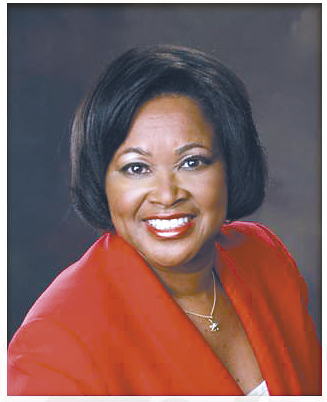
    Annie McDaniel

    WINNSBORO – A Fairfield County School Board member, either unwilling or unable to answer questions from the news media Tuesday night, instead dialed 9-1-1 to report that she was being harassed.

    “Yes, I am at the District Office and I am being harassed,” Board member Annie McDaniel (District 4) said into her cell phone after the 9-1-1 dispatcher answered her call.

    While The Voice clearly heard the dispatcher answer McDaniel’s call, afterwards only McDaniel’s side of the conversation could be discerned for the record. It was as follows:

    “The District Office at the School District. My name is Annie McDaniel. . . . Annie. McDaniel. . . . Mr. James Denton, with The Voice newspaper. . . . He’s standing right here in front of me . . . 803-960-5782 . . . He’s got on a beige jacket and a beige shirt . . . He approached me after the Board meeting, yelling at me, asking me questions . . . No, I’m sitting right here at my desk and he’s standing in front of me and he asked me a question and I told him I didn’t have an answer, and he’s yelling and harassing me. . . . OK. Thank you. Bye.”

    A review of the recording of the conversation clearly shows that no voices other than McDaniel’s were raised during the question and non-answer session.

    No emergency responders arrived at the District Office before the auditorium cleared, but a School Resource Office was on site throughout the entire meeting. Phyllis Watkins, Director of Fairfield County’s 9-1-1 system, said McDaniel’s choice of dialing 9-1-1 instead of answering questions from the media did not qualify as abuse of the system, but that it did exhibit a lack of understanding as to what the system should be used for.

    “We prefer people call when they are facing a life-threatening emergency,” Watkins said Tuesday night. “That’s what we prefer. Unfortunately, that’s not what always happens.”

    The questions that McDaniel refused to answer stemmed from accusations she had made during the meeting that J.R. Green, Superintendent of Schools, was not distributing funds from his discretionary account equitably among the District’s various clubs. McDaniel said Green’s focus appeared to be primarily on the Bow Tie Club at the expense of other clubs. Green said he had supported “a host of different clubs over the course of the year from the Superintendent’s contingency account,” and reminded McDaniel that the expenditure of those funds were, as the definition of the account would indicate, at his discretion.

    “I guess the problem, Mr. Green, is that allows so much latitude for injustice to our kids in the district,” McDaniel said. “That’s like giving you a pile of money to do whatever you want to do with it. All I’m saying is that lends itself to unfairness, and if we are going to allow that to exist, there be some kind of communication on how it’s going to be used so that all our students are treated fairly, and not just one group of students that happen to be one you’re intimately involved with.”

    Green said McDaniel’s statements were “pretty close to an indictment that I have been unfair to students, which I categorically reject. I guess the question is do you think I’m going to be fair to students or do you think I have been fair?”

    After the meeting, The Voice asked McDaniel which clubs had received short shrift in favor of the Bow Tie Club. In lieu of an answer, McDaniel suggested The Voice obtain a list of district clubs from Green. Thinking the question had been misunderstood, The Voice restated the query, asking McDaniel directly which clubs were being treated unfairly.

    “Do I need to call the Sheriff’s Department to ask them to come escort you? Because you’re really harassing me right now,” McDaniel said. “The questions you’re asking me, Mr. Green is the only person that can provide you that information.”

    McDaniel could also not explain why she was the only Board member who failed to turn in her assessment worksheet for the District’s selection of a contractor for the construction of the new career and technology center, a matter the Board took up at the outset of the meeting.

    “The Chair is the spokesperson for the Board, so any questions you have regarding this Board you need to ask her,” McDaniel answered. “I have no comment.”

    But with six of the seven assessments delivered on time, Green recommended and the Board voted to award the contract to MB Kahn of Columbia. MB Kahn beat out Shiel Sexton, KBR Building Group and Edifice, Inc. all of Charlotte. Andrea Harrison (District 1) cast the lone dissenting vote. After the meeting, Harrison would not divulge which of the other firms she would have preferred.

  • County Sets Sights on Dirt Roads

    BLYTHEWOOD – Many residents in Blythewood 29016 became concerned last month when they received preliminary informed consent forms, which if agreed to would allow Richland County to pave the dirt roads they live on. A letter accompanying the form said the County is asking for a 50-foot easement on those dirt roads – 25 feet on each side of the road’s center line – in exchange for $1.

    “Property owners who consent to the easement will retain ownership of the property,” Rob Perry, Director of Transportation for the new Transportation Penny Tax program, said Monday. “They are only granting the County the right to pave and maintain the road and shoulder.”

    Perry said that if county residents who live on dirt roads do want their roads paved, they can either sign and return the Preliminary Informed Consent Form or do nothing and, either way, it will be assumed they want their road paved.

    But Perry said that if residents living along dirt roads do not want their roads paved, they must send the consent form in with their denial of consent or it will be assumed they want their road paved.

    Perry said the preliminary consent form is not binding.

    “The purpose of the consent form is to allow us to gauge how many roads we can plan on paving,” he explained. “If we get at least 25 percent of the people on the road turning in forms that deny consent for paving, then we aren’t going to spend money designing a road that we aren’t going to pave. If we get more than 75 percent of the residents on a road consenting to have their road paved or don’t turn in forms, then we go back to our designers and have them design that road. After the road is designed we go back to the residents and ask them to sign permission for the easement which is binding.”

    To explain the program to those living on dirt roads in the Blythewood area, the County hosted a public forum last week at the Community Center on Campground Road.

    “I understand there was strong opposition to paving from some Blythewood folks at that meeting who live on dirt roads,” Perry said. “Blythewood is horse country and some of them want dirt roads. I respect that. We aren’t trying to force anyone to pave their roads.”

    However, he pointed out, residents who do not want their road paved need to take the time to complete their denial of consent on the form and mail it back. If no form is returned, it will count as a consent.

    Perry said the program is made possible by an ordinance County Council recently passed that permits low cost paving on low volume roads.

    “The quality of the paving is the same,” Perry said, “but the asphalt is thinner. It doesn’t need to be designed for heavy traffic.”

    Plus, he said, $45 million in new funding for paving is available from the Transportation Penny Tax revenue, and about $1.4 million in funding is available from the County Transportation Committee annually.

    “County Council District 2 (Blythewood’s District) has 106 dirt roads (41 miles in length) and the county has 240 miles of dirt roads,” Perry said, “and we will begin paving the first 35 of those roads this summer.”

    He said he expects the list of roads to be paved each year will soon be posted on the Richland County website at richlandonline.com.

    Perry encouraged anyone with questions about the program to call him at 576-1526.

  • Tree Law Comes With Cost

    BLYTHEWOOD – Under proposed amendments to the Town’s landscape and tree preservation ordinance, owners of all existing commercial properties in Blythewood’s Town Center District would be required to conform to new landscaping and buffering requirements within five years of the adoption of the amendments. While new businesses (or newly developed properties) are required to meet the specifications of the Town’s landscape and tree ordinance, there has never been enforcement on existing businesses because they have sometimes existed for so long that there is no landscape plan to refer back to, the Town’s Planner, Michael Criss, told Town Council at a work session on April 15. The amendments were suggested by a committee headed up by Mikel Switzer and recommended for adoption to Town Council two weeks ago by the Town’s Planning Commission. Council passed first reading at its March meeting. The second and final reading is expected at the April 28 Council meeting.

    “So far,” Criss said, “we’ve relied on persuasion, cooperation and volunteerism to get existing businesses to conform. But, is this something you want to impose on existing commercial property owners?”

    He said it would mean commercial enterprises would be subject to such costly requirements as planting trees and shrubs around the perimeter of their properties.

    “The Town has spent an awful lot of money on a Master Plan, which calls for these kinds of improvements, and at some point we have to start moving toward implementation of the Plan throughout the Town,” Councilman Bob Massa said. “We’ve done this with signs. We’ve given businesses seven years to conform to the sign ordinance. It seems to me five years is plenty of time.”

    Criss agreed, “Why should existing businesses forever have bare lots?”

    Councilman Bob Mangone suggested that the commercial property owners not only comply within five to seven years, but wondered if they should also be required to submit their plan for conformity to the new landscape and tree ordinance within 60 days of the passage of the ordinance. Criss disagreed, suggesting that businesses should not have to submit a plan until the year before conformity is required.

    Councilman Tom Utroska asked, “Have we considered how this would affect the current businesses in the Town Center District?”

    He suggested allowing seven years for conformity instead of five.

    Mayor J. Michael Ross, however, took a dim view of the proposal as he addressed his fellow Councilmen.

    “As you sit around here, none of you are true business property owners,” he reminded them. “We’re at a critical time when governments are telling people what to do and being so restrictive. When you start telling existing businesses they have to conform, are businesses like Carolina Wings with a lot of asphalt going to have to chop up their paving to plant shrubs? When you start talking about the little businesses, we need to look at what it’s going to cost them.”

    Councilman Eddie Baughman agreed.

    “When some of these small businesses go out of business (because of the costs of this ordinance), then you’ve got a vacant space,” he said.

    “But if we say the existing structures never have to make any changes,” Mangone said, “it will always look like it does now.”

    New rules for residential plantings

    The amendments also proposed new rules and regulations for residential property owners such as the requirement that irrigation spray heads be directed entirely onto pervious, soil or target area surfaces with no more than incidental spraying of impervious streets, driveways, parking areas or sidewalks.

    Property owners, both residential and commercial, would be responsible for keeping required plantings well maintained for at least three years after planting. The amendments also allow property owners to remove one healthy tree per year. Up to five healthy trees can be removed per year on properties of two acres or more.

    A fee-in-lieu Tree Fund is proposed as an alternative compliance method. This method is achieved by contributing the equivalent monetary value of the required replacement trees to the Town’s Tree Fund, which is “dedicated to the planting, maintenance and replacement of trees by the Town on public rights-of-way and public property (such as the park) within town limits.”

    After reviewing the entire ordinance, Ross asked, “But does it really achieve what we want?”

    The ordinance’s author, Rick McMackin, said, “The intent is to keep as many trees as possible, to maintain a tree canopy in the Town as much as possible.”

    The proposed amendments to the tree ordinance are available for review at Town Hall. Those who have questions about the ordinance or who would like to comment before it is voted on can do so at the April 28 Town Council meeting which will be held at 7 p.m., at The Manor.

  • Board Ups Ante on Superintendent

    WINNSBORO – For the second time this year, the Fairfield County School Board voted to extend the contract of Superintendent J.R. Green during their April 8 meeting. The extension takes Green’s deal with the District to 2019 and increases the District’s buyout option from nine to 18 months.

    “We felt the timing was excellent, considering the most recent accolades under his leadership and those he’s hired,” Board Chairwoman Beth Reid (District 7), said.

    The overall five-year deal and 18-month buyout if Green were discharged without cause was standard throughout the state, Reid said. The move did not get unanimous support, however, with Board members Andrea Harrison (District 1) and Annie McDaniel (District 4) voting against the extension and Board member Paula Hartman (District 2) abstaining.

    “I have no dislike for J.R.,” McDaniel said last week, “but (the Board) couldn’t give me a good reason to make him that offer at this time.”

    Hartman said that while she had supported Green’s extension in January, she “didn’t see why we were bringing it up again.” Harrison did not return phone calls at press time.

    Career Center

    The Board heard from four companies during their April 8 meeting, all vying for the contract to construct the new Career and Technology Center on a sliver of land between Fairfield Central High and Fairfield Middle schools. Shiel Sexton, KBR Building Group and Edifice, Inc. all of Charlotte, as well as MB Kahn of Columbia, made detailed presentations before the Board. Regardless of who wins the contract, the construction company taking on the project faces huge challenges, including rerouting bus traffic during school hours and game traffic during football season.

    The Board will vote to award the contract during their special April 22 meeting, and will vote on a guaranteed maximum price for the project during their May 20 meeting.

    Budget

    The Board also held first reading on their 2014-2015 budget. The $35,548,351 proposed budget is up from last year’s $34,358,564 budget, but holds the millage rate at 203.1 mills. Tax revenues are expected to be up from $26,331,062 last year to $27,480,665, while funds from the Education Finance Act are up from $4,146,227 to $4,371,451 and funds from the Education Improvement Act are up from $2,894,936 to $2,917,436.

    The proposed budget will include $128,167 in increases for purchased services, as well as $158,564 in increases for supplies and materials, including an increase of $170,000 in energy costs and expected rate increases. A transfer of $126,000 to the food services fund is also included in the proposal. The proposed budget also allocates $60,000 for Fairfield Behavioral Health Services (FBHS) for prevention programs and treatment services. Since the 2008-2009 school year, FBHS has served more than 5,000 students through various prevention programs.

    The Board will hold a work session on the budget April 22 at 6 p.m. at the District Offices.