Category: Government

  • Gaddy to Bring Water Plan to Blythewood

    WINNSBORO – Mayor Roger Gaddy told The Voice after Monday’s Council meeting that he plans to attend the Blythewood Town Council meeting at their next regular meeting on Dec. 22, with the intention of opening up the lines of communication not just with Blythewood’s Mayor J. Michael Ross, but with Council as well.

    “Mike (Ross) and I have talked, but I have not talked with the Blythewood Council members to explain Winnsboro’s decisions regarding the water issue between the towns,” Gaddy said.

    He said he plans to not only talk with them, but to ask for their support in Winnsboro’s endeavors to continue to provide water service to Blythewood.

    “I think it’s important for us to talk, and I want to explain why Winnsboro can’t and doesn’t want to be dependent on Columbia water in the future. We want to be able to negotiate with industry as it comes to our area. We want to be in control of our own destiny,” Gaddy said. “And I think it will be good for our Town governments to have an open dialogue.”

    The meeting will be held at 7 p.m. at The Manor.

  • Future of Manor in Doubt

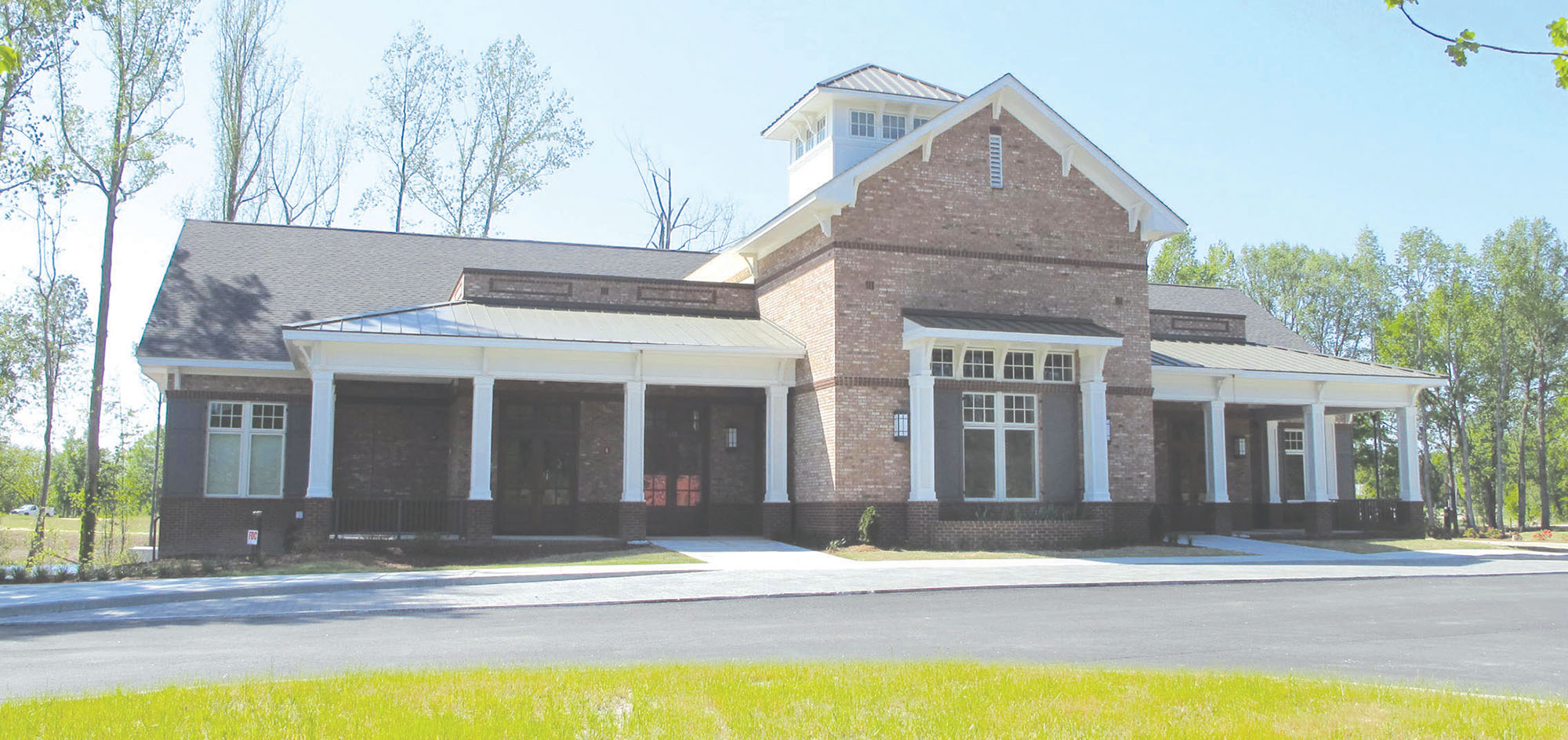
    BLYTHEWOOD – A discussion at the Dec. 9 Town Council work session revealed that while the finances of The Manor, the two-year-old Town-owned conference center, have improved since last year, the facility is still hemorrhaging money, and with no end in sight.

    “A year ago we were losing about $8,000 each month. Now it looks like we’re losing about $4,200 each month,” said Councilman Tom Utroska. “I don’t understand how it shows a minus $91,922 on page 1 of the Profit and Loss Statement. It looks like we’ve double dipped and added the numbers twice, but we show having a shortfall of ordinary income of $45,961 for the year. And it appears that’s going to be the case.”

    While Utroska and Town Administrator Gary Parker had high praise for the efforts of Booth Chilcutt, Events and Conference Center Director of the Manor, and his Assistant Director, Pat Connolly, in renting the facility, Council agreed that the Town faces an uphill battle for The Manor to break even.

    Utroska said that while weekends are booked through the end of 2015, the pricing has not been set high enough to break even on weekends alone.

    “We have a building that we can rent out every weekend but not during the week,” Utroska said.

    Wondering what to do to solve the financial dilemma of The Manor, he asked, “Do we just double the rates in 2016? Do we try to get someone to help Booth and Pat with the marketing? I’m concerned about the outflow here and then if something happens with the SMS4 (a newly state-mandated storm water management program that could cost the town $50,000 or more annually) and the outflow there, what’s going to happen with the Town’s reserves and where are we going to get the money?”

    Parker said he planned to put together a budget addressing maintenance expenses, which has not been done previously.

    “The revenues from the operation (of the Manor) were supposed to cover the costs,” Parker said. “And that’s not the case.” But Parker said progress is being made. “And if you raise the rates, there will be further progress by the end of the year.

    But Councilman Bob Mangone pointed out, “We’re so far behind the curve. We’ve got to stop the downward spiral.”

    Concerned that there is no reserve or enterprise fund to cover long term expenses of the park and Manor, Utroska suggested the Town would need “somewhere between 1 and 1-1/2 percent of the cost of the building per year. Since the building cost $2.3 million, that’s $20,000-$30,000 we need for reserves.”

    “Can we even afford to keep the building open?” Mangone asked.

    Utroska agreed, “That’s a worry.”

    Councilman Bob Massa suggested that to help defray the heavy fixed costs of the building during the week, “Instead of raising rates during the week, perhaps we should lower the weekday rates to make it more affordable for businesses to hold meetings there. Those fixed costs during the week are killing us.”

    “As a local government administrator,” Parker said, “I’ve never been faced with an enterprise quite like this.”

    He suggested that a couple of the members of Council might want to meet with him, Chilcutt and Connolly to talk about how to best improve the financial situation of The Manor.

  • County Urges Quarry Delay

    Administrator: No Conflict of Interest

    WINNSBORO – With the close of the Department of Health and Environmental Control’s (DHEC’s) public comment period on Dec. 4, the mining application for a company with designs on quarrying granite out of 405 acres of a more than 900-acre tract of land near Rockton Thruway hangs on the precipice of approval. Last week, County Council asked DHEC to delay their decision until additional information could be provided to the public. Monday night, Council once again heard from concerned residents of the community, one of whom suggested that the relationship between mining consultants and the County Administrator might be a little too cozy.

    David Brandenburg, a Rockton Thruway resident and prominent member of the community’s opponents to Winnsboro Crushed Stone, LLC, said during the second public comment portion of Monday night’s Council meeting that he had seen County Administrator Milton Pope chatting it up with one of the mining company’s consultants before the Nov. 20 public hearing at Fairfield Central High School. Brandenburg said that sort of fraternization gave him an uncomfortable feeling, and he asked Pope to disclose any relationship he might have – or that Pope’s parent company, Parker Poe Consulting, might have – with the mining industry. While Brandenburg said he was not making any accusations of a conflict of interests, but said Pope’s behavior toward the consultant (Craig Kennedy of Kennedy Consulting) certainly gave that impression. If Pope would not offer those disclosures, Brandenburg said he would push for an investigation, at the criminal level, if necessary.

    “I have absolutely, unequivocally, absolutely no relationship with any mining activity, company or any industry like that,” Pope responded. “I don’t even know why there’s a sense of, and I’ll say this and this is my term, I don’t know why there’s a sense of paranoia about that.”

    Pope went on to say that he knew Kennedy from Kennedy’s previous employment with DHEC, “and I was just being courteous to the gentleman by speaking to him,” Pope said.

    Were there any existing conflict of interest on his part, Pope said, “I would have divulged that to this Council a long time ago if I did.”

    The Major and the Minor

    The County’s land use ordinance prohibits mining activity on a minor road, and quarry opponents who live on the mostly gravel Rockton Thruway have been hanging some of their hopes on that point of law since March. But Monday night, Council revealed that at least a portion of Rockton Thruway is out of the County’s bailiwick, which would place the community’s concerns about truck traffic entirely in the hands of the Department of Transportation (DOT).

    “I go down 34 a good bit, and if you see a school bus going down Rockton Thruway, especially when its dry, there’s more dust going down Rockton Thruway than any other highway I’ve ever seen,” Councilman David Brown (District 7) said. “I guarantee you it puts up more dust, more than likely, than the mine ever will. If the state’s responsible for it then I think they need to be doing something to it to keep the dust down. I mean it looks like the woods are on fire, from a school bus going up and down the road.”

    Chairman David Ferguson (District 5) said the County was responsible for the un-paved portions of Rockton Thruway. The rest, he said, was state-maintained. Pope added that, according to the conceptual plans for the mine, trucks would be crossing Rockton Thruway on the state-maintained portion of the road. But Ferguson said that the conceptual plan was all that the County had thus far seen. A final plan, he said, had not been submitted to DHEC, as far as he knew, prior to the Dec. 4 closing of public comments. That omission was just one of the reasons for the County’s request for a delay.

    Request for Delay

    “We believe that the applicant’s proposed mining operations fall short in terms of sufficient information available to reasonably assess whether mining operations on the subject property would be harmful or even feasible,” Pope wrote DHEC in a letter dated Dec. 4.

    Pope wrote that the Nov. 20 public hearing left unanswered questions about the impact of mining on local water wells, the availability of sufficient water supply, the health impacts of dust generated by the mine, the hours of operation and the impact of truck traffic on Highway 34.

    Pope and the County asked DHEC to require Winnsboro Crushed Stone to install a groundwater monitoring system, and requested 100-foot buffers around Horse Creek and its tributaries. Pope also asked that the dust control plan include requiring trucks entering and leaving the site to be covered by tarp; for water used in dust suppression to be silt-free; and for on-site haul roads to be paved.

    The County also asked that the company be required to conduct a traffic impact study and to bear the costs of any road improvements; for background noise levels to be monitored and noise impacts on neighboring properties minimized; and for the company to limit hours of operation to week days and within a time frame “most conducive to neighboring property owner’s peaceful use.”

    “Therefore, the County respectfully requests that DHEC delay any permitting decision until another public meeting is held to address these legitimate concerns and until DHEC provides written responses to public questions and issues raised in this letter,” Pope wrote.

    In an emailed response to The Voice Tuesday, a DHEC spokesperson said his department plans to make a decision on the application in late January.

    “We will continue our dialogue with all interested parties throughout the process,” the spokesperson said. “We will answer questions as best we can as we work through the review process. Answers to all questions that we received during the comment period will be answered in writing and will accompany the final decision.”

  • Council Sets Recreation Plan Time Line

    WINNSBORO – Fairfield County’s multi-million-dollar comprehensive recreation plan, which experienced a minor setback at Council’s Nov. 24 meeting, took a few baby steps forward Monday night with the authorization to purchase a plot of land in Blackstock for the construction of a mini park.

    Council voted 6-0 to approve the deal Monday (District 3 Councilman Mikel Trapp was absent) for 2.3 acres on Overlook Road, between Ashford Road and Country Side Drive. According to County tax records, the property is currently owned by Carolyn Boulware and has an assessed value of $5,000. Boulware purchased the land for $2,800 in 1993, the records state. Milton Pope, County Administrator, told The Voice after the meeting that the County was ponying up $7,000 for the lot.

    A similar move was scrubbed at Council’s Nov. 24 meeting when residents in the Center Creek community spoke out against the County’s plan to purchase 3.36 acres for a mini park near the intersection of Shoemaker and Center Creek roads. Don Quick, a resident of the Center Creek community, presented Council with a petition during the meeting that he said showed overwhelming opposition to the proposed park. Quick also offered some alternatives for the money the County had planned to spend on the land purchase and park construction.

    “Why don’t they get us some fire hydrants on these side roads that don’t have any?” Quick proffered. “Why not pave some of these side roads that aren’t paved?”

    Quick also suggested the County could take the $25,000 budgeted for the project, combine that with the County’s profit from last summer’s sale of 405 acres of land in the community, “and use it to pay the next interest payment on the ($24.6 million) bond,” Quick said.

    Council voted 5-0 on Nov. 24 to drop the Center Creek park (District 4 Councilman Kamau Marcharia and District 7 Councilman David Brown were both absent from the Nov. 24 meeting).

    During his report to Council Monday night, Pope sketched out what he called a “preliminary time line” for the County’s $3.5 million recreation plan. Pope said the County’s recreation consultants (Kenneth B. Simmons Associates and Genesis Consulting) would advertise RFQs (requests for qualifications) for contractors in the S.C. Budget and Control Board’s Business Opportunity publication beginning Dec. 10. Receipt of RFQs and a review of submissions would begin on Jan. 10, 2015, Pope said, while the designs for the plan’s multiple projects would be completed by Feb. 15. Bid packages would be sent to contractors on March 15, and on April 15 the County would begin accepting bids.

    Unless those bids come in at significantly lower than anticipated prices, Council could face the task of trimming projects from their master plan. The plan, when it was revealed to the public for the first time last September, came in more than $600,000 over budget. Council last year OK’d $500,000 per district out of the 2013 $24.6 million economic development bond issue for recreation.

    Only District 3 came in under budget, at $499,337, with a plan that includes four playgrounds and an outdoor basketball court. District 6, which has already seen approximately $380,000 dumped into the Drawdy Park football field project in the last year and a half, came in at $509,629 with a plan that includes converting the County’s former maintenance facility into a fitness center and adding lighting to the football field.

    District 2’s plan for a community center and an EMS/recycling facility came in at $573,333. The remaining four district were between $117,000 and $144,000 over budget, with no existing land on which to construct the proposed facilities.

    Pope said the contracts would be awarded on May 15, with construction getting under way by June 15. By Jan. 15, 2016, Pope said, construction on the projects would be “substantially completed.”

  • Winnsboro Rejects Columbia’s Waterworks Bid

    No Sale on Blythewood Infrastructure

    WINNSBORO – For all the challenges it has presented to the Town of Winnsboro in recent years – installing new pumps, making new connections, negotiating with the City of Columbia for water and then more water – the Blythewood tentacle of Winnsboro’s water company has become a hot commodity of late.

    In mid-November, the City of Columbia made what was the second bid this year to purchase the Blythewood water system from Winnsboro, offering up a cool $1.4 million for the infrastructure and its customers. But last week, Winnsboro Mayor Roger Gaddy rejected that offer in a letter to Columbia Mayor Steve Benjamin dated Dec. 4.

    Gaddy made it perfectly clear after a Town Council meeting in early November that Winnsboro had absolutely no interest in selling off the Blythewood arm of the system, but that was before the $1.4 million offer hit the table. During Council’s Dec. 2 meeting, Council gave Gaddy the authority to discuss the offer with Benjamin. Even so, Gaddy said after the Dec. 2 meeting that there was not an overwhelming desire to sell a portion of the system that Winnsboro may be relying on to secure bonds for a project to expand the system as a whole. In his Dec. 4 letter to Benjamin, Gaddy reiterated that position.

    “This portion of the Town of Winnsboro’s system is an integral component of the system and as such will play a significant role in the Town’s ability to obtain a favorable bond issue for the funding of the Broad River raw water line construction project,” Gaddy wrote. “Thank you for your interest, but at this time, it is not available for purchase.”

    Winnsboro took its first steps toward drawing as much as 10 million gallons of water a day from the Broad River in September, when Council authorized Town Manager Don Wood to coordinate the project, while also giving the OK to enter into contracts with three separate entities to help begin piecing the project together. The project is estimated to cost between $12 million and $13 million, would require approximately 9 miles of water lines and may not be completed before 2017.

    “It’s real easy for them to say they’re not interested and we play a significant role in them getting a favorable bond,” Blythewood Mayor J. Michael Ross told his Council members at a work session Tuesday. “But that’s five years down the road, even at the earliest. We’re talking about what affects us today.”

    Last spring, Ni America, LLC, a private utility that also owns Palmetto Utilities in Elgin, waved an $800,000 check in front of Town Council. The overture was quickly brushed aside, but not before it set off a wave of panic within the Blythewood Town Council, prompting Blythewood to light a fuse that has yet to be stamped out.

    Before the Ni America offer even became public, Blythewood Town Council executed a resolution to terminate its water franchise agreement with Winnsboro, setting off a controversy that, at press time, is yet unresolved. While Winnsboro maintains that the agreement, which sends approximately $13,000 in fees to Blythewood each year, is binding until 2020, Blythewood and Mayor Ross contend that it expires in 2016.

    The resolution came as a shock to Winnsboro when it was passed, without a word of warning, last April. Ross told The Voice shortly afterwards that Blythewood had gotten wind of the Ni America offer and had “hit the panic button,” fearing that they could potentially be at the mercy of private industry and its water rates. Termination of the deal automatically triggers the sale of the system at fair market value, and it was at Blythewood’s behest that Columbia made their $1.4 million offer on Nov. 19.

    But the contract also mandates arbitration in the event of a dispute between the two parties, and last summer Winnsboro hired a mediator to make their case. Blythewood, however, did not, and the deadline to do so passed in September.

    “(Blythewood) doesn’t like this franchise agreement, we’re not happy with it either, let’s work together to work something out that would be mutually beneficial,” Gaddy said after the Dec. 2 meeting. “But no one has gone to them and sat down and said that.”

    Ross has also cited Winnsboro’s perceived inability to provide water to economic development projects in Blythewood as another motive for attempting to bail out of the agreement. Last summer Ross told The Voice that the Doko Village development, as well as Red Gate on Muller and Blythewood roads, were both turned down for water by Winnsboro.

    Gaddy, meanwhile, has stated repeatedly that the Broad River project will make all of those concerns disappear, rendering Blythewood’s move to wriggle out of the agreement nothing less than entirely ironic.

    “We’ll just sit here and watch what happens with Columbia and Winnsboro,” Blythewood Town Councilman Bob Massa said at Tuesday’s work session, “but at some point in time, it’s affecting us economically. We’ve got to get out from under the auspices of Winnsboro.”

  • Defining Zoning Downward

    Mayor Pushes for Relaxed Restrictions

    BLYTHEWOOD – Mayor J. Michael Ross called for a revamping of the town’s Master Plan and specifically of the Town Center District (TCD) at the Town Council work session at the Golf Club in Cobblestone Park Tuesday morning. He had expressed at the Nov. 29 meeting that his goal is to relax not only the town’s sign laws, but what he considered too restrictive zoning in the TCD.

    “I don’t want to give you the wrong impression when I say (the town) is not going to look like the suave picture of the Town Center District that sits there in the conference room,” Ross told the Council members, “but it probably will not. It was probably wonderfully planned out 10 years ago. But I don’t know if the town can ever be developed like that. I think it’s time for this Council to revisit this and have a more practical vision for a new Master Plan that incorporates more economic development as much as anything.”

    Ross said he had asked Town Administrator Gary Parker to provide Council members with background about how the Master Plan came about. In that report that was handed out at the meeting, Parker described the TCD as the heart of Blythewood and included any future residential parts of town that would be developed in the district along with the commercial area of Blythewood Road and McNulty Road. The TCD regulations and design standards, Parker wrote, were to create a pedestrian-oriented area where people could walk to shopping and dining – places like Reston, Va.; Columbia, Md.; Cary, N.C. and Baxter Village/Town Center, S.C. He concluded that while these towns are regularly in the top 10 of CNN Money’s top-rated cities to live in, the only subject of Council’s work session discussion in this regard would be whether or not this model is right for Blythewood. While the mayor had made it clear that this was not his vision for the town, he asked the other members their views.

    Councilman Bob Massa pointed out that the town had spent nearly $300,000 on the Plan in 2009 and that it was made law by a previous Council in 2010. Massa, who campaigned for a tweaking of the Master Plan, also pointed out some of its benefits. He said earlier in the meeting that anyone walking or biking in Blythewood was risking their life. The Plan calls for more accessible walking and biking trails in the TCD.

    Councilman Tom Utroska said that while there were numerous committees involved with the creation of the Master Plan, many of the committees’ suggestions were ignored. He would like to have more solid citizen input.

    Councilman Bob Mangone suggested a visit to Little Mountain, a town he thinks is more in line with the kind of town Blythewood could become. Ross suggested a subcommittee made up of members of the Planning Commission and Chamber of Commerce study the issue and report to Council.

    Parker suggested asking Wayne Schuler of the Central Midlands Council of Governments, and who assists the town government in reviewing and revising its Comprehensive Land Use Plan every five years as required by state law, to also assist in reassessing the Master Plan.

  • Sign Ordinance Debate Divides Town Council

    BLYTHEWOOD – Continuing to rehash Mayor J. Michael Ross’s concern that the Town’s sign ordinance and the Town Center District zoning is too restrictive, some Council members disagreed saying the sign ordinance should not be scrapped or even tweaked very much. The ordinance was passed in 2009 to require all signs in the town to conform by the year 2016 (high-rise interstate signs don’t have to conform until 2020).

    Councilman Bob Massa said he felt the Council should stick with the 2016 ordinance. While some signs are slightly out of conformity because of size, he suggested allowing a 5 percent overage.

    “That would bring a lot of these signs into compliance. Having previously served on the BZA,” Massa said, “when anything pertaining to signs came before us, we held them to the 2016 date. There was a lot of public involvement. The weakness in the system has probably been allowing the Town Administrator to override the BZA and planning commission. I don’t know how that can happen since under the state statute, the BZA is the only law making body outside the Town Council.”

    Massa also said he felt the sign ordinance is fairly liberal from the standpoint that the Town doesn’t say what materials or style a business has to use.

    “Our limitations are restricted only to size,” Massa said. “So I would recommend sticking with the 2016 ordinance.”

    Councilman Tom Utroska agreed that the 2016 ordinance should be kept.

    “I think it is inappropriate for the Town Administrator to overrule the BZA on sign ordinances,” he said. “That has caused problems. The BZA should be the final authority.”

    Councilman Eddie Baughman said the churches are having the biggest heartburn over the sign issue.

    “If we would allow a 10 percent overage, that would probably bring the churches in line with the ordinance,” Baughman said. “But a church’s sign is its landmark, its identity. (The ordinance) makes them rebrand. The trustees of those churches are the ones having an issue with it. They don’t budget that kind of money.”

    Councilman Bob Mangone said both Sandy Level and Trinity UMC had big building programs – a community center and a teen center – built in the time during which the sign ordinance was enacted.

    “For another $300 – $400, they could have brought their signs into compliance,” Mangone said. “I understand the branding and all that, but they had the opportunity when they had money to make a little change to be in compliance. But like a lot of others, they didn’t.”

    Mangone said he felt the Town should also have been sending out notices every year to remind businesses they are going to have to conform. Mangone also suggested a new scenario concerning zoning, one in which the area around the interstate is not considered the same as the town. He suggested less restrictive zoning in the TCD from McNulty and Boney roads to Community Road, which encompasses most of the downtown area, and to create a more lenient sign ordinance for that area to accommodate travelers coming on and off the interstate.

    “Let’s say to the Planning Commission, take that Town Center District and make some kind of commercial zoning around the interstate and have separate sign ordinances for that and grandfather them in,” Mangone said, “then hold everybody else accountable with this other ordinance.”

    Parker pointed out that there are laws on the whole subject.

    “Those big (high-rise) signs may be treated differently, because they are subject to different laws,” Parker said. “Once you’ve adopted a sign ordinance, if you make changes to it, like a 10 percent allowance, have you put yourself at risk with every other business who didn’t come in within the 10 percent who could might claim that you, because you made your original adopted rules to some extent, then why not to ‘my’ extent. If you make the change you open yourself up to a claim by someone who wasn’t covered by that 10 percent. There are a lot of things to consider. You want to be fair and appreciate the churches, but when you adopt a sign ordinance, that means all signs. There’s no distinction.”

    Massa reminded Council that “the sign committee (that adopted the current sign ordnance) was made up pretty much of all the commercial businesses down Blythewood Road. Let’s just say the ordinance is there and we’re going to enforce it and move on.”

    Parker said he wanted to point out that while it may be a harsh law, it is not the Town’s duty on an annual basis to notify businesses that they are out of compliance. Once a law is passed, it is a person’s responsibility to know the law.

    “We are taking a courteous step to remind them that the deadline is approaching,” Parker said, adding that just because a sign is 3 inches above the limit, “you don’t have to go out and enforce that 3 inches.”

    There was general agreement that the Town needed an accurate inventory of all the signs and how many are out of conformity and in what way.

    In other business, Council discussed giving Town employees the Friday after Christmas off this year so they could enjoy a 5-day holiday. But Ross said that would be for this year only because of when the holiday falls on the calendar.

  • Ridgeway Pores Over Priorities

    Hospitality Tax Leads To-Do Lists

    RIDGEWAY – Following up on their Sept. 18 community meeting where a broad outline of goals was developed, Ridgeway Town Council sat down with Jeff Shacker of the Municipal Association of S.C. on Nov. 13 to narrow the spectrum of ideas into the Town’s strategic plan for 2015.

    Shacker and Mayor Charlene Herring, along with Council members Russ Brown, Heath Cookendorfer and Doug Porter, gleaned from a list of more than 30 goals developed at the Sept. 18 meeting, trimming that lists down to three top priorities, four second-tier priorities and four third-tier priorities.

    Leading the priority list on Ridgeway’s 2015 strategic plan is a hospitality tax. Although the concept, pushed in the past by Councilman Brown, perished on the floor at Council meetings last year, the notion cropped up on the “must-do” list of Herring and each of the three Council members present last week.

    Maintaining existing infrastructure and adding an additional police officer rounded out the top three priorities.

    An advertising/marketing campaign for the Town topped the list of second-tier priorities, followed by providing for residential development within the downtown business district, providing additional street lights and extending water lines down Hood Road.

    Working with the Central Midlands Council of Governments to explore form-based codes in order to explore the idea of mixed business and residential property use downtown topped the third-tier list. Developing customers for the water line near the gold mine, a citizen-led town beautification program and providing a system of ambient music downtown rounded out the list.

    Recreation projects, such as expanding the local ball field for use for events and implementing a health and fitness program, did not make the cut as the Town is looking to the County’s new comprehensive recreation plan to fill those gaps. Providing Wi-Fi service downtown also did not make any of the lists, although Herring indicated Council would explore the possibility.

    A security camera system for downtown also failed to make any of the lists.

  • Columbia Bids for Blythewood Water Works

    $1.4 Million Offer Sparks ‘Discussions’

    WINNSBORO – Three weeks ago, Mayor Roger Gaddy made it perfectly clear that the portion of the Town of Winnsboro’s water infrastructure servicing Blythewood was absolutely not for sale. Although Gaddy indicated after Tuesday night’s Town Council meeting that there still existed no great impetus to sell off the Blythewood infrastructure, he had just been given the green light by Council to discuss with Columbia Mayor Steve Benjamin a recent $1.4 million offer placed on the table last month by the Capital City.

    While Gaddy said the offer was not so rich that it had to be jumped upon with both feet, it at least merits the courtesy of further discussion. Some of that discussion will include Blythewood Town Council, which Gaddy said he plans to address on the issue at Blythewood’s Dec. 9 work session. Winnsboro is in the planning stages of running a supply line from the Broad River to the reservoir, and still needs the Blythewood system, its customers and its potential future revenue to help secure financing for the project. Gaddy said he hopes to make that clear to Blythewood next week.

    Gaddy also said the Blythewood system had been appraised within the last two years at roughly $1.2 million. Since then, he said, significant upgrades have been put in at the expense of the Town and Fairfield County. Plus, Gaddy said, there are future revenues to consider when weighing the $1.4 million offer.

    Asked by The Voice Tuesday night if the Town would have the system reappraised in light of the new offer, Gaddy said he did not believe the process would get far enough to require it.

    The $1.4 million offer came in the form of a Nov. 19 letter from Benjamin to Gaddy, which stated, in part, “. . . Blythewood has requested the City of Columbia consider purchasing the Blythewood portion of the Winnsboro system.” And Blythewood’s request only brings back to the surface a matter that has lingered unresolved since April, when Blythewood Town Council passed a surprise resolution to terminate the water franchise agreement between Blythewood and Winnsboro. Blythewood contends that the agreement expires in 2016, while Winnsboro maintains it is valid until 2020.

    Following the guidelines of the agreement itself, Winnsboro last summer voted to hire an arbitrator to make their case. Blythewood, however, did not, and the deadline to do so passed in September.

    It was apparent, Gaddy said, that neither side was entirely happy with the franchise agreement as written and Winnsboro would be amenable to negotiating a fresh deal.

    “(Blythewood) doesn’t like this franchise agreement, we’re not happy with it either, let’s work together to work something out that would be mutually beneficial,” Gaddy said Tuesday. “But no one has gone to them and sat down and said that.”

  • Council Slips in $50K Vote

    BLYTHEWOOD – Taking full advantage of last summer’s State Supreme Court ruling that crippled the Freedom of Information Act and opened the door for boards and councils to alter agendas without giving 24-hour notice, Town Council at their Nov. 24 meeting tacked on three items to their agenda after the meeting had begun.

    One of those was an action item on a matter that could cost the town $50,000, and another was discussion of the hot-button sign ordinance.

    Added to Agenda:

    1. Consideration of a vote on a waiver letter concerning the town’s designation for the SMS4 storm drainage program. Council voted unanimously to apply for a waiver to be excluded from the state’s Small Municipal Separate Storm Sewer System (SMS4) program, a designation that, if not waived, will require the Town to initiate and maintain a storm water management program for Blythewood as specified by the S.C. Department of Health and Environmental Control (DHEC). The vote included the provision that the Town would, at the same time, pursue a second option of continuing discussions with Richland County to become a co-permittee with the County should the waiver be denied. Under the second option, the Town would pay Richland County approximately $50,000 for the County to manage the town’s storm sewer system.

    2. A report by Malcolm Gordge on the recent special called meeting concerning non-conforming signs. Gordge told The Voice that he was asked by the Mayor on Friday to make the report; however, the item was not placed on the agenda last Friday, which would have notified the community that the item would be discussed at the meeting should anyone in the community have wanted to speak to it. Council took no action on the item, but Ross, who supports extending the date by as much as four years to make all non-conforming signs in the town conform, asked that the matter be put on the agenda for the next Council workshop for discussion. It has not been announced when that workshop would be held.

    When Sabra Mazyck, chairwoman of the Board of Zoning Appeals (BZA), which hears variance requests for non-conforming signs, asked to address Council on the subject, there was some hesitancy on the part of the Mayor to allow her to speak since she had not signed up (prior to the meeting). Mazyck reminded Council that she had not signed up to speak because the item had not been put on the agenda until after the meeting had started. Mazyck told Council that those who have appeared before the BZA asking for variances knew that Jan. 26, 2016 was coming and they knew they would have to replace their signs at that time. She told Council that “We work hard when we come to our meetings to make decisions,” and suggested that the Council should be more considerate of what they ask their volunteers (board and commission members) to do.

    3. A report on the landscaping of the I-77 interchange. Town Administrator Gary Parker reported that the landscape contractor for the I-77 beautification project will replace the 30-40 additional trees that have died this year because they died in the warranty period. Parker said the replacements will be smaller versions of the trees currently planted since the smaller sizes will have a better chance of survival.

    Searching for New Auditor

    Council voted unanimously to issue a Request for Proposal for audit services. The request seeks sealed proposals from qualified certified public accountants to audit its financial statements for fiscal year ending June 30, 2015 with options for annual renewals in 2016, 2017 and 2018.

    FY 2014 Budget Amended

    Council voted unanimously to amend the FY2014 budget primarily, according to Parker, because the amended items were under-budgeted. In the general fund, under Operations, $1,000 was added to Advertising; $10,000 to Audit and Accounting; $1,000 to Legal; $90,000 for the Inspection Services under Legal and Professional; $10,000 to Community Promotions and $14,000 to Utilities.

    “We also put back the Encumbrances total to $89,275,” Parker said, “in case we want to make use of any of those carry-over amounts. We also increased the base payment to the Blythewood Facilities Corporation Trustee to $99,376 in order to cover the entire payment for 2015.”

    Added expenditures totaled $221,651.

    Changes to the revenue included increasing the Insurance Tax Collection amount by $56,000 from $250,000 to $306,000, showing the actual fees received in permit fees and re-inspections ($136,000), estimated interest earnings of $600 and appropriating $99,051 from the fund balance. The $90,000 payment to RCI for inspections is a wash because the expenditures are covered by the fees received. This raised the general fund revenue by $251,651.

    As for the Accommodations and Hospitality Tax budget, “We added $300 in interest income to the A-Tax budget, $500 in interest income to the H-Tax budget and appropriated $44,300 from the fund balance, bringing the new total $316,800,” Parker explained.

    The Visitor Center allocation was reduced to $18,000 because the Chamber was receiving funding of $10,000 and the Chamber is not allowed to be funded by tourism dollars, Parker said.

    “We put a line in for general event expenditures,” he said, “since the particular events are subject to change and we made that total $90,000.”

    There was no change in the budget of the Manor.