Category: Government

  • DHEC Permit Sparks Appeal to County

    Quarry Foes Question Road Paving

    WINNSBORO – One week after the S.C. Department of Health and Environmental Control (DHEC) issued an air quality permit to Winnsboro Crushed Stone, LLC, the company dedicated to breaking ground on a rock quarry on several hundred acres off Rockton Thruway, property owners in the neighborhood made yet another appeal to County Council during the first public comment portion of Council’s Monday night meeting.

    “We need ya’ll to stop them,” Clarence Pauling said. “Ya’ll are our last hope. Ya’ll belong to us. Ya’ll don’t belong to the rock quarry; ya’ll belong to us. Ya’ll were assigned to us to protect us from the outsiders that we don’t need to have here.”

    Pauling said that while it would be nice to have another industry in Fairfield County, surely the County could attract “an industry that people can actually agree on, that’s not going to kill us in the end.”

    The appeals came from as far away as Augusta, Ga., bringing Wayne Mixon to the podium to ask for Council’s help. Mixon said his family owns property near the proposed quarry site and they want some assurances that they and other property owners nearby will be compensated by the company if their properties suffer damage from the mining operations.

    Lisa Brandenburg, a local leading opponent of the quarry, said DHEC’s air permit essentially gives the OK to dump dangerous pollution into the surrounding atmosphere.

    “One third of every pound of dust is carcinogens,” she said. “They are cancer causing. It is stated in the air permit that has been issued that fugitive dust must be suppressed by water, yet the quarry has not followed up with the Town of Winnsboro to receive water.”

    Brandenburg asked Council to inform quarry opponents “of the procedures that will be used should DHEC grant the second permit needed by the quarry to operate.”

    Milton Pope, County Administrator, said during his report that even if the company gets all of its necessary permits from DHEC, “they still would have to submit documentation to the County with the land development permit and all other things. Then from a local zoning matter, the County would have to approve several things in order for any operation to occur.”

    Brandenburg also told Council that Rockton Thruway, a largely gravel road, had mysteriously shot up the priority list of roads waiting to be paved the County Transportation Commission (CTC).

    “Nothing has changed with the land owners in wanting that road paved,” she said. “We haven’t made any requests or anything. And regardless of the reason, it won’t change the definition that it’s still a minor road.”

    The CTC, Pope said later, was appointed by the local legislative delegation and manages state funds dedicated to paving county roads. The County, through ordinance, set the criteria by which roads are ranked and scheduled to be paved.

    “There have been absolutely no special meetings or discussions about Rockton Thruway,” Pope said, “so where it is on the list is where it is on the list based upon that evaluation. There has been absolutely no communication with us about that.”

    Councilman Billy Smith, who represents District 7 in which the proposed quarry would lie, said he recently received a copy of the CTC’s road paving list, which gave Rockton Thruway a lower priority.

    “If anybody has any information other than that,” Smith told the quarry opponents, “let me see that and I will contact them and see why there might have been a change or if I received old information.”


  • Council Tweaks Bylaws

    Councilman Moves to Silence Critics of Other Governments

    WINNSBORO – County Council approved several technical changes in its bylaws Monday night, with the lone dissenting vote on two of the items coming from District 7’s Billy Smith, who said that, given a little more time, Council could have come up with a better solution.

    The two changes that failed to get a unanimous 6-0 vote (outgoing Councilman Mikel Trapp, who was defeated in the new election for District 3, was absent) involved calling to order and chairing the first meeting of the new year following an election, and the election of officers during the first meeting of the new year.

    The previous edition of the bylaws left those duties exclusively in the hands of the chairperson, without regard to the end of his or her term. Chairwoman Carolyn Robinson (District 2) said that the chairmanship officially ends each year at midnight on Dec. 31. Calling the first meeting of the year to order, she said, must then fall to the County Administrator. But Smith found the idea unappealing.

    “I’m not in favor of any County Administrator or someone who is employed by the Council to run a public meeting of the Council,” Smith said. “I think that it should be a public official who handles that. I would prefer we do this a different way and not be so hasty in doing this, and we certainly have a little bit of time before we have to do it again.”

    Smith said he was under the impression that the Council turned those duties over to its senior member when the new Council was seated just two months ago, but Robinson said it was indeed the Administrator who had performed the task.

    Smith voted against the change, as well as the change for the organizational election of the chair and vice chair during the first meeting of the year.

    “There again, you do not have an officer who is in a position with the Council to run the meeting and it spells out how we go about electing chair and vice chair,” Robinson said. “As soon as that chair and vice chair are elected then that chair takes over and runs the meeting. This is just a formality in order to have someone who can handle that.”

    Smith later reiterated his conviction that only public officials should run public meetings, adding that he thought “there are ways and mechanism by which we could ensure that could be made possible.”

    “Would you care to explain what they are?” Councilman Kamau Marcharia asked. “If there’s another way, what are those ways?”

    Smith said the proposed bylaws changes had only been in his hands since Friday, which he said was not enough time to explore alternatives. But, he said, he had been told it was done differently elsewhere.

    “In other places they do it whereby the old Council would do that first meeting where the new ones would get inaugurated and maybe the senior member that’s left over would preside over the meeting in which the new chairman and vice chairman is elected,” Smith said. “I think we should have taken a little bit more time on that and looked at some other possibilities.”

    “I would be interested in learning more about that as you research that,” Marcharia said.

    Smith voted with the majority in accepting a policy of signing an official conflict of interest statement before Council members recused themselves from County business in which they may have a conflict, as well as on adopting the formal names of Council’s two new committees (Public Affairs and Policy; and Public Services and Development).

    As Council amended their bylaws to add the I-77 Alliance to the list of intergovernmental boards and commissions to which they appoint delegates (the list includes the Central Midlands Council of Governments and the Central S.C. Alliance), Robinson asked Council to further amend the item to allow the chairperson to appoint the public sector delegates. As she placed the motion on the floor herself, Smith went a step further and amended her motion to strike “appoint” and replace it with “serve as.”

    Council agreed, 6-0. Private sector delegates will still be appointed by the chairperson.

    Items for Committee

    Marcharia asked Council to consider closing the floor to public comment that strayed from the County’s turf, or that deviated into unsubstantiated and personal verbal attacks against elected officials serving on other public bodies.

    “We have had individuals come before Council, getting exposed to the newspaper and the TV, attacking other elected officials and implying that they are criminals and crooks and that they have stolen money, and this is all not within our purview,” Marcharia said. “If they have an issue with them and we have no jurisdiction over these bodies, I think they should take it to their boards and people who have the right to make a decision about what their complaints are. But to come here and degrade other elected officials and make accusations that are never substantiated and make all kinds of legal accusations, that’s something we should not tolerate.”

    Marcharia later told The Voice that he was thinking specifically of the recent request made to Council by Gregrey Ginyard, Mayor of Jenkinsville, for $50,000 in matching grant funds for the completion of a sidewalk in the Western Fairfield town. Marcharia noted that public opposition to Ginyard’s request was accompanied by verbal attacks against Ginyard in his role as president of the Jenkinsville Water Company, with those attacks insinuating that Ginyard had mishandled or misappropriated water company funds.

    “I don’t think we should allow people to come in here and degrade people, particularly when they can’t validate what they’re saying,” Marcharia said, who then put his request into a motion.

    Councilwoman Mary Lynn Kinley (District 6) seconded the motion, but persuaded Marcharia to reconsider until it could go through committee.

    Council also sent to committee a proposed noise ordinance for consideration.


  • Council Spending Strays from Agenda

    BLYTHEWOOD – Town Council at Saturday’s annual retreat, held at The Langford-Nord House in Blythewood, voted on three items that involved expenditures and that were not placed on the agenda for action prior to the meeting.

    Council gave the OK to $3,500 from Hospitality funds for a Small Business Forum on April 22; $3,000 for a barbecue dinner for 48 French exchange students and $1,200 for the S.C. Council of Governments to update the Town’s employee handbook.

    No Answer on Storm Water

    Town Administrator Gary Parker informed Council that the S.C. Department of Health and Environmental Control (DHEC) had not yet responded to the Town’s request for a waiver on the designation of Blythewood as an MS4 (municipal separate small sewer system.)

    “We hope to work with the County on managing that program, which, if Blythewood had to manage its own storm water program, would cost the Town about $50,000 annually,” Parker said.

    If the Town can work under the County’s program, the County will staff it and enforce the program’s mandates. Parker said that if the Town has to pay the storm water management program, the Town will pass the cost to the citizens in the form of a 4 mills property tax.

    New Budget Format

    In preparing for the upcoming budget, Parker said he is changing the budget format to specifically reflect the Town’s needs and to make the budget easier to read and understand. The new format will arrange expenditures by departments (administration, legal and professional, public works, inspections and code enforcement and parks and recreations).

    Parker said this would “aid in monitoring the costs of the various Town services” and that he will present a proposed budget at the April Council meeting. The new format will be a precursor, he said, to new municipal accounting and budgeting software he will be asking the Council to purchase.

    New Accounting Software

    “The Town is currently operating off QuickBooks,” Parker told Council, “which has not been satisfactory for Town staff because the data cannot be accessed in a timely fashion. A municipal operation should be able to access all financial data from staff’s own computers.”

    Parker said the new software will facilitate decision making.

    “Right now we have to rely on monthly financial reports with weeks-old data for our decision making,” he said.

    “(The software) will allow us to prepare an annual budget more quickly and more accurately,” Parker said. “We (will be able to) do account inquiries that help us immediately decide if we should make an expenditure or not.”

    Parker said the new software will allow the Town staff to do the payroll and most of the accounting operations, saving the Town possibly tens of thousands of dollars annually. Proposals from software technology companies will be presented to Council at the March 30 meeting.

    The next regular Town Council meeting will be March 30, at The Manor.


  • Manor’s Economic Drag Burdens Town Budget

    Mangone: Fish or Cut Bait

    Conceived and sold to the public as a profit-making venture, Doko Manor has created a drain on Town finances.
    Conceived and sold to the public as a profit-making venture, Doko Manor has created a drain on Town finances.

    BLYTHEWOOD – Despite The Manor’s now successful weekend rentals, the facility’s continuing financial quagmire was still the hot topic at Town Council’s annual retreat, held at The Langford-Nord House in Blythewood on Saturday. The bottom line was the urgent need to “stop the bleeding” and generate revenue.

    After hearing a presentation from a local woman about how she would market the facility, Council members discussed options that included hiring professional marketers, introducing a website exclusively for The Manor and utilizing various social media and video presentations.

    “We keep going in the hole every month and we’re just trying to get to a place where we can break even,” said Councilman Tom Utroska. “Unfortunately, there wasn’t a lot of forethought, in my opinion, when The Manor was built. You can’t hold more than one meeting at a time (in the large reception room) on weekends because of sound proofing, even though the room is dividable into four parts. We’re going to have to zero in on rentals during the week.”

    Councilman Bob Mangone agreed, saying, “Weekday meetings are where we have to get our revenue.”

    “We talk about this every day at Town Hall,” Mayor J. Michael Ross told the group. “We’ve looked at having a website for the Manor. We’ve met with the Gannet people (USA Today), WLTX and a videographer. We’re looking at the next step. We’ve got to get somebody to promote it.”

    “Whatever we do,” Mangone said, “we have to have an end point that says this is how much incremental income we’ll bring in for the money we spend. If we’re going to spend a chunk of change advertising The Manor, we need to bring in significant income and not go further and further in the hole.”

    “Every month we have a $4,000-$5,000 deficit,” Ross said. “We don’t have anything else in the town that’s drawing that kind of deficit. We’ve got to do something.”

    Town Administrator Gary Parker made a number of suggestions, including issuing a Request for Quotes (RFQ) for a website to promote the facility, but he expressed his own consternation at the dilemma the Town faces as expenses for The Manor accumulate.

    “This is a unique animal in my experience,” Parker said. “I have never had a situation where I was managing a municipality and had such an aspect of operation as this one (The Manor).”

    As frustration made its way around the table, Councilman Tom Utroska vented.

    “We keep talking about it and do nothing,” Utroska said. “We need to stop the bleeding. We’ve tried various and sundry approaches, but we’re basically in the same place we were a year ago. We’re still hemorrhaging.”

    “A compelling event creates a decision,” Mangone told the group. “Our compelling event (The Manor) is becoming chronic. It needs money to win the battle. You must line everything up to see if you can win the battle. We have a community center that, by design, was to be a revenue source. Now we’re in the event planning business. I’m not sure the Town should be in the restaurant or event planning business. We need to fish or cut bait.”

    Councilman Bob Massa disagreed with Parker about putting out an RFQ as a first step.

    “The RFQ takes time,” Massa said. “We need to get a website up right away.”

    “You’re looking at well over $5,000,” Parker said, “and normally when I’m seeking a company to spend that kind of money with, I’m going to do an RFQ.”

    An RFQ, he said, would take six to eight weeks.

    Town Attorney Jim Meggs confirmed that such a purchase would require a competitive bid process. The Council directed Parker to draft an RFQ to send out as soon as possible.

    “I’m going to work on that this week and begin the process of recruiting a marketing person who would work on filling weekday vacancies,” Parker told The Voice.


  • Town Talks Tax

    Fear of Shortfall Prompts Millage Discussion

    BLYTHEWOOD – During Town Council’s annual retreat on Saturday, an agenda item titled ‘Revenue Issue’ turned out to be a presentation by Town Administrator Gary Parker to prepare the citizens of Blythewood for a property tax in the not too distant future.

    Parker reviewed a laundry list of the Town government’s increasing financial burdens along with ways the town’s citizens would benefit from a property tax. More to the point, however, he told Council members, “We don’t know exactly where we stand until we get into the budget workshop for this coming year. My fear is that we are going to see a shortfall already in the coming year.”

    Parker said that while a shortfall would not mean the Town won’t be able to sustain services in the upcoming budget year with current revenues, “we can’t sustain the Town’s operation in future years unless we have additional revenue sources,” he said.

    While Parker laid the need for additional revenue squarely at the feet of projected growth (25,000 population by 2025, according to the town’s Master Plan), Councilman Tom Utroska cast doubts on the numbers with his own collection of previous growth prognostications, one of which put the town’s population at 10,000 by 2015. According to the U.S. Census Bureau’s annual estimates of the resident population (released for municipalities in May 2014), Blythewood had only 2,298 residents as of July 1, 2013.

    “We don’t have a property tax in Blythewood,” Parker said. “Consequently, we are trying to fund services through other very limited revenue sources.”

    However, services currently provided in the Town of Blythewood (such as police and fire protection, garbage collection, water, sewer and power services) are provided by Richland County through Intergovernmental Agreements (IGA’s) or through other municipal or privately owned utilities. Parker suggested growth would eventually be a contributing factor “down the road” in the need to levy a property tax in the town.

    At one point, Utroska, who made it known he was not in favor of levying a property tax on the citizens, brought the call for a tax full circle back to the various financial tribulations of the park and Manor (see story, page 1).

    “The real equation we have is with the town park and The Manor,” Utroska said during heated comments about the proposed property tax. “As long as we continue to provide more and more stuff for the park and Manor, the deeper we’re going to go into debt. We need to neutralize expenses at the Manor. A hundred residents went to a town meeting and said this would happen.”

    In addition to Utroska, Council members Bob Massa and Bob Mangone also expressed opposition to levying a property tax.

    Before he would agree to levy such a tax, Massa said he would pose two questions to the citizens in the form of a public referendum (vote): 1) Are you in favor of a small millage to maintain the park? 2) Are you in favor of a small millage to maintain the roads in the town (those owned by the Town government)?

    Utroska said he wanted the citizens to have a say in whether they would support a property tax. He also said he didn’t want to pass a tax until there is a specific need for one. Mangone added that while he had not campaigned against levying property taxes, as such, he told Council that he did say during his campaign, “I have never voted for a tax increase and couldn’t imagine doing that in the future.”

    “Three of us (himself, Massa and Utroska) ran on platforms aimed against continuing building the park and Manor,” Mangone added. “I’ll be chained to the graders before I see a penny (of public money) spent on the amphitheater. The park foundation can raise private money to build it, but until we can meet the basic needs of the citizens I can’t justify spending town money on the amphitheater.”

    It was just last month, however, that Council voted unanimously to give the park foundation $3,000 for seed money.

    Parker disagreed that the citizens should be polled on a property tax.

    “The people elected the Council to make decisions for them,” Parker said. “Council members are the ones who really have the knowledge and information about whether or not a (property) tax is needed. If you put it on the ballot, the (people’s) knee jerk reaction will be ‘No.’ But people don’t understand all the costs that are involved in a municipal operation that the governing body understands. That’s why they elect Council members – to represent them. A referendum on a property tax would endanger support for it. You as elected officials should make that decision.”

    “I don’t dismiss what you’re saying,” Mangone told Parker, “but saying the citizens don’t understand, and that Council knows what’s best – that’s what got the last group un-elected.”

    In the end, Parker managed to get Council’s buy-in for what he called a good, very expensive public education effort, to convince citizens of the need for a property tax and before it is levied. Still, there are other major road blocks the Town must overcome before actually levying a property tax, specifically Act 388, passed by the state legislature in 2006 that has thus been interpreted by the S.C. Attorney General’s office: if a municipality does not currently have a property tax, it can never have one. The Act 388 formula amounts to “0 existing millage rate multiplied by annual percentage of permitted millage rate increase = 0.”

    Blythewood is one of a handful of towns in the state that does not have a millage, much less a property tax. The Amoth administration voted to do away with it in 2004. Without a millage, the Town cannot, under Act 388, legally establish a millage and levy taxes.

    The intent of the law has long been questioned by the Municipal Association of S.C. (MASC), and Parker suggested that Council, with the help of MASC, find out once and for all whether the legislature in passing Act 388 actually intended for a Town without a millage to never be able to have one. Council agreed that would be a good idea before asking voters to support a property tax.

    Other ways suggested to increase the town’s revenue included issuing debt millage, which Parker said the Town would be allowed to do under Act 388 (such debt millage could be issued with General Obligation (GO) bonds); levying impact fees on developers and bringing in more industry into the town which Parker said would provide a greater ratio of revenue than that provided by residences.

    Parker pointed out, however, that impact fees could only be used for capital improvements, not for the Town’s operations and maintenance expenses. And even if the Town did pass an ordinance to issue a GO bond, which must be paid for with property taxes, voters would have 20 days, from the date of publication of the Notice of Adoption of the GO bond ordinance, to meet certain requirements to force Council to either rescind the bond ordinance or vote to hold a public referendum on it.


  • Proposed Policy Change Pits Board Against FOIA

    WINNSBORO – With the final reading pending on a revision to the School Board’s policy on how for-the-record statements are recorded in meeting minutes, the Board Chairwoman has indicated some uncertainty in how, or even if, the policy change can move forward. One of the minds behind the state’s open records law, meanwhile, has weighed in on the revision, calling the proposed change “problematic.”

    The Board passed first reading of the revision during their Feb. 17 meeting on a 4-2 vote, with Annie McDaniel and Paula Hartman offering the only opposition to Chairwoman Beth Reid, Henry Miller, William Frick and Carl Jackson (Andrea Harrison was absent from the Feb. 17 meeting). The proposed changes to Policy BEDG, Minutes of Board Meetings, would limit for-the-record comments by Board members to “written materials germane to the public agenda.” Those materials would be limited to five pages, front and back, unless granted a special exception by the Board chairperson. The statement “must be presented in writing to the board’s secretary or the board chairman at the time of the meeting.”

    The written statements would be “designated as an attachment to the minutes,” the revision states, and not as part of the minutes themselves. The chairperson would also have “the prerogative to rule any such request out of order for the reason that such materials are not germane to the agenda, are inappropriate as an attachment or that the materials are otherwise publicly available; such ruling by the presiding officer will stand unless overturned by the board majority.”

    The S.C. Freedom of Information Act (FOIA), however, which governs, among other things, how public bodies maintain records of meetings, contains no such provisions or restrictions regarding the minutes of meetings. Placing restrictions at the local level on a state law is “problematic,” according to Bill Rogers, Executive Director of the S.C. Press Association.

    “That is a problem,” Rogers said this week, “when they can stifle Board members from putting things on the record that they (the majority) don’t agree with.”

    Reid said the intent of the policy revision was not to silence the minority, but was instead an effort to make the compilation of minutes more efficient. An overwhelming number of for-the-record comments during every meeting, Reid said, was hampering efforts by the Board clerk to compile minutes in a timely manner. Furthermore, she said, the District consulted with it attorneys from the Childs and Halligan Law Firm before proposing the change.

    “We have from legal counsel advice that (the policy revision) does meet the standard of the FOIA,” Reid said.

    Reid added that the policy is taken verbatim from a policy that has been in place at the Lexington-Richland 5 school district since at least 2012. But Rogers said Lexington-Richland 5 has a poor track record when it comes to transparency.

    “Lexington-Richland 5 is not a good role model for openness,” Rogers said.

    Frick, a Winnsboro attorney who serves with the Public Defender’s Office, placed the motion to adopt the change on the floor during the Feb. 17 meeting. This week, however, he said he was on the fence heading into the second and final reading.

    “I don’t know if I can vote in favor of it as it is written,” Frick said, “but I do think something needs to be done about (the number of for-the-record comments).”

    Frick said he supported the revisions in first reading so that the Board could discuss the issue.

    “I knew we would have a second vote on it,” he said.

    Reid told The Voice this week that changes could be implemented to the revision prior to final reading.

    “I want to work together to make it right,” Reid said. “We don’t want to stifle freedom of speech. We don’t want to violate the law or create the appearance in any way that it’s more than it is, which is to make the minutes more efficient in the future.”


  • Council Retreat Slated for Saturday

    BLYTHEWOOD – Town Council will hold its annual retreat on Saturday, March 7 at the Langford-Nord House in downtown Blythewood. “The public is invited,” said Town Administrator Gary Parker. While Parker said there will not be a public comment section on the agenda, there will be time before, after and during breaks to talk with members of Council about issues.

    Top agenda items during the morning session will include a discussion on the marketing of The Manor, budget planning and format change and the acquisition of municipal software. Following a 45-minute lunch break, Council will discuss several revenue issues and the administration’s vision for the future with emphasis on the Town’s comprehensive and Master plans as well as commercial development.

    Also on the afternoon agenda is a discussion about storm water runoff problems and solutions for the town and approval of funds for the Midland Small Business Forum and Council of Governments (COG) personnel services.

    The meeting will last from 9 a.m. until about 4:30 p.m. The Langford-Nord House is located at 100 McNulty Street.


  • Rimer Pond Road Faces Zoning Threat

    BLYTHEWOOD – About 10 residents of Rimer Pond Road appeared before the Planning Commission Monday night to express their concerns about a letter the Mayor received from a Chapin resident seeking his support for a potential commercial zoning request on property he owned on Rimer Pond Road. The request is to change the zoning on the property from Rural (RU) zoning to Rural Commercial (RC) zoning, which would, according to an employee in the Richland County Planning Department, permit many kinds of businesses including liquor stores, restaurants, grocery stores, convenience stores with gas pumps, pawn shops, motor vehicle sales and more.

    In the letter, dated Feb. 17, John L. Warren stated that he was giving the Town government a “heads up on a request I am making (to Richland County Council) to rezone from rural to commercial a piece of property adjacent to the Town of Blythewood.” The property is located on Rimer Pond Road about 600 feet from Highway 21, just outside the Blythewood Town limits in the unincorporated area of Richland County and subject to Richland County zoning, not Town of Blythewood zoning.

    Warren’s letter also asked for Mayor J. Michael Ross’ support in his (Warren’s) effort to have Richland County Council re-zone the property. The letter further stated, “Though I would hate to do this to the community, if we can’t get it rezoned, we plan to divide the property and locate mobile homes on (it), which would in turn be rented to generate income.”

    Trey Hair, a resident of Rimer Pond Road, told The Voice before the meeting on Monday night that Warren’s threat of mobile homes was no threat to the residents.

    “We already have mobile homes on the road,” Hair said. “They’re homes. It’s commercial zoning that threatens our rural existence.”

    Warren’s letter was copied to Town Administrator Gary Parker and to Planning Commission Chairman Malcolm Gordge who, it was later learned by The Voice, was asked by the Mayor to reply to Warren.

    In that reply, dated Feb. 24, Gordge said, “The Mayor and I have discussed your desire to amend the zoning of the property in question from Rural to Commercial and we would like to help you if at all possible.”

    Gordge went on to say that “the staff at Town Hall and myself would welcome the opportunity to chat with you informally and under no obligation about your plans and how the Town might help.”

    Gordge also advised Warren that in order for the Town to help him he would need to annex the property into the Town. Gordge further stated that Warren could “feel free to write, call or e-mail me in confidence at any time.”

    While Warren’s letter was disclosed at the Planning Commission meeting, Gordge’s reply to Warren was not. Gordge did, however, supply a copy of the reply to The Voice when it learned about it the next day and asked for it. Both Gordge and Mayor Ross told The Voice they have had no response from Warren.

    During public comment time Monday evening, Hair told the Commission, “We’ve been before you before, opposing the commercialization of Rimer Pond Road. While we are not residents of the Town, we are in the community. We shop here, attend Blythewood churches, Blythewood schools and participate in the community’s activities. We would ask that you support us, the majority who do not want the commercialization of Rimer Pond Road, rather than support (Warren) who has never lived here, will never live here and simply bought the piece of property to rezone it and sell for a profit,” Hair continued. “It may have been a bad investment on his part, but once it becomes commercial, that commercial will domino right down the road.”

    Warren came before Town Council in 2009, saying he purchased the property on the strength of the Town’s then-proposed Master Plan that designated a portion of the road where it connects to Highway 21 as a commercial ‘node.’ Residents on the Road repeatedly appeared in large numbers before both the Blythewood Planning Commission and Town Council to ask that commercial zoning be limited to Highway 21 and not be brought down Rimer Pond Road.

    Town Councilman Bob Massa, who was then a member of the Town’s Planning Commission, told The Voice on Monday that the Town government, at that time, agreed to the residents’ requests and did not further pursue commercial zoning on the road. However, the Master Plan still reflects the commercial ‘node.’

    Hair told the Commission that with the proposed eventual widening of the road and the City of Columbia currently working toward laying a 48-inch water main along the road, “if commercial zoning gets a foothold, the road will quickly become another Clemson Road.” Rimer Pond Road is lined primarily with large acre properties and farms along with several neighborhoods including Eagle’s Glen and Cooper’s Pond.

    “We live here,” Hair said. “We don’t have a sign like Cobblestone, but it is our community, and I just want to go on record against commercial zoning on Rimer Pond Road. And I ask for your support in our objections to commercial zoning on our road.”

    Gordge told Hair, “We have some sympathy with your views, but that area has been earmarked (by the Town’s Master Plan) for some type of commercial zoning. But your comments will be helpful to us in the future.” Gorge said that commercial zoning might not be as bad as the residents envision.

    “It’s easy to for you to say it’s not going to be as bad as I feel it will be,” Hair said, “but once the commercialization begins, we won’t be able to stop it. It will domino.”

    Commissioner Marcus Taylor, however, told Hair that when the issue comes before Richland County, “I think we (Commission) just have to go down and support you guys’ opinion. Taylor said he knew there had been efforts in the past to commercialize the road, and I know you don’t want it. So when we find out (when it will come before Richland County) I’ll go down with you.”

    Gordge asked if the road’s other residents in attendance were in accord with Hair’s comments and they all said they were.

    Warren’s request, along with another request by developer Patrick Palmer for 5 acres of commercial zoning further down the road, across from Blythewood Middle School, is scheduled to be on the Richland County Planning Commission’s agenda at its next meeting on April 6 at 1 p.m. in the County building at Harden and Hampton streets in Columbia. Suzie Haynes, who prepares agendas for the County’s boards, told The Voice that both Warren’s and Palmer’s applications are for Rural Commercial (RC) zoning.

    Changing the Record

    In other business, Gordge spoke on behalf of Commissioner Mike Switzer, who was absent, asking that the minutes to the February Planning Commission meeting be changed to reflect that Switzer had, at the February Town Council work session, apologized for remarks he had made at the February Planning Commission meeting criticizing the Mayor and Town Council for being anti-business. Even though the apology was not made at a Planning Commission meeting, Gordge asked that the Planning Commission minutes be changed to reflect the apology.
     

  • Stewart Wins Special Election

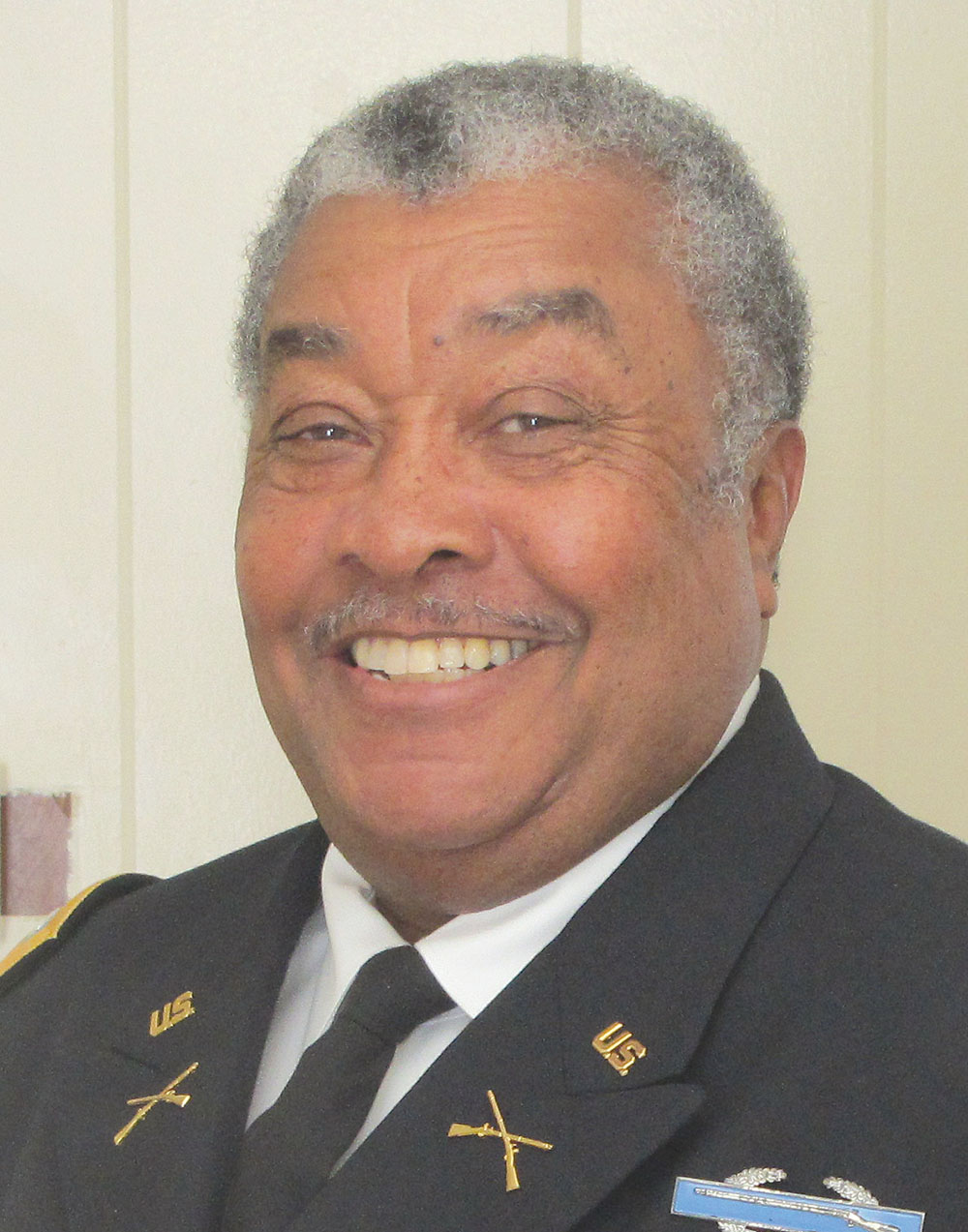
    Walter Larry Stewart
    Walter Larry Stewart

    WINNSBORO – In November, a recount cut his deficit to a mere 4 votes. Tuesday night, Walter Larry Stewart needed no such recount, nor an official protest to stake his claim to the District 3 County Council seat.

    In a stunning reversal of November’s results, which gave incumbent Mikel Trapp the narrow win, Stewart overthrew Trapp, 429 votes to 380.

    The turnout was considerably lower than on Nov. 4, when Trapp pulled in 489 votes, Stewart 484 (485 after the ensuing mandatory recount) and Tangee Brice Jacobs, the third candidate on the ballot, 147.

    Jacobs managed just 34 votes in Tuesday night’s do-over.

    While the weather, the odd timing and the unprecedented nature of the special new election may have stunted turnout, the results, Stewart said, turned on campaign styles.

    “We ran a good, clean, honest campaign,” Stewart said after the results became final. “My opponent slipped into all kinds of dirty tricks and falsehoods. My opponent played too many tricks, and it backfired on him. You can only play so many tricks and people will eventually see through what you’re doing.”

    Nowhere was that more true, Stewart said, than in the Mitford precinct where Trapp mustered only 3 votes to Stewart’s 111. Stewart also fared well in Gladden Grove (Stewart 28, Trapp 4), Hickory Ridge (Stewart 45, Trapp 0, Jacobs 6) and White Oak (Stewart 58, Trapp 34, Jacobs 1), while holding a slight edge in Feasterville (Stewart 52, Trapp 46, Jacobs 13) and Horeb-Glenn (Stewart 21, Trapp 18, Jacobs 2).

    Trapp’s largest support came in his back yard at the Blair precinct where he took in 134 votes to Stewart’s 34 and Jacobs’s 9.

    With the election frenzy behind him, Stewart said it was time to begin focusing on the future of Fairfield County.

    “Now it is time for healing,” Stewart said. “It is time for us to get past all the negativity we have heard over the last nine months. It is time to come together and work together to make Fairfield County a better place for our families.”

    Stewart said his first mission will be to improve the quality of life for the county’s senior citizens, many of whom, he said, lack fresh water and live in substandard housing.

    “We’ve got plenty of money in this county,” Stewart said. “We’ve got to start spending our money on the right things.”

    Gov. Nikki Haley ordered the new election last December after the State Election Commission upheld a ruling by the Fairfield County Commission that at least five voters in the Nov. 4 election in District 3 had been given the incorrect ballot style. With the margin of victory at only 4 votes, the five incorrect ballots were enough to trigger a new election.

    Election results will be certified Friday morning.

    Information on when Stewart would take office was not available at press time. Phone calls to Trapp were also not returned at press time.


  • Council OK’s Sidewalk Funds

    WINNSBORO – In a close 4-3 vote and after extensive debate and voices of opposition from two members of the public, County Council Monday night approved $50,000 for the Town of Jenkinsville to use as matching funds for a S.C. Department of Transportation (DOT) grant for the completion of a sidewalk.

    Jenkinsville Mayor Gregrey Ginyard originally requested the funds, in installments of $25,000 each over the next two budget cycles, at Council’s Jan. 12 meeting. Ginyard said three-quarters of the project, from Buttercup Lane to approximately a quarter of a mile shy of Baltic Circle where the Lake Monticello Park is located, had been completed using DOT grant money. To take the sidewalk all the way to the park, Ginyard said Jenkinsville is applying for another grant and needs $100,000 in matching funds, half of which will come from the County Transportation Committee (CTC).

    The item went to committee, where Council developed an alternative proposal to avoid taking money out of the County’s general fund. That proposal, to take the funds from District 4’s portion of state money that is distributed through the CTC for road paving projects, essentially put the CTC on the hook for the entire $100,000. During their meeting earlier this month, the CTC balked at that proposal, but agreed to pony up the $50,000 provided Ginyard could find the other half elsewhere.

    With the deadline for Ginyard to apply for the DOT grant less than a week away, Council faced the matter for the last time Monday night. Two members of the public, however, urged Council to pass on the idea.

    “Why on earth would we allow the mayor (of Jenkinsville) to come and ask for money from a county that he wants nothing to do with,” Jeff Schaffer, a resident of the Dawkins community, said during Council’s first public comment session. “I want you to consider who you are giving this money to and how it will be handled and followed. This is the same mayor and chairman of Jenkinsville Water Company, the same company that could not account or reconcile its checkbook for five or six years in a row, never mind thousands and thousands of dollars unaccounted for. That’s not who I want to be handing my money over to. Would you?”

    Schaffer said there were not enough people living in or close enough to Jenkinsville to justify spending money to complete the sidewalk. D. Melton, also a District 4 resident, said his dealings with Ginyard in Ginyard’s capacity as president of the Jenkinsville Water Company Board of Trustees have left him with the impression that the mayor is not interested in growing his town. Melton said the water company turned away a development opportunity from Christ Central Ministries in 2010 and has hampered his efforts to expand his Broad River Campground in the area.

    “Why do we need a sidewalk if we can’t bring a business into Jenkinsville?” Melton asked Council.

    Vice Chairman Kamau Marcharia (District 4) later put the motion on the floor to commit the funds over the next two budget cycles. The motion received a second from Mikel Trapp (District 3).

    Marcharia called the public opposition to the project “highly personal,” and reminded Council that they had no authority over how the Jenkinsville Water Company conducts its business. Furthermore, Marcharia said, even though the town limits of Jenkinsville may contain a small population, the voting precinct contains “over 700 registered voters, and I guarantee you 50 percent of those voters are almost within walking distance” of the park and the proposed sidewalk.

    Council members Marion Robinson (District 5) and Billy Smith (District 7) both said they opposed allocating the funds because Council had not yet even begun to discuss the 2015-2016 budget.

    “There’s no way I can sit here and vote for something in 2016 when we don’t even know what the budget is going to be or what other things we have facing us,” Robinson said.

    Robinson also said he was concerned that a portion of the sidewalk, if built, would have to be ripped out to accommodate the driveway of the new fire station the County plans to build near the park.

    The sidewalk discussion came on the heels of Council voting unanimously to contribute $10,000 to Bill Haslett’s World War II memorial project in downtown Winnsboro, fueling Marcharia’s argument.

    “In the last two years from the V.C. Summer nuclear power plant, this county has received $52 million that’s come out of my community, my district,” Marcharia said, “and we’re asking for $50,000 for infrastructure for people to be safe and not walk in the roads. We just sat here and took taxpayers’ money and voted $10,000 without any prerequisites other than the Administrator will follow up and get a report.”

    Marcharia added that it was “grossly unfair that when tens of millions of dollars leave that community and we can’t get anything back.”

    But Smith said Council had committed to a new recreation center and a new fire station in the community. And, he said, Haslett’s group came to Council last year to make his request, not with a month and a half to go before his deadline as Ginyard had done. Haslett’s group, Smith said, was tasked with meeting certain requirements before Council would release the funds and they met those requirements.

    Council Chairwoman Carolyn Robinson (District 2) told Marcharia that of all the money poured into the county from the nuclear plant, the majority goes to funding the school district. The County’s portion, she said, funds the entire budget, not just any single district.

    “The area around Winnsboro for many years was the only one who put money in the coffers for the county,” she said, “so they could say the same thing. We have to look at the budget as a whole, not just for a district. That’s one of the worst things that’s ever happened to us, in my opinion, is the districts.”

    In the end, the Chairwoman cast the deciding vote, supporting the allocation along with Marcharia, Trapp and Mary Lynn Kinley (District 6). Voting in the negative with Marion Robinson and Smith was Dan Ruff (District 1).