Category: Business

  • Barn Express reopens Thursday, Aug. 1

    WINNSBORO – Answering the prayers lifted up by many folks in Fairfield County the last two months, Jennifer Boone has re-opened the popular Barn Express. It opened Thursday morning at 10 a.m.

    It’s going to be the same, but different, the longtime co-owner of the restaurant told The Voice earlier in the week.
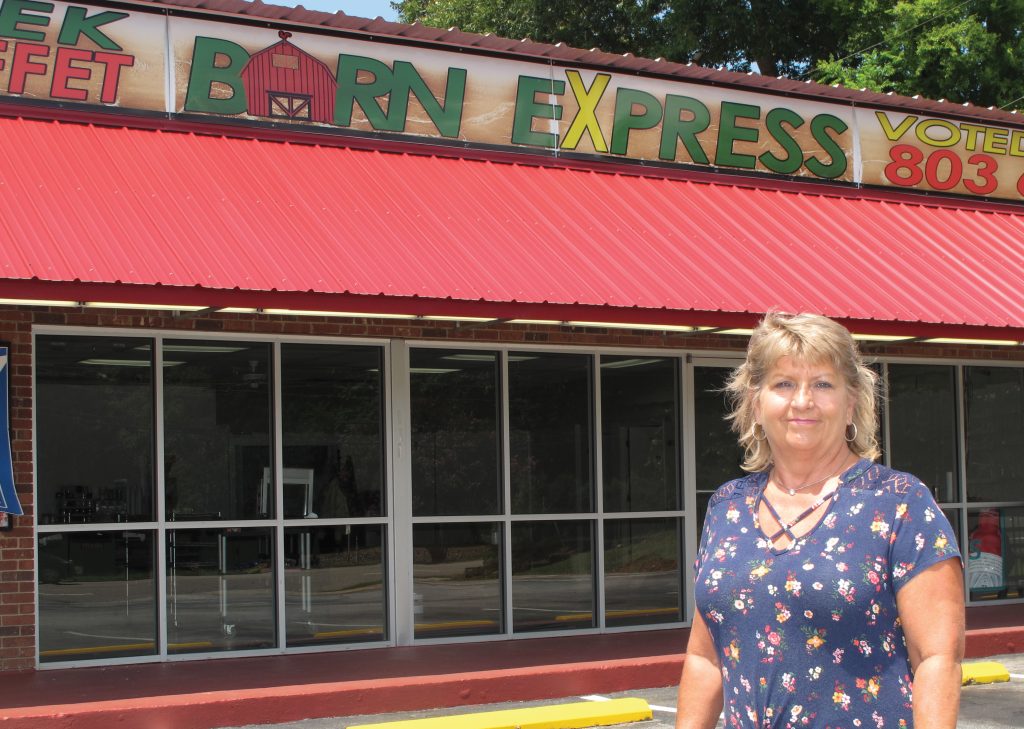
    Jennifer Boone, co-owner of Barn Express. | Barbara Ball

    “It will no longer have the convenience store component,” Boone said. “It’s just going to be a restaurant. I got rid of all the booths – sold ‘em yesterday. We will have tables and chairs in both the dining room and in the front area,” Boone said, running through a list of changes customers will see. “We’ll still have the buffet, but no more busboys. I’m going to have waitresses instead,” she said.

    A new ordering system will take orders straight to the kitchen and make everything more efficient, Boone added.

    “We’ll have a couple of people on the floor to assist the customers so they won’t have to be running back and forth to get a drink,” Boone said. “I’ve bought new kitchen equipment and added another fryer to keep us from running out of fried chicken. We’re also adding subs and some additional sandwiches, and we’re adding to our grill menu.

    “I’m trying to do better. I want our customers to have a better experience,” Boone said.

    One thing longtime customers may not like better is that Boone will no longer be open for breakfast but will be open for an early dinner.

    “We will be open from 10 a.m. until 6 p.m., seven days a week,” Boone said. “But no breakfast.”

    After 24 years running the restaurant, starting in 1995 with her dad, the late Jackie Mincey, and later with her sister Julie Haynes, Boone said she has come back refreshed.

    “We intended to just be taking a vacation and closed for a week when my husband had knee surgery the end of May,” Boone said. “But during the same week, Julie became a grandmother for the first time. Plus my mom was not well, so we just shut the place down and decided to sell it. I realized that the welfare of my husband and mom were more important to me than the store. Julie felt the same about her new grandbaby. But, you know, when my husband got well and my mom was feeling better, I didn’t have anything to do! I began missing all our customers. So I decided to open back up, but with changes,” she said.

    Haynes, on the other hand, decided to continue on playing with her new grand, and will not be rejoining her sister in the business. The two purchased the business from their dad in 2003.

    “While we were closed, we started to hear from our customers. I didn’t realize how important the restaurant was to the town and how much our customers missed us,” Boone said. “It makes me feel really good that we apparently did the right thing all these years to have so many loyal customers. With the changes, I’m looking forward to opening back up.”

    The Chamber of Commerce is planning a ribbon cutting for the grand re-opening sometime in mid-August, Boone said.

    “But I’m going ahead and opening now so we have time to get used to the new way we’ll be doing things. It will give us time to adjust,” Boone said. “I’m looking forward to seeing everyone again, and I think the customers will like everything better.”

    Everything except, maybe, the part about ‘no breakfast.’
  • Council leases former fire station for Ridgeway retail

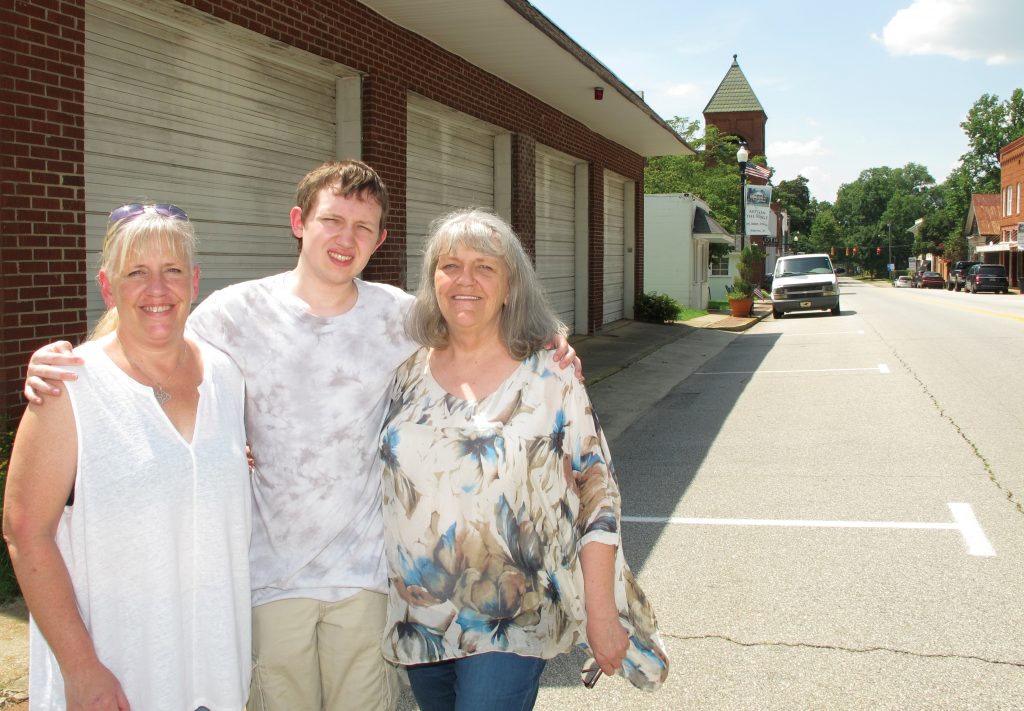
    Carol Allen, right, owner of Laura’s Tea Room, announced that she will bring a consignment store to the former fire station in downtown Ridgeway. Her daughter, Kelly Quinn, and grandson, Seamus, who are visiting from Ireland, will be helping with the store opening. | Barbara Ball

    RIDGEWAY – Continuing concerns about how Ridgeway’s new water tower turned out, prompted an executive session at the beginning of the Town Council meeting Thursday evening.

    ‘Contractual Matter regarding Civil Engineering of Columbia (CEC),’ was the stated reason on the agenda for the executive session.

    Following the session, Councilman Rufus Jones made a motion to hire an independent surveyor to measure the height of the town’s new water tower which was constructed by CEC. The tower sits adjacent to Geiger Elementary School.

    “We continue to have concerns about the height of the new tank,” Jones said. “And we want a representative from CEC to be present for the measuring.”

    In a follow up interview with The Voice, Councilman Dan Martin said the measurement is needed to determine whether there is a discrepancy between the height of the town’s new water tower and the old one.

    “If the new tower is shorter than the old tower,” Jones said, “that could adversely affect the water pressure for the town’s customers.”

    The motion passed 4-1 with Councilwoman Angela Harrison voting against.

    Allen Leases Fire Station

    A second discussion in Executive Session resulted in a unanimous vote in public session to accept a request from Ridgeway resident Carol Allen to lease the former fire station at 170 S. Palmer Street, commencing Aug. 8.

    Allen, who owns Laura’s Tea Room down the street in the same block, said she plans to open a consignment shop ‘of sorts,’ but will not have enough room for booth rentals.

    “But we will welcome individual consignments, crafts and handmade items. We also plan to feature an assortment of nice pet items, plus we’ll carry some neat things that we don’t have space for in the Tea Room,” Allen said.

    “I guess I need to get together with my tea gang and decide exactly what we’re going to do over there, but I’m looking forward to having sort of an open air market as we roll those big bay doors up every day,” Allen said.

    Business License Fee Up

    Council voted unanimously to pass a resolution to amend Ridgeway’s Business License Fee schedule by increasing fees 20 percent.

    “The Town has not adjusted the business license fee schedule for cost increases or standard inflationary factors since the fee schedule was originally adopted,” the resolution stated.

    Councilman Dan Martin said the across the board fee increase is necessary to cover some of the increase in costs of providing services in the town.

    Rates are predicated on the class of the business and the income generated. The lowest fee is $48 for $0 to $10,000 in income, plus $1.35 per thousand or fraction thereof over $10,000.

    There are also specific daily license fees for peddlers and a $5 license fee for a yard sale.

    Persons or firms not licensed by the Town of Ridgeway must provide proof of a minimum $2,500 performance bond before they can receive a permit to work in the town.

    Councilman Jones pointed out the difficulty in monitoring the contractors who come to Ridgeway and provide services.

    Mayor Cookendorfer agreed.

    “I try to keep an eye on trucks, etc. in town, and when I approach them, they typically go to Town Hall and secure a business license for Ridgeway,” Martin said.

  • Doko Depot almost there

    Doko Depot

    BLYTHEWOOD – Four years and many meetings later, Doko Depot is on the cusp of being finished, purchased and open for business by sometime in September or October, according to Chris Hill of Hill Construction LLC.

    Representing Don and Sarah Russo of Freeway Music who are purchasing the building, Hill appeared before the Board of Architectural Review (BAR) Monday evening to request approval for a Certificate of Appropriateness (COA) to permit the alteration of the Doko Depot Building.

    The proposed alterations will address additional points of entry to the building to accommodate the music store on one end and a restaurant on the other.

    The proposal includes the replacing two rear windows with entry doors consistent in appearance with the doors present on the existing structure. Another alteration would provide entry to and from a music/storage room and accommodate food deliveries to the restaurant.

    Additionally, Hill is requesting a door located at the north end of the building be relocated to redirect traffic. The proposed doors will visually match the existing doors.

    The applicant also proposed the installation of two new windows on the rear of the building (side facing the railroad track). Those windows would provide additional light for classrooms in the music store. The windows will be identical to the existing windows, so that the character of the property will be maintained, Hill said.

    The board voted unanimously to approve the alterations

    Signage will be reviewed by the BAR at a later time in consultation with staff.

  • New is Better!

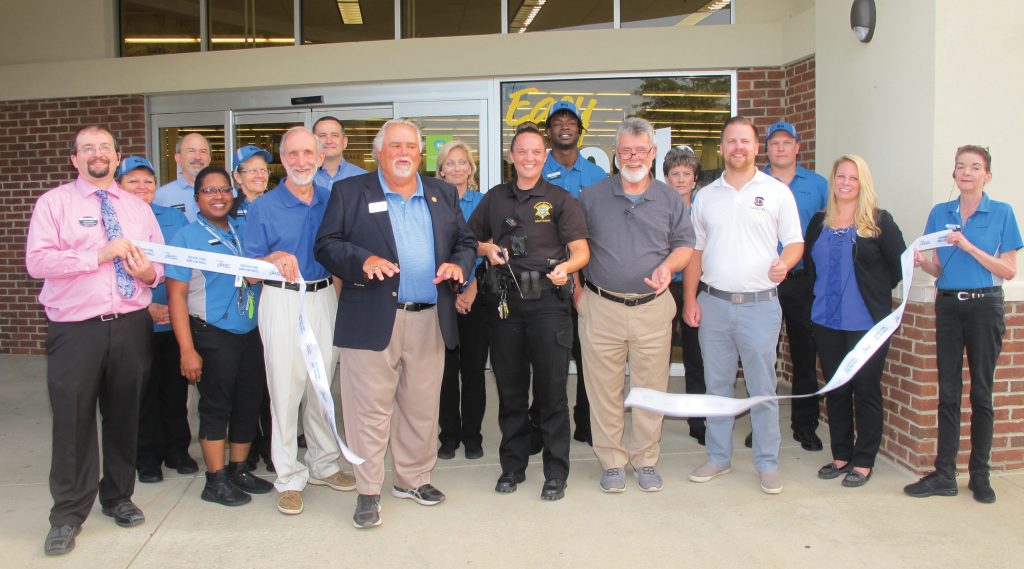
    BLYTHEWOOD – The Blythewood Chamber of Commerce and Mayor J. Michael Ross cut the ribbon Wednesday morning for Food Lion’s grand re-opening.

    Store manager Stephanie Hartford welcomed the community and handed out $10 gift cards to customers. The store boasts new checkout stands, more fresh produce, a wing bar and hand battered chicken in the deli.

    Below, Hartford presents the morning’s first customer, Barbara Voyles, with a bouquet of roses.

  • Perfect Score for Restaurant Next Door

    WINNSBORO – If the owners of downtown Winnsboro’s newest restaurant, RND (Restaurant Next Door) look happy, it may be because they received the distinction last week of receiving a score of 100 when DHEC dropped by for an unannounced inspection of the restaurant’s kitchen. RND opened June 16. Owners are Shaun (center) and Crystal (right) Paulk and their three daughters, from left: Shauntae, Imani and Genesis. RND is located at 147 S. Congress St., and is open M-Sat, 11 a.m.-10 p.m. and Sundays, 11 a.m. – 8 p.m.

  • Council to raise franchise fees

    BLYTHEWOOD – Mayor J. Michael Ross announced Friday morning that council is planning to raise the franchise fees that town residents pay on their power and water bills from the current three percent ($3 per $100) to five percent ($5 per $100).

    The revelation came during the public hearing section of a special meeting called to grant new 30-year non-exclusive franchise agreements to both Fairfield Electric Coop and Dominion Energy.

    Lake Ashley resident Edith Norris came to the meeting with questions about the fee.

    “I understand that this fee is collected on our light bill on behalf of the town and that Dominion and Fairfield Electric give this fee back to the town. Is that standard for all the town residents? How much does the town collect and what is that money used for?”

    Ross explained that the three percent franchise fee is across the board for all residents in the town and that the town collects franchise fees not just from the power companies, but from insurance companies, Winnsboro water service and other companies that do business in Blythewood.

    “This current agreement with the power companies has been in effect since 2001 – 18 years. And it’s remained the same, three percent,” Ross said.

    He explained that Fairfield Electric returns about $140,000 in fee collections annually to the town and Dominion returns about $70,000.

    “Since there is no taxation in Blythewood, this is one of the few revenue streams we have to operate with,” Ross said. “So all these fees usually go back into the general fund for operating the park, paying employees and other things since there is no tax millage,” he said.

    “It’s been three percent for 18 years, so it’s time to go up on the fee, like all the other municipalities have done. Things have gone up more than three percent over 18 years and we don’t have another way to raise money for operating expenses other than building permits and business licenses,” Ross said.

    “I understand, but how does a franchise fee differ from a tax?” Norris asked.

    “I don’t know,” Ross said, looking to town attorney Jim Meggs for guidance. “It’s just a word,” he said, shrugging.

    “It looks like a tax to me,” Meggs said.

    “Only the residents who live in the town limits pay the fee,” Norris said. “Before we annexed into the town, we didn’t pay this fee. So, it is a tax, but it’s called a fee.”

    “The town requires the power company to collect this fee,” Morgan Harrell representing Dominion, added. ”The power company doesn’t require the town to pay it.”

    Meggs weighed in with some clarity on the issue.

    “Under our state constitution, municipalities have authority over streets and rights of way inside the town limits. We even have some say about the Department of Transportation’s rights of way,” Meggs said. “The constitution requires that if people use the town’s streets’ right of way, they have to have a consent or franchise agreement with the town. It’s a traditional municipal thing across the state. Counties don’t have franchise authority, so you don’t pay fees in the county.”

    “I realize it’s a way of collecting tax,” Norris said, pressing the issue, “but a franchise fee can’t be deducted on my income tax. So why isn’t it called a tax?”

    “I don’t know,” Ross finally said. “It is what it is. It gives the town the money it needs to run the town.”

    While Norris said that because the town has grown it is therefore collecting more money in franchise fees even though the fee has not increased.

    Ross countered that there is more work to do and pay for when there are more people in the town. He said it is not final that the fee will be raised to five percent. He said it may only go up one percent.

    Harrell pointed out that the town can also raise or lower the fee at any time during the 30-year contract. The fee, she said, is not bound by the contract.

    Ross said the new fee will be finalized at second reading and that any change in the fee would go into effect Jan. 1, 2020.

  • CAB plans expansion

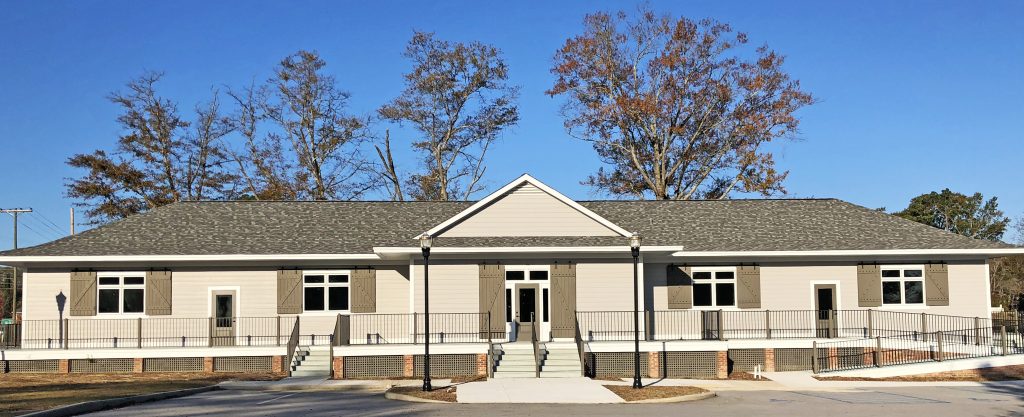
    BLYTHEWOOD – Christian Assistance Bridge filed paperwork with the Town Hall on April 23 requesting a Certificate of Appropriateness from the Board of Architectural Review (BAR) to expand its facilities to accommodate a food pantry.

    On Monday evening, the Board, along with the Town Administrator Brian Cook and two town employees convened at the Manor to hear the request.

    But the applicant did not attend, so the Board was unable to get answers to questions and therefore could not make any approvals, according to BAR Vice Chairman Jim McLean.

    The Board did, however, review notes made by the town’s architect, Ralph Walden who noted the following suggestions for items on the project that would need tweaking in order for it to meet the COA requirements for approval.

    • Be sure handicap ramp meets all codes
    • Be sure new shingles match existing shingles
    • Be sure the frieze is the same size all around the building
    • Be sure the new brick is the same as the existing brick

    McLean consulted Board member Alisha Coleman, also an architect, who agreed with Walden’s assessment. She also pointed out the need for adjustments to the proposed retention pool.

    The proposed expansion, which is to the rear of the existing building, is eligible for BAR consideration based on its location in the Town Center portion of the Architectural Overlay District, Cook wrote in a memo to the Planning Commissioners.

    Under the Town’s code, any new construction in the Town Center District must meet the approval of the BAR if it constitutes a major visual impact.

    Cook also reported that the food pantry must reflect the style and material of the principal structure.  The pantry will be constructed of a red semi-smooth brick. The existing building, located at 126 Blythewood Road, is built with similar brick.

    McLean and Cook said the applicant’s representative would also need to bring samples of shingles, brick and other materials to the July meeting.

  • Winnsboro Fibers expanding

    WINNSBORO – The former DuraFiber Technologies mill in Winnsboro is getting another shot at life.

    Fairfield County Council recently approved an ordinance certifying the Maple Street property as an abandoned textile mill. The vote passed unanimously on June 10.

    County Administrator Jason Taylor said Winnsboro Fibers, the facility’s current owner, plans to refurbish parts of the property, and wants to use state tax credits to help accomplish that. The abandoned designation allows the company to apply for those credits that will be reinvested into the property.

    In time, the company hopes to add some new facilities and make additional hires, Taylor said.

    “The state tax credits will allow them to invest in the facility to get it back to where it’s productive,” Taylor said.

    At second reading on May 24, Ty Davenport, the county’s economic development director, explained the ordinance in greater detail.

    Davenport said Winnsboro Fibers approached the county, seeking support for the company’s rehabilitation plans.

    Winnsboro Fibers plans to invest upwards of $6 million in the facility. The company currently employs about 19 workers, though Davenport remained optimistic more jobs could be created.

    “Hopefully in the future they’ll be able to add a second and third shift and add more people,” he said. “That [would] be a good thing for the county and for the town of Winnsboro.

    Winnsboro Fibers’ plans call for demolishing part of Plant 1 and leaving the weave room intact. Davenport said the company plans add ons to the building, though the additions wouldn’t be readily visible.

    Plant 2 and the administration building would remain intact. There are also plans to rehabilitate the plant’s iconic clock tower.

    “The facility was in fact a textile facility,” Davenport said. “All we’re doing is confirming and support their intent to rehabilitate the facility.”

    In addition to jobs, reinvigorating the plant could also help boost utility revenue, Davenport said.

    Winnsboro utility officials previously estimated the plant’s closure would cost the town between $400,000 and $441,000 in lost revenue per year, including $256,247 in lost gas revenues, according to a July 20, 2017 story in The Voice.

    Winnsboro Fibers acquired the mill from DuraFiber Technologies, paying $839,000 for the property in October 2017, according to Fairfield County property records.

    DuraFiber Technologies declared Chapter 7 bankruptcy in 2017. It operated three plants, including the Winnsboro facility. It employed around 800 people at all three locations, including 220 in Winnsboro.

    More than a century old, the Winnsboro property has housed several companies, including Uniroyal Goodrich Tire, Michelin North America and Invista.

  • QuaLex LLC investing $2M in Fairfield

    WINNSBORO – Another manufacturing company is coming to Fairfield County that isn’t asking the county for incentives.

    Ty Davenport, Economic Development Director for Fairfield County, announced last week that QuaLex Corporation, LLC will be investing $2 million in a new steel stamping manufacturing plant in Fairfield County. It will be located in an existing building across from the former Caterpillar facility.

    The Georgetown, KY based company is expected to hire up to 40 workers to staff the new plant. QuaLex supplies materials to Trane Manufacturing which announced two years ago that they would be doubling the size of their existing manufacturing facility on Two Notch Road.

    Davenport said he would share more information about the plant as it is available, conduct bond hearings, preside over minor misdemeanor cases and hear small claims civil cases.

  • PC proposes allowing sandwich signs, prohibiting feather signs

    Planning Commissioners recommend allowing sandwich board signs in town.

    BLYTHEWOOD – The prohibition of sandwich board signs in the town has long been the bane of many shop owners in Blythewood. Those days may be over if a recommendation made to Town Council last week by the Planning Commission comes to fruition.

    At the June 3 Planning Commission meeting, Town Administrator Brian Cook proposed an amendment to the current sign ordinance for options that would allow all the town’s businesses to advertise with sandwich boards so long as the signs meet certain size requirements and are set up and taken down at specified times.

    The signs can be any A-frame sign consisting of two boards hinged at the top hanging back to back.

    Sandwich board sign regulations were added under a section for exempt signs. One sandwich board sign can be permitted to an onsite commercial owner/operator only during the hours when the establishment is open. The sign can be no larger than three feet tall and two feet wide, with a maximum of two sign faces.

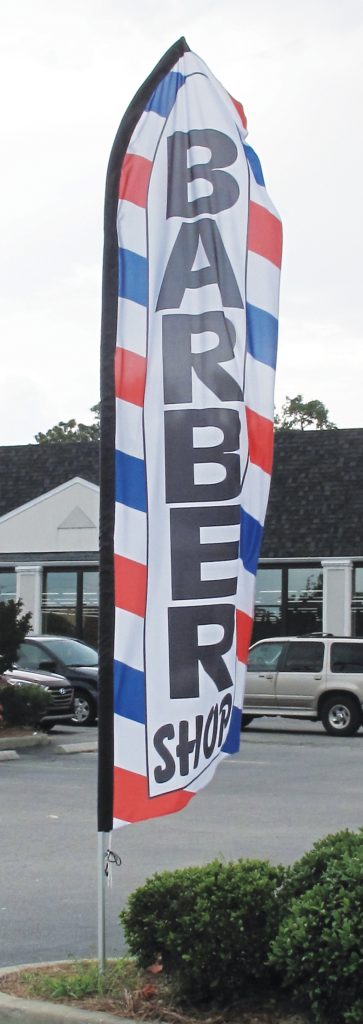
    Town’s PC recommends prohibiting feather flags.

    Cook said the town can remove any sign that causes interference with vehicular or pedestrian traffic, or in the event of any emergency situation, or that interferes with any work that is to be performed on the public sidewalk and/or right-of-way by or on behalf of the town.

    In all instances, the amendment specifies that the sign shall be placed on the business’ lot, at least five feet outside of right of way, shall be constructed of a material and weight to ensure general stability and shall not block visibility.

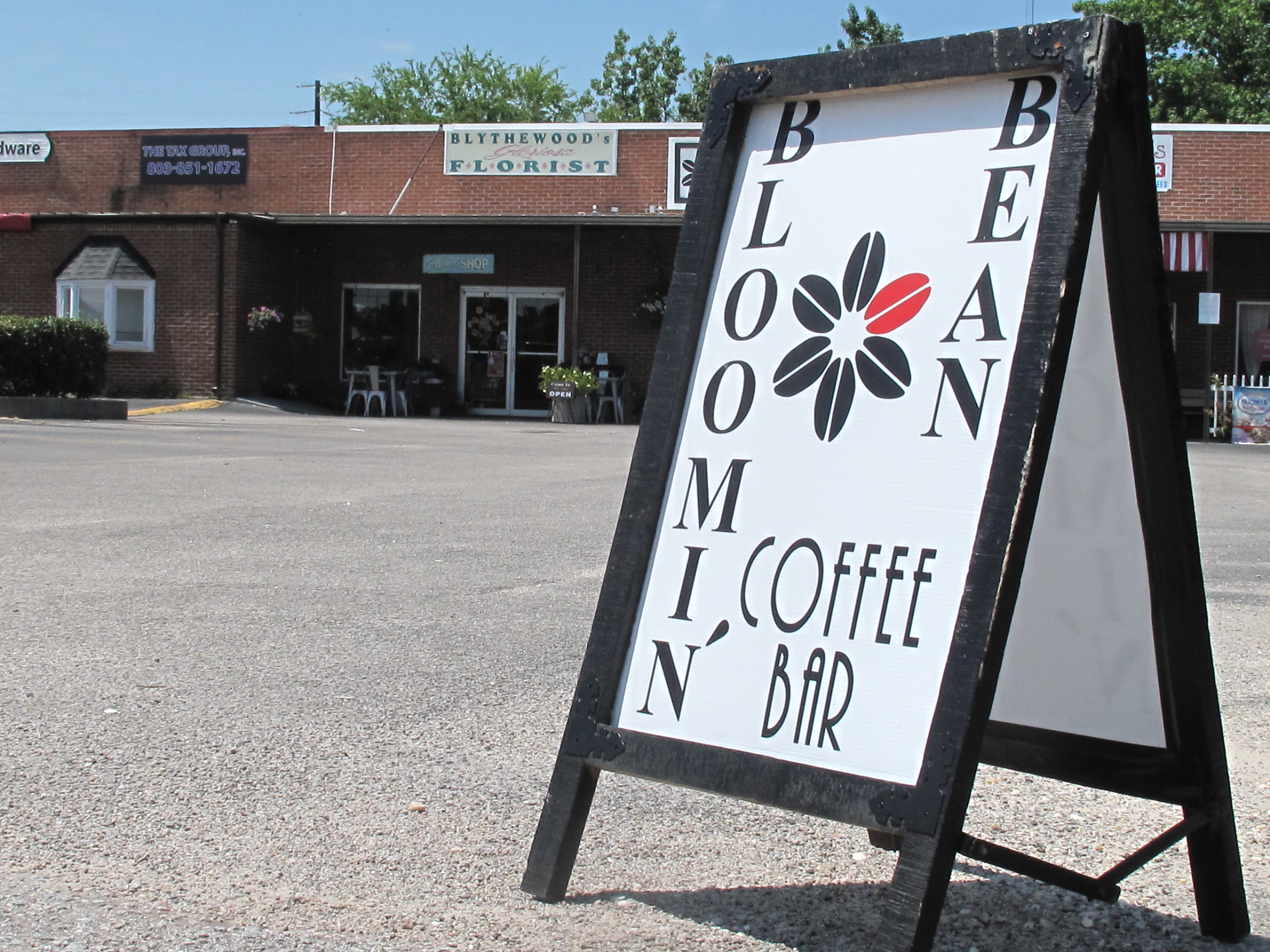
    While sandwich signs are currently prohibited, many businesses such as Bloomin’ Bean Coffee Bar and others have set them out for the last few years with little interference from Town Hall.

    That’s not to say that a business can stake out other types of signs in front of the business.

    Cook clarified that feather flags, which have been popping up around town the last couple of years, are prohibited under the amendment.

    Other prohibited signs, according to the proposed ordinance, include “any sign (other than a government sign), banner, feather flag, festoon, or display placed on any curb, sidewalk (except where otherwise permitted in this subchapter), post, pole, hydrant, bridge, tree or other surface located on, over or across any public street or right-of-way, or any banner, placed on stakes on a property, unless a permitted temporary or grand opening banner, otherwise permitted.

    The proposed sign amendment was approved unanimously and will now move to Town Council for the first of two votes on June. 24 at The Manor.