Category: Business

  • New Developer Eyes Rimer Pond Road

    Rimer Pond Map Jan 22 copyBLYTHEWOOD (Jan. 21, 2016) – Another Rural (RU) zoned property on Rimer Pond Road is on the block for rezoning; however, this one hasn’t drawn the ire of neighbors as have other recently requested rezonings on the road.

    A request by Kevin Steelman, representing Land Tech developers, to amend the current RU zoning on a 41+ acre Rimer Pond Road property to Residential Low Density (RS-LD) zoning for single-family homes will be heard by Richland County Planning Commission at 1 p.m., Monday, Feb. 2.

    The tract lies between the VillageChurch and a 5-acre parcel across from Blythewood Middle School that developer Hugh Palmer recently requested to have rezoned for commercial use. That request failed to win approval of Richland County Council in December when the motion died with a 5-5 tie vote.

    “This property already has higher density zoning on both sides and RS-LD on the back side,” Steelman told The Voice. “We decided low density zoning would be more in keeping with the surrounding area. I live in the area and we want to keep a rural feel to the road.”

    With a pond stretching along the road frontage leaving no room for a road, Steelman said he anticipates leaving a border of trees the length of the property with only one entrance into the neighborhood off Rimer Pond Road.

    “Land Tech already owns a 30-acre track adjacent to the 40-acre property,” Steelman said. “We have the option of a second entrance through our other property onto Longtown Road West.”

    Steelman expects to build about 60 homes on the site and has a commitment from Palmetto Utilities for sewer.

    “As for water, we have the option of using the Town of Winnsboro line that runs through the property, or we can use the City of Columbia line that is being installed along Rimer Pond Road. It will depend on the timing of the project and the fees,” Steelman said. “We have spoken with both providers and don’t anticipate any issues with either.”

    “I don’t think any of us really want any more development along Rimer Pond Road,” said resident Michael Watts who has frequently opposed other requested rezonings on the road. “But, realistically, something is going to go there. We don’t want commercial and we don’t want medium or high density, so this is probably the best we can hope for.”

    To print a copy of the Planning Commission agenda and rezoning request packet go to richlandonline.com or contact Susie Haynes at 576-2176. Steelman can be reached at 540-3474.
     

  • Shell Building Profit No Sure Thing

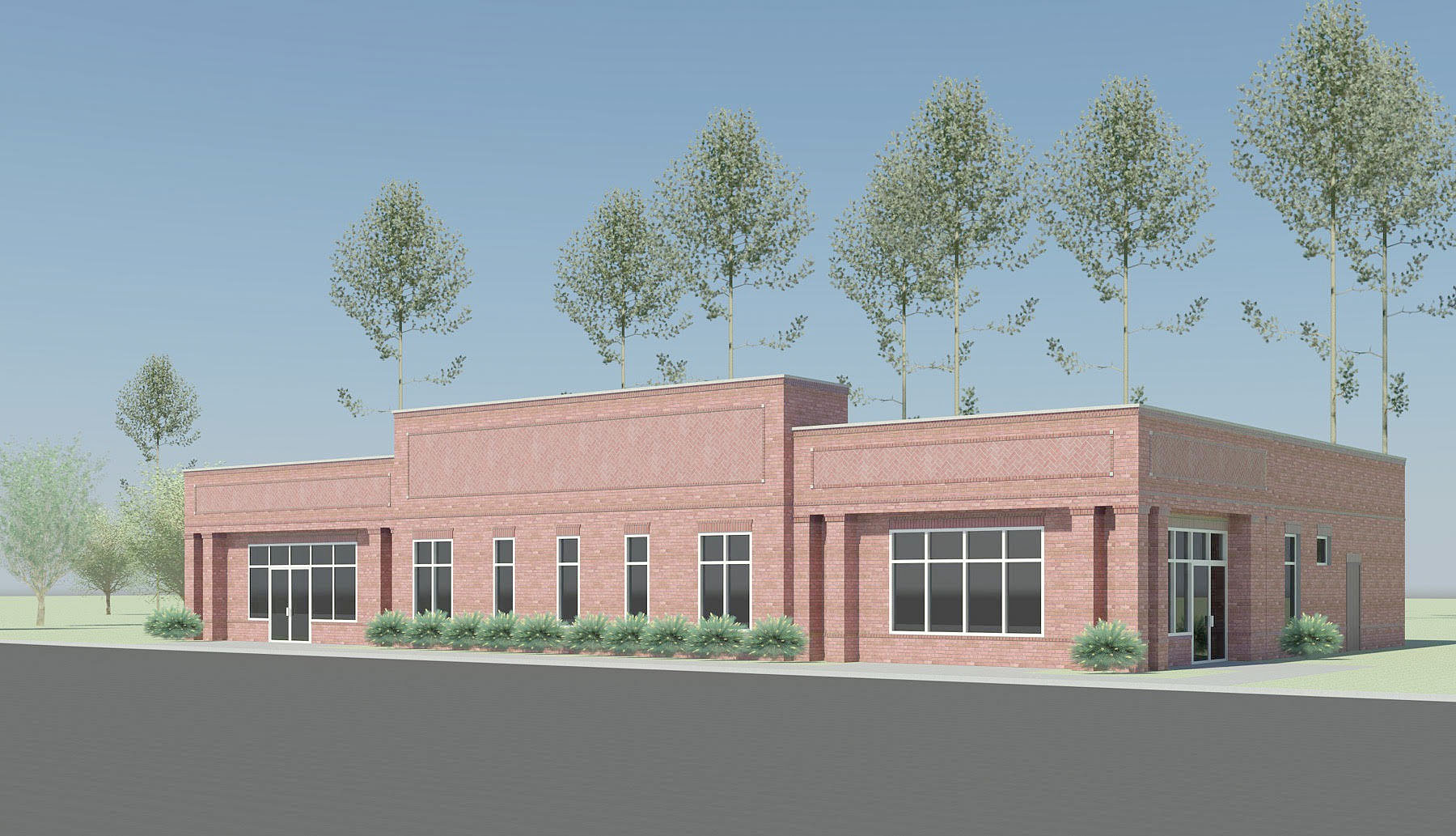
    BLYTHEWOOD (Jan. 21, 2016) – As Town Council’s proposed shell building, to be built in the park across from Town Hall on speculation, moves forward, there is no guarantee that the Town will reap a profit or even break even when the 3,800-square-foot building is sold, Ed Parler, the Town’s Economic Development Consultant, told Council members during their monthly workshop Tuesday morning.

    “Whether the Town gets back all the money it puts into the shell depends largely on whether we sell the land with the building or lease it over a period as long as 99 years,” Parler said, explaining that the land is currently valued at $130,700 on the Richland County Tax books.

    “The cost of the shell will be $456,881, paid for by a grant from Fairfield Electric Company. When you add on the $100,000 – $200,000 it will cost the end user to finish the interior of the building and the $130,700 cost of the land, the sale price could total up to $800,000,” Parler said. “I don’t think it is reasonable to expect that someone will offer that.”

    Including the land in the sale will make it difficult to get the full value of the land, Parker said. “There’s no guarantee we’ll get every dollar of that back. We just have to look at this as an economic incentive project.”

    Parler told Council that leasing the land is a more favorable option than selling it for several reasons. A lease would lower the purchase price of the project, making the sale more attractive to an end user, and a long-term lease might allow the town to recoup some of its investment. Parler provided a spread sheet outlining various returns the Town could realize from a multiple-year lease. Lease payments of $330/month at 1 percent over 40 years, for instance, would total $158,400. He said a long-term lease could be done without clouding the financing of the building.

    Parker said that while a deed restriction on the land would allow Council to limit the kinds of businesses that could operate on the property, a lease would allow the Town to further restrict the use of the property by future owners.

    The grant, which was originally to be used by the Town to build a restaurant for Sam Kendall three years ago, must be used for specific economic development projects or the Town must return it plus interest and penalties to Fairfield Electric.

    A new timeline for the project is to put it out for construction bids in early February, to award bids in late February or March, begin construction in March, advertise for the sale of the building in April and close on the property in June.

    While Council did not vote Tuesday on whether to move forward with the project, it did not stop the shell’s progress, prompting Parler and Ralph Walden, architect of the shell building, to go before the Board of Architecture Review (BAR) on Tuesday evening to seek a Certificate of Occupancy (COO).

    BAR members approved the building, but because Walden was not prepared to present lighting, landscape, signage and a site plan, the BAR granted a conditional COO until which time those items were brought to the board.


  • Half of H-Tax Unpaid

    RIDGEWAY (Jan. 15, 2016) – Owners of a pair of Ridgeway business could be on the hook for fines or even jail time for not kicking in their share of the Town’s hospitality tax, according to documents obtained from Town Hall this week.

    The issue came to light at Town Council’s Jan. 7 work session as Mayor Charlene Herring suggested revisiting the ordinance to ensure it was clear on the payment schedule and that it included penalties.

    “Some people were given the option to pay once a year, some people were given the option to pay every three months, some were given the option to may once a month,” Herring said.

    But Herring was reminded by the Town Clerk that those options were only part of Council’s initial discussions of the tax. The ordinance, which passed second reading last May and went into effect on Aug. 1, clearly states that the tax (2 percent on the sale of prepared meals and beverages) is due once a month, no later than the 20th day of the month.

    Of the Town’s four establishments subject to the tax, only two – the Old Town Hall Restaurant and City Gas – have made their monthly contributions. The Tea Room and the Ridgeway Station Café have made no payments.

    In 2015, the Town took in a little more than $2,559 in hospitality taxes from the two businesses making their payments.

    Town Clerk Vivian Case told Herring during the Jan. 7 meeting that the Town had sent out late notices to the Tea Room and the Station Café, but had received no response.

    According to the ordinance, hospitality taxes not paid on time “shall be subject to a penalty of five percent of the sum owed for each month or portion thereof until paid.”

    Failure to pay the tax, the ordinance states, “shall constitute a misdemeanor punishable by a fine of not more than $500 or imprisonment for up to 30 days, or both.”

    Council is expected to revisit the issue during their Jan. 14 regular meeting.


  • Enor: Winnsboro Plant Safe During Chapter 11

    WINNSBORO (Jan. 1, 2016) – Bankruptcy proceedings will not affect production of employment at Enor Corp. on 1 Quality Lane in Winnsboro, a spokesperson for the New Jersey based toy company told The Voice this week.

    “This is just a credit restructuring,” the spokesperson said. The Winnsboro plant, he said, “is not going to be affected.”

    Toy production is seasonal, Enor’s spokesperson said, with production entering its busiest time of the year now. Although the spokesperson declined to say exactly at what capacity the Winnsboro plant was currently operating, he did say the plant would be “back up to full speed shortly.”

    Enor filed for Chapter 11 bankruptcy protection in the U.S. Bankruptcy Court, District of New Jersey on Dec. 2. According to documents included in the filing, the manufacturer of toys and games said they faced more than $5 million in liabilities, while claiming only $248,659 in assets with cash, cash equivalents and financial assets totaling just over $11,595.

    On the list of Enor’s top 20 creditors, according to the documents, is the Town of Winnsboro’s Utility Department, to whom the company owes $135,029. John Fantry, Winnsboro’s utilities attorney, said last month that the Town would file a claim in an effort to recover the funds.

    As part of their recruitment to Fairfield County by the S.C. Department of Commerce, Enor received a $300,000 Rural Infrastructure Fund grant from the S.C. Coordinating Council for Economic Development. Those funds were used to retrofit the 78,000-square-foot former Ruff & Tuff building at 1 Quality Lane, off Highway 321 S.

    The company was also the beneficiary of a Fee-in-Lieu-of-Taxes (FILOT) agreement with the County. Under the agreement, Enor committed to invest a minimum of $2,500,000 in economic development property and a minimum of $3,870,000 in property subject to ad valorem taxation over a 20-year period. Enor also agreed to create at least 151 new full-time jobs at the plant over a five-year span.

    Enor’s payments to the County in lieu of taxes were capped at a 403.5 mills, with a 6 percent assessment ratio on economic development property.

    Milton Pope, Interim County Administrator, said last month the Chapter 11 filing would have no immediate impact on the incentives package.

    “However, the County and the Department of Commerce are closely monitoring this situation,” he added.

    Enor is being represented in Bankruptcy Court by Jeffrey A. Cooper of the Livingston, N.J. law firm of Rabinowitz, Lubetkin & Tully. The first meeting of creditors is Jan. 6, 2016 in room 3B of the Martin Luther King Jr. Federal Building in Newark, N.J. The last day for creditors to file a claim is April 5, 2015.


  • Pellet Plant Rezoning on Hold

    WINNSBORO (Dec. 25, 2015) – Third and final reading to rezone two parcels of property near White Oak for the controversial AEC Pellet 1 USA wood pellet plant is officially on hold, Interim County Administrator Milton Pope said during County Council’s Dec. 15 meeting.

    But that does not mean, Pope added, that the project may not ultimately move forward.

    “The parent company, Abengoa, does have financial challenges,” Pope said during his Administrator’s report. “They’re looking at financially restructuring. The project itself is pending. The project has not been shelved.

    “As far as the rezoning request, that has been placed on hold,” Pope added. “I do not know what the final determination of the company will be on that particular matter, but I would anticipate during the first part of the year maybe having some official statement regarding that.”

    Spain-based Abengoa reportedly filed for preliminary creditor protection under Spanish Insolvency Law on Nov. 24. In early December, the company began implementing layoffs at facilities worldwide. Abengoa’s Arizona offices have been closed, according to media reports, with staff at its corporate offices in St. Louis down to a bare minimum. The entire staff, save for a handful of upper-management positions, at the company’s cellulose ethanol plant in Kansas has reportedly been put out of work and the plant has been idled since November.

    Council passed first reading on Oct. 12 of an ordinance to rezone from RD (Rural Resource District) to I-1 (Industrial District) 2.01 acres owned by Rosezenna Cason White at 137 Cason Road, and 180 acres owned by Wateree Holdings LLC c/o Forest Investment Associates, also on Cason Road.

    Second reading passed on Oct. 26, but not before 10 neighboring landowners spoke out against the plant.

    Council announced the tentative arrival of AEC Pellet 1 during their Aug. 24 meeting, when they also passed third reading on and disclosed the details of the company’s incentives package.

    Pope said during the Aug. 24 meeting that the terms of the Fee-in-Lieu-of-Taxes (FILOT) agreement included a $125 million investment by the company, as well as the creation of 75 new full-time jobs. AEC Pellet will be assessed at a ratio of 6 percent, Pope said, and will pay a fixed millage rate of 423.3 mills for their first 30 years. They will also receive a special source revenue credit of 60 percent per year for the first 10 years.

    But in 10 years, there may be no market for what the plant produces, according to Emily Zucchino, a campaign organizer with the Asheville, N.C. environmental advocacy firm Dogwood Alliance.

    “This market is based on European policies, which we know with working with policy makers in Europe will change in the next 10 years,” Zucchino told Council before the Oct. 26 second reading. “The wood pellet industry is an extractive export market to feed power plants in Europe, and is in a transitional market until these power plants switch to wind and solar. So my question for you is what happens to Winnsboro in 10 years when there are no longer subsidies in the market for these wood pellet facilities?”

    Pollution is also a concern with wood pelleting plants, Zucchino said, with facilities generating fine particulate matter into the atmosphere. In N.C., she said, communities living near similar facilities have seen increases in respiratory illnesses, bronchitis and asthma.

    According to DHEC documents, and as first reported in The Voice on Aug. 29, emissions generated by the facility would include particulate matter (less than 10 micrometers in diameter and less than 2.5 micrometers in diameter), nitrogen oxides, carbon monoxide, sulfur dioxide, Volatile Organic Compounds (VOC) and Hazardous Air Pollutants (HAP). The notice states, “a federally enforceable facility-wide limit of less than 250 tons per year” of the particulate matters, the carbon monoxide and VOC “would be established, thereby enabling the facility to be below Prevention of Significant Deterioration (PSD) major source thresholds.”

    Federally enforceable limits of 10 tons per year would also be established “of any single HAP, or less than 25 (tons per year) of total HAPs,” the documents state.

    An air quality permit (permit number 1000-0039-CA) was issued to AEC Pellet on March 16, DHEC said.

    White Oak resident Carrie Matthews presented Council during the Dec. 15 meeting with a petition she said was signed by 294 residents of the community opposing the plant.

    “We’re not happy for the Abengoa plant company, that they are in such dire financial straits,” Matthews told Council, “but do hope that because of that situation the AEC Pellet company will be dropping plans altogether to locate in the White Oak community.”


  • Cambridge Point Gets Water Deal

    WINNSBORO (Dec. 25, 2015) – Town Council during their Dec. 15 meeting gave the green light for water for a Blythewood subdivision on which developers plan to break ground in the spring.

    Council voted unanimously to approve 3,000 gallons of water per day in a willingness to serve letter for 100 planned homes in the Cambridge Point subdivision on Boney Road. The vote comes just two weeks after Council met in secret with developer Bucky Drake to discuss the project. A commercial aspect to Cambridge Point, which may require even more taps, is still slated as tentative.

    Cambridge Point is taking precedence over Drake’s other development, Red Gate, to which Winnsboro has already committed water for 100 lots. Red Gate, sources told The Voice, is running at least a year behind Cambridge Point, and in addition to the already approved 100 taps may need 240 more if developers opt for an apartment complex in the subdivision.

    Other Business

    Council also gave the OK to a 1-year contract with Coral Springs Aquatic Management, at $200 per month, for the maintenance of the pond at Fortune Springs Park. The company has recently restored the pond for the Town.

    “I’ve ridden by there and the pond looks about as good as it’s ever looked,” Mayor Roger Gaddy said.

    Accepting the recommendation from the Finance Committee, Council OK’d $103,761 for a boom truck as well as $21,000 for a meter-reader truck for the Electrical Department.

    Gaddy said the Town’s current meter-reader truck is only valued at $3,800 but needs more than $7,000 of repair work, making the purchase of a new truck a better option. Town Manager Don Wood said the cost would be shared between the gas, electric, water and sewer departments.

    Councilman Clyde Sanders pointed out that the meter-reader truck was not a budgeted expense. However, he said, Council had budgeted $120,000 for the boom truck, making the unbudgeted financial impact $4,761.


  • Offices Get Conditional OK

    The proposed medical office building, slated for Blythewood Road.
    The proposed medical office building, slated for Blythewood Road.

    BLYTHEWOOD (Dec. 24, 2015) – The Board of Architectural Review (BAR) gave conditional approval for a certificate of occupancy (COP) Monday evening for construction of a 6,500-square-foot medical building on Blythewood Road across from Companion Animal Hospital.

    The approval is conditional on plans for lighting, landscape and signage being presented and approved at the BAR’s Jan. 19 meeting.

    The building is being constructed by Cohn Construction Services for pediatrician Dr. Frank Dorn and optometrist Jim Eddis, who will be the only two occupants.

    Matt Davis, architectural consultant to the project and to the Town, said he expects construction to begin as soon as the owners receive the final approval for a COP.

    “The building looks fine,” Town Planning Consultant Michael Criss told the Board. “It meets codes and there appears to be no need for any variances.”

    “I would expect construction should be completed by the end of the summer,” Davis told The Voice.


  • B.A.R. Silences Critics

    BLYTHEWOOD (Dec. 24, 2015) – In a move to stem citizen dissent over The Pointe, a low-income apartment complex proposed for downtown Blythewood, Michael Langston, Chairman of the Board of Architectural Review (BAR) opened Tuesday night’s meeting with the announcement that citizen testimony that evening would not be allowed on agenda items slated for discussion.

    “Tonight, when we get to citizens’ testimony,” Langston told the audience, “citizen testimony can only be raised concerning action items.”

    The action items listed on the agenda were for Certificates of Occupancy for expansion of The Manor and a new medical building proposed on Blythewood Road. The Pointe was on the agenda for discussion only, eliminating it from the possibility of being addressed by the citizens in attendance.

    Looking in the direction of two of those citizens, Langston said firmly, “I just want you to be aware of the structure and procedure, and we’ll go from there.”

    The announcement was a departure from how the BAR had conducted meetings in the past when no specific limitations had been placed on citizens who wished to address issues before the Board. Following the meeting, The Voice asked Langston about the new rule.

    “We’re coming into alignment with exactly what the procedures (BAR bylaws) say and how the procedures give us direction. And so, yes, we’re tightening up,” Langston said.

    Explaining why the procedure was not evoked until now, Langston said, “We’ve never had anything as contentious as this particular project.”

    Earlier this month Prestwick Development, LLC successfully sued the Town after the Planning Commission voted not to grant approval of the site plan for the Pointe. On Dec. 11, the 5th Circuit Court of Appeals ruled in favor of Prestwick, ordering the Town’s administrator to issue a letter of approval to Prestwick so that the project could proceed.

    Once that was settled, some neighbors of the development turned their concerns from potential traffic congestion that could be caused by the development to the appearance of the project, asking why the developer was being allowed variances to avoid meeting the Town’s building codes. At the October BAR meeting, the developer had come before the Board asking for 13 variances to avoid having to meet some of Blythewood’s ordinance requirements for new construction.

    Following the conclusion of the lawsuit and in response to concern about the design of the building’s façade, which proposed little elevation, no porches and minimal door and window treatment, all of which leaned toward a more basic look rather than a higher end design, Langston told The Voice that he had been in negotiations with the developer about these concerns.

    “I asked the developer why the building design of the Blythewood project was different (more basic) than the same type of housing project the developer had built in Greenville,” Langston told The Voice.

    That project had been highly praised by the developer as an example of what Prestwick would bring to the Blythewood community. Some in the community had visited the Greenville site, bringing back to Council glowing reports of the Greenville project. Both sites are built from the same basic design, Langston said, but Greenville’s development has more detail, giving it a more upscale appearance than the one proposed in Blythewood.

    “We wanted the developer to upgrade the building to be more than what was proposed,” Langston said. “I’ve been on the phone to them the last couple of weeks to get them (Prestwick) to come up to our codes instead of us giving them variances so they would not have to meet our standards. They have met us about halfway.”

    To that end, Prestwick came to the meeting prepared to add some upgrades including:

    • Raising the elevation of the building so that it does not set flat on the ground;

    • Upgrading architectural details on the building façade, windows and doors;

    • Camouflaging several unsightly drainage areas with plants and other decorative landscape materials; and

    • Changing fencing (that will be installed on the sides and back of the property) from chain link to wrought iron or other suitable fencing material approved by the Board.

    “When the item is on the agenda for a vote for approval of a Certificate of Occupancy,” Town Administrator Gary Parker said after the meeting, “then citizens will be able to address the architectural design issues at that time.”

    That vote is expected to be on the agenda at the Jan. 19 BAR meeting when Prestwick will present final architectural proposals and renderings to the Board.


  • Attorney General: No Crime in Dennis Probe

    WINNSBORO (Dec. 18, 2015) – More than a year after the S.C. State Law Enforcement Division (SLED) opened the case, the S.C. Attorney General’s Office cleared Dan Dennis of any criminal wrongdoing in connection with allegations by Former Fairfield County Administrator Phil Hinely that Dennis had blackmailed him, according to documents released by SLED last week in response to a Freedom of Information Act request.

    Those documents detail an investigation that opened on June 14, 2014 after Hinely alleged that he (Hinely) had been the victim of a blackmail and extortion plot by Dennis.

    Hinely resigned as County Administrator in June of 2013 amid a firestorm of controversy and public criticism over allegations that he used his County computer, during working hours, to disseminate pornographic images via email. An initial SLED investigation of the pornography allegations evolved into a second investigation of whether Hinely disseminated obscene images, a crime under S.C. Code Section 16-15-305. In a final report on that investigation, Sixth Circuit Solicitor Doug Barfield stated in a letter dated Oct. 20, 2013, that for obscene material to be illegal, it must, among other specifications, have been disseminated. Barfield said his agent, Britt Dove, concluded that Hinely had not sent the questionable files to anyone else after he received them.

    According to Sen. Creighton Coleman (D-17), who requested the investigation, Barfield’s letter only indicated that Hinely did not forward illegal material. Coleman maintains that Hinely did forward pornographic material, and noted that, in law, there is a difference between pornographic and obscene.

    “He sent stuff out,” Coleman said. “You know it and I know it.”

    According to Hinely’s statements in the SLED documents, that firestorm resulted from a disagreement between Hinely and Dan Dennis.

    Between 2006 and 2009, Hinely’s testimony states, the Dennis Corp. had experienced a cost overrun on a County project. Hinely blamed this overrun on Dennis’s lack of quality control. In his own testimony, Dennis said the overage was due to changes made in order to meet the standards of multiple agencies involved. Nevertheless, Dennis gave the County a check for $15,000 for the overrun, and in 2009 the County renewed their contract with Dennis Corp. But two years later, when the contract expired and went to another firm, Hinely told SLED, Dennis came to his office in Winnsboro to ask for the return of the $15,000 and threatened to expose Hinely as a racist and a pornographer.

    Hinely told SLED that he (Hinely) had received ‘inappropriate images’ via email from a Dennis Corp. employee and that he (Hinely) had, indeed, forwarded some of those emails, which he said were neither illegal nor policy violations at the time. Hinely said he asked the Dennis Corp. employee to stop sending him the emails.

    Dennis’s testimony stated that it was Hinely who sent the images to the Dennis Corp. employee and that Dennis asked Hinely to stop sending them. But Dennis denied making any attempt to extort, threaten or blackmail Hinely. Dennis stated in his testimony that he only wanted the $15,000 back that he paid for the overage. When Hinely refused, saying Dennis had made an engineering error, Dennis’s testimony states that started a domino effect and the pornographic photos were later leaked to the public. The SLED report does not suggest who leaked them.

    After interviewing several county employees, elected officials and citizens concerning Hinely’s accusations against Dennis, SLED closed their investigation on Aug. 28, marking it “Cleared.”

    “I have concluded that criminal prosecution is not appropriate given the facts and circumstances presented,” Brian T. Petrano, Assistant Attorney General, wrote in a declination letter, dated Aug. 21 regarding Hinely’s allegations against Dennis.


  • Toy Company Files for Bankruptcy

    WINNSBORO (Dec. 18, 2015) – After only a little more than a year in business at 1 Quality Lane in Winnsboro, Enor Corp. has filed for Chapter 11 bankruptcy protection.

    In documents filed Dec. 2 in the U.S. Bankruptcy Court, District of New Jersey, the manufacturer of toys and games said they faced more than $5 million in liabilities, while claiming only $248,659 in assets with cash, cash equivalents and financial assets totaling just over $11,595.

    According to the documents, the company claimed $10,722,094 in business income between Jan. 1 and the bankruptcy filing date. That figure was up from earnings of $7,869,878 between December 2014 and October 2015, but off slightly from the $10,740,037 earned between December 2013 and November 2014.

    On the list of Enor’s top 20 creditors, according to the documents, is the Town of Winnsboro’s Utility Department, to whom the company owes $135,029.

    John Fantry, Winnsboro’s utilities attorney, confirmed this week that Enor had defaulted on their payment arrangement with the Town after making their November payment. Winnsboro will file a claim in Bankruptcy Court, Fantry said, to recover the funds.

    Total claims against the company come in at just over $2,352,717. According to an accounts receivable schedule included in the documents, the company is owed more than $596,111, nearly half of which is more than 90 days past due. Walmart Stores owes the company $177,362, while Wal-Mart Canada Corp. owes Enor more than $175,894.

    In addition to a long list of local individuals to whom Enor owes anywhere from between $350 and $1,700 each, several local merchants will also have to file claims for debts accrued. Topping the list of local merchants is Innovative Plastics SC in Ridgeway, to whom Enor is in debt to the tune of $12,935.

    Brice Plumbing and Hobgood Electric & Machinery Co. in Winnsboro, and Midlands Fire Protection, Inc. in Blythewood are also among Enor’s local creditors.

    Enor was introduced to Fairfield County in a ceremony in August 2014 at the Midlands QuickJobs Center in Winnsboro. Recruited to the area by Fairfield County Council and the S.C. Department of Commerce under the code name “Project Leprechaun,” Enor received a $300,000 Rural Infrastructure Fund grant from the S.C. Coordinating Council for Economic Development. Those funds were used to retrofit the 78,000-square-foot former Ruff & Tuff building at 1 Quality Lane, off Highway 321 S. Operations at the Winnsboro location began a month later.

    The company was also the beneficiary of a Fee-in-Lieu-of-Taxes (FILOT) agreement with the County. Under the agreement, Enor committed to invest a minimum of $2,500,000 in economic development property and a minimum of $3,870,000 in property subject to ad valorem taxation over a 20-year period. Enor also agreed to create at least 151 new full-time jobs at the plant over a five-year span.

    Enor’s payments to the County in lieu of taxes were capped at a 403.5 mills, with a 6 percent assessment ratio on economic development property.

    Milton Pope, Interim County Administrator, said the Chapter 11 filing would have no immediate impact on the incentives package.

    “However, the County and the Department of Commerce are closely monitoring this situation,” he added.

    Phone calls to the Department of Commerce were not returned at press time.

    Bankruptcy proceedings are not listed in the FILOT documents among the terms of default. A cessation of operations, including a closure of the plant or cessation of productions and shipment of products to customers for a continuous period of 12 months, however, is.

    A spokesperson for Enor told The Voice last week that there were no plans to shut down operations in Winnsboro.

    Enor is being represented in Bankruptcy Court by Jeffrey A. Cooper of the Livingston, N.J. law firm of Rabinowitz, Lubetkin & Tully. The first meeting of creditors is Jan. 6, 2016 in room 3B of the Martin Luther King Jr. Federal Building in Newark, N.J. The last day for creditors to file a claim is April 5, 2015.