Category: Business

  • Low-Income Fears Fuel Mt. Zion Debate

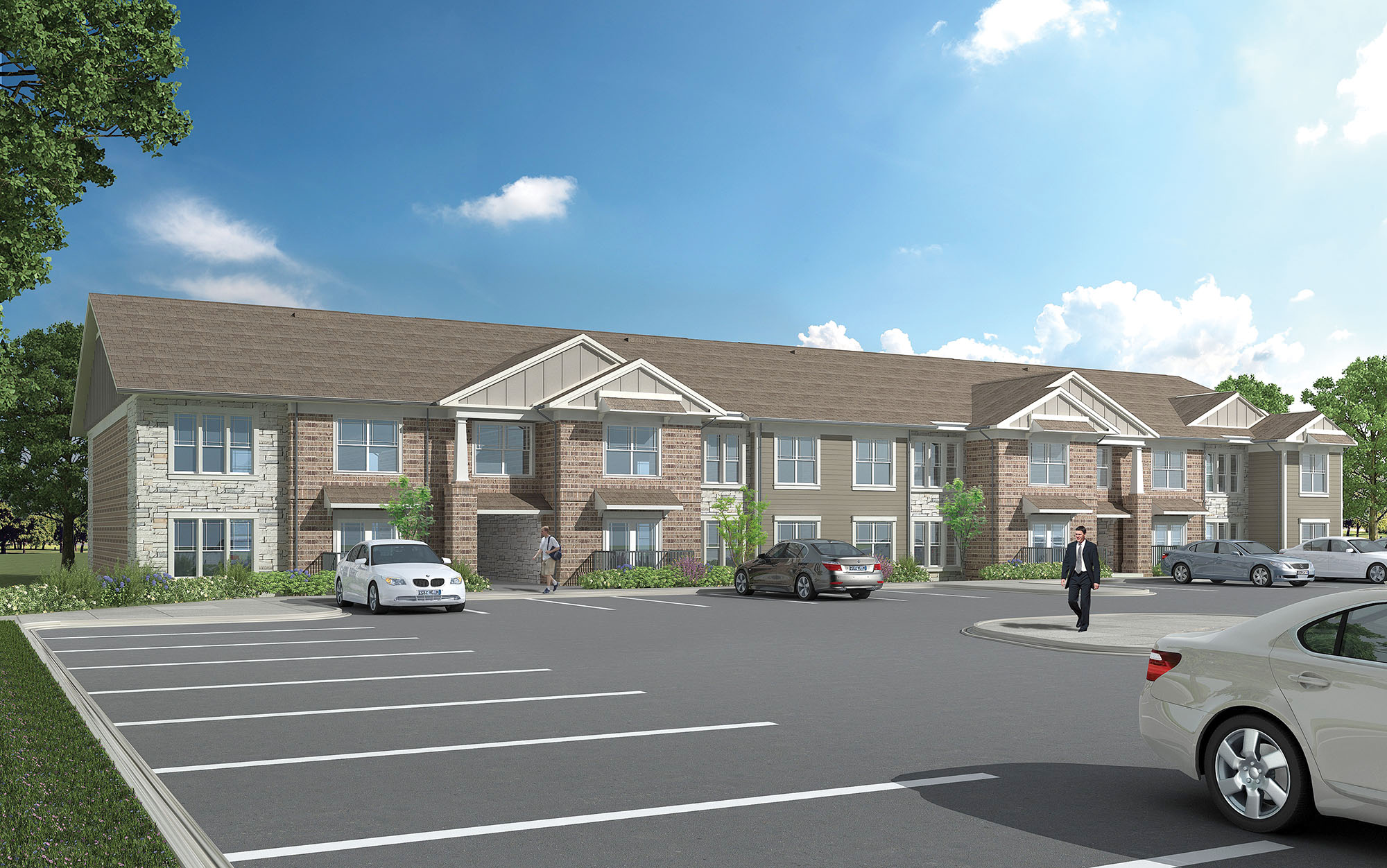
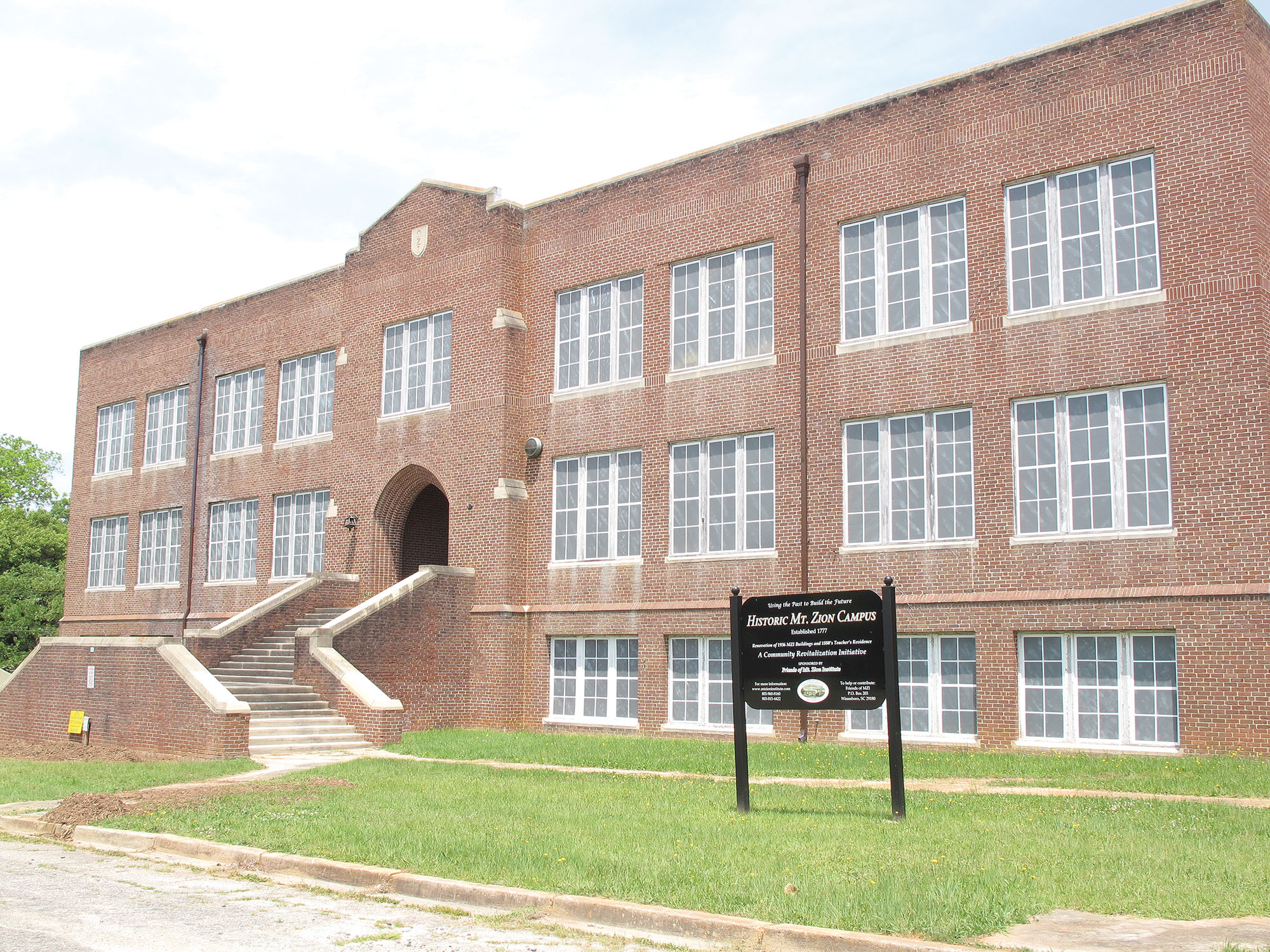
    The faux windows went up last summer, but Tuesday night the debate was less about Mt. Zion’s exterior and more about what – or who – could be residing in its interior.
    The faux windows went up last summer, but Tuesday night the debate was less about Mt. Zion’s exterior and more about what – or who – could be residing in its interior.

    WINNSBORO (Feb. 19, 2016) – Emotions ran high Tuesday night as residents spilled out of Town Council chambers and into the hallway for what may have been the last appeal for the life of Mt. Zion.

    Leading the charge for demolition was Marie Rosborough, who presented Council with what she said was a survey she conducted last week of neighborhood residents pitted with the question of whether or not they favored a plan to convert the old school building into senior living apartments. All but two respondents, she said, were flatly opposed to the notion.

    “We don’t want apartments,” Rosborough said. “It needs to be torn down. We ask Town Council to please close this issue, tear the building down and move on to some more pressing issue you have. You’ve done everything you can do.”

    Boyd Brown, who delivered to Council last Friday a letter of intent from developer Rob Coats, did his best to quell fears that Mt. Zion, even if intended for market-level senior living apartments, might end up as a low-income housing project.

    “This is not low-income housing. I’ve heard that from about three or four people today,” Brown told Council. “The Banyan Foundation (Coats’s non-profit organization) does do low-income housing projects – fact. This project does not score in the H.U.D. database to qualify for the 4 percent tax credits for low-income housing, nor does it score the other tax credits for low-income housing.”

    Mayor Roger Gaddy, however, subjected Brown to intense interrogation on the potential use of federal money on the project. Brown said that, as far as he knew, there would be no federal loans or grants, but that federal and state historic tax credits may be applied.

    “One of the Council’s concerns is if there’s any federal money involved,” Gaddy said, “any taxpayer money involved and the market-value apartment – it’s not even zoned for that now – if that were to occur and it not be successful and the federal government wants their money back, then they tell you you’re going to open it up to low-income housing. Council is not interested in even talking to anybody that’s going to use any federal money that’s going to put that neighborhood at risk.”

    Brown acknowledged Gaddy’s concerns, and said that federal historic tax credits were different than loans and grants.

    “We can do a workshop on federal tax credits and state tax credits,” Brown said, “and explain how that is what is driving all this growth in Columbia and even places like Edgefield and Lake City.”

    Dina Borda, an attorney living on Bratton Street, countered Brown’s claims by producing articles of incorporation for a company called The Peaks at Raleigh, Inc., filed in N.C. in 1998. The Peaks later became the Banyan Foundation, she said, and according to the articles was almost exclusively involved in low-income housing projects.

    “I am not saying I am against any kind of development,” Borda said. “I would just like to know the scope and method of execution before any contract is executed so that we can make an informed decision as to what’s going to occur. But I am absolutely against low-income housing.”

    Brown rebutted later, noting the date (1998) and the name on the articles, but said Coats does represent some of the people named in the articles.

    “These article of incorporation are from North Carolina. They are now in Alabama. This is dated,” Brown said. “You can Google search anything and you’re going to find all sorts of information. But I am here to tell you this is not going to be low-income housing. During the due diligence period if you want to go so far as to put that in the contract, if we ever get to that, I’m sure he will be just fine putting it in the contract.”

    But Gaddy said a contract means nothing if the federal government is involved.

    “I’m telling you the federal government is not going to loan him a dime for this project,” Brown said.

    “I don’t want any association, period,” Gaddy replied.

    “The council is going to have to have significant reassurance – I mean significant reassurance – that there would not be one iota of a chance and there would be some ramifications liability-wise if that would occur,” Gaddy continued. “I think that certainly is a major concern when you tell us the Banyan Corporation is the one doing it, from my standpoint, and the (articles) say that (low-income housing) is their sole purpose.”

    Vickie Dodds, Chairwoman of the Friends of Mt. Zion Institute (FOMZI), said she agreed with opposition to low-income housing. But what she didn’t understand, she said, was the feeling from those who “just want it torn down for the sake of tearing it down.”

    Responding to a point made by Faye Johnson, that the buildings were not historic buildings, Dodds said the old school had been approved for submission of placement on the National Historic Register.

    “All we have left to do it is finish the editing of the actual application,” Dodds said, “which cannot happen unless they (the Registry) qualify it as permissible to be on there. They consider anything over 50 years to be historic.”

    Betty Gutschlag also spoke up for Mt. Zion, saying it was an opportunity for retiring seniors to stay in their community. But when Rosborough spoke up again, she made it clear that it made no difference to the majority of respondents to her survey what type of apartments Banyan has in mind.

    “The residents who signed it (her survey) said ‘No, we don’t want Mt. Zion turning into apartments’. No conditions,” Rosborough said.

    Rosborough was interrupted by shouts from the back row.

    “Do you speak for everybody in the community?” Pelham Lyles asked. “The whole town?”

    Gaddy lowered the gavel and Rosborough attempted to continue, but Lyles interrupted again, shouting, “You didn’t put it in everybody’s mailbox!”

    When Gaddy called Lyles out of order, she exited the chambers.

    “We would hope you would consider what the community wants,” Rosborough finally concluded. “We’ve been talking about this for 15 years, at least. Now you want to add some more of this same over and over. You need to put an end to this because it will never end if you don’t.”

    Brown asked Council for 180 days for Coats to perform his due diligence on the project.

    “I’m not going to be unrealistic about this,” Brown said. “If there comes a point during that 180-day due diligence period where we just realize it cannot be done, we’re going to call you that day and tell you.”

    Gaddy said after the meeting that Council would consider Brown’s request.

     

  • County Issues New Bond

    $306,000 Bond Fifth in Two Years

    WINNSBORO (Feb. 19, 2016) – Fairfield County Council has issued its fifth general obligation (GO) bond in barely more than two years, this one in the amount of $306,000.

    The new bond, like the four previous GO bonds, is being issued to pay off the County’s $24 million bond debt.

    In a circuitous arrangement, County Council created a shell corporation in March 2013 that enabled the County to borrow $24 million for specific economic development projects. A month later, on April 15, 2013, Council passed an ordinance that allowed the County to issue GO bonds to pay off that $24 million debt. The GO bonds would provide funds from property taxes to make installment purchase payments to the shell corporation which it (the shell corporation) would use to pay off the $24 million debt.

    After the first GO bond was issued Feb. 12, 2014, surprised residents complained that the County’s scheme to make payments (to the shell corporation) to pay off the $24 million bond debt with a string of GO bonds had not been explained to the public by Council in open meetings. And the GO bond ordinance was short on specifications as to the amount of the bonds to be issued, date of issuance and the total number of bonds authorized by the ordinance.

    So long as the bonds issued did not exceed the County’s eight percent debt limit, Council could issue bonds without the voter’s permission. Even so, the state statute provided a 60-day window that allowed the voters of Fairfield County to initiate a petition that could have forced a referendum on the GO bond ordinance, effectively halting the issuance of the GO bonds altogether. But elected officials and newspaper accounts may have derailed any such petition effort by wrongly referring to the ordinance passed on April 15, 2013 as the $24 million bond, not the GO bond ordinance which was subject to the initiative petition.

    Adding further confusion, then County Administrator Philip Hinely and then Director of Economic Development Tiffany Harrison, were quoted in The Voice as saying the $24 million bond would not increase taxes. But a chart obtained in 2014 from the County showed that it is actually the GO bond debt (that is continually levied to make the installment purchase payments on the $24 million bond) that keeps the County’s debt millage at an elevated level of approximately 10 mills (or about $1.27 million) each year until about 2042, at which time the debt millage will begin to decrease steadily, reaching zero by 2047.

    While the County borrowed $24,690,000 to pay for economic development projects, it will repay $43,200,663 for just the principal and interest on that bond debt, according to the bond document.

    Although County officials have long aligned the payments for the $24 million bond debt with the dates the County would realize additional income from the second and third units at V.C. Summer nuclear plant, the County’s Interim Administrator Milton Pope, noted during a joint meeting of the Fairfield County Council and the Fairfield County Legislative Delegation in 2014, that the semi-annual installment purchase payments on the $24 million bond do not depend on income from the V.C. Summer nuclear plant. He said it was planned from the beginning to pay off the $24 million bond with property tax revenue from GO bonds.


  • Penny Tax on the Menu at The Manor

    BLYTHEWOOD (Feb. 18, 2016) – The public is invited to a Lunch & Learn event on Feb. 23, intended to fill in the blanks about Blythewood’s proposed road improvements under Richland County’s penny tax road improvement program.

    Sponsored by the Blythewood Chamber of Commerce, the information session will be presented by officials from Richland County, SCDOT and Blythewood Town Council who will discuss traffic circles, bike lanes, sidewalks, new roads and streetscapes that are planned for the town and the outlying areas in 29016 and that are to be paid for with Richland County’s penny tax.

    The program will be held from 11:30 a.m. – 1 p.m. at The Manor. While the event is free to Blythewood Chamber members and their guests, a $5 fee is charged for non-members. A free Chick-Fil-A lunch will be available to those who register in advance at blythewoodchamber.com.


  • Quarry Opponents Ready for Appeal

    WINNSBORO (Feb. 12, 2016) – Residents of Rockton Thruway and the Middle Six community will get one more shot next week in their efforts to keep a rock quarry out of their back yard.

    The S.C. Mining Council will hold an appeal hearing Feb. 16-19 in the Board Room of S.C. Department of Health and Environmental Control (DHEC) at 2600 Bull St., Columbia. Residents are appealing the mining permit (I-002053) granted by DHEC last April for Winnsboro Crushed Stone, LLC.

    According to the appeal, filed last June, DHEC overlooked elements of the Clean Water Act during its permitting process, failed to provide environmental justice for minority and low- to moderate-income residents in the area and committed errors in its evaluation of state approved safety regulations.

    Winnsboro Crushed Stone intends to mine granite on 365.8 acres of a 923.2-acre tract off Rockton Thruway. According to the appeal, the permitted area includes natural wetlands, as well as water sources for local residents. The quarrying and processing of granite uses quite a bit of water, and while the mining company has said that water would be a fixed amount contained within a closed system of ponds, the appellants are worried about loss of water pressure and loss of water in local streams as the proposed mining pit delves deeper into the water table.

    ” . . . if pit drawdown depressurizes the local surficial aquifer, then there is likely to be significant loss of water to surface streams, and subsequently the wetlands area,” the appeal states.

    Appellants are also asking Crushed Stone to install one or more near-surface aquifer monitoring wells. DHEC’s requirement that the company install monitor wells and observe pre-mining water levels for six months is not enough, appellants say, to produce a complete study. Instead, they are asking that the pre-mining conditions be monitored for 12 months. Those wells also need to be deeper than the recommended 150 feet, appellants say, in order to “mirror the depth of local area drinking wells where the water level is known to be.”

    “How do you protect pre-mining conditions of groundwater, when you don’t have any data on what the pre-mining conditions are?” Dorothy Brandenburg, the community liaison for quarry opponents, asked rhetorically when contacted by The Voice this week.

    Appellants also state that their requests to DHEC for “evidence of sufficient evaluation of the wetlands” have not been honored. Noting a letter from the Army Corps of Engineers, which advises against work on or around the wetlands until the company receives Approved Jurisdictional Determination, appellants are asking the Mining Council’s Appeals Board to “reconsider this permit until an adequate Environmental Impact Study can be completed and evaluated.”

    Another DHEC oversight in the permitting process, appellants claim, is failure to note that a required map demonstrating entrance and exit routes of mining traffic had not been included in the application.

    “This is yet another oversight of (DHEC), concurrent with other mistakes made in the permit issuance,” the appeal letter states. “In their response to questions from citizens, (DHEC) employees claim that pointing to a map at the public hearing is sufficient evidence for intended operations.”

    While Rockton Thruway residents opposed to the quarry have gotten the lion’s share of attention, the appeal states that the Middle Six community, just on the north side of the permitted area, has gone largely ignored, thereby giving rise to the charge of “lack of environmental justice.”

    The hearing begins at 9 a.m. each day in room 3420. A final order, according to DHEC regulations, will be due within 30 days of the conclusion of the hearing.


  • Closing Threatens Property Tax Relief

    Walmart was Top Contributor to LOST

    Without revenues from Walmart sales, property tax relief may suffer. (Photo/Barbara Ball)
    Without revenues from Walmart sales, property tax relief may suffer. (Photo/Barbara Ball)

    WINNSBORO (Feb. 12, 2016) – When Walmart closed its doors for the last time in Winnsboro on Jan. 28, it shut off the spigot for more than just major retail in Fairfield County. As the county’s single largest contributor to the Local Option Sales Tax – the pot of money by which Fairfield County property owners are afforded property tax relief – taxpayers may see the amount of credit they receive on future tax notices diminish.

    “With the loss of that revenue (from Walmart), I don’t see how County Council is going to be able to continue to provide that relief,” said Robert Martin, who serves on the Board of Economic Advisors governing the S.C. Revenue and Fiscal Affairs Office. “I don’t see how County Council is going to get around increasing property taxes somewhat next year.”

    While the S.C. Department of Revenue would not divulge exactly how much money Walmart contributed to the Local Option Sales Tax (LOST), the big-box retailer was Fairfield County’s largest contributor.

    In spite of Martin’s grim forecast, Interim County Administrator Milton Pope said Fairfield County’s losses would be offset somewhat by the fact that Fairfield is a “receiver” county among the counties participating in the property tax relief formula. A portion of the penny sales tax collected by more prosperous counties – “donor” counties – is redistributed among the “receiver” counties annually.

    But while funds coming back to Fairfield from donor counties might mitigate some of the fiscal damage, Martin said it would only be a fraction of what Fairfield is losing with the absence of Walmart.

    “Some of it would be offset by the donor counties,” Martin said, “but I wouldn’t think it would be that much.”

    Fairfield County’s municipalities are also credited with LOST funds that offset their local property taxes. According to the Department of Revenue, 33 percent of the penny tax is distributed to municipalities, based on their population. The remaining 67 percent goes to property tax relief in the unincorporated areas of the county. With the LOST funds diminished, Town council’s may have to rethink their annual budgets.

    Ridgeway’s millage rate for the 2015-2016 fiscal year, for example, brought in $44,350 to their meagre general fund budget of $222,840. While Ridgeway is still bolstered by rental properties and an insurance tax, every penny counts.

    Don Wood, Winnsboro’s Town Manager, said the loss of Walmart’s contribution would be “significant;” however, how significant remains to be seen. As of last week, Wood was still seeking exact figures from the Department of Revenue.

    Walmart also contributed to Winnsboro’s bottom line with utility bills. According to Kathy Belton, Director of Winnsboro’s Finance Department, Walmart paid an approximate average of $23,000 a month in electricity bills, $190-$200 a month in water bills and $1,100 a month in gas bills.

    All of that, too, has now dried up.

    “That will certainly be a concern,” Winnsboro Mayor Roger Gaddy said. “That’s more than a quarter of a million dollars a year.”

    Of course, Gaddy added, Winnsboro purchases electricity from SCE&G before reselling it to customers. So Winnsboro will only be losing its profit margin, not the entire $23,000 a month bundle.

    “It will have some impact,” Gaddy said, “but I don’t think it will kill us.”

    The ultimate impact of the loss of Walmart won’t be known until August, Pope said, when the final LOST figures come in. As Council begins its budgeting process in the coming months, Pope said the County will have to bear in mind the potential reduction in LOST funds when estimating property tax credits.

    And while Pope was reluctant to discuss the potential for a millage increase, he did say that taxpayers would feel some impact.

    “The Local Option Sales Tax is a credit on your tax bill that helps to lower taxes on property,” Pope said. “There may not necessarily be an increase, but yes, there is a possibility that folks may not see as much of a credit.”


  • Town OK’s Hospital Payment Plan

    Pointe Gets Green Light for Water Construction

    WINNSBORO (Feb. 5, 2016) – Town Council Tuesday night accepted a payment plan agreement with Fairfield memorial Hospital, which was in arrears to the tune of $188,699.99 on its utility bill as of last Dec. 8.

    According to the agreement, failure by the hospital to make good on its debt will result in termination of service, 15 days after the due date of any future payments. The arrangement allows Fairfield Memorial to make the payments in 36 installments of $5,241.67 each, with the first installment due on Feb. 20. The bill should be paid in full by Feb. 20, 2019.

    In consideration for 18 timely payments, the Town agrees to return the sum of $2,865.07 – the hospital’s current balance as of Jan. 19 – in the form of a credit applied to the 36 installments.

    The Pointe

    Council also gave the OK to a resolution approving the request to proceed with construction of water facilities at a future 56-unit apartment complex slated for 425 Main St. in Blythewood.

    During their Jan. 19 meeting, Council agreed to transfer their capacity and willingness to serve agreement for 19,200 gallons of water capacity from Sarah K. Niemann of Niemann Consulting, Inc. to The Point at Blythewood, LP, the apartment complex known as “Just the Pointe.”

    As part of Tuesday night’s approval, Winnsboro agrees to send a letter of support to the S.C. Department of Health and Environmental Control (DHEC) on behalf of the developer’s application for a construction permit.

    John Fantry, Winnsboro’s utilities attorney, told The Voice Tuesday night that the Town’s engineers had reviewed and accepted plans for the construction of the water facilities. The construction is being performed by Site Design, Inc.

    The Point at Blythewood, LP, will also have to enter into a Subdivision Water System Development Agreement with Winnsboro within 18 months of March 19, 2015. Once the infrastructure has been completed, inspected and licensed, Winnsboro will accept ownership of the water lines.

    Last month, Blythewood’s Board of Architectural Review gave the project its Certificate of Appropriateness (COA) and granted the project’s developer, Prestwick Development LLC, 16 variances, including a request to omit the Town’s requirement that principal building facades provide a stoop or porch with a minimum height of 24-inches for all first-floor residential units. The Board did not omit the height requirement, but amended it to allow Prestwick to lower the height of the stoops on the principal building to 12 inches. The Board also allowed Prestwick to lower the required 48-inch elevation height on the building.


  • Art Center Closes Shop

    BLYTHEWOOD (Feb. 4, 2016) – The Blythewood Art Center, Visitor’s Center and the office of the Blythewood Chamber of Commerce closed the doors and their current location on Blythewood Road on Jan. 3.

    While the Arts Center and Chamber will be looking for new locations in the town, the Visitor’s Center will be temporarily housed in the Town Hall until Town Council assesses how the Center should go forward, said Mayor J. Michael Ross.

    “We will operate the Center out of Town Hall until June and by then should have a plan for it.” Ross said.

    The Arts and Visitor’s Centers and the Chamber all receive funding from the Town’s Accommodation Tax revenue.


  • Pointe Gets Variances

    Now known as ‘Just the Pointe,’ the housing development planned for Main Street Blythewood was granted 16 variances by the BAR this week.
    Now known as ‘Just the Pointe,’ the housing development planned for Main Street Blythewood was granted 16 variances by the BAR this week.

    BLYTHEWOOD (Jan. 28, 2016) – After the Board of Architecture Review unanimously approved a Certificate of Appropriateness (COA) last week for The Pointe, a 56-unit apartment complex proposed for Main Street in downtown Blythewood, the Richland County 9-1-1 addressing system required that the project’s official name to be changed to Just the Pointe since a nearby street is named Blythewood Pointe.

    Prior to granting the COA to the project, the BAR unanimously granted the developer, Prestwick Development LLC, 16 variances, including a request to omit the Town’s requirement that principal building facades provide a stoop or porch with a minimum height of 24-inches for all first-floor residential units. The Board did not omit the height requirement, but amended it to allow Prestwick to lower the height of the stoops on the principal building to 12 inches. The Board also allowed Prestwick to lower the required 48-inch elevation height on the building.

    The developers of the project told the Board last November they planned to install a chain-link fence on two sides and back of the property. At the December meeting the Board asked that the fence be changed to a wrought iron or similar decorative material. But at the January meeting, the project’s architect, Robert Byington, told the Board the owner had decided not to install a fence at all since one was not required by code.

    There was, however, some give and take between the Board and Prestwick in the finished design.

    “We wanted the developer to upgrade the building to be more than what was proposed,” Board chairman Michael Langston told The Voice following the December meeting. “I’ve been on the phone to them the last couple of weeks to get them (Prestwick) to come up to our codes instead of us giving them variances. They have met us about half way.”

    At that meeting, the Board negotiated for Prestwick to add several design changes to the window and entrance openings on the principal building to provide for a more upscale appearance on the street side.

    No one signed up to address the architectural requirements during public comment time on Tuesday evening. A representative of the company said he expected that the project is on track for completion by the end of the year.


  • As Council Cracks Down, Merchants Vow to Pay Back H-Taxes

    RIDGEWAY (Jan. 22, 2016) – Town Council members, during their Jan. 14 regular meeting, resolved to get tough with owners of a pair of downtown restaurants who have failed to remit any of their portion of Ridgeway’s hospitality tax. Both owners have since told The Voice that they intend to pay, although at press time no payments had been remitted.

    Two of the town’s four establishments subject to the tax – Laura’s Tea Room and Ridgeway Station Café – have made no payments to the Town since the ordinance establishing the tax went into effect last August. The first payments were due on Sept. 20.

    Over that same period of time, the Old Town Hall Restaurant and City Gas have combined to kick in more than $2,559 to the Town’s coffers.

    The issue first came to light during Council’s Jan. 7 work session, and during the Jan. 14 meeting when Council learned that the Tea Room and the Station Café had ignored late notices, Council considered the strength of the ordinance and the possible consequences for failing to comply with it.

    “I think the ordinance is good, but I think now we’re failing to follow through with the ordinance,” Councilman Heath Cookendorfer said. “We have to be more diligent as a Council to enforce it. I think we’re at the point now where we should be moving to the secondary section with this for some of these people, correct? We’re at that $500 penalty for some of these people.”

    The ordinance, which passed final reading last May, imposes a 2 percent tax on the gross proceeds of the sale of prepared meals and beverages, to be paid to the Town by the 20th of each month, beginning Sept. 20, 2015. Any tax not timely paid shall be subject to a 5 percent penalty, the ordinance states, each month. Failure to comply “shall constitute a misdemeanor,” the ordinance states, punishable by a $500 fine or 30 days in jail, or both.

    “The thing that we have to get in their minds is that it’s not their money,” Cookendorfer said. “It’s tax money.”

    Indeed, the 2 percent has been collected by restaurants from customers, as an additional tax on their bills. But if a restaurant has failed to tack that 2 percent onto customers’ bills, the ordinance states the establishment is still responsible for paying that 2 percent of gross proceeds to the Town.

    Karen Siegling, owner of the Station Café, confirmed Tuesday that she has been collecting the 2 percent from customers, but said her restaurant has been struggling to make ends meet.

    “We had some difficulties here at the restaurant,” Siegling said. “We’ve just been struggling.”

    Siegling told The Voice that she intended to pay this week.

    “I’m not trying to cheat anyone on my taxes, I promise you,” she said.

    Carol Allen, owner of the Tea Room, said she was planning to pay either Tuesday or Wednesday. She also confirmed that she has been collecting the 2 percent from customers.

    “I just plain didn’t get it done,” Allen said. “I felt so horrible when it came out.”

    The associated paperwork, Allen said, is a little more difficult for her business, which sells more than just food.

    While failure to pay could land the offenders in some hot water, it also puts the Town in a precarious position when preparing its annual budget. At press time it was not known how much the restaurants owe.

    “And the thing about it is, the merchants who are paying this,” Herring said, “part of the hospitality (tax) goes back to help support them to bring people here for tourism.”

    During Council’s discussion of the tax last March, then Town Councilman Russ Brown, who introduced the tax, said that state law regulated how hospitality tax revenues could be spent. The revenue could, he said, go toward tourism-related, cultural, recreational or historic facilities, as well as highways, roads, streets or bridges providing access to tourist destinations.

    The revenue could also go toward advertising and promotion of tourism development, and to water and sewer infrastructure serving tourism-related facilities. The funds could go toward preserving the arch on the old school property, and for promoting Pig on the Ridge, Arts on the Ridge and other Town events.

    The ordinance, which only states the taxes should be “timely remitted,” gives Council considerable leeway as to when to impose the 5 percent penalty and when to enforce the $500 fine. But with the Tea Room and the Station Café four months in arrears, Council elected to send out one more letter with a copy of the ordinance, informing both that they owed not only the 2 percent in back taxes, but the 5 percent penalty for each month as well.

    Those notices may be unnecessary, if Allen and Siegling pay as promised. However, if those notices go unanswered, Council said, the restaurateurs could find themselves facing a municipal judge.


  • Bracing for Life After Walmart

    Shoppers prepare for Walmart’s final days. (Photo/Barbara Ball)
    Shoppers prepare for Walmart’s final days. (Photo/Barbara Ball)

    WINNSBORO (Jan. 22, 2016) – With the announcement last week that Wal-Mart Stores, Inc. plans to shutter 154 stores nationwide, including its Walmart Express store at 721 Highway 321 Bypass S. in Winnsboro, local leaders have been scrambling for a plan to fill the enormous retail gap that will be left by the closing, or perhaps delay or even hold off for good the Jan. 28 closing date.

    “The thing that is paramount in everyone’s mind is getting those people placed who are losing these jobs,” Terry Vickers, President of the Fairfield County Chamber of Commerce said.

    Brian Nick, Senior Director of Corporate Communications at Wal-Mart Stores, Inc. said approximately 300 employees would be affected by the Winnsboro closing. Employees would be paid 60 days beyond Feb. 10, Nick said. Employees who qualify for severance pay (full- and part-time employees who have been with the company for more than one year) may begin receiving that pay after the 60 days has expired, he said. Some employees may be relocated to other stores, Nick said.

    Downtown Renaissance?

    Big box retailers can have a devastating effect on Main Street, U.S.A., particularly in small, rural communities.

    According to a 2010 study by the Center for Community Planning and Development at Hunter College in New York, Walmart kills three local jobs for every two jobs it creates. A 2004 study by Pennsylvania State University found that U.S. counties with a Walmart suffer an increase in poverty over time compared to counties without a Walmart. And a 1997 study by Iowa State University found that small towns can lose half of their retail trade within 10 years of a Walmart opening in their community.

    When Walmart opened its doors in Winnsboro in 1998, it quickly became the biggest kid on the block, drawing even more traffic away from Congress Street and onto the 321 Bypass. With its closing, a retail void opens that Vickers sees as an opportunity for downtown.

    Bringing downtown back to life has long been a goal of the Chamber. Now there is considerable impetus to do so. For the transition to be successful, both merchants and consumers will have to adapt.

    “We’re looking for things to service us when we lose Walmart,” Vickers said. “We’ve talked to the hardware store (Winnsboro Builders Supply, 340 S. Vanderhorst St.) and the Butcher’s Block (324 S. Congress St.) about the fact that they could see more business. We’ve asked them to take a look at their inventory and keep stock of what people will be looking for.

    “The main thing is for our citizens to look here first,” Vickers continued. “And if there’s something that you don’t like about a business, make suggestions.”

    Downtown merchants, Vickers said, may have to rethink how they have traditionally done business. In Winnsboro, she said, practically everything except the CVS Pharmacy and the Bi-Lo closes shop by 6 p.m. And some still observe that old Southern tradition of closing at lunch on Wednesdays.

    “We’re definitely going to need to look at store business hours,” she said. “If a business is going to be competitive, they have to structure their hours so they are convenient to customers.”

    Businesses may also have to consider adding staff, she said, and breaking them up into shifts in order to cater to customers who can only shop after 6 p.m.

    A United Front

    Filling the gap left by Walmart cannot be the Chamber’s cross to bear alone. If downtown is truly going to be the next destination for Winnsboro shoppers, it is going to take a joint effort between merchants, the Chamber, the Town of Winnsboro and County Council. At the very least.

    For starters, Vickers said, downtown is going to have to look and feel like the place to be. Toward that end, she said, additional lighting may be necessary, particularly well-lighted parking areas. An expanded police presence also wouldn’t hurt, “so people can feel safe and relaxed shopping downtown after hours,” Vickers said.

    The Town has done an excellent job, Vickers said, on downtown’s landscaping, and she hopes that can be expanded in the future. The walking trail on Mt. Zion Green is paved now, she said, and the growing monument park there has added an attraction for the downtown area.

    During Tuesday night’s Town Council meeting, Winnsboro Mayor Roger Gaddy addressed the loss of Walmart in his closing remarks.

    “It certainly will have a detrimental impact on the quality of life here in Fairfield County,” Gaddy said. “Hopefully we will be able to find some retailers to come in and fill the gap and the large void that Walmart is leaving us.”

    After the meeting, Gaddy told The Voice that additional monetary support for the Chamber may be one of the things Council looks at when budget talks ramp up in March.

    “I’m sure that our downtown development folks will be talking with the merchants to try to see if we can help them in any way to enhance their business,” Gaddy added.

    The County’s role, meanwhile, remains unclear. Vickers said she had not yet spoken with the County, and our phone calls to Chairwoman Carolyn Robinson (District 2) were not returned at press time.

    Can it be Undone?

    The Winnsboro location is one of only three S.C. Walmart stores to call it quits by the end of the month. Gray Court in Laurens County, and Pacolet in Spartanburg County are the other two. Worldwide, 269 locations are going out of business, putting 10,000 out of work in the U.S. and 16,000 across the globe.

    State Sen. Creighton Coleman (D-17) told The Voice this week that he had spoken with Gov. Nikki Haley and S.C. Secretary of Commerce Bobby Hitt about a possible plan of action.

    “We’re meeting with Wal-Mart next week,” Coleman said, “to see if they may be willing to reverse their decision. And if not, we want to do everything we can to get people who will be losing their jobs into new positions.”

    If a stay of execution is off the table, Coleman said the next concern was the physical building itself.

    “Will they let someone else come in and use it,” Coleman said, “or will they tie it up and let it remain empty?”

    And if the commercial winds blow back toward downtown, Coleman said he would have to have discussions with Hitt to determine if there were any state money that could help kick-start Congress Street.

    Lemons to Lemonade

    As she said in her letter to the editor this week (page 2), Vickers hopes to turn the sour news of the Walmart closing into a refreshing future for downtown. And she is confident that the building blocks are in place.

    “We have the makings,” Vickers said. “We have two drug stores (CVS on the Bypass and Price’s at 110 S. Congress St.) and Bi-Lo. We want to talk to the manager of our farmers market to see if we can have a storefront where people can get fresh vegetables. Winnsboro Builders Supply carries everything Walmart did and more.”

    As the process takes its first baby steps, Vickers said the Chamber is already courting grocery store chains to gauge their interest in Winnsboro. One of the community’s more immediate needs, she said, is a hunting and fishing supply outlet. Whether that is something that Builders Supply expands to take on – or, as Gaddy suggested, something Northside Feed and Seed tackles – remains to be seen.

    The one thing that is certain is that it won’t happen overnight. There may be slim pickin’s for Winnsboro consumers for some months to come.

    “The kicker at first is just going to be to keep the lights on and the doors open later,” Vickers said.