Category: Business

  • Plan Update Puts Leadership on Notice

    WINNSBORO (April 15, 2016) – As consultants continue their work on Fairfield County’s newest set of long-range plans, County Council during their March 28 meeting received a word of advice during an update on their Economic Development Plan: officially get behind the next Strategic Plan.

    “I will point out that that 2010 Strategic Plan was never formally adopted by County Council and that was a real obstacle to implementation,” Crystal Morphis, of Creative Economic Development Consulting, LLC, told Council during her presentation last week, “so one of the key recommendations for this update is for you to adopt it and endorse it and pass it on to your staff to implement it. Without that endorsement from Council, staff and the department was able to move forward really on a limited basis. They accomplished some things in the Strategic Plan, but they really needed the endorsement of this Council.”

    Morphis and her firm are working on an update to the County’s Economic Development Plan, while T.Y. Lin International is preparing an updated countywide Strategic Plan. Council voted in 2014 to launch the planning process to help prepare the County for the influx of money expected from fees-in-lieu-of taxes on two new reactors at the V.C. Summer Nuclear Station, the first of which may come online in 2020.

    Fairfield County has some things going for it, Morphis told Council last week. Unemployment is down, she said, and wages are growing. Home values are also growing, she said, while at the same time home prices are competitive when compared to the region.

    On the downside, she said, Fairfield County’s population is declining, and with it the labor force. Income is stagnant, while overall education attainment remains low.

    “That (education attainment) is a key factor for companies that are considering moving to the area,” Morphis said, “because they want to find a skilled and trained workforce.”

    SWOT

    Reviewing her firm’s SWOT (Strengths, Weaknesses, Opportunities and Threats) analysis, Morphis said the county’s key strengths are its location in relation to transportation access (I-77), and in relation to larger metropolitan areas (Columbia and Charlotte). Utilities in the county are also competitively priced, she said.

    Key weaknesses, she said, included a lack of direction and overall consensus, which she said an updated Strategic Plan should help address. And while the county is conveniently located near a major interstate highway, she said, the development of additional railway sites would be a “key advantage to this community.”

    Long-term poverty, Morphis added, was also a significant weakness in Fairfield County.

    “That (long-term poverty) is something that we find in other rural communities,” she said, “but it’s concentrated here and that’s why this economic development strategic plan is very important.”

    The projected revenue from the nuclear reactors, Morphis said, presents the county with a golden opportunity.

    “You have the opportunity with new revenue to create economic transformational projects,” Morphis said, “and the leadership on this Council is going to be critical in making key investments, especially in infrastructure and economic development.”

    The declining population and the difficulty in keeping youth in the county topped Morphis’s list of threats.

    “The millennials are now the largest part of the workforce and communities that do a really good job of retaining and attracting those young people will be the communities that are successful going forward,” she said. “Companies go where they can find a trained workforce.”

    Morphis also reviewed the county’s “product inventory,” or available buildings for prospective industry. The County has one spec building at present, she said, and recommended that the County consider adding at least one additional building.

    “Communities that have quality buildings are those that are getting looked at by companies,” she said. “You do have one building, but it would be good to have more than one, so we do recommend that you take this model that you have started with the spec building and carrying it forward.”

    There remain, she said, “a few due diligence items” at the Walter Brown 2 Industrial Park “that would really make that park stand out.” A virtual spec building, she added, should also be added to the County’s Economic Development website.

    Target Sectors

    Morphis identified four “target sectors,” upon which the County should focus its economic development plans.

    “When we talk about ‘target sectors,’ these are the sectors where you would focus your marketing dollars and where your regional alliance, the I-77 Alliance, is focusing its marketing dollars,” Morphis said. “That doesn’t mean you would not accept and welcome other companies, but this is where you’re focusing your marketing dollars.”

    For Fairfield, she said, those sectors are: Energy (services that can be provided to V.C. Summer); Advanced Material and Transportation Equipment (to serve the state’s aviation and automotive industries); Chemicals and Food Products (industries strong in Fairfield and Chester counties, she said); and Business Financial Services/Life Sciences (industries with a presence in Richland and York counties, she said).

    The 2010 Plan

    Reviewing parts of the 2010 Strategic Plan, Morphis said the County, which is still searching to fill the position of Economic Development Director, should also consider creating an Assistant Director for that department.

    “It is more work than one person can implement,” she said.

    Morphis also said that while the County had budgeted for product development, for incentives and for other economic development spending, “there was no funding in the department for things like marketing or existing business programs,” she said.

    Morphis recommended budgeting for marketing, including a business retention and expansion program.

    “In a small community like Fairfield, you cannot afford to lose even one company, because it is so hard to recruit a new company,” she said. “I believe that this has been a missed opportunity in this community when you have relied on others for your business retention and expansion program.”

    She also suggested that Council consider additional product development funds “to be put in the budget for engineering studies and additional due diligence on sites.”

    “I know that you do have some other product development money for long-range planning,” she added, “but this would be for studies that could quickly support projects.”

    Morphis also recommended expanding the Economic Development Committee to include more private-sector members, as well as upgrading the office of the Economic Development Department.

    “It has been my experience that companies will not invest in communities that do not invest in themselves,” she said.

    Internal Marketing

    Morphis said the County may also want to consider marketing itself to itself, to combat what she said was the County’s negative image within Fairfield County.

    “In everyone that we talked to, there is an undercurrent of negativity internally in this community,” Morphis said. “All of you (Council) present a very positive image to the outside, but internally there’s some public relations work to do.”

    That can be accomplished, she said, for little cost using social media and marketing tools. Internal marketing, she said, could be one of the roles for the Assistant Director of Economic Development.

    Next Steps

    “I would encourage this Council to adopt this strategic plan,” Morphis reiterated. “That was a shortcoming of the last strategic plan. It’s hard for you as leaders to hold your staff accountable to an economic development plan without adequate funding, support and your endorsement and leadership in the plan.”

    Morphis urged Council to work with an expanded Economic Development Committee, and to expand the staffing of the Economic Development Department and budget the funds for that department.

    But the tallest hurdle, she said, was leadership.

    “The main difference in communities that are successful and those that aren’t is leadership,” Morphis said. “I have worked in communities that have inherent assets and they should be prospering, but they’re not because leadership is not pulling in the same direction. And I have worked in communities that have lacked in significant assets and they’re making progress because their leadership has consensus in the community and they’re pulling in the same direction.”

     

  • Fairfield Square Lands Second New Business

    WINNSBORO (April 15, 2016) – After taking a big hit in January with the exodus of Walmart, Fairfield County is suddenly on a roll. State Sen. Creighton Coleman (D-17) and Interim County Administrator Milton Pope announced late last week that Roses has signed a lease to open a department store at 83 Highway 321 Bypass S., in the former Goody’s location in the Fairfield Square shopping center.

    The announcement came just days after Coleman revealed that an IGA grocery store had inked a deal to move into the former Food Lion location, also in Fairfield Square.

    Much like the IGA deal, Coleman said he and State Rep. MaryGail Douglas (D-41) worked to bring Roses together with the realtor, and the County together with the Town of Winnsboro to offer some incentives. Coleman said Terry Vickers, President of the Chamber of Commerce, has also been involved in attracting new retailers to help fill the Walmart void.

    Pope said Roses and IGA were essentially a package deal as far as the $50,000 contribution from the County to help the property owner upfit the locations to suit the retailers.

    It was not known at press time when Roses planned to open for business, and efforts to reach the realtor involved in the deal were unsuccessful at press time.

    The winning streak may not be over. While Pope would not elaborate on any details, he said last week that talks were ongoing with yet another potential tenant in the shopping center.


  • White Oak Survives Pellet Plant Threat

    WINNSBORO (April 8, 2016) – The European energy company that had planned to locate a wood pelleting plant near White Oak may have hit its final snag last month when two key pieces of property it needed were bought up by a local LLC, effectively blocking the proposed plant’s access to railway lines.

    AEC Pellet 1 USA, a subsidiary of Spain-based Abengoa, announced its plans to construct the plant last August. Efforts to rezone more than 180 acres on Cason Road brought nearly a dozen White Oak residents and property owners to County Council’s Oct. 12 meeting to protest before second reading of the rezoning ordinance.

    The plant would grind lumber into wood pellets, which are used as fuel in European power plants and are marketed as an alternative, renewable energy source. Production of the pellets, however, has come under fire from critics who cite dangerous levels of pollution generated by the plants.

    According the company’s permitting and application documents on file with the S.C. Department of health and Environmental Control (DHEC), emissions generated by the facility would include particulate matter (less than 10 micrometers in diameter and less than 2.5 micrometers in diameter), nitrogen oxides, carbon monoxide, sulfur dioxide, Volatile Organic Compounds (VOC) and Hazardous Air Pollutants (HAP).

    The rezoning was put on indefinite hold in December after Abengoa filed for bankruptcy protection in its home country. Last week, the company made a similar filing in U.S. Bankruptcy Court in Wilmington, Del.

    While a number of Abengoa’s subsidiaries were included in the U.S. bankruptcy filing, AEC Pellet 1 USA was not among them.

    Emily Zucchino, a campaign organizer with the Asheville, N.C. environmental advocacy firm Dogwood Alliance, told The Voice last week that it was doubtful Abengoa would abandon its plans for a wood pelleting plant so easily.

    “My belief is that this is a very lucrative business with lots of subsidies going into the industry,” Zucchino said. “This (pellet plant) could be a way for Abengoa to pull themselves out of the hole.”

    But with the purchase last month of two pieces of land between the proposed Cason Road site and the railway, the White Oak location is off the table.

    KWOB, LLC, registered with the S.C. Secretary of State’s office last December by Columbia attorney J. Derrick Jackson, snatched up the properties on March 15. According to Fairfield County tax records, KWOB paid a total of $480,000 to Thomas W. Peterson, Willene K. Peterson and Keith D. Peterson for 10 acres at 5590 and 56 U.S. Highway 321 North, and approximately 5 acres at 183 Ibis Lane. The total market value for the properties is, according to tax records, $90,000. The records also indicate that the Petersons are members of the KWOB, LLC.

    With the White Oak site no longer viable, Zucchino said she was concerned the company might be considering another site in the county. A source within the County government, however, told The Voice this week that AEC Pellet 1 has not approached the County with an alternative site.


  • IGA Coming to Winnsboro

    State Sen. Creighton Coleman outside the future home of the IGA grocery store in Winnsboro. (Photo/Barbara Ball)
    State Sen. Creighton Coleman outside the future home of the IGA grocery store in Winnsboro. (Photo/Barbara Ball)

    WINNSBORO (April 8, 2016) – When Walmart closed up shop at the end of January, it took with it more than just Fairfield County’s largest retail outlet. It also left Bi-Lo as the only grocery game in town.

    That monopoly is now over.

    This week, State Sen. Creighton Coleman (D-17) announced that IGA (Independent Grocers Alliance) will soon be moving into the site once occupied by Food Lion in Fairfield Square, 133 Highway 321 Bypass S. The Food Lion closed its doors in 2012, leaving shoppers with only Walmart and Bi-Lo to choose from for their grocery needs.

    “Negotiations have been going on for some time with IGA,” Coleman said, “but I didn’t think it was proper to say anything until the contract was signed. It’s signed. They’re coming.”

    The effort to bring a second grocery chain into Fairfield County was a joint one, Coleman said. State Rep. MaryGail Douglas (D-41) joined forces with Coleman to help lure the IGA, and Coleman said the County government and the Town of Winnsboro worked together to get the deal done.

    “After Walmart left, MaryGail and I started looking around and IGA was the logical choice,” Coleman said. “They came about two weeks ago and we met with them and the realtor at the store and looked at the site. And we contacted the Town and the County and asked them to look at incentives, and both were willing to sweeten the deal until IGA could get their feet under them. Everyone worked together.”

    Once Coleman and Douglas had established the contacts, Coleman said, the legislators stepped aside and allowed the realtor, the County and the Town work through the details.

    “We’re just elated they’ve decided to come,” Douglas said. “They’re coming at a really good time.”

    Milton Pope, Interim County Administrator, said IGA was capitalizing on an incentives deal the County had floated after Walmart’s exodus. In an effort to attract new retailers, the County shortly after the Walmart closing committed up to $100,000 in marketing and incentives to bring in business. IGA, Pope said, was offered $50,000, paid out in two annual installments of $25,000 each.

    “I also asked Council if they would direct me to reach out to the Town to get them to offer things,” Pope said. “There was a very positive response from the Town.”

    Winnsboro Mayor Roger Gaddy said Tuesday night that the Town offered some concession to IGA on building permits and inspection fees to aid in the grocer’s transition.

    It was not known at press time when IGA planned to open for business, and efforts to reach the company and the realtor involved in the deal were unsuccessful at press time. But Coleman said he didn’t think Fairfield would have to wait too long.

    “I would think pretty quick,” Coleman said. “They’re already paying rent.”

    And IGA may not be the last storefront to make a new home in Winnsboro. Coleman and Pope both said this week that several businesses were looking at the former Goody’s store, also in Fairfield Square; however, neither would disclose who was doing the looking.


  • Council Pulls Plug on Wi-Fi

    BLYTHEWOOD (May 31, 2016) – After Michael Switzer, Executive Director of the Blythewood Chamber of Commerce, challenged Town Council to repair the town’s Wi-Fi system during Council’s annual retreat in February, Council rejected the plea on Monday night, voting 4-1 to eliminate the Town’s current failed Wi-Fi system and to ask AT&T about providing more hot spots around town for the convenience of visitors to the community.

    At the retreat, Switzer told Council that he had surveyed about 20 of the town’s businesses and that the majority of them wanted the Town’s 8-year-old Wi-Fi system returned to working condition.

    But on Monday evening, Kevin Williamson, the Town’s IT consultant, told Council that the system was flawed in its installation, its design, had never worked properly, could probably not be really fixed and is costing the Town about $200 per month.

    “The system is down right now. It’s intermittent at best. It has a router that’s bad on top of the Comfort Inn, and the system was never designed to provide Wi-Fi for the businesses or anything inside of a building,” Williamson said. “Even though the router was on top of the Comfort Inn, when it was first installed and was fully functional, you still couldn’t pick it up inside the Comfort Inn which is 30 feet from the antenna.”

    The system, which was installed in 2009 during Mayor Keith Bailey’s administration, was intended to broadcast from the Comfort Inn to an antenna behind the Town Hall and across the Interstate to the Community Bank Building in the Food Lion shopping center.

    “When the system was installed,” Williamson recalled, “the contractor complained that the trees were too high around the router. My argument was – the trees were there before the system was quoted.”

    Williamson told Council that the package being supplied to the antenna is not an industrial speed package.

    “They are charging a very high rate, and the pieces on top of these buildings are industrial/commercial style routers intended to broadcast over long ranges – 5 miles or so. But system was never completed. It was not installed in such a way that it can work the way it was proposed,” Williamson said.

    He said there are only three or four users and they are local addresses and it would cost about $5,000 – $6,000 to repair.

    “And now the trees are taller,” Williams said, “so it wouldn’t work anyway.”

    Switzer insisted that about 20 businesses in town want to be able to use the Wi-Fi system and asked Council to defer a vote until he could get quotes from internet service providers to repair and redo the system.

    “We have three chamber members who provide this service – Time Warner, AT&T and TruVista,” Switzer said. “I’d like to see what they have to say about the repairs, the cost, the strength and I’d like to survey some other towns and Chambers of Commerce to get their advice.”

    “Just so you don’t waste your time, none of the service providers you mentioned do this. This is a hardware issue. They won’t even talk to you. They’ll provide you with internet service for your hardware,” Williamson told Switzer. “AT&T has put hot spots in different locations around town so travelers can get service.”

    Councilman Eddie Baughman pointed out that most of the Town’s restaurants – McDonald’s, Hardee’s, Carolina Wings and others – provide Wi-Fi.

    “You say all these businesses want Wi-Fi service but I’ve never gotten a call from a business disappointed that the Town’s Wi-Fi doesn’t work,” Mayor J. Michael Ross told Switzer.

    “When this Wi-Fi was installed, it was stated quite clearly that the businesses wouldn’t be able to use it. It was to be used by travelers from parking lots. So what are the businesses wanting and missing if the Wi-Fi doesn’t go into the buildings, anyway,” Councilman Tom Utroska asked.

    Councilman Malcolm Gordge shared some of his research on the subject.

    “The overwhelming impression I get from the experiences of other municipalities that provide Wi-Fi service is that we don’t want to go there,” Gordge said. “The cost of setting up the system, supporting the system, uploading the system, etc., far outweighs any advantage of it. The state of North Carolina forbids its municipalities from subsidized internet services.

    “We might rue the day if we did this,” Gordge told Council. “Even if we got our system up and running, the internet service providers are not just going to give up that revenue and let the Town of Blythewood provide free service (to their potential customers). It doesn’t make economic sense.”

    With that, Utroska made the motion to discontinue the Town’s Wi-Fi system and try to get more hot spots installed around town. Utroska, Baughman, Ross and Gordge voted for the motion, and Councilman Larry Griffin voted against.

    In other business, Council voted unanimously to install two way-finding signs in the town directing visitors to the schools, business districts, park, historical society and Town Hall. The signs are to be installed at Blythewood and Boney Roads and Main Street and Blythewood Road.

    The next Council workshop will be held on Thursday, April 14.


  • Council OK’s Water for Pointe

    WINNSBORO (March 18, 2016) – Town Council Tuesday night gave the OK to a formal resolution to provide water for The Pointe at Blythewood, a multi-family residential development slated for 423 Main St., Blythewood.

    According to the agreement, Winnsboro will reserve 19,200 gallons per day of capacity for the 56-unit apartment complex recently renamed Just The Pointe, while developers Prestwick Development of Atlanta, Ga., will pony up $57,000 in impact and meter fees.

    Impact fees include $7,500 for two 1-inch multi-family meters and $22,500 for three 1 ½-inch multi-family meters. Impact fees must be paid within 180 days of the signing of the agreement.

    Meter fees include $6,750 for the two 1-inch multi-family meters and $20,250 for the three 1 ½-inch multi-family meters. Meter fees will be paid before installation and within eight months of the signing of the contract.


  • Growth, Taxes on Tap at Retreat

    BLYTHEWOOD (March 3, 2016) – The prospect of impending growth and serious consideration of a property tax to pay for that growth will be the focus of Town Council’s annual day-long retreat on Saturday at the Langford Nord House.

    “This is a time we need to be looking at what services can be provided to a growing number of residents by the town or through intergovernmental agreements and what services those residents are expecting to receive,” Town Administrator Gary Parker told The Voice.

    Parker will share various estimates at the retreat that show Blythewood’s population increasing to between 6,000 residents by 2025 and 12,000 by 2035. Parker said that growth likely won’t pay for itself.

    “In most cases, growth in residential development costs more in services provided by the municipality than what the municipality receives in revenues generated by that development,” Parker said. “Data collected from studies across the nation have determined that, on average, residential development requires $1.16 in community services for every dollar of tax revenue it contributes. So all this residential development that we’re seeing here in Blythewood will require more government services while very likely providing revenues that will only partially fund those services.”

    While a dozen or so of the town’s current services, including police, fire, EMS and election oversight, are now provided through low cost intergovernmental agreements with the County and water agreements with Winnsboro and the City of Columbia, Parker said the reality is that one day, with a much larger population, the town government may have to start providing some of its own services. Without a property tax, Council will not be able to fund a large enough budget to do this, Parker said. Parker sees the need for Council to initiate planning now to provide better revenue sources for the town in the not too distant future.

    “What we’re soon to be in need of,” he said, “is annual revenues to fund a larger annual operating budget.”

    Blythewood’s share of the Penny Tax revenue for road improvement projects will also be discussed. And Parker said he wants Town Council to give strong consideration to whether it truly wants to pursue what has been heralded in the Town’s Master Plan as a walkable Town Center District.

    “A pedestrian-oriented gathering place, while a laudable goal if achievable, is definitely challenging in the Blythewood Road and McNulty Road areas,” Parker said. “Also, there are currently no inviting sidewalk storefronts along McNulty Road or Blythewood Road to ease a transition from what is now an automobile-oriented ‘downtown’ to a pedestrian-oriented one.”

    Parker pointed out that, generally, a walkable town center has a mixed-use character to it with housing very close and somewhat mixed-in with commercial establishments.

    “That certainly isn’t the case now,” Parker said.

    He also noted that the town’s proposed walkability has been somewhat marginalized by changes the Town government has made in zoning since the Master Plan was adopted with the intent of accommodating and promoting walkability. Parker said he would talk about some ways Council could retrofit existing development into a more walkable community if that is what Council desires.

    Also included on the agenda will be discussions about economic development, a vision for the town and an action plan.

    “We’re going to be discussing some very important topics on Saturday, and the public is invited to have input,” Mayor J. Michael Ross told The Voice. “We will have a time for citizens to comment on agenda items at the beginning of the meeting and on discussion items at the end of the day.”

    The retreat is scheduled from 9 a.m. – 3 p.m., with a lunch break from 12 – 1. The Langford Nord House is located at the corner of Main Street and McNulty Road. For more information about the agenda, call Town Hall at 754-0105.


  • Intergov Meeting Focuses on Economic Development

    RIDGEWAY (Feb. 26, 2016) – Intergovernmental meetings have a reputation of being either mundane, elbow-rubbing affairs, or fur-flying cat fights between elected officials. Last week’s meeting at the Century House found a middle ground.

    With the focus of the Feb. 18 meeting on economic development, particularly in the wake of last month’s closing of Walmart in Winnsboro, State Sen. Creighton Coleman (D-17) set the tone.

    “I think this is a time to unite,” Coleman said, then told County Council officials, “I’m excited about the (strategic) plan that y’all are doing. I think it’s time the County and City sit down and try to work together jointly on Winnsboro, the town of Winnsboro, to make it a viable entity in our county.”

    Fairfield County is at a critical state, Coleman said, and the County holds the purse strings.

    “Let’s face it: Winnsboro’s got a little bit of money, the County’s got a lot of money, going to have a lot of money coming in the future,” Coleman said. “I don’t mean to be casting stones and don’t want to, but sometimes I think the County doesn’t want to help downtown because it’s downtown. I know y’all do the Courthouse and Town Clock, but to me there’s more to it than that. Correct me if I’m wrong.”

    Interim County Administrator Milton Pope said he was not aware of any request for assistance from the Town of Winnsboro that has not been honored. However, he added, the respective roles of the elected bodies were “terribly misunderstood.” There is a mindset, Pope said, that the County has all the money and should therefore “be able to do anything and everything.”

    “To a certain degree that is reality,” Winnsboro Mayor Roger Gaddy interjected. “The County does have all the money. We are the richest poor county in South Carolina. Because we get all this money from V.C. Summer we have tremendous amount of expectations from the county, and I think sometimes you can fulfill those and sometimes you can’t.”

    But, Gaddy said, he did not know of anything the County had not helped Winnsboro with when Winnsboro had asked.

    “I think that the shortcoming between the Town and the County is in economic development,” Gaddy said. “There has been little or no communications between the County and the Town on economic development. The Town has been totally left out of it and we’re the ones who provide the utilities.”

    Terry Vickers, President of the Chamber of Commerce, said there were plenty of opportunities for businesses in the county, but the trick was promoting and selling Fairfield. That is difficult to do, she said, when even the leadership cannot get on the same page.

    “We shoot ourselves in the foot every day,” Vickers said. “I was absolutely mortified at the social media comments that went online when Walmart made their (closing) announcement. I have never been so put out and disgusted with the citizens of Fairfield County that were so negative. Even leaders who have people who look up to them, talking so negative about leadership, about taxes, about theft. And of course, everything on the street was that Walmart closed because of a theft issue. That was not the major reason and that came straight from Sen. Coleman who had met with the executives from Walmart. But still we have people in a position where they are looked up to and they talk about theft in our community. I’m sorry folks, that’s not how you attract tourists or businesses, developers or housing. Nothing.”

    Vickers said businesses are looking at space in downtown Winnsboro, but the buildings that are available are in such disrepair – some costing as much as $300,000 to upfit – companies are reluctant to settle here.

    “When they look at the upfitting, the rent and property taxes,” Vickers said, “are they willing to take a chance on Winnsboro that just lost a Walmart to come in here? Those are the things we need to look at. If we truly want to attract business in this community, we need to be an attractive community.”

    Vickers said Ridgeway was thriving with only one block of merchants. Winnsboro, meanwhile, has three blocks, she said, with two restaurants, a gift shop, two consignment shops and a thrift store. Taking up one of the largest spaces on Congress Street, she said, was a building filled with antiques that, sadly, were not for sale.

    “If the paper would come out of that window, if that door could be unlocked, that would be the hook for Winnsboro’s success,” Vickers said. “There would be interior designers from all over the east coast that would come to Winnsboro to shop, that’s how fantastic they are. But no, it is a warehouse for a hoarder. How did that happen?”

    Vickers said if Downtown Winnsboro and the county at large is to survive in the wake of Walmart’s closing, businesses need their local governments behind them.

    “We have got to change our communication, we have got to change our reputation, we have got to change our outlook,” Vickers said. “The businesses need the support of the decisions that elected bodies make. I have seen so many opportunities missed because we could not come together and agree.”


  • Layoffs at TV Plant

    WINNSBORO (Feb. 26, 2016) – Element Electronics, manufacturer of television sets for Walmart, has laid off nearly 85 employees, Interim County Administrator Milton Pope told County Council during their Feb. 15 meeting. The layoffs occurred in early February, he said.

    Pope said the company, operating at 392 Highway 321 Bypass N., still has more than 250 employees at work. Element was still in line, Pope said, with their Fee-in-lieu-of taxes agreement with the County.

    Before the layoffs, the company had as many as 370 employees at work, Pope said.

    Phone calls to Element for comment were not returned to The Voice.


  • New Digs –

    IMG_9231 copy

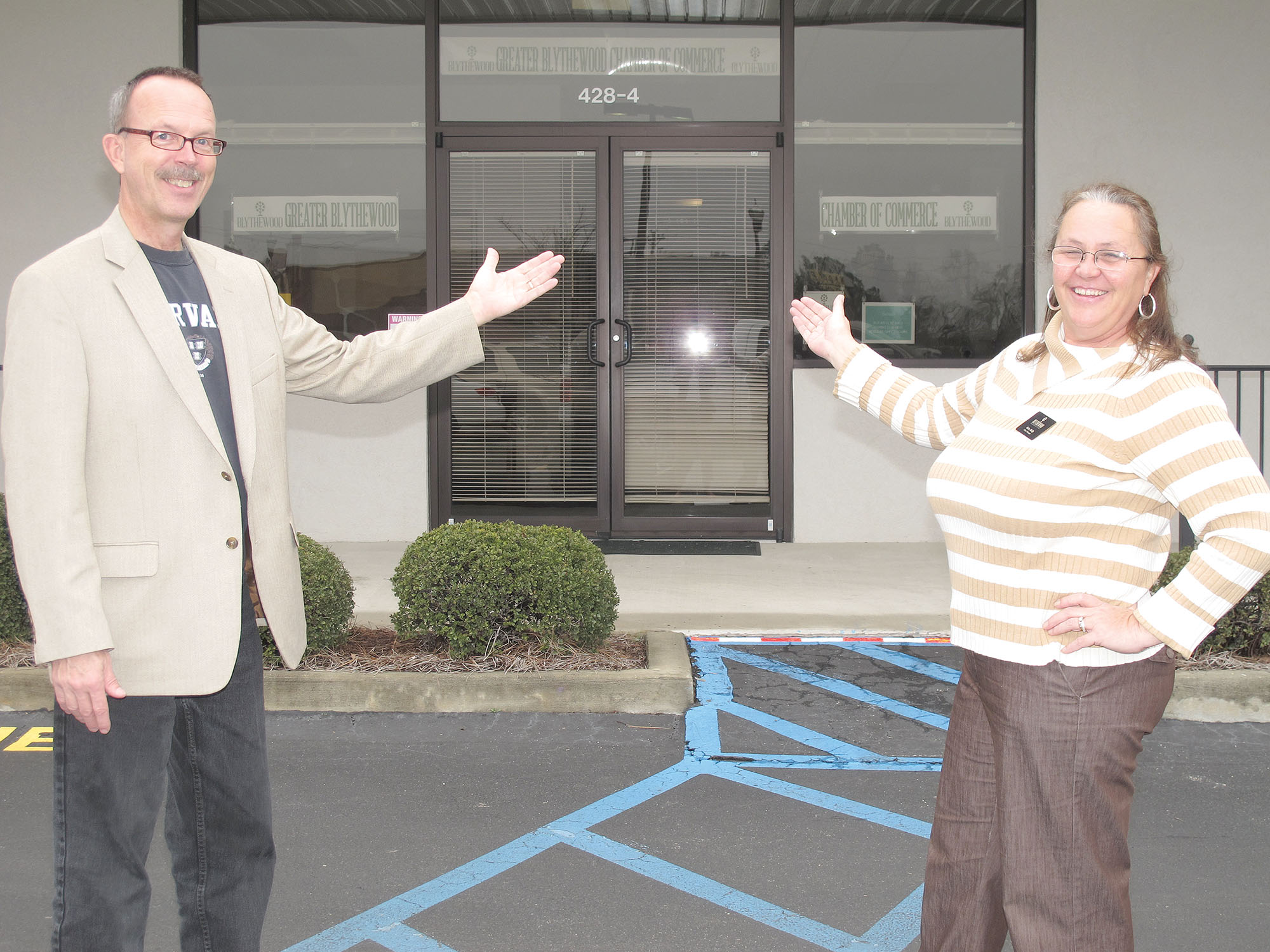
    Blythewood Chamber of Commerce executive director Mike Switzer and assistant Kitty Kelly show off the Chamber’s temporary office located in McNulty Plaza after recently closing the doors on the group’s Blythewood Road office. Switzer told The Voice that the Chamber has been offered the space by the owners of the Plaza until which time it becomes leased.