Category: Business

  • BAR Finds ‘Hiccup’ in Sign Rule

    BLYTHEWOOD (July 21, 2016) – The Board of Architectural Review granted a Certificate of Appropriateness Monday evening for a new sign at the Kellie Ballentine Allstate Insurance office at 162 Langford Road in downtown Blythewood. It also voted unanimously to grant Ballentine a variance because her new sign did not conform to the sign ordinance because of what Ballentine called a ‘hiccup’ in the ordinance.

    It was during a review of Ballentine’s application for a new sign that Town Hall staff discovered that the Town’s current sign ordinance, Section 155.544 (C) (1), restricts the height of a sign in front of an historic structure to three feet. Ballentine, whose office is on the historic register, was requesting to replace her six-foot tall sign with a new sign of the same height. It was noted by the Board that other historic buildings in the town had been routinely granted the six-foot height.

    “It’s amazing that the three-foot (height) limitation has been in the ordinance all this time and none of us noticed it,” Board Chairman Gale Coston said. “We’ve always approved the six-foot height (for historic sites) so that ‘hiccup’ surprised us, too.”

    To remedy the oversight, the Board voted to recommend amending the wording in the sign ordinance to allow for signs in front of historic homes to be six feet in height. The ordinance will now go to Town Council, which will have two readings and a public hearing before the amended ordinance becomes effective.

    Role of Advisor

    According to the agenda, the Board had planned to discuss the role of their architectural advisor. But as the discussion began, it was decided to postpone the agenda item and move it into executive session at the August meeting. The Town’s Planning Consultant suggested the Chairman seek the advice of Town Administrator Gary Parker as to under which provision (of the Freedom of Information Act) that issue could be discussed in executive session.

    Election of Officers

    Because of the resignation of Chairman Michael Langston from the Board, members elected Gale Coston Chairman and Jim McLean Vice Chairman. Those seats will be effective until the end of the year when regularly scheduled elections are held for the Board.


  • County Moves Forward on I-77 Project

    WINNSBORO (July 7, 2016) – After a brief executive session Tuesday evening, County Council voted unanimously to pass first reading of an ordinance authorizing the execution of an agreement between Fairfield County and the S.C. Department of Commerce that authorizes the County to purchase property located in Fairfield County. Earlier, the Administration and Finance Committee spent almost an hour in executive session discussing the issue before voting to move it to Council for a vote.

    “We are negotiating in partnership with the state to purchase a tract of land for a possible industrial site,” Councilwoman Carolyn Robinson (District 2) told The Voice following the meeting. She added that Council’s goal is to bring good paying jobs to Fairfield County.

    While the vote was unanimous on Tuesday evening, Councilman Kamau Marcharia (District 4) didn’t appeared to be in agreement about the project at last month’s intergovernmental meeting. At that meeting, Marcharia said the County might be better served if Council could focus as much on small businesses as it does on big, long-range industrial projects.

    Robinson, however, later told The Voice that Marcharia had spoken out of turn, specifically in his mention of the County’s prospective I-77 project.

    A better idea (than the I-77 project), Marcharia said, is supporting the expansion of water and sewer infrastructure by the local municipalities, which in turn, he said, would spur the growth of small businesses and improve opportunities for adequate housing.

    “I think if you had that (expanded water and sewer), small businesses would come, housing would come,” Marcharia said, “rather than waiting for 10 years for one major project on I-77.”

    Marcharia identified the I-77 project as a long-range vision to construct a major industrial park somewhere along the interstate in the northern portion of the country. Robinson, meanwhile, would not speak in detail about the project.

    “I am not at liberty to discuss it,” she said. “We (members of County Council) are under a confidentiality agreement. Mr. Marcharia was out of line (talking about it).”


  • County Hires Economic Leader

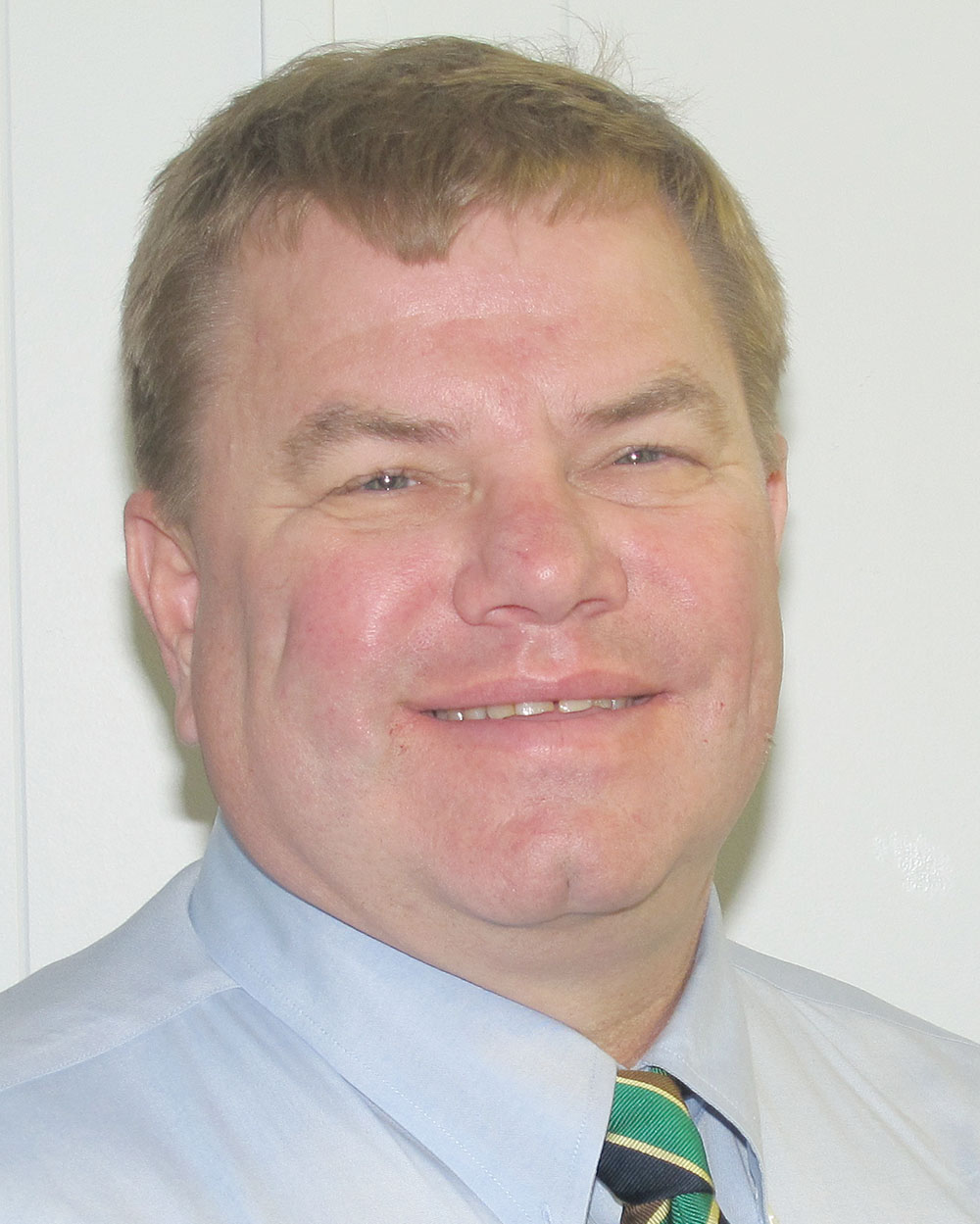
    Ty Davenport
    Ty Davenport

    WINNSBORO (June 30, 2016) – When County Council introduced Jason Taylor as their new County Administrator earlier this month, they also filled another long-vacant position by announcing the hire of Ty Davenport as the County’s new Economic Development Director.

    Davenport, 52, took office on June 6. The County has been without an Economic Development Director since July 2, 2015, when Tiffany Harrison resigned to take the Executive Director position with the Midlands Education Business Alliance in Columbia. Harrison had been the County’s economic point person since 2006.

    Davenport holds a Master’s degree in economic development from the University of Southern Mississippi. He earned an undergraduate degree in business administration from Presbyterian College in Clinton.

    Prior to coming to Fairfield County, Davenport spent the last eight years as the owner of Charles T. Davenport Investments, LLC, a commercial real estate company. For 10 years before going out on his own, Davenport was the national accounts manager for Nucor Corp. in Columbia, where he was responsible for promotion and sales of Nucor Building Systems products. He spent 1996-1998 as the Economic Development Representative for the SCANA Corporation, and began his career as the Senior Project Manager with the Central Carolina Economic Development Alliance.

    It was while he was with the Alliance that he first became acquainted with Fairfield County, when he helped recruit both Isola and Lang Mekra to the Walter Brown 2 Industrial Park.

    “While working for the Central Carolina Alliance, I had some success in Fairfield County with some projects I worked on,” Davenport said. “The people here were great, they wanted to grow and they had the right attitude.”

    So when the opportunity to come back to Fairfield County arose, he said, he jumped at it.

    “It’s kind of like coming home,” Davenport said.

    Nearly 20 years later, Fairfield County is in a great position to grow further, he said.

    “There’s tremendous opportunity here,” Davenport said. “The new Commerce Park is up and there’s infrastructure in the ground, which is huge. It makes it really attractive to industry. It’s a great county from an economic development standpoint; where it is located, between Columbia and Charlotte. It’s tough to find property. We have property here.”

    Davenport’s job is not without its challenges, however; water being at the top of the list.

    “We’ve got infrastructure requirements,” he said. “We need more water and sewer in the ground, but that will come. We have adequate services for moderate users, but if you have a major mega-water user, we’re off the list. Typically, they’re the big investments. That’s an opportunity we don’t want to miss.”

    Davenport said since coming to work he’s already had his first visit with an interested company, and there are four or five others, he said, that appear “viable.”

    As Harrison said in her final days with Fairfield County last year, “The county is in great position for growth and success. We have the building blocks in place so the next person coming in will be able to continue that success.”

    Davenport, it appears, is wasting no time in fitting some of those building blocks together.


  • I-77 Project Under Way

    BLYTHEWOOD (June 29, 2016) – If you haven’t noticed by now, then you probably haven’t been behind the wheel of your automobile for the last week or so. In case you’ve missed it, the S.C. Department of Transportation (DOT) got under way on June 20 with a massive two-year project to widen and repair I-77 in Northeast Richland County.

    During construction, the DOT said, Northbound and Southbound I-77 will be widened to add an additional travel lane in each direction beginning between SC 12 (Percival Road) and ending at the Killian Road Interchange. The additional lanes will be constructed within the existing interstate median.

    The project also includes the rehabilitation of the existing I-77 Southbound pavement from Blythewood Road to just north of Killian Road, the DOT said. This work will consist of repairing and then overlaying the concrete pavement with a new asphalt pavement. The majority of work in this area will be performed under nightly lane closures to minimize traffic impacts; although Tuesday morning, traffic in the work zone was down to a single lane. Drivers traveling through the construction zone are asked to be aware of equipment and crews working adjacent to traffic at all times.

    According to the DOT, all of the I-77 bridges within this area will also be widened toward the median to support the new lanes, including I-77 northbound/southbound bridges over I-20 mainline, I-77 northbound/southbound bridges over I-20 westbound ramp to I-77 southbound, I-77 northbound/southbound bridges over Windsor Lake Boulevard, I-77 northbound/ southbound bridges over Windsor Lake and Jackson Creek and I-77 northbound/southbound bridges over Edgewater Drive and Little Jackson Creek.

    The $88 million design-build contract was awarded to Archer Western, A Member of the Walsh Group, which has proposed an aggressive work schedule. Construction is estimated to be substantially complete in July 2018.

    Updates on travel information will be available at www.511sc.org.


  • Council Approves Amphitheater Architect

    BLYTHEWOOD (June 16, 2016) – Rick McMackin’s Landplan Group South has been selected by Town Council as the architect for the design of the proposed amphitheater in Doko Park. Because McMackin was the landscape architect for the original design work on the park, he was selected without issuing a Request for Proposal

    McMackin will be responsible for site prep/demolition, grading, stage retaining walls, concrete stage pad, dance pad, electrical, sound, lighting, landscaping and oversight of the construction of the band shell. McMackin’s contract is for $383,820.

    According to Town Administrator Gary Parker, the project is expected to be completed by mid-summer of 2017. Revenues for McMackin’s contract will come from the Town’s Hospitality and Accommodations Tax fund balances.

    Town Council gave its approval last month to an agreement with Palmetto Citizens Federal Credit Union for the naming rights for the amphitheater, naming it the Palmetto Citizen’s Amphitheater. The nearly $400,000 band shell is being funded with a grant and pledges from across the community, including $125,000 from the credit union for naming rights.


  • Council Up’s Chamber Budget

    BLYTHEWOOD (June 16, 2016) – During a four-hour budget work session on Tuesday morning, Town Council considered a request by the Blythewood Chamber of Commerce to more than double the Chamber’s funding from $9,500 to $20,000.

    Councilman Tom Utroska suggested only a 5 percent increase to $10,000, while on the high end, Councilman Malcolm Gordge, siding with the Chamber, suggested an increase in funding to $14,500. Councilmen Eddie Baughman and Larry Griffin favored a middle ground between $12,500 and $14,500. Mayor J. Michael Ross suggested instead a 25 percent increase to $12,000, which was approved unanimously by Council.

    But the vote came after a lengthy discussion of what the proposed increase would be used for and an airing of whether the Chamber was serving the smaller businesses in the town.

    “We’ve talked for three years now about the Town paying the salary of Mike Switzer, the Chamber’s Executive Director,” Utroska said. “Originally, it was presented to us by Mr. Switzer that other Town’s paid their directors. Then it was corrected that other towns do not, in fact, pay their (Chamber) directors’ salaries.”

    In an email to The Voice following the meeting, Switzer wrote that the requested increase in funding was needed to pay for office space for the Chamber, which now uses space in McNulty Plaza. That space is loaned to the Chamber by the building’s owner free of charge. The Chamber pays the cost of the office’s utilities, which comes to about $600 per year according to the Chamber’s published budget. But the office is for lease, so the Chamber might have to eventually move out, Switzer said.

    When asked by The Voice to explain a proposed $9,000 increase in the Chamber’s payroll budget from $21,000 in FY 2015-2016 to $30,000 in FY 2016-2017, Switzer said the increase would go to salary increases for him and the Chamber’s other employee Kitty Kelly, explaining that with increased membership, they were working more hours.

    With the proposed increase from Council, the Chamber’s overall budget would have increased from $41,000 to $71,500. Switzer told Council in April that besides a small monthly salary he receives 10 percent of the Chamber’s revenue.

    Griffin asked if the Chamber was doing “what we think it should be doing. If they are accomplishing what we want them to accomplish, that’s positive?”

    Later referring to Griffin’s suggestion that the Chamber should follow Council’s directions, Ed Parler, a Chamber Board member, told Council the Chamber functions independently of Council with a mission to serve its members.

    “The wishes of the Chamber members may not be consistent with the policies of the Town Council. We function as independent bodies,” Parler said.

    Ross suggested that the Chamber is doing a good job, that at the Chamber breakfast that morning, Switzer was talking about the big Kroger coming to Killian Road.

    “But it’s (Kroger) not in the town of Blythewood,” Ross said. “It’s on the outskirts.”

    As a member of the Chamber himself, Ross said the Chamber is in a better place than it’s ever been.

    “But I still think it does not seem to provide for the businesses in our Town Center District. Do those (Town Center) businesses get what they need from the Chamber? Is there a value for them in being a member of the Chamber?” Ross asked. “We can reach out to the (big stores), but they are not really in the town. Our Town Center businesses are Rimer’s Hardware, Blythewood Pharmacy, Pam’s Fashions, Papa John’s. These are our businesses. I think all of a sudden we’ve gone to a cloud above all that.”

    Ross said he did not feel comfortable increasing the Chamber’s funds to more than $12,500.

    “You’re moving forward,” he said to Parler, “and this ($12,500) is not going to buy you a building. But we don’t give funding to other organizations, not even Bravo Blythewood. They only get money from the Hospitality Tax funds for sponsoring events.”

    Utroska agreed with Ross that the Chamber had gone to a cloud that’s beyond the town of Blythewood.

    “Bringing businesses in from out of town is important, but I’d just like to focus on the local businesses too,” Utroska said. “The Chamber must show local businesses that it is of value (to them).”

    Ross said he and Town Administrator Gary Parker meet with Switzer, Parler and other Chamber Board members every two months.

    “We work closely with the Chamber and recently purchased way-finding signs for the town at the Chamber’s request,” Ross said. “I think the Chamber knows what we would like and that’s for even more to be done for small businesses, mom-and-pop businesses, that make up Blythewood. But we want all of them (businesses).”

    Before he finished, Ross said he was a little disappointed that the Chamber has abandoned the sponsorship of the town’s Christmas Parade.

    “I just think that was a perfect way to promote the Chamber,” Ross said.

    In an email to The Voice, Switzer said he was disappointed that Council did not approve the full funding request.

    “We are disappointed,” Switzer said, “and will make every effort to convince Town Council of the necessity and justification for our original request between now and final reading for the Town’s budget.

    Council passed first reading of the Town’s budget at the workshop and will take the final vote on Tuesday, June 28 at The Manor.
     

  • DHEC OK’s Mining Permit

    WINNSBORO (June 16, 2016) – The Department of Health and Environmental Control (DHEC) issued a permit on June 6 for Winnsboro Crushed Stone, LLC (WCS) to mine granite on 365.8 acres of a 923.2-acre tract off Rockton Thruway in Winnsboro.

    DHEC initially approved the company’s Application for a Mine Operating Permit and Reclamation Plan in April 2015, but an appeal by local residents, which was heard last February, resulted in several concessions by WCS. According to DHEC documents, in the Final Order, dated March 18, 2016, the S.C. Mining Council “affirmed (DHEC’s) decision with modifications to the permit.”

    “Those modifications have been satisfied,” DHEC’s permit letter to WCS states.

    “This is not a surprise,” said Lisa Brandenburg, a Rockton Thruway resident and member of a local citizens’ group that has battled the quarry for more than two years, “but the company still has to meet the conditions (won by opponents in the February appeal).”

    Fairfield County Administrator Jason Taylor, during his report to Council Monday night, revealed to Council that the permit had been issued.

    “The next step in this process would be for them (WCS) to approach the County with a development plan for that site, for approval or denial,” Taylor said.

    After Monday night’s County Council meeting, Brandenburg said she will be making a 10-minute presentation on the proposed quarry at Council’s June 27 meeting. She was confident, she said, that “the County will do the right thing.”

    Concessions granted by the Mining Council after the February hearing included the installation of monitoring wells, which must be operational in time for construction to begin on the quarry. The company was also required to construct berms along areas close to neighboring properties.

    The Mining Council also mandated the metering of the water flow in nearby Horse Creek. Winnsboro Crushed Stone was also required to present a plan for funding neighborhood wells that may run low or dry as a result of mining, including a plan for furnishing emergency water and replacing wells.

    According to the “Additional Terms and Conditions” portion of the June 6 permit, “four groundwater monitoring wells and one stream staff gauge shall be constructed” in designated areas. A benchmark level will be established for each well and the levels measured once a month with the data submitted to DHEC quarterly.

    The company “shall be responsible for repairing, deepening or re-drilling” drinking water or water supply wells should DHEC determine that those wells have been “adversely affected by dewatering activities at the Winnsboro Quarry,” the Additional Terms and Conditions state.

    Prior to the initiation of mining, according to the Additional Terms and Conditions, “an inventory of all water wells for domestic or agricultural purposes within the pre-blast survey area shall be conducted.”

    The Additional Terms and Conditions also state that “if archaeological materials are encountered prior to or during the construction of mine facilities or during mining, the S.C. Department of Archives and History and (DHEC) should be notified immediately.”

    The Additional Terms and Conditions also prohibit the “temporary or permanent placement of refuse and debris from off-site locations;” however, topsoil and DHEC-approved fill “may be brought in from off-site sources only for the purposes of mine land reclamation.”

    The company is also required to maintain a minimum of 75-foot undisturbed buffer “between any land disturbance activity and wetland areas.” DHEC may, if deemed necessary, require “an appropriate fence” to be installed around the affected area.

    According to the Additional Terms and Conditions, for nearby parcels owned by Samson Woods, LLC, and Banks Construction Company, no mining can take place.

    “The mineral rights for these parcels have not been conveyed to the mine operator,” the Conditions state. “Therefore, only grading related to the haul road construction within the 75-foot corridor . . . may take place within these parcels.”

    Finally, before the company can break ground on future reserve areas, “a mine map, reclamation map and reclamation schedule must be submitted for approval by (DHEC) prior to initiating activity.”


  • Get Down on the Farm with Ag + Art Tour

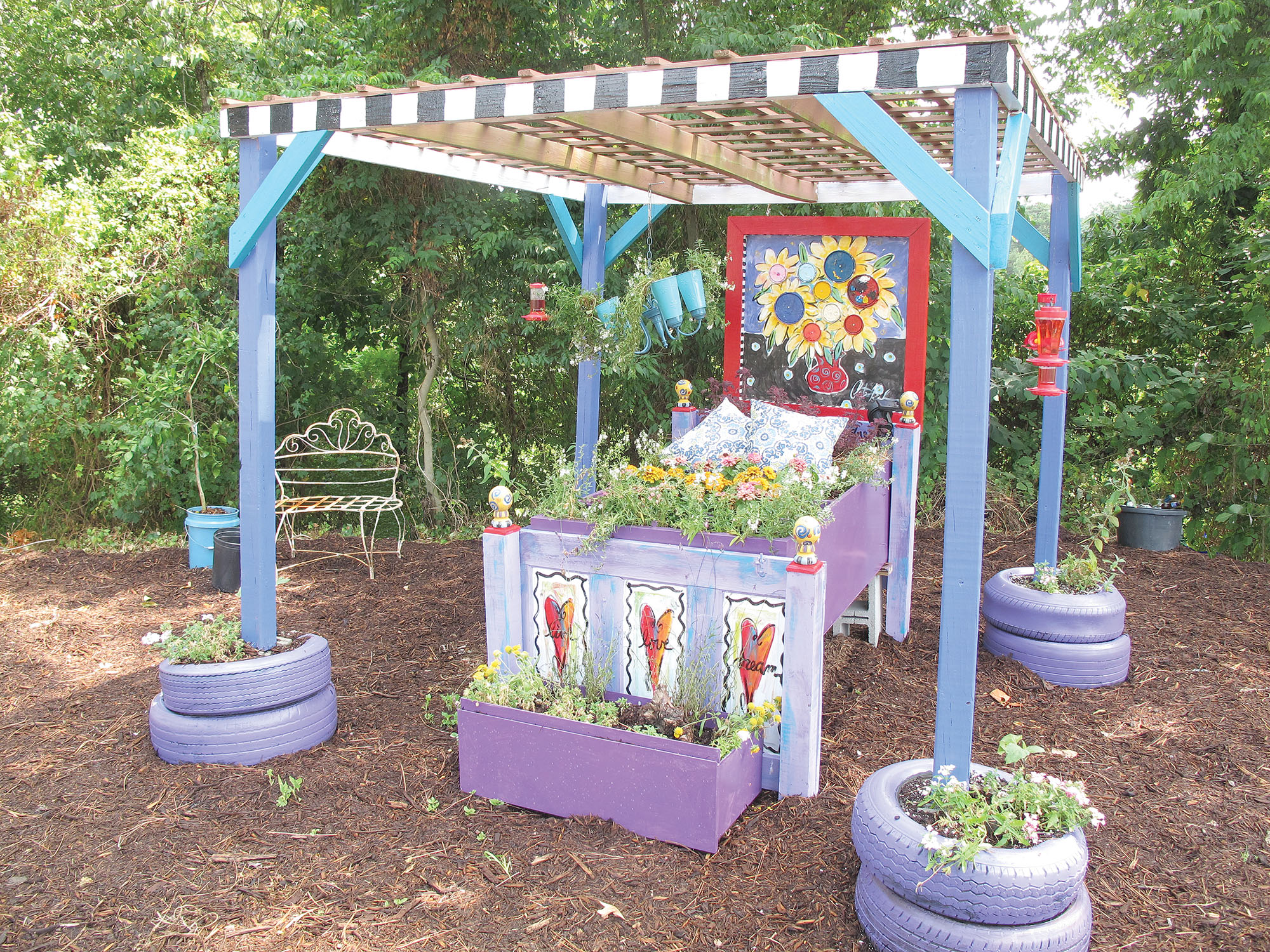
    This whimsically painted ‘flower bed’ made from discarded items, was featured in artist Christy Buchanan’s painted garden during Fairfield County’s Ag & Art Tour last year.
    This whimsically painted ‘flower bed’ made from discarded items, was featured in artist Christy Buchanan’s painted garden during Fairfield County’s Ag & Art Tour last year.

    FAIRFIELD COUNTY (June 15, 2016) – The rural, fair fields of Fairfield County will be busy with visitors this Saturday and Sunday during the County’s third year participating in the Ag + Art Farm Tours. Terry Vickers, President of the Fairfield Chamber of Commerce, said this year’s exhibits are going to top everything tour visitors have seen in past years.

    Bit and Annabelle, the Barbados Blackbelly Sheep, and their family will greet guests at Gypsy Wind Farm, as will Mangalitsa pigs with long, curly hair. A number of artists will be on site – one will be milling white, yellow and blue grits in a stone-ground grist mill.

    Magnolia Farm in Ridgeway dates back to the early 1800s with the original smoke house, barn and chicken coops still on site. The farm is home to The Barclay School with its curriculum for students who learn differently. Their raised-bed garden is configured as a sun. The students have cured hams hanging in the smoke house, and their farm animals include pigs, horses and goats. The kids will be making goat’s milk cheese. Samples of cheese and fudge will be available for tasting. The children’s art will be available for sale as well as the works of Plein Air Painters Yongue, Holland and Finch.

    Visit Forevermore Farm’s exotic miniature Zebu cows and Pygmy Dwarf goats and chickens of all kinds. A backyard critter encounter featuring a ferret habitat, baby cows, baby goats and chickens is a must for everyone. Artisans on site include Matthew Dickerson’s Dulcimer Music Concert on both Saturday and Sunday at 2 and 5 p.m. One Eye Ink, an acrylic painter, will be presenting on-going painting demonstrations both days.

    Triple J Farm is relatively new and produces grass-fed beef using controlled grazing. It also features pastured poultry and fresh eggs. Katie Langdale of Rosewood Farm will be featured in a freestyle riding performance with her Andalusian horse, Maluso II, on Saturday at 11 a.m. and Sunday at 2:30 p.m. Artist Julie Rambo will use barn tin for canvas and barn wood for frames. Julie is a three-time first place winner at the S.C. State Fair.

    For the whimsical in all of us, The She Garden will be a popular spot again this year at the Painted Picket. This fun studio space offers unusual garden creations including a thriving container garden in file cabinet drawers and a wine bottle house with a live herb garden on the roof. Also of interest are several free-range chickens and ducks, handcrafted honey, goat’s milk products with 100 percent essential oils in Earth-friendly packaging. And meet the goats as well. NaNa’s Art will be on hand cleaning, burning and drilling gourds in preparation for de’coupage and embellishment. Brenda Tobin-Flood will also be at The She Garden selling her Ruby’s Naturals dog, cat and horse treats made from all-natural, human-grade organic ingredients.

    Kick off for the Ag + Art Farm Tour will be a Farm-to-Table Dinner on June 16. Ingredients will be supplied many of the farm sites. Tickets are available online at eventbrite.com. For information, call 803-635-4242.


  • Volunteers Needed for Big Grab

    BLYTHEWOOD/FAIRFIELD (June 9, 2016) – Volunteers are need for 12-15 teams with that many Big Grab volunteer leaders, organizer Dennis Jones told The Voice on Monday.

    “We are needing folks who will, with a few friends, help with 7-12 mile sections of the 85-mile route,” Jones said. “They will stake out directional signs on the evening of Thursday, Sept. 8 and pick them up on Sunday, Sept. 11.”

    Jones also said that prior to the sale, volunteers are needed to go out and encourage those who live along the routes or have churches or businesses along the route to set up sites to sell their goods on the two sales days.

    Other volunteers are needed to solicit sponsorships ($50 per group/church/business) to help defray costs of security, advertising, temporary restrooms, etc. For their $50, sponsors will receive a yard/window sign and their sale site will be listed on the Big Grab website www.biggrabyardsale.com

    “Having a sales site listed on the website can be a big boost to that sales site,” Jones said. “People from near and far start analyzing the route early online, looking for ways to maximize their purchases in two short days. We want them to fine plenty of treasures and know how to navigate the route when they get here.”

    “The Big Grab is more successful every year,” Jones said. “The bigger it is each year, the more successful it is. But the more work it is as well.”

    Those who wish to volunteer, please call Denise at 803-361-2013.


  • More Delays, Rising Costs at Nuclear Plant

    JENKINSVILLE (June 9, 2016) – South Carolina Electric & Gas (SCE&G), primary owner of the V.C. Summer Nuclear Station, has filed a petition with the Public Service Commission of S.C. seeking an order approving an updated completion and cost schedule for two new nuclear reactors currently under construction at the Jenkinsville plant.

    The requested rescheduling would push the completion date for Unit 2 back to Aug. 31, 2019 and would push Unit 3 back to Aug. 31, 2020. It would also add approximately $807 million to SCE&G’s cost for the project, taking the estimated total cost for SCE&G up to $6.8 billion in 2007 dollars and $7.7 billion with escalation.

    When initially approved by the Commission in March 2009, SCE&G’s total estimated cost was expected to be $4.5 billion in 2007 dollars and $6.3 billion with escalation.

    SCE&G is a 55 percent owner of the project, with Santee Cooper owning the other 45 percent. Overall estimated cost for the project now stands at around $14 billion.

    According to SCE&G’s notice of filing, the new cost schedules “reflect additional costs associated with the Amendment and with certain change orders outside the Amendments. It also reflects additional Owner’s costs principally associated with the Amendment and the change in the guaranteed substantial completion dates, and additional costs to upgrade certain project-based transmission equipment.”

    A public hearing on the amendments has been scheduled for Oct. 5-7 at 10:30 a.m. at 101 Executive Center Drive, Saluda Building, Columbia, 29210.

    “The request for a cost of overrun of this magnitude will hit consumers hard and the PSC should for once side with residential and business customers and require for SCE&G and its shareholders to bear a major portion of the cost increase as it is in large part due to poor project management,” said Tom Clements, director of Savannah River Site Watch. “The law under which the project is being pursued is not a blank check for endless cost overruns and schedule delays and the company must be held accountable by the PSC for the costly problems and mistakes with the project.”

    Clements said SCE&G has also informed the Commission that it would be filing for its annual nuclear cost rate increase, as allowed by the Baseload Review Act. If approved, it would be the ninth such rate increase since the project was approved.

    SCE&G customers are already paying 15.5 percent of the bill for advance payment of financing costs for the project, Clements said.

    In October 2015, SCE&G signed an Amendment to the Engineering, Procurement and Construction Agreement for the project, which, among other things, granted SCE&G a “fixed price option for the remaining work required under the construction contract,” according to the company’s notice of filing.

    “The claim that the cost is fixed is very misleading as it’s clear that there can be future cost increases, all of which would be passed on to the consumer if allowed by the PSC,” Clements said. “The cost of the project is not capped and unless the PSC acts responsibly to curb the cost the sky’s the limit on future cost overruns, so customers should be braced for yet more negative rate impacts.”

    Phone calls to SCE&G spokespersons for comment were not returned at press time.

    Anyone wishing to testify and present evidence at the hearing should, by July 15, notify, in writing, the Commission at the Office of Regulatory Staff, 1401 Main St., Suite 900, Columbia, S.C. 29201; or K. Chad Burgess, Director and Deputy Counsel, SCANA Corp., 220 Operations Way, Mail Code C222, Cayce, S.C. 29033. Refer to Docket No. 2016-223-E.