Category: Business

  • Business Fights for Full Color

    BAR Reviews Sno-Cone Stand

    A Pelican SnoBalls stand in Forest Acres, similar to what franchise owners are looking to bring to Blythewood.
    A Pelican SnoBalls stand in Forest Acres, similar to what franchise owners are looking to bring to Blythewood.

    BLYTHEWOOD (Sept. 29, 2016) – Bryan Keller, owner of ice specialty stores in Elgin and Columbia, appeared before the Board of Architectural Review on Sept. 19 to find out if Board members would approve the use of several different bright colors on the exterior of a building the franchise hopes to rent on Wilson Boulevard near the intersection of Rimer Pond Road.

    Keller said he had been discouraged last year by Town Hall zoning officials from trying to open a Pelican’s SnoBalls franchise in downtown Blythewood because of the company’s required bright purple, pink and blue building colors.

    Town Administrator Gary Parker explained that the colors weren’t the only problem, that the business would also require a zoning change to at least Multi-Neighborhood Commercial (MC) if it locates on the Wilson Boulevard property. Several residents from nearby Rimer Pond Road who oppose commercial zoning in the area were in attendance.

    “It was made clear to us that the location in downtown was not going to happen,” Keller told the Board. “So we’ve expanded our search (for a building).”

    Keller said he’s considering the former 3-G Windows and Doors building that was renovated about five years ago. The building is located at 10713 Wilson Blvd.

    BAR members, who are charged with safeguarding the town’s aesthetics, took a collective deep breath when Keller passed around photos of the proposed color options.

    “The 3-G building has a very nice renovation,” Board member David Shand pointed out, “and I think your color scheme would take away from the look.”

    After much discussion about the colors which all concerned, including the Pelican representatives, agreed were garish, Matt Marcom, the Pelican SnoBalls franchise representative, weighed in.

    “There is some flexibility with the color. We can’t change the color scheme, but we can change where the colors go, the amount of color and saturation levels. So if we can compromise, the color combination makes up our trade dress. It’s meant to stand out,” Marcom said about the bright colors. “I think it’s good looking.”

    “The town’s requirements say unusual or attention-grabbing colors are not permitted,” Chairman Gale Coston said, reading from the ordinance.

    “But it’s supposed to be (attention grabbing),” Marcom said. “Could we get a variance?”

    “We worked for two and a half years with Hardees to get the colors right,” Coston said. “For us to make an exception like this would be defenseless.”

    “But this is not in the Town Center,” Keller countered. “It is in an area where the rules are more relaxed. It’s not on Blythewood Road. It’s next to a farm.”

    After Keller was reminded by a Board member that, “Some of us live on farms,” another Board member, Jim McLean, added, “It is the gateway to the town and the entrance to Rimer Pond Road. I don’t think this Board can maintain its continuity and approve these colors.”

    With that, Marcom backed down, suggesting he could possibly get approval (from his company) for a white building with only brightly colored trim work, wall menus and signage.

    “I understand. What you’re trying to prevent is what we’re trying to bring in,” Marcom said.

    Coston agreed that some compromise was possible and suggested Keller schedule a formal presentation to the Board outlining their plans, including landscape, lighting and parking lot paving for the Board to review. But McLean suggested Keller might want to be sure he could get the zoning before going to the trouble of preparing a presentation for the BAR.

    Asked by Keller if he thought the Town would agree to rezone the property from its current Multi-Neighborhood Office (MO) designation to Multi-Neighborhood Commercial (MC) designation, Parker said that would be up to Council.

    The properties on all sides of the 3-G property are currently zoned Rural (RU). Dawson’s Pond, a residential neighborhood, borders the back side of the property.

    Asked if he wanted to speak to the issue, Michael Watts said he and other Rimer Pond Road neighbors in attendance shared the Board’s concerns about the colors.

    “But our biggest concern is up-zoning the property to a commercial designation that will lead to even more up-zoning. We’re opposed to commercial zoning in this area,” Watts said.

    The next Board of Architectural Review is Oct. 17.

     

  • Expect Delays as Pipeline Work Continues

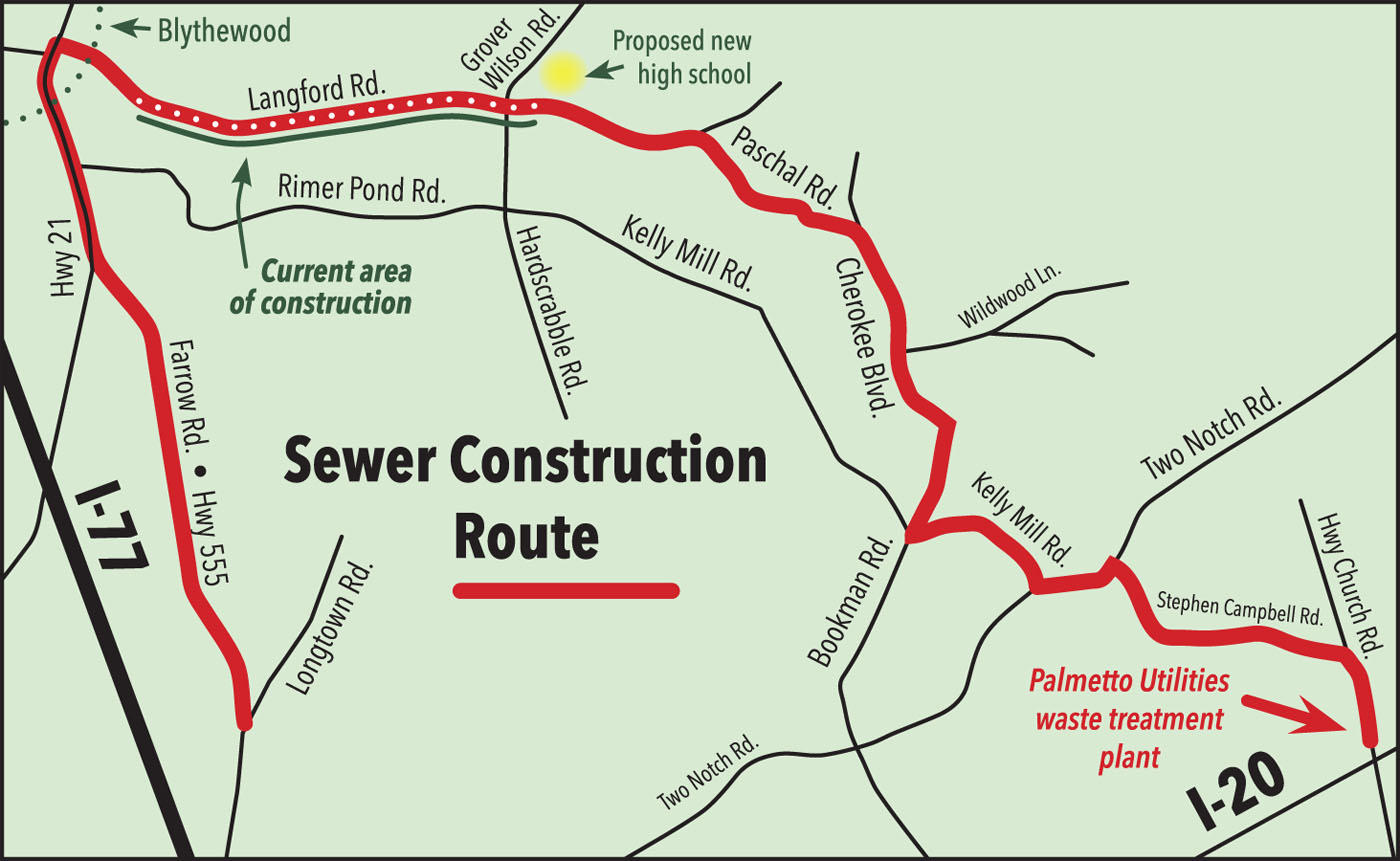
    The 2-1/2 foot sewer line being constructed for Palmetto Utilities along Langford Road will accommodate growth in Blythewood and the surrounding county.
    The 2-1/2 in diameter sewer line being constructed for Palmetto Utilities along Langford Road will accommodate growth in Blythewood and the surrounding county.

    BLYTHEWOOD – Palmetto Utilities recently started construction on a new 2-1/2 foot diameter force main sewer line along Langford Road that is not only causing traffic slowdowns just north of downtown Blythewood, but is a sign of things to come for Blythewood – growth. And the local construction is part of a much larger growth plan for the county.

    “The sewer line begins at the intersection of Longtown Road and Highway 555, and will eventually end at the Palmetto Utilities waste treatment plant on High- way Church Road in Elgin,” Andrena Powell-Baker, Senior Manager for Community Relations and Development at Palmetto Utilities, said in an email to The Voice.

    “We anticipate the construction along Langford Road to be completed within the next 45-60 days,” Powell-Baker said.

    The overall sewer line route will follow several different roads, Powell- Baker explained, beginning on Highway 555 at Longtown Road and running north along Highway 21, then following under a giant power line as it goes cross country to Langford Road where the gi- ant pipes are currently being buried.

    The map below shows the route of the sewer line continuing all the way to Two Notch Road and ending at the Highway Church Road treatment plant.

    sewer-map-conv

    “The first section will serve all of our Palmetto Richland County area. Once you get to Kelly Mill Road, the Kelly Mill pump station, which serves Blythewood, LongCreek and Lake Carolina, will also pump into the line,” Powell-Baker said.

    While the Langford Road construction may cause headaches for commuters now, the construction will soon change route and continue along Highway 21.

    “There may be some minor construction traffic issues in and around Blythewood for a short time,” Powell-Baker said.

    Construction on the sewer line results from the steady population increase and the expected growth in Blythewood and surrounding areas. A new high school is scheduled to be built on property owned by Richland School District Two at the corner of Grover Wilson Road and Langford Road. The high school is scheduled to be completed for the 2024-25 school year, the District’s Director of Planning Will Anderson told The Voice.

    “We have seen a large influx in building permits and new residential construction over the last three years,” Kirk Wilson, Director of Permits and Licenses for the Town of Blythewood, said.

    According to Wilson, the Town of Blythewood’s building permits more than doubled from 2012 to 2013, going from 53 to 123 permits. Since 2013, permit numbers have stayed consistently in the hundreds.

    “There have already been 111 residential building permits issued this year,” Wilson said.

    Powell-Baker told The Voice the entire project should be completed by March.

  • Enor Corp. Shutting Down

    WINNSBORO (Sept. 22, 2016) – The days of Enor Corp., the toy manufacturing plant that opened its doors at 1 Quality Lane in Winnsboro in the fall of 2014, are apparently numbered, according to the company’s headquarters in Northvale, N.J.

    “We have stopped production there,” a source within the company’s N.J. headquarters, who wished not to be identified, told The Voice this week. “We are still open, but we have moved all the machinery out.”

    The source said Enor plans to close down the site for good within the next three months.

    “The building is for sale,” the source said. “It should already be sold. We don’t have the final contract yet.”

    A review this week of Fairfield County’s tax records shows the building to still be owned by Enor Corp.

    The company filed for Chapter 11 bankruptcy protection last December. In documents filed in the U.S. Bankruptcy Court, District of New Jersey, the manufacturer of toys and games said they faced more than $5 million in liabilities, while claiming only $248,659 in assets with cash, cash equivalents and financial assets totaling just over $11,595.

    Shortly after the bankruptcy documents were filed, a spokesperson with the company told The Voice that Enor had no plans to shut down operations in Winnsboro. This week, however, the company’s tone had changed.

    “It just wasn’t a profitable business for us (at the Winnsboro location),” the unidentified source said. “We had heavy losses there.”

    Enor was introduced to Fairfield County in August 2014. Recruited to the area by Fairfield County Council and the S.C. Department of Commerce under the code name “Project Leprechaun,” Enor received a $300,000 Rural Infrastructure Fund grant from the S.C. Coordinating Council for Economic Development. Those funds were used to retrofit the 78,000-square-foot former Ruff & Tuff building at 1 Quality Lane, off Highway 321 S. Operations at the Winnsboro location began a month later.

    A spokesperson with the Department of Commerce said this week that since the $300,000 grant went to retrofitting the building and not to the company itself, there would be no recovery of those funds.

    “Hopefully, Fairfield County will be able to move another business into that site,” the spokesperson said. “The (grant) was for the building. Whether the company stays or goes, the building is still there. It is still a marketable building.”

    The company was also the beneficiary of a Fee-in-Lieu-of-Taxes (FILOT) agreement with the County. Under the agreement, Enor committed to invest a minimum of $2,500,000 in economic development property and a minimum of $3,870,000 in property subject to ad valorem taxation over a 20-year period. Enor also agreed to create at least 151 new full-time jobs at the plant over a five-year span.

    Enor’s payments to the County in lieu of taxes were capped at a 403.5 mills, with a 6 percent assessment ratio on economic development property.

    Bankruptcy proceedings are not listed in the FILOT documents among the terms of default. A cessation of operations, including a closure of the plant or cessation of productions and shipment of products to customers for a continuous period of 12 months, however, is. A default on a FILOT agreement could mean the company is subject to what is commonly referred to as “claw-backs,” or the recovery by the State or the County of incentives provided to the company to entice them to set up shop in Winnsboro.

    But, according to Michelle Mishoe of the S.C. Department of Revenue’s Manufacturing & Property Division, which oversees FILOT agreements in the state, Enor’s FILOT never had time to kick in.

    “A company has three years (to begin production),” Mishoe said, at which time the FILOT would take effect. “They have to file a return for us to track. Once they file, we make sure they’re meeting their statutory requirements. We have no knowledge of them actually ever being in production. It’s possible they never produced a single toy there. The FILOT does not start until they start claiming for income tax purposes.”

    Enor Corp., in business in Winnsboro for a little more than a year, never progressed to the point of filing a tax return.

    Ty Davenport, Fairfield County’s Economic Development Director, said the property at 1 Quality Lane was on the books as assessed at 6 percent before Enor took up residence there. Enor paid their required 6 percent property taxes in 2015, Davenport said, and they met their required minimum investment and hires as well.

    “They did hire the people they were supposed to hire,” Davenport said. “They just laid them off just as quickly.”

    Enor was in line for a 25 percent tax credit from the County, Davenport said, but did not remain in production long enough to get it.

    “They never got any advantage for us to take back,” Davenport said, “so it’s a wash. What we get out of it is a building (that can be marketed), which has been upfitted.”


  • Neighbor Provides Pointe Fence

    BLYTHEWOOD (Sept. 22, 2016) – The Board of Architectural Review (BAR) finally got its fence, though not exactly the one it wanted. After negotiating for months last year with the developers of The Pointe apartment complex to install a decorative fence (instead of the developer’s proposed chain link fence) on three sides of the Main Street apartment project, the developer, Prestwick Developers, backed out at the last minute, pointing out that the zoning ordinance did not require a fence.

    On Monday evening, Harold Boney, who owns the property on the west side of The Pointe, came before the BAR offering to build a fence between the two properties if the Board would approve a 6-foot tall, black vinyl-coated chain link fence that, he said, would be hidden in the landscaping. The 450 linear feet of fencing would stretch from a previously determined setback point near Main Street straight back to the back property line of the adjoining properties.

    “It’s a liability issue for me,” Boney said. “There will be lots of children over there and if they are playing on my property and get hurt, I’ll be liable.”

    Boney said the fence is part of an agreement he has with Prestwick.

    “They needed a place to bore under Highway 21 for sewer connections,” Boney said. “So I let them bore on my property in exchange for them paying for the fence.”

    Boney said Prestwick has already paid him for the cost of the fence, which is estimated at $7,980.

    As a condition of their approval, BAR members asked Boney to add a decorative column on the end of the fence nearest Main Street, and that the brick on the column match the brick on the apartment buildings. Boney agreed.

    “We appreciate very much what you’ve done for us. (The fence) is something we’ve wanted,” Jim McLean told Boney. “My disappointment to some degree is that Prestwick has had us again, because they knew a chain link fence was not going to be approved for them. So they went into this agreement (with Boney) deceitfully.” Though McLean was quick to say the Board did not blame Boney.

    The Board voted unanimously to approve the fence on the conditions that the setback from Main Street that was previously approved would be used, and that specifications for the decorative column could be hammered out.


  • Phillips Granite Co. Enters New Era

    Grady Phillips with the last load of granite to leave his shop.
    Grady Phillips with the last load of granite to leave his shop.

    WINNSBORO (Sept. 16, 2016) – After 83 years in business, Phillips Granite Company has decided to partner with Gulden Monuments of York County. The granite company has been in the family for three generations and was the last monument manufacturer in South Carolina.

    “My grandfather moved here in 1933 and started his own granite business and saw it as an opportunity,” manager Grady Phillips said. “I learned (the business) from my father who engaged in the business all his life, and we worked side by side for three decades together.”

    Phillips said he has known the owners of Gulden Monuments for many years and has always thought highly of them.

    “Now it’s time to finish up the remaining manufacturing orders and move onto the next chapter,” Phillips said. “That’s just the economics in the way of business these days. I didn’t have a successor in my family that wanted to continue the business. Now the business will be able to continue after I retire, and hopefully after I die.”

    Phillips said this merger will have little outward change for the public, however. The business will stay in the same location and clients will still come to the office to place their orders. The only major change is that Phillips Granite will be working strictly in sales and services, not in manufacturing.

    “You’ll see the same two ladies at the front, and you’ll still see me there. I’ll still be a manager of the granite company,” Phillips said. “We are very blessed and I thank the Lord every day that we have been able to do this for 83 years. We’re still in business and we appreciate all the support from the community.”


  • Confusion Reigns Over Rezoning

    Council Tables Request, Seeks Legal Advice

    RIDGEWAY (Sept. 15, 2016) – Confusion over Ridgeway’s zoning ordinance continued to plague Town Council last week as a motion on second reading to amend that ordinance to rezone .82 acres at the fork of highways 21 and 34 failed to carry. Instead, Council opted to table the amendment and consult an attorney.

    “Our citizens feel like we don’t know what we’re doing up here,” Councilman Donald Prioleau said after the vote on second reading fell 1-3. Councilman Heath Cookendorfer was the only affirmative vote at the Sept. 8 meeting.

    Prioleau was one of three Council members to vote in favor of first reading of the zoning ordinance amendment during Council’s Aug. 11 meeting. That vote stirred controversy in the face of a petition in opposition to the zoning change, presented to Council prior to the Aug. 11 meeting.

    That petition, according to Councilwoman Angela Harrison, represents an official protest, in light of which a three-fourths vote of Council is required to pass a zoning change. While the S.C. Municipal Association last month told The Voice that three-fourths of a five-member council is four, during the Aug. 11 meeting Council was unclear on the mathematics.

    Ridgeway business owner Russ Brown, a former Ridgeway resident and former member of Town Council, owns the lot in question and is seeking a zoning change from residential to commercial. Brown, who has plans to construct a small office building on the lot, told Council last month that any protest of his request should have come before the Planning and Zoning Commission at their July 12 public hearing on the matter. The Commission voted to recommend Brown’s request on a 5-2 vote.

    And while Sara Robertson, a nearby resident, presented Council with the petition – which she said included the signatures of 50 people opposed to the zoning change – before the Aug. 11 meeting, an official letter of protest was not submitted to the Town until Aug. 12, a day after first reading passed on a 3-2 vote.

    As Council began discussion last week prior to second reading, Harrison again cited the protest rule requiring a three-fourths vote.

    “The protest rule is for the Planning and Zoning Committee to hear,” Cookendorfer said. “It’s not for the Council. The Council does not have a hearing. At this point and time, if there’s still any question of legality or illegality, anyone who opposes it and is on the letter of protest, can at this point and time seek legal advisement and file a case with the civil court.”

    Harrison disagreed and said that the protest was of a decision that Council was making.

    In a memo to Council reviewing the process, Zoning Administrator Patty Cronin-Cookendorfer wrote that the Planning and Zoning Commission had correctly followed the Town’s ordinance. Furthermore, she wrote, any protest can only be made by owners of lots “contiguous to the area in question,” according to the Town’s ordinance. Brown’s property, she noted, has only one contiguous lot “according to the legal definition.”

    That lot is owned by Robert Johnson, a signatory of the protest.

    Cronin-Cookendorfer also wrote in her memo that, after discussing the matter with the County Zoning Administrator, a three-fourths vote on a five-member council is three.

    “You’re telling me three-fourths of five is three and the Municipal Association says it’s four,” Harrison said during the Sept. 8 discussion. “And we’re not listening to our citizens at all. I don’t want to debate this issue. I think it’s fair to our constituency that we at least get legal advice and table it until we get advice.”

    After second reading failed, Council agreed to authorize Mayor Charlene Herring to consult Danny Crowe, an attorney she said was recommended to her by the Municipal Association.

    “I’m for that (seeking legal advice),” Prioleau said. “Before, I voted for it. The decision I made, I don’t think was wrong. I’m for rezoning, but I don’t want our citizens to feel like we’re not doing our job.”

    Herring said she was not sure how much an attorney would cost the Town to review and interpret its own laws.

    “Our citizens will pay for it,” Prioleau said.


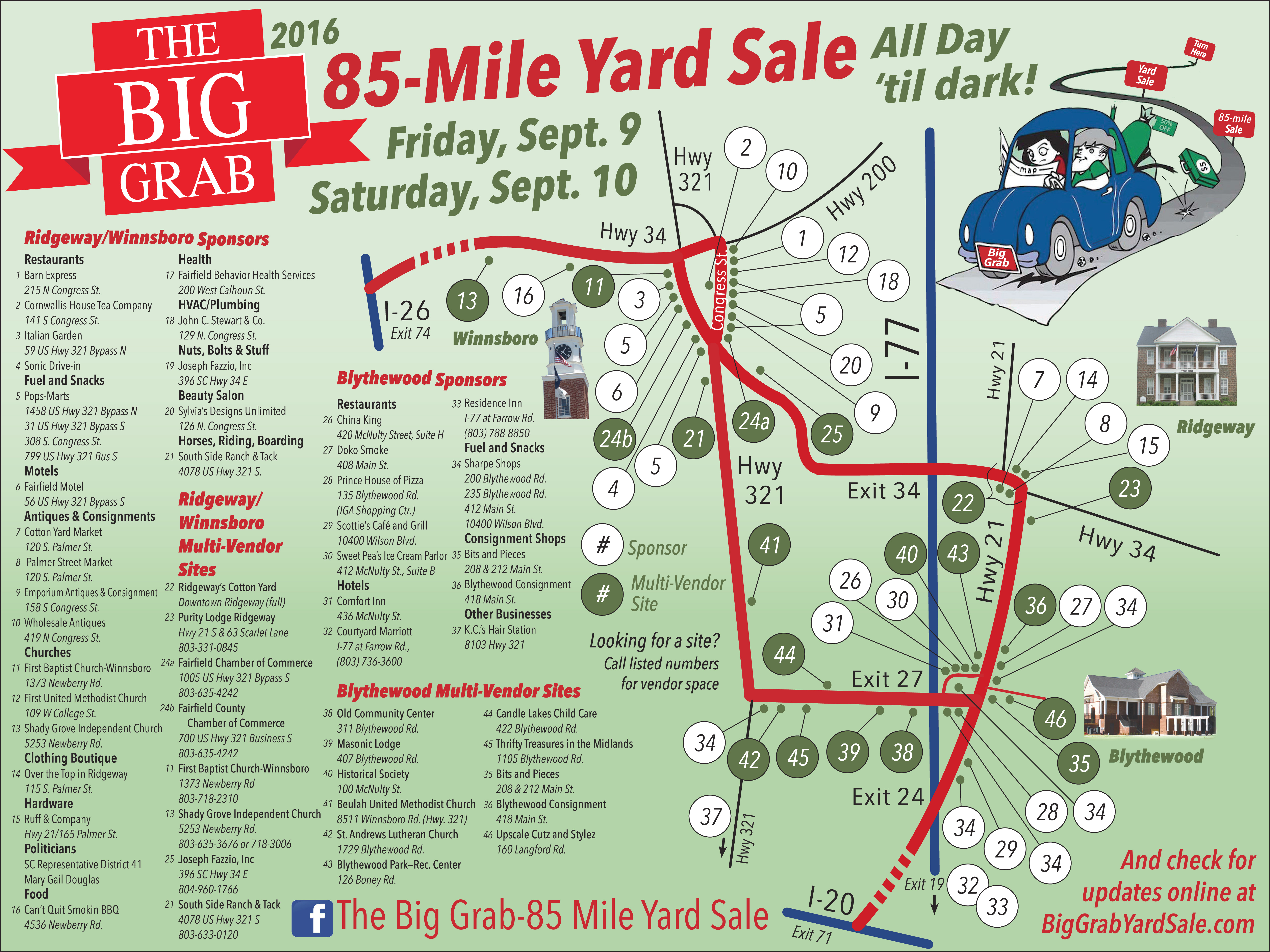
  • The Big Grab Map

    big-grab-double-truck-sept-8

    Check out the map to see where all of your favorite businesses will be located for the big event!

  • Big Grab Gets Bigger

    Bargain Hunting Begins Friday

    BLYTHEWOOD/FAIRFIELD (Sept. 8, 2016) – With a name like “The Big Grab,” one would have to imagine the event has considerable scope. After all, the word “Big” is right there in the name of the event.

    But this weekend’s curbside crawl of yard sales might have been better dubbed “The Bigger Grab.”

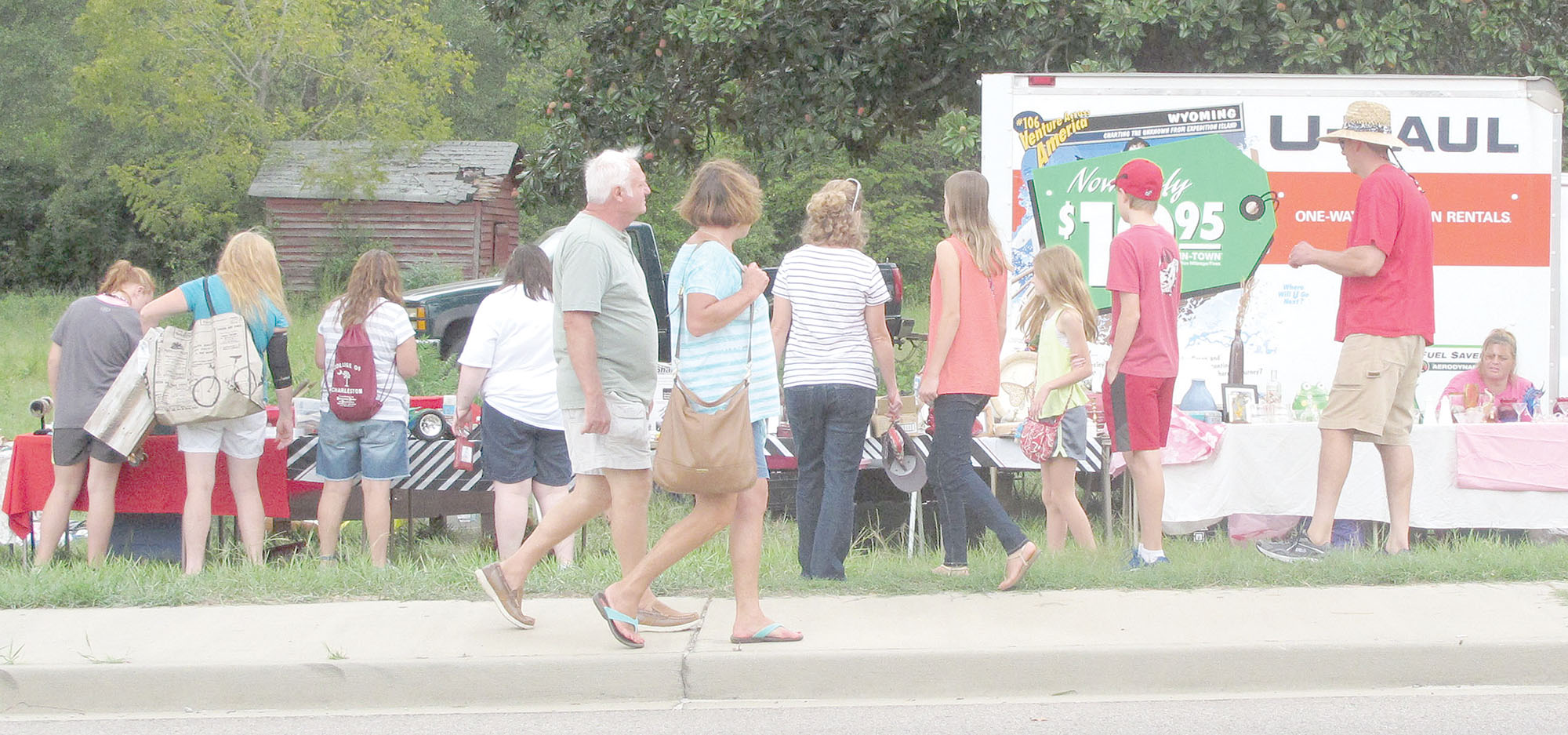
    Shoppers at last year's Big Grab search for deals.
    Shoppers at last year’s Big Grab search for deals.

    The event that links Blythewood, Ridgeway and Winnsboro in a network of yard sales has grown and expanded this year to include more of Richland County and will run all the way to Newberry.

    “It started out at 25 miles as a way to bring people into our communities and to enjoy small towns again, as well as a way to help our citizens put a little money in their pockets,” Terry Vickers, President of the Fairfield County Chamber of Commerce, said. “Now we’re in our fifth year and it is up to 85 miles.”

    Vendors will be out trolling the roadsides from sunrise to sunset this Friday and Saturday along a route that beings at Exit 71 on I-20 and travels up Highway 21 into Blythewood and on to Ridgeway. From Ridgeway, shoppers can follow Highway 34 to Winnsboro, where sales will stretch along Highway 321 Business and the 321 Bypass, looping back to Highway 34 and running all the way to Exit 74 at I-26 near Newberry.

    The event was the brainchild of Ridgeway merchant Denise Jones, Vickers said, who saw the success of Ridgeway’s semi-annual sidewalk sales and envisioned a chain of similar sales running for miles along the open road. Since its inception, The Big Grab has not only drawn shoppers into local businesses, it has also drawn vendors from as far away as New Jersey, Vickers said.

    The event has also been a boon to local churches, who have capitalized on The Big Grab as a major annual fundraiser – not only selling their own wares, but also renting out prime selling space to vendors who otherwise would not have had a spot along the route. First United Methodist Church in Winnsboro has set the bar for other churches, raising approximately $5,000 last year.

    Vendors will begin trickling into the area soon, Vickers said, setting up Thursday evening so they will be ready for the first light of dawn on Friday. Shoppers will just have to stand by and wait until day breaks.

    “It’s exciting,” Vickers said. “My phone has been ringing off the hook!”


  • Shell Building Becoming Reality

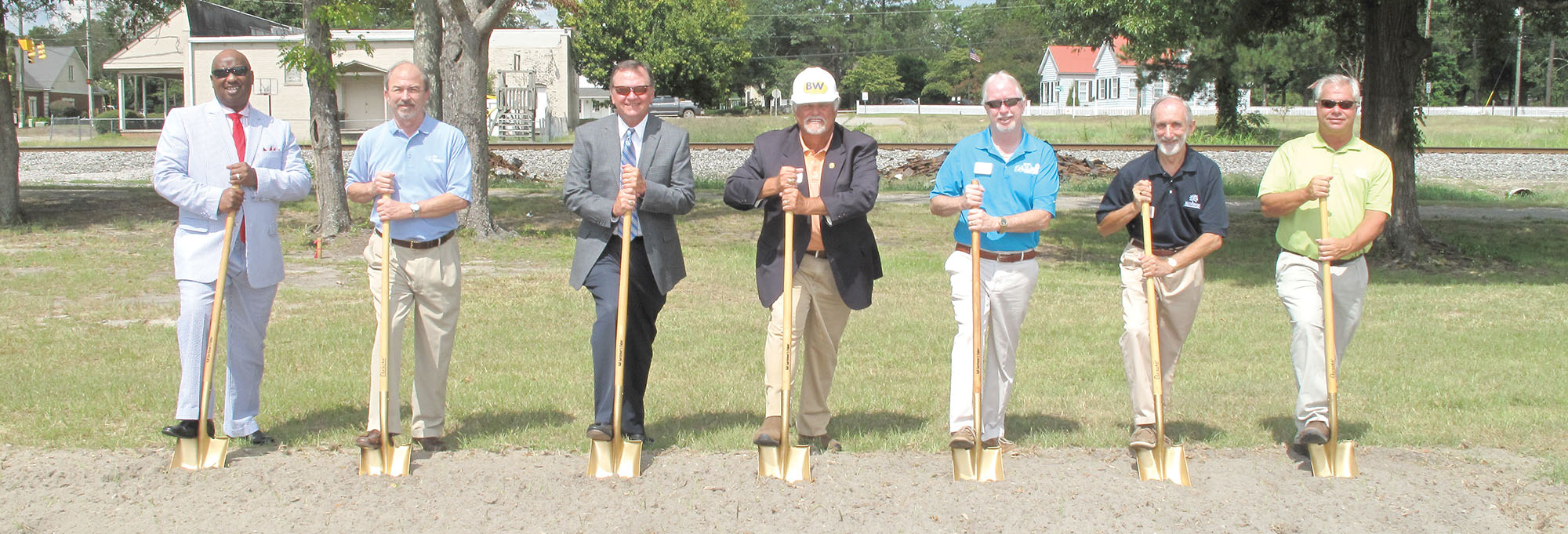
    After reworking the original concept and a project re-bid, ground was finally broken last week on Blythewood’s shell building. Digging in at Doko Meadows last Wednesday are: Larry Griffin, Town Councilman; Ed Parler, Economic Development Consultant; Bill Hart, CEO Fairfield Electric Cooperative; Blythewood Mayor J. Michael Ross; Town Councilmen Eddie Baughman and Malcolm Gordge and Kevin Key, Lyn/Rich Contracting Co., Inc. (Photo/Barbara Ball)
    After reworking the original concept and a project re-bid, ground was finally broken last week on Blythewood’s shell building. Digging in at Doko Meadows last Wednesday are: Larry Griffin, Town Councilman; Ed Parler, Economic Development Consultant; Bill Hart, CEO Fairfield Electric Cooperative; Blythewood Mayor J. Michael Ross; Town Councilmen Eddie Baughman and Malcolm Gordge and Kevin Key, Lyn/Rich Contracting Co., Inc. (Photo/Barbara Ball)

    BLYTHEWOOD (Sept. 8, 2016) – After several stops and starts and adjustments to the overall plan, Blythewood’s spec building on the grounds of Doko Meadows Park is at last on its way to becoming a reality.

    “It’s for real this time,” Ed Parler, the Town’s Economic Development consultant, told The Voice last week, just days after a ground-breaking ceremony at the site. “We’ve awarded the contract, and construction should begin in the next seven to 10 days.”

    The Town announced the winning bid on the project last month after Lyn-Rich Contracting Co., Inc. of West Columbia submitted a base bid of $379,850. With options, which Town Council voted to accept, the Lyn-Rich bid came to $388,100. Those options include walkways and special fire protection equipment.

    The August bids were the second round of bids on the project. Council put the construction out for bid a second time after bids opened last June came in ranging from $524,000 to $761,455 – all well over the $410,000 budget for the project.

    The June bids forced Council and architect Ralph Walden to rethink the scope of the spec building.

    “We had the specs beyond a shell,” Walden said in July, “and that proved to be the wrong direction. We had wiring, 800 amps for a kitchen, HVAC and a slab. The plan was to give the end-user a little more for his money.”

    Specifications for the second round of bids included only rough plumbing and eliminated the HVAC unit. Also eliminated were interior doors and ceiling tiles, connection to water and sewer and all walkways. Finished siding was substituted for primed siding and paint. Specifications were changed for deck and rail materials, windows, doors and shingles.

    The spec – or “shell” – building is itself a scaled-down version of a plan three years ago for the Town to build a restaurant in the park, utilizing grant money from the Fairfield Electric Co-Op and a $1 million loan from Santee Cooper. That plan called for the Town to construct a restaurant and lease the facility out. But a newly elected Town Council balked at that idea.

    “The new Council had questions about the Town being in the restaurant business and carrying all that debt,” Parler said. “So we scaled down the project. Rather than doing a fully fitted out building, we would construct a shell. Hopefully, by the first of the year we will be able to sell it and have the owner finish it out.”

    And while there are certain restrictions on what kind of business could set up shop in a building located in a publicly owned park, Parler said the likelihood is high that it would be a restaurant after all. The building could also serve as an office building, Parler said.

    Fairfield Electric Co-Op has been instrumental in making the shell building a reality, Parler said. A 2013 economic development grant from the Co-Op netted the Town $240,714, and a year later the Co-Op pitched in another $216,167, for a total of $456,881, Parler said.

    Last month, Town Administrator Gary Parker told Council that the Town still holds $325,916 of the original $456,881 utility grant from Fairfield Electric Co-Op. The balance of the costs of the shell building, Parker said, can probably be taken from Hospitality Tax revenue.

    Parler said the Town’s intent is to recover those funds with the sale of the shell building.

    Construction is slated to begin any day now, Parler said, and should be wrapped up in approximately 150 days. The Town will begin marketing the building for sale in November.


  • Fighting for Green Space

    Cobblestone Residents Look to P.C. for Help

    BLYTHEWOOD (Sept. 8, 2016) – After discovering in July that Cobblestone Park developer D.R. Horton is planning to build six new roads and 74 more homes in what residents thought would remain green space around their homes in the Primrose section of Cobblestone, Lenora Zedosky and about 30 of her Primrose neighbors appeared before the Town’s Planning Commission to protest the development, saying, “We were told (by the developer) that the green space would always be there.”

    Zedosky and her neighbors appeared again at Tuesday evening’s Planning Commission meeting to report that four days after their July protest, D.R. Horton upped the ante, displaying in the Cobblestone Clubhouse an entirely different road/housing plan for the Primrose section that included two more roads and 10 more new homes.

    “In this new plan, the backs of homes would face Primrose, which is the primary entrance into our neighborhood,” Zedosky said. “To our knowledge, the new plan has not been presented to Council, but is already being marketed. That’s a great concern to us. It’s an entirely different plan than was approved by you in October 2014.

    “We are not trying to stop all development,” Zedosky continued. “We just want a buffer and no clear cutting, which has been the habit we’ve seen so far.”

    Commission Chairman Buddy Price asked Town Administrator Gary Parker to confirm that the developer cannot move forward with the proposed construction until it comes before the Planning Commission for approval.

    Parker agreed.

    “We had a meeting with the developer about a week ago and saw the new proposal, but there’s a ways to go,” Parker reassured Zedosky.

    Following the meeting, Michael Criss, the Town’s Planning Consultant, reviewed for The Voice the steps the developer will need to complete in order to progress to the construction and sales stages of the project.

    “After the developer brings a sketch plan to the Town Administrator, he will then send it to the Planning Commission for a preliminary plat approval,” Criss said.

    “That’s a full civil engineering plan – roads, street drainage, water, sewer, as well as other infrastructure,” Criss said. “At that point, if the plan is approved by the Commission, work can begin on the infrastructure (grading, pipes in the ground, sidewalks, paving, etc.) When this work is finished, the developer will bring a final plat to the Commission for approval. When that’s approved, they can start selling.”

    Asked if the Commission had the authority to outright turn down the plan because of the residents’ objections, Criss said any approval or disapproval must follow zoning regulations spelled out in Chapter 153 of the Town’s zoning ordinances.

    “The developer has already been given the authority to build so many homes, so the Commission can make some suggestions for the plan, but there is just so much land available to build on. We have to be fair with how the houses and streets are arranged to accommodate what has been approved,” Parker said.

    Franklin Elected Chairman

    In other business, the Commission members unanimously elected Commissioner Bryan Franklin as Chairman. Buddy Price said he was stepping down from the Planning Commission after six years to give someone else an opportunity to serve.