Category: Business

  • Hospital Losses Easing

    CT Scanner Remains Offline

    WINNSBORO – While Fairfield Memorial Hospital continues to struggle financially, Tim Mitchell, the hospital’s Chief Financial Officer, reported to its Board of Directors last week that the losses are trending downward.

    Mitchell told the Board during their Nov. 22 meeting that the hospital had experienced an operating loss of $88,155 for the month of October, which included $44,363 of bad debt. But, he added, that was a $36,671 decrease from the operating loss experienced in September and a $158,000 decrease from losses in October of 2015.

    Average daily revenues were down $51,688 in October, he said, which was a slight improvement over September, when revenues were down $56,456. In October 2015, Mitchell said, those revenues were down $58,477.

    Year-to-date expenses are down $122,646, Mitchell reported, while year-to-date operating revenue is down $210,000.

    Mitchell said the hospital had a deficit of $18,283 in earnings before interest, taxes and depreciation during the month of October, which he said was a marked improvement over last year.

    “It is a significant departure from where we were a year ago when our deficit was $151,745,” Mitchell told the Board.

    MRI/CT

    Hospital CEO Suzanne Doscher told the Board that Fairfield Memorial’s CT scanner was still out of operation. A replacement part for the scanner was expected to be delivered from Germany this week, Doscher said. The part would have to be customized to fit the aging machine, she said, and it was hoped the scanner would be back in operation in early December.

    “This has been very painful,” Doscher said. “We’re very unhappy with it, but the service rep has been here day after day trying to fix it.”

    Doscher told the Board that the scanner was “an old machine that needs to be replaced,” but the cost to do so, she added, was around $500,000.

    Last March, the hospital asked County Council for a little more than $305,523 to catch up on maintenance for the CT scanner and the MRI machine. Council ultimately approved $200,000.

    The hospital’s prior service contract for the CT scanner had lapsed as of last March when payments on the contract could not be kept up.

    At last week’s meeting, the Board approved $88,500 for the service contract on the MRI machine, but that will not include refilling the cryogen. Mitchell told the Board that the cryogen had needed a refill prior to the new service agreement taking effect and would not be included in the current contract. Future refills, he said, would be included. The hospital will have to pony up $12,000 for the refill, Mitchell said.


  • Tax Notices on the Way

    WINNSBORO (Dec. 1, 2016) – Forget to pay your property taxes? Hoping to get a good deal because someone else did? Then next week is your first opportunity to settle up or clean up as Fairfield County’s delinquent tax notices make their first run in The Independent Voice.

    Approximately 600 listing of properties will appear next week in these pages and will run for two more weeks after. Property owners with outstanding bills will have this chance to make good with the Tax Man. But about three weeks after the final run of the notices in The Voice, the Auctioneer takes over.

    That’s when savvy fortune hunters will have the opportunity to bid at the County Courthouse on properties whose owners did not pay The Man. Winning bidders will see their money go into an escrow account where it will earn interest for one year. Delinquent property owners will have that year to come up with those back taxes. If they do, the winning bidder keeps the interest. If not, the winning bidder becomes the new property owner.

    Just like a late-night T.V. infomercial.

    So make sure to pick up next week’s edition of The Independent Voice to find your property or find your best deal. Notices will appear in the Dec. 8, Dec. 15 and Dec. 22 editions.


  • Sno-Ball Rezoning Fails

    BLYTHEWOOD (Dec. 1, 2016) – Rimer Pond Road residents and their neighbors live to fight (commercial zoning) again.

    On Monday night, Council voted 5-0 in support of the residents who spoke out against a request by Pelican Sno-Balls for Multi-Neighborhood Commercial zoning (MC) at 10711 Wilson Blvd., at the entrance to Rimer Pond Road.

    The MC zoning designation would have allowed not only the ice treat store, but a myriad of other retail business uses, including convenience stores, beer and wine sales, apartment buildings and, under certain conditions, service stations. The property, which is surrounded by Rural (RU) zoning, is currently zoned for office use and was most recently occupied by the 3-G Windows and Doors office.

    “We continue to show up here to speak out against commercial zoning in our neighborhood,” Rimer Pond Road resident Trey Hair said during citizen testimony regarding action items on the agenda. “The Town Hall has already stood up against Pelican locating in the Town Center based on its (franchise’s) brightly colored buildings. But more important to us is the zoning change. We would be left with commercial zoning where we never wanted it.”

    David Whitner, who lives on Shoal Creek Road just off Rimer Pond Road, agreed.

    “Keep it rural,” Whitner said. “That type of zoning is not something we want to see in our neighborhood.”

    “We are opposed to this up-zoning near our road because it will progress and the up-zoning will rapidly be out of your hands,” Michael Watts told Council members.

    Other residents, including those from Dawson’s Creek neighborhood which is located behind the property up for re-zoning, voiced similar opinions.

    Pelican owner Brian Keller also addressed Council saying he owns Pelican stores in Elgin and Spring Valley and that both are extremely popular. While Keller he said he had talked to a lot of people on Rimer Pond Road who were in favor of his business opening in the area, he lamented that none of those residents showed up at the meeting.

    While Keller acknowledged that a main objection from the Board of Architectural Review, Town Hall and neighbors in the area of the property up for re-zoning, had to do with the bright blue, purple and pink colors used by the Pelican franchise on its buildings and signs, he told Council that he was 100 percent sure the franchise would agree to tone the colors down if he could first get the MC zoning passed.

    Councilman Eddie Baughman brought the focus back to zoning, pointing out that MC zoning allows apartment buildings like the ones going up in Blythewood.

    “With MC zoning, we could be allowing an apartment building to go up right outside of the town,” he said.

    Councilman Tom Utroska agreed.

    “When you change the zoning,” Utroska said, “you can’t just change it right back.”

    While Councilman Larry Griffin, a proponent of growth, suggested that if there had never been any zoning changes in the town, residents might not have some of the things they enjoy today, he said he was torn on how to cast his vote.

    “How much and where do we want that growth to go and what do we want it to look like is the real question,” Griffin asked.

    “I think you’ve hit it right on the head,” Mayor J. Michael Ross said to Griffin. “As I look at it, it’s not, ‘Do we want a Pelican Sno-Balls store?’ It’s a zoning map and zoning district classification that would allow this type of business, but it would also allow a lot of others. So are we ready to do that down that close to Rimer Pond Road? So, when I cast my vote, it’s not against Pelican Sno-Balls, but are we ready to start what might be an entire commercial development down on Highway 21 right in front of the entrance to Rimer Pond Road?”

    Ross also said he was sorry that the Town Center District would not accommodate the Pelican store, “but we have regulations as to what we want (the town) to look like,” he added.

    Turning to Griffin, Ross said, “I think you said exactly what we are voting on – whether or not we will open this up to allow this type of business or other businesses like this business in that area.”

    On a verbal roll call, Council members unanimously rejected the MC zoning request.

    Historic Designation of Academy

    Council voted 4-1 to designate the interiors of Blythewood Academy’s auditorium and gymnasium as historic features of those already designated historic structures. Council also recommended changing the classification of both buildings from Class II to Class I structures. The change requires the building’s owner (Richland 2 School District) to get prior approval from the Town’s Board of Architectural Review before making any changes to the buildings.

    Utroska was the lone dissenting vote, suggesting that it might be inappropriate for the Town to control what could be done with the interior of the building.

    Jack Carter, Director of Operations for Richland 2, addressed Council to confirm that the District is fine with the changes.

    YMCA Use of Doko Park

    Council unanimously approved an ordinance granting a license to the YMCA for the use of the soccer fields in Doko Meadows during certain hours of certain days with the specification that the regular $15 hourly rate would be prorated for additional hours used.

    Amphitheater Bid Approval
    Unanimous approval was given to accept the low base bid by AOS Contractors ($415,893) to construct an amphitheater stage, pavilion structure and concrete pad in front of the stage. While Digging Deep Construction submitted the lowest bid for both the base bid and the alternates (installation of interior radial sidewalks that connect to the road and handicap parking areas), Utroska suggested that the Town stay within their budget for now and go with the work that could be completed with the base bid.

    Chamber Holiday Party Sponsorship

    Council voted 4-1 to spend $400 to sponsor a table (6 tickets) for the Blythewood Chamber of Commerce’s holiday party on Dec. 9. Utroska voted against.

    A-TAX Approvals

    Council voted unanimously in favor of the A-Tax Committee’s decision to approve $6,496 for the Town’s Christmas Parade, which is being organized this year by volunteers from the Transfiguration Catholic Church and the Knights of Columbus, and $20,000 for the Diamond Invitation Baseball Tournament in March.

     

  • Cobblestone Residents Reach Boiling Point

    BLYTHEWOOD (Dec. 1, 2016) – A group of 50 or so Cobblestone Park residents unleashed their fury on Town Council Monday evening for having amended zoning in March 2015 to allow developer D.R. Horton to add 143 additional homes and six roads to the Primrose section of Cobblestone Park.

    Residents speaking at the meeting said the recently initiated development was a surprise to them and is destroying green space that Horton sales representatives promised (when they purchased their homes in 2014 and 2015) would be preserved. Some said they paid premiums of up to $20,000 for those lots, but that the developer’s promises are not in writing.

    One after another, residents told Council that the developer is now clearcutting trees, leaving the neighborhood open to noise pollution from I-77, blasting rock near their homes to carve out spaces for foundations for the new homes, destroying the current residents’ privacy from I-77 and other homes and leaving the current infrastructure vulnerable to increased traffic and seeping ground water.

    The residents’ angst over the construction and road expansion was matched only by their angst with three Cobblestone Park neighbors who sat on Council at the time of the zoning amendment. Two of those Councilmen – Tom Utroska and Bob Mangone – voted to allow the new development.

    The third Council member/neighbor, Mayor J. Michael Ross, was required by the S.C. Ethics Commission to recuse himself from voting since he owned a lot in the area affected by the rezoning. Also worrisome to the neighbors was the fact that the three sitting Councilmen lived in the front of the neighborhood while those affected by the rezoning live in the back section.

    The Town’s attorney, Jim Meggs, defended the Councilmen, saying that all three requested a decision from the S.C. Ethics Commission and were advised that Utroska and Mangone, who has since moved away, were not subject to recusal.

    Resident Madelyn Mills told Meggs that the residents’ own attorney informed them that he believed the two Councilmen should have recused themselves.

    Meggs asked Mills to have their attorney call him, saying that he (Meggs) felt her passion.

    “You do not feel my passion,” Mills shot back. “You can’t possibly feel my passion. You can’t possibly know how we feel.”

    Mills, fighting back tears, also said the group’s attorney believes Council’s executive session for ‘legal matters’ at the April 26 meeting prior to the vote for the rezoning was illegal.

    Following the meeting, Cobblestone Park resident Lenore Zedosky handed The Voice a copy of a letter she sent to Council dated Nov. 18, that drove home Mill’s assertion. The letter stated, “The S.C. Freedom of Information Act (gives) limited reasons why the Council may hold a meeting closed to the public (executive session). A discussion of D.R. Horton’s request to build more houses in the subdivision, even though he was lessening the total residences by eliminating townhouses, does not fall within any of those reasons.”

    Mills also expressed worry that the blasting being carried out by D.R. Horton near their homes could affect their homes’ foundations.

    “On April 26, you opened a can of worms that is affecting us, not the people at the front (of the neighborhood),” resident Doug Shay told Council. “I couldn’t sleep last night because of the noise from I-77.”

    Resident Phil Orr reviewed for Council a list of multimillion dollar court cases nationwide that he said Horton had recently lost or settled because of problems similar to those in Cobblestone Park. He said the group is now going to reach out for help from the Governor’s office, the S.C. Attorney General’s office, area TV stations and other local and statewide organizations.

    “But,” he told Council, “you have the unique opportunity to right the wrong of the proposed expansion of new homes in areas that were promised to remain as undeveloped green space in our neighborhood.”

    The most stinging rebuke came from resident Joe Lupia who accused Council members of a quid pro quo in connection with a wetlands he said exists in the area where Horton plans to build the homes.

    “How did it get from a wetlands to 143 homes?” Lupia asked, “What did the Town of Blythewood get for this?”

    Lupia also said the Town should try to find out whether the stone being blasted in his neighborhood is Serpentine rock which produces asphalt when exploded.

    “It could be,” Lupia said.

    While speakers during public testimony are usually limited to three minutes, none of the several Cobblestone Park speakers were interrupted, with some speaking up to 10 minutes.

    Following their presentations, Ross thanked his neighbors for their comments, saying simply, “We hear you.”

    Asked following the meeting if there was any possibility that Council could intervene in a process that had been set in motion by the April 2016 zoning amendment, Meggs said he would reserve his answer for his client (Council).

    “D.R. Horton must still come to the Planning Commission for preliminary plat approval,” Town Administrator Gary Parker said, “and the Commission can dictate road locations and interconnections and a few other things as stated in Chapter 153 of the Town Code.”

    Utroska told The Voice that he was doubtful Council would be able to reverse what is allowed by the current zoning.

    The next Council meeting is Dec. 19.


  • Incumbents Out in County Council Races

    Fanning Wins State Senate, Trapp Retakes District 3

    BLYTHEWOOD/FAIRFIELD – Two long-standing Fairfield County Council members were bumped out Tuesday night, while a former Councilman who was ousted in 2013 reclaimed his seat in local election results. Fairfield County voters also gave their approval to Sunday alcohol sales.

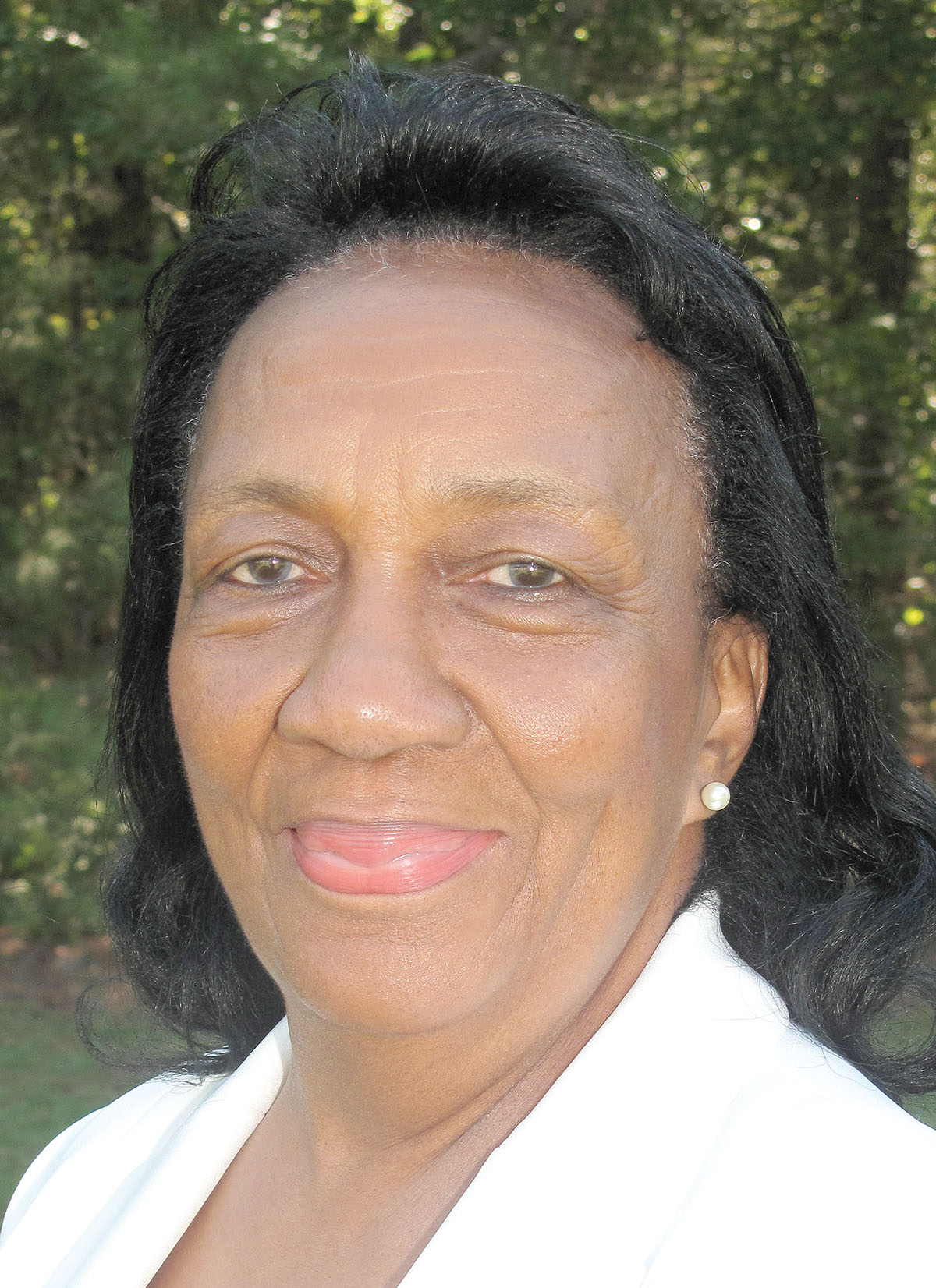
    Bertha Goins
    Bertha Goins


    District 4 Councilman Kamau Marcharia and District 6 Councilwoman Mary Lynn Kinley, both first elected in 1996, were handed defeats Tuesday.

    Bertha Goins bested Marcharia in District 4, 659 votes (43.36 percent) to 493 (32.43 percent). Quincy Pringle Sr. earned 365 votes (24.01 percent) in the race.

    Jimmy Ray Douglas
    Jimmy Ray Douglas

    In District 6, Cornelius Neil Robinson toppled Kinley 441 votes (39.8 percent) to 234 (21.12 percent). Gwen Harden finished second in the district with 357 votes (32.22 percent).


    Jimmy Ray Douglas cruised to a win in District 2 with 785 votes (49.53 percent). J. Renee Green earned 496 votes (31.29 percent) and Clyde Wade 302 votes (19.05 percent). District 2 Councilwoman Carolyn Robinson did not seek re-election.

    Mikel Trapp
    Mikel Trapp

    A late surge lifted Mikel Trapp to a District 3 victory Tuesday as his 651 votes (47 percent) were enough to beat out Peggy Swearingen’s 535 votes (38.63 percent) and Kirk Chappell’s 197 votes (14.22 percent).


    Trapp lost a 2013 re-vote after the 2012 results were overturned by the Election Commission. Col. Walter Larry Stewart, who defeated Trapp in the 2013 re-vote, resigned last summer for health reasons.

    The only contested race on the Fairfield County School Board went to Paula Hartman, who won reelection to District 2 with a narrow 694 (51.18 percent) to 653 (48.16 percent) win over Janet Mason.

    In the race for the District 17 seat in the S.C. State Senate, Democrat Mike Fanning notched a win over Republican Mark Palmer, 20,270 to 18,190 on a race that spanned Fairfield, Chester and York counties.

    Democrat MaryGail Douglas, meanwhile, was uncontested in her reelection bid for the District 41 seat in the State House of Representatives.

    Joyce Dickerson also won an uncontested reelection to Richland County Council’s District 2 seat.

    Lindsay Agostini (13,179 votes) and Monica Elkins (11,326 votes) were the top two vote-getters for the at-large seats on the Richland 2 School Board.

    Democrat Mia McLeod was the winner over Republican Susan Brill for the State Senate District 22 seat that spans Richland and Kershaw counties.

    In other uncontested Fairfield County races, Will Montgomery was returned to the Sheriff’s Office; Judy Bonds will be the next Clerk of Court; and Chris Hill the new County Coroner.

    Annie McDaniel (District 4) and William Frick (District 6) were also uncontested in their respective School Board races.

    Fairfield County voters overwhelming approved Sunday alcohol sales, 6,472 (64.45 percent) to 3,570 (35.55 percent). That matter will now go before County Council for approval.

  • Lawsuit Alleges Fraud in Industrial Site Land Deal

    WINNSBORO (Oct. 27, 2016) – Fairfield County Council made it official last July, passing third reading on a deal to partner with the S.C. Department of Commerce to purchase more than 1,000 acres of land near I-77 and Highway 34 to develop as a mega-industrial site.

    Last month, one of the owners of a key portion of that land filed a lawsuit in the Sixth Judicial Circuit claiming, among other things, that she was misled in the deal for her parcels to the point of fraud.

    Named as defendants in the suit are Long Leaf Land Co., an LLC organized by Parker Poe attorney Ray E. Jones; and Russell D. (David) Brown and Russell M. (Russ) Brown and their respective real estate companies. Also named are Ray E. Jones and the Fairfield County government. Jones also represents the County in the mega-site land deal.

    Cedar Tree Plantation, LP, and its general partner, Margaret Patrick, the plaintiff, is the owner of several key tracts along I-77. In the summer of 2014, Long Leaf Land Co., LLC began buying up parcels in the area ahead of the County-Department of Commerce deal.

    According to the lawsuit, filed Oct. 18, Russ Brown, a Ridgeway real estate agent, was in charge of acquiring the property for Long Leaf. But when it came time to approach Patrick about her land, Russ Brown asked his father, Winnsboro real estate agent David Brown, to do that particular piece of legwork. David Brown (a County Councilman at the time) and Patrick had known each other for more than 30 years, the suit states, and Russ Brown felt Patrick “would be more receptive to being approached by David Brown because of their long-standing relationship.”

    On June 23, 2014, the lawsuit states, David Brown became the dual agent for Long Leaf and Patrick. A little more than a month later, Cedar Tree and Long Leaf entered into an option agreement, which gave Long Leaf one year to purchase approximately 290 acres.

    Patrick alleges that David Brown promised her “top dollar” for her property. Two of her four tracts were priced at $9,000 an acre. Two other tracts for $7,000 an acre. Of the two $7,000 an acre tracts, Patrick claims, one should have been priced at $9,000 an acre. The price for that tract, the suit claims, was changed after Patrick signed the option agreement.

    The lawsuit notes that Patrick did not initial the individual pages of the option agreement, and the page containing the signatures of the parties is a separate page.

    Patrick later learned, the suit states, that another nearby property owner received more than $10,000 an acre for her tracts, meaning Cedar Tree did not, in fact, receive “top dollar.”

    The lawsuit claims that David Brown promised Patrick that, on behalf of Long Leaf, “he would get her ‘the rest of the money’ to match the price” of the other property owner. However, the suit states, he did not do so.

    There were also issues with the land survey under the option agreement, the lawsuit alleges. The survey, conducted by Glenn Associates at Long Leaf’s expense, included land that was not part of the option agreement, Patrick claims. Furthermore, posts marking the boundaries of the property where timber was to be harvested were removed and replaced with new posts. The new posts, the suit states, significantly reduced the amount of timber Cedar Tree was able to harvest and sell.

    The survey added nearly 241 feet to Long Leaf’s acquisition, the suit states, which would force Patrick to move a cabin located on the property while also cutting off Cedar Tree’s access to the railroad crossing. None of those things were part of the original option agreement, the suit claims; and had they been, Patrick would not have entered into the deal.

    The lawsuit alleges fraud on the part of David Brown, as well as negligent misrepresentation and breach of contract.

    “The Plaintiff is informed and believes it is entitled to judgment against the Defendants in an amount to be proved at trial,” the suit concludes.

    Glen Bowens of Winnsboro and Robert Hartman of Ridgeway are representing the plaintiff. The Browns are being represented by Michael Tighe of Callison and Tighe. The County has retained John K. DuBose of Dubose-Robinson of Camden.

    Reached by telephone Tuesday, both David and Russ Brown declined to comment on the lawsuit.


  • Council Wavers on Itinerant Merchants

    BLYTHEWOOD (Oct. 20, 2016) – During a discussion last week in a Town Council workshop about the increasing prevalence of itinerant merchants in the downtown area, Town attorney Jim Meggs asked, “What exactly is the problem you’re trying to solve here?”

    “I don’t know if this is a big issue,” Mayor J. Michael Ross said. “I think it bothers some people. I’ve had a lot of people talk to me about it,” and added jokingly, “telling me how good the tomatoes are. But if it comes back that Mayor Ross is shutting them down, well . . .”

    Meggs offered guidance in the form of a model ordinance used by another town (Midvale, Utah) to regulate peddlers and itinerant merchants. That ordinance, Meggs said, covered licensing, exceptions, definitions, applications, badges and penalties for a wide variety of itinerant merchants including vending carts, seasonal produce, seasonal food stands, Christmas tree sales and fireworks stands. He explained that the Midvale ordinance is detailed and specific.

    “It’s a commencement to see how far you want to go with this,” Meggs said. “If you go with the full Midvale treatment, you’re going to have a pretty exhaustive comprehensive set of regulations. I’m not sure some of these peddlers/itinerants would be able to comply with it.”

    Meggs said there appears to be some concern in the community about the produce stand that stays on site on the corner of the former Blythewood Community Center property across Blythewood Road from the Food Lion.

    “Under the Midvale ordinance,” he said, “(that stand) would have to be moved at closing time every day. You might want to consider how this (ordinance) would interface with a zoning change. Or if you have some concerns about prohibiting these kinds of activities in the Town Center District (TCD), because it may not be consistent with what your vision is for business activity in the TCD, then we’re back to ‘What’s the problem you’re trying to address?’”

    Town Administrator Gary Parker suggested that if the focus is on the itinerant merchants in the TCD district, it could be handled as an amendment to the zoning ordinance prohibiting itinerant merchants in the TCD altogether.

    “We might say there are not going to be any peddlers licensed in the TCD and then they’re just down the road – still in Blythewood, but not in the TCD, if we want that,” Parker said.

    Ross said he was concerned that the produce stand across from Food Lion was becoming more stationary.

    “He’s moved in a port-a-john over there. This is getting a little bit more so . . . ,” Ross said. “We now have a peanut man – sells boiled peanuts and sets up under a tent every afternoon on somebody’s property. We have a chicken man who brings in a trailer and unloads paintings to sell. We have birdhouses selling at Larry’s Exxon and fireworks.

    “What brought my attention is that a peddler comes in and is usually there a little while, but this (produce stand) has been here two months,” Ross said.

    Councilman Tom Utroska asked if the produce stand owner was paying taxes.

    “To be fair,” Ross said, “this man selling produce just pays a $40 business license. The IGA, Food Lion and Red Barn pay taxes on everything they sell. They turn in their taxes to us.”

    Utroska suggested permitting so much per day for a peddler’s license with a minimum amount for a maximum number of days. Parker suggested prohibiting itinerant merchants in the TCD except for charitable groups for temporary fundraisers such as the Food Truck Fridays that are held occasionally at one of the churches in downtown Blythewood.

    But there was no definitive answer to Meggs’ initial question, ‘What is the problem you want solved?’

    “We’re sitting here right now with only three (itinerant merchants) in the town,” Ross said. “But when we’re sitting here and there are 12 – 13 and we didn’t do anything, then what?”

    Without Council nailing down how they hoped to solve their problem, or if there was a problem, Ross concluded, “I think I’m going to back off right now. If there is something you all think needs to be addressed . . .”

    “If you want me to write an ordinance, let me know,” Meggs told Council members.

    There was no indication that the issue is scheduled to be brought back to Council.


  • Lawyer Responds to Zoning Issue

    RIDGEWAY (Oct. 20, 2016) – As the battle over a rezoning request for .82 acres at the fork of highways 21 and 34 continues to unfold, Mayor Charlene Herring reported during the Oct. 13 Town Council meeting that the Town had received a response from attorney Danny Crowe to questions that arose after Council last month nixed that request on second reading.

    Herring said that, according to Crowe, “Zoning ordinance sections 1005 (Protest) and 1007 (Minimum Area for New Districts) are valid laws. The rezoning requests from R1 to C1 that we received were invalid. Thus the council at our next meeting must nullify the voting on C1, we must have first reading on C2 and (we) must vote to send the request for rezoning from R1 to C1 back to Planning for consideration, with a public hearing, with public notices and postings.”

    Russ Brown’s request for rezoning from R1 to C2, which cleared the Planning Commission 5-2 on July 12, was amended by Council at their Aug. 11 meeting to a C1 request. That amended request passed first reading 3-2. Second reading, which came on the heels of a formal protest by nearby property owners, failed 1-3.

    During the public comment portion of the Oct. 13 meeting, Brown called Council “a kangaroo court held in a banana republic,” and added that, regardless of Council’s decision he could clear the lot.

    “If you remand and approve the rezoning request, you will actually gain a larger vegetative buffer with C1 than I am required to keep if it remains R1,” Brown said. “I’m willing to adhere to the commercial setbacks, but if denied I will return with another request for rezoning and a cleared lot.”

    In his memo to Council, Crowe states that zoning ordinance sections 1005 and 1007 are “presumptively valid local laws and should be enforced, as applicable, with regard to this property.”

    Because the Planning Commission recommended a change to C2, Crowe’s memo states, Council’s votes on C1 “should not have been taken.” Council, at its next meeting, should declare those votes null and withdraw them, Crowe writes.

    Since Council has not acted on the Planning Commission’s C2 recommendation, Crowe writes, this needs to be placed on the agenda for a future meeting.

    As Council noted during their Aug. 11 meeting, Brown’s .82 acres does not meet the 2-acre minimum requirement for C2 rezoning. In his memo, Crowe writes, “Council should request an administrative determination from the Zoning Administrator on whether the minimum area size requirement of Zoning Ordinance section 1007 applies to the Brown property for a rezoning to C2,” prior to first reading.

    Crowe also said the protest to Brown’s request was valid, as it contained the signatures of at least twenty percent of the five contiguous property owners. Therefore, adoption of the zoning change would require a three-fourths vote by Council. And three-fourths of five, Crowe states, is four.

    However, in a separate memo to Council, Crowe writes that, while Section 1005 does not specify a time for submittal of a protest, “submittal at the time of the Council meeting may not give the Town time to verify the requisite number of signatures and, therefore, may not be a reasonable time.”

    A petition of protest was submitted to Council by Sara Robertson prior to the Aug. 11 first reading.

    Council had scheduled a work session with Crowe to review the Town’s zoning ordinance on Oct. 18.


  • Qualls Helping FMH Cut Costs

    linda-qualls-web
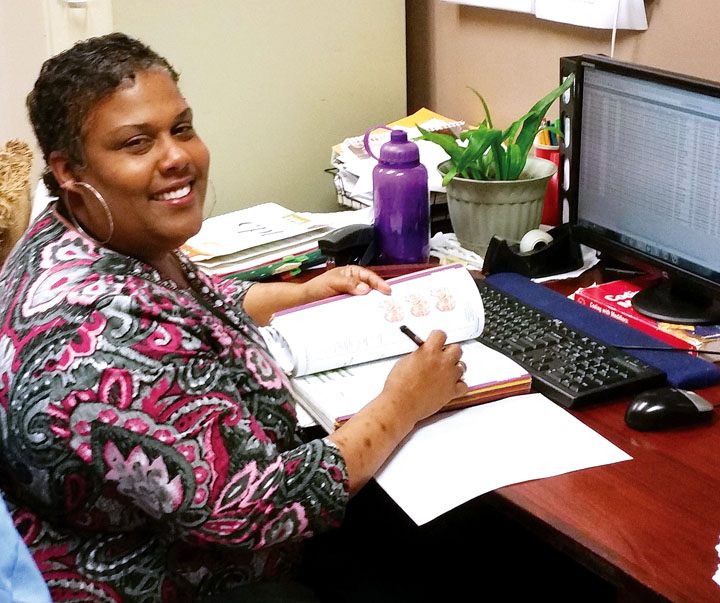
    Linda Qualls, Certified Coding Associate for Fairfield Memorial, looks up coding information for her newest batch of hospital files.

    WINNSBORO – It’s no secret that the future of Fairfield Memorial Hospital is up in the air and has been for a long time. As the hospital has struggled in recent years to stay afloat with County funds until it can work out a partnership with another health care facility, its problems and debt have mounted as solutions remained elusive.

    But there are beginning to be some bright spots – new management, new board members and Linda Qualls.

    Last year, Qualls, employed by the hospital for 12 years, with much of that time as a billing records clerk, took it upon herself to help the hospital save money, a lot of money, by becoming a certified billing and medical coder. This year the hospital is on track to save as much as $50,000 because of Qualls’ certification.

    “Regulations and laws require that billing records be coded for us to get paid,” Karen Reynolds, Senior Director of Health Information at FMH, told The Voice. “Because we had no one in house to code our billing records, we’ve had to outsource that work at a significant cost every year. By becoming a certified coder, Linda has been able to take on many of those coding duties such as our new Mako Laboratory account claims, provide all coding and billing for our Blue Granite outpatient clinic and handle roughly fifty percent of all other medical coding needs within the hospital. What Linda has accomplished for the hospital is no small feat. She has earned both the Certified Coding Associate and the Rural Health Coding and Billing Specialist credentials. ”

    Those certifications required course work at Midlands Technical College, various coding boot camps, independent study and sitting two national exams, Reynolds said. “I’m very proud and the hospital management is thankful for what Linda has done.”

    The courses, training and certifications are regulated by the Association for Rural Health Professional Coding (APHPC), Office of Rural Health and American Health Information Management Association.

    “There are certain nuances about Rural Health coding that are a little bit different than in a doctor’s office or a hospital,” Reynolds said. “So to understand those nuances and be certified to not only code, but bill as well, is a unique certification that not a lot of people have.”

    Qualls told The Voice that she was hesitant, at first, to take the qualification classes, even though she knew she liked to code and had a natural knack for it.

    “I was scared the classes would be too hard, but Karen really encouraged me,” Qualls said.

    “My advice to her was ‘nothing ventured, nothing gained,’” Reynolds said. “I felt confident that she could do it.”

    With a dedicated support system, Qualls pushed past her fears and finished her certification with flying colors. Now she says she feels like she’s accomplished something really big and is proud of herself for it.

    “It really has made all the difference,” Qualls said.

    Reynolds said that while the hospital has lowered its costs by no longer having to outsource most of its coding and billing paperwork, she doesn’t think the hospital will eliminate outsourcing coding and billing altogether.

    “Those (coding) companies have 25-100 coders and so the advantage is having them as kind of our back up,” Reynolds said. “They can essentially code around the clock and on weekends. There’s great value in having both (in house and outsourcing),” Reynolds said.

    For her part, Qualls says she is willing to help out however possible in the hospital’s struggle to not only survive but to thrive.

    “I love this hospital. It’s like my home, and I’m glad to do what I can to save the hospital money and hopefully it will be here for years to come for the County’s residents,” Qualls said.

    But for Qualls, her accomplishments are not a signal that it’s time to coast. She’s now working toward becoming certified on an even higher level.

    “I’ve got one more level of certification that I’m studying for and it’s the highest level, a Certified Code Specialist,” Qualls said. “Hopefully, I’ll soon be able to set a date to take the test.”

    And for Fairfield Memorial Hospital, that certification will likely mean even greater cost savings.

    “It’s another positive step for our hospital,” Reynolds said.