Category: Business

  • Rimer Pond Road Zoning Battle Looms

    BLYTHEWOOD (Feb. 23, 2017) – Residents from the Rimer Pond Road/LongCreek Plantation area are expected to make their umpteenth trip down to Richland County Council chambers Tuesday evening to continue a years-long battle to keep their rural residential neighborhood free of commercial zoning.

    For the last three years, the battle has been fought over the same property, a 5.23-acre parcel across from Blythewood Middle School. The parcel is owned by developer Hugh Palmer, the father of longtime Richland County Planning Commissioner and commercial realtor Patrick Palmer.

    Hugh Palmer is asking that Council rezone the property to Rural Commercial (RC), a zoning designation that could, the Palmers say, allow such businesses as pizza restaurants and dry cleaners. It is the third time the rezoning request has come before Council in the last two years. In 2015 it was tabled, and later that year a tie vote resulted in denial of the request. Because it was denied, Palmer had to wait a year to reapply for the rezoning.

    When the issue came before the Planning Commission earlier this month, a split vote (3-3) resulted in no recommendation for or against the rezoning being forwarded to County Council. More than 75 people opposed to the rezoning attended that meeting and 34 spoke out in opposition to the rezoning.

    The County’s planning staff (employees of the County) recommended, as it has previously, that Palmer’s commercial rezoning request be approved, pointing out that, according to the County’s zoning summary, the RC District is designed “for areas within Richland County where residents of the more isolated agricultural and rural residential districts and residents located beyond the limits of service of the towns can receive convenience merchandising and services.”

    But residents, addressing the planning commission, pushed back, repeating again and again as they came to the microphone, that the area is neither isolated nor located beyond the limits of service.

    “Within a four-mile radius of my home, there are four pizza restaurants, three dry cleaners, a Dollar Store, a Dollar General, three large grocery stores and at least five service stations,” said LongCreek Plantation resident May Vokaty. “There are plenty of commercial resources available to this area.”

    LongCreek resident Jay Thompson disagreed with the planning staff’s suggestion that the requested zoning is in compliance with the county’s objectives for land use.

    “I hold in my hand a map of future land use. If you look at this map, this neighborhood is shown as medium density, not rural. That directly contradicts this proposed zoning for Rural Commercial. It does not fit.”

    Trey Hair of Rimer Pond Road pointed out that there is no commercial zoning anywhere on the road.

    “The only beneficiary of this zoning change will be the applicant who stands to make a large sum of money from the property,” Hair said.

    “The Palmers are the ones who came to Rimer Pond Road 10 or so years ago and changed the parcel from Rural zoning to Residential Medium Density (RS-MD),” Rimer Pond Road resident Ken Queen said. “We didn’t want that, but the Palmers wanted it. They never even came out to meet with anyone in the neighborhood and they have not this time.”

    Some of those who addressed the Commission hinted at the planning staff’s motives in recommending approval of the rezoning request again and again.

    “The Planning Commission is tasked to oversee the strategic growth of our County, to keep the big picture in mind and not make decisions based on personal requests that are not in the interest of the community,” Rhett Sanders said.

    “That a single person could do this to a neighborhood is unbelievable,” LongCreek Plantation resident Benny Solton told Commissioners.

    Hugh Palmer could not be reached for comment.

    County Council is scheduled to vote on the issue at 7 p.m., Tuesday, Feb. 28 in Council Chambers of the Richland County building at Hampton and Harden streets in Columbia. Those who wish to speak for or against the rezoning request should arrive a few minutes early to sign in.
     

  • Traffic Circle Talks Continue

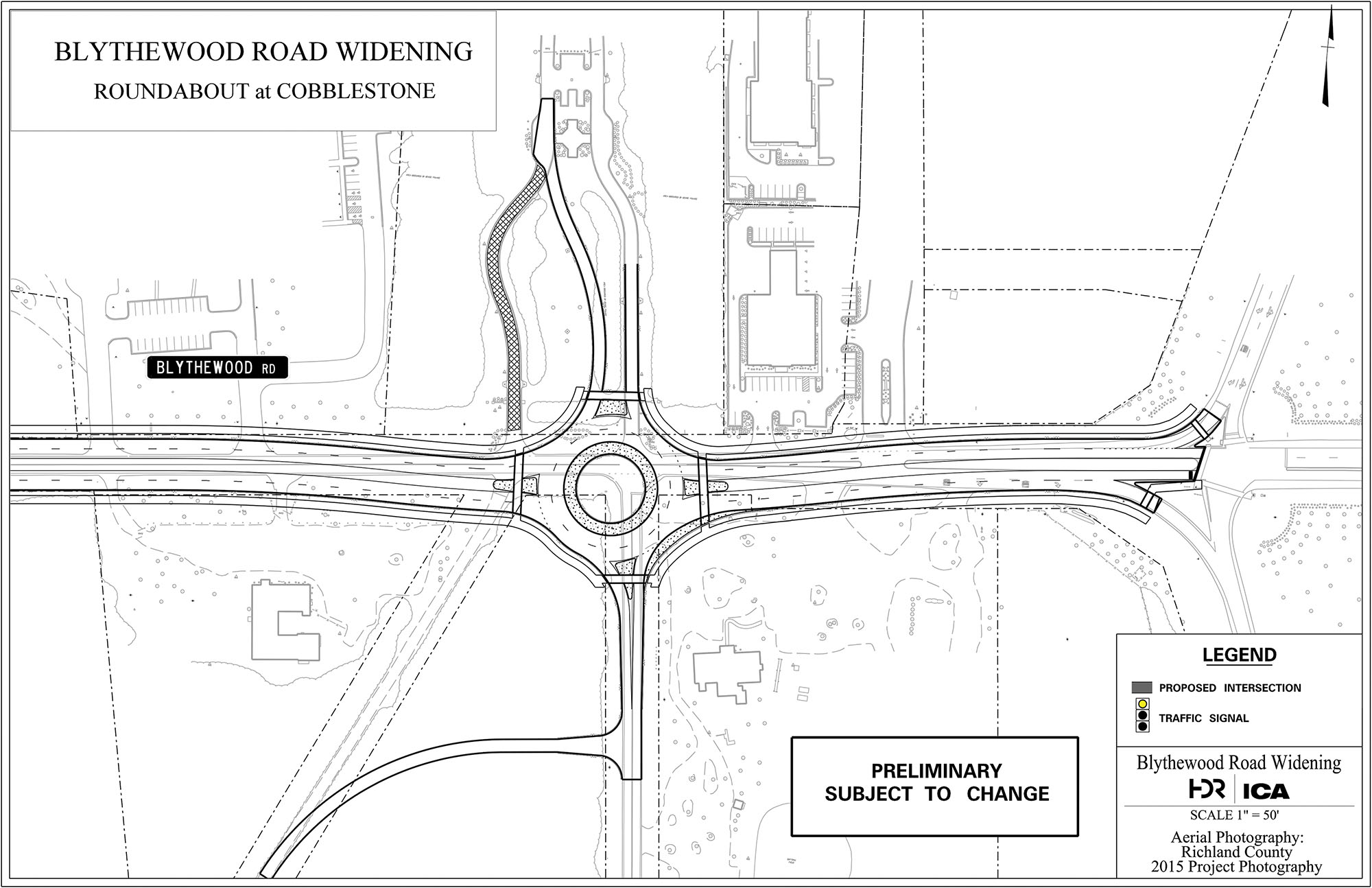
    BLYTHEWOOD (Feb. 16, 2017) – At the outset of Town Council’s Jan. 30 meeting, Councilman Malcolm Gordge reported that he had attended as an observer that morning a meeting between Chamber of Commerce members and Ben Lewis, Project Engineer for the Richland County Penny Sales Tax Ad Hoc Committee, the purpose of which was to discuss the double-lane traffic circle slated for Blythewood Road near the entrance to Cobblestone Park.

    Facilitated by the Chamber, approximately 14 Chamber members and a handful of guests met with Lewis in the Cobblestone Park Golf Club conference room.

    “At this point, there appears to be about a 50-50 split between the property owners regarding a traffic light vs. a traffic circle,” Mike Switzer, Chamber Director, told The Voice recently. “This was our first meeting and I don’t think anybody is ready to commit to a preference until all their questions are answered. We have a follow-up meeting scheduled for Feb. 27, 10 a.m. at the same location.”

    Switzer said that the properties near the proposed traffic circle are owned by Chamber members, while member businesses located in the University Village shopping center would also be affected by the circle.

    “Therefore the Chamber has initiated this effort to bring these parties to the table with the planners so that our members’ voices can be heard before the planning gets too far along,” Switzer said. “The County planners are estimating that their second public meeting (the first was last October) will be this summer to show their final proposal and so we wanted to make sure they received our input well before then. This was a very positive meeting. It was very beneficial for these Chamber members, property owners, developers, agents, engineers and county reps to meet each other, see more details about the project, ask questions face to face, etc.”

    Members want to know, Switzer said, if a traffic circle will actually perform better than a traditional four-way stop with lights. Affected property owners and businesses, he said, want to know if they will be reasonably compensated for any detrimental effects of either a circle or a four-way stop.

    “All of the affected parties are wanting what is the best balance for the community and their own business interests,” Switzer said.

    Lewis reported to Council at their Dec. 19 meeting that the roundabout was a go and that an executive summary of plans for the project had been given the OK by Richland County Council on Dec. 13.

    But after hearing from Chamber members at the Jan. 30 meeting, Lewis and the Committee have some additional convincing to do.

    “The roundabout was part of a 2012 referendum,” Lewis said, “and it is in the Town’s Master Plan. It has been evaluated in a traffic report and shown to operate efficiently.”

    Nevertheless, Lewis said a comparison plan was being drawn up to be presented to Chamber members at the Feb. 27 meeting. That alternate plan – a traditional four-way stop with traffic lights – has already been studied, Lewis said, and rejected in favor of the traffic circle. However, such a plan has not been presented to the public in a mock-up, which will be the focus of the Feb. 27 meeting.

    A traffic light set-up, Lewis said, “doesn’t seem to fit DOT (Department of Transportation) standards.” A roundabout, on the other hand, does.

    “This section of Blythewood Road has had 80 percent of Blythewood accidents over a three-year period,” Lewis said. “DOT studies say that a roundabout reduces accidents by 80 percent. And it keeps traffic moving – there is no stoplight.”

    Switzer said Chamber members hope to see a graphic and video comparison of a traffic circle vs. traffic lights at the Feb. 27 meeting. Members also hope to see estimations, he said, of the effects on nearby properties of the circle and stoplights.


  • Report: Manor Revenue Up

    BLYTHEWOOD (Feb. 9, 2017) – Doko Manor is on the move, Steve Hasterok reported to Council during their Jan. 30 meeting.

    Hasterok, Director of the Manor, told Council that through the first three quarters of fiscal year 2017, revenues have outpaced the previous fiscal year by $45,000. The third quarter of 2017 alone has greatly outpaced the third quarter of FY 2016.

    In FY 2016, Hasterok said, the Manor brought in just $16,600 in the third quarter. The third quarter of FY 2017, he reported, has generated $40,050.

    While February turned out to be a slow month, with just $8,993 in revenue, January was a big money maker, with a haul of $18,148. March, which has six weddings booked at the Manor, is on pace to bring in $12,908.

    “And I’m going to tell you,” Hasterok said, “April through June, this place is going to be packed. We have weeks where we’re doing weddings Thursday, Friday, Saturday and Sunday.”

    Independence Day

    Hasterok also suggested that the Town hold its Independence Day celebration event on July 3 – a Monday. Doing so would mean moving the start time for the event back to later in the evening, which would probably eliminate the professional wrestling feature. Council agreed and voted to hold the event on July 3.

    Earlier in the evening, during the citizens comment segment of the meeting, Daune Walker asked Council to give some thought to parking for events such as the Independence Day celebration.

    Walker, who owns the properties at 208 and 212 Main Street, said parking for Blythewood events had created a nightmare for her lots.

    “Where do these people park? In any available business parking lot, open or closed,” Walker said. “We have blocked the entrance to the business – we put up sawhorses, they pick up the sawhorses and move them. One lady told me she had a right to park there because she lived in Blythewood and she had been to this even (July 4) since its inception. We had people almost run us over. They park anywhere in the lot and in the field. So what do we do? Do we charge these people to park? In consideration, when you invite people to Blythewood for events, I would like you to provide adequate parking. They park on the railroad right of way, all up and down. It’s a hazard.”

    Mayor J. Michael Ross said Council would keep parking in mind when planning future events.


  • Planning Commission Splits on Rimer Pond Road

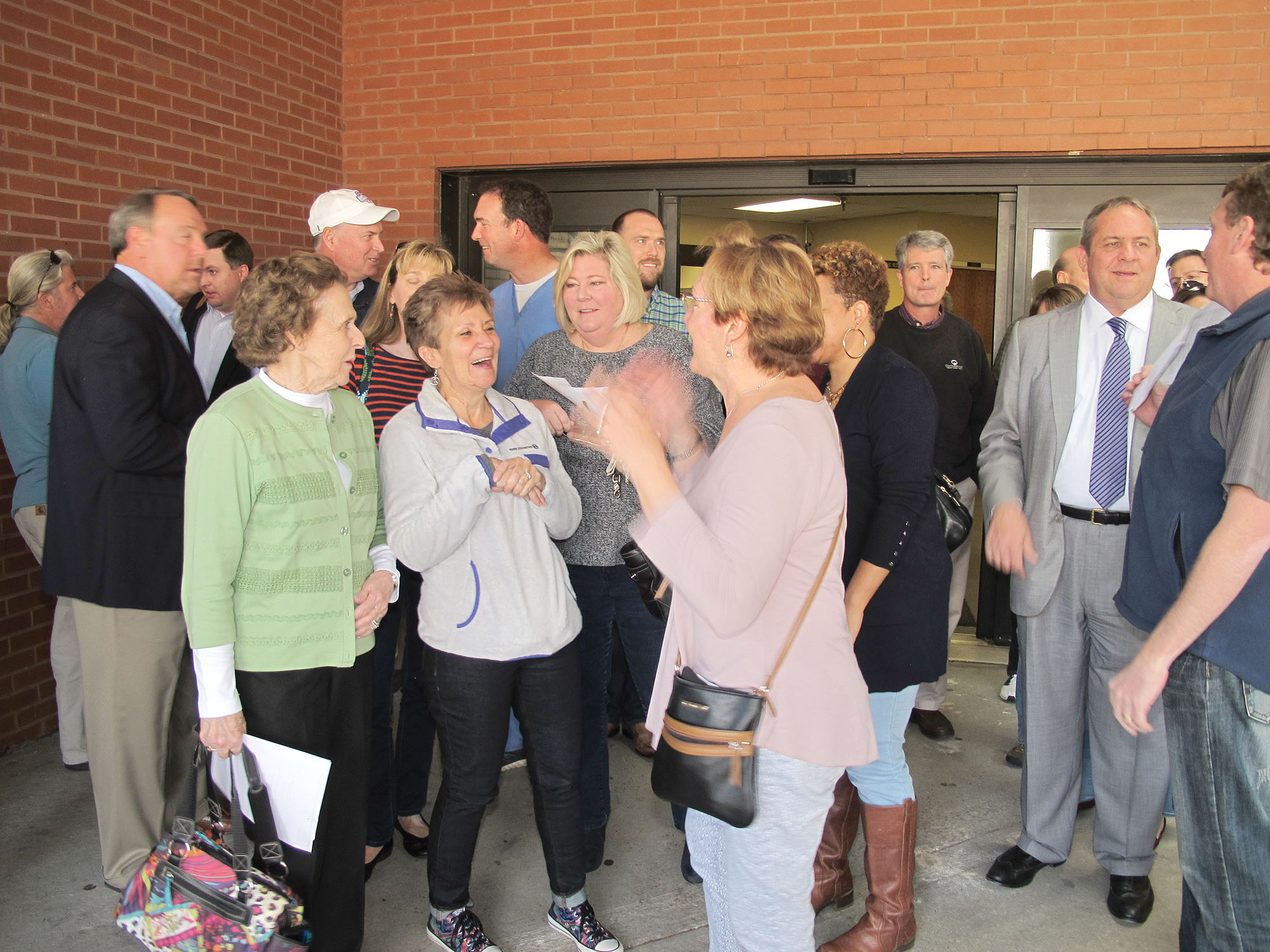
    While the vote ended in a tie, the residents left Monday’s Planning Commission meeting jubilant. (Photo/Barbara Ball)

    COLUMBIA (Feb. 9, 2017) – A Richland County lobbyist who said he was hired by Hugh Palmer, the father of Richland County Planning Commissioner Patrick Palmer, addressed the Commission Monday afternoon to convince members to vote to recommend Rural Commercial (RC) zoning on 5.23 acres on Rimer Pond Road. The property is owned by Hugh Palmer. About 70 Blythewood community residents tuned out to beseech the Commissioners to spare their neighborhood from that rezoning. With Patrick Palmer recusing himself, the vote ended in a tie, which means the rezoning request will go forward to County Council without a recommendation for either approval or denial. The residents left the meeting jubilant.

    Richland County Council will convene on Feb. 28 to take the first of three votes on the contentious rezoning issue that has been simmering for the better part of three years.

    That simmer turned into a boil at times Monday as 34 of the residents streamed to the microphone for more than an hour to voice their opposition to the rezoning.

    Lobbyist Boyd Brown of Tompkins, Thompson, Brown Government Affairs in Columbia spoke for Hugh Palmer. Brown, a former member of the S.C. House of Representatives, representing Fairfield County, said he was speaking as one who is familiar with the County’s land use plan for that area.

    “We feel as though this (parcel) is tailor-made for Rural Commercial (RC) use,” Brown said. “If you were to take the definition for Rural Commercial (zoning) in the Richland County Land Use Plan, you would feel like it was written primarily for this specific parcel. Rural Commercial zoning was designed to help communities like this.”

    Some residents, having boned up on the County’s land use plan during their three-year battle against the Palmers, mocked Brown’s assessment of the land use plan for the area.

    “We feel? Who is ‘we’? We are here and we don’t feel,” resident Steven Greenburg shot back at Brown’s comment.

    “Contrary to Mr. Brown’s statement, Rural Commercial zoning is not tailor-made for this area,” said resident Jay Thompson. He said county staff seems to be of the opinion that the requested zoning is in compliance with the objectives for commercial uses.

    “That’s not correct,” Thompson said. “I hold in my hand a map of future land use and priority investments. If you look at this map, this neighborhood is shown as medium density, not rural. That directly contradicts this proposed zoning for Rural Commercial. It does not fit.

    ‘The staff reports that the requested rezoning would not be out of character with the existing surrounding development and zoning districts. I would ask staff, anyone, to find another property in this area zoned Rural Commercial,” Thompson said. “You will not find one in any direction.”

    Asked by Commissioner Ed Greenleaf if Thompson was correct, Planning Director Tracy Hegler, who participates in the staff report which called for approval of the rezoning request, said, “Yes, that is correct.”

    Another common target for residents was the County’s zoning district summary that states that RC zoning is needed to provide commercial services for residents in more isolated agricultural and rural areas.

    The Palmers have said the RC zoning is designed for businesses such as pizza restaurants and dry cleaners for the convenience of surrounding residents.

    Almost every speaker repeated the crowd’s mantra – “We are not isolated.” “This area is not underserved by commercial.” “We do not need it.” “We do not want it.”

    “Within a four-mile radius of my home, there are four pizza restaurants, three dry cleaners, a Dollar Store, a Dollar General, three large grocery stores and at least five service stations,” said LongCreek Plantation resident May Vokaty. “There are plenty of commercial resources available to this area.”

    Resident Stacey Young said she had to take time off from work just to be at the afternoon meeting. “It is that important to me.  We don’t need this commercial. I have five boys, and we can order pizza any time of the night. We are not going to go hungry without the proposed commercial.”

    “If you have pizza delivery, you are not beyond commercial services,” resident Joe Johnson reminded the Commissioners who, along with the audience, responded with a laugh during an otherwise tense meeting.

    On a more serious note, Johnson questioned, “Is the staff who keeps approving this venture familiar with the land use plan?

    “And I think Mr. Palmer has made some mistakes with this property which has got him in the position he is in,” Johnson said.

    Residents repeatedly reminded Commissioners that nearby commercial zoning would bring crime, congestion, more traffic and commercial lighting that would affect the environment and dark skies they enjoy in their rural neighborhood.

    “You are slowly taking away from us what we moved here for,” said Nanette Howerin of Longcreek Plantation.

    They also addressed the safety of students who would cross a very busy Longtown Road West to the commercial area from Blythewood Middle after school.

    Trey Hair of Rimer Pond Road pointed out that there is no commercial zoning anywhere on the road.

    “The only beneficiary to this zoning change will be the applicant who stands to make a large sum of money from the property. We’re asking you to stand with the people you serve. Stand with the community. We’re highly opposed to this zoning and we continue to show up in large numbers to protest. Being rural is our choice,” Hair said.

    “The Palmers are the ones who came to Rimer Pond Road 10 years or so ago and changed this parcel from Rural to Residential Medium Density (RS-MD),” Rimer Pond Road resident Ken Queen said. “We didn’t want that, but the Palmers wanted it. They didn’t even come out and meet with anyone in the neighborhood and they have not this time. There is nothing they can put on that property that we don’t already have within five or six miles.”

    “We do not want Rimer Pond Road to be anything other than rural residential with schools, homes and churches,” Rhett Sanders told the Commissioners. “The Planning Commission is tasked to oversee the strategic growth of our County to keep the big picture in mind and not make decisions based on personal requests that are not in the interest of the community.”

    “I bought my property in 1982” Benny Solton told the Commissioners. “That a single person is doing this to a neighborhood is unbelievable.”

    “It’s in your hands now to decide if you’re going to stick up for the people or for a developer, which won’t look good for you. We hope you’re with us,” Adams Road resident Michael Watts told the Commissioners.

    While Commissioners Beverly Frierson, Ed Greenleaf and Wallace Brown Sr. did vote with the residents, three Commissioners, David Tuttle, Chairman Stephen Gilchrist and Christopher Anderson, did not. Another three Commissioners were absent.

    While there was criticism of staff for its approval of the zoning request and for what residents said was staff’s lack of understanding of the zoning applicability to the land, Commissioner Tuttle took staff’s side saying, “We should not impugn staff. I commend staff.”

    “We are to look at this as planners. It (RC) meets our guidelines,” Commissioner Anderson said.

    Council will hear the rezoning request at 7 p.m. in Richland Council chambers on Feb. 28.

    (Note: An earlier version of the story said the lobbyist said he had been hired by Patrick Palmer.)


  • Rimer Pond Road Faces Commercial Rezoning…Again

    Two notices recently popped up at the intersection of Rimer Pond Road and Longtown Road West announcing two hearings for a request for commercial zoning for 5.23 acres across from Blythewood Middle School. The first hearing is scheduled for the Richland County Planning Commission on Monday, Feb. 6. The second is scheduled for the Richland County Council on Tuesday, Feb. 28. (Photo/Barbara Ball)
    Two notices recently popped up at the intersection of Rimer Pond Road and Longtown Road West announcing two hearings for a request for commercial zoning for 5.23 acres across from Blythewood Middle School. The first hearing is scheduled for the Richland County Planning Commission on Monday, Feb. 6. The second is scheduled for the Richland County Council on Tuesday, Feb. 28. (Photo/Barbara Ball)

    BLYTHEWOOD (Feb. 2, 2017) – Residents on Rimer Pond Road and the surrounding area are once again faced with a request for commercial zoning on their road.

    A sign staked at the corner of Rimer Pond Road and Longtown Road West gives notification by Richland County that a 5.23-acre parcel across the street from Blythewood Middle School is scheduled for a public hearing on a request by Hugh Palmer to rezone the parcel for commercial use. The rezoning request will come before the Richland County Planning Commission on Monday, Feb. 6 at 1 p.m. At that hearing, the Commission will make a recommendation to Richland County Council for approval or denial of the request – a request with a history.

    Since April of 2015, Patrick Palmer – a developer/commercial realtor and longtime member of the Richland County Planning Commission – and his dad, Hugh Palmer, have launched several efforts to get commercial zoning pushed through the Planning Commission and County Council for the parcel, which is owned by Hugh Palmer. Patrick Palmer is the real estate broker for the property. The Palmers have said they want the commercial zoning designation so they can provide surrounding residents with commercial conveniences such as a pizza restaurant, dry cleaners and other businesses.

    But the Palmers’ opponents, the residents who live in that area (Rimer Pond Road, LongCreek Plantation, Cooper’s Pond, Round Top Community and Eagles Glen), have fought the Palmer’s commercial zoning requests, saying they neither need nor want commercial zoning or commercial entities in their rural neighborhood, testifying repeatedly before the Commission and County Council that they are already well served by nearby businesses in Blythewood and on Killian Road. For the better part of three years, the residents have fought the Palmers tooth and nail, showing up in large numbers at Commission and Council meetings to speak out against the zoning request.

    The score so far – Residents: 2, Palmers: 0.

    Against strong neighborhood opposition, Hugh Palmer withdrew his request after the Planning Commission recommended denial (4-1) in June 2015. On the eve of Thanksgiving in November that same year, after another recommendation of denial (5-5) from the Commission, County Council failed to pass the Palmers’ request for commercial zoning when the vote ended in a tie, rendering a denial of the request.

    But with close to $2 million riding on commercial rezoning of the property, the Palmers are not giving up. Again they are calling on Patrick Palmer’s fellow Planning Commissioners to grant him and his father a commercial zoning designation on the property, which is advertised for $350,000 per acre.

    Residents say the timing for the hearing, on a weekday afternoon, causes a hardship on those who would like to oppose the rezoning.

    According to the County’s zoning history of the parcel, it was part of a larger 36-acre parcel that was zoned Rural District (RU) in 1977. Palmer later had the entire parcel rezoned from RU to Residential Single-Family Medium Density (RS-MD) District and sold 31.23 acres for residential use, keeping the 5.23 acre point of the property that contained a cell tower. It is that point that the Palmers want rezoned to Rural Commercial (RC).

    The County planning staff (not the Planning Commission) has, for the third time, recommended approval of the commercial zoning, citing the district’s zoning summary that says, “RC zoning is designed to bring commercial services to residents in the more isolated agricultural and rural districts who are located beyond the limits of commercial services.”

    The summary also states that the RC district is designed to be located at or near intersections of major collector roads.

    “All the (zoning) guidance points to this intersection as a parcel needing rezoning,” Hugh Palmer told the Planning Commission in 2015. “The documents that the County has passed have put this area as an area for change per the comp plan.”

    Planning Commissioner Heather Cairns disagreed at a previous hearing.

    “If all it takes is an intersection for there to be commercial development in what is an otherwise totally rural area, I’m sort of horrified,” Cairns said. “That means we won’t ever have integrity in our rural areas. It may be an intersection, but this area is already well served by commercial development a couple of miles away. This area is not underserved by commercial development.”

    Commissioner Beverly Frierson agreed, saying that the properties along Rimer Pond Road are not isolated from commercial services.

    “These residents,” Frierson said, “would be adversely impacted (by commercial zoning.) There are already stores and conveniences nearby.”

    The rezoning request will be heard by the planning Commission on Monday, Feb. 6, at 1 p.m., in County Council chambers, 2020 Hampton St. in Columbia (at the corner of Hampton and Harden streets) and is the second item on the docket. The agenda and information packet about the property can be found at richlandonline.com. Click on ‘government,’ then ‘commissions,’ then ‘planning commission,’ then agendas.

    The public can attend the meeting and speak for or against the rezoning request.


  • Credit Union Ponies Up for Naming Rights

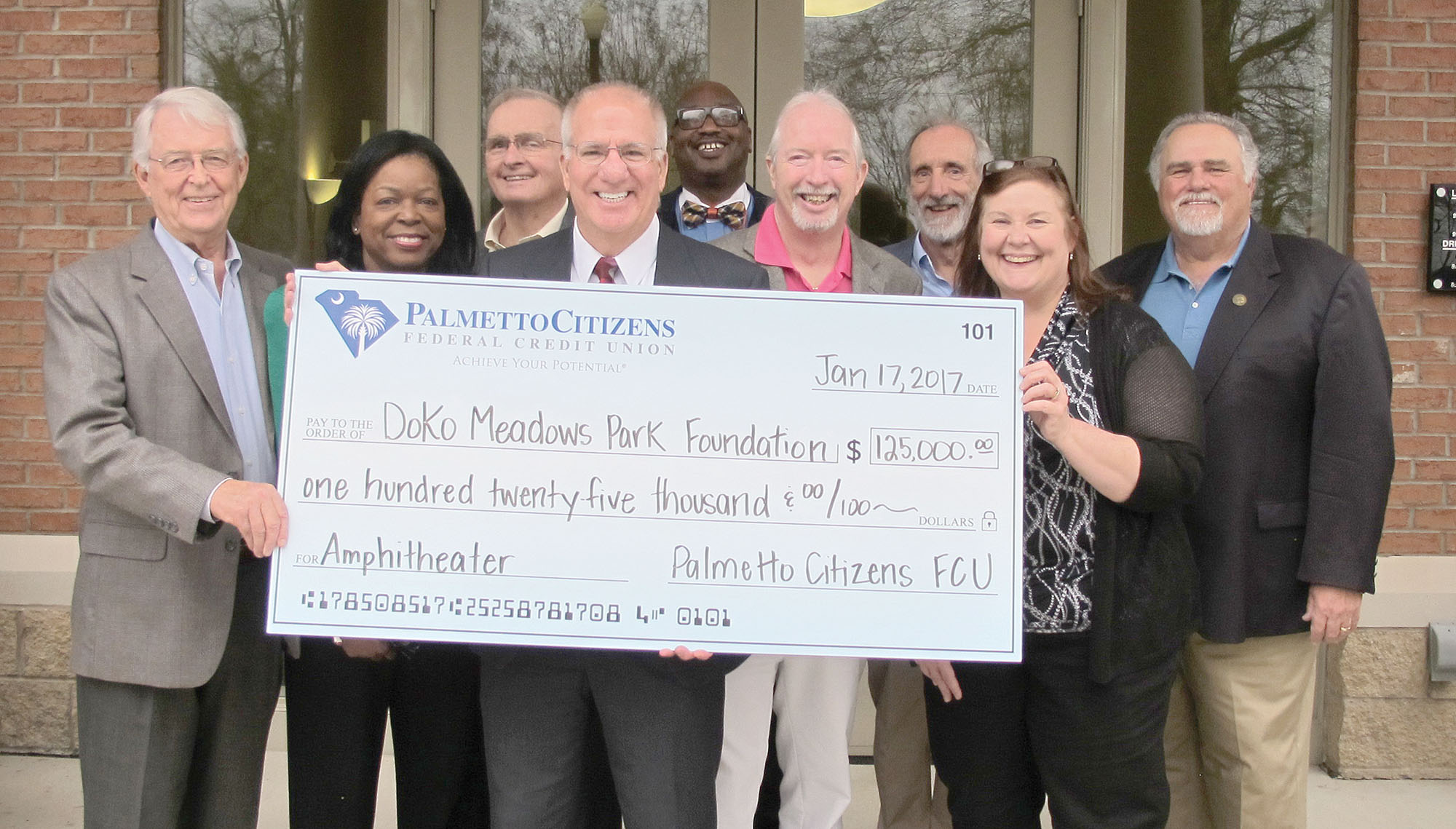
    Nick Wodogaza, center, President of Blythewood’s newly opened Palmetto Citizens Federal Credit Union, presents a check for $125,000 for the naming rights to the Town’s new amphitheater to Jim McLean, left, Chairman of the Doko Meadows Park Foundation; Foundation members Martha Crawford and Buddy Price; Wodogaza; Town Councilmen Larry Griffin, Eddie Baughman and Malcolm Gordge; the Town’s financial assistant Chris Keefer and Mayor J. Michael Ross.  (Photo/Barbara Ball)
    Nick Wodogaza, center, President of Blythewood’s newly opened Palmetto Citizens Federal Credit Union, presents a check for $125,000 for the naming rights to the Town’s new amphitheater to Jim McLean, left, Chairman of the Doko Meadows Park Foundation; Foundation members Martha Crawford and Buddy Price; Wodogaza; Town Councilmen Larry Griffin, Eddie Baughman and Malcolm Gordge; the Town’s financial assistant Chris Keefer and Mayor J. Michael Ross. (Photo/Barbara Ball)

    BLYTHEWOOD (Jan. 26, 2017) – During a check presentation ceremony last week, Nick Wodogaza, President of the town’s newly opened Palmetto Citizen’s Federal Credit Union, made good on the bank’s pledge of $125,000 for the naming rights to the Town’s planned amphitheater in Doko Meadows Park. Town officials and donors broke ground last week for construction to begin on the amphitheater.

    The outdoor entertainment venue was planned as an integral part of the Town’s Master Plan that was approved by Council in 2010. A non-profit foundation was established in 2015 to bring in donations and grants to fund construction of the facility.

    The foundation received its first major contribution, a $25,000 check from Fairfield Electric Cooperative, in January 2016. That was followed by a $75,000 check from Central Carolina Community Foundation in March to purchase concert-quality sound and lighting systems.

    Last June, Palmetto Citizen’s Federal Credit Union, which opened a branch office in Blythewood last week, sealed the deal on the amphitheater’s naming rights with a $125,000 offer.

    “We are so happy to be here in Blythewood now, and we hope that our contribution to the amphitheater will make a difference for the community,” Wodogaza said during the groundbreaking ceremony for the amphitheater last week.

    Foundation Chairman Jim McLean said the Foundation raised 80 percent of the funds to build the amphitheater in less than a year. Individual donations include a $100,000 donation from Blythewood’s Joyce Martin Hill. McLean said the Foundation only needs $60,000 more to cover the cost of the base bid of $415,893 to construct the amphitheater stage, pavilion structure and concrete pad in front of the state.

    Construction is expected to be completed by mid-May.


  • Shining the Light: Local Journalist Exposes Corruption

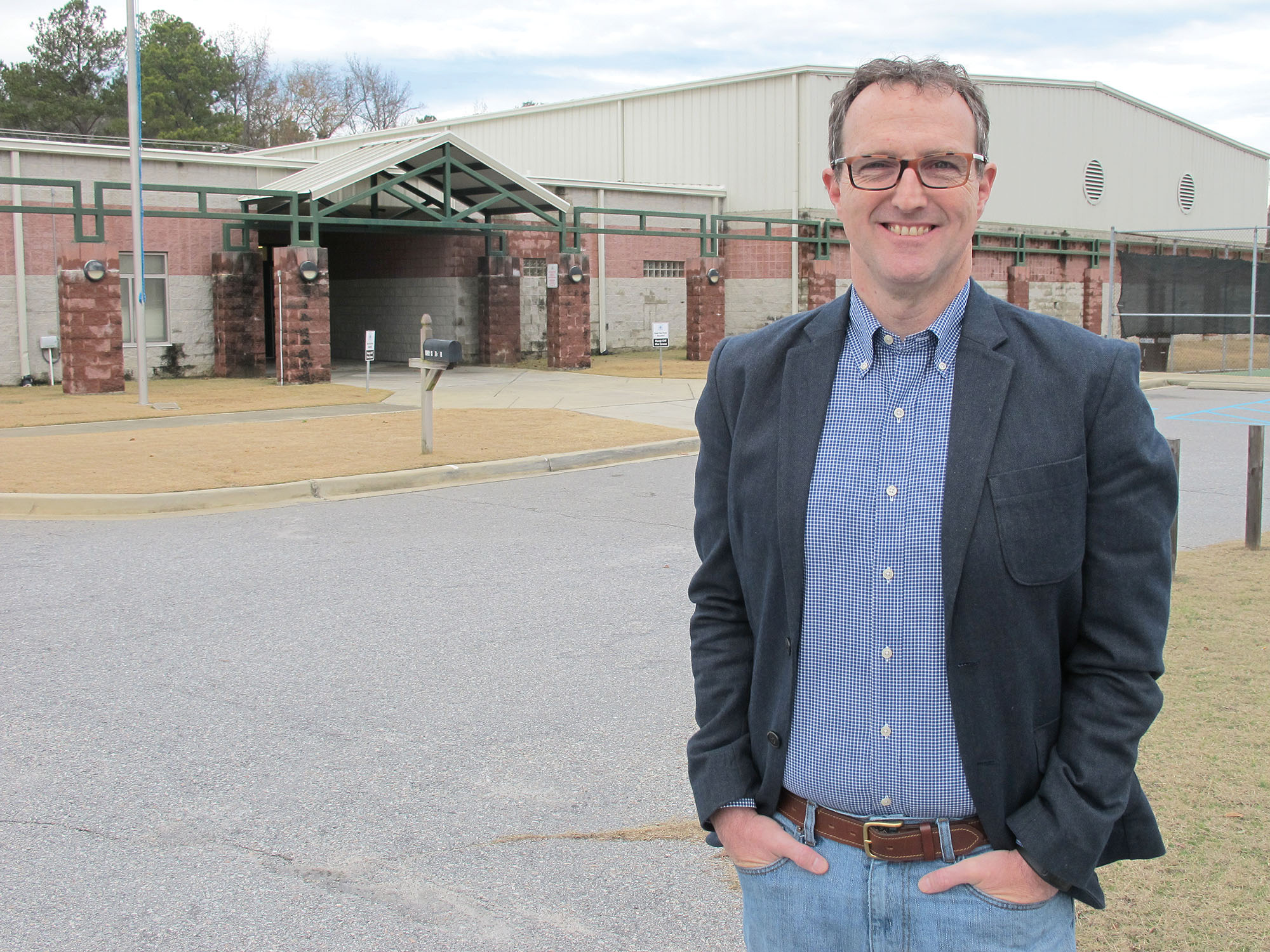
    Local journalist Ron Aiken outside the Blythewood offices of the Richland County Recreation Commission. Aiken broke the news last year of Commission corruption. (Photo/Barbara Ball)
    Blythewood journalist Ron Aiken outside the Richland County Recreation Commission’s park in Blythewood. Aiken broke the news last year of Commission corruption. (Photo/Barbara Ball)

    BLYTHEWOOD (Jan. 5, 2017) – It may not have been entirely the work of a single man that last year brought down the Richland County Recreation Commission Board. But it was the work of one man that tipped over the first domino.

    Writing for the news website The Nerve, local journalist Ron Aiken broke the story of sexual harassment, nepotism, the bullying of employees, abuse of power and cash payoffs to Commission board members by the board’s director in exchange for protection. Aiken would later follow up on that lurid tale on his own website, quorumcolumbia.com, as larger news outlets picked up on his trail. Largely as a result of Aiken’s investigation, the Commission director was indicted last October on charges of misconduct in office and retired, and Gov. Nikki Haley removed all but one of the Commission’s seven board members.

    Aiken also broke other Richland County stories – about hundreds of thousands of dollars’ worth of engineering contracts let to someone with no engineering education or experience; about a business partner of a Richland county councilman given over a quarter-million dollars in Hospitality Tax money; about the practice of each council member giving away $165,000 annually any way they please with no oversight or accountability. . . . And the lists goes on.

    These and other investigation stories by Aiken have resulted in the FBI, SLED, Attorney General’s office and the S.C. Secretary of State all having open investigations.

    Not bad work for a journalist working solo.

    “It’s exciting to me to reveal wrongdoing, possible fraud, corruption, lack of transparency where there should be transparency,” Aiken recently told The Voice. “At The Nerve, it was getting a stagnant 3,000 views per month. I was able to get those numbers up to over 100,000 views per month. Starting from nothing, I had the Quorum up to 50,000 views the first month.”

    Aiken lives in Blythewood with his wife and three stepchildren. He previously worked for The State newspaper, beginning in 1999, for three or four years as a sports reporter. Not satisfied covering just sports, Aiken got the job as senior editor for the Columbia Business Monthly.

    “There I caught the news bug and went to work in Wyoming for a small-town newspaper,” Aiken said. “I learned the techniques of covering all sorts of news – car wrecks, sports, school board meetings, court cases, town councils, etc.”

    Aiken eventually worked his way back to Columbia and a gig with Gamecock Central for three years. Not conducive to family life, the away time required by Gamecock Central soon had Aiken looking elsewhere. Local CBS affiliate WLTX reached out to him at the right time, needing someone to cover high school sports. After a year at WLTX, Aiken finally got the chance to work as an investigative journalist at The Nerve, an investigative news website that watchdogs state and local government. Although Aiken was finally doing what he really wanted to do, changes in the direction The Nerve was headed led to some dissatisfaction on Aiken’s part. This led Aiken to create Quorum where he has been busy digging up the dirt.

    The sort of work that’s being done at the Quorum would sometimes naturally get on the bad side of some influential people. Aiken takes precautions, but has not had, nor does he expect, any direct threat.

    “I believe in the work,” Aiken said. “If I am reporting everything correctly, I don’t worry about it (personal safety). One of the overall purposes of my work is to make everybody’s life better.”

    As a one-man show at quorumcolumbia, Aiken does all the research for his articles. Sometimes this involves pouring through stacks of  paperwork, contracts, etc.

    “I don’t have a team of lawyers behind me,” Aiken said. “The onus is on me to make sure my information is accurate and air tight. I have to know that before I print anything. I have to have 100 percent confidence of its accuracy.”

    And that means vetting his sources carefully – sources he said are surprisingly not hard to find.

    “The right people will find you,” Aiken said. “They contact me. I won’t report after a source comes to me unless I know the story is true. I normally won’t report information from a one-time source. I have to develop a relationship with the source and corroborate their information five ways unless they are people I have known for a long time, and there’s already trust built up.”

    Catching the attention of the larger daily newspapers has prompted Aiken and The State to consider some sort of working relationship.

    “Their publishing process and mine differ,” Aiken said. “I serve my business first, and if I can get exposure from them (The State), all the better. There is a way to do it, but we haven’t nailed it down quite yet.”

    Aiken’s work recently earned him second place in the Society of Professional Journalists’ Larry Peterson Memorial Awards for Investigative Journalism. He placed between two major Pulitzer Award winning newspapers, the Atlanta Journal Constitution (first place) and the Charleston Post & Courier (third place).

    So what does the future hold for Quorum? In the short term, Aiken said his goal is to maintain the website. Currently, there are enough subscribers to keep it running, but he said the big money hasn’t started rolling in yet. Once the value of the Quorum is fully appreciated, Aiken is hoping the amount of subscribers will increase to the point that more reporters are needed.

    Long term, the possibilities are almost endless. Aiken said he is interested in expanding his coverage to Lexington County or State Government. Who knows, maybe Quorum Greenville or Quorum Charleston?

    For $10 per month, subscribers can follow Aiken’s investigations at quorumcolumbia.com.


  • Electric Vehicle Chargers at a Crossroads

    BLYTHEWOOD (Jan. 5, 2017) – The Electric Vehicle Revolution in Blythewood has hit something of a snag, leaving Town Council with a few options to ponder.

    Michael Criss, the Town’s Consultant, told Council during their Dec. 19 meeting that the large, direct-current quick-charger located at the Exxon station on Blythewood Road is no longer charging. The device began having communication troubles with vehicles late last year and it has since been taken off-line completely. That leaves the town with only its four slower, Level 2 chargers – two each at the Comfort Inn and the Holiday Inn.

    All five chargers have been available at no cost to electric vehicle drivers.

    Criss said the first option is to simply repair the large quick-charger, if it is affordable to do so.

    “We won’t know that until we get a diagnosis on the quick-charger; that’s the big one, the most expensive one,” Criss said. “We got it for $25,000, and that was half price. That and the four Level 2 chargers have useful life, but only if repairs are affordable.”

    The rub, however, is that Eaton, the manufacturer of the chargers, has discontinued their line of electric vehicle juicers and will no longer be servicing or repairing the devices.

    “Another alternative is turn over all sites to a third party like EVgo and let them replace our equipment with their equipment,” Criss said. “They’ll charge for use. It’s a for-profit charging system.”

    EVgo, out of Houston, Texas, has recently made inroads into the East, Criss said, installing chargers at Spinx gas station chains in Spartanburg. They have expressed interest, Criss said, in taking over the Blythewood sites.

    Volkswagen’s scandal last year, in which the car company installed software on some of its diesel vehicles that allowed them to circumvent the Clean Air Act, may present a third option, Criss said.

    Volkswagen’s settlement of an ensuing lawsuit by the Environmental Protection Agency put South Carolina in line for $20 million over the next 10 years, Criss said.

    “Some of that money may be used for electric vehicle charging stations,” Criss said. “I’ve already talked to the Bureau of Air Quality to get us in line for any potential grants that we might be able to use to replace our aging equipment.”

    Criss said finding anyone qualified to work on devices like the large quick-charger was difficult; however, he added, Mike Switzer, Director of the Blythewood Chamber of Commerce and an electric vehicle owner himself, has given Criss a few leads.

    “I suggest we do what we can to keep our four slow chargers working at the hotels, leaving our big charger off line and hope for a diagnostician to see if it’s worth repairing,” Criss concluded. “If it’s just a plug and cable, you’re probably looking at $1,500 for a $25,000 unit. It still boots up, it powers up, it tries to talk to cars when you plug it in, and then – ‘communication error.’ My guess is we have worn out the plug. But I don’t know that. Until we do, it’s hard to predict the best course of action.”


  • Local Business Owner ‘Pays it Forward’

    Liz Humphries, owner of Blythewood Consignment Shop on Main Street in Blythewood, recently loaned a stranger $5 for fuel for his pickup truck. “And then,” she said, “to my surprise, I got this!” (Photo/Barbara Ball)
    Liz Humphries, owner of Blythewood Consignment Shop on Main Street in Blythewood, recently loaned a stranger $5 for fuel for his pickup truck. “And then,” she said, “to my surprise, I got this!” (Photo/Barbara Ball)

    BLYTHEWOOD (Dec. 18, 2016) – It’s not unusual for strangers to walk in to Liz Humphries Blythewood Consignment shop on Main Street. It happens every day.

    “They’re called customers,” she said with a laugh.

    Just before Thanksgiving, however, a stranger came in who was not a customer.

    “He said he was lost and had run out of gas trying to find his way back to the interstate. He needed $5 for gas to get home to Columbia,” Humphries recalled.

    “I didn’t know if he really needed the money for gas or what. But he seemed down on his luck, and I couldn’t not help him. It could have been one of my kids needing help. So I gave him the $5 and kissed it good-bye,” she said.

    “Then last Friday I opened my mail and found an envelope with a $5 bill and a nice note inside thanking me for the loan,” Humphries said.

    “People are good.” she said with a smile.


  • Planning Commission OK’s Cambridge Pointe

    Attorney: Too Late to Alter Home Density

    BLYTHEWOOD (Dec. 15, 2016) – The Planning Commission Monday night gave their OK to a preliminary plat for the Cambridge Pointe subdivision without requiring sidewalks and gave it a virtual pass on interconnectivity with adjacent neighborhoods as called for in Blythewood’s Master Plan.

    While the former was a relief to the Cambridge Pointe development team, the latter was a relief to both developers and residents of the adjacent Oakhurst subdivision who packed the chambers at Doko Manor to voice their concerns over interconnectivity, home density and traffic.

    But the Commission only had the authority, Chairman Bryan Franklin reminded the audience and fellow Commissioners, to address the sidewalk requirement and the proposed link-up between Cambridge Pointe and Oakhurst.

    “Go before Town Council and talk with them about the density of houses if you’re concerned with that,” Franklin said after Commissioner Donald Brock, an Oakhurst resident, asked if the Commission had any say over the 89 homes planned for the approximately 41 acres off Boney Road. “They have to vote on the zoning changes. We only can do preliminary plats and do they meet the current zoning ordinance, and in this case they do. But we have the option to ask them to put sidewalks in and the connectivity.”

    Cambridge Pointe initially received sketch plan approval, with modifications, on June 7. The plan called for an entrance road to the subdivision off Boney Road and an internal connection to Cross Ridge Road in Oakhurst. While the Town waited on developers to submit their preliminary plat, D.R. Horton approached the Town on Oct. 12 to discuss developing 90 acres of what is known as the Wilson Tract, which lies just to the east of Cambridge Pointe and north-northeast of Oakhurst, fronting Main Street/Wilson Blvd.

    D.R. Horton’s project could comprise between 150 and 300 new homes, and, according to the Town, would require more than just a single entrance off Wilson Blvd., as well as neighborhood connectivity with Cambridge Pointe and Oakhurst. In order to accomplish that connectivity, Town staff told Cambridge Pointe developers to reserve lot 86 for a stream crossing into the Wilson Tract, built at D.R. Horton’s expense.

    But excluding a home from lot 86 would mean Cambridge Pointe developers would be out $250,000, according to John Thomas of Sustainable Design Consultants, engineers for Cambridge Pointe.

    “In a project with 89 lots, you do the math on how much that adds per lot,” Thomas told the Commission. “If you’re going to bridge a big stream like that, you’re probably looking at $500,000 or up, which I don’t think D.R. Horton is going to sit still for. They’re not going to pay that.”

    Sidewalks were another issue for the Cambridge Pointe team, Thomas said.

    “We met early on and talked about sidewalks in here and it was determined that there’s no sidewalks in Oakhurst to connect to, there’s no sidewalks on Boney Road to connect to,” Thomas said. “I’d like a reason for sidewalks in here.”

    For the Commission to require sidewalks at this stage, Thomas said, would mean re-engineering the entire project, re-grading the site, re-designing the storm drainage system and then resubmitting a slew of permits. What developers had planned instead of sidewalks, Thomas said, was a network of walking trails throughout the Cambridge Pointe greenspace.

    “Those are issues that should be resolved at the beginning of a project, not at the end of it, after everything has been engineered and submitted for permitting,” Thomas said. “That’s my biggest complaint.”

    Town Administrator Gary Parker reminded the Commission that the Master Plan called for connectivity between adjacent neighborhoods – when feasible – in order to alleviate traffic on the main roads and to make Blythewood a more walkable, bicycle-friendly community. Without connectivity, he said, anyone living in Cambridge Pointe wanting to visit Oakhurst would have to exit Cambridge Pointe, travel down Boney Road to Oakhurst Road and enter the single Oakhurst entrance. Likewise, he said, if the Wilson Tract project came to fruition without connectivity, getting to people in Cambridge Pointe would mean dumping cars out on Wilson Blvd., sending them down Oakhurst Road and up Boney Road.

    “Why not have a connection, expensive though it may be, that crosses that stream and can access Cambridge Pointe from the Wilson Tract?” Parker said, “Likewise, if you have that connection into Oakhurst from Cambridge Pointe, people can go from one subdivision into another subdivision without having to go on the main corridor, which is both safer, plus encourages walking and bicycling, and that’s the whole concept of the Master Plan.”

    Bucky Drake of Drake Development Company, which is developing Cambridge Pointe, told the Commission and audience that their original plan did not call for connectivity with Oakhurst.

    “We had to do it because it was required for us to go forward with a plan,” Drake said. “We would rather not have it.”

    Oakhurst resident Ethel Johnson said she felt her neighborhood was being punished because Cambridge Pointe had been overdeveloped.

    “If the development is too dense to support its own access,” Johnson said, “then why should we, the residents of Oakhurst, be burdened with accommodating a developer who is obviously overbuilding and overcrowding on this small area?”

    As the Commission began deliberating the matter, several unidentified members of the audience shouted out calls for a traffic study for Cambridge Pointe.

    “Anything less than 90 homes, you’re not required to do one,” Franklin replied. “That’s a Town ordinance. That’s another Town Council issue.”

    Brock suggested rejecting the plan and sending the whole thing back to Sustainable Design Consultants for a do-over without any connectivity via automobile with either Oakhurst or the Wilson Tract.

    “I would also recommend that the developers consider application for rezoning for R12 or higher to Town Council,” Brock added, “to lower the density in the neighborhood, to build nicer and better homes, up to Oakhurst standards.”

    But Franklin said it was too late in the game to suggest such a drastic change since Cambridge Pointe currently met all of the Town’s existing ordinances.

    “So there’s no recourse for that high-density development in that area that can’t support that traffic other than to say what? We reject that?” Commissioner Cynthia Shull, also an Oakhurst resident, asked.

    Town attorney Jim Meggs confirmed that the only matters the Planning Commission were authorized to address were sidewalks and connectivity. Home density, he said, has long been set in the Town’s ordinances.

    “A lot of the ships that folks have been unhappy about in recent times are ships that were built and launched off the launch pad some years ago, because the Master Plan was adopted years ago,” Meggs, turning to the crowd, said. “If you’re concerned about those ships and the possibility that more of them are hitting the water and sailing, you need to come to Town Council.”

    Ultimately, the Commission approved the preliminary plat with no sidewalks and no road connections to Oakhurst or the Wilson Tract. The preliminary plat will provide for a multi-use trail system that will include a connection to Oakhurst for pedestrian and bicycle traffic.