Author: admin

  • Cornish Guilty

    Cornish

    Larry Cornish, 32, of Columbia, was found guilty of the attempted murder of Ashley Mickle on Thursday, Aug. 31, following a three-day trial in the Sixth Judicial Circuit Court in Winnsboro with Judge Daniel Hall presiding.

    Cornish was also convicted of possession of a weapon during the commission of a violent crime and possession of a weapon by a person previously convicted of a violent crime.

    Mickle testified that in the early morning hours of July 27, 2016, after an argument with Cornish, she attempted to flee from the couple’s Winnsboro apartment with her two children. Before Mickle and her children were able to drive away, according to Assistant Solicitor Croom Hunter, Cornish jumped in her car with a pistol and held it to her head. Cornish forced Mickle to drive away from the apartment complex and proceeded approximately half a mile to the intersection of Calhoun Street and Highway 321 in Winnsboro.

    As Mickle came to a stop, Cornish exited the vehicle, turned towards Mickle, and according to Hunter, fired his pistol at her head. Mickle was struck in the cheek but was able to drive to the emergency room at Fairfield Memorial Hospital, where she was treated for her wounds. Mickle’s two children, ages 6 and 9 at the time of the shooting, witnessed the event from the backseat of the car and testified at trial.

    Law enforcement began a search for Cornish the same day.  He was later arrested in Columbia by members of the Richland County Sheriff’s Office, the SLED Fugitive Task Force and the Winnsboro Department of Public Safety.

    Cornish was sentenced to a combined 40-year sentence. He received thirty years imprisonment for attempted murder and five years on each weapons charge, to be run consecutive.

    Cornish was represented by Aimee Zmroczek of Columbia.

  • PC heads off commercial zoning

    Residents of Dawson’s Pond and Dawson’s Creek neighborhood could be facing a change of zoning for two parcels bordering their neighborhood when a request for commercial zoning of the parcels goes to Town Council later this month.

    Vicki Brooks, owner of 10735 Wilson Boulevard, is requesting a zoning change for the parcels from the current Rural District (RU) zoning to Multi-Neighborhood Commercial District (MC) zoning. The request for a recommendation to Council was heard by the Planning Commission Tuesday evening.

    While Town Administrator Gary Parker suggested in a memo to the Commissioners that the request falls in line with other existing commercial districts along this section of Wilson Boulevard, the Town’s zoning consultant, Michael Criss, said it is a higher level of commercial zoning that two other office commercial uses down the road.

    Brooks told the Commission that she was not sure what would go on the two parcels that total 3.33 acres and which are about 1,200 feet south of Blythewood High School on Wilson Boulevard.

    “I have in mind something to serve the community, whether it’s medical, dental, up to 20,000 square feet with a possible drive thru if it became a restaurant,” Brooks told the Commissioners. “At one time it had a restriction against gas stations, but it no longer has that restriction,” she said.

    When she mentioned that there were no dental or medical offices in Blythewood, she was corrected by Criss and several Commissioners that there are three dental offices and two or three medical offices.

    Criss reviewed the allowable commercial uses for the property that include a convenience store, a beer, wine and liquor store, certain automobile sales uses and conditional uses for gas stations and automobile wash and detailing establishments as well as indoor and outdoor restaurants.

    While Parker told The Voice that no rezoning notice is required to be posted on the property prior to a request coming to the Planning Commission, at least one resident from the adjoining Dawson’s Pond and Dawson’s Creek neighborhoods was aware of the request coming before the Commission and spoke out at the meeting.

    “I’m concerned that Blythewood is in danger of urban sprawl, bringing commercial into the rural,” Dawson’s Creek resident and former Planning Commissioner Carol Peeples told the Commission. She said she has no problem with growth, but that the commercial development of this property bordering her neighborhood would be growth in the negative.

    Commissioner Donald Brock, in answer to Brooks saying she would not put a gas station on the corner property, quizzed her further.

    “Let’s say we take your word that you will not put a convenience store there. If the zoning is changed to MC and you sell the property, what stops someone from coming behind you and putting a liquor store there? I have a problem with that,” Brock said.

    “Absolutely,” Brooks agreed. “But you could put a restriction for that.”

    “No,” Criss said. “The zoning district designation regulations have to be consistent so that any of these allowed  land uses could be developed.”

    The Commission voted 4-0 to recommend that Council deny the request when it comes before them at the September meeting.

  • Field crowding up in Council race

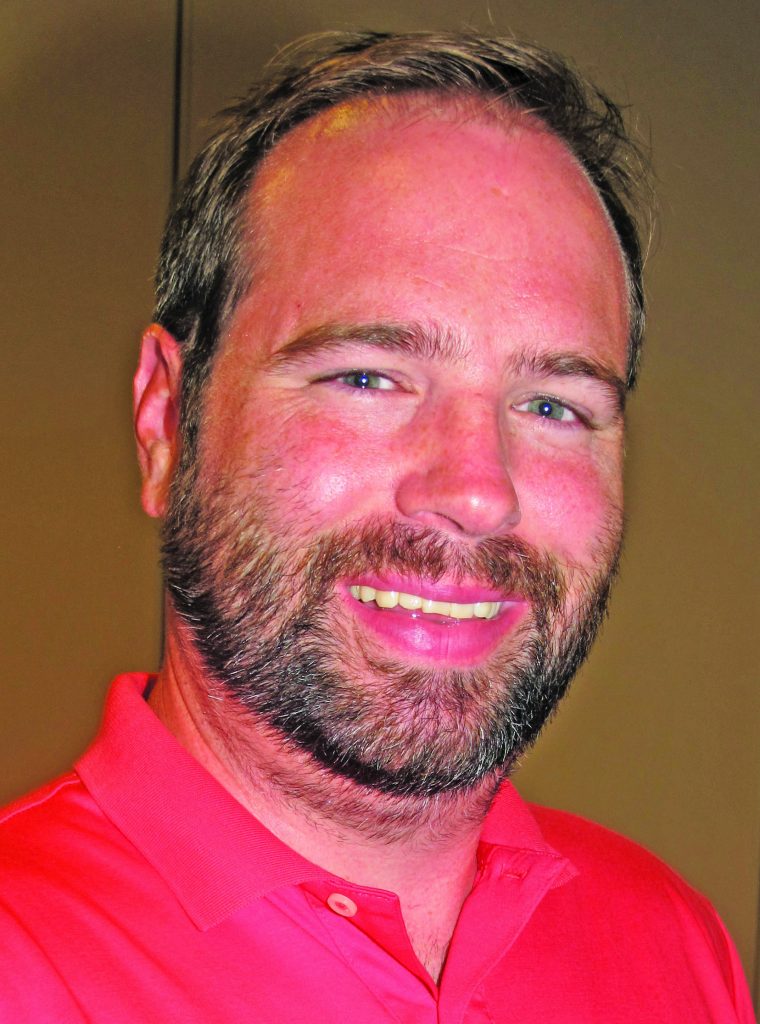
    Brock
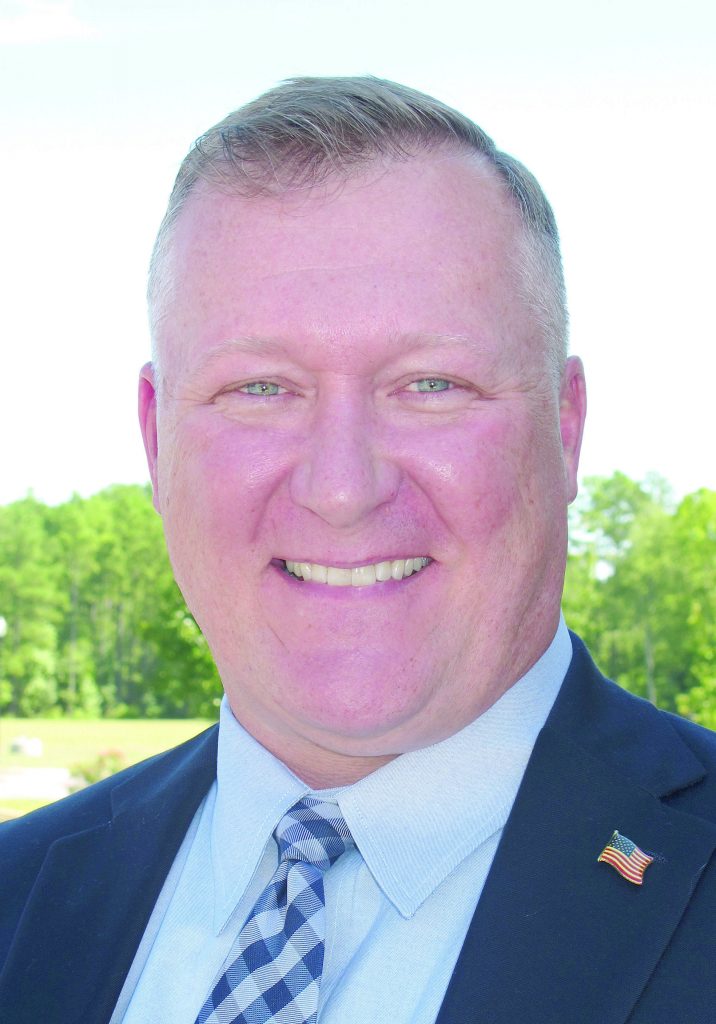
    Franklin
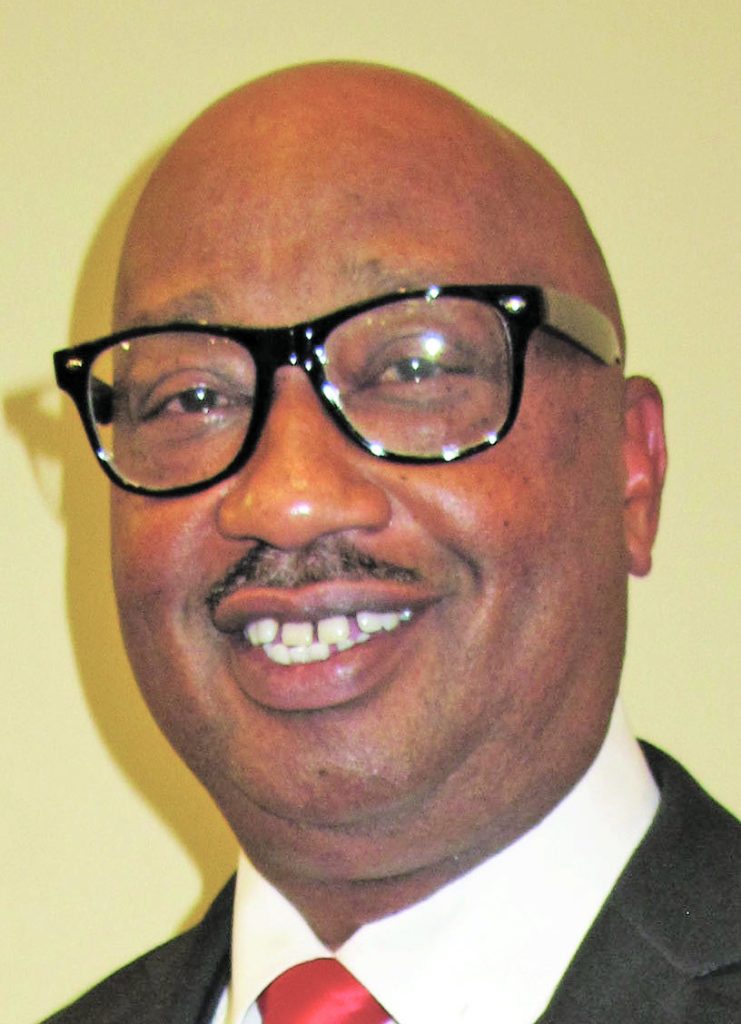
    Griffin
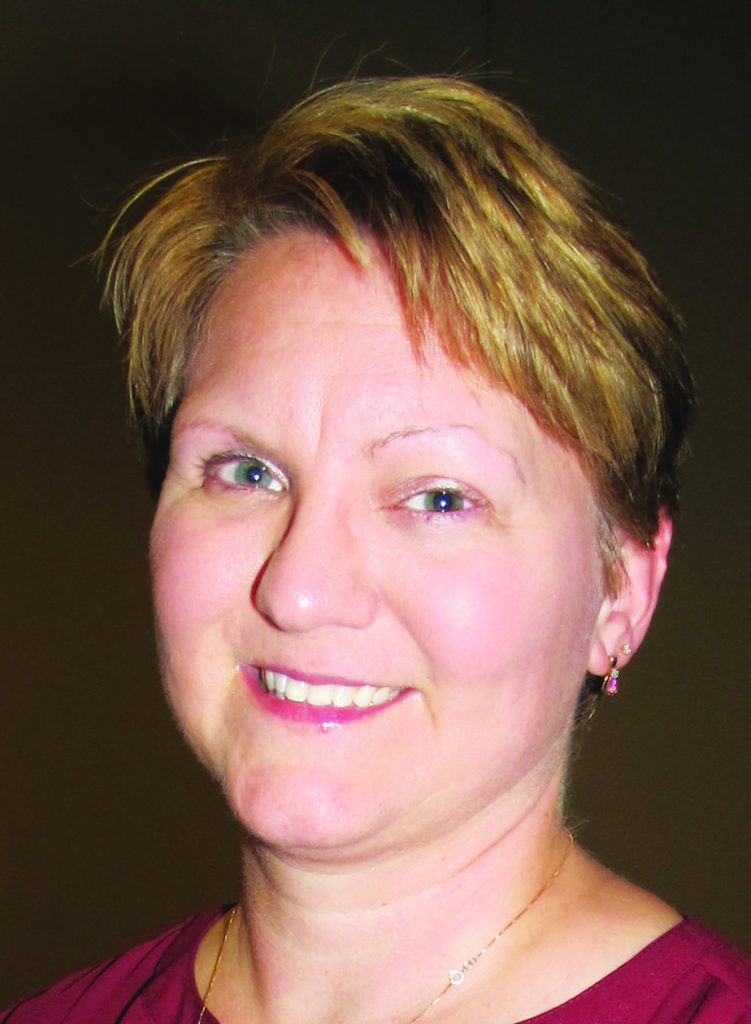
    Kedrosky


    With one day left for candidates to sign up to run for two open seats on Council, the field is fast filling up. At press time on Wednesday, four candidates had made their candidacies known – incumbent Larry Griffin, Bryan Franklin, chairman of the Town’s Planning Commission and two other Commissioners, Donald Brock and Michelle Kiedrowski.

    The two open seats are currently held by Tom Utroska and Larry Griffin. Terms for the seats are for four years and comes with a $500 monthly salary. Only Councilman Utroska, who is not running again, does not take the salary, saving the Town $6,000 per year.

    Utroska, who has long been an advocate for the community said at the outset of his current term that he would only serve one term.

    “I think I can continue to contribute and speak out on various issues as a citizen,” he told The Voice last week. Utroska has not only been an outspoken watchdog for the Town’s finances, but, prior to his election four years ago, is the only person to have every picketed town hall over an issue.


    Since the Town is not districted, residents run for the seats at large. Candidates must be qualified, registered voters within the town limits of Blythewood, and have until Thursday, Sept. 7, to register. The candidate filing fee is $5. Contact Melissa Cowan, the Town Clerk, with filing questions at 754-0105.

    Griffin resides on Langford Road, Franklin in Ashley Oakes, Brock in Oakhurst and Kiedrowski in Cobblestone Park.

    To vote in the upcoming election, register by Oct. 7, 2017. To register, contact the County Board of Voter Registration.

    The following precincts will be open from 7 a.m. until 7 p.m.: Blythewood 1, Blythewood 2, Blythewood 3, Longcreek and Ridgeway (Fairfield County) The polling place for all precincts in this election is at Blythewood Park, 126 Boney Road.

  • Hospital CFO delivers grim financial report

    WINNSBORO – Fairfield Memorial Hospital’s Chief Financial Officer Timothy Mitchell delivered a brief but dire financial report to the full Board last week during their regular monthly meeting. Operating expenses continue to outweigh revenues.

    The more detailed financial picture presented by Mitchell during the Finance and Audit committee meeting preceding the full Board meeting showed an even darker outlook, causing Board member William Turner to exclaim the obvious, “Listen, we are absolutely broke.”

    Even some positive things in July did not really budge the negative numbers on the FMH income statement or balance sheet.

    For example, gross revenue was up $100,000 from June and there were smaller net losses in July – $128,596 – versus $289,648 the previous month. This ticked up average daily gross revenue from $37,234 in June to $39,286 in July.  But that is still about $5,000 a day less than July a year ago.

    Also, in July the hospital received an extra $64,329 in disproportionate share money (DSH) as a result of a recalculation of unreimbursed cost.  DSH funds come from federal and state tax dollars and are paid out by the S.C. Department of Health and Human Services to help hospitals that treat a disproportionate share of indigent or uninsured patients.

    “It is important to note, however,” Mitchell said, “that the DSH payments year to year are dropping.  It may be hard to see that, because we are getting payments related to audits from previous years.  DHS is actually dropping by $358,000 (this year) because patient volumes are down.”

    Mitchell also noted that another source of federal money – $1.2 million in meaningful use funds the hospital received last August – would also be drying up.  Meaningful use funds are from a federal program to help hospitals and other health care providers implement and use electronic health records.

    ‘It’s no secret that the hospital has had substantial operating losses over the past four months, and this is affecting key financial indicators such as days cash on hand [money needed to operate on a daily basis],” Mitchell said. He projected that the hospital would have, on average, only eight days of cash in hand during the month of August and only five days cash on hand in September.

    Other indicators were the focus of concern as well. For example, in July the hospital owed vendors more than $2.7 million, and 59.16% of accounts payable were older than 60 days.

    “The hospital has experienced $928,930 in losses during the past four months,” Mitchell said.  “At that level, you are burning $65,000 in cash every month that you don’t have. That’s on top of the county appropriation. That’s the bottom line… so we have to sit down and have some serious discussions about how to deal with that.”

    Board member Randy Bright pointed to the service line report which he said was indicative of where the hospital was losing money. For example, he said, for the current year through July, almost all of the hospital departments, including the emergency room, imaging services, respiratory and rehab therapy and laboratory were pulling in far less patient revenues than initially budgeted at the beginning of the year.

    In total, the hospital’s actual revenues generated from its services were almost $7 million less than its initial operating budget.  Only home health revenues significantly exceeded budget expectations.

    Mitchell pointed out that the hospital has already done some things, such as eliminating some loss leaders, i.e., ending its MRI and nuclear medicine services.  “I think we need to continue our consideration of other areas that we may need to think about closing or eliminating,” he said.  “We are at a place where we either charge or retreat.”

    “We can either look at this completely insulated from the outside in how we deal with the problem,” Mitchell said, “or do we look outside our organization for any options.”

    “No revenue just destroys you,” Board member William Turner said. Committee members agreed, noting that the hospital can only cut expenses so much.

    Bright added that in the meantime there are still hospital departments that have opportunities.

    “We have deadlines/time table for department decisions. But we can’t make any decisions on those departments until we know what we want to look like afterward,” he said, meaning after Providence Hospital builds the new, stand-alone ER and the FMH inpatient and ER departments close.

    This prompted an outburst from Turner.

    “If they [the hospital’s other departments] aren’t making money now, how are they going to make money then? We can sit here and talk all day about what they (Providence) are going to get and what we want to keep, but if we aren’t making money now, how are we going to make money later?”

    “But maybe someone else could”, Bright noted.

    “Well are we looking at someone else at this point?” Turner asked.  “What about Eau Claire [Cooperative Health Center]**, for example?  Why aren’t we looking at somebody right now no matter what departments we keep or which ones we get rid of?”

    “I don’t know if we want to send that message out right now,” Board member Ronald Smith said.

    “We don’t have time to send a message. Listen, we are absolutely broke,” Turner responded.

    In the end, committee members agreed that until the Board had more information from Providence and the decisions it is going to make, it would be difficult to plot the future for the remaining departments of the hospital and how they could be sustained.

    “We can’t get into any entanglements until we know what we want to be,” Bright said.


    **At the Fairfield County Council meeting August 14, Eau Claire Cooperative Health made a presentation focused on expanding its presence in Fairfield County.  With locations in four counties, including Fairfield, Eau Claire has 50 providers and offers primary care, pediatrics, dental, women’s care, and behavioral health. In 2016 about 3,000 Fairfield residents received care from Eau Claire. During the full board meeting, copies of the presentation by Eau Claire were distributed by Board Chairwoman Catherine Fantry as information for the Board to consider.


     Council Grills Hospital CEO

    After reporting to County Council Monday evening what services the hospital continues to provide as well as a financial update, which was bleak, hospital CEO Susie Doscher summed up her presentation by saying it would be difficult for the hospital to be sustained in the future without help from the County. Following her presentation, Doscher was grilled by several members of Council.

    Councilman Douglas Pauley asked Doscher if she thought the hospital’s executive structure was top heavy with four executives: CEO, CFO, CNO (nursing) and a COO. Doscher said she didn’t know of any hospital that didn’t have a CEO, CFO and CNO, but that sometimes the CEO will take care of departments that are overseen in some hospitals by the Chief Operating Officer, thus eliminating that position.

    Pauley also asked why Blue Granite Clinic has not been closed since it has never generated a profit.

    “Blue Granite Clinic is a primary care provider. These can not stand alone. The Martin Center gets assistance from USC. Fairfield Medical Associates brings in other types of revenue such as ordering lab tests, by ordering any tests,” Doscher said.

    “How much money has the hospital written off or adjusted last year due to errors on the hospital’s part?” Pauley asked.

    “I’ll see if I can find out for you,” Doscher answered.

    The questions got closer to the bone.

    “FMH board and staff members are going to a conference in Hilton Head next month,” Pauley said, and asked if FMH would be paying for the trips.

    “Yes,” Dosher responded.

    “If the hospital pays for their trip to Hilton Head and you all come back to Council asking for more money, I will vote no,” Pauley said. “The hospital being in the financial condition it is in, if they go to Hilton Head, they need to pay for their own trips.”

    Councilman Neal Robinson questioned Doscher about rumored recent cuts in employee pay and asked if executives also received pay cuts.

    Doscher initially said there were no pay cuts, but explained that hours were cut back for some employees because staffing didn’t match patient volume. She said no salaried employees received cuts.

    Robinson also asked what generates the most revenue at the hospital.

    “Imaging services,” Doscher replied.

  • $25,000 offered for info in Lugoff train derailment

    LUGOFF – On August 5, 2017 the Kershaw County Sheriff’s Office responded to a CSX train derailment in the Highway 601 and Medfield Road area.

    After an investigation, police discovered that 12 cars from the 18-car CSX train derailed after a collision with a yellow bulldozer parked on the tracks. Though no injuries were reported, damage to a nearby building and the railroad were reported.

    The Kershaw County Sheriff’s Office, CSX Police, and Crime Stoppers are searching for the unknown suspect(s) who caused the derailment. CSX Police are offering a $25,000 reward for information leading to the arrest and conviction of responsible parties.

    Information can be provided anonymously. If you have information about this case, call Crime Stoppers at 1-888-CRIME-SC or visit the Crime Stoppers website at www.midlandscrimestoppers.com.

  • Emergency preparation offered to residents

    BLYTHEWOOD – With hurricane season around the corner, the Blythewood Community Emergency Response Team (CERT) has organized a seminar to help members of the community know better how to cope with emergencies such as the flooding the Blythewood area experienced two years ago and that Houston and Louisiana are experiencing this week.

    The 90-minute seminar is being hosted by Transfiguration Catholic Church on Thursday, Aug. 31, beginning at 6:45 p.m.

    “But those attending don’t really have to spend 90 minutes at the seminar,” Paul Richter, one of the organizers, said. “There will be displays that folks can view at their own pace and we have a 30-minute presentation beginning at 7 p.m. with a general overview of what it takes to be prepared for an emergency and to see that emergency through in the best way possible.”

    Richter said the displays will address topics relevant to enduring 72 hours without public services such as electricity and water.

    Topics of discussion will include water purification, food storage, communication, how to secure valuables when leaving the home, pet care, light and first aid.

    “It’s something everyone, adults and young people alike, need to know to survive an emergency,” Richter said.

    Richter said there will be handouts and door prizes.

    The church is located at 9720 Wilson Boulevard in Blythewood.

  • Fairfield residents sue SCE&G, SCANA

    WINNSBORO – An 11-count class action lawsuit was filed late Monday in Fairfield County Court of Common Pleas against SCANA Corp. and S.C. Electric & Gas for charging approximately 661,000 customers more than $1 billion in electricity charges to pay for two power plants that they abandoned last month.

    The complaint was filed on behalf of 10 plaintiffs, all residents of Fairfield County: Edwinda Goodman, Bobby Lee Jones, Bobby Cunningham, Darreyl Davis, Phillip Cooper, Karla Cooper, Jackie Mincey, Dean M. Perry, Steve Lawson and Freddie Lawson.

    According to the 21-page civil action, the companies “continue to bill its customers the increased charges leaving both defendants in possession and ownership of billions of dollars without fulfilling the promised services to the plaintiffs and hundreds of thousands of other SCE&G customers.”

    “It was totally mishandled,” Winnsboro Attorney Creighton Coleman, one of the attorneys participating in the filing, told The Voice. “We think SCE&G and SCANA have treated the rate payers wrong and inappropriately, and we’re seeking refunds to the rate payers. It’s as simple as that.”

    Other attorneys participating in the filing include Ed Bell of Bell Legal Group LLC in Georgetown, state Sen. Vincent Sheheen of Savage, Royall and Sheheen LLP in Camden and Gregory M. Galvin of Galvin Law Group LLC in Bluffton.

    The lawsuit alleges that the companies “knew years before abandoning the project that the project was not feasible; not subject to a detailed construction schedule; not a good investment of the ratepayer’s money; over budget; and failing.”  It also accused the companies of making “misrepresentations, false statements and misstatements” to the state Public Service Commission about the project.

    The complaint noted that while South Carolina families’ power bills are among the highest in the nation, in part because of the failed projects, that SCANA executives received more than $20 million in compensation.  It also claimed the companies “refused to abandon the project at an earlier time because they received approximately 10.25 percent profit from all the monies it collected from the plaintiffs.”

    “When power companies have so much control over our lives, they should not be able to benefit from their own misdeeds and negligence,” Ed Bell of Bell Legal Group LLC in Georgetown said. “It’s pretty simple. If you don’t pay your electric bill, what do they do? They cut you off. Now, we should cut them off from future payments for a failed project.  They should be held to the same standards as their rate holders.”

    The lawsuit alleges 11 causes of action, including waste, breach of fiduciary duty, negligence and fraud. It accused the companies of unjust enrichment for receiving profits from the project “since the project was not completed and the plaintiffs were provided with no value from the project.”

    The complaint also seeks to have the court freeze assets of the company related to the nuclear plant project.

  • Ridgeway Library readies for move

    RIDGEWAY – The Ridgeway Branch of the Fairfield County Library will be closed temporarily starting Sept. 1, 2017.

    The library is unable to stay in its current building and is in the process of securing a more permanent location. In the meantime, the Bookmobile will provide service one afternoon per week (day and location to be determined). Until a new location is found for the library, the Winnsboro library will provide computer access and all other library services.

  • DHEC delays Town’s Broad River project

    WINNSBORO – The Winnsboro Town Council will have to wait a while longer before it will get official bid recommendations on the Broad River Project from HPG & Co. Consulting Engineers., Inc.  HPG can’t make the recommendations until it gets input on the bids from the Department of Health and Environmental Control (DHEC), Town Manager Don Wood told Council last week.

    Wood said the delay by DHEC effectively halts the town’s bid process, and it is not known what the timetable is for a DHEC response. The delay, however, is not expected to have much effect on HPG & Co.’s involvement in the bid recommendation process.

    “Like I said, they (DHEC) are very slow and they’ve got their own timeframe, but we will stay on them for a prompt response,” Wood said. “These are the same people (HPG) that are doing our sewer line input, so they want the job. Even if there is a slight delay, I think they’d be good.”

    Council also approved a $15,000 capital expense request from the water plant to clean the recycle basin. The expense was recommended by the finance committee. Those funds were previously earmarked in the FY 2017-2018 budget, under Recycle Basin/Pulsator Clarifier Cleaning.

    Town Council and the finance committee approved $36,738.80 for the purchase a new brush chipper requested by the Town of Winnsboro electric department. The department’s former brush chipper had been in commission 20 years.

    William Medlin and the electric department recommended a Morbark M12RX, because of service availability in Columbia as opposed to a Vermeer, which only has service availability in the Charlotte area. Council and the Finance committee turned down alternate bids of $45,386.78, $41,231.00 and a Vermeer for $34,746.00.

    Brush Chippers assist in about 60 percent of the electric department’s duties, according William Medlin.

  • Daughters want mom’s death reinvestigated

    What happened to Cathy Vera? Family, friends challenge suicide ruling in Midlands death of former Summerville woman

    To read the article in The Post and Courier, click here.