Author: admin

  • Green appointed to Board of Education

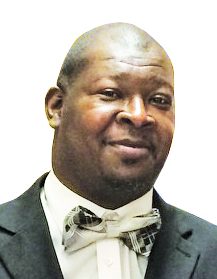
    WINNSBORO – Fairfield County School District Superintendent Dr. J. R. Green has been appointed to the State Board of Education by the Fairfield, Chester and Lancaster legislative delegation.

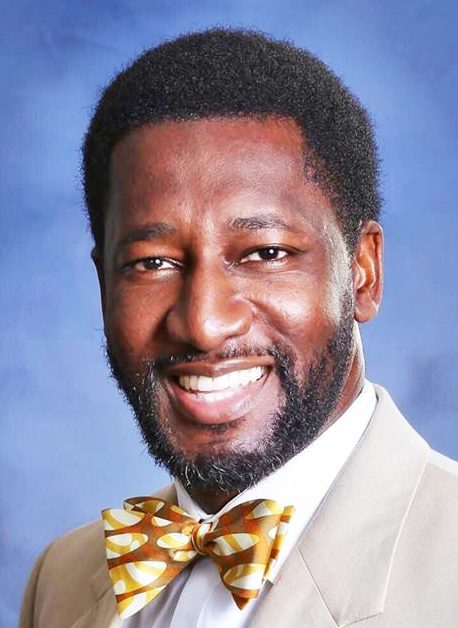
    Green

    “In December, we were notified by Molly Spearman, S.C. Secretary of Education, that a seat was coming open on the Board effective Jan. 31,” Rep. MaryGail Douglas said last week. “The seat rotates between Fairfield, Lancaster and Chester School Districts, and it was Fairfield’s turn to fill it. Senator Fanning and I felt, of course, that Dr. Green is an excellent choice for this appointment.”

    “We were looking for someone to be a voice for teachers in our district and in our state,” Douglas said. “They don’t really have a strong voice on the state level.”

    “It is an honor to be provided an opportunity to serve on the State Board of Education,” Green said.  “I look forward to contributing to the crafting of education policy in South Carolina.”

    The State School Board seat is for a four-year term.

  • Richland Two students make holidays brighter

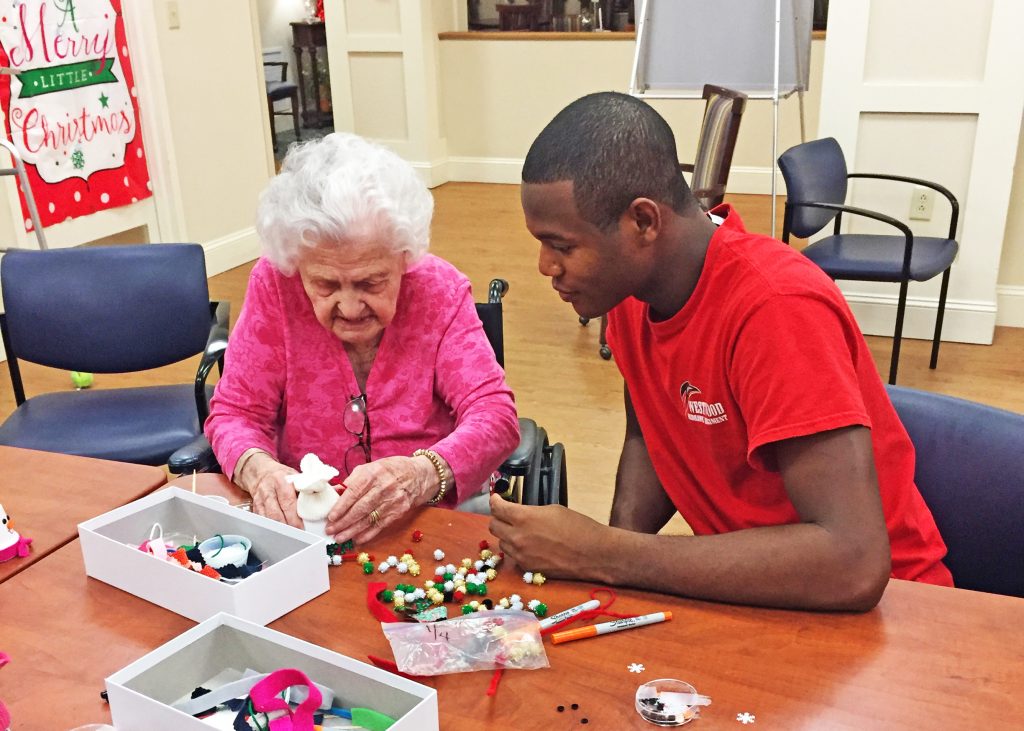
    Westwood High School’s Student Senate visited residents of The Crossings.

    BLYTHEWOOD – The holidays were brighter for many in the Midlands, thanks to the hard work of Richland Two high school students.

    During the first week in December, Westwood High School’s Student Senate, along with three honors societies, visited residents of The Crossings, an independent and assisted living community. They played Bingo, tic-tac-toe and crafts with the seniors.

    Also in December, Westwood and Blythewood high schools joined forces for military families in the Blythewood area. The “Red, White, and Blue Holiday Party” included food, games, carriage rides and a visit from Santa.

    Blythewood High’s Unarmed JROTC Drill Team performs at during the pep rally at Main Street Elementary School in Lake City.

    Blythewood High adopted Main Street Elementary School in Lake City through a program called Project Connect. The school received donations from parent groups, individuals and other Richland Two schools to provide supplies for each of the school’s 14 classrooms as well as related arts classrooms.

    On Dec. 7, BHS students traveled to Lake City to deliver and set the supplies in every classroom. Main Street Elementary students arrived the following morning to positive notes on their desks and a festive gym ready for a pep rally.

  • Area students graduate from Clemson University

    CLEMSON – Area students graduated from Clemson University at the Dec. 21, 2017, ceremonies.

    Among the more than 1,400 students who received degrees at graduation ceremonies at Littlejohn Coliseum were, from Blythewood:

    Victoria L. Houghton, Bachelor of Science in Animal and Veterinary Sciences .

    Abby L. Joannes, Bachelor of Arts in Modern Languages .

    Justin Maurice Pondexter, Bachelor of Science in Graphic Communications .

    John Manning Sutton, Bachelor of Arts in English .

    Jordan Franklin Whitehead, Bachelor of Science in Parks, Recreation and Tourism Management .

    Christopher J. Zenoni, Bachelor of Science in Biological Sciences .

    From Fairfield County:

    William Joseph Britt IV of Ridgeway, Bachelor of Science in Management .

    Paul J. Currey of Winnsboro, who graduated Magna Cum Laude with a Bachelor of Science in Financial Management .

  • Members wary to sit on JWC board

    JENKINSVILLE – While the Jan. 11 annual meeting of the Jenkinsville Water Company (JWC) was not the donnybrook it was the last two years, there were still a number of angry outbursts and shouting matches between the president of the Water Company Board and several of the 20 or so water company members who attended the meeting.

    The main event of last week’s meeting was the election of new Board members for four open seats.  According to the by-laws, each member is allowed one vote for each of the four seats. As members arrived and registered, they were each handed one set of four ballots.

    In past years, members have complained that the balloting was rigged and that some members, including Board members, voted multiple times for a seat. Some notice was taken at this meeting when Secretary Tangee Jacobs entered the meeting room with a handful of ballots. She later turned them over to the JWC attorney, Chris Archer with Goodwin law firm in Columbia, saying, “I don’t want anyone to think I’m stuffing the ballot box.”

    As it turned out, however, no ballots were needed for the election.

    Unlike last year, when many of the 100 or so members were clamoring to be elected to the Board to gain some control over what they said was an errant Board, this year no one at all sought election to the Board, not even the four Board members whose seats were open. With a lawsuit, filed by member D. Melton, breathing down the neck of JWC and with JWC Board President Gregory Ginyard and Vice President Joseph McBride also named in the suit and the growing worry that more or, perhaps, all of the Board could be named as defendants, there was no interest in joining the fray.

    When there were no takers for Seat 1, Ginyard nominated incumbent Mary White who reluctantly accepted the nomination and was elected by acclamation.

    While several members were nominated for Seat 2, none accepted.

    “Doesn’t anyone here want to be on the Board?” Ginyard pleaded. Finally, Seat 2 incumbent Julie Bernell agreed to continue in her seat and she, too, was elected by acclamation.

    “If you don’t like it [being on the Board], you can quit at any time,” McBride assured members as he pleaded with the audience for someone to accept the nomination for Seat 3. Finally, member Rose Yarborough agreed reluctantly, asking for assurance that she could quit anytime.

    When no one could be cajoled into serving in Seat 4, a motion was made to limit the Board to nine members instead of 10 and move on. The vote was unanimous to do so.

    With a new Board in place, Ginyard called for the election of Board officers. Ginyard, McBride and Jacobs were re-elected to their offices. The Board’s CPA, Yvette Jones, was elected treasurer, and Preston Peach was elected Chaplain.

  • Blythewood Town Council names new Administrator

    BLYTHEWOOD – Blythewood Town Council has named Brian Cook, the Zoning Administrator for the City of Columbia, as the Town’s new Administrator. Cook replaces Gary Parker who announced in November that he plans to retire sometime in March.

    Cook

    Cook grew up in Charleston and graduated from the College of Charleston with a Bachelor’s degree in Sociology. He has worked for the City of Columbia since 2012. Prior to that, he spent seven years with Richland County in Planning and Development.

    Cook also spent six years as a police officer with the City of Charleston and at the Medical University of South Carolina.

    Council voted unanimously on Jan. 10, to extend to Cook a two-year, $75,000-a-year contract.

    “We’re excited for you to be here,” Mayor J. Michael Ross told Cook. “I know you’re going to hit the ground running.”

    While Cook lives in Cayce, he said he spent the weekend driving around Blythewood looking at homes and properties.

    “I’m not married, but I have two awesome daughters, Kate, who is in high school, and Sara, a middle schooler,” Cook told The Voice on Tuesday. “I spent some time working on projects in Blythewood when I was with the County, and I’ve always liked it out here,” he said.

    Cook reports to work Feb. 10.

  • Winnsboro Town Council plans Fortune Springs pool repairs

    WINNSBORO – Town Council voted Tuesday evening to move forward with discussions with the County about a collaborative effort to remodel/repair the Fortune Springs swimming pool so it will be ready for summer swimmers.

    Fortune Springs Park

    Town Manager Don Wood announced that the Town had received a bid from Genco Pools & Spa to remodel/repair the pool as it is for $180,000.

    “If we downsize it,” Woods said, “the cost would be $120,000.”

    “We’re reaching a point where we need to make a decision on this so the pool can open,” Mayor Roger Gaddy told Council members. “We’ve had conversation with the County about them taking over the pool and putting it under their recreation. They manage the vast majority of ball fields and recreation in the county.”

    Gaddy said the Town has had conversation with Russell Price, the County’s new recreation director, and that Price is in the process of preparing a presentation to County Council.

    “We’d like to find out if the County is interested in this,” Gaddy said. “And we’d like to expedite the decision. The Town can’t afford to keep the pool the same size as it is, but the County has indicated that it would like to keep it the size it is. So we need to get a decision on this. We don’t want to decide to downsize the pool and then find out that the County wants to keep the pool the size it is,” Gaddy said.

    “Time is growing nigh for rehabbing that pool and getting it ready for the summer,” Gaddy said.

    At the Finance Committee’s request, Council voted unanimously to move forward with talks with the County.

    Wood also updated Council on the waterline.

    “You may have noticed we’ve had numerous truckloads of pipe coming in. I hope this is all of it,” he joked. “We just got an invoice for $2.1 million for pipe.”

    Council voted to go into an executive session to discuss legal/contractual matters concerning Mt. Zion.

    Following executive session, there was no discussion and no vote.

  • Three vying for Tuesday’s school board election

    WINNSBORO – Lisa Brandburg, Darreyl Davis and Herb Rentz are on the ballot in next Tuesday’s school board special election to fill Beth Reid’s seat on the board. Reid, who represented District 7, passed away in November.

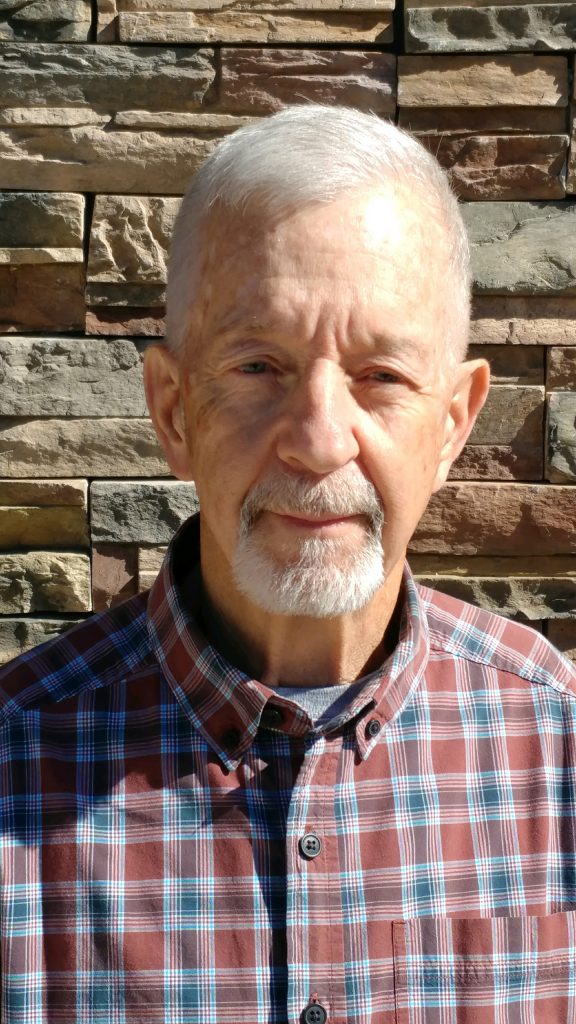
    Davis

    Darreyl Davis, who works in environmental health and safety at Isola, is president of Believers and Achievers, is a past chair of the Fairfield Elementary School Improvement Council and is the current president of the Fairfield Elementary PTO. He is a board member for First Steps and two years ago received the ‘Service Above Self’ award from the Rotary Club of Winnsboro. He was also recognized for his community work by the South Carolina Legislature in 2015.

    The father of six children, two of whom are enrolled in Fairfield District schools, Davis said he has a passion to help kids in the community.

    “I am the right choice to be the voice of the people in District 7 for the Fairfield County School District,” Davis said.

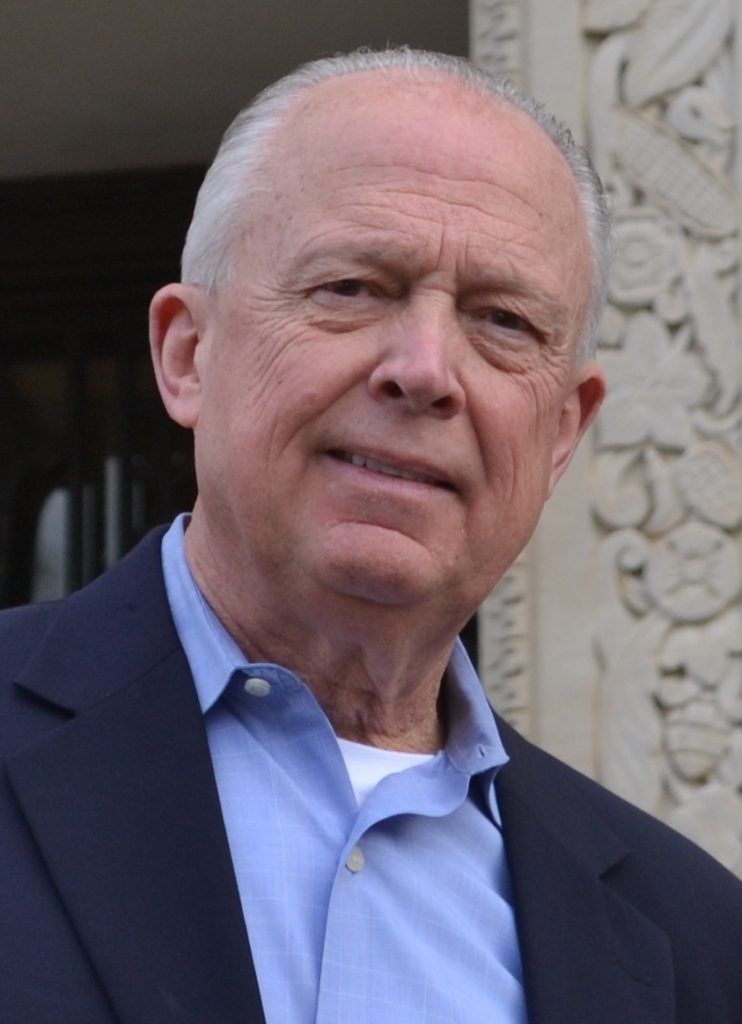
    Rentz

    Herb Rentz, manager of Mid-County Water Company, said he is hoping to continue the work of Reid, his late wife.

    ‘I feel a calling to take on her work,” Rentz said. “Crucial to the successful operation of our education system is accountability. Our results have to correlate appropriately to our expenditures. Our superintendent, as our primary employee, successfully prioritizes our goals and objectives and is responsible for matching our resources so that we achieve maximum efficiency. Policies established by the board are designed to insure that this process continues,” Rentz said.

    Brandenburg, who is emplooyed as Coordinator of Intervention in special services for the Fairfield County School District, has been employed by the District for more than 30 years, serving as a teacher, assistant principal and principal.

    “I feel I’m the candidate most qualified to fill the vacancy,” Brandenburg said.


    Ms. Brandenburg had not responded to requests for a photo at press time.

  • Ridgeway Councilman wants vote rescinded; Mayor’s economic interest questioned

    RIDGEWAY – After a controversial 3-1 vote by the Ridgeway Town Council on Dec. 14, 2017 to purchase the Cotton Yard from Norfolk-Southern Railroad for $73,000 plus an estimated $11,000 for associated costs, that vote is now under the microscope with the possibility of being rescinded.

    That possibility was raised at the Jan. 11 council meeting when Mayor Charlene Herring called for approval of the Dec. 14 meeting minutes. Councilman Heath Cookendorfer, citing a potential economic interest on the part of Herring when she voted for the Cotton Yard purchase, called for those minutes to be tabled and for the Dec. 14 Cotton Yard vote to be rescinded and re-discussed at the Feb. 8 meeting.  Herring’s vote was one of the majority three votes for the purchase.

    Cookendorfer, who voted against the purchase, said Herring’s home, The Ivy Veranda, which is directly across the street from the Cotton Yard, was registered as an event business with the S.C. Secretary of State in June, 2017. He made the argument that Herring’s event business depends on the Cotton Yard for parking, thus giving Herring an economic interest in the vote.

    As he began his presentation to Council last week, Cookendorfer said he had contacted [Steve] Hamm, an attorney with the South Carolina Ethics Commission, who, “confirmed that, based on the information I provided him, that the motion [to approve the Cotton Yard purchase] included a vote that violated S.C. law, Section 8-13-700 which talks about someone voting that has a potential economic interest. Section A & B talks about a…”

    Councilwoman Angela Harrison interrupted Cookendorfer, asking for a copy of the document.

    Cookendorfer said he would give her one.

    “Can I ask, what’s the conflict of interest?” Harrison asked, again interrupting.

    “I’m getting ready to…” Cookendorfer said before being interrupted by Harrison a third time.

    “Who has a conflict of interest?” Harrison demanded.

    “I’m sorry, we’re…”

    Harrison and Herring began talking over Cookendorfer.

    “I’m getting ready to tell you…” Cookendorfer continued before being interrupted again.

    “Well, we don’t need you to. I can read, so…” Harrison countered.

    “Anyone who has a business can park there,” Herring interrupted.

    “Right,” Cookendorf said. “If I can get through this, I’ll be more than happy to answer any questions.  Mr. Hamm asked me if the mayor had parking space for her business,” Cookendorfer said. “The answer was ‘No.’

    “Yes, I do,” Herring interrupted.

    “Do you have spaces for 40-50 cars?” Cookendorfer asked.

    “Probably not 40-50,” Herring said.

    Cookendorfer read from documents that he said were submitted to Hamm who, Cookendorfer noted, is a close friend of Herring’s. Herring acknowledged that he is.

    Those documents contained two pieces of information Cookendorfer said supported his claim that Herring had an economic interest in the Cotton Yard vote:

    1) an event advertisement from the Ivy Veranda Facebook page stating that, “Plenty of parking is available in the adjacent Cotton Yard,” and

    2) a copy of a statement that Herring submitted to Council on Dec. 8, 2016, recusing herself from voting on an ordinance to rent portable restrooms for the Cotton Yard for a special town event, in which she cited her economic interest.

    That recusal stated, in part, “I, Charlene Herring, Mayor of Ridgeway, recuse myself from voting because of conflict of interest. My husband and I are members of the Merchants Association.”

    Cookendorfer said the Dec. 8, 2016 recusal set a precedent for Herring to recuse herself on the Dec. 14, 2017 Cotton Yard vote.

    A brochure advertising The Ivy Veranda states that it is the “ideal place to host your intimate Southern style wedding reception.”

    “He [Hamm] asked, ‘By purchasing that land, will it be used for her business and other businesses?‘  I said, ‘Yes.’”

    “He then asked if anyone parks [in the Cotton Yard] currently. I said, ‘Yes,’” Cookendorf said.

    “If Ridgeway ever decides to discontinue its [Cotton Yard] leasing agreement, then that could potentially affect parking spaces available for your business,” Cookendorfer said to Herring. “So, because it could affect parking for your business, it could affect your business,” Cokendorfer said. “This means there’s an economic interest.”

    Cookendorfer said Hamm referred to S.C. Statute, Sec. 8-13-700 which states:

    (A)         No public official…may knowingly use his official office…to obtain an economic interest for himself, a family member, an individual with whom he is associated or a business with which he is associated.

    (B)          No public official…may make, participate in making or in any way attempt to use his office…to influence a governmental decision in which he…is associated, or a business with which he is associated has an economic interest.

    The statute continues with step–by-step details of how a public official with an economic interest should recuse him/herself.

    “Again, this is something that he [Hamm] concluded from the same information I’m handing you. He [Hamm] recommends that we rescind the vote and bring it back up for discussion. You’re welcome to talk to him,” Cookendorf said. “We can ask Mr. Hamm for a written recommendation. In the meantime, we can talk about this in open session.”

    “We’re not going to have this discussion, ok?” Harrison snapped. “The discussion will be, let’s call our attorney. We have legal advice for a reason, so let’s just take it from here.  We don’t need to rescind the motion,” Harrison repeated.

    “We don’t need that parking,” Herring interrupted, “and I can take that out [of the advertising].”

    “So you’re going to leave the motion and contact our attorney?” Cookendorf asked.

    “Yes,” Harrison snapped again. “They’ll understand it.”

    While Harrison, Herring and Porter fought on against tabling the Dec. 14 meeting minutes, in the end, Councilman Donald Prioleau made a motion to table them until the Feb. 8 meeting, and Council voted 5-0 to do so.

    Harrison added, however, that she wanted to correct a line in the Dec. 14, 2017 minutes from, “Councilman Prioleau left for an emergency…” to “Councilman Prioleau ‘said’ (Harrison’s emphasis) he left for an emergency.”

    Following the meeting, The Voice asked Herring if she had already signed the Cotton Yard contract, as authorized by Council on Dec. 14.

    “Some of us have,” Herring answered after thinking about it for a few seconds.

    However, contacted by email and phone, the other four council members, Harrison, Cookendorfer, Prioleau and Doug Porter told The Voice that none of them had signed the contract. That only the mayor was authorized to sign it.

    The Voice emailed Herring last week, asking if she planned to contact the Ethics Commission about whether her business constituted an economic interest in the Cotton Yard vote or to only contact the Town government’s attorney for advice about the issue. At press time, Herring had not answered the email.
  • News Analysis: Comptroller issues warning on filing

    COLUMBIA – Each October, many state agencies – including public colleges and universities – are required to submit to me their financial statements for the previous fiscal year. I use those statements to produce South Carolina’s financial report, which is used by lawmakers, credit rating agencies, and others to assess the state’s financial condition.

    Eckstrom

    An agency’s failure to turn in its statements on time can have ramifications beyond just that one agency. If it holds up completion of the state’s financial report, it potentially hinders policymakers’ ability to make decisions about spending and taxes. It may also send a troubling signal to investors interested in buying state bonds, or otherwise reflect poorly on the state.

    Untimely financial statements sometimes raise red flags about an agency’s accounting and record-keeping. In the recent past, they’ve led to discovery of serious deficiencies – such as failure to reconcile bank statements regularly, or a lack of CPAs in crucial accounting positions. Even worse, they can indicate indifference toward the importance of financial reporting.

    When an agency misses the deadline, it’s up to me to light a fire under them. But my options for doing so are limited. Hopefully, with repeated phone calls and a little nudging, I’ll have the statements in enough time to complete the state’s financial report without much delay.

    But what happens when an agency is evasive or uncooperative – for example, won’t return calls? With no legal authority to force them to do anything, my only recourse is to raise the issue publicly and hope the unflattering attention will motivate the tardy officials.

    Which brings me to the subject of S.C. State University…

    SCSU boasts a loyal student body and faithful alumni, yet its governance — particularly its financial leadership — has often fallen short. In 2014, its troubles came into the open: out of control spending, large budget deficits, about $10 million in unpaid vendor bills, mismanaged funds, and improperly recorded transactions — all of which resulted in a two-year probation by the regional accreditation agency. (Losing its accreditation would have been disastrous, as it would have meant its students were no longer eligible for federal aid and may well have caused SCSU to close its doors.)

    Since then, much money and effort have gone into putting SCSU on sound financial footing. Lawmakers purged the entire board of trustees. The Legislature gave the school around $20 million in state loans which later were forgiven, meaning taxpayers foot the bill to clean up the mess.

    Given the resources invested in righting the ship, there was no joy in notifying other state leaders last month that SCSU was late again this year submitting its financial statements. After missing the Oct. 1 deadline, university officials assured me I’d have the statements by Nov. 22. That date came and went. It wasn’t until Dec. 12 – more than two months late – that the statements were turned in.

    All who care about SCSU’s future should be concerned. Timely financial disclosures are crucial for keeping the university healthy and solvent. And again, late financial statements can portend broader issues.

    While its fiscal woes only became known to the public in 2014, I actually had begun sounding the alarm years earlier — after growing concerned by the school’s chronic problems turning in its financial statements. Out of an abundance of caution, I’m sounding the alarm again.

    Certainly, SCSU finances have stabilized over the past few years, and the quality of its board and administration are much-improved. Nonetheless, we mustn’t tempt fate. Given its track record and the magnitude of its recent troubles, complacency isn’t an option.

    S.C. State’s crisis was rooted in a lax attitude toward the notions of oversight and accountability — a mindset partially cultivated by state leaders’ hands-off approach to the university; the storied, historically black university was treated as a special case, allowing its administrators to operate nearly oversight-free. What was actually needed, then as now, was “tough love.”

    Three years later, the high stakes dictate keeping an attentive eye on SCSU administrators. We must remind them we’re watching and what’s expected of them. Failure to meet minimum standards isn’t acceptable.

    And there’s a cautionary tale here for governmental bodies at all levels. While not a sensational topic, oversight measures such as financial reporting requirements are fundamental to an institution’s well-being.

  • Big Plans for Pets

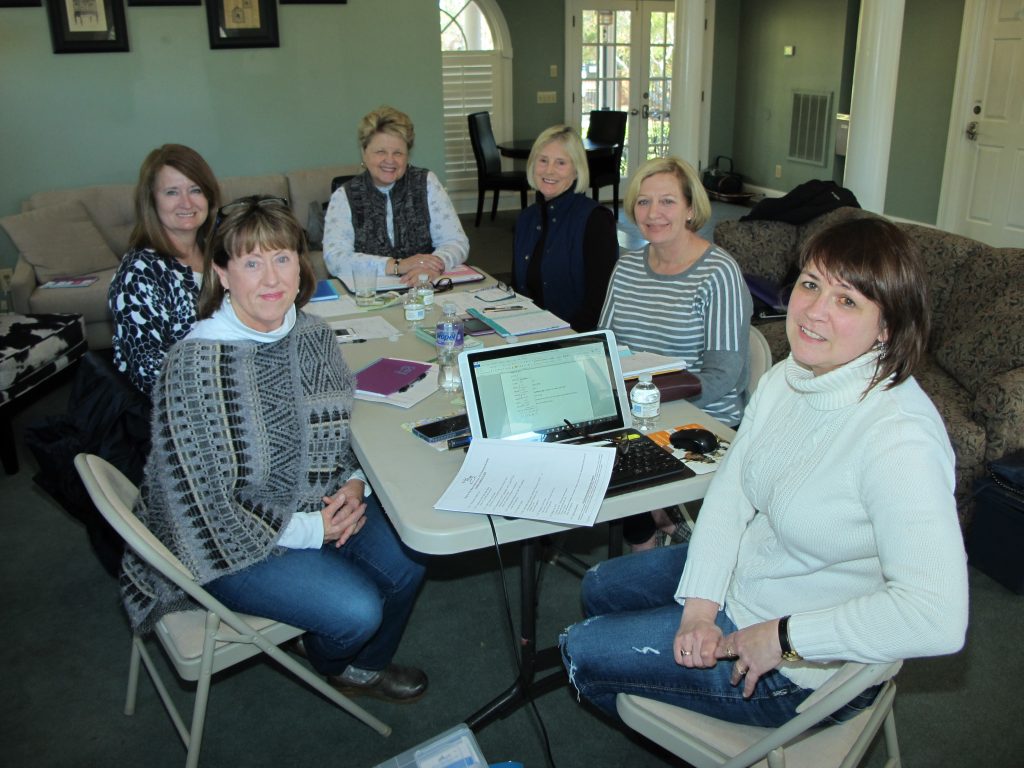
    BLYTHEWOOD – Hoof & Paw Benevolent Society members gathered at the Crickentree Country Club in Blythewood to plan their forthcoming year of fundraisers that will enable the group to provide support to local animal organizations, including the Fairfield Animal Shelter and Adoption Center.
    First event will be the Love Your Pet Valentine benefit on February 10 at the Tractor Supply on Killian. Seated clockwise from left front: Kathy Faulk, Mary Ann Ferris, Deborah Richell, Margurite Ferguson, Carol Crooks and Sonja Murphy.