WINNSBORO – Despite setbacks this year, including the abandonment of two V.C. Summer nuclear units and the loss of that expected future revenue, the fiscal state of the County remains solid, County Administrator Jason Taylor reported Tuesday evening during Council’s second budget workshop for fiscal year 2018-19.
Taylor presented a total budget of $39,748,964, an increase of $991,779 (3%) over last year’s budget of $38,757,185.
While Taylor stated in his budget letter to Council that the County still has great potential, to maintain a strong fiscal position and realize future growth, it must focus its budgetary resources on its core function of public safety and on critical infrastructure needs – water and sewer – quality of life services and public facilities.
“These are all things that are necessary to reverse population loss and recruit new industry,” Taylor said.
Taylor reported that the County’s revenues exceeded expenditures by $2 million this fiscal year and that he is not recommending a millage increase in the 2018-19 budget.
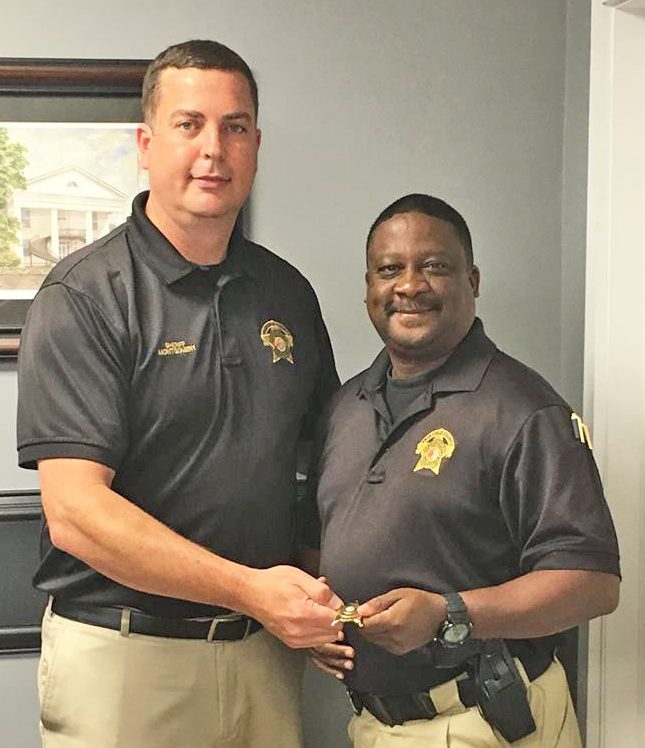
WINNSBORO – Fairfield County Sheriff Will Montgomery congratulates Deputy Oren Gadson on being promoted to Corporal. Gadson has worked in law enforcement for 24 years.
COLUMBIA – On Wednesday, April 11, the Joint Senate and House elected Paul Dove of Winnsboro to a four-yearterm on the Francis Marion University Board of Trustees. Dove was elected to complete the unexpired term of the 5th Congressional District representative to the FMU board earlier this year.
Dove says he is “excited and humbled about again being part of the great FMU family.”
WINNSBORO – At approximately 2 a.m. on Tuesday, April 17, burglaries occurred at UpCountry and Tierra Azul restaurants.
Both restaurants are located on 321 Bypass in Winnsboro, approximately one mile from each other.
The three suspects are believed to have been involved in burglaries in Greenville as well as other jurisdictions.
The Fairfield County Sheriff’s office asks that Investigator Dove be contacted at (803)718-4067 or bill.dove@fairfield.sc.gov with any information on the burglary, vehicle or suspects.
The Voice will updated this story as more information is available.
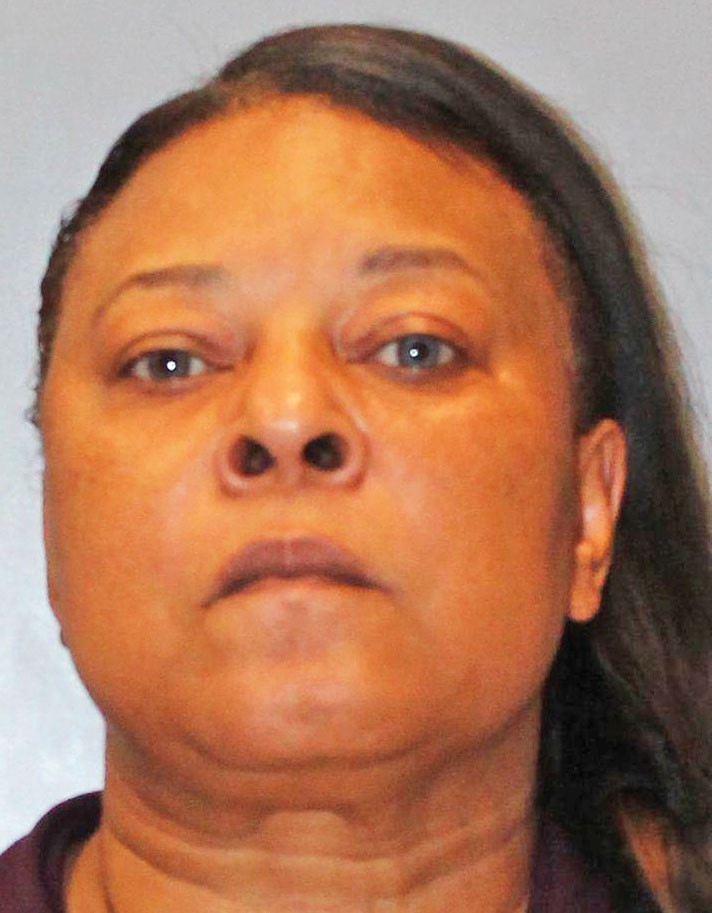
COLUMBIA – Teresa Yarborough-Walker age 50, of Blythewood, pled guilty to Theft of Government Funds, United States Attorney Beth Drake stated today. Judge Mary Geiger Lewis accepted the plea and will sentence Walker at a later date.
Walker
Evidence presented at the hearing established that Walker was the human resources supervisor for Genesis Health Care, Inc. Genesis is a non-profit health care center that offers medical services to poor, rural communities. Many Genesis patients are on Medicare and Medicaid.
Genesis was funded by the Health Resources Service Administration, an agency within the US Department of Health and Human Services. The theft is a violation of Title 18, United States Code, § 641.
Walker embezzled from Genesis by creating fictitious employees and paying them a salary. She then diverted those salaries to herself. She modified the payroll software to prevent reports from going to management that would have revealed the scheme.
Walker stole approximately $416,257.00.
The maximum penalty faced by Walker is imprisonment for ten years with a potential fine up to $250,000.
The Federal Bureau of Investigation and Internal Revenue Service investigated the case. Assistant United States Attorney Winston David Holliday, Jr., of the Columbia office is prosecuting the case.
The theft is a violation of Title 18, United States Code, § 641.
BLYTHEWOOD – Town Council voted during a special called meeting last week to refinance the 2010 $5M Blythewood Facilities Corporation (BFC) bonds for a savings of $51,000 the first year and $25,000 annually, thereafter, for a total savings of $470,000 over the life of the bonds.
The Town’s payments on the bonds currently run about $350,000 annually. The refinancing is through BB&T bank, which is offering a 3.65 percent interest rate that is 8.7 percent lower than the bond’s current interest rate of 4.33 percent.
The more favorable refinancing is predicated by the release (refunding) of a $358,475 debt service reserve fund or escrow that the Town had to set aside for security at the time of the bond’s issuance in 2010. That $358,475 will now go toward reducing the loan.
That debt service reserve fund, which represented principle and interest on the loan for one year, was initially required for security on the loan for two reasons, Parker Poe representative Brent Robertson said.
“The assets being financed by the bond were not essential for governmental purposes such as an administration building or jail, but for Doko Manner and Doko Meadows. Plus, it was a brand new credit for a public offering. So investors were looking for additional security,” Robertson said. “We’re now in an environment with a private placement where an individual purchaser (BB&T) is buying the bonds. Now that it has a history of repayment, the Town is able to negotiate the release of that debt service reserve fund.”
By moving forward with the refunding (release) of the reserve fund, it can be used to downsize the amount of bonds that the Town has outstanding.
“With that reduction, the cash flow savings benefit runs about $25,000 a year with the initial year estimated at $51,000,” Robertson said.
Council authorized the refunding last fall when it decided, ultimately, not to go ahead with the refinancing at that time, so from now forward, Council will not have to take any additional action to authorize the release of the debt service reserve funds.
JENKINSVILLE – An annexation vote scheduled for May 1 could literally quadruple the size of Jenkinsville town limits. And chances are most of the affected property owners don’t even know the vote is taking place.
That’s because Jenkinsville is utilizing the “25 percent petition and election method” in state law to annex 143 properties into the town of 46 residents.
Passed in 1988 and enacted in 2000, the 25 percent method would allow annexation of the 143 properties to move forward with only 25 percent of those 143 properties’ owners petitioning the town government. It requires the least amount of public support to pass.
Jenkinsville Mayor Gregrey Ginyard deferred comment about why the 25 percent method was selected to Columbia attorney Christopher Archer, who’s representing the town.Archer couldn’t say why the 25 percent method was chosen, nor could he say exactly how many people signed the petition, only that there was a door-to-door effort to solicit signatures.
“I can’t really speak to the history that much. All I can tell you is that the 25 percent of the names are considered qualified electors,” Archer said. “There was an effort to go door to door to ask them if they were in agreement with the petition.”
Debby Stidham, director of Fairfield County Voter Registration and Elections, said state law doesn’t require Jenkinsville to submit the list of names signing the petition.
“He does not have to give that to me,” Stidham said.
All that’s required is a letter stating the town met the 25 percent threshold. That letter was written March 21. According to the letter, obtained by The Voice, the Jenkinsville Town Council on March 15 adopted a resolution “certifying that a proper petition has been received for annexation of the area described in the resolution,” the document states.
Archer said state law generally doesn’t require notification of individual property owners that they might be annexed into the town. He said that’s accomplished through public notices or media coverage. That notice has appeared twice in The Voice.
“You would be notified by local media,” Archer said.
Exceptions exist for properties greater than 10 acres or if a property exceeds 25 percent of the territory to be annexed. In those cases, qualifying property owners would be notified via certified mail that they could opt out.
Polling will occur at the new Jenkinsville Fire Department at 7104 Highway 215, and polls will remain open from 7 a.m. to 7 p.m.
Only registered voters within the territory proposed for annexation are eligible to cast ballots May 1. Stidham estimated there are at only about 53 eligible voters in the annexation territory, meaning annexation of the 143 properties could pass with as few as 27 votes in favor.
Massive growth
If the annexation is adopted, the town’s geographic boundaries would grow at least fourfold, and its taxable property value would surge by a factor of five, according to Fairfield County property records.
A review by The Voice of the 143 properties on the annexation ballot found they have a cumulative fair market value of $12.3 million. Parcels currently making up the Town of Jenkinsville have a total fair market value of $2,467,200, nearly five times less, land records show.
Ginyard said the annexation effort is not a money grab. Rather, he said growing the town’s population would make it easier for Jenkinsville to attract new businesses.
“We’d like to be able to have a Dollar General and things like that,” Ginyard said. “We’re not trying to be a Columbia, we’re trying to be a community that has a few amenities.”
Jeff Shacker, field services manager for the Municipal Association of South Carolina, said municipalities usually spend new tax revenue from annexation on operations, such as police or parks and recreation. Some towns, however, choose to apply the money toward matching grants, Shacker said.
“Jenkinsville has been pretty successful with that,” Shacker said, citing streetscaping and adding sidewalks as examples. “I’ve talked with Mayor Ginyard about interest in building a new town hall.
“I’m not sure what all the motives are,” Shacker added. “But Fairfield County is a local option sales tax county. That is distributed by and large by population, so any population growth would mean more tax revenue for them.”
Ginyard said there are no specific plans to seek grants, though he didn’t rule out funding more town services.
“Annexation is good for the town because it puts more people into the town. It’s a good thing for everybody,” Ginyard said. “It’s not something that’s going to boost Greg Ginyard. It’s going to boost the town.”
By the numbers
Because a majority of the 143 properties included on the annexation ballot are owned by residents living outside Fairfield County, they will not be eligible to have a vote as to whether their property is annexed into the town.
Only 56 of the parcels, or 39.1 percent, are taxed at the 4 percent assessment that primary property owners pay, property records show. With few exceptions, the rest are taxed at 6 percent, which is what non-residents and residents owning second properties pay.
One parcel on the list is owned by Whitehall AME Church, which has a zero percent assessment. Four other property owners are also assessed at zero percent – Jenkinsville Water Company, Blue Valley Masonic Lodge, Eau Claire Cooperative Health and a fourth parcel whose owner couldn’t be identified.
It’s unclear how much of a windfall annexation would generate for the Town of Jenkinsville. Using other Fairfield County towns as a guide, the financial gain would be substantial. Jenkinsville would reap $25,251 (for properties taxed at 4 percent) and $37,877 (6 percent) in tax revenue if it adopted Ridgeway’s millage rate of 51.3 mills, according to Fairfield County tax formulas. Winnsboro’s millage rate of 38.9 mills would generate between $19,148 and $28,722.
Challenging the vote
Ginyard said the upcoming vote is actually the second attempt to annex the properties that are listed on the May 1 ballot. He said it has always been the intent to annex these properties since the town incorporated in 2008.
If the vote passes, Ginyard hopes to organize a third annexation vote in the future to bring in even more properties.
“What we’re trying to do is to grow the town,” he said. “Once that happens, that opens more doors to do things.”
Only a handful of S.C. towns have used the 25 percent election method, Shacker said, noting Pelzer in Anderson County used it in 2015.
Despite community objections, the Pelzer annexation vote passed 122-106, according to media reports. As a result, the town of Pelzer tripled in size, with several hundred properties added to the tax rolls.
Regardless of how the Jenkinsville vote unfolds, the town council must first conduct a public vote to adopt the annexation election results. That vote, though, can be delayed or halted altogether by petition. For that to happen, the petition would need signatures from only 5 percent of registered voters within the town limits, according to state law.
According to Fairfield County election records, there are 54 registered voters currently in the Town of Jenkinsville, meaning any petition contesting the annexation vote would need only three signature.
State law says that petition must then be submitted within 30 days of the town government publishing the annexation election results. Jenkinsville would then have 30 days to publish a public notice for a second annexation election. But, for a second election, only the 54 registered voters within the Jenkinsville town limits would be voting on the annexation of the 143 properties.
If a second election were held, stopping annexation at that point would likely face an uphill battle.
WINNSBORO – The Fairfield County Family Court computer system crashed last week, wiping out all data for February, March and early April. The computer’s data had not been backed up since Jan. 31, 2018, according to the County’s Information Technology (IT) Director Marvin Allen. More than $400,000 of Fairfield County child support payments to hundreds of families are being delayed as a result.
That delay could extend for as many as eight weeks since two-and-a-half months of data for 800 – 1,200 cases must now be re-entered into the system manually, Deputy Administrator Davis Anderson told The Voice.
During Monday night’s County Council meeting, Administrator Jason Taylor asked Allen to explain, “what happened, what we’re doing to fix it and what we’re doing to keep that from happening again.”
“First, the Family Court staff is not to blame for the crash,” Allen said. “The blame is on several entities, including me.”
Allen explained in technical terms a complex sequence of events in which he said the County’s IT staff had been manually backing up the server as it waited six months for a cost estimate for regular backup service from QS1, the company that has managed the Family Court server for 25 years. Allen said the last manual backup was performed by the County staff on Jan. 31, 2018.
Since Jan. 31, Allen said he had placed his trust in faulty information from the Department of Social Services (DSS) that the Family Court’s data was being copied directly to the DSS server. Allen said he stopped backing up the server manually because he understood ‘copied’ to mean the data was being backed up by DSS.
“Apparently, that was not the case,” Allen told Council. “Although we depend on vendors, it’s still, ultimately, me who’s responsible for the county’s data, regardless. And I take full responsibility,” Allen said, apologizing to all the people the crash affected.
Allen assured Council that, from here out, his department will do a daily manual backup of the QS1 server.
“That’s all we can do with this server,” Allen said.
Taylor said the County took immediate steps after the crash to find a solution to restore the lost data.
“After the crash, we quickly contacted a company in Charlotte and took the server to them to see if they could recover the data or at least some of it,” Taylor said. “They said they could not recover from what we have on the server. We talked to DSS to find out what data could be recovered from them. We found out that wouldn’t work because the way their system inputs data is different than ours. So we’re having to re-enter all the data back to Jan. 31, more than two months. It’s a lot of data so it’s going to take some time,” Tailor said.
“We don’t know just yet when we will be able to resume mailing child support checks,” Fairfield County Clerk of Court Judy Bonds told The Voice. “The Family Court staff is manually re-entering all the data back into the system, but they have to enter the oldest data first to make everything balance. It’s very time consuming.”
“We’re going to get the problem resolved as soon as possible,” Taylor said. “But it’s going to take some time.”
BLYTHEWOOD – A former Blythewood Town Councilwoman pleading guilty for her role in a multi-million dollar health care fraud scheme could soon learn her fate.
Kathleen Cauthen, 47, is scheduled for sentencing on May 14, according to federal court records. In 2015, Cauthen pleaded guilty to one count of misprision of a felony. A second count of conspiracy to commit theft or embezzlement in connection with health care was dropped as part of a plea deal.
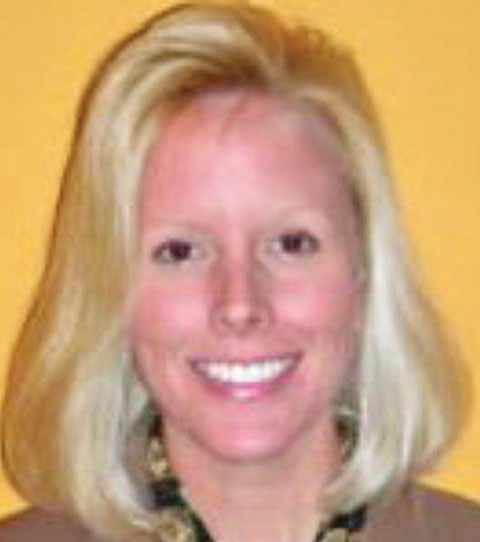
Cauthen
Court documents state the misprision of a felony has a maximum sentence of three years in prison and a $250,000 fine. The embezzlement count carries the same penalty. Documents list an “advisory” sentence of 21 to 27 months for the misprision count, though the judge could sentence Cauthen to probation or house arrest.
Cauthen has been a cooperating witness in the government’s investigation and prosecution of others in the health care fraud case. She has also been subject to subpoena from the prosecution.
Cauthen’s sentencing was set for March 16, but her attorney requested a continuation seeking more time to respond to a presentencing report. Complicating matters, the report that was emailed to Cauthen was delivered to her spam folder and wasn’t discovered until weeks later, the motion states.
“Ms. Cauthen would request the full period of time in which to respond to the lengthy presentence report, which is not possible due to the March 16 hearing date,” the motion says. “Based on the foregoing, Ms. Cauthen requests a continuance of this cause to fully respond and prepare for this critical hearing.”
Cauthen is one of several people indicted in a multi-state health care fraud scheme totaling at least $6.5 million and impacting approximately 17,000 people.
The scheme involved embezzling funds from premiums paid by individuals who had signed up for unauthorized health plans, diverting more than $5.4 million in premiums for the defendants’ own personal use, according to an FBI news release.
Shell companies were set up to facilitate money laundering, court documents state.
The ringleader was William Madison Worthy, a former client of Cauthen. Worthy was sentenced to 82 months – or just shy of seven years – in prison and three years of supervised release after pleading guilty in 2016.
Worthy was also ordered to pay $6.5 million in restitution, according to court records.
The sentence is concurrent with an 87-month sentence Worthy received in 2011 for similar, but unrelated fraud-related counts from when he lived in Spartanburg before moving to Isle of Palms.
Other codefendants have also pleaded guilty, including Angela Posey and Bart Posey. Angela Posey was sentenced March 26 to six months of probation. Bart Posey pleaded guilty in January and is scheduled for sentencing April 30.
In addition to criminal penalties, Cauthen and others pleading guilty have been slapped with cease and desist orders from departments of insurance in South Carolina, Delaware, Oklahoma and other states.
The S.C. Supreme Court suspended Cauthen’s law license in 2014. It later accepted a request from Cauthen to resign in lieu of discipline in January 2017, according to court documents. The resignation is permanent, court documents state.
WINNSBORO – During the first of three planned budget work sessions, Council took a conservative look at allocations it provides for agencies in the county.
“We’ve got to start taking a little closer look at funding given the situation we’ve had with V.C. Summer and the fact that we’re now looking at less revenue in the future than we had expected,” County Council Chairman Billy Smith told The Voice before the meeting.
Behavioral Health was the first to feel the pencil, with council suggesting reducing the agency’s usual annual allocation of $67,438 to $52,288. While the County has covered the agency’s cost for its annual audit in the past, Council Chairman Billy Smith expressed reluctance to continue paying for audits for this or any other agency.
The Council on Aging requested and administration recommended $104,912, an increase of $11,501 over last year’s funding of $93,411. Smith, again, pointed out that $11,000 of that increase is to pay for the agency’s annual audit, which he said he wants to stay away from. Smith also noted that he saw no explanation for the $501 increase and would want to see that before funding it.
Fairfield Memorial Hospital saw the largest recommendation for reduction in funding, from $1,043,000 to $0.
“We do need to change this to reflect zero funding until further decisions are made regarding the hospital,” Smith said.
Council questioned a recommended $6,352 increase in funding for Midlands Technical College over last year’s approved budget of $158,810. Council members also had some discussion about reducing the $25,000 it gives each year to the railroad museum.
Council also suggested reducing the amount it gives Palmetto Citizens Against Sexual Assault ($9,285) by $1,285 and recommended reducing Sistercare’s funding from last year’s $10,000 to $8,000 this year.
Council let stand the administration’s recommendation of a $10,000 increase for Eau Claire Cooperative Health Center, bringing that agency’s funding from council to $60,000.
Heads of agencies considered for cuts will be invited to make their case to Council at the next budget work session which is scheduled for next Tuesday, April 17 at 6 p.m. in council chambers.